
Lecture
An automated control system (abbreviated ACS) is a complex of hardware and software together with personnel, intended to control various processes within a technological process, a production facility or an enterprise. Automated control systems are used in various branches of industry, in power generation, in transport and so on. The term "automated", as opposed to the term "automatic", emphasizes that certain functions are retained by the human operator — either the most general, goal-setting ones or those that cannot be automated. An ACS combined with a decision support system (DSS) is the principal tool for improving the soundness of management decisions.
The most important task of an ACS is to raise the efficiency of controlling the object by increasing labor productivity and improving the methods used to plan the control process. A distinction is drawn between automated systems for controlling objects (technological processes — automated process control systems, APCS; an enterprise — enterprise-level ACS; an industry sector — sector-wide ACS) and functional automated systems, for example those for designing planned calculations, for materials and technical supply, and so on.
In the general case, a control system can be regarded as a set of interrelated management processes and objects. The generalized goal of control automation is to make better use of the potential capabilities of the controlled object. Accordingly, a number of goals can be identified:
The standard GOST 34.601-90 provides for the following stages and phases in the creation of an automated system (AS):
The preliminary design, the detailed design and the working documentation represent the successive construction of ever more precise design solutions. It is permissible to omit the "Preliminary design" stage and individual phases of work at any stage, to combine the "Detailed design" and "Working documentation" stages into a single "Detailed working design", to carry out different phases and activities in parallel, and to add further ones.
This standard is not entirely suitable for development work today: many processes are covered insufficiently, and some of its provisions are outdated.
An ACS comprises the following kinds of support: information, software, hardware, organizational, mathematical, legal and linguistic.
The principal classification criteria that determine the type of an ACS are:
The functions of an ACS are laid down in the technical specification for the creation of the particular ACS, on the basis of an analysis of the control goals, of the resources allocated to achieve them and of the expected benefit from automation, and in accordance with the standards that apply to that type of ACS. Each function of an ACS is implemented by a set of task complexes, individual tasks and operations. In the general case, the functions of an ACS include the following elements (activities):
The required set of elements is chosen according to the type of the particular ACS. The functions of an ACS can be grouped into subsystems by functional and other criteria.
In industrial production, the following main classes of control system structures can be identified from the control standpoint: decentralized, centralized, centralized distributed and hierarchical.
Building a system with such a structure is effective when automating controlled objects that are technologically independent in terms of material, energy, information and other resources. Such a system is a collection of several independent systems, each with its own information and algorithmic base.
To generate a control action for each controlled object, information about the state of that object alone is required.
A centralized structure implements all the processes of controlling the objects within a single control unit, which collects and processes information about the controlled objects and, on the basis of analyzing it in accordance with the system's criteria, generates control signals. The appearance of this class of structures is associated with the growing number of monitored, regulated and controlled parameters and, as a rule, with the geographical dispersal of the controlled object.
The advantages of a centralized structure are the fairly simple implementation of the information interaction processes; the fundamental possibility of optimal control of the system as a whole; fairly easy correction of input parameters that change in real time; and the possibility of achieving maximum operational efficiency with minimum redundancy of the control hardware.
The drawbacks of a centralized structure are as follows: the need for high reliability and high performance of the control hardware in order to achieve acceptable control quality; and the great total length of the communication channels when the controlled objects are geographically dispersed.
The main feature of this structure is that the principle of centralized control is retained, that is, the control actions applied to each controlled object are generated from information about the states of the entire set of controlled objects. Some functional devices of the control system are shared by all channels of the system and are connected by switches to the individual devices of a channel, forming a closed control loop.
In this case the control algorithm consists of a set of interrelated algorithms for controlling the objects, and these are implemented by a set of interconnected control units. During operation, each control unit receives and processes the relevant information and issues control signals to the subordinate objects. In order to implement its control functions, each local unit enters into information exchange with the other control units as the need arises. The advantages of such a structure are: lower requirements for the performance and reliability of each processing and control center without any loss of control quality; and a reduction in the total length of the communication channels.
The drawbacks of the system are as follows: the information processes within the control system become more complicated because data have to be exchanged between the processing and control centers and the stored information has to be updated; the hardware intended for information processing is redundant; and synchronizing the information exchange processes is difficult.
As the number of control tasks in complex systems grows, the volume of information to be processed increases considerably and the control algorithms become more complex. As a result, centralized control becomes impossible, because there is a mismatch between the complexity of the controlled object and the ability of any single control unit to receive and process information.
Moreover, the following groups of tasks can be distinguished in such systems, each characterized by its own requirements for the reaction time to events occurring in the controlled process:
Clearly, the hierarchy of control tasks makes it necessary to build a hierarchical system of control facilities. While such a division overcomes the information difficulties faced by each local control unit, it creates the need to coordinate the decisions taken by these units, that is, to create a new control unit above them. At every level, the characteristics of the hardware must be matched as closely as possible to the given class of tasks.
In addition, many production systems have a hierarchy of their own, which arises under the influence of the objective trends of scientific and technological progress and of the concentration and specialization of production that help raise the efficiency of social production. In most cases the hierarchical structure of the controlled object does not coincide with the hierarchy of the control system. Consequently, as systems grow more complex, a hierarchical pyramid of control takes shape. The controlled processes in a complex controlled object call for the timely formulation of correct decisions — decisions that lead to the goals that have been set, are taken in good time and are mutually consistent. Each such decision requires that a corresponding control task be posed. Together these tasks form a hierarchy of control tasks, which in a number of cases is considerably more complex than the hierarchy of the controlled object itself.
Examples:
Examples:
Vladimir Petrovich Isaev, a veteran of the creation and deployment of ACS, stresses in an article published in 2009 in issue 5 of the journal "Open Systems", and in an article:
"The very first results achieved with the help of computers already showed that the capabilities of computing technology are far broader than the performance of merely complex and labor-intensive calculations and extend much further, into the sphere of its "non-arithmetic use"
— A. I. Kitov, "Electronic Digital Machines". 1956
That article was largely devoted to the use of computers in economics, to the automation of production processes and to the solution of other intellectual tasks. I believe that this theoretical scientific monograph was the forerunner of the Soviet ACS, and I date that event to 1956. Then, in his next work, "Electronic Computing Machines", which appeared in 1958 from the Znanie publishing house, A. I. Kitov set out in detail the prospects for the comprehensive automation of information work and of administrative management processes, including the management of production and the solution of economic problems. This concept (paradigm) and its public presentation were at that time an act of civic courage, since official circles were still dominated by the formula "Mathematics in economics is a means of apologetics for capitalism". On the strength of the above, and drawing on my knowledge and more than 40 years of experience in the development of computing technology and ACS, I consider it logical to conclude: "Anatoly Ivanovich Kitov is the author of the concept and the ideologist of the Soviet ACS". And so, to put it figuratively, if "in the beginning was the Word", then that Word was spoken by A. I. Kitov exactly 50 years ago. We are therefore entitled today, in December 2008, to speak of a double anniversary: the 60th anniversary of Soviet computing technology and computer science, and also the 50th anniversary of the Soviet ACS".
From the mid-1960s the mass deployment of industrial ACS began in the USSR, leading in effect to the creation of an entire ACS industry, whose informal scientific head until 1982 was the leader of the Kiev computer scientists, V. M. Glushkov. In every industrial sector of the country the USSR Government set up lead research institutes for the creation and deployment of ACS, and a Council of Chief Designers of ACS was in operation. The Novosibirsk school of computer scientists (Siberian Branch of the USSR Academy of Sciences) headed by G. I. Marchuk gained a certain renown. In the mid-1960s active work was under way in the USSR on the creation of the Sectoral Automated Control System of the USSR Ministry of the Radio Industry (A. I. Kitov — Chief Designer of the OASU MRP, V. M. Glushkov — Scientific Head of the OASU MRP). This OASU was recognized by the Government of the Soviet Union as the standard sectoral ACS for all nine defense ministries of the USSR.
The fundamental basic principles for building industry-wide and enterprise-level automated control systems (ACS) — OASU and ASUP — and the experience of creating managerial and economic information systems based on the use of computers and economic-mathematical methods were set out in the monographs by A. I. Kitov, "Programming of Information and Logic Problems" (1967) and "Programming of Economic and Management Problems" (1971), and by V. M. Glushkov, "Introduction to Automated Control Systems" (1972) and "Fundamentals of Paperless Informatics" (1982).
Automated control systems developed vigorously in the republics of the Soviet Union — above all in Ukraine, Armenia, Azerbaijan, Uzbekistan and other republics, where large teams of scientists and specialists worked in this field. Among the Ukrainian computer scientists, besides V. M. Glushkov — who from the mid-1960s until his death on 30 January 1982 was the informal leader of Soviet ACS work — special mention is due to V. I. Skurikhin, a specialist in automated control systems, Doctor of Technical Sciences, professor and member of the Academy of Sciences of the Ukrainian SSR. In Azerbaijan, S. K. Kerimov (a student of A. I. Kitov), Doctor of Technical Sciences, professor and corresponding member of the Academy of Sciences of Azerbaijan, worked successfully on creating automated control systems for the oil sector of the economy. In Belarus this was N. I. Veduta (1913–1998), Doctor of Economics, professor and corresponding member of the National Academy of Sciences of Belarus. From 1962 to 1967, as director of the Central Research Institute for Technical Management (TsNIITU) and also a member of the board of the USSR Ministry of Instrument Engineering, he led the deployment of a number of the country's first enterprise automated control systems at the machine-building plants of Minpribor.
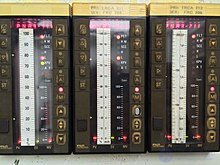
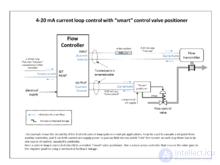
The simplest control systems are based on small discrete controllers with a single control loop each. They are usually panel-mounted, which gives a direct view of the front panel and provides the operator with means of manual intervention, either to control the process by hand or to change the control setpoints. Originally these were pneumatic controllers, some of which are still in use, but nowadays almost all of them are electronic.
Fairly complex systems can be built from networks of such controllers exchanging data over standard protocols. The network makes it possible to use local or remote SCADA operator interfaces and supports cascading and interlocking of controllers. However, as the number of control loops in a system design grows, there comes a point at which using a programmable logic controller (PLC) or a distributed control system (DCS) becomes more manageable or more economical.
A distributed control system (DCS) is a digital control system for a process or a plant in which the controller functions and the field connection modules are distributed throughout the system. As the number of control loops grows, a DCS becomes more cost-effective than discrete controllers. In addition, a DCS provides supervision and control of large production processes. In a DCS, a hierarchy of controllers is linked by communication networks, which makes it possible to centralize control rooms while retaining local monitoring and control within the plant.
A DCS makes it easy to configure production control facilities such as cascade loops and interlocks, [ further explanation needed ] and to interface simply with other computer systems such as production management. It also provides more sophisticated alarm handling, introduces automatic event logging, removes the need for physical records such as chart recorders, and allows control equipment to be networked and thereby located close to the equipment being controlled, so as to reduce the amount of cabling.
A DCS normally uses purpose-designed processors as controllers and uses either proprietary interconnections or standard protocols for communication. Input and output modules form the peripheral components of the system.
The processors receive information from the input modules, process that information and decide on the control actions to be carried out by the output modules. The input modules receive information from measuring instruments in the process (or in the field), and the output modules pass instructions to the final control elements, such as control valves.
Field inputs and outputs may be either continuously varying analog signals, for example a current loop, or two-state signals that switch either on or off, for example relay contacts or a semiconductor switch.
Distributed control systems can normally also support Foundation Fieldbus, PROFIBUS, HART, Modbus and other digital communication buses, which carry not only input and output signals but also extended messages such as fault diagnostics and status signals.
Supervisory control and data acquisition (SCADA) is a control system architecture that uses computers, networked data communication and graphical user interfaces for high-level supervisory control of processes. Operator interfaces that provide monitoring and the issuing of process commands, such as changing a controller setpoint, are handled through the SCADA supervisory computer system. The real-time control logic and the controller calculations, however, are performed by networked modules that connect to other peripheral devices, such as programmable logic controllers and discrete PID controllers, which interface with the process plant or machinery.
The SCADA concept was developed as a universal means of remote access to a set of local control modules, which may come from different manufacturers, providing access through standard automation protocols. In practice, large SCADA systems have grown to become very similar in function to distributed control systems, but using several different means of interfacing with the plant. They can control large-scale processes that may span several sites and operate over long distances. This is a widely used industrial control system architecture; there are, however, concerns that SCADA systems are vulnerable to cyberwarfare or cyberterrorist attacks.
SCADA software operates at the supervisory level, since the control actions are performed automatically by RTUs or PLCs. SCADA control functions are usually limited to intervention at the basic or supervisory level. A closed-loop control loop is driven directly by the RTU or PLC, but the SCADA software monitors the overall performance of the loop. For example, a PLC may control the flow of cooling water through part of an industrial process to a given level, but the SCADA system software will allow operators to change the setpoints for the flow. SCADA also makes it possible to display and record alarm conditions, such as loss of flow or high temperature.
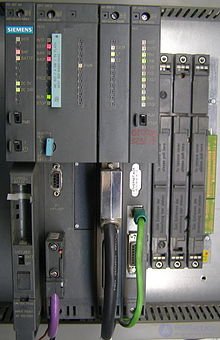
PLCs can range from small modular devices with tens of inputs and outputs (I/O) in a housing integrated with the processor, up to large rack-mounted modular devices with I/O counts running into the thousands, which are often networked with other PLC and SCADA systems. They can be designed for a variety of digital and analog input and output configurations, extended temperature ranges, immunity to electrical noise, and resistance to vibration and shock. The programs that control machine operation are usually stored in non-volatile memory with battery backup.
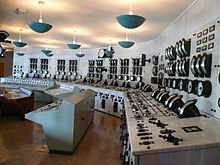

Process control in large industrial plants has passed through many stages. Initially, control was exercised from panels local to the process unit. This, however, required personnel to attend to those dispersed panels, and there was no overall view of the process. The next logical step was the transmission of all plant measurements to a permanently staffed central control room. The controllers were often located behind the control room panels, and all automatic and manual control outputs were transmitted individually back to the plant as pneumatic or electrical signals. In essence, this was the centralization of all the localized panels, with the benefits of a reduced need for personnel and a consolidated overview of the process.
However, while it provided centralized control, this arrangement was inflexible, since each control loop had its own controller hardware, so that changes to the system required the signals to be reconfigured by re-piping or re-wiring. It also required continual movement of the operator within a large control room in order to monitor the whole process. With the advent of electronic processors, high-speed electronic signaling networks and electronic graphic displays, it became possible to replace these discrete controllers with computer algorithms hosted in a network of input/output racks with their own control processors. These could be distributed around the plant and communicate with the graphic displays in the control room. The concept of distributed control was realized.
The introduction of distributed control made it possible to interconnect and reconfigure plant controls flexibly, such as cascaded loops and interlocks, as well as to interface with other production computer systems. It provided sophisticated alarm handling, introduced automatic event logging, removed the need for physical records such as chart recorders, allowed the control racks to be networked and thus located locally in the plant in order to reduce cabling runs, and provided high-level overviews of plant status and production levels. For large control systems, the general commercial name distributed control system (DCS) was coined to denote proprietary modular systems from many manufacturers that combined high-speed networks with a full suite of displays and control racks.
While the DCS was tailored to meet the needs of large continuous industrial processes, in industries where combinatorial and sequential logic was the main requirement the PLC arose out of the need to replace the racks of relays and timers used for event-driven control. The older controls were difficult to reconfigure and debug, and PLC control made it possible to network the signals to a central control area with electronic displays. PLCs were first developed for the automotive industry on vehicle production lines, where sequential logic was becoming very complex. They were soon adopted in a large number of other event-driven applications, such as printing presses and water treatment plants.
The history of SCADA has its roots in distribution applications, such as electric power, natural gas and water pipelines, where there is a need to gather remote data over potentially unreliable or intermittent links with low bandwidth and high latency. SCADA systems use open-loop control with sites that are geographically remote from one another. A SCADA system uses remote terminal units (RTUs) to send supervisory data back to a control center. Most RTU systems always had some capability to exercise local control while the master station was unavailable. Over the years, however, RTU systems have become more and more capable of exercising local control.
The boundaries between DCS and SCADA/PLC systems are blurring over time. The technical limitations that guided the designs of these various systems are no longer much of an issue. Many PLC platforms can now perform quite well as small DCSs using remote I/O, and are reliable enough that some SCADA systems actually manage closed-loop control over long distances. With the increasing speed of today's processors, many DCS products have a full line of PLC-like subsystems that were not offered when they were originally developed.
In 1993, with the release of the IEC-1131 standard, which later became IEC-61131-3, the industry moved toward greater code standardization through reusable, hardware-independent control software. For the first time, object-oriented programming (OOP) became possible in industrial control systems. This led to the development of both programmable automation controllers (PACs) and industrial PCs (IPCs). These are platforms programd in the five standardized IEC languages: ladder logic, structured text, function block, instruction list and sequential function chart. They can also be programd in modern high-level languages such as C or C++. In addition, they accept models developed in analytical tools such as MATLAB and Simulink. Unlike traditional PLCs, which use proprietary operating systems, IPCs use Windows IoT. IPCs have the advantage of powerful multi-core processors at a much lower hardware cost than traditional PLCs, and they lend themselves well to a variety of form factors, such as DIN-rail mounting, combined with a touchscreen as a panel PC, or as an embedded PC. New hardware platforms and technologies have contributed significantly to the evolution of DCS and SCADA systems, blurring the boundaries still further and changing the definitions.

Comments