
Lecture
Factor markets – these are markets in which firms acquire the resources (labor, capital, land) needed to produce goods.
Factors of production are goods of natural and artificial origin used to produce (create) the final goods and services people need. Factors of production are no less numerous and varied than final consumer goods. Nevertheless, a certain division of factors of production into land, labor, capital and entrepreneurship has taken shape. These four aggregated factors have been assigned, or imputed, different types of income received by their owners: rent, wages, interest and profit.
In the modern world, where this distribution of ownership is not so perfect, the aggregation of factors of production into these four classes has largely lost its significance. What has come to the fore is the treatment of capital as a universal source of income, and of income itself as the result of the productive use of capital. Now all sources of the services of factors of production are represented as capital (personal or national). In this sense capital is taken to include production equipment, land with its useful properties, and human abilities, qualifications and skills, as sources of a person's capacity for labor.
This broad understanding of capital as the source of every productive force does not exclude the distinction between its personal, personified elements, such as labor or entrepreneurial activity, which are not alienable from their owners, and its non-personified elements, such as land, equipment, buildings and structures. Non-personified factors of production, or elements of capital, can both be sold and leased, which is why a distinction is drawn between capital prices and rental prices, whereas the services of personified factors can only be provided on lease and have only rental prices.
It is important to distinguish between capital property, represented by a set of capital goods, and financial capital. If capital goods represent capital as a factor of production in the form of a stock, then financial capital – is capital in liquid (or flow) form, in the form of shares, obligations or simply money. The term capital as a source of every productive force also has two different meanings – real capital and capital-value. Real capital – these are the sources of income themselves, or capital goods (buildings, structures, land, etc.). Capital-value – is the market value of capital goods.
The formation of prices for factors of production does not, in principle, differ from the formation of prices for final goods. They are formed in the markets for factors of production under the influence of the forces of supply and demand for productive resources. However, two important points affecting the demand for, and accordingly the price of, resources must be noted. First, the demand for factors of production and the level of their prices are derived from consumer demand, since labor, capital and land are ultimately necessary in order to produce the consumer goods people need. Consequently, the demand for any given factor of production depends on the demand for the goods produced with the help of that factor.
Thus, the demand for labor, capital and land – is always a derived demand. The production process is a process of interaction among factors of production. Production of output requires the interaction of all factors of production, and no single one of them is capable of producing output and generating income on its own. Yet it is equally impossible to determine precisely how much of the output is owed to one factor of production or another. Indeed, in the process of production the factors continuously interact with one another, complementing and substituting for each other. This interrelationship is reflected in the production function.
The production function – is a technical relationship reflecting the connection between the aggregate inputs of factors of production and the maximum output of production. Y=f(a1,a2,…an). The significance of the production function lies in the fact that it shows the existence of alternative possibilities in which different combinations of factors of production provide the same volume of output. Since various combinations of factors of production are possible, there is, accordingly, a variant in which the optimal combination of factors can be achieved. We have already examined the theory of marginal productivity earlier, according to which the profit-maximization rule is MRP=MRC. In a market economy, factors of production are supplied by the owners of the factors – households. The supply of factors of production is determined, first, by decisions about the supply of labor services and capital services (i.e., savings) on the part of the available population, taking into account the existing stock of physical capital, and, second, by decisions affecting the size and educational level of the population and the amount of savings of physical capital.
The additional income a firm earns from selling an additional unit of output is called the marginal revenue product of the resource (MRP – from the English marginal revenue product).
In other words, MRP – is the marginal product expressed in monetary terms, which is calculated using the formula: MRP=MPxMR, where MP – is the marginal product of the resource, and MR – is the marginal revenue from selling an additional unit of output.
In a perfectly competitive market MR=P, and therefore MRP=MPxP. The cost of purchasing an additional unit of a resource – is the marginal resource cost (MRC – marginal resource costs).
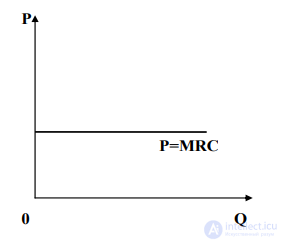
Fig. 7.2. Marginal factor costs in a perfectly competitive market
It follows that 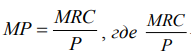 – is the real price of the resource, expressed in units of output produced.
Figure 7.3 shows that at the price P1 in the market for factors of production, the firm will obtain maximum profit by purchasing the factor of production in the amount Q1, since at point E1 equality between MRP and MRC is achieved. In the same way we can find the firm's quantity demanded at prices P2 and P3. As a result, we obtain the coordinates of points A, B and C for the demand function for the factor of production. Thus, the demand curve for the factor of production will coincide with the marginal product curve of the factor of production, and will have a negative slope (see Fig. 7.4).
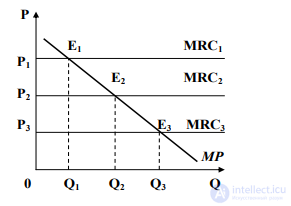
Fig. 7.3. The optimal quantity of the resource for the firm
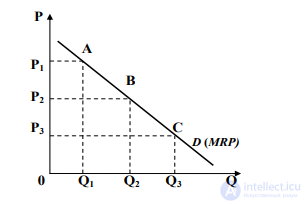
Fig. 7.4. The demand curve for a factor of production
Let us consider a competitive labor market. The demand side of the labor market consists of businesses and the government, while the supply side consists of households. In a perfectly competitive market, the number of workers hired by entrepreneurs is determined by two indicators – the real wage and the value of the marginal product of labor. As the number of workers hired increases, the marginal product decreases, since the law of diminishing returns to a factor operates. The hiring of an additional unit of labor will stop when the value of the marginal product equals the wage. The demand for labor is inversely related to the wage. With a rise in wages, an entrepreneur must, in order to maintain equilibrium, reduce the demand for labor accordingly, while a fall in wages increases the demand for labor. The situation is different for the labor supply function. It, too, depends on the wage received for productive services. As a rule, sellers in the labor market under perfect competition seek to increase supply as wages rise. That is why the labor supply curve has a different shape from the labor demand curve.
Most technological processes are characterized by diminishing productivity, that is, under unchanged conditions each successive additional unit of a resource yields a smaller additional income (Fig. 7.1). The amount of additional income a firm earns from selling an additional unit of output will depend on the marginal revenue in the market for the finished product and on the marginal product of the resource
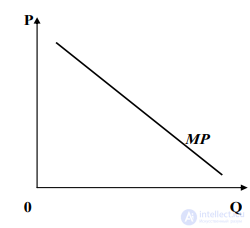
Fig. 7.1. Diminishing productivity of resources
The features of the labor supply curve stem from the operation of the substitution effect and the income effect. Since, as wages rise, each hour of time worked is paid more, each hour of leisure time is perceived by the worker as an increasingly greater loss. This benefit could be realized by converting leisure time into working time – hence the tendency to substitute additional work for leisure time. The process described above is called the substitution effect. The income effect counteracts the substitution effect and becomes noticeable once the worker reaches a certain level of well-being. At that point the attitude toward leisure time changes, and its value rises. Hence the tendency to reduce the supply of labor in favor of leisure time. The level of wages depends on the quality of labor, qualifications and professional training. Different kinds of work can be more or less attractive to a person – which means wages must provide an incentive to perform less pleasant work that is nonetheless necessary for society. Such differentiation in wages, caused by the need to compensate for non-material differences in the nature of the work itself, is called «equalizing differences».
But there are also differences in the nature of work and in earnings that do not belong to the type described above. These are differences stemming from objective qualitative characteristics – differing abilities of people, talent. Wage rates for such groups of people must be different: the incomes of especially talented specialists contain an element of rent. Differentiation in wage levels – is an objective phenomenon, since the occupational composition of the workforce is expanding and migration between groups of people in different occupations cannot be entirely unimpeded. Trade unions have a major influence on the level of wages.
1) trade unions can restrict the supply of labor. This is achieved by introducing immigration barriers and adopting laws on the maximum length of the working day;
2) trade unions press for an increase in the wage rates set by contract, helping to establish them above the equilibrium point;
3) trade unions can cause a shift in the labor demand curve, and any means that increase the demand for labor may be used for this purpose, for example, the imposition of high import customs tariffs protecting some national industry. Capital is one of the fundamental elements of a society's wealth. Capital in the broad sense of the word – is any resource created for the purpose of producing a greater quantity of economic goods. Unlike land, for example, capital has the capacity for reproduction, whereas the stock of land is a fixed quantity and cannot be quickly increased. Two basic forms of capital are distinguished: physical (material) capital and human capital. The present value of capital depends on what capital can produce in the future.
To generate income, the owner of capital must forgo current consumption in the hope of receiving a higher reward in the future. Income on capital will be generated only if the owner of the capital transfers it to an entrepreneur for productive use. In this case, capital lent for a period of time must be returned with an increment. This increment, returned to the owner of the capital, is called interest. Loan interest – is the price paid to the owner of capital for the use of his funds over a given period of time. Investments of money – that is, investment – are necessary to create and increase capital. Investment – is the process of creating or replenishing the stock of capital. The process of investment is usually understood as the inflow of new capital in a given year. A distinction is made between gross and net investment. Gross investment – is the total increase in the stock of capital.
Gross investment is compared with replacement expenditure – the process of replacing worn-out fixed capital. Net investment – is gross investment less the funds used for replacement. Capital is in demand because it is productive. The demand side for capital consists of entrepreneurs. The supply side of capital consists of households. The demand for capital – is a demand for investment funds, not simply for money. However, a distinction must be drawn between the demand for money as money and the demand for money as capital. That is, entrepreneurs demand a certain quantity of money in order to acquire productive assets with it. In economic theory, land is the term for all natural resources (fertile soil, freshwater reserves, mineral deposits). A distinguishing feature of land as an economic resource is its unlimited nature. Unlike capital, land is immobile. Its supply is limited not only at the macro level but also at the micro level. For most farms, expansion runs into certain difficulties not only in the short run but also in the long run.
The main factors affecting the supply of land are fertility and location. Therefore, the limitedness of land is understood as the limitedness of land of a certain quality located in a certain place. Fertility depends on soil quality, climate, the nature of the technology used, and the labor skills and production experience of those who work the land. Although some factors are variable, owing to the peculiarities of the labor and capital used in agriculture, they change only after a more or less significant period of time. The fixed nature of the supply of land means that the supply curve is perfectly inelastic. If the number of acres of land is plotted on the horizontal axis and the price of an acre of land on the vertical axis, the land supply curve will be a line parallel to the vertical axis. This means that the supply of land cannot be increased even under conditions of a significant rise in the price of land. In order to determine what price will actually be established, it is necessary to analyze demand, which plays the active role in this case, since it will determine the level of land prices. The demand for land is not homogeneous. It includes two main elements – agricultural and non-agricultural demand. D=Dc+Dnc. The non-agricultural demand curve also has a negative slope, since it is tied to location.
Aggregate demand for land is determined by horizontally summing the agricultural and non-agricultural demand curves. Under a developed market economy, agricultural demand for land is derived from the demand for food. It is made up of the demand for crop production, livestock production, and so on. Agricultural demand for land takes into account the level of soil fertility and the possibilities for improving it, as well as location – the degree of remoteness from centers of food and raw-material consumption. Many farms produce not just one type of agricultural product but several, so demand for land in the agricultural sector is of a complex character. Agricultural demand for land is determined by the characteristics of the demand for food products. The demand for food is inelastic. Therefore, the quantity demanded of staple food products changes little even when prices change. The inelasticity of demand for food means that even a small reduction in the usual volume of supply can cause a sharp rise in food prices. Conversely, an increase in supply can lead to a significant fall in the prices of agricultural products. The agricultural sector is highly dependent on natural conditions. Changes in weather, unfavorable precipitation, numerous pests, and natural disasters lead to sharp fluctuations in supply. To this day agricultural production remains entirely unpredictable and is not controlled to the same degree as industrial production. Agricultural demand for land is also significantly affected by such an important factor as the gradual decline in the share of food in the consumer's budget. This is a long-term trend. The decline in the share of food in the consumer's budget leads to a reduction in the share of spending on food products. That is why the share of agricultural production in national income is declining.
Unlike agricultural demand for land, non-agricultural demand has a steady upward trend. Non-agricultural demand for land also combines various kinds of demand. It consists of demand for land for housing construction, infrastructure facilities, industrial demand, and inflationary demand for land. Non-agricultural demand is indifferent to the level of land fertility. What matters most for it is the location of the land parcels. This matters in large cities. In different districts of a city the price of land is not the same and usually reaches its maximum in the city center. The main factor influencing the formation of prices for land resources is the existence of rent. Economic rent – is payment for a resource whose supply is strictly limited. Land rent is a particular case of economic rent. Thus, land rent – is payment for the use of land and other natural resources whose supply is strictly limited or inelastic. The supply of land and other natural resources acts as a stock, while rent acts as a flow.
The supply of land is perfectly inelastic, so the supply curve has a negative slope, and the demand curve will have a negative slope owing to the operation of the law of diminishing fertility. The intersection of the demand curve D0 with the supply curve determines equilibrium in the land market. The proposed model clearly shows the active role of demand. Under conditions of inelastic land supply, the price of land and absolute rent depend entirely on changes in demand. In the proposed model it was assumed that land is of the same quality and the same location. In reality, however, land differs (is differentiated) both in fertility and in location. The question of differential rent was first worked out in detail in the writings of D. Ricardo, and later K. Marx also addressed this question. Let us examine the problem using the example of the natural fertility of land. Suppose there are three plots of land: the best, the average, and the worst.
With equal investments of capital and labor on plots of equal size, different results can be obtained owing to differences in the fertility of the land. In this case, the higher productivity and corresponding yield are entirely the result of differences in the natural fertility of the land. The owner of the land will therefore seek to capture the entire differentiated additional income. Consequently, the rent on the best plot will be higher than on the average one, and the rent on the average plot will be higher than on the worst one. The worst land will bring its owner only pure economic (absolute) rent, while the average and best land will bring, alongside economic rent, differential rent as well. The fertility of land is not a constant quantity. It can be improved or worsened as a result of economic activity on the land. Artificial fertility can be added to natural fertility. Present-day land is the result of a long process of investment of capital and labor. The additional return on capital investment can raise the productivity of labor, lower it, or leave it at the same level.
If additional capital investment leads to an increase in production efficiency, this is referred to as increasing additional returns. Rent then rises as well. Thus, differential rent – is income obtained from the use of resources (with an inelastic supply) of higher productivity when these resources are ranked. Moreover, the ranking of these plots may be carried out both by location relative to the market for agricultural products and, in a city, by location depending on distance from the city center, and so on. Land rent means that the payment applies to the most important factor of production – land. Under a market economy, land acquires a commodity form: it is bought and sold. Land is in demand just like other factors of production – labor and capital. In this connection it is important to find out what determines the price of land. If a plot of land is regarded as a capital good that generates a flow of income, then the price of land depends on two quantities: the amount of land rent that can be obtained by becoming the owner of the given plot, and the rate of loan interest. A buyer of a plot of land seeks to acquire it not for the soil as such, but for the rent, the steady income, that the land provides. What is purchased is the right to receive a regular income for an indefinite period of time.
It is therefore important to take the rate of loan interest into account, since, having a given sum of money, one can either deposit it in a bank or buy a plot of land. Consequently, the price of land must be calculated as a discounted value, by analogy with the acquisition of any income-generating capital good. The formula for present discounted value is analogous to the formula used when calculating discounted value in the capital market. The only difference is that income in the form of rental payments will be paid to the owner of the land not for 1, 2, or 10 years, but for an indefinitely long period of time. Consequently, the value of t in this formula is not taken into account.
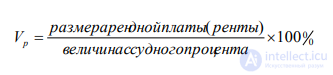
For example, if the annual income in the form of rent is $1,000, and the rate of loan interest – is 5%, then the price of land will be: 1000/5%*100%=$20,000. The definition of land price considered above is theoretical. In practice, the price of land depends on a multitude of factors affecting the demand for and supply of land plots. Thus, for example, rising land prices may be explained by growing demand for it for non-agricultural purposes. Demand for land rises sharply under conditions of inflation, which leads to an increase in the price of land.

Comments