
Lecture
There are two approaches to the problem of economic equilibrium. One of them – from the standpoint of partial equilibrium, when one, two, three, etc. markets are considered in isolation from the rest of the economy. The other – from the standpoint of general equilibrium, when the entire economic system is considered as a whole, with all its internal connections and mutual influences. The choice of analysis method in each case depends on the purpose of the study and the specific market situation.
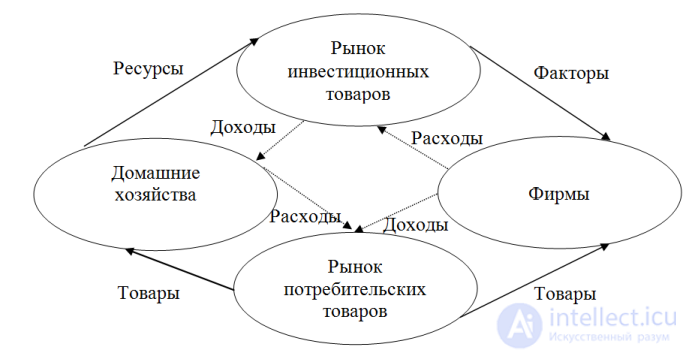
Fig. 11.2. Diagram of general equilibrium
The process of establishing market equilibrium is often considered only using partial equilibrium models. In doing so, the effect of a change in the price of one good on the prices of other goods is not taken into account, and the resulting feedback effect is ignored. In reality, all prices are in close interaction. The prices of factors of production determine the costs of the goods that underlie their prices. Given fixed costs, the prices of goods determine the volume of output, on which the volume of demand for factors of production depends, and, consequently, their prices as well. Since the same factors are used in the production of various goods, the prices of the latter turn out to be interrelated.
In addition, the incomes of the owners of factors of production depend on the prices of those factors, and consumer income, by determining consumer demand, directly affects the price of a good. The interdependence of all prices is also brought about by the fact that any good (with the exception of “basic necessity” goods) is, in terms of its consumer properties, either a substitute for or a complement to some other goods.
Because of the circumstances listed above, a more reliable picture of the process of market pricing and its role in the national economy can be obtained by building a model of general economic equilibrium, in which the mechanism of formation of a system of equilibrium prices ensuring the equality of demand and supply simultaneously in all markets is studied. The large number of factors determining the system of equilibrium prices makes general economic equilibrium models significantly more complex compared to partial equilibrium models.
As a rule, the study of a specific market can be carried out quite successfully from the standpoint of partial equilibrium, by analyzing one or several closely interrelated markets. Such an approach is simply necessary in order to understand the essence of the processes taking place in a given market, undistorted by changes in the overall economic situation. At the same time, methods of general equilibrium are the only possible ones when it comes to the effect of a general rise in prices, an increase in wages, and other processes affecting all sectors of the economy equally.
The idea of general economic equilibrium has its roots in the works of the classical economists. Thus, A. Smith put forward the idea that under conditions of free interaction between producers and consumers, it is not chaos but an economic order of individuals pursuing their own self-interest that prevails, one that leads to the establishment of a general equilibrium beneficial to all.
The fundamental possibility of achieving general equilibrium under conditions of perfect competition was first expressed in mathematical form by L. Walras (1834—1910). Expressing the model of general economic equilibrium as a system of equations, he proved that if all markets except one are in equilibrium, then the last market will also be in the same equilibrium state.
In the microeconomic interpretation, L. Walras's model of general economic equilibrium assumes that demand and supply are equalized for each type of goods, services, and productive resources; in the macroeconomic interpretation — the equalization of aggregate demand and supply. In other words, according to Walras's law, if excess demand exists in some markets, then excess supply of the same magnitude must exist in others. As a result, the total sum of excess demand and supply is always equal to zero.
The achievement of equilibrium, according to Walras, presupposes not only the existence of conditions of perfect competition, but also the constancy of all factors of demand and supply except prices. Naturally, such premises are not observed in a real economy. Therefore, general equilibrium is not a typical but a fleeting moment, characterizing the ideal state of a competitive economy. But the study of this model of a «world without friction» makes it possible to understand what ideal a competitive economy strives for, and to clarify the reasons that prevent it from being achieved under specific economic conditions. As J. Schumpeter rightly observed, L. Walras showed modern economic science the path it still follows today.
Walras's general equilibrium model is universal enough that, within certain limits, it is suitable for describing any economic system. It is therefore not surprising that non-Marxist socialist theory (O. Lange, A. Lerner, and others) used it to construct a model of market socialism.
The theory of general equilibrium has a broad range of applications. It is used to analyze the efficiency or inefficiency of an economy, for example, losses from imperfect competition. However, it plays its most important role in determining the scientific foundations of welfare economics policy.
Goods are means of satisfying human needs. This concept can be classified on various grounds, yielding a multitude of types of goods. But when goods are classified by the nature of their consumption, two types of goods are distinguished:
A private good is divisible, and each unit of it can be consumed by only one person (food, beverages). Collective goods, as a rule, are consumed jointly. In turn, collective goods can be subdivided into two types:
«Club» goods can be used jointly only up to a certain limit (the number of seats on a bus, etc.). The utility of a «club» good for each of its users depends on their number, starting from a certain value called the boundary of non-rivalry. Once the boundary of non-rivalry has been crossed, the inconveniences that consumers cause one another begin to increase. For a public good, the boundary of non-rivalry cannot be reached within a given community. Because of this, public goods also possess the property of «non-excludability in consumption».
Public goods are social services provided by the state to all residents of the country, financed from the budget and extra-budgetary funds: external and internal security, public administration, the judicial system, education, healthcare, roads, bridges, etc.
The state arose as an instrument for ordering social relations. It reflects the interests of society as a whole, of all its strata. The provision of public goods to the population is a component of the social function of the state. This function of the state received its greatest development in the 20th century. And indeed, under modern conditions it is difficult to imagine our life without such things as healthcare, public transport, or the centralized (state-level) provision of both external and internal security of the state, and hence of the citizens of that state.
The most important characteristic of public goods is the territorial boundary of their consumption. In essence, it is necessary to find the community that consumes a given good. The boundaries of this community may not coincide with the boundaries of the society that finances and produces the good. From the standpoint of differentiating the boundaries of consumption and provision, one distinguishes international, national (state-wide) and local public goods .
International public goods are either available to all inhabitants of the planet (combating air pollution and the expansion of the ozone hole, international stability, etc.), or are provided to the inhabitants of a particular region of the Earth, to several countries. Today, economists count among public goods, including international ones, standards that reduce transaction costs, including units of length and weight, language, the monetary system, the results of fundamental scientific research, and international and regional stability.
The analysis of goods so unusual for traditional economic science presents considerable difficulties. In this connection, special attention has been given to the question of who exactly provides international public goods (there is no international government; it is replaced by a whole range of intergovernmental and public organizations), and how the absence of a single government affects the volume of their provision.
As stated above, one of the characteristics of public goods is their non-excludability. But not every public good is non-excludable. There also exist so-called excludable public goods, which are simultaneously non-rival and excludable. Unlike pure public goods, access to them can easily be restricted. Consequently, despite the fact that their consumption occurs collectively, the "free-rider" problem does not arise in such cases. This means that excludable public goods can be produced, and often indeed are produced, privately, without resorting to the involvement of state institutions. A typical example of market provision of excludable public goods is the show business, which flourishes in many countries.
There are various criteria for assessing welfare. The greatest progress in solving the problem of criterial welfare assessment is associated with the name of the well-known mathematician and economist V. Pareto. It is precisely this author's work («Manual of Political Economy», 1906) that is customarily considered a watershed in the history of the subjective theory of welfare. Thus, Pareto resolutely departed from traditional practice, rejected cardinal utility, and proposed a criterion that in no way depends on any interpersonal comparisons of utility.
The essence of the Pareto criterion is that any change that harms no one and that benefits some people (by their own assessment) constitutes an improvement.
The state of the economy is called Pareto-preferred relative to another state of it if, in the first case, the welfare of at least one agent is higher, while that of all others is no lower, than in the second.
A state of the economy is called Pareto-optimal if it is impossible to change production and distribution in such a way that the welfare of one or several agents increases without decreasing the welfare of others.
The concepts of Pareto optimality and Pareto preference are related to one another. A Pareto-optimal state of the economy can be defined as one relative to which there exists no Pareto-preferred state. At the same time, any point lying on the boundary of attainable welfare levels is Pareto-incomparable with respect to any other point on that boundary. It can therefore be said that the set of Pareto-optimal states is the set of all Pareto-incomparable states remaining after all undesirable states of the economy have been excluded from consideration on the basis of the Pareto-preference criterion.
The fruitfulness of using the concepts under consideration in economic analysis is determined above all by the fact that they explicitly take into account the divergence of interests of different economic agents. What appears desirable (good) for one may turn out to be undesirable (bad) for another. Therefore, it is natural to require an organization of the economy that would bring it into a Pareto-optimal state, or at any rate a state close to it.
On the other hand, there are infinitely many Pareto-optimal states of the economy. Which of them is the best (optimum optimorum)? Economic theory does not give an unambiguous answer to this question; it belongs to the sphere of social choice (Eng. social choice).
One of the sources of social tension in any country is the difference in the levels of welfare of citizens, in the level of their wealth.
Considering the problem of inequality from various angles, several arguments can be identified in favor of reducing it and, consequently, of redistributing income in society. Speaking of inequality from the standpoint of welfare economics, one should note the possible relationship between social inequality and the magnitude of social welfare. Under certain assumptions about the social welfare function (additivity; diminishing marginal utility of income; individual utility functions being identical and making utility depend only on the individual's income), it reaches its maximum under conditions of complete equality. Therefore, any reduction in inequality caused by income redistribution leads to an increase in social welfare. Such income redistribution fully corresponds to the implementation of the maximin principle underlying J. Rawls's social welfare function. Under other assumptions (non-additivity, differences in individual utility functions), an increase in welfare may require income inequality.
The second argument in favor of redistributing income in society is macroeconomic in nature – it is the existence of a certain relationship between the level of social inequality and the rate of economic growth. In essence, this argument is somewhat contradictory and is used by both supporters and opponents of redistribution processes. On the one hand, the less intensive the redistributive processes, the stronger the incentive for individuals to engage in productive labor, which manifests itself in the possibility of their obtaining high real incomes. In this sense, inequality is the price that society is forced to pay for an efficient economic system and stable economic growth. However, too high a level of inequality, on the contrary, leads to a decline in the country's economic growth (that is, there exists a relationship between inequality and the rate of economic growth in the form of an upward-convex parabola – as inequality increases, the rate of economic growth increases only up to a certain level, beyond which, with further increases in inequality, the rate of economic growth declines). It is therefore advisable to regulate inequality by pursuing a redistribution policy and not to allow its level to become too high.
The third reason is linked, perhaps, with the most striking manifestation of inequality – the problem of poverty. Poverty exists in every country, regardless of the level of living standards it has achieved. The poor are considered to be people who do not have the ability to live in accordance with the minimum standards accepted in a given country. As a result, they are also deprived of the opportunity to fully exercise all the rights and privileges guaranteed to citizens of that country. Poor segments of the population are characterized by low levels and quality of life, high mortality (including child mortality); a significant proportion of offenses are also committed by members of the poor population. In view of these considerations, and also in accordance with the principles of social justice and generally accepted norms in a democratic state, reducing the extent of poverty is one of the goals of the state, achieved through the implementation of an income redistribution policy.
Mechanisms of income redistribution are quite diverse, and the application of one or another mechanism depends on the level of inequality existing in the country, its structure, its causes, as well as the specifics of the goals and objectives of the policy for reducing inequality.
The significance of Pareto's ideas:
For example, there is often a contradiction between economic growth and the distribution of resources, when the benefits of growth are distributed unevenly. The priorities given to some industries and regions limit the opportunities of others. In such cases, government programs must find means and methods of compensating those who end up losing out from the decisions taken

Comments