
Lecture
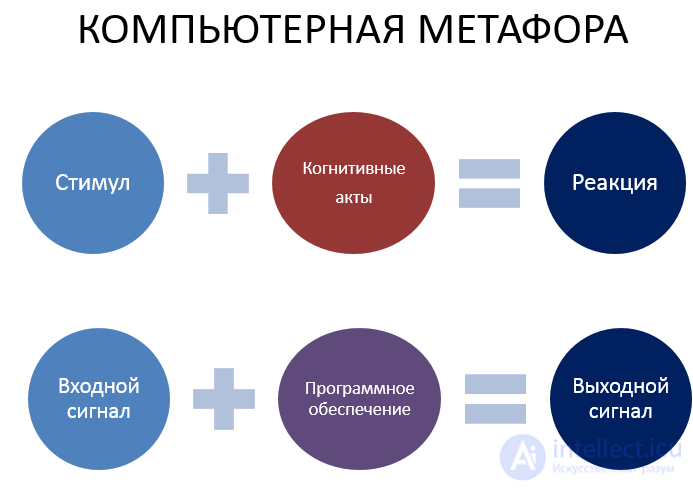
The computer metaphor – is a metaphor comparing the human brain and mind to a computer.
he computer metaphor is used to describe the processes, functions, and structure of the human mind using terms and concepts from the world of computers and information technology. Within this metaphor, the human brain is compared to a computer's central processing unit, and the mind — to the software running on that processor.
For example, we can speak of «programming» the brain when the formation of a person's thoughts and behavior is at issue, or of «computations» when a person's capacity for analyzing information and making decisions is under consideration. Terms such as "memory", "information storage", "data transmission", and so on are also frequently used to describe the processes of memory, memorization, and learning.
This metaphor helps people to understand and interpret better the complex processes taking place in the brain, by association with notions and concepts already familiar to them from the world of computers and technology. It is important to remember, however, that the human brain and a computer have substantial differences, and the computer metaphor does not fully describe every aspect of the human mind.
Cognitive psychology is the scientific study of the thinking mind; it concerns the following questions:
Cognitive psychology encompasses the entire range of mental processes — from sensation to perception, neuroscience, pattern recognition, attention, consciousness, learning, memory, concept formation, thinking, imagination, memorization, language, intelligence, emotions, and developmental processes; it concerns every possible sphere of behavior.
Cognitive psychology regards the human being as a cognizing system and interprets the processes occurring within this system as the stage-by-stage processing of information in the subject's behavior, by analogy with the processing of information in a computer. This analogy has received in the literature a special name – the computer metaphor.
At the origins of the computer metaphor, which specialists in the field of cognitive psychology adopted, lies the cognitive metaphor adopted by specialists in the field of computing technology, computer science, and artificial intelligence. They turned to the conceptions being developed in contemporary psychology about the system of a person's subjective experience, about the ways knowledge is represented and stored in that system.
In accordance with the computer metaphor, hypotheses about internal processes that are not directly observable must be such that they can be constructively interpreted in terms of the organization of computational systems. The computer metaphor does not replace psychological theory; it is intended only to help formulate theory in constructive concepts. M. N. Ragovin regards cognitive psychology as the psychology of cognition, which to one degree or another makes use of the computer metaphor. Cognition, according to U. Neisser, is a general name for all the processes by means of which sensory information is transformed, reduced, elaborated, stored, recovered, and used. It pertains to these processes even when they unfold in the absence of relevant stimulation, as is the case in imagination or hallucination. Such terms as «sensation», «perception», «imagination», «memorization», «recall», «problem solving», and «thinking» refer to hypothetical stages or aspects of the process of cognition.
The «computer metaphor» proved most fruitful in the field of research on the structural organization of memory. The area of the psychology of memory became central to the cognitive approach. In cognitive psychology, memory was compared to a library, a workshop, a storehouse, and so on. The chief analogy, however, always remained the blocks of working and external memory of a computing device. U. Neisser presents the process of information processing in memory as follows. The first stages on the path of transforming sensory information are the peripheral kinds of memory: «iconic» for vision and «echoic» for hearing. Then the information passes into verbal short-term memory, where it is retained by means of processes of covert or overt rehearsal, after which its long-term memorization becomes possible. Two phases of cognitive processes are distinguished. The first phase – the phase of preattention – is associated with relatively coarse and parallel processing of information. The second – the phase of focal attention – has the character of conscious, attentive, detailed, and sequential processing. Here verbal encoding of information becomes possible, serving as the precondition for its retention in memory and subsequent reconstruction.
Research on memory is a great victory for cognitive psychology, for it is precisely thanks to it that we have been able to learn far more about memory in the last few years than in all of previous history.
The basic ideology of cognitive science consists in the claim that the mind functions as a digital computer, mental states being computational states and mental processes computational processes. Where did this metaphor come from? In the past the brain was compared to many things, for example to a telephone switchboard, a telegraph system, and so on. The arguments in favor of the computer metaphor are numerous. They rest on conceptions of intelligent behavior, on the likening of the mind to an information-processing system, on assumptions about the capacity to perform computations, on a disregard for common sense, on a belief in internal theories of human behavior, and on the «discoveries» of the formal rules of language. All these assumptions and convictions run into serious problems, as is convincingly argued in this chapter. For example, the notion of a «rule» is likewise problematic. It cannot be applied to people in the same way as to machines. A computational «rule» is not a rule at all; it is a formal procedure that the machine goes through. The computational metaphor is also an easy solution to the mind-body problem. This solution, however, admits the worst assumption of dualism. It supposes that the mind is something formal, abstract, and immaterial, rather than part of the ordinary physico-biological world in which we live. If, however, one supposes that mental processes are part of biological natural history, then there is no mind-body problem. The computational (computer) metaphor is also an easy solution to the mind-body problem. This solution, however, admits the worst assumption of dualism. It supposes that the mind is something formal, abstract, and immaterial, rather than part of the ordinary physico-biological world in which we live. If, however, one supposes that mental processes are part of biological natural history, then there is no mind-body problem. The computational metaphor is also an easy solution to the mind-body problem. This solution, however, admits the worst assumption of dualism. It supposes that the mind is something formal, abstract, and immaterial, rather than part of the ordinary physico-biological world in which we live. If, however, one supposes that mental processes are part of biological natural history, then the mind-body problem does not exist.
Attempts to describe the workings of the brain and its mental manifestations by means of various technical or physical analogies were characteristic of practically all psychological conceptions that sought to find the mechanisms of mental activity. In each historical period, moreover, researchers looked for the most complex analogue available. Thus, Pavlov's views were directly connected with the notion of the brain's working as a telephone switchboard. S. Freud's energetics implied an analogy with electrical processes. A. A. Ukhtomsky held that the irradiation of excitation in the cerebral cortex is similar to the propagation of radio waves, which are received wherever a receiver happens to be switched on at the moment. The Gestalt psychologists saw the unity of the phenomenal field of consciousness with real physical fields such as the electromagnetic one. P.I. Zinchenko was already establishing the dependence of memory capacity on the amount of information per symbol. It is therefore not surprising that in cognitive psychology the analogy between the brain's work and the design and operation of a computer was adopted.
What does this tell us? That in each historical period psychology sought the most modern means of investigating the processes taking place in the human brain. The development of the engineering sciences, as it were, "nudged" psychologists toward contemporary comparisons and analogies. It is clear that such a comparison is used as nothing more than a metaphor, and by no means as an identification.
The understanding that a human being is not a passive communication channel, but rather actively «processes information», constructing «internal models or representations» of the environment (of stimulation), marked the transition from the information-theoretic approach in the narrow sense of the word to cognitive psychology. Cognitive processes came to be interpreted by analogy with the processes of information processing in a complex computing device.
Space and time, matter and energy were the basic meta-scientific categories for twentieth-century scientists. Psychologists regarded the human being as a system that reflects the spatiotemporal and energetic characteristics of reality in subjective form (sensations, perceptual images, mental representations, and so on). In the middle of the twentieth century the catalogue of general scientific categories was enriched by the concept of «information», and this word already carried a quite definite, mathematically measurable content. A decisive role was played by the work of C.E. Shannon, who proposed the famous formula for evaluating the measure of information contained in a message. Information theory as a branch of applied mathematics was created in response to practical needs: supporting work in the field of radio communication, combating noise in communication systems, designing systems for receiving, encrypting and decrypting messages, and so forth.
A radical turning point in the approach to information came with the appearance of the computer, which became the first technical system that receives, stores, transforms and applies information in order to solve tasks set by people. In computers a distinction is drawn between hardware (the «iron», or equipment component) and software. Following the lead of specialists in the field of computer science, the human being came to be regarded as a system for receiving and processing information. The computer is used to model human thinking and to create artificial intelligence systems that genuinely surpass human beings on many characteristics determining the speed and accuracy of information processing, storage capacity, and so on.
In addition, the operation of a computer is described in terms of mental processes: a computer has memory and sensory inputs, it «makes decisions» and «solves a task», it «controls» and «carries out information analysis». Thus arises the computer metaphor — the analogy between «the knowing human being» and a technical device that dominated the end of the twentieth century and is used for the theoretical modelling of the human psyche. A new version of the computer appears — computers «evolve», engineers use «languages» to create computer programs.
The analogy: both psychology and technology are enriched.
At first the computer metaphor was used to describe and explain the work of the central nervous system in receiving and processing «information». The brain was regarded as an analogue of computer «hardware», possessing an input subsystem — the periphery of the analyzers (eyes, ears, etc.); a central link (a processor with built-in programs) — thinking and memory; and an output subsystem — the effectors (the motor apparatus and speech). The system operated on the principle of negative feedback: solving the task interrupts the activity.
It was precisely the feedback mechanism — the reception of information about the result of an action by the «input» subsystem, as well as information about the action itself — that psychologists made use of. In Soviet psychology a decisive role was played by the influence of the ideas of P.K. Anokhin [1978] and N.A. Bernstein [1947], who in their works pointed to the role of the feedback mechanism in the regulation of actions and movements. On the whole the psyche was regarded as a system for controlling actions and activity on the basis of the reflection of reality, the processing of the products of that reflection («information»), and the feedback mechanism. From this arose the tradition of regarding the psyche as a system of sequential information processing consisting of several separate, discrete components («blocks»). In the Russian psychological tradition the structural-block description originates in the work of A.R. Luria, who distinguished three blocks in the central nervous system: the first is responsible for the planning and regulation of activity, the second for cognition, and the third for activation.
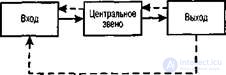
Fig. 1.1. Linear model with feedback.
Let me note here that the «cognitive» approach in Russian psychology of cognition arose practically simultaneously with the appearance of analogous research in the USA, thanks to the efforts of B.G. Ananiev, L.M. Wekker, V.P. Zinchenko, A.N. Leontiev, B.F.
Fig. 1.1. Linear model with feedback. Lomov, V.N. Pushkin and many other researchers.
Three approaches to the «block» description of the psyche as an information-processing system may be provisionally distinguished.
The first approach—the linear one (Fig. 1.1), the most traditional, assumes that the psyche is a system of blocks that successively receive and process information, with the «product» of the preceding level serving as the «raw material» for the subsequent level. This approach is presented most explicitly in the work of N. Lindsay and D. Norman [1973]. In particular, in the authors' view the process of perception passes through two stages: at the first stage an amorphous image is created on the basis of the extraction of properties from the physical environment by a system of detectors; at the second, the image is recognized by assigning it to one or another category. The information-processing system operates on the principle of encoding, recoding and decoding information. Moreover, at each stage of processing two streams of information interact: one running from the «inputs» to the centre and one running from the centre to the «inputs». From the standpoint of this approach the following questions remain unclear.
The second approach assumes the inclusion into the system of linear-sequential information processing of a superstructure — a controlling link. The computer analogue of this block is the control processor. It is precisely this link that carries out the regulation of the information-processing procedure and the making of a decision about action on the basis of the available alternatives. N. Lindsay and D. Norman proposed the «pandemonium» model describing the controlling system.
The inclusion of a «controlling link» made it necessary to consider, within the framework of the psychology of cognitive processes, the mechanisms of the formation of alternatives, decision making, decision criteria, the forecasting and planning of actions, and so on. In psychophysics, the most mathematized area of psychology by the mid-1960s, a two-level schematic model was proposed by Yu.M. Zabrodin [1977]. In this model the decision block included two subblocks: the formation of criteria and the rules of decision making.
The problem of the subject of cognition, or the «homunculus», did not find so obvious a solution. More precisely, two solutions are possible: denial of the problem itself — a person sees in such a way that he actually sees (the ecological approach); and the introduction of the notion of an active system — a person testing hypotheses about the world (the model of
Popper). We shall consider these approaches below.
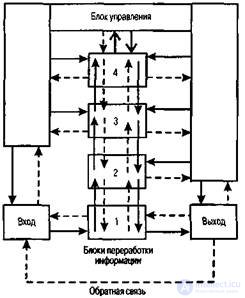
Fig. 1.2. Structural-level model with feedback.
The third approach should be designated as structural-level (Fig. 1.2). It is most often used in Russian psychology. The psyche is regarded as a system of structures that took shape at various stages of development.
To each subsequent stage there corresponds a new level, and to each level a new structure. The subsequent level of the psyche regulates
the activity of the preceding one, while the preceding one supplies content for
the subsequent one. The structure of the highest level of mental regulation integrates within itself the structures of the lower levels, thereby ensuring the systemic (holistic) regulation of behaviour. Ya.A. Ponomarev [1973] generalized this model, advancing the principle of «stages — levels — structures» (SLS). This approach rests on the views of N.A. Bernstein [2000]. In the field of cognitive psychology a modification of it was used by B.M. Velichkovsky.
Over time, however, psychologists came to realize that by means of «block» schemes they were describing not the structure of the psyche but the structure of the central nervous system of humans and animals. The absence of rigid localization of mental functions, the processual character of the psyche, the undividedness and multidimensionality of mental reality, its wholeness, the activity of the cognitive process — all this led researchers to attempt to use as a metaphor describing the process of information processing not the computer's «hardware» but its software. The beginning of this approach can be found in the works of G. Miller [1965] and U. Neisser [1981], who are, properly speaking, the founders of cognitive psychology as a scientific school.
The information metaphor

Comments