
Lecture
The emergence of a new technical product in any industry is a complex and sometimes
contradictory process. This is especially true of electronic equipment,
the operation of which is based on an extremely wide range of physical,
chemical and other phenomena. New equipment, embodying the results of the latest scientific and technical achievements, promotes the development of society's productive forces and
the satisfaction of its demand for products of higher quality than previously known
prototypes or analogues.
The most important issue for successful action in the field of producing
new equipment is forecasting. Determining the main directions of future
research and development, in order to concentrate efforts on them, is carried out in the
course of research work (R&D study) and development work
(OKR).
To develop and organize the production of a new product means
turning knowledge, a new idea, into a finished product. This process requires
an expenditure of time and large one-time financial investments. The size of these
costs depends on the level of novelty of the product and the frequency of model changes.
The costs of manufacturing a new product in the first year of its production can
exceed the costs of subsequent years several times over. This reduces the level of
efficiency in producing new equipment, and sometimes leads to major
losses
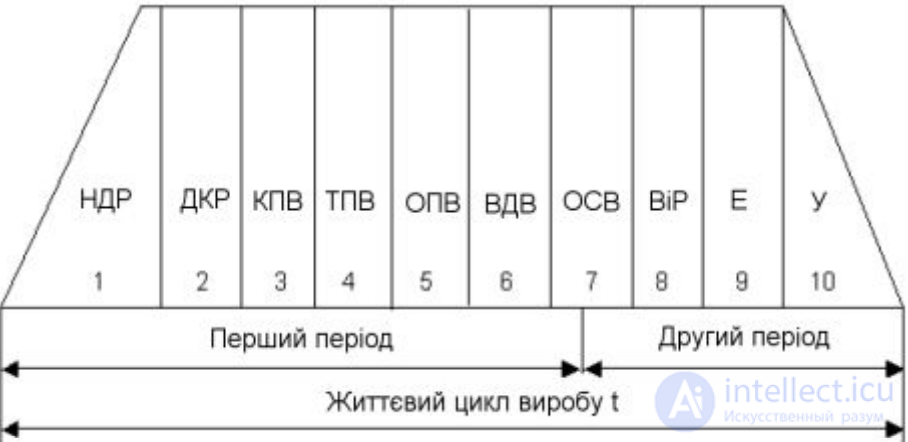
Fig. 1.1. Structure of the product life cycle.
The rapid pace of technical progress requires such a period for changing
product models, i.e., such a product life cycle, in which the total
costs of developing and introducing new models, as well as the losses from
obsolescence, would be minimal, while the level of economic efficiency would
be maximal.
In the life cycle of a product (Fig. 1.1), two characteristic
periods can be distinguished: the first is the time during which the development of the new
product takes place, and the second is the time during which the new product is put into
production, manufactured and sold, up to the complete cessation of production and disposal.
The first period of the product life cycle includes the full complex of
work involved in creating new equipment:
1 – research work (R&D study). In the course of this stage, new ideas arise and undergo comprehensive
testing, sometimes taking the form of discoveries or inventions.
The theoretical premises for solving the scientific problem are verified in the course
of experimental work;
2 – development work (OKR). This is a transitional stage from scientific research to production. At this
stage, the ideas arising in the course of the R&D study are practically embodied in technical
documentation and prototypes;
3 – design preparation of production (DPP): this involves
designing the new equipment; drawings and technical
documentation are developed;
4 – technological preparation of production (TPP). Here, new
technological processes are developed and tested, and process
tooling for producing the new equipment is designed and manufactured;
5 – organizational preparation of production (OPP). At this stage,
methods are chosen and the processes of switching over to the production of the new product are modeled,
calculations are made of the requirements for materials and components,
and calendar-planning standards are established (the duration of the production cycle
for manufacturing the new product, batch sizes, the interval between batches
of products, etc.);
6 – pilot-production tryout (PPT) of the new
product's design. Production of the prototype is mastered, and
new technological processes are debugged, and the "viability" of the new
product is checked and evaluated.
The second period of the product life cycle includes a seventh stage -
putting it into series production (SP). At this stage, the conditions are created
for the industrial production of the new product. Practice shows that
sometimes, even at this stage, design changes arise, along with
changes in technological processes that are either caused by them or independent of them. Therefore, at the stage
of production start-up, it becomes necessary to determine the rational degree
of developing the technological documentation, and the appropriate level of equipping
production with special tooling and equipment.
The start-up stage is the link connecting to the phase of production and sale of the
product (VIR).
Strict observance of the technological process is one of the most important
organizational conditions for increasing the efficiency of launching a new product,
including high product quality and high technical-and-economic indicators
of production.
The final stage of the life cycle is the operation of the new product
(E) – the period during which this product is used in accordance with its
purpose and produces an economic effect, up to the moment of disposal (U).
It would be advantageous for the enterprise to extend the second period of the life
cycle of the product to the maximum term, since at that time it no longer bears
additional costs for developing and introducing the new product. However, this
period has its limit: from the moment of its appearance, the new product provides
a socio-economic effect only up to a certain time, after which it
becomes obsolete, and its further production and use cause damage
to the enterprise.
State standards define the procedure for developing and putting into
production products for technical purposes, including electronic equipment:
- technical proposal;
- preliminary design (PD);
– detailed design.
The basis for the development is the technical specification (TS), the content of which
is established by GOST. The technical specification sets out the purpose and field of application
of the electronic equipment being developed, the technical, structural, operational and economic
requirements for the equipment, the conditions for its storage and transportation, the requirements for
reliability, and the rules for conducting tests and accepting samples in
production.
The stages of developing the technical specification, technical proposals and the preliminary design are, as a
rule, included in the R&D study, while the stages of developing the detailed design and the technological
preparation of production are included in the development work (OKR).
At the technical-proposal stage, an analysis is carried out of existing technical
solutions, patent research, the working-out of possible options for creating
the equipment, the selection of the optimal solution, the mock-up of individual units of the equipment,
and the formulation of requirements for the subsequent stages of development.
At the preliminary-design stage, the design and
technological working-out of the chosen implementation option for the equipment is carried out; a
working model or a series of the equipment is prepared; testing is conducted on them to an extent
sufficient to confirm the technical and operational parameters set out in the technical specification;
the development of the full set of the necessary design
documentation is organized, to which the letter "E" is assigned;
the main questions of manufacturing technology, adjustment and
testing of the elements, units, devices and the equipment as a whole are worked out.
At the detailed-design stage, final decisions are made on the
structural design of the equipment and its constituent units, a full
set of design and technological documentation is developed, to which
the letter "T" is assigned, a pilot series of the equipment is produced,
and the equipment is tested for compliance with the technical and
operational requirements set out in the technical specification. The results of the detailed design serve as the basis
for developing the full set of working design documentation,
to which the letter "O" is assigned.
Subsequently, the technological preparation of production is carried out,
along with the release of the pilot batch and the organization of series (mass) production of the equipment.
With the development of the INTERNET network, broad opportunities for the creators of the equipment
are opened up by CALS–technology (Computer Aided of Logistics Support) – an industrial
strategy aimed at the efficient creation, exchange, management and
use of databases that support the life cycle of the product
being created.
Electronic equipment being developed must meet tactical-technical,
structural-technological, operational, reliability
and economic requirements. These requirements apply to the electrical hardware, radio components, printed circuit boards, other structural elements of the equipment, and the methods of assembling units and modules. Optimally satisfying these
requirements is a complex engineering task. In addition, these requirements must
comply with the recommendations of the relevant state standards. The
structural-technological requirements include: ensuring a
functional-unit principle for building the structure of the equipment,
manufacturability, a minimal range of component parts,
maintainability, protection against unauthorized access, convenient access
to units and elements; and ensuring safe operation for the operator.
The concept of manufacturability is closely linked to the concept of the economy
of the equipment's design. As a rule, the most manufacturable designs are also the most
economical under production conditions. The manufacturability of an equipment's design is
largely determined by the rational choice of its structure, which must
be developed with allowance for the autonomous, separate manufacture and adjustment of its
main elements, units and blocks. The design of the equipment is more manufacturable
if fewer adjustment and fine-tuning operations need to be performed after
its final assembly. In this respect, the ideal manufacturability is that of equipment which,
once assembled from separate units, performs its specified functions immediately after
the power is switched on.
A manufacturable design should make maximum use of
unified, standardized and normalized parts and materials. The need to
develop new materials with improved properties or new
technological processes must be technically and economically justified. In a
manufacturable design, maximum use is made of
interchangeability, adjustability, testability, and instrumental
accessibility of units and parts.
The reliability requirements include specific quantitative characteristics:
the probability of failure-free operation over a given period of time, the mean time
to restore operability, and others.
The economic requirements include the minimum possible expenditure of time,
labor and material resources on developing, manufacturing and operating the equipment;
the minimum cost of the equipment after it is put into production; and the minimum costs
for operation, maintenance and scheduled repairs.
Reducing the costs of developing, manufacturing and putting into production
the equipment, ensuring the compatibility and continuity of hardware solutions, while
simultaneously improving quality, increasing reliability and service life,
is made possible by using the modular design principle based on the
structural and functional interchangeability of the constituent parts of the
design – the modules.
The modular design principle involves breaking down
(dividing, dismembering) the electronic circuit of the equipment into functionally and
structurally complete sub-circuits (parts) that perform specific
functions and are equipped with elements for switching and mechanical connection to
similar modules and to modules of a lower level in the product. Modules of the same
level are combined with one another into the equipment on some structural base
(a supporting structure).
The design of modern electronic equipment is a hierarchy of modules, each degree of which
is called a level of modularity. When choosing the number of levels of modularity,
the modules are typified, that is, their variety is reduced and
such designs are established as would perform the broadest functions in
products of a given functional purpose. The functional
diversity of products is achieved by using different numbers of levels
of modularity, with the possibility of giving structural form to the highest, and consequently the most complex, module in the shape of a finished product.
Four main levels of modularity are distinguished:
A zero-level module is an electronic component. Depending on
how the equipment is implemented, the zero-level module is governed by
electrical hardware, radio components, and integrated circuits (ICs).
A first-level module is a printed circuit board (PCB) fitted with
zero-level modules and an electrical connector,
by means of which the module is connected to other modules. In other words,
a first-level module is called an assembly unit, which
includes original parts and purchased items (electrical hardware,
radio components, mounting hardware). PCB-based assembly units are
the basis for the widest range of products classified as electronic equipment.
A second-level module is a unit whose main structural element
is a panel with connectors mating with first-level modules.
Inter-unit interconnection is performed by connectors located along
the periphery of the unit panel. First-level modules are arranged in one
or several rows.
A third-level module is a rack in which units are installed.
The modular design principle also implies several levels of
interconnection.
In the design of simple equipment, the higher levels of modularity are absent.
Full modularity is used only in complex equipment.
Faster development and production of equipment, an increase in its
production runs, and reduced cost can be achieved through unification, normalization, and
standardization of the basic parameters and standard sizes of modules.
Standardization of modules and their supporting structures is based on
typical functions common to many electronic systems. To
apply the modular design principle,
departmental norms and government standards have been developed, within established time frames,
defining systems of standard designs for modular systems.
A structural system should represent a multilevel family
of modules with an optimal set composition that provides functional
completeness when building equipment for a given purpose. All modules
of the system must be mutually compatible in structural, electrical, and
operational parameters.
The base principle of design is one in which partial
structural solutions are implemented on the basis of standard module structures
or module structural systems (base structures) approved for use in equipment of a given class, purpose, and installation
sites.
When developing base structures, account must be taken of the features
of current, and more importantly, future designs. In doing so, individual
structural solutions are generalized, while the basic properties and parameters
are built into structures that are standardized, supplied, and
recommended for wide application.
Base structures should not be fully finalized in design; provision must be made for the possibility of their (non-fundamental) modification
in character, in order to create modifications of equipment designs. A hierarchical
construction of base structures with a flexible structure and a number of levels not
exceeding four is quite sufficient for developing electronic equipment of any
complexity.
In standardization, structural parameters are combined into parametric series, characterized by a set of numerical values based on
adopted gradations and ranges. If the geometric dimensions of the structure are used as
the series' parameters, then one speaks not of parametric but of
dimensional series. Both types of series are widely used.
From a standardization standpoint, the optimal series are those that
provide the greatest economic benefit from their use and
anticipatory standardization, that is, a reduction in the volume of work associated
with reviewing standards and updating them (anticipatory standardization
extends the service life of standards).
Manufacturability is the set of properties of a design that result
in optimal expenditure of labor, resources, materials, and time during
manufacture, operation, and repair of the product. The main indicators
of manufacturability are defined by ESTPP standards and are divided into design and process indicators. A distinction is made between
the manufacturability of the entire product, the manufacturability of the design
of individual parts and assembly units, and the manufacturability
of the design with respect to the manufacturing process. The qualitative characteristics
of design manufacturability include interchangeability,
adjustability, testability, and tool
accessibility of the design.
ESTPP standards require mandatory manufacturability review of the design at every stage of its development, aimed at
increasing labor productivity, reducing costs, and shortening the time spent on
design, process preparation of production, manufacture, and technical
servicing and repair of the product while ensuring the required product quality.
Let us note some characteristic indicators of manufacturability:
unification coefficient (a design indicator)
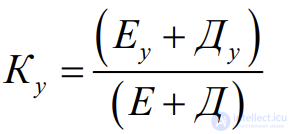
where Eu and Du – the number of unified assembly units and parts, respectively; E and D
– the total number of assembly units and parts in the product;
typical-process-applicability coefficient (a process indicator)
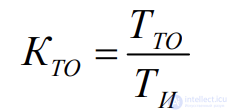
where Tto – the labor input of typical technological operations in manufacturing
the product, and Ti – the total labor input for manufacturing the product;
automation and mechanization coefficient (a process indicator)
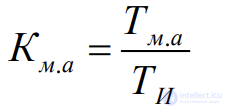
where Tma – the labor input of operations performed on automatic or
automated equipment.
The manufacturability of a product's design is directly related to the economic indicators of the manufacturing process, and quantitative
manufacturability assessments are used when comparing various
process-design options for manufacturing the product in order to optimize the process.
The structural characteristics of a new product, including its component parts, depend on the operating conditions of the equipment. The intensity of
climatic, mechanical, and radiation factors determines the degree of protection
required for electronic equipment, which affects its size-and-weight indicators, economic indicators, and
reliability indicators. By area of use, electronic equipment can be divided into
three large groups: stationary, transportable, and portable.
Stationary electronic equipment – this is equipment operated in various indoor spaces and
outdoors (electronic equipment of groups 1 and 2). The operating and
transport conditions of such equipment are characterized by a very
wide range of operating (-50 ÷ 50 °C) and limiting (-50 ÷ 65
°C) temperatures, humidity of up to 90–98%, vibration up to 120 Hz at
4–6 g, the presence of repeated (up to 5 g) and single (up to 75 g)
shocks, exposure to rain of up to 3 mm/min, and salt fog with
a droplet dispersion of up to 10 µm and a water content of up to 3 g/m3.
Transportable electronic equipment – this is equipment installed and operated
on land, water, and air transport, and on spacecraft
(electronic equipment of groups 3, 4, 5, and 8). The operating specifics of this type of
equipment result in increased exposure to mechanical factors. Each
type of transport has its own vibration characteristics. To
prevent damage to such electronic equipment, it is required that the equipment as a whole and
its individual parts have natural oscillation frequencies outside the range
of the vibration frequencies of the vehicle on which it
is operated or transported.
Electronic equipment installed on automotive transport may be subjected to
vibration with a frequency of up to 200 Hz and impacts caused by rough roads. When
railway transport is moving, sudden jolts are possible as a result of changes
in speed (during shunting, impacts with accelerations of up to 40g occur).
Wheel impacts at rail joints cause vibration with a frequency of up to 400 Hz at
an acceleration of up to 2g. The design of electronic equipment is subjected to particularly severe effects when it
is operated on tracked vehicles (tanks, carriers,
self-propelled artillery, tractors). Here, owing to the "clatter" of the tracks, the frequency
of vibration can reach 7000 Hz with an amplitude of ±0.025 mm. Shocks
caused by rough roads, gun recoil on firing, or a projectile
hitting the hull can be of great force and accompanied by vibration.
In addition, there is constant exposure to acoustic noise at a level of up to 150 dB.
Airborne electronic equipment is installed on aircraft, helicopters, and missiles of various
classes, guided projectiles, artificial Earth satellites (AES), and
spacecraft. In aircraft, the electronic equipment
is usually located in the fuselage. In this case, it is
affected by vibration loads with a frequency of up to 500 Hz and an
amplitude of up to 10 mm, and by acoustic noise reaching a level of 150
dB at frequencies of 50–10000 Hz.
Equipment installed aboard missiles of various classes and
purposes is in the most unfavorable conditions in terms of exposure to
vibration, shocks, and accelerations. The vibrations of missiles in flight are of a very complex
nature, determined by the combined influence of the operating rocket engine and
aerodynamic effects. The nature of the vibration is usually random, and it therefore
covers a wide range of frequencies. The vibration frequency is 2500 Hz at
accelerations of up to 20g. The nature of such vibration is sinusoidal. At the moment
of missile launch and during its flight, the onboard equipment is affected by acoustic
noise reaching a level of 150 dB. The acoustic noise of small missiles is
at its maximum at the moment of launch.
Portable electronic equipment (groups 6 and 7) includes microcalculators, portable
computers, and specialized calculators used by
geologists, surveyors, builders, soldiers, and
army officers, and so on. This category also includes portable
radio-receiving and radio-transmitting equipment, small medical
equipment, and so on. It is characterized by small dimensions, low
power consumption, high reliability, and relatively low
cost.

Comments