
Lecture
There are several technologies for transmitting electricity through the air, including by laser, sound wave, and other interesting methods. But so far only one of them can be called commercial — the use of electromagnetic induction, by means of which Faraday and Tesla already tried to transmit energy. The most common inductive charging standard today has been developed for about seven years by the Wireless Power Consortium. This standard is called by the Chinese word Qi — pronounced «chee» in English or «tsi» in the Russian translation tradition. It is officially supported by practically all mobile phone manufacturers, starting with Samsung, Sony, and Lumia phones, down to small companies whose names mean nothing to anyone. Charging stations compliant with this standard are promised to be installed within a year at some American airports, British McDonald's and Starbucks, and this, as becomes clear, is only the beginning of the list. New IKEA furniture and lamps with built-in charging panels can also be added to this list — they will start selling in Europe this month. Even Apple, which, as always, stands a little apart and does not officially support Qi, appears to still adhere to WPC principles in its watch.
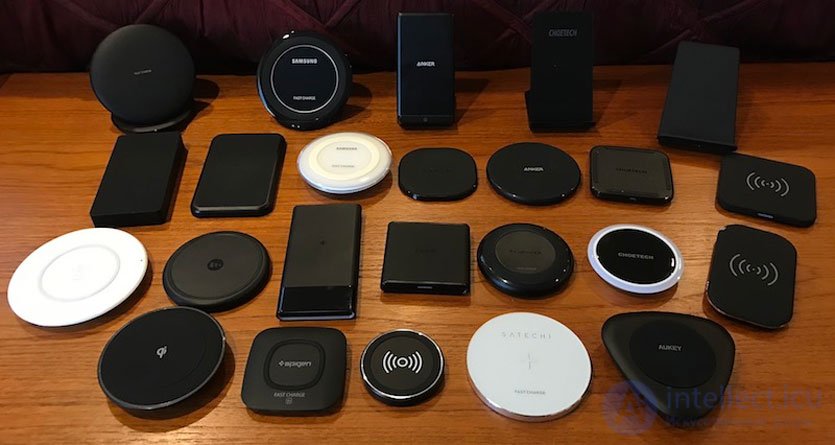
Wireless charging using WPC technology assumes the presence of induction coils in both the phone and the charger: one acts as a receiver, the other — as a transmitter of electricity. When the charger is connected to the mains, a voltage arises in it, and a magnetic field arises around its transmitter coil. When a phone enters this field, the electromagnetic waves in its receiver coil are converted into electricity — the phone's battery starts charging. The Qi standard implies that for full energy transfer the distance between the devices must not exceed 3–5 centimeters. That is, they must practically touch each other. That is why most current inductive chargers are small panels on which the phone needs to be placed. At the same time their efficiency is about 75–80% — slightly less than that of wired chargers.
If we talk about the average user, inductive charging has only one significant advantage. It frees you from having to connect a cable to the phone (player, camera, watch, and other small devices). And although it is called wireless, it does not actually free you from the wire, since it is needed to connect the charging panel to the outlet. These panels have other disadvantages: they are somewhat more expensive and on average charge one and a half to two times slower.
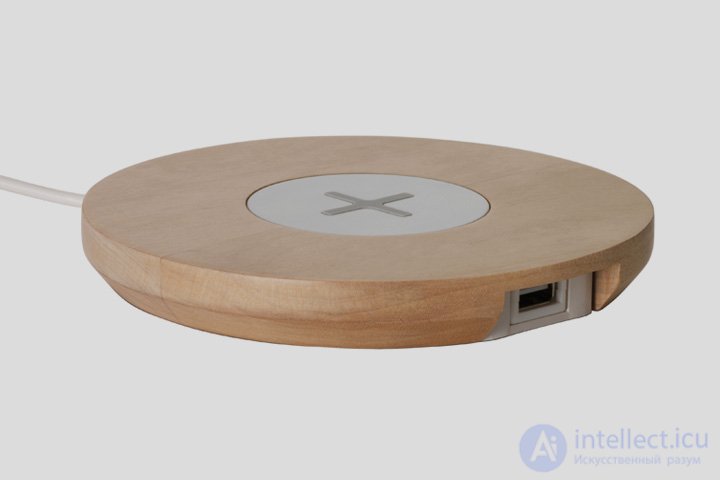
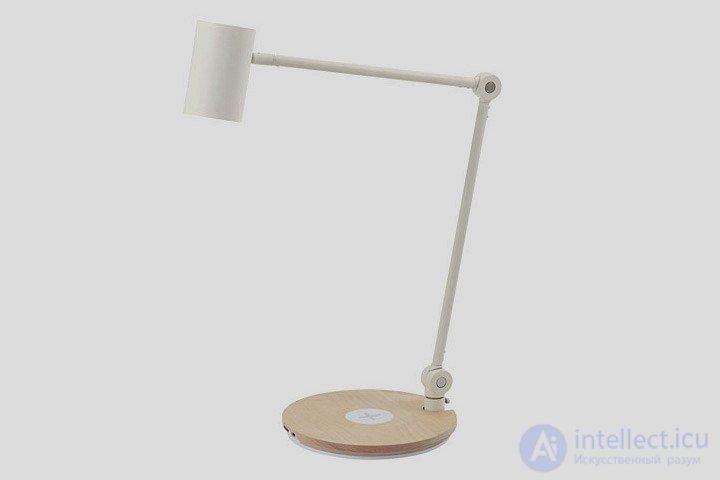
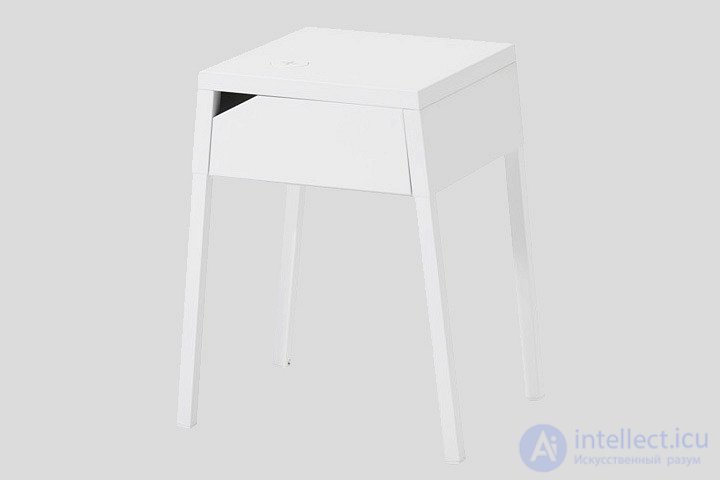
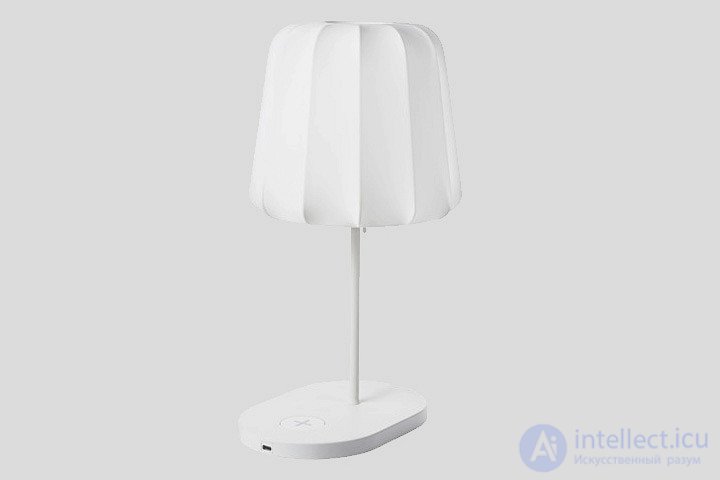
This is probably the most popular question asked of the Wireless Power Consortium, and mobile manufacturers, of course, answer that it is safe. Manufacturers of electric razors and electric toothbrushes try to convince everyone of the same thing — the same inductive principle has long been used for charging them. But it is worth keeping in mind that the electromagnetic waves through which wireless panels transmit energy belong to the spectrum of so-called non-ionizing (and therefore safe, unlike, say, X-ray) radiation. Electromagnetic waves of the same spectrum are used to transmit signals from radio stations, cell towers, and Wi-Fi routers. For example, a mobile phone signal is transmitted constantly and over much greater distances, but a small power (within 1–2 watts) is enough for its receiver to work. The maximum power of Qi-standard wireless panels is significantly higher — 5 watts. But they (for now) operate at extremely short distances, and moreover automatically turn off (meaning — stop emitting waves) once the device has charged.
In any case, no one has yet presented convincing evidence that Qi-standard wireless charging (like a cellular signal) could pose a health hazard. However, the Wireless Power Consortium is also working on more powerful wireless chargers (up to 120 watts) capable of charging laptops. But these devices are still being approached with caution, and it seems no one is releasing them yet.
You can find this out by searching on the WPC website. It is worth remembering that to carry out wireless charging you will need two things: an energy receiver and a transmitter. Some phones (and wearable devices) already have built-in charging modules, which are also receivers; for them you only need to pick a wireless panel, which is the transmitter. Other phones — all iPhones, for example — do not yet support this technology. For them, in addition to the panel, you will also need to buy a special case or attachment with a charging module, which connects to the smartphone through the usual charging port.
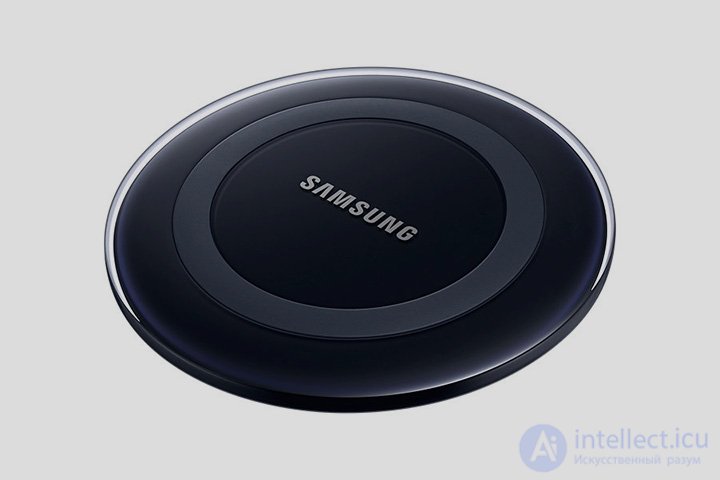
The latest invention from «Samsung», which is praised for its ability to charge a phone regardless of its position on the charging pad. The charger supports not only the WPC standard, but also the technologies of the competing and less well-known organizations AW4P and PMA. This means that, most likely, it won't matter which phone you have. If it has a wireless charging module, everything should work. Also, in the manufacturer's promotional video, they promise that this Wireless Charging Pad can charge a Galaxy's battery by 60% while you sing a song (but this, one must assume, is just advertising).
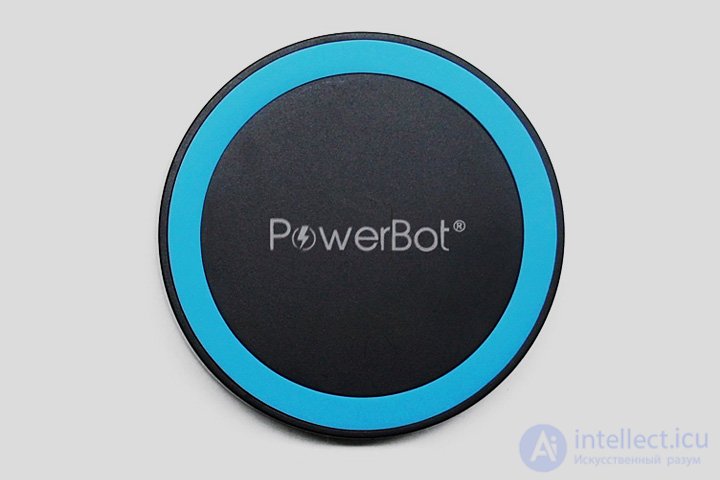
A bestseller and, judging by the reviews, the best wireless pad on «Amazon». Compatible with Qi-standard receivers. It comes with a micro-USB cable (meaning it can be connected to a laptop or a power bank). A fairly reliable and inexpensive model.
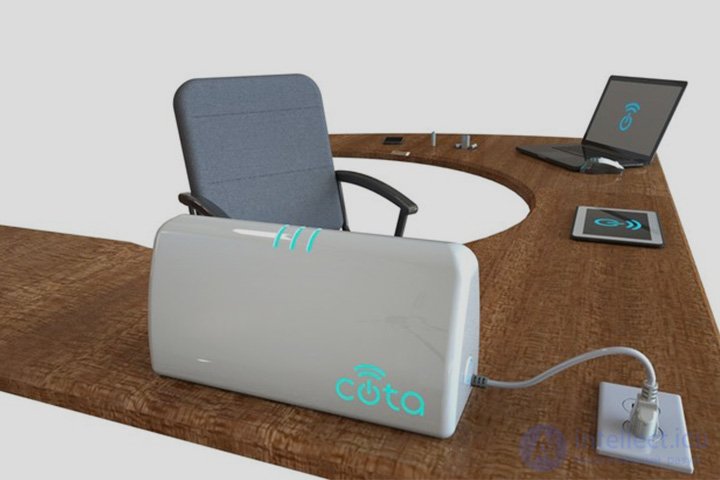
Perhaps the most exciting promise of recent years — a bread-box-sized transmitter that allows charging phones, smart watches and bracelets, remote controls or gamepads at a distance of up to 10 meters. This is already a more wireless technology in the true sense, freeing you from fussing with a charger. It doesn't matter whether the phone is lying on a table or in a pocket: as soon as it runs low and comes within range of the transmitter, the transmitter will start charging it. However, the device being charged must be fitted with a special Cota receiver. The developers promise to begin shipping these receivers to device manufacturers by the end of the year.
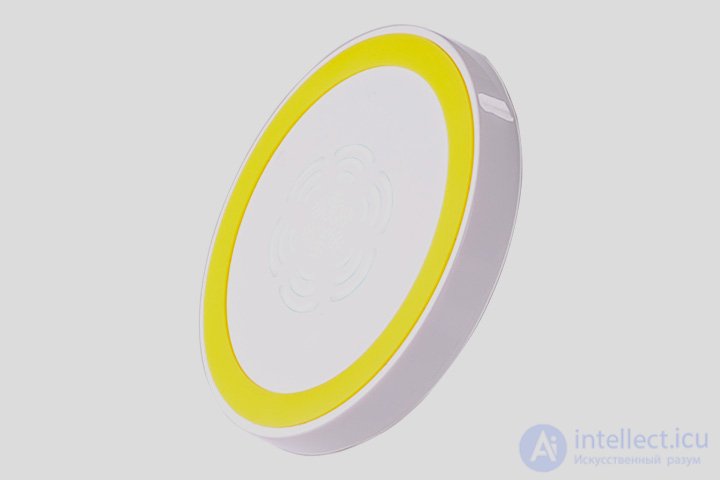
Finally, an example of how things stand with wireless charging for Apple phones. Since iPhones do not yet support the technology, workarounds come to the rescue in the form of cases, attachments and other accessories. For example, Duracell cases for $120, which Apple itself recommends in its own store. But the most surprising device for the same purpose is the iQi receiver card, which is plugged in via the Lightning connector and hidden under a regular phone case. The project, which successfully raised funds on the crowdfunding platform Indiegogo, can now be found on «Amazon» (although it's probably still better to wait for the seventh or eighth iPhone: one or the other, according to rumors, will have its own built-in wireless charging receiver).
Qi («Chi», named after the term from Eastern philosophy) — a standard developed by the Wireless Power Consortium (WPC) for inductive energy transfer over a distance of up to 4 cm .
Qi hardware includes a transmitter plate (with a flat coil) in the base (connected to a stationary power source) and a compatible receiver in the pluggable device being charged (also a flat coil); in use, the pluggable device is placed on the transmitter plate. This uses the principle of electromagnetic induction between these two flat coils (similar, for example, to the windings of transformers) .
The Qi standard provides for two options: low power — from 0 to 5 Watts and medium power — up to 10 Watts.
Manufacturers using this standard in some of their devices: Apple, Asus, HTC, Huawei, LG Electronics, Motorola Mobility, Nokia, Samsung, Xiaomi, Sony, Yota Devices . The Wireless Power Consortium was founded in 2008, is open, and brings together various manufacturers from Asia, Europe and America. Its goal is to create a unified standard for inductive charging technology . When the Qi standard gains popularity, public charging stations are expected to appear in cafes, airports, sports arenas, etc.
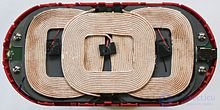
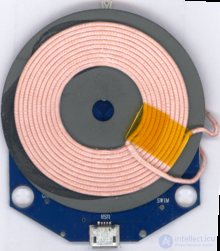
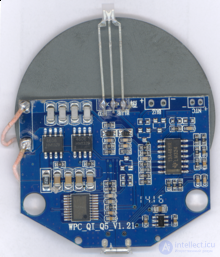
Qi includes the ability for the base station and the mobile device to use a limited data transfer system . This allows charging and transmitting charge-state information to the base station. In this way, the base station can adapt its operation to meet the needs of the mobile device and stop operating when the mobile device is fully charged.
During operation, initial detection occurs as a result of a deviation in capacitance or in the resonance of the transmitter coil. Once an object has been detected, the base station checks whether the device placed on it is indeed a Qi-compatible device. The base station transmits 8 bits of string data. The receiving mobile device must respond and provide a signal. The base station then sends several digital pings to verify information about the optimal position of the mobile device. Only once the device has been verified and the information has been transmitted will charging begin. During the charging process, the Qi device sends control data packets to regulate the power level and, finally, to stop charging.
The data transfer protocol of the Qi charger is defined so that all devices can interact correctly.
| Qi Standard Data Format | Qi Capabilities |
|---|---|
| Data transfer rate | 2 kbit/s |
| Bit encoding | Bi-phase |
| Byte encoding | Start bit; 8 data bits; - parity bit; stop bit |
| Packet structure | • Preamble (>=11 bits)
• Header (1 Byte) |
The Qi standard specification is available and free of charge .
Qi — the main standard for wireless power transfer. It is actively used by all manufacturers of mobile phones and chargers. At the moment there are three main power ratings for chargers:
1. 5W
2. 7.5W
3. 10W
For comparison, wired chargers deliver the following power:
1. Standard charging block for iPhone — 5W
2. Charging block for iPad — 10W
3. Quick Charge 3 — 18W
Wireless chargers have lower efficiency due to energy transfer through the air. Tests show that out of 5W the phone receives only 4.2W (85% efficiency), and out of 10W — 9.1W (about 90% efficiency).
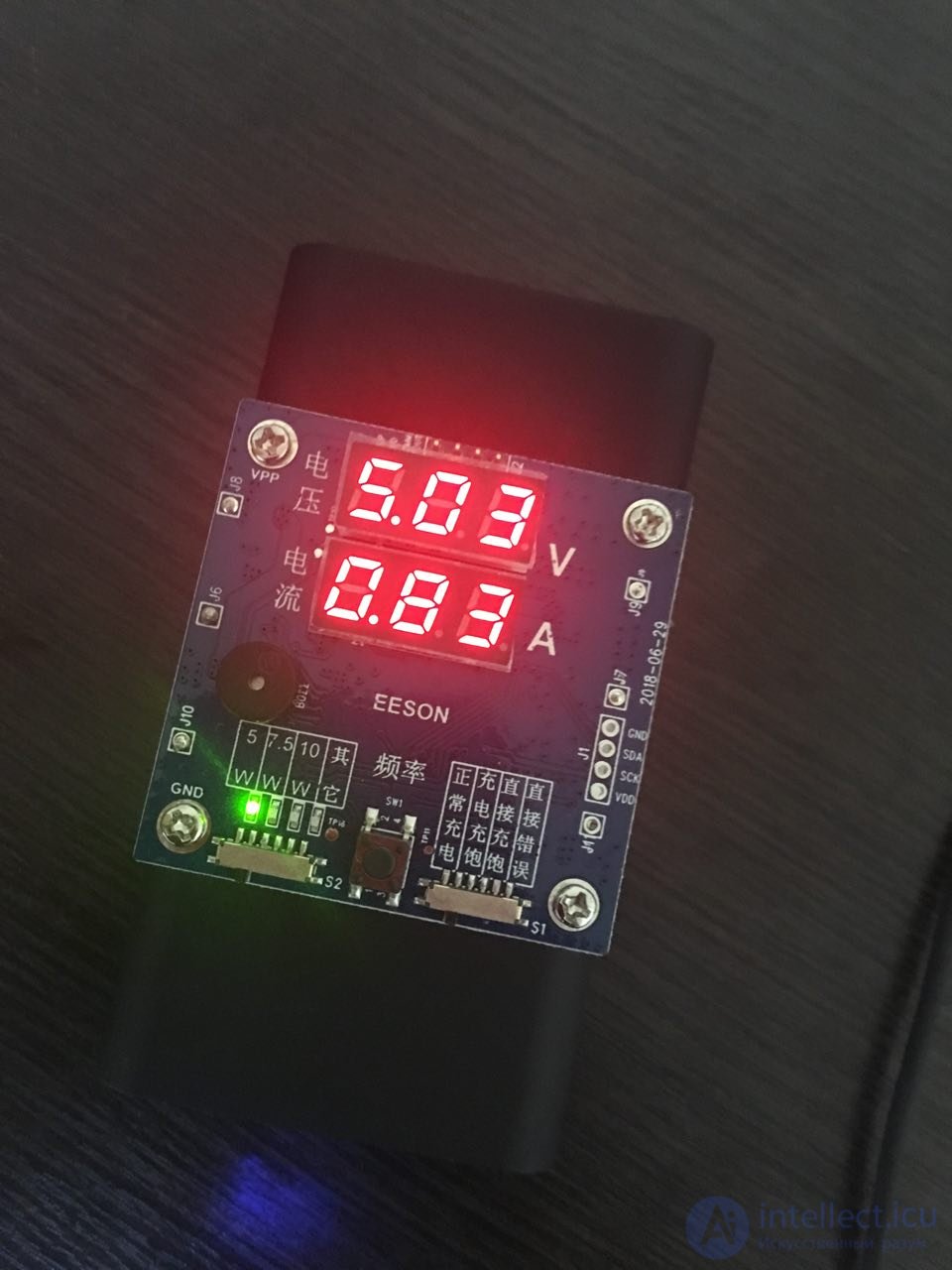
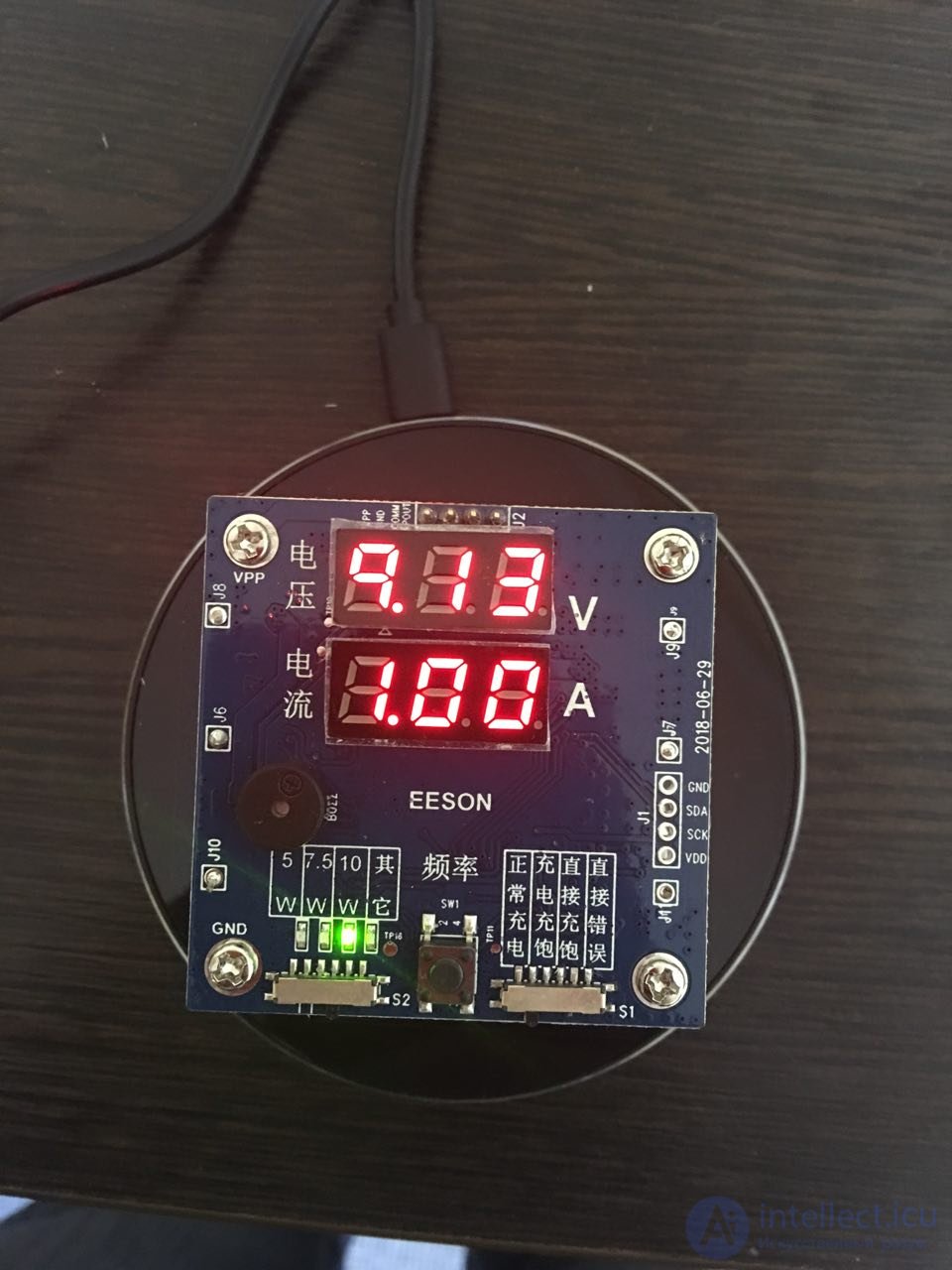
Wireless charging is, for some reason, commonly called "fast" only for devices with power above 5W. I don't agree with this, since devices at 15W are already starting to be sold, and prototypes are already delivering 20W — 60W (more on that later). So the purely marketing label «fast» will completely lose its meaning and any criteria. I would simply name them by their maximum output power (e.g. 10W wireless charger).
You need to understand that there are several types of charging. Different phone models support different standards.
5W charging is supported by all phones with a built-in charging module. This power level can also be obtained by using a wireless charging receiver (with this plate, a phone without wireless charging can be charged on it).
7.5W charging is currently supported by iPhone models (all models newer than the 8).
10W charging is supported by Samsung flagships (from the S7 and Note 5 onward), and the Huawei Mate 20 Pro.
If a charger only delivers 10W, it may not deliver 7.5W for an iPhone. And vice versa. In cases of mismatched wireless charger and phone model, charging will proceed at 5W.
A wireless charger must be plugged into an outlet. For each type, powerful charging blocks must be used. The minimum required power is 10W (5V/2A). You can use something with a lower output, but it will be a torment rather than a convenient experience.
For charging at the increased power levels of 7.5W and 10W, you need to use charging blocks with Quick Charge 3 functionality or equivalents. This is a necessity, without which wireless charging simply will not be able to deliver the increased power.
In the following articles I will talk about charger heating, different types/functionalities, and new developments that will be brought to life over the next 1-2 years.
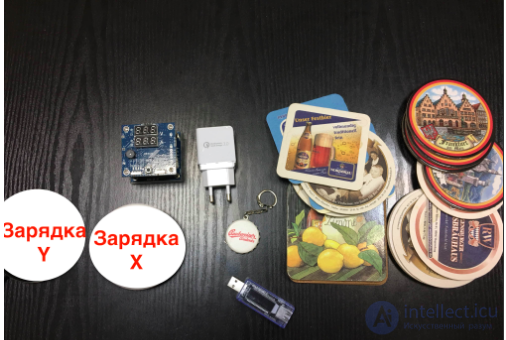
To conduct the testing, 3 different wireless chargers were used: X, Y, Z.
X, Y — 5/10W wireless chargers from different manufacturers.
Z — a wireless power bank with a 5W output.
Prerequisites: the same Quick Charger 3.0 charging block and USB — Micro USB cable were used. The same beer coasters were also used as plates (from a personal collection), which were placed under the meter. The meter itself also has a protective plate 1mm from the coil, which I also added to all values. I did not account for the thickness of the top cover above the coil. To measure the range of received charge, I recorded the maximum values that the meter picked up. To measure the charging zone, I recorded what the meter showed at a given point (I took measurements first lengthwise, then crosswise. Since the coil in all chargers is round, the values were practically the same).
The chargers in the test each had one coil.
First, I measured the received power depending on height (the thickness of the phone case).
The following graph was obtained for a charging power of 5W:
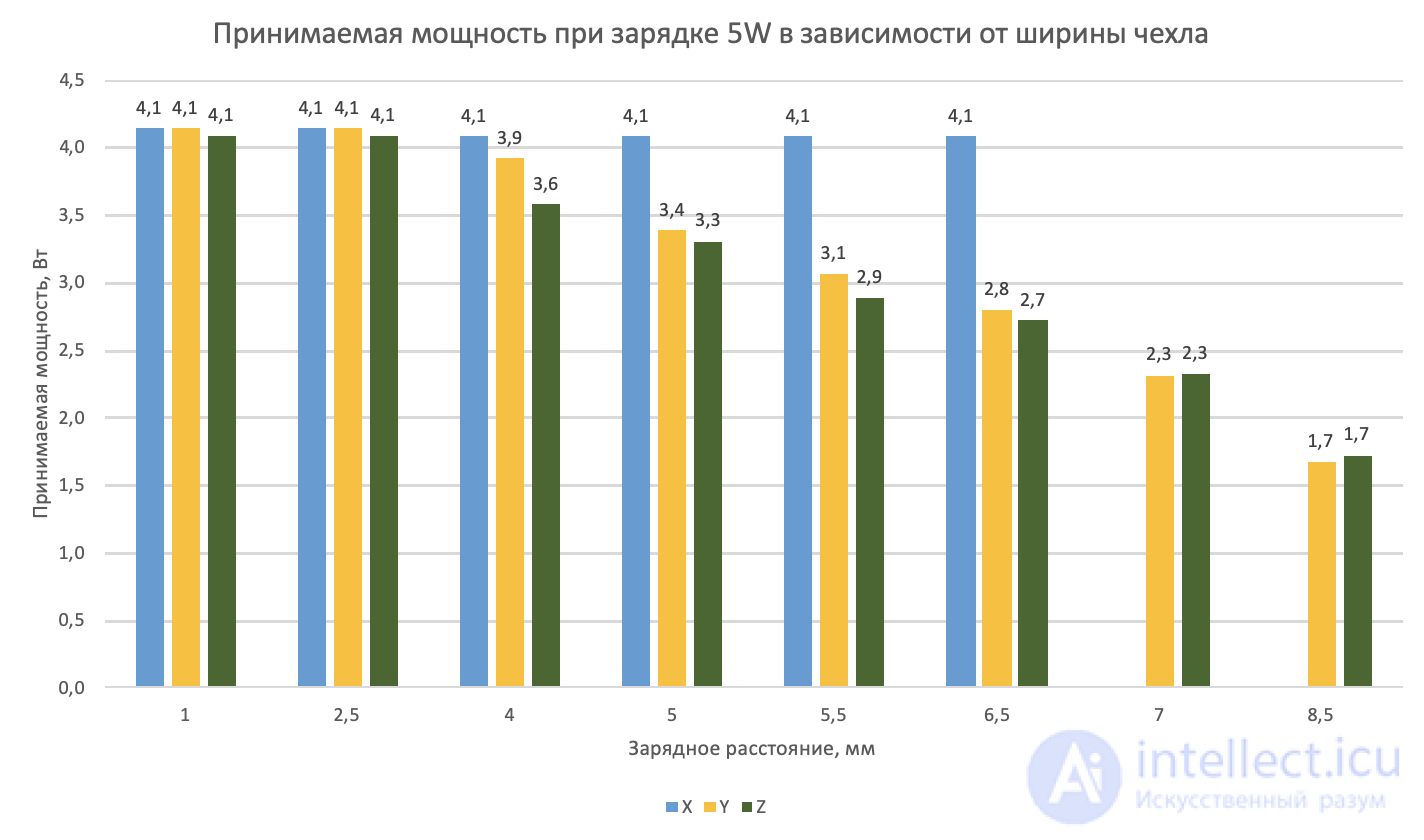
Usually the description of wireless chargers mentions a case thickness of up to 6mm, and this is roughly what turns out for all the chargers in the test. Beyond 6mm, the charger either shuts off already (which seems more correct to me) or gives very low power.
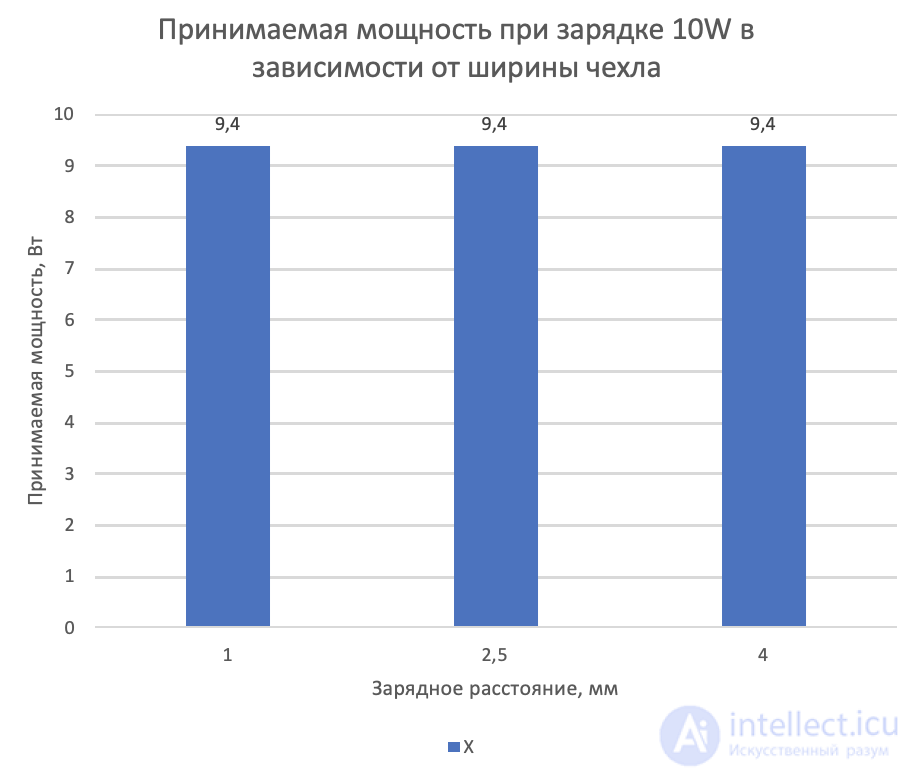
Then I started testing 10W power for chargers X and Y. Charger Y did not hold this mode for more than a second. It restarted immediately (it possibly works more stably with phones). Charger X, however, delivered stable power up to a height of 5mm.
After that, I began measuring how the received power changes depending on the position of the phone on the charger. To do this, I printed out grid-ruled paper and measured data for every 2.5mm.
These are the results obtained for the chargers:
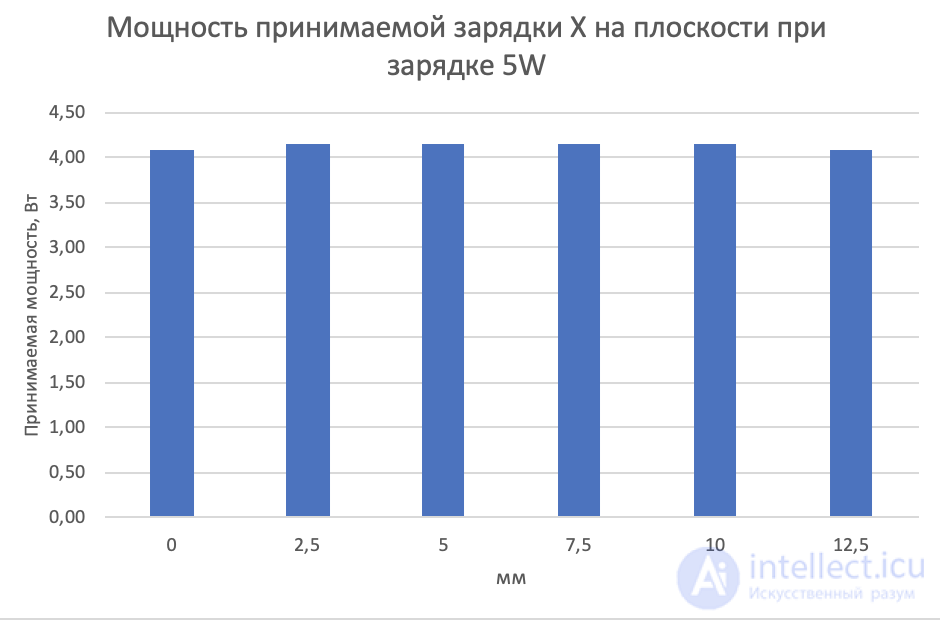
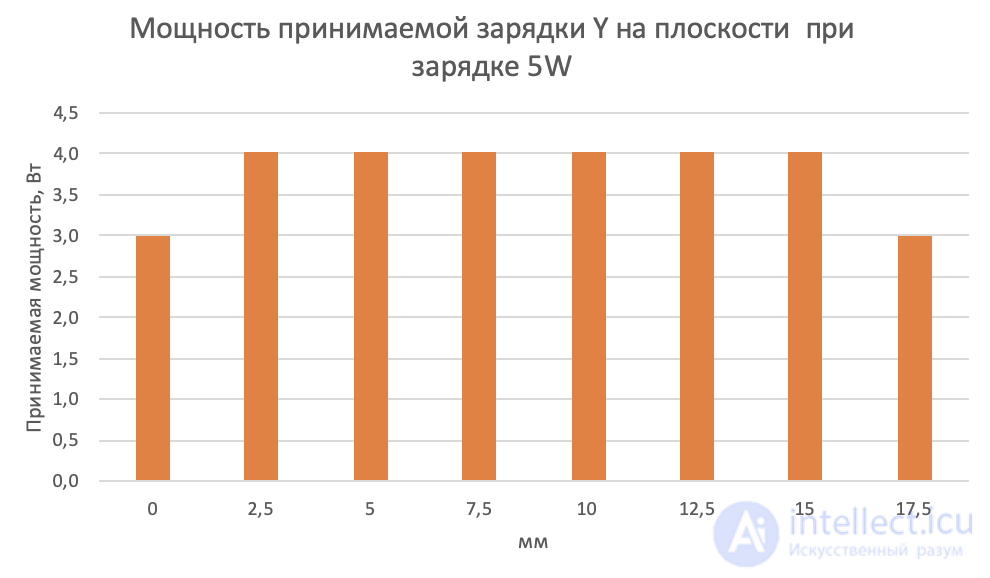
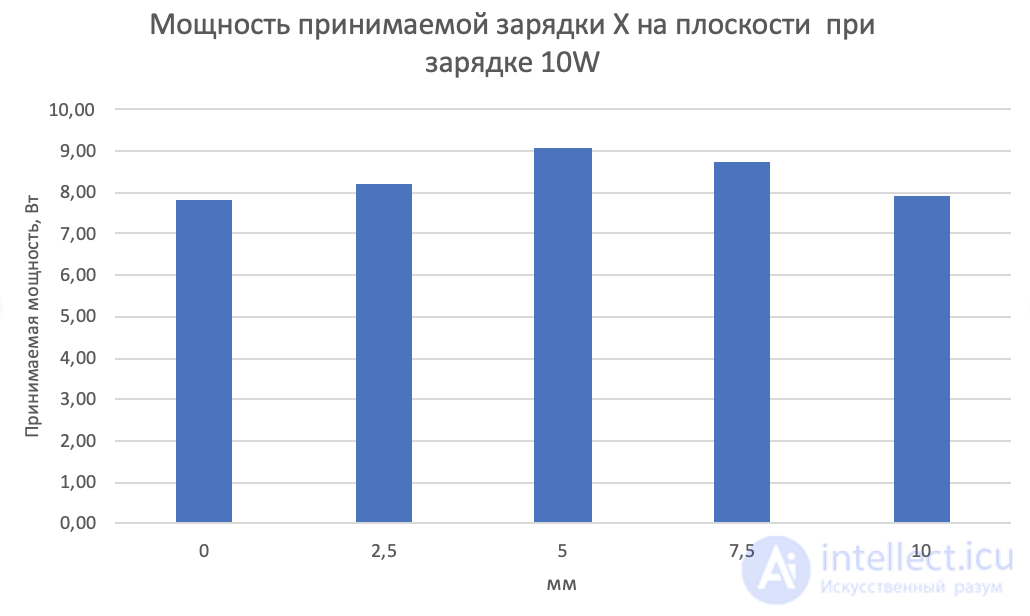
The conclusion from them is logical — the phone should be placed in the center of the charging device. A deviation of plus or minus 1cm from the center of the charger is possible, which will not have a very critical effect on charging. This works for all devices.
Next, I wanted to give some advice on how to hit the center of the charging zone. But this is too individual and depends on the width of the phone and the model of the wireless charger. So the only advice is — place the phone in the center of the charger by eye, this will be enough for a normal charging speed.
I must make an important caveat that this may not work for some chargers! I have come across chargers that could only charge the phone with a 1-to-1 alignment. With vibration from 2-3 text messages, the phone would already shift out of the charging zone and stop charging. So the graphs above are just an approximate measurement of three chargers.
Advantages of wireless charging:
1) Saving money. A charger is cheaper than a cable. The cost of a new quality cable (or buying a cable urgently) will be higher than the cost of a wireless charger.
2) Saving effort. It's more convenient for me to put the phone on the charger than to get out a cable. Yes, for this you need to put the phone in the center of the wireless charger for it to start charging. But this is easy to do, and here I gave measurements of the wireless charger's zone.
3) Convenience. If different phones are used at home, then usually everyone has different chargers. QI wireless charging — a unified charging standard.
The same logic applies if you have several gadgets. Wireless earbuds and watches can also already be charged on a wireless charger. And you can charge several devices at once on chargers with multiple coils.
4) Simplifying life. Where should you put a wireless charger to charge your phone? Where the phone is not being used.
If you put a charger near your bed, at your workplace, in the kitchen, in the car, and place the phone on the pad whenever it is not in use, the phone will always be charging.
That is, without making any effort to charge the phone — it will always be charged.
10 years ago, wifi in hotels was considered a nice perk. Now — it's a necessity.
2 years ago, paying via NFC — was a novelty and was almost never used anywhere. Now — almost every second payment in Russia is made contactlessly.
In the near future — wireless chargers will be in all new phone models, hotels, restaurants, cars, and desks.
Take England as an example. Wireless chargers are already installed in hotels, hostels, and chain restaurants. There are now about 5,000 of them, but the number of places with chargers is actively growing in France, Germany, and the USA as well. Even in Russia there are several chain establishments that are also installing chargers.

Map of wireless chargers in England on the left, on the right — a map of pubs. The potential is huge :)
The technology does not yet work at 100%. There is still potential for improving it (increasing the charging zone to 2-3cm, power up to 20W, and some other commercial improvements for mass-market chargers), but already the advantages of such charging outweigh the disadvantages.
In a few years, the absence of wireless charging will be equivalent to the absence of wifi in a hotel today — you won't even stay in that place.
The idea of wireless transmission of electricity occurred to scientists back at the end of the century before last. It's frightening to imagine what prospects the new technology opened up for humanity.
125 years have already passed since Nikola Tesla's great discovery, and «things haven't moved an inch». Or rather, some steps have already been taken toward a wireless future, but in essence they are pitiful and helpless.
The Qi wireless charging standard has shown up in both the iPhone X and the iPhone 8/8 Plus. Samsung applied a similar one several years BEFORE that. LG, ZTE, Nokia, and a good handful of Chinese makers have their own Qi solutions.
But if you set aside the five-minute delight and shouts of «Wow, no wires!», put the euphoria “on the shelf”, and think about the practicality of the technology itself in its current form, you start to realize that Qi is nothing more than an attempt to squeeze another couple of hundred rubles out of the consumer.
Let me explain why.
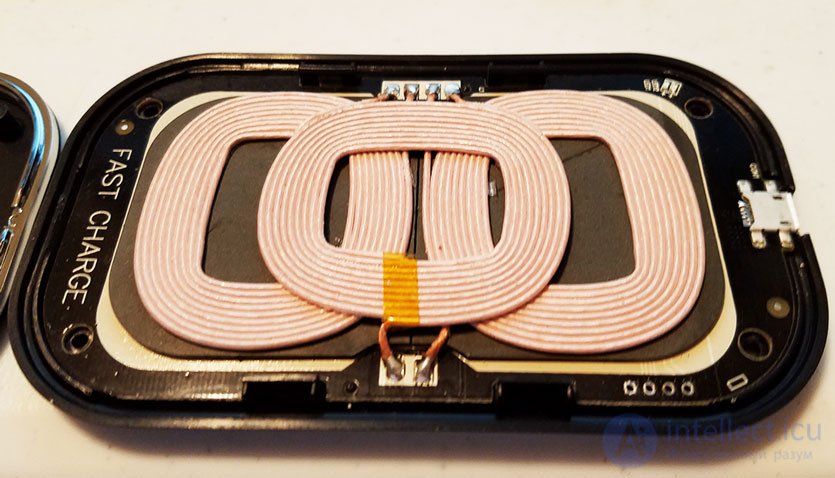
Wireless transmission of electric current is based on the concept of electromagnetic induction. Put simply, there are two coils of wire placed at a certain distance from each other. A current of a certain magnitude is applied to one of them. An electromagnetic field arises between them, and a voltage appears on the second coil. The charge starts flowing.
Of course, everything described above comes with a number of caveats. Power is one of them.
If you flip over a modern wireless charger and look at the output voltage and current values, you get a power of 5 – 10 Watts. For the most powerful smartphone chargers, this figure reaches 20 Watts.
But these aren't the same watts written on a traditional «wired» power adapter. In reality, wireless charging has a significantly lower efficiency.
- The efficiency of wired charging is 95 – 98%
- The efficiency of wireless charging is less than 80%
That is, the difference in charging speed, at best, is around 20%. In reality, though, wireless Qi chargers replenish battery capacity two, or even three times slower.
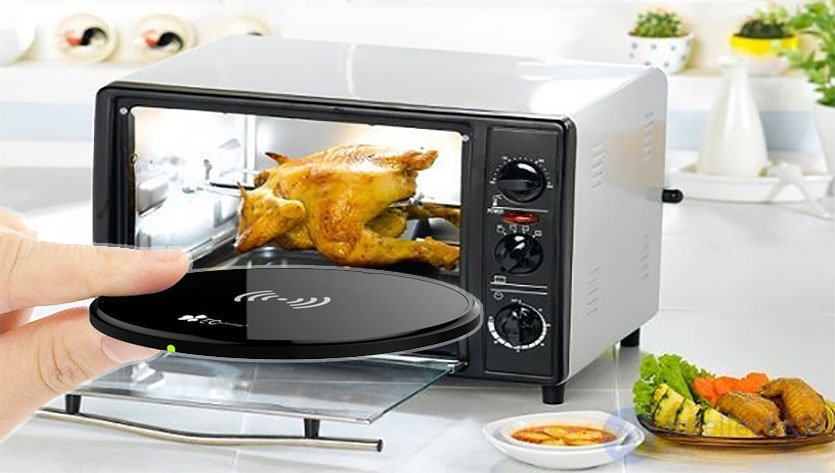
Or rather, it's technically possible. Nothing stops manufacturers from releasing a charging device with a power of 100, 200, or 800 Watts, like in a microwave oven. Only you probably already know the effect that very microwave has on anything organic.
Yes, the frequency range of these emissions differs, but if the power of wireless chargers were increased 10 – 15 times, to charge your smartphone you'd have to put it in a special box or get well away from the room.
Speeding up the charging process is difficult for several reasons at once:
- companies that release powerful charging devices will never be granted a quality compliance certificate, for the simple reason that they harm human health
- to produce powerful chargers, they'd have to be fitted with hefty transformers weighing up to 1.5 – 3 kg. Can you picture such «elegant packaging» with a new iPhone and a powerful charger? I – can't.
- excessively powerful electromagnetic radiation would “boil the brains” not only of the owner, but of the smartphone itself
The saddest part is that even Apple's official website has a disclaimer: during wireless charging the iPhone may get a bit warm. And that's at a power of 5 W. You can imagine what would happen to the device at a higher power.
«Without wires it's more convenient and faster» — seriously?
How much time do you spend plugging a Lightning cable into your iPhone? About two seconds, I'd guess.
With wireless charging, it takes one second. Okay, with the Qi standard I save, at most, 2 seconds when placing my smartphone on the charger, but I lose dozens of minutes because of its low efficiency.
Where, pray tell, is the logic in that?
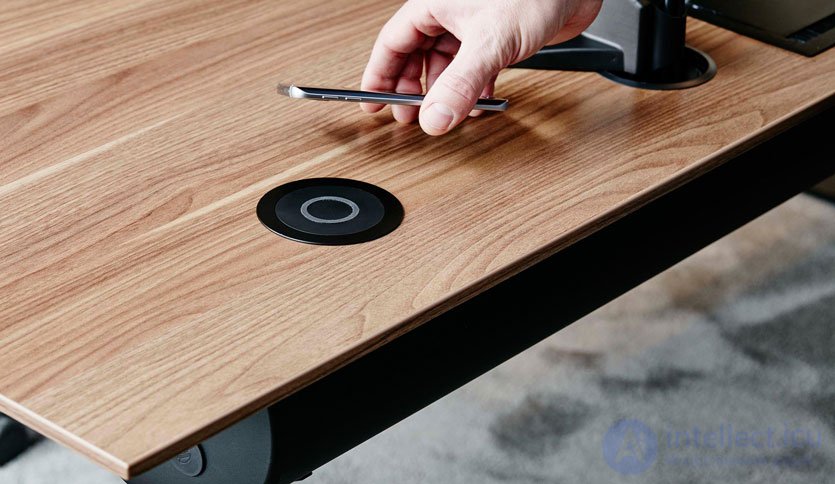
In exchange for the ability to charge your iPhone without wires, you create new problems for yourself. From now on you need a perfectly horizontal surface. And if a dozen messages come in while it's charging, or a couple of colleagues call you persistently, when you come back to the charger you may find that the iPhone has slid off the pad without ever charging.
Again, I didn't make this up. Apple itself warns about it. And there are plenty of similar user stories.
Ah yes, you can attach the charger to a magnetic mount. Of course you can, but you shouldn't forget that the iPhone has several components that aren't very tolerant of constant magnetization. For example, the compass and the camera's optical image stabilization system.
As a result, one fine day the GPS positioning may “go haywire”, and your favorite mapping service will lead you off into the middle of nowhere. But this, of course, won't happen right away.
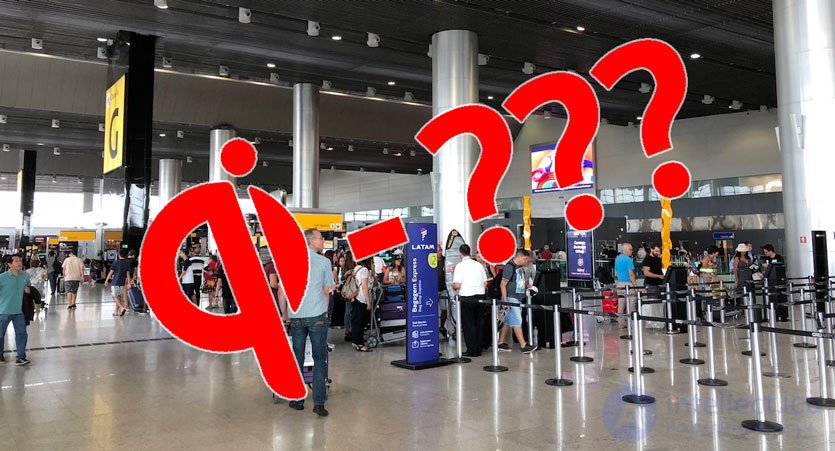
Being happy about having wireless charging in a smartphone in 2018 is like a resident of Zimbabwe, Costa Rica, or one of the other “224 countries of the world” being happy about the NFC module in an iPhone.
The technology does exist, but its use is quite questionable.
If you often have to spend time in an airport or train station waiting area, spend whole days on buses, or stay overnight in hotels, you know perfectly well — there are no wireless chargers there. And if you do come across one, it's extremely rare.
As a result, all the convenience once again boils down to using a USB cable and hunting for a free USB port.
Let's say that in the near future charger manufacturers pull off a revolution and release a 60-Watt Qi charger with no downsides.
Let's say you're — the owner of a cozy café and you keep up with technology trends. Caring about your visitors, you purchased a hundred expensive chargers and placed a couple at each table.
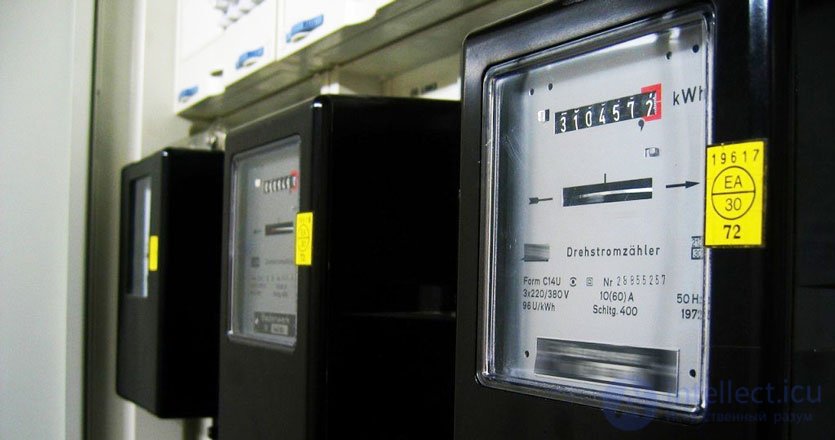
Let's say that on the busiest «peak» days a fully packed café seats about a hundred people. Every other one decides to charge their smartphone. People are delighted, and you dutifully pay for three extra kilowatts of energy consumed.
This is just an illustrative example that can be scaled up indefinitely.
If you take a sober look at the situation with wireless chargers and the level of development of this technology in 2018, you begin to understand — you can live just fine without Qi.
But even if you have never used Qi and don't plan to, Apple has already taken your money «for the future».
The cost of the chip installed in the iPhone X, 8 Plus and iPhone 8 responsible for wireless charging is $8.5. The chip is labeled BCM59355A2IUB3G, and it is manufactured by Broadcom.
Given that the cost of the device after entering the market was ultimately marked up threefold, you end up paying about $25.5 for that same module. This is at official US prices.
When buying a smartphone in Russia, the overpayment for wireless charging in the base iPhone X will amount to almost 2,000 rubles.
In the case of the iPhone 8 and 8 Plus, it's still a bit worse. The calculation is very rough, but has a lot in common with reality.
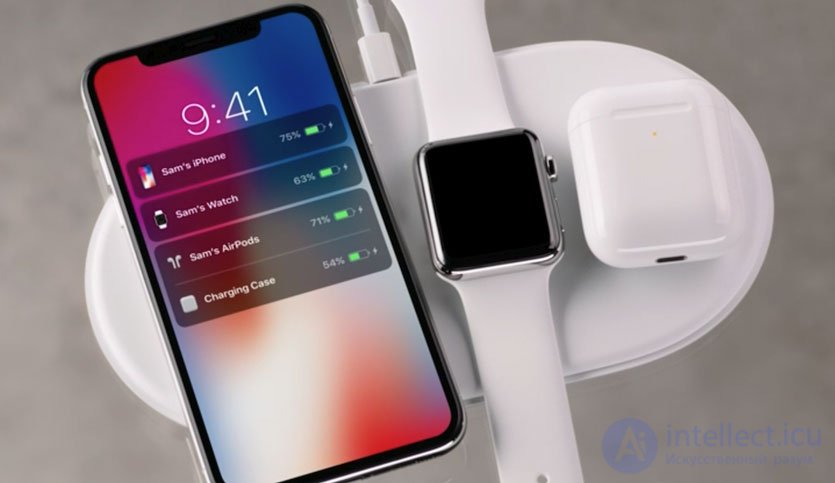
Now tell me, is Apple really that interested in supporting the dreary Qi technology, if it hasn't been able to release its own AirPower charging station for more than six months?
I think the answer is obvious.
Perhaps, instead of the useless Qi, Apple's engineers would do better to take care of something else. For example, thinking about a higher-capacity battery and support for fast-charging technology. And they could also include a more powerful power supply in the box.
And then every iPhone owner would take their smartphone off the charger early in the morning and not even think about the need to recharge the device, either wired or wirelessly, until late at night. But that would be a «different Apple». In the pursuit of capitalization, the company's slogan "Think Different" takes on somewhat different shades.

Comments