
Lecture
Despite its relevance, the problem of psychological influence has not yet received adequate treatment in our country’s psychological theory or practice. Although Russian psychology assigns the decisive role in a person’s mental formation and development to their immediate social environment — and, in this sense, understands personality as a product and outcome of a person’s communication with other people — until recently this fact was given far too little weight in the actual content of Russian psychology’s account of the human psyche. The core psychological structure of personality, in keeping with the traditions of the activity approach (L.S. Vygotsky, S.L. Rubinstein, A.N. Leontiev, and others), was defined solely by the structure and character of a person’s object-oriented practical activity. The social context — which sets the norms and coordinates of that activity and creates its emotional and motivational background — remained essentially outside the scope of scientific analysis. As the well-known Russian psychologist G.A. Kovalyov put it, “in recognizing the human being as a product of social relations may lie the chief potential and reserve of contemporary psychological knowledge, marking out the zone of its nearest development and opening the way to new frontiers in the scientific mastery of human subjective reality, and to new approaches to the scientifically grounded management of psychological phenomena” [7, p. 45]. The traditions of this scholarly and applied line of psychology were laid down in the works of such outstanding Russian scholars as L.S. Vygotsky, S.L. Rubinstein, M.M. Bakhtin, A.A. Ukhtomsky, V.N. Myasishchev, and others.
Another source (and immediate trigger) of the recent development of the Russian psychology of influence was the vigorous growth of psychological practice — services of various kinds of psychological counselling; groups for active social learning; the practical work of management and organisational administration; the growth of business and advertising structures, and so on. It became clear that categories and constructs previously developed at the theoretical level were extremely difficult to adapt to explaining the processes and phenomena occurring in real, natural interpersonal relations, in communication between living people.
Unlike Western conceptions, the primary subject of research in the Russian psychology of influence is subject-subject interpersonal interaction, as opposed to subject-object influence. A scientific grounding for the subject-subject approach to studying and influencing a person was provided in the works of psychologists such as A.A. Bodalev, B.F. Lomov, A.M. Matyushkin, and others.
The subject-subject approach was further developed in the typologies of interpersonal interaction devised by contemporary Russian psychologists (G.A. Kovalyov, A.B. Dobrovich, E.L. Dotsenko, E.V. Sidorenko, and others), whose main criterion is whether one’s communication partner is treated as a subject or as an object of influence.
The distinctiveness of the approach the author proposes for characterising influence lies in developing strategies of psychological impact in correlation with the main scientific approaches existing in psychology for studying the essence of the human being and their mental organisation.
On the basis of a historical and theoretical analysis, G.A. Kovalyov identified three basic paradigms through which attempts have been made to explain the nature and laws of psychological realities, and related them to the existing approaches to the scientific study and practical use of strategies of interpersonal impact.
1. The first, and historically the most traditional, is the so-called object, or reactive, paradigm, according to which the psyche and the person as a whole (regardless of the particular theoretical stance taken) were viewed as a passive object of external conditions and their product. Being the first to emerge historically, this approach found its most complete scientific expression in behaviourism. This general view of the mechanisms determining a person’s mental organisation continues to appear in some contemporary Western psychological theories. Formal (though not substantive) analogues of this methodology can also be found in Russian psychology. Accordingly, the strategy that best fits the reactive approach can conventionally be labelled imperative influence.
Imperative strategy of interpersonal influence – an overt way of exerting influence in which the partner is perceived as a passive object of impact.
Imperative methods are used: ranging from violence and suppression to suggestion and direct orders.
The main functions of this strategy are to control the target’s behaviour and attitudes, reinforcing them and steering them in the desired direction, as well as to coerce the object of influence.
Using methods of open pressure on a partner may bring about their compliance, but only an external and short-lived one.
The imperative strategy is applied most often where a person, owing to particular circumstances, has limited scope for making independent choices about their actions or decisions. In social practice, this strategy can be appropriate and effective in extreme situations calling for prompt, important decisions under time pressure, and also when regulating hierarchical relations between people in “closed” organisations (for example, of a military type) and in certain subcultures. In real human relationships, however — in the sphere of informal, non-role-based interpersonal relations (for example, friendships or family relations) — as well as in pedagogical practice, whose goal is to uncover and develop a child’s psychological potential, this strategy is unsuitable. Here, the use of imperative influence that disregards the other person’s current states and attitudes, and the conditions of interpersonal communication, most often produces the opposite, even negative, psychological consequences.
2. Over the last 40 years, a major shift has taken place in psychological knowledge, marking a departure from treating the person as a “passive reactor”. An approach emerged that asserts the person’s activity and selectivity in the process of reflecting external influences. This approach, which G.A. Kovalyov labelled the subject-based or actional approach, is most fully represented in Western cognitive psychology.
Within this approach, the largest number of specialised theories of influence has been developed (around 40), all resting on the idea of the activeness and integrity of a person’s mental functioning. According to this view, the process of influence occurs when people interacting with one another interpret the information coming from each other within a situation of interpersonal perception.
According to G.A. Kovalyov, this approach to studying influence is currently the most popular in scientific psychology and today offers the fullest account of the possibilities of psychological impact. Within this paradigm a great many specialised experimental studies have been conducted, and on their basis numerous effective techniques and tools of psychological impact have been developed; these are successfully used, in particular, by the mass media in shaping public opinion, creating advertising, and so on. Some of them are also used in pedagogical practice.
The recognition that mental reflection of external phenomena is active and selective, and that the organisation of influence is a two-way process, does not remove the question of whether these influences actually benefit the person. In G.A. Kovalyov’s view, what matters most here are their purposes and their direction. Numerous experimental studies and social practice make it clear that more refined knowledge of, and deeper penetration into, the most intimate mechanisms of human mental nature does not mean that these scientific discoveries will be used for the benefit of humanity. Quite often, on the contrary, they are used directly to devise sophisticated means and methods for controlling people’s consciousness and behaviour, and for manipulating the psyche. The effects of such means are difficult to recognise, and their consequences are difficult to predict. The influence of psychotropic drugs on the human psyche is well known. Drawing on the latest advances in psychological theory, modern methods of psychological recruitment, subliminal influence, and the like have been developed and continue to be refined. That is why, in G.A. Kovalyov’s view, at the current stage in the development of psychological science (and of the psychology of influence in particular), pressing ethical and universally human problems have clearly come to the fore, connected with answering the question of psychology’s social responsibility for its own scientific achievements. This gives grounds for describing the strategy of influence within the actional paradigm as manipulative.
Manipulative strategy of interpersonal influence – a covert, disguised way of exerting influence in which the partner is perceived as an object of impact, but a complex and unpredictable one.
Techniques of subliminal stimulation are used, which operate by circumventing psychological controls and blocking the system of psychological defences.
The primary aim is to change another person’s behaviour for one’s own benefit, but to do so so skilfully that the partner remains convinced that they are controlling their own behaviour themselves. The manipulator is guided by the principle: “My gain – the other person’s loss.”
Thus, by its inner nature, the actional approach to organising influence can in principle lead to consequences just as damaging — sometimes even worse — as those of the reactive approach. Despite this approach’s proclaimed recognition of the activeness and individual selectivity of mental reflection, when specific methods of influence are actually applied the person still in fact remains an object of external influences and psychological manipulation. That is why, in G.A. Kovalyov’s view, the imperative and manipulative strategies of psychological influence can, on the whole, both be classed under the same one-dimensional, object-based, monological view of human nature, in which the person as a whole is assigned a passive role and their unique essence is depersonalised.
At the same time, as G.A. Kovalyov points out, this stance is fairly widespread in Western thinking about human nature; it forms the ideology of most contemporary psychological-help services, and it underlies the technology and many of the methods of psychotherapeutic and psychocorrective work. “In this case the person (perhaps even out of the best of intentions) is nonetheless made to fit some standard of a “good” patient, often by means of fairly elaborate techniques, a standard that exists in the professional cognitive map of the “all-powerful” and “all-knowing” psychotherapist; the patient, meanwhile, is deprived of any right to independence in viewing the situation and making decisions” [7, p. 44]. In the West it is sometimes acknowledged that a person in bourgeois society is an object and a product of constant, deliberate psychological manipulation and pressure, and that the possibilities for such manipulation are practically limitless.
Thus, the object-based character of the natural-science approach to studying human nature inevitably turns into an object-based, one-dimensional character in developing practical recommendations for organising relationships between people — recommendations that most often take on an impersonal, “technological” character and, naturally, cannot take into account the full richness of real human connections and the uniqueness of each person’s inner content. Blindly or clumsily following such recommendations when working with people (for example, in psychological and pedagogical practice) can have a negative effect on the character of a person’s mental development and social functioning.
3. Opposed to this pessimistic, one-dimensional view of the person, in the history of thinking about human nature there stood an optimistic tradition. It rests on a belief in the constructive, active, creative and generative core of human nature, in humanity’s innate morality and goodness, and in its altruistic and collectivist orientation, which serve as preconditions for people’s joint existence and survival. In Western psychology this conception received its most thorough elaboration above all in the theory of humanistic psychology, whose foundations were laid by A. Maslow, R. May, C. Rogers, E. Fromm, and others. Central to this doctrine is the recognition of each person’s individuality and uniqueness, a belief in their positive and creative core, and their social orientation. In contrast to the object-based approach to the person, G.A. Kovalyov labels this direction the personal, or subject-subject, approach. The traditions of this scholarly and applied line of Russian psychology were laid down in the works of such outstanding Russian scholars as L.S. Vygotsky, S.L. Rubinstein, M.M. Bakhtin, A.A. Ukhtomsky, V.N. Myasishchev, and others. A modern scientific grounding for the subject-subject approach to studying the person was provided in the works of psychologists such as A.A. Bodalev, B.F. Lomov, A.M. Matyushkin, and others. G.A. Kovalyov calls the strategy of influence that best corresponds to the subject-subject approach the developmental strategy.
Developmental strategy of influence – a way of influencing in which people perceive each other as equal partners in communication, so that the potential for self-development of both partners is activated. According to G.A. Kovalyov, the main psychological condition for realising this strategy of influence is dialogue.
According to the author, the main norms and principles for organising dialogue are: the emotional and personal openness of communication partners, a psychological attunement to each other’s current states, non-judgementalness, and trust and sincerity in expressing feelings and states. In dialogue, “two individuals begin to form a shared psychological space and temporal extension, creating a single emotional “co-being”, in which influence (in the ordinary, object-based, monological sense of the term) ceases to exist, giving way to a psychological unity of subjects within which a creative process of mutual disclosure and mutual development unfolds, and conditions are created for self-influence and self-development” [Kan-Kalik, Kovalyov, 1985, p. 46].
The authors of the theoretical approach concerning the multicomponent structure of communication between people (V.N. Myasishchev, A.A. Bodalev) hold that the psychological essence of dialogue, as the highest level of organising communication, consists in an adequate (cognitively complex) mutual reflection of each other by the people involved, a positive (personal) attitude toward one another, and “open” conduct and behaviour toward each other [Bodalev, 1983]. The central link in this functional structure of communication is the system of subjective relations [Myasishchev, 1998]. The tradition of studying dialogic communication in Russian psychology involves several planes of interpretation for describing this concept. Dialogue — is: a) the primary, generic form of human communication, determining the healthy mental development of the personality; b) the leading determinant of this development, ensuring the functioning of the mechanism of internalisation, through which the initial external interaction in the “child — adult” system passes “inward” into the child, thereby shaping their individual (intersubjective in content) psychological character; c) a principle and method for studying the human being, realised through reconstructing the content of the subjects’ externalised inner semantic fields as they unfold in a situation of dialogue between them; d) a process (difficult to formalise within the positivist tradition), developing according to its own (as yet unknown) laws and its own inner dynamics; e) a particular psychophysical state unfolding within the interpersonal space of the people communicating with one another, akin to the infantile experience of emotional comfort during physical contact between mother and child; f) the highest level of organising relations and communication between people, the one most organically suited to the inherent inter-subjective nature of the human psyche, and therefore the most optimal for normal mental functioning and personal development, and for the fulfilment of people’s needs; g) the most effective method of pedagogical and psychocorrective influence; h) a creative process.
G.A. Kovalyov charts the further path of development for the theory of the Russian psychology of influence. In his view, the logic of the analysis requires a deeper look into the psychological essence of the objective factors and subjective determinants through which psychological influence unfolds.
A.B. Dobrovich distinguishes seven levels of communication according to the criterion of partners’ “ethical impeccability”. The lowest level in this classification is primitive interaction, in which the partner is perceived as a passive object, either useful or an obstacle. The highest level is spiritual interaction, in which the partner is perceived as the bearer of a spiritual principle.
A brief description of the levels of communication, according to A.B. Dobrovich, is given in Table 2.
Table 2 Levels of Communication according to A.B. Dobrovich [Dobrovich, 1996]
|
Levels of communication |
Brief description of the levels |
|
Spiritual |
“The partner is perceived as the bearer of a spiritual principle, and this principle awakens in us a feeling akin to reverence.” (p. 126) |
|
Business-like |
“In this kind of contact people sometimes stop thinking about how they look or which of their individual roles they are revealing to their partner: that is not so important; what comes first is the matter at hand” (p.123) |
|
Playful |
“Possessing fullness and humanity, it surpasses the conventional level in the subtlety of its content and the richness of its shades” (p. 118). “An interest in the interlocutor’s personal characteristics — not a self-serving interest, but one imbued with sympathy for the person” (p. 119). “The partners “play each other”, that is, they “mirror one another,… in order to be interesting to each other” (p.122). |
|
Conventional |
“Full-fledged human communication” (p. 97) “A convention (or agreement) is a set of rules of conduct, mostly unwritten but passed down from generation to generation, because these rules enshrine people’s mutual agreement as to which forms of behaviour, according to collective experience, are most acceptable both to the individual and to society” (p. 95) |
|
Standardised |
“Communication is based on certain standards. This is a “contact of masks” ”(p. 115) |
|
Manipulative |
“For someone who chooses this level, the partner is a rival in a game that absolutely must be won” (p. 106) |
|
Primitive |
“For someone who sinks to the primitive level in contact, the other person is not a partner but an object — either useful or an obstacle” (p. 101) |
A.B. Dobrovich characterises each level of interpersonal interaction in accordance with the structure of a behavioural act proposed by the well-known American psychologist G.H. Mead. Every act of behaviour (interaction) comprises four phases: 1) the impulse to act – mutual orientation, 2) the individual’s clarification of the situation of action – mutual reflection, 3) the action itself – mutual informing, 4) the winding-down of the action – mutual disengagement.
The lowest level of communication in A.B. Dobrovich’s classification is the primitive level.
Primitive level of communication. The other person is not perceived as a partner but as an object, either useful or an obstacle.
Mutual orientation is determined by the urge to take up, in communication, a “one-up” position. If the other person is useful, one must take possession of them; if they are an obstacle, one must push them aside.
Mutual reflection is characterised by the primitiveness of the image formed of the partner. Perceptual templates are used. A significant role in assessing the partner’s role is played by superficial qualities: appearance, clothing.
As for grasping one’s own current role through the partner’s eyes, things never get that subtle; the subject naively believes that he is seen exactly as he sees himself, or as whatever he is pretending to be…
The mutual-informing phase is characterised by an open display of one’s attitude toward the partner. Without the slightest inner restraint, the subject expresses their liking for the “object” that pleases them, or their dislike for one that does not.
The disengagement phase from the partner is characterised by the absence of any parting rituals in keeping with the rules of etiquette and ethical norms. If the previous stage involved confrontation, then with a weaker partner the exchange ends in insults and mockery, while with a stronger one it ends in apologies or threats (the threats being uttered once the partner has already moved to a safe distance). If, on the other hand, there was agreement, the subject, having got what they wanted from the partner, makes no secret of their boredom. They may simply walk off about their business without saying goodbye.
The way to deal with a partner who adopts a primitive style of communication is to calmly and confidently put them in their place, without humiliating the other person’s human dignity in the process. For example: “Citizen A is sitting on a bench in a park, reading a newspaper. Another person, B, walking past, feels like sitting down and plops down right next to A without worrying whether he is crowding him. Having quickly sized up A and decided that he is a “four-eyes”, a “dandy”, B deliberately sprawls out on the bench. He has the physical advantage. The “one-up” position has been established. A might respond as follows. He moves a little away from the uninvited neighbour, gives him a friendly look, and cheerfully asks: “Hot, isn’t it?” or “Tired?”. “Mm-hm,” the other mutters back, vaguely and gloomily. “It’s a decent bench, pity there’s not more shade,” A says, as if inviting him into conversation. And immediately catches himself: “Actually, sorry, I won’t bother you.” With these words he buries himself completely in his newspaper. The main thing has been achieved: a calm, humane tone has been struck, and the atmosphere of a brewing scandal has dissolved.” [Dobrovich, 1996, pp. 103-104].
A primitive partner in communication is, in a sense, defective, and to respond to him just as primitively means admitting one's own inadequacy.
Manipulative level of communication. For the manipulator, the partner – is a rival in a game, which must be won at all costs. Winning means gain: material or psychological.
In the phase of orientation toward the partner, the manipulator prepares in advance to subordinate the other person, positioning himself “above” them.
In the phase of reflecting the partner the manipulator picks up quite well on the other person's current role and on his own current role as seen through the other's eyes, but all of this is done as “setting a trap.” He seizes on those traits of the interlocutor that can be used as weak points.
In the phase of mutual information exchange the manipulator uses various tactics of influence on the interlocutor in order to achieve a win. A series of “thrusts” are made to expose the partner's true face: a flattering remark; a risky joke bordering on mockery; a plaintive tone counting on human sympathy. The interlocutor's reactions are keenly noted; a tactic that brings no success is instantly dropped in favor of another that promises “success.”
Manipulations vary widely in technique and purpose; manipulators do not necessarily act according to a conscious plan; for some it happens unconsciously. Manipulators are not only self-serving, cruel and cold people, but also unhappy ones, deeply dissatisfied with life. In the latter case the manipulator is pitiable, and many play along with him out of pity.
The phase of disengagement from the partner is characterized by the fact that the manipulator ends the interaction once he has achieved his win, but unlike primitive behavior, manipulative behavior involves observing certain rituals.
“Anti-manipulative defence” requires great maturity and self-control from the individual, manifested in the ability “not to play along,” but rather to “step out of the game.”
Standardized level of communication. Communication here is based on certain standards. This is “contact of masks” – superficial, “formal communication.”
The phase of orientation toward the partner is unsatisfactory here, since genuine readiness for communication is lacking for various reasons: feelings of resentment and distrust, fear of communication, laziness, indifference to others, arrogance, fatigue. The way of communicating without communicating is “putting on various masks”: “the mask of zero” (detachment, politeness, courtesy); “the mask of the tiger” (aggressiveness, arrogance, unapproachability), meant to inspire fear; “the mask of the hare” (timidity, obsequiousness), meant to protect oneself; “the mask of the clown” (recklessness, eccentricity, ingenuousness), meant to avoid being taken seriously.
In the phase of reflecting the partner the subject determines how “dangerous” the other person is, i.e., how actively they seek to “remove the mask” from him. At the same time, the subject is concerned about whether he conforms to accepted standards – in other words, whether “the partner can see something more than just his mask.”
In the phase of mutual information exchange the mask becomes sharper, more pronounced; thereby the subject “informs” the partner of his wish to end the contact as soon as possible.
Genuine communication is also absent in the phase of disengagement from the partner – an unemotional, unnatural end to the interaction, which leaves the interlocutor with an unpleasant impression of the subject – a difficult, insincere, secretive person.
Conventional level represents full-fledged human communication.
The phase of mutual orientation has the following content. A person feels a need for contact. In doing so, he prepares to position himself “alongside” the other: caring about the partner, striving to put himself in the other's place. Such consideration for the partner, even before he is reflected in one's consciousness, testifies to good upbringing and communicative competence.
The phase of mutual reflection of the partners. At this level of communication, “reflecting the partner” means, first, grasping his current role. Second, grasping one's own current role through his eyes. In this way the partners establish what role expectations they hold toward each other.
In the phase of mutual information exchange the partners confirm or fail to confirm the mutual role expectations established at the previous stage of communication. Mutual self-disclosure takes place, with regard for the partner and for the situation as a whole. Ethical propriety in the contact is maintained regardless of whether the communication takes on the character of confrontation or of congruence (mutual agreement).
Mutual disengagementalso takes place in a spirit of equality between the partners and their attentiveness to each other. Both take care not to impose themselves on the other once the topic of conversation has been exhausted.
Playful level of communication. This level of communication is characterized by fullness and humaneness, as well as subtlety of content and richness of nuance.
The phase of orientation toward the partner involves not simply concern that he should in principle be able to position himself “alongside,” but also, from the outset, a genuine interest in the interlocutor's personal qualities, an interest that is not self-serving but imbued with sympathy for the person. We rise to the playful level of communication (as to other high levels) only with people we already know at least a little and with whom we are bound by some positive feeling – if not mutual, then at least not yet clouded by grievances and disappointments.
In the phase of reflecting the partner this feeling provides a special sensitivity, an emotional engagement with the partner, and the attribution to the interlocutor of a reciprocal interest and goodwill.
The specifics of the playful level of communication are easiest to grasp by turning to the psychology of being in love. This does not refer only to relations between the sexes. One can be in love with a teacher, with a lonely old man living next door, with someone else's child, or with a film actor known only from the screen.
In the phase of mutual information exchange the subjects want to be interesting to each other, and they involuntarily “play,” so as to “look interesting.” It is not necessary to please each other right away here: the main thing is to arouse interest, to intrigue, and for that one must be extremely sensitive to the partner's reactions in conversation and control oneself so as not to spoil the game with tactlessness, haste, clumsiness, or excessive pressure.
In communication at the playful level, the partners, in K.S. Stanislavsky's phrase, “play each other,” i.e., “reflect one another.”
That is why the phase of mutual disengagement does not require both parties to perform parting rituals; one can do without them, “releasing” each other with a look, an imperceptible gesture, a touch…The partners understand everything without words.
Business level of communication. Communication – is a dialogue within joint activity.
In the phase of orientation toward the partner the interlocutor is given, in advance, the opportunity to position himself “alongside.” The partner arouses particular interest as a participant in joint activity, someone who can help or who needs help for the sake of the common cause.
In the phase of mutual reflection the partners are attentive to each other with regard to displays of intellectual and business activity, and involvement in the shared task.
The phase of mutual awareness is characterized by the fact that the partners sometimes stop thinking about how they look and which of their individual roles they are revealing to the partner: this is not so important; the task at hand – comes first. “Two scholars meet: they discuss a professional problem, and a discussion arises between them. Both are so absorbed in the subject of conversation that from the outside they may look comical: one, trying to formulate his thought better, throws his head back and switches to a falsetto; the other, expressing firm disagreement, crouches down and slaps his hands on his thighs…Both of them are perfectly capable of looking dignified and presentable when necessary, but right now they have no time for that. What matters to both of them is the truth” [Dobrovich, 1996, p.124].
At the business level of communication, people are united by special, usually implicit bonds in their joint work: enduring feelings of mutual attachment, trust and warmth, a “sense of comradeship.”
These bonds also determine the character of the phase of mutual disengagement. There is no ceremony, no ostentation in the expression of feelings here, but behind the outward dryness of partings (and meetings) one senses warmth.
Spiritual level of communication – the highest level of human communication. “The partner is perceived as a bearer of a spiritual principle, and this principle awakens in us a feeling akin to reverence” [Dobrovich, 1996, p. 126]. Examples of spiritual communication include: the teachings of wise old men, respectfully heeded by young people yearning for “spiritual thirst”; a conversation between an adult and a child about the riddles of how the world is arranged, the problems of good and evil, and so on; the highest degree of love between a man and a woman; a lifelong friendship based on spiritual contact. Spirituality is ensured not by the choice of topics for conversation, but by the depth of the “dialogical penetration” of people into one another.
The phase of mutual orientation of the partners is imbued not merely with interest and sympathy for the interlocutor; here there is also a belief in the possibility of drawing closer, through conversation, to grasping the true values of existence.
In the phase of mutual reflection, and then of mutual awareness, the interlocutors are extremely sensitive to each other's emotional state, to the slightest “turn” in each other's thought. They are so dissolved in one another that one is able to finish a sentence begun by the other. The partners are marked by freedom of self-expression. A partner's dejection, hurt, or helplessness in expressing a thought – all of this is perceived by the interlocutor as his own distress. The interlocutor's persistent misconceptions (or rather, what seem to be such) leave the partner with a feeling of anxiety, and then, in the process of self-analysis – a repeated return to his words and one's own arguments, agonizing questions: “But what if I'm wrong? What if I misunderstood him?..”
The phase of mutual disengagement of the partners tends to be difficult at the spiritual level of communication. There is still so much each wants to say to the other that parting seems impossible. Spiritually active people can never speak themselves out “completely,” and contact is usually broken off owing to mutual fatigue or under the pressure of each person's urgent everyday obligations.
In A.B. Dobrovich's view, real communication is polyphonic, meaning that it unfolds on several levels at once and can shift from one level to another. On this basis the author concludes what a culture of communication actually is: “it does not consist in conducting a dialogue with constant self-monitoring (so as not to slip below the conventional level), but rather in ensuring that, at whatever level arises in the conversation, both interlocutors retain the ability to rise to the conventional level and the levels above it – all the way up to the spiritual” [Dobrovich, 2001, p. 136]. That is why the culture of communication cannot be reduced to a set of rules; it is ensured by the intellectual, emotional and moral development of the individuals who enter into contact.
E.L. Dotsenko, in constructing his scale of levels of attitudes toward interaction, ranging from the object pole to the subject pole, drew on G.A. Kovalyov's typology. He identified five types of relations. The classification is based on the criterion of symmetry in the partners' relationship: at one pole – treating the other as a value, presupposing equality of interests (subject-subject relations); at the other – treating the other as a means of achieving personal goals (subject-object relations).
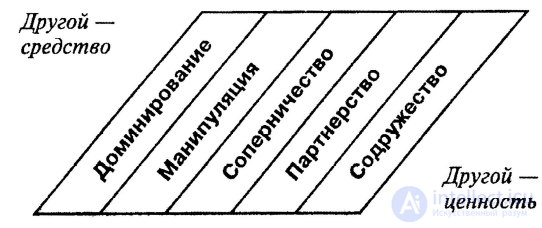
Fig. 1. Scale of interpersonal relations [Dotsenko, 1996, p. 102]
According to E.L. Dotsenko, “the shift from domination to fellowship represents a transition from extremely asymmetrical relations, in which one subject dominates the other, to relations of equality that allow people to join together to solve emerging problems. The same changes occur with force: at first it is crude and simple, directed at/against the other, then it becomes increasingly gentler, more refined, even spiritualized” [Dotsenko, 1996, p.103]
A brief description of each of the levels is given in Table 3.
Table 3 Description of the levels of interpersonal relations [Dotsenko,1996, p.102-103]
|
Level of interpersonal relations |
Characteristics of the relationship |
Methods of influence |
|
Domination |
Treating the other as a thing or a means of achieving one's own goals, ignoring his interests and intentions |
Open, undisguised, imperative influence – from violence, suppression, domination to imposition, suggestion, command, using crude, straightforward coercion |
|
Manipulation |
Treating the other as a “thing of a special kind” - a tendency to ignore his interests and intentions |
Influence that is covert, relying on automatisms and stereotypes. Provocation, deception, intrigue, insinuation |
|
Rivalry |
Treating the other as dangerous and unpredictable. The other's interests are taken into account only to the extent dictated by the tasks of the struggle against him |
Certain kinds of “subtle” manipulation, alternating open and covert methods of influence, “gentlemen's” or temporary tactical agreements and the like. |
|
Partnership |
Treating the other as an equal, who has the right to be as he is and with whom one must reckon. Relations of equality, but cautious ones. |
Reconciling one's interests and intentions, joint reflection. The use of an agreement, which serves both as a means of union and as a means of exerting pressure (a coercive element). |
|
Fellowship |
Treating the other as having intrinsic value. A striving toward union, joint activity to achieve related and coinciding goals. |
The primary instrument – agreement (consensus). |
The two poles on E.L. Dotsenko's scale represent the poles of an object-oriented and a subject-oriented attitude toward a person. But this scale also uses a criterion of interests. The other's interests are at first ignored (in domination and manipulation), then taken into account to the extent dictated by the tasks of the struggle (rivalry), then reconciled (partnership), and finally there is a striving toward union (fellowship).
However, some contemporary authors find contradictions in the classification of interpersonal relations proposed by E.L. Dotsenko, which takes into account the interplay of the partners' interests [11]. First, a person may have diverse, and even contradictory, interests, which he himself does not always understand. Second, coercion and manipulation can be used in the interests of another person rather than against them, and sometimes even against one's own interests (for example, a mother checks her son's homework and makes him redo an assignment instead of relaxing and watching television after work). Third, violence and suppression can be carried out impulsively rather than consciously, and entirely contrary to one's own interests.
In her classification, E.V. Sidorenko also uses the criterion of symmetry in relations. She holds that influence is always dictated by a person's own needs. If we turn, for example, to A. Maslow's hierarchy of needs, then the higher the level at which a person's needs are satisfied (from physiological and safety needs up to needs for self-esteem and self-actualization), the more accomplished and creative his influence on another person will be. The author uses the criterion of the civility (maturity) of relations between people, according to which she distinguishes three kinds of influence: barbarian and civilized, with manipulation lying between them.
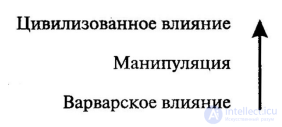
Fig. 2. Types of influence (according to E.V. Sidorenko)
By civilized influence, E.V. Sidorenko means influence:
That conforms to the rules of etiquette;
That conforms to the ethical norms accepted by the subject himself.
Civilized influence conforms both to the rules of conduct and manners (etiquette) and to subjective criteria of fairness and nobility (ethics). This influence is at once correctly executed and noble, worthy of a human being. Just as civilization is a stage of social development that follows barbarism, so civilized influence stands above barbarian influence – crude, cruel and ignorant.
Civilized influence requires a certain level of psychological culture, at which a person becomes ennobled by civilization rather than remaining a barbarian.
Manipulation lies between the barbarian level of interaction and the civilized level.
As operational criteria of civilized influence, E.V. Sidorenko identifies three:

Fig. 3. Criteria of civilized influence (according to E.V. Sidorenko)
The psychological means of civilized influence include, above all, words, speech, text. In this, such influence is addressed to those human faculties responsible for working with these means, to reason, intellect, cognitive abilities.
Among the truly civilized types of influence, E.V. Sidorenko includes argumentation, counter-argumentation, self-promotion and constructive criticism. These types of influence satisfy all three criteria of civility: they help preserve and develop the matter at hand, the working relationship, and the personal integrity of the participants. Depending on the specific conditions, the author holds, certain disputable types of influence can also be civilized, for example, request, arousing an impulse to imitation, suggestion, emotional contagion, ignoring (not the person, but certain of his statements or reactions), and the like.
The barbarian types of influence include attack (in all its varieties) and coercion. Even if, in the short term, these methods of influence increase the effectiveness of the work, they inevitably violate and destroy the working relationship and, above all, the personal integrity of the participants. Sometimes people play at barbarism, or agree that their relations will be barbarian, at least for a while. But if there is no special agreement to play the game or about “temporary barbarism, then the use of uncivilized methods constitutes barbarism, and the person employing them is a psychological barbarian.
Manipulation is a transitional stage between barbarism and civilization. It aims to compel a person to feel, think and act in a way that is advantageous to the manipulator, while making sure the person does not feel that he has been compelled. If the manipulation remains covert, it may outwardly look like a civilized method, since both the matter at hand and the working relationship can flourish, and even the personal integrity of the participants may remain unaffected. However, once the manipulation is exposed, it ceases to satisfy all three criteria of civility.
Thus, manipulation – is a “"Potemkin village," where in place of real houses – there are painted facades. Perhaps for many people a Potemkin village is preferable to the bleak empty field that would open up before us in all its dreariness if these painted houses did not exist. They prefer to be deceived rather than to learn the truth, however bitter” [Sidorenko, 2002, p.29].
Which basic scientific paradigms for understanding human nature and behavior, in G.A. Kovalyov's view, correspond to the strategies of interpersonal influence: imperative, manipulative, developmental?
Which of the three strategies of influence described by G.A. Kovalyov would be most effective in extreme situations such as: a) a gas leak at a fuel-production plant, b) an urgent order at a design firm, c) obtaining secret data on the location of enemy troops, d) calming down a heavily intoxicated acquaintance?
Which of the five strategies of influence identified by E.L. Dotsenko do you think are closer to the concept of “developmental influence”?
What do the mechanisms of influence in manipulation and in developmental influence have in common?
Which ideas of humanistic psychology did Russian psychologists use in developing their classifications and descriptions of types of influence?
Why did E.V. Sidorenko use the terms “civilized” and “barbarian” influence to denote the constructive and non-constructive types of influence? What substantive criterion did she use as the basis for her classification?

Comments