
Lecture
Projective techniques (from Lat. projectio «throwing forward») — one of the methods of psychodiagnostics, a group of personality diagnostic techniques characterized to a greater extent by a holistic, global approach to personality assessment rather than by identifying its separate traits.
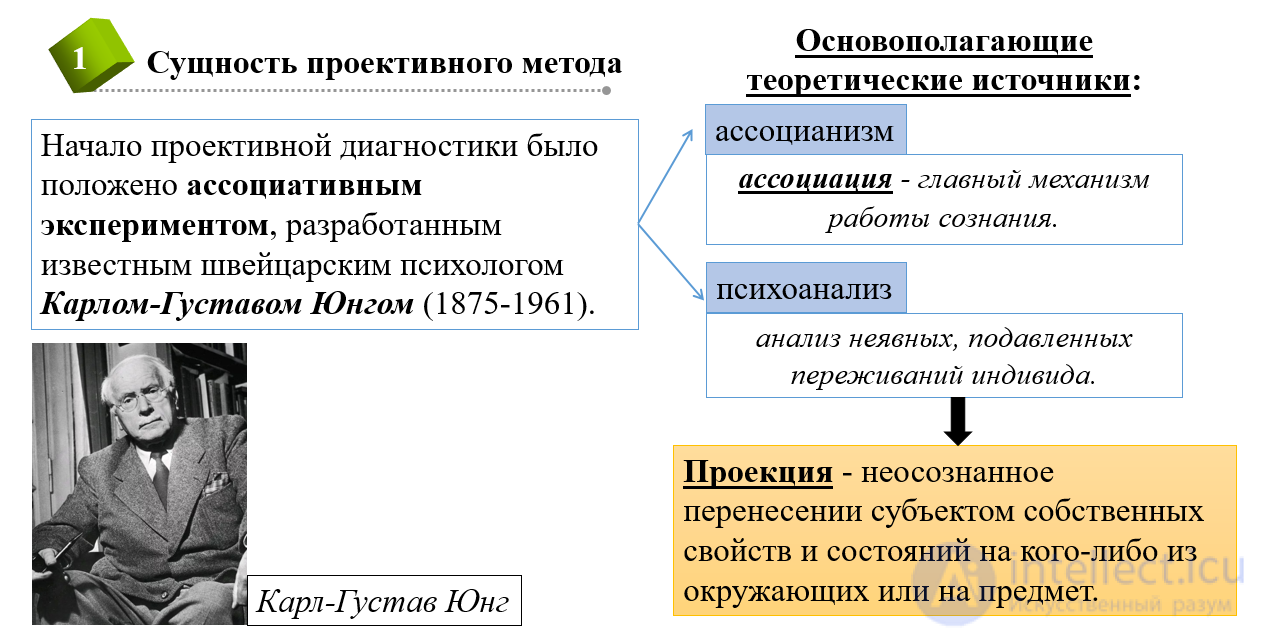
Projective techniques are special research methods aimed at obtaining information about a person's personality, motivations, emotions and internal conflicts. They are often used in psychology, psychiatry, sociology and education. Projective tests assume that a person projects their thoughts, feelings and internal conflicts onto external objects or situations, which allows researchers to gain a deeper understanding of their inner world.
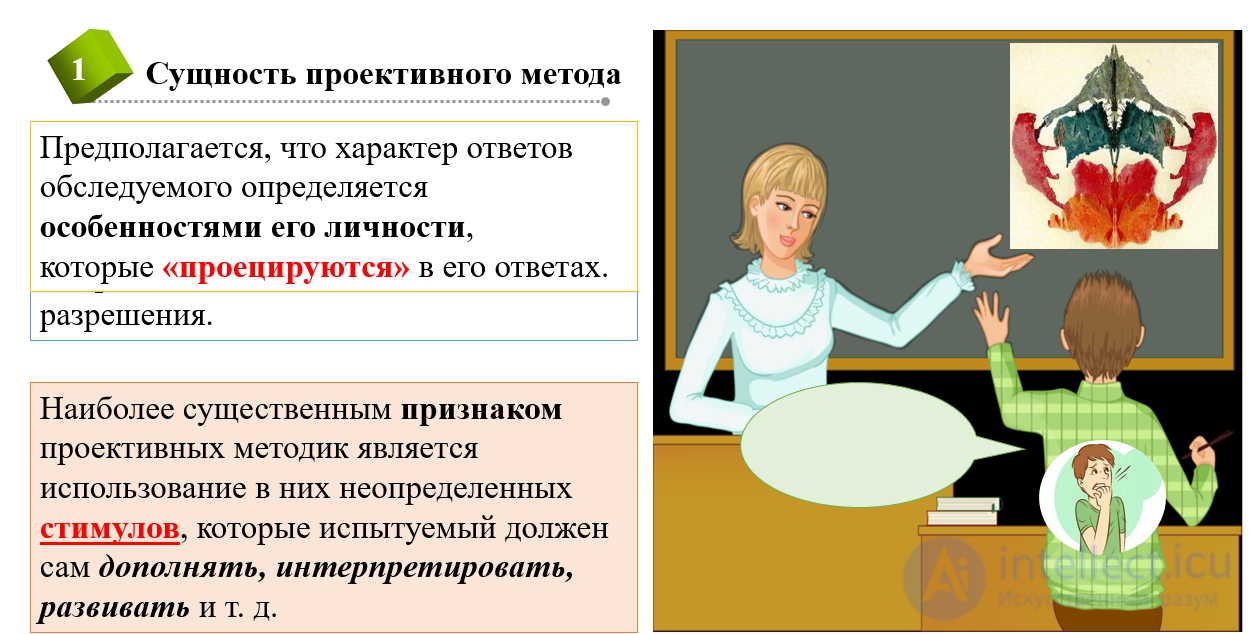
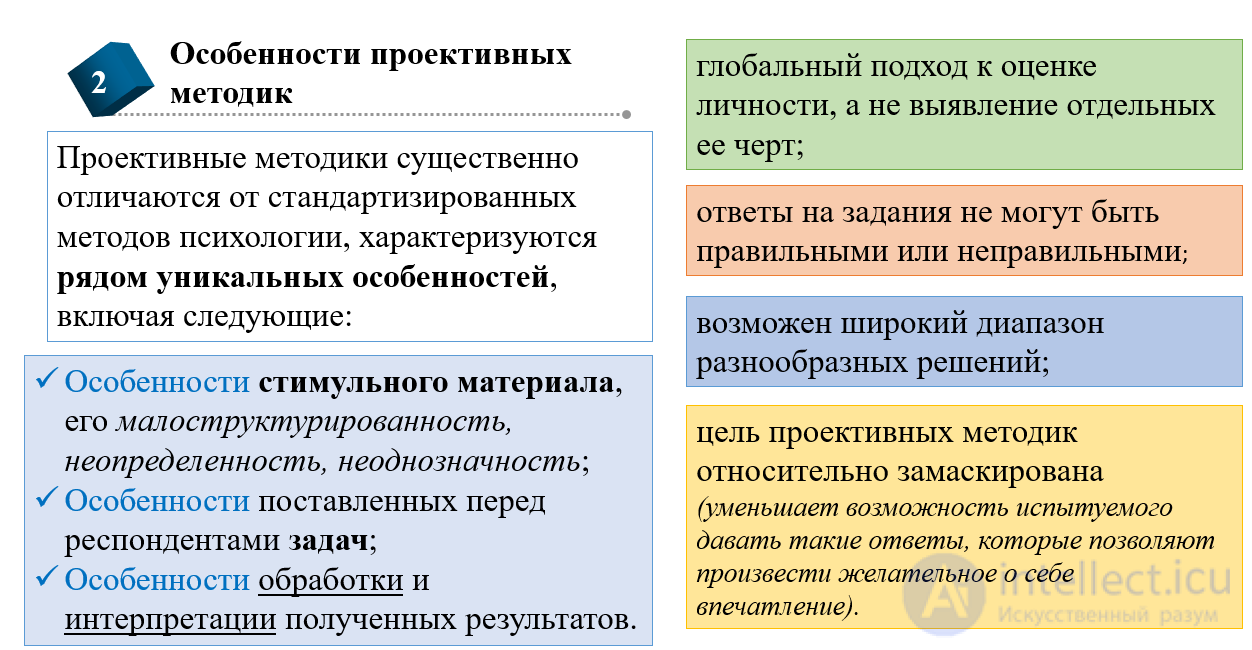
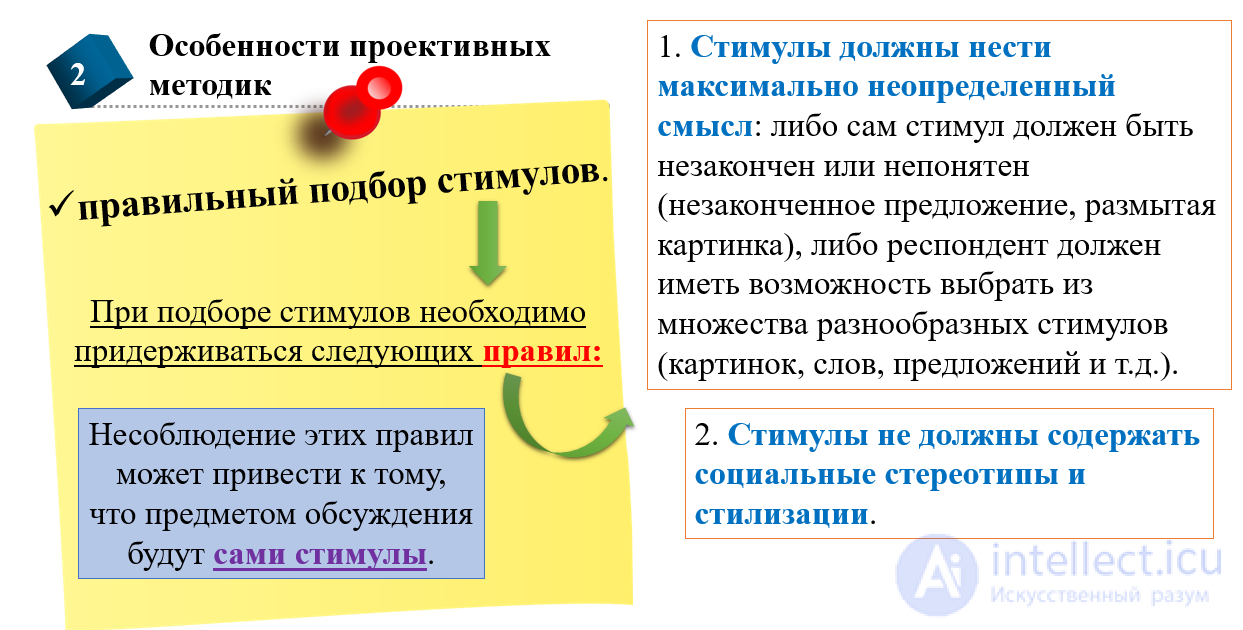
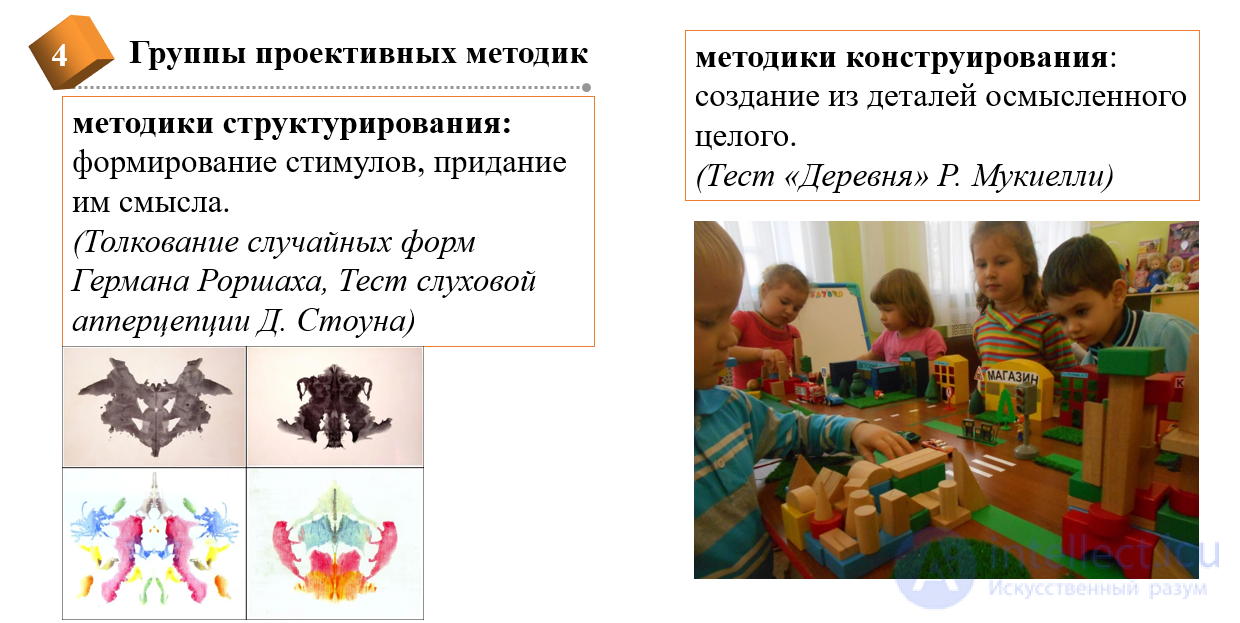
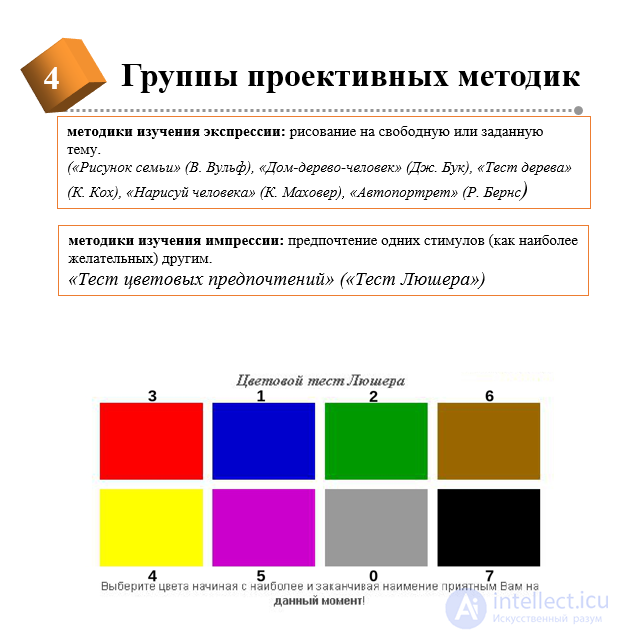
Projective techniques are based on identifying various projections in experimental data with their subsequent interpretation. The concept of projection to denote this research method was introduced by L. Frank. The projective method is characterized by the creation of an experimental situation that allows for a multiplicity of possible interpretations as perceived by the subjects. The most essential feature of projective techniques is the use of ambiguous stimuli, which the subject must complete, interpret, develop, and so on. Thus, subjects are asked to interpret the content of narrative pictures, complete unfinished sentences, give an interpretation of indeterminate shapes, and the like. In this group of techniques, responses to tasks also cannot be correct or incorrect; a wide range of different solutions is possible. It is assumed that the nature of the subject's responses is determined by the characteristics of their personality, which are «projected» in their answers. The purpose of projective techniques is relatively disguised, which reduces the subject's ability to give answers intended to create a desirable impression of themselves. Behind each such interpretation, a unique system of personal meanings and features of the subject's cognitive style emerges. The method is supported by a set of projective techniques (also called projective tests), among which the following are distinguished: associative (for example, the Rorschach test, the Holtzman test, in which subjects create images from stimuli — blots; the sentence completion test); interpretive (for example, the thematic apperception test, in which one is required to interpret a social situation depicted in a picture); expressive (psychodrama, the draw-a-person test, the draw a non-existent animal test by M. Z. Dukarevich). The overall use of projective techniques is called projective psychology

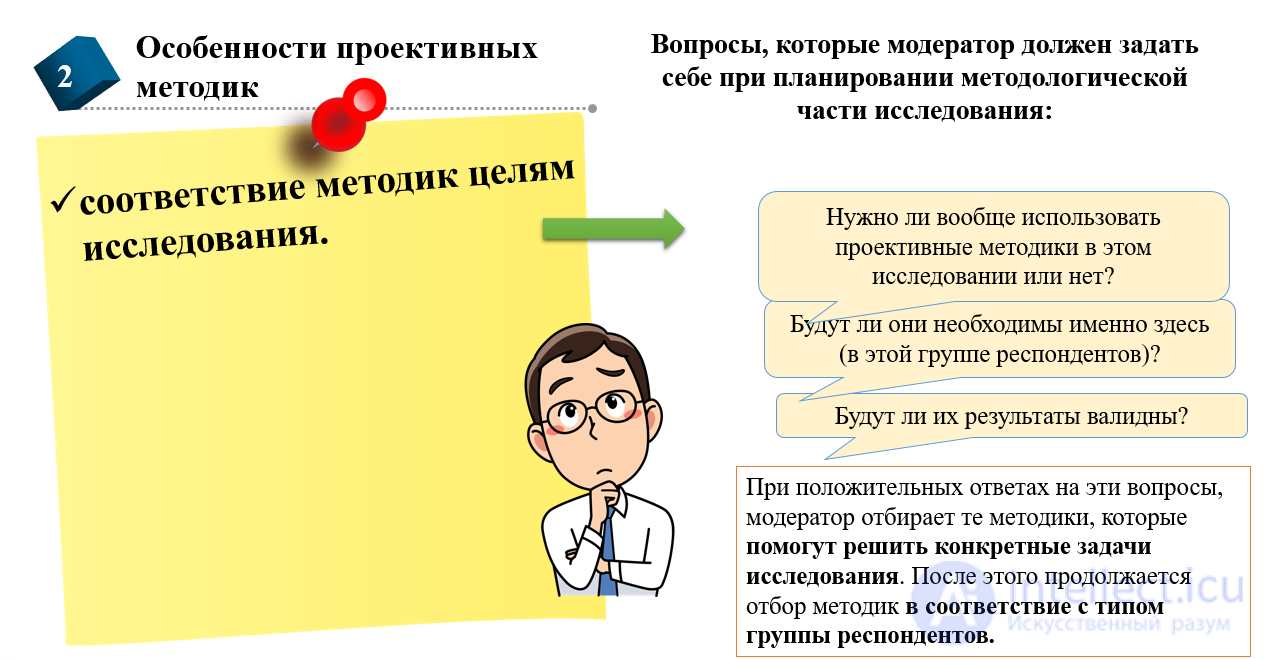

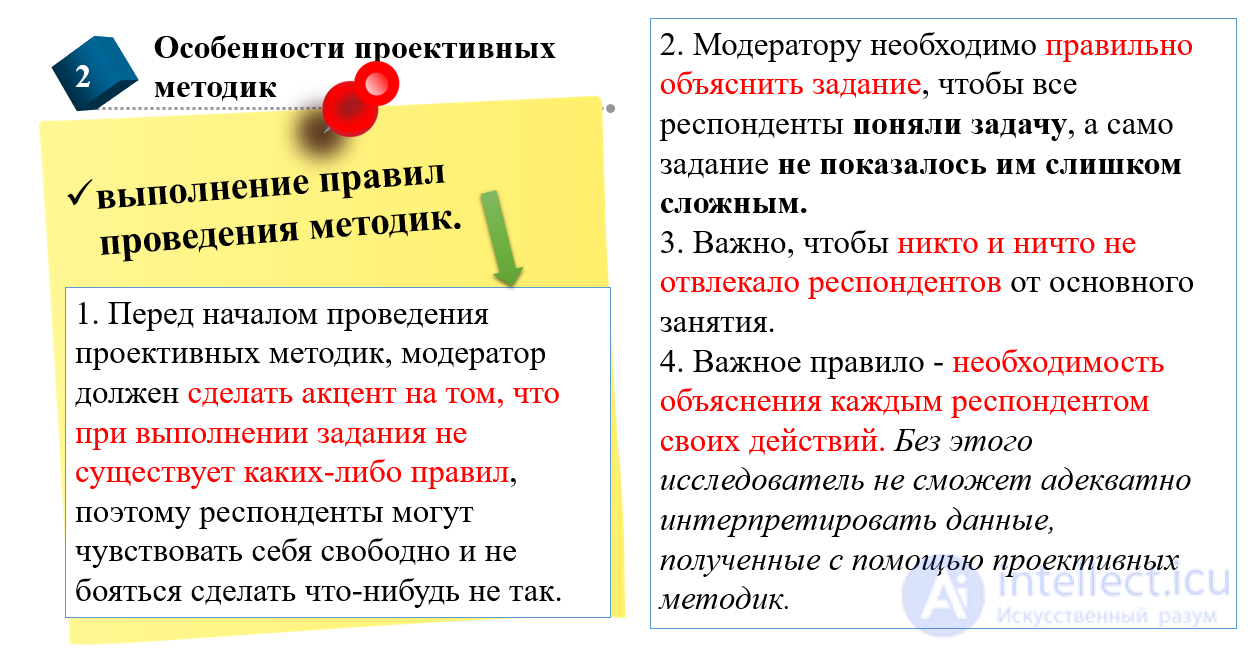
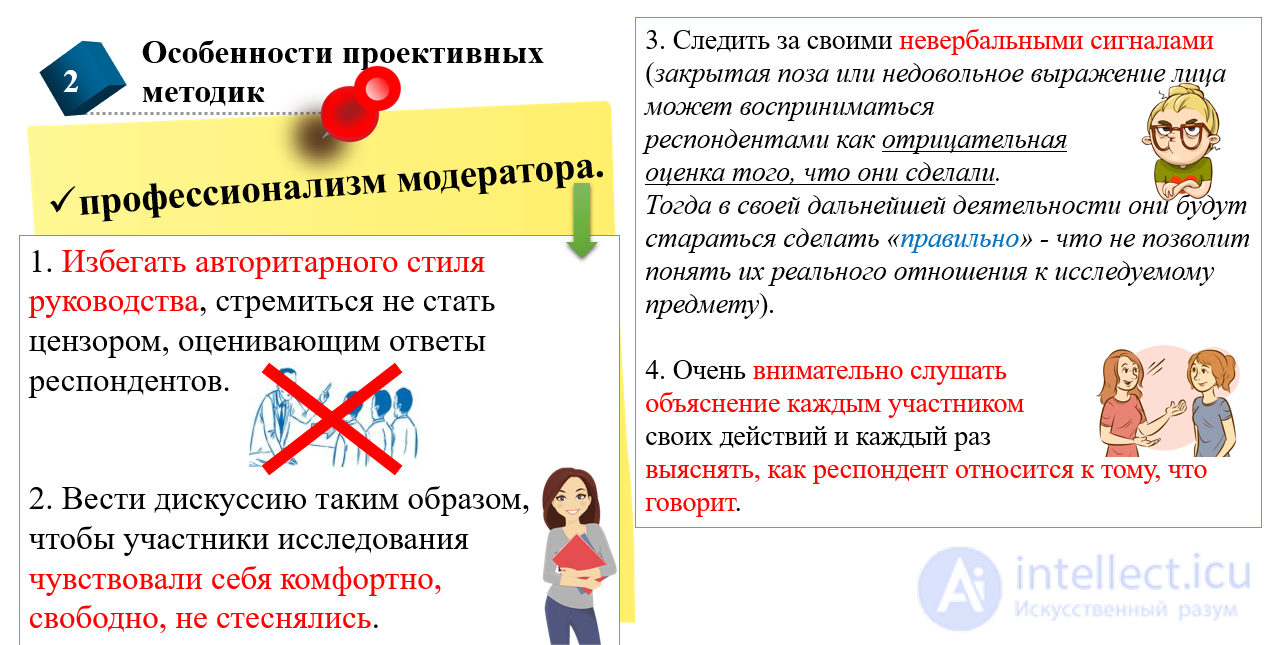


Projective techniques can be useful in psychodiagnostics for gaining a deep understanding of an individual's personality, emotional state and motivations. Here are several steps that can be taken when using projective techniques in psychodiagnostics:
Choosing a suitable technique:
Preparing the client:
Conducting the test:
Analyzing the results:
Integration with other techniques:
Consultation with the client:
Accounting for context:
Ensuring ethical conduct:
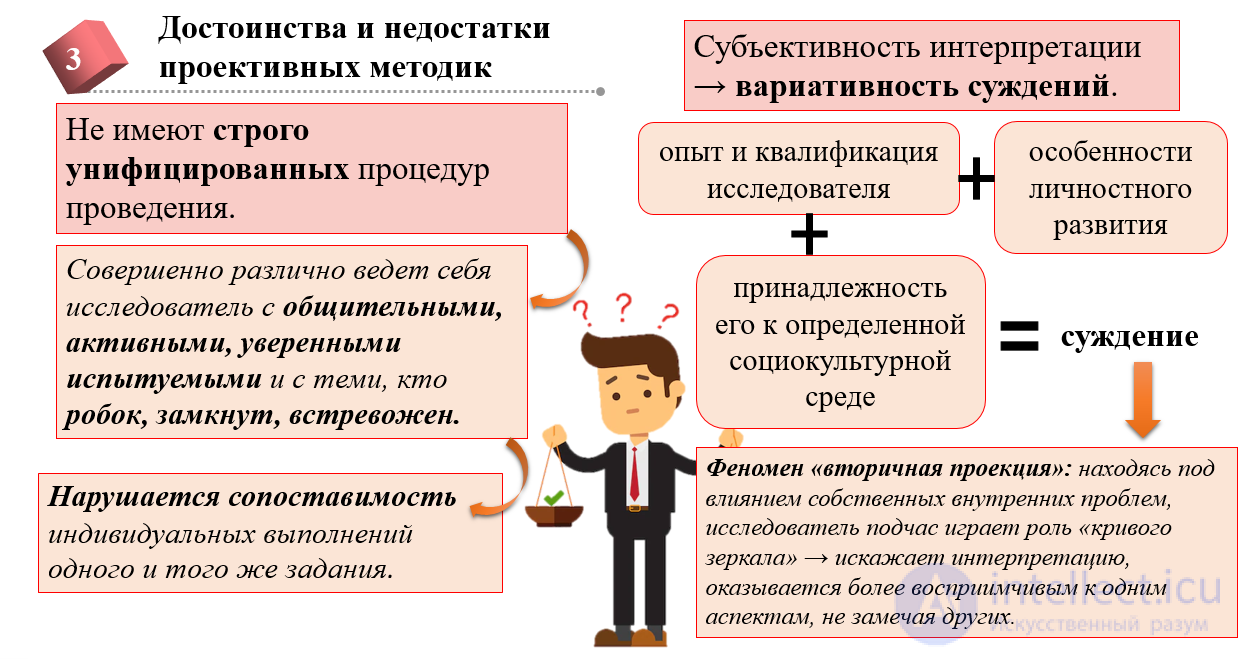
Remember that projective techniques are not an absolute diagnostic tool, and their interpretation requires experience and professional skill. Combining various methods can improve the accuracy and completeness of the psychodiagnostic picture.


Projective techniques are often used in clinical practice, in psychotherapy, as well as in the fields of recruitment and personnel assessment. However, it should be noted that interpreting the results of projective tests requires professional skill, and the use of these techniques must be accompanied by caution and ethical conduct.
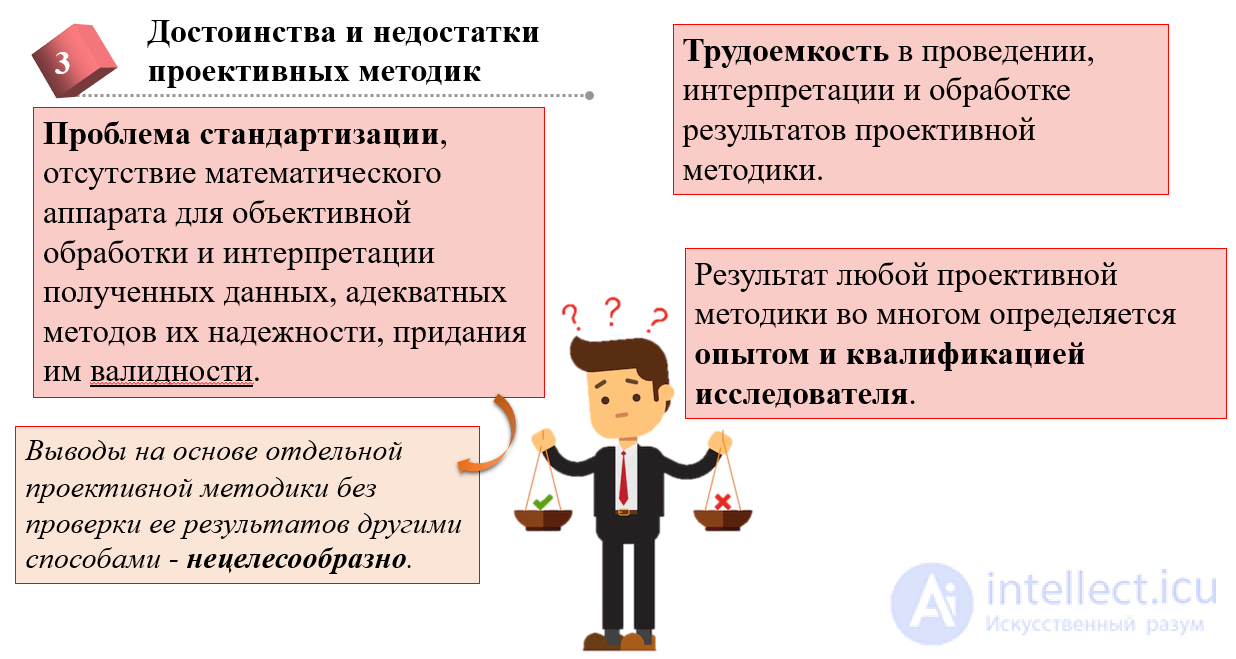
Projective techniques are an innovative tool for studying personality, making it possible to implement a qualitative rather than a quantitative approach. At the same time, being relatively new tools, many projective techniques lack a mathematical apparatus for processing and interpreting research results, which necessitates combining the projective method with quantitative approaches.
Projective methods are also actively used for self-knowledge, identifying one's abilities, hidden interests, types of relationships between children and parents, and so on.
The worldwide Internet makes it possible to apply and implement projective techniques free of charge using special online resources.

Comments