
Lecture
Introduction to the discipline "Location Lighting in Games and Cinematography"
Lighting plays a key role in shaping the visual perception of a scene in both interactive and linear media projects. In cinematography, light sets the atmosphere, emphasizes the dramaturgy, focuses the viewer's attention, and helps convey the mood of a scene. In games, lighting additionally affects gameplay, player navigation, and immersion in the virtual world.
The discipline "Location Lighting in Games and Cinematography" is devoted to studying the theoretical foundations and practical techniques of light setup. The course covers types of lighting, its physical and artistic properties, the principles of building lighting schemes, as well as the technical aspects of implementing light in various software environments — from game engines to visual effects systems.
The goal of the course is to teach students to create expressive and functional lighting that enhances the project's visual style, emphasizes key elements of composition, and contributes to effective storytelling. Particular attention is paid to analyzing lighting in well-known films and video games, as well as creating original lighting solutions for given scenes and locations.
Knowledge of the fundamentals of lighting is essential for every specialist working in the field of visual arts — from environment artists to technical directors. Lighting is not merely a technical tool, but a crucial expressive means that turns an image into a full-fledged visual story.
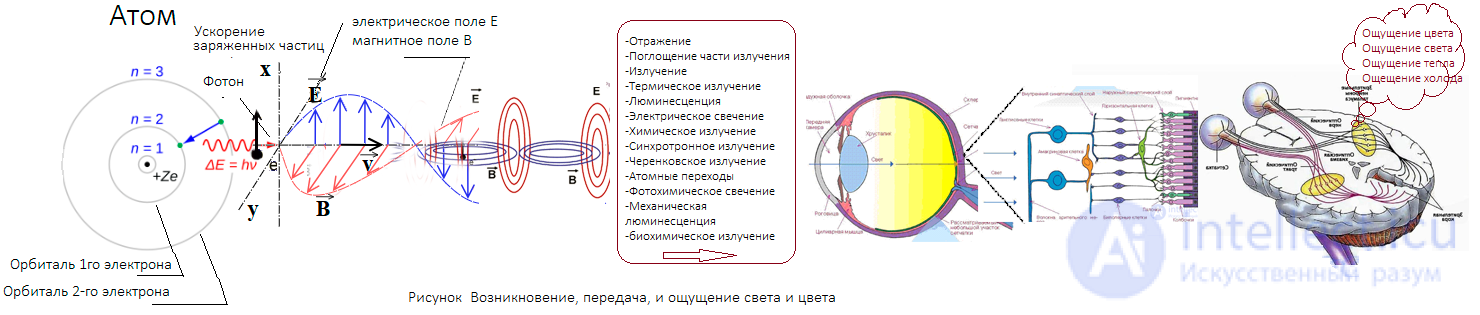
Fig. the emergence of light and its perception by humans (discussed in more detail below)
Due to the large number of stages in the process of visual perception, its individual characteristics are examined from the perspective of different sciences — quantum physics, optics, biophysics, psychology, physiology, chemistry (biochemistry). At each stage of perception, distortions, errors, and failures arise, but the human brain processes the information received and makes the necessary corrections. These processes are unconscious in nature and are implemented through multilevel autonomous correction of distortions.
According to the renowned British neurophysiologist Richard H. Masland , much remains unknown in the field of vision physiology, and the higher visual centers have been studied only in the most general terms .
Light is electromagnetic radiation perceived by the human eye. It propagates in waves and carries energy.
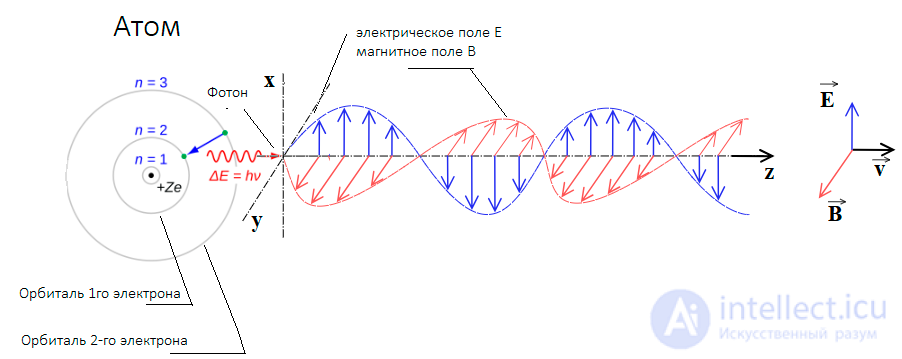
In physics, electromagnetic radiation (EMR) is a self-propagating wave of the electromagnetic field that carries momentum and radiant energy through space. It covers a broad spectrum, classified by frequency or its inverse, wavelength, ranging from radio waves, microwaves, infrared radiation, visible light, ultraviolet, X-rays, and gamma rays. All forms of EMR propagate at the speed of light in a vacuum and exhibit wave-particle duality, behaving both as waves and as discrete particles called photons.
The root cause of the emergence of electromagnetic radiation is a varying electric field — an accelerating charge (any charged particle) or an electron transitioning from one energy level to another.
Electromagnetic radiation is created by accelerating charged particles, such as from the Sun and other celestial bodies, or is artificially generated for various applications. Its interaction with matter depends on wavelength, which affects its use in communications, medicine, industry, and scientific research. Radio waves enable broadcasting and wireless communication, infrared radiation is used in thermal imaging, visible light is necessary for vision, and higher-energy radiation such as X-rays and gamma rays is used in medical imaging, cancer treatment, and industrial inspection. Exposure to high-energy radiation can pose health risks, making shielding and regulation necessary in certain applications.
The visible spectrum of light is the range of wavelengths from approximately 380 to 750 nanometers.
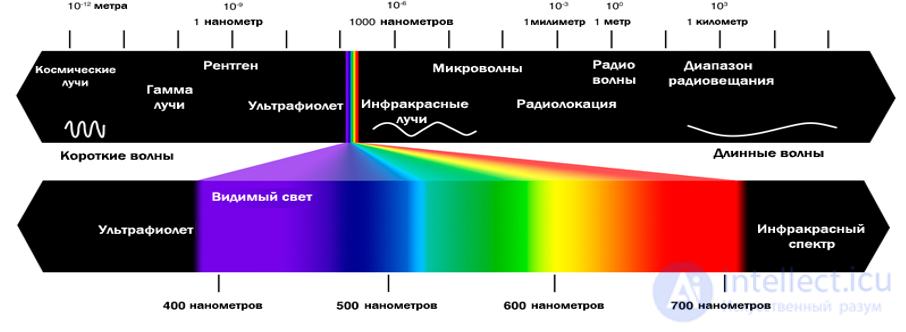
Human perception of light is closely related to the physiology of the eye and the psychology of perception. Important features:
Adaptation: the pupil regulates the amount of light entering the eye.
Color vision: the retina contains cones sensitive to red, green, and blue. Their combined activity creates the perception of the full color spectrum.
Contrast and shadows: important for judging the shape, texture, and depth of objects.
Lighting plays a key role in conveying information, creating atmosphere, and guiding the viewer's attention. In the visual arts (film, photography, painting, design), light is the primary expressive tool.
Light is electromagnetic radiation in the wavelength range of roughly 380 to 740 nanometers. This is the range perceived by the human eye and is called visible light.
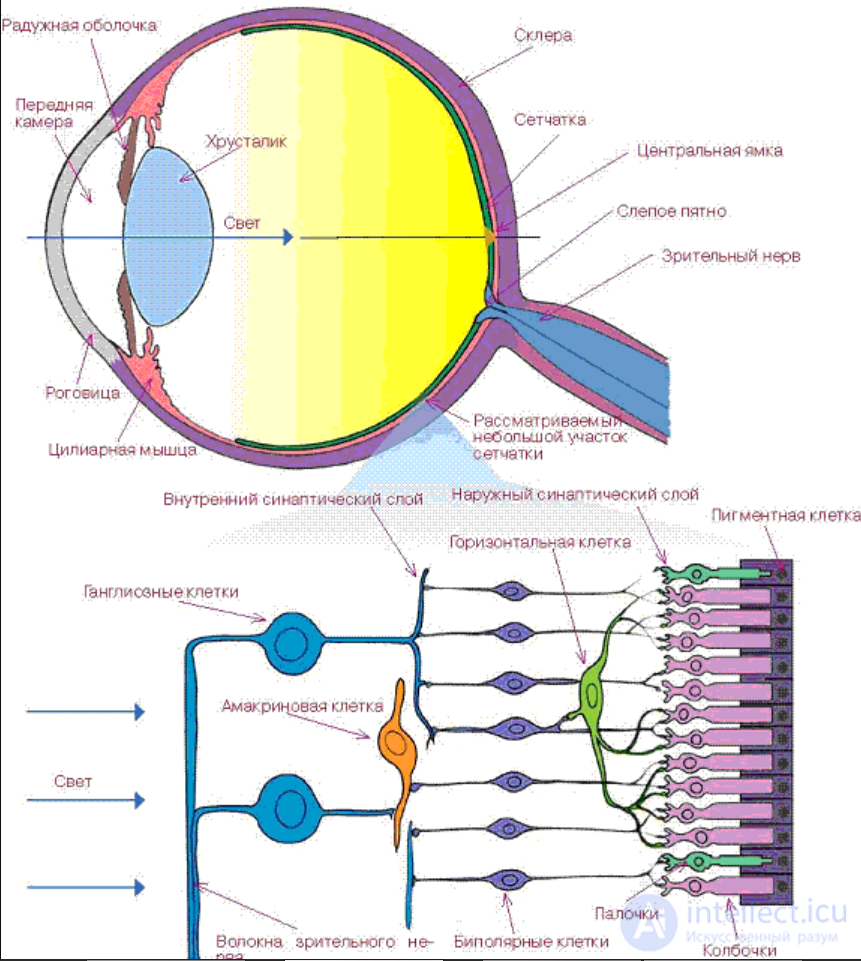
The main parts of the eye involved in the process of vision:
The cornea and lens — focus light onto the retina.
The pupil — regulates the amount of light entering the eye.
The retina — the inner lining of the eye, containing light-sensitive cells:
Rods — sensitive to low light, do not distinguish color.
Cones — function in bright light and are responsible for color vision:
S-cones — sensitive to blue (≈420 nm)
M-cones — to green (≈530 nm)
L-cones — to red (≈560 nm)

Full perception of the entire color range is provided by iodopsin, which in turn comes in several types:
Light is converted into electrical signals in the photoreceptors.
These signals are transmitted via the optic nerve to the occipital lobe of the brain.
The brain analyzes the information — forming visual perception: color, shape, motion, depth, and more.
The human eye is trichromatic — it distinguishes colors by comparing signals from three types of cones.
This explains why screens (RGB) can reproduce thousands of shades by combining three base colors.
Other kinds of animals are able to see different parts of the light spectrum; for example, bees can see in the ultraviolet range, while snakes can precisely target prey using their pit organs, which are sensitive to infrared radiation. The mantis shrimp possesses perhaps the most complex visual system of any species. The mantis shrimp's eye contains 16 color-receptive cone types, whereas humans have only three. This diversity of cones allows them to perceive an expanded range of colors as a mechanism for mate selection, predator avoidance, and prey detection.
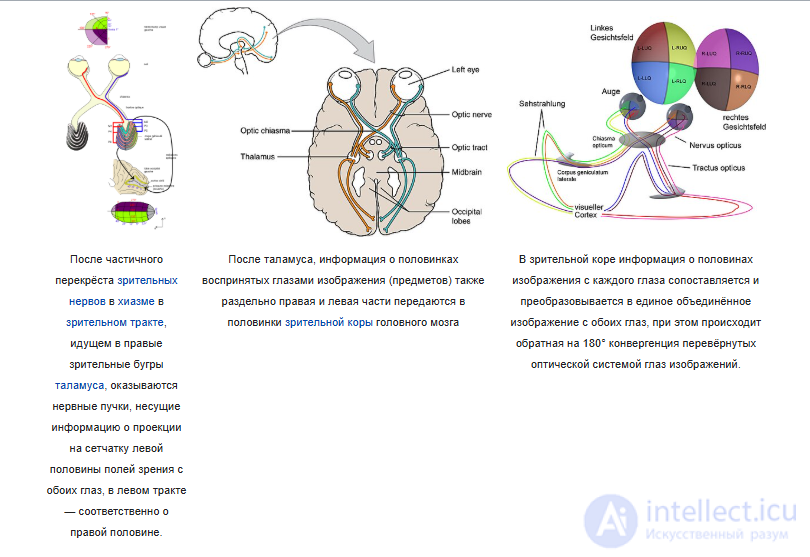
Transduction is the process by which energy from external stimuli is converted into neural activity. The retina contains three distinct layers of cells: the photoreceptor layer, the bipolar cell layer, and the ganglion cell layer. The photoreceptor layer, where transduction occurs, is farthest from the lens. It contains photoreceptors of varying sensitivity, called rods and cones. Cones are responsible for color perception and come in three different types: red, green, and blue. Rods are responsible for perceiving objects in low light. Photoreceptors contain within them a special chemical substance called photopigment, which is embedded in the membrane of the lamellae; a single human rod contains about 10 million such molecules. Photopigment molecules consist of two parts: opsin (a protein) and retinal (a lipid). There are 3 specific photopigments (each with its own sensitivity to wavelength) that respond across the entire visible light spectrum. When the corresponding wavelengths (those to which a particular photopigment is sensitive) strike the photoreceptor, the photopigment splits into two, sending a signal to the bipolar cell layer, which in turn sends a signal to the ganglion cells, whose axons form the optic nerve and carry the information to the brain.
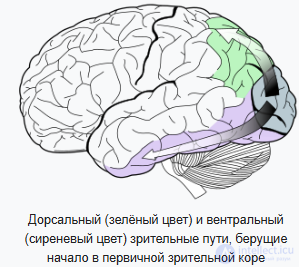
The two-stream hypothesis of visual information processing is the idea that the cerebral cortex contains two processing streams — the ventral and the dorsal. The hypothesis was put forward in 1983 by the neuropsychologist Mishkin and colleagues. Mishkin and colleagues proposed that the cerebral cortex has two anatomically and functionally distinct pathways for processing two kinds of visual information — spatial (the channel handling this type of information he called the «Where?» system) and object-related (correspondingly, the «What?» system). This idea was suggested to him by experiments on rhesus macaques with lesions in various regions of the cerebral cortex. Thus, when the inferior temporal region was damaged, the monkey could not distinguish objects presented in the visual field, whereas when the parietal regions were damaged, the animal failed to determine spatial position.
Blind spot — an area on the retina without photoreceptors (at the point where the optic nerve exits).
Adaptation to light:
Light adaptation — when moving from darkness into light.
Dark adaptation — the reverse.
Color blindness (color vision deficiency) — a disturbance of color perception (usually associated with the absence of one type of cone).
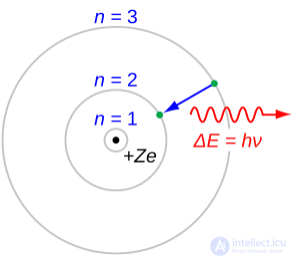
The source of electromagnetic radiation is a changing electric field – an accelerating charge or an electron transition from one energy level to another. High-frequency radiation is produced through the continuous, massive process of electron transitions between energy levels.
Emission of a light photon during the transition of an atom with nuclear charge +Ze from the third energy level to the second. ---- Until 1923, most physicists were reluctant to believe that electromagnetic radiation possessed quantum properties. Instead, they tended to explain photon behavior through the quantization of matter, as, for example, in Bohr's model of the hydrogen atom. Although all these semiclassical models were disproved by experiment, they led to the creation of quantum mechanics.
It is well known that when heated to certain temperatures, substances begin to emit light: whether it is the tungsten filament in an electric light bulb or our own celestial luminary, whose surface temperature is about six thousand degrees Celsius
Scientists have established that the energy of atoms is discrete in nature and changes in specific jumps characteristic of each atom. These established possible values of atomic energies are called energy or quantum levels. Electrons, while at one of the higher energy levels, spontaneously transition to lower ones after a time interval on the order of 10−8 seconds. At the same time, a spontaneous transition from the lowest state to any other is impossible. This level is called the ground level, while the others are called excited. Under normal conditions, all atoms are in their ground energy states. In order to excite an atom, it must be given a certain amount of energy, and for each atom there exists a specific smallest portion of energy that moves it from the ground state to the excited state (for hydrogen, for example, this value is 10.1 eV — the gap between its first and second energy levels).
When transitioning from higher states to lower ones, a portion of energy is emitted — a photon. According to Planck's formula, the emitted energy is calculated as follows:
 ,
,
where h — is Planck's constant, and νnm — is the frequency of the photon during the transition from level n to level m (n>m), which can be calculated from the energies of these levels: 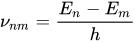
As the temperature of a body rises, its radiation is supplemented by ever higher frequencies. Thus, the radiation of a body heated to several thousand degrees will represent a continuous spectrum: from infrared to ultraviolet.
Visible light – is produced by electron transitions between the valence levels of atoms, which require comparatively small amounts of energy (usually a few electron-volts).
Short-wavelength radiation, for example X-rays – arises from deep quantum transitions, when an electron is knocked out of an inner shell of the atom (for example, the K- or L-shell) and another electron fills its place, releasing a very high-energy photon.
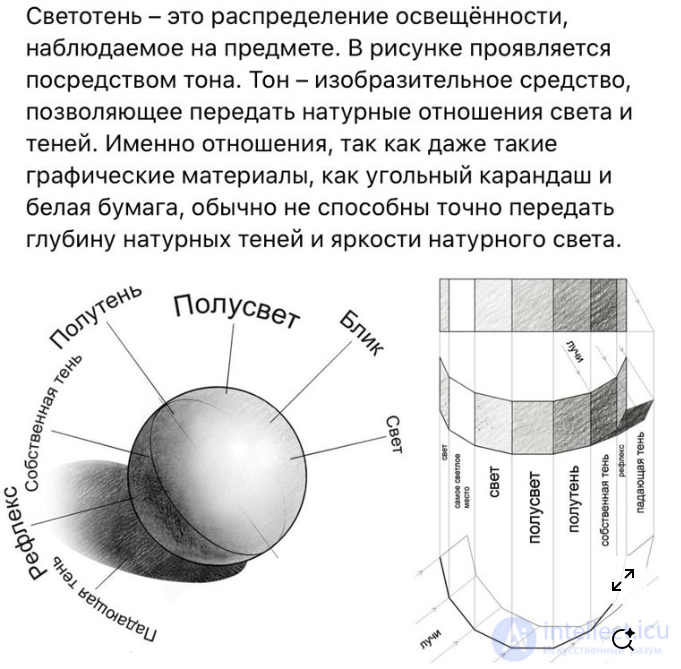
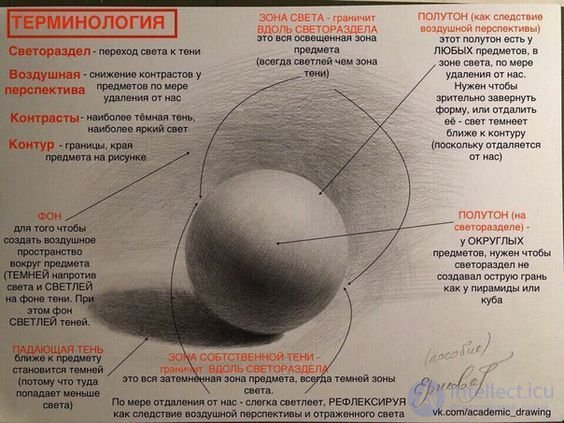
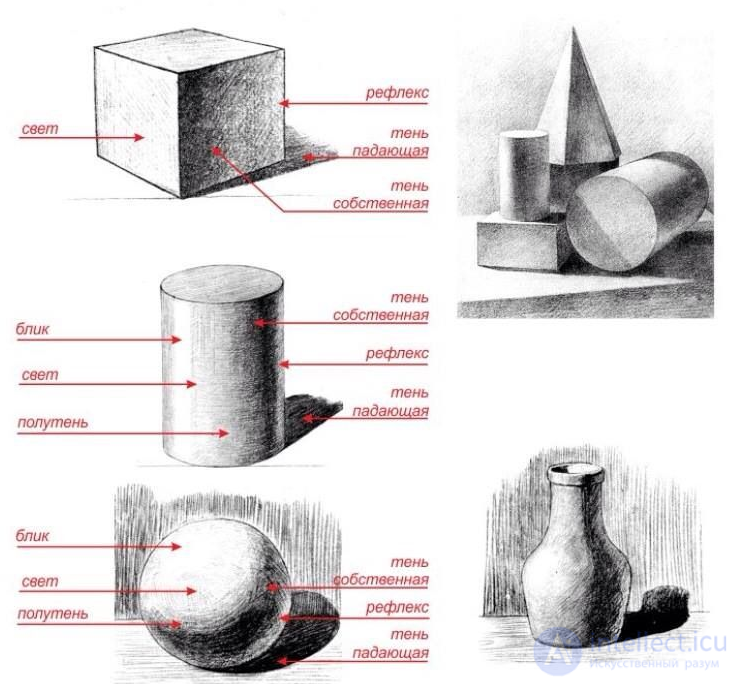
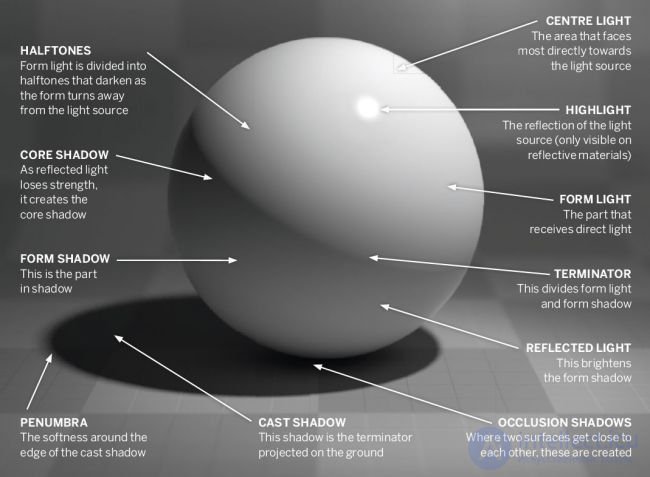
Light and shadow in a drawing create the illusion of three-dimensional space on a two-dimensional surface with the help of light and dark shapes. Since light, when it falls on an object, is distributed unevenly and at different angles, the degree of illumination of its various sides also differs greatly.
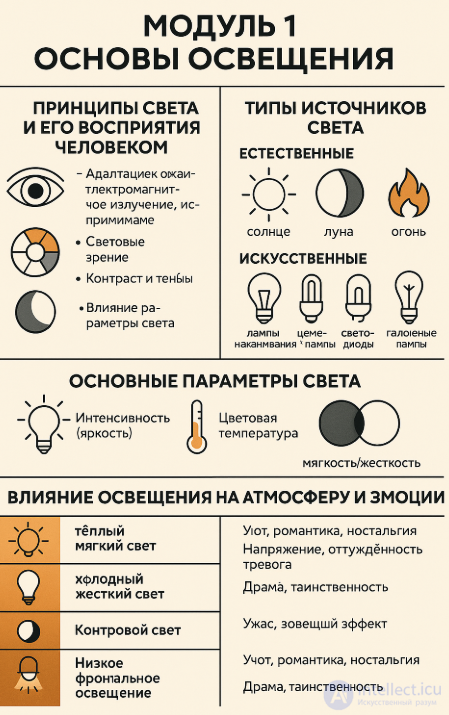
Light can be conditionally divided into natural and artificial.
The Sun — the primary source of daylight. Characterized by high brightness and a color temperature that varies depending on the time of day.
The Moon — reflected sunlight, weak in intensity.
Fire (bonfires, candles, lightning) — sources with a warm spectrum.
Incandescent lamps — warm light (around 2700K), soft and cozy.
Fluorescent lamps — cool or neutral light, often used in offices.
LEDs — can mimic different color temperatures, energy-efficient.
Halogen lamps, neon, lasers, and others.
In real-time computer graphics applications, such as video games, three main types of light sources are distinguished :
They only approximately describe their analogues in the physical world; nevertheless, combined with quality shading models, such as Phong shading, they allow the creation of quite realistic images.
It is important to understand that the choice of light source affects not only brightness, but also the emotional tone of the scene.
Colors in an image can be described by several characteristics:
Hue – the primary color, for example, red, blue, or green.
Saturation – the intensity of the color, from pale to vivid.
Brightness – the level of lightness or darkness of a color.
Contrast – the difference between the light and dark areas of an image.
Tone – the balance between warm (reds, oranges) and cool (blues, greens) hues.
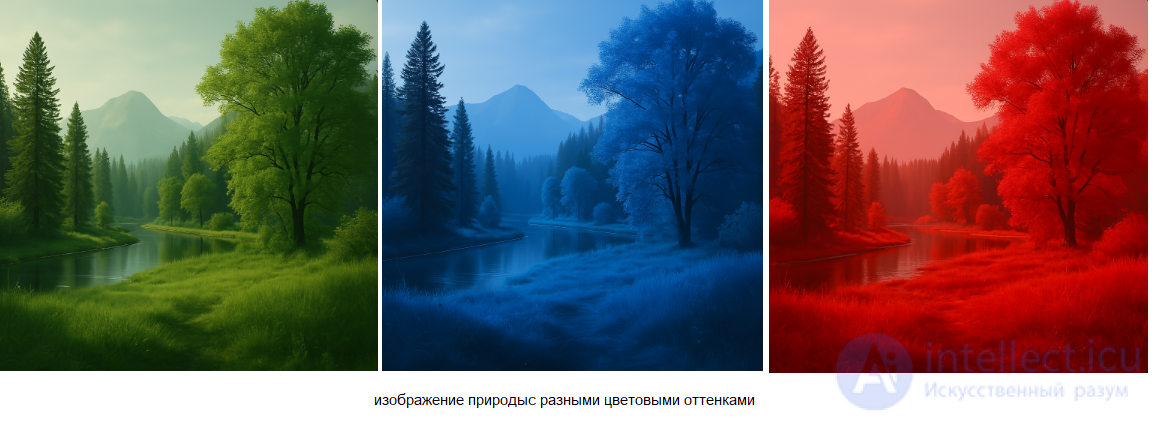
an image of nature with different color hues achieved through software means (changing the hue) or hardware means (using transparent color-filter materials)
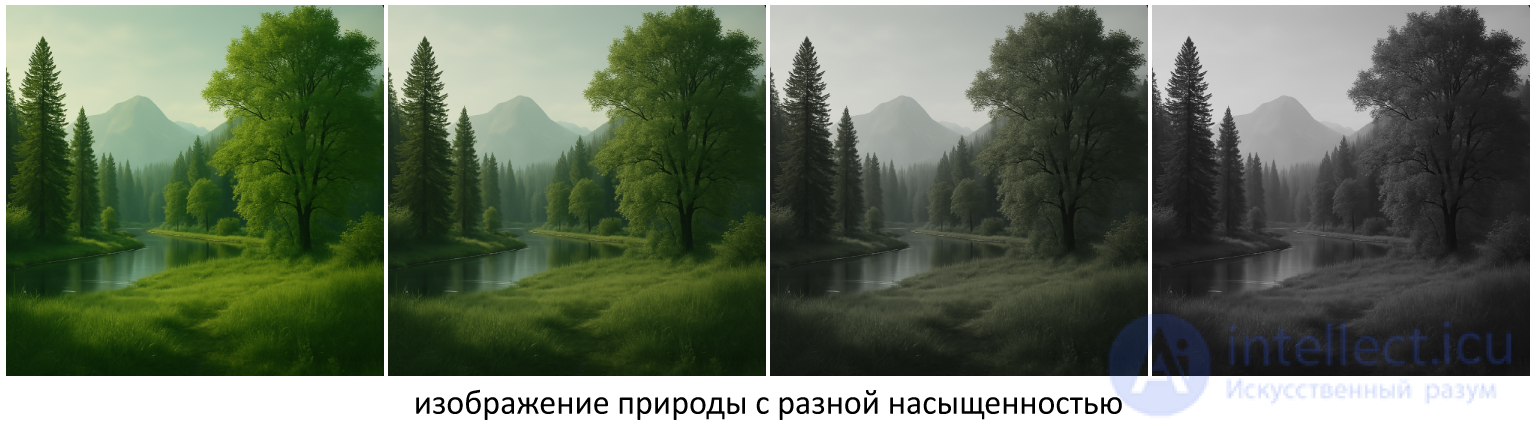 an image of nature with varying saturation
Measured in lux or candelas. Determines how bright an object appears. Strong lighting emphasizes details, while weak lighting can obscure them.
Measured in kelvins (K):
Warm light: 2000–3500K (a yellow-orange tint)
Neutral white: 4000–5000K
Cool light: 5500K and above (a bluish tint)
Temperature affects the perception of space: warm light makes it feel cozy, cool light — strict and modern.
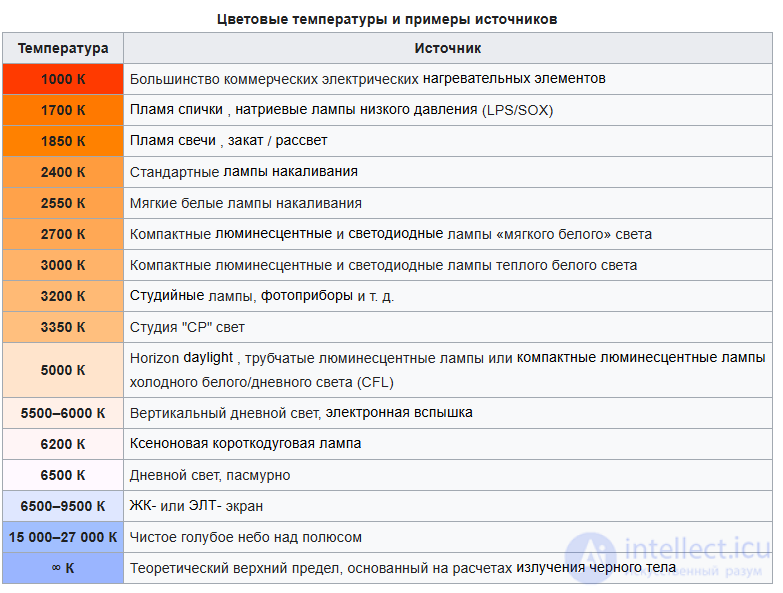
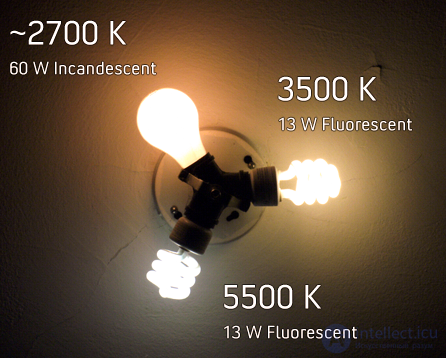
Color temperature of common electric lamps
In addition to color temperature, there is also a parameter called tint — the degree of color deviation toward green or magenta. Together with temperature, this parameter allows any monochromatic light to be described. The concept of tint is most often used in photography to determine the exact parameters of the required color-conversion filter when shooting. Different light sources are characterized not only by different temperatures, but also by tint (for example, daylight fluorescent lamps have a shift toward magenta or green). Most color meters, in addition to color temperature, can directly output the tint value in special units — mireds — which corresponds to the calibration of conversion filters.
Determined by the size of the source relative to the object and the distance:
Soft light creates smooth shadows (diffused lighting, for example, an overcast sky or a softbox).
Hard light produces sharp shadows (a point source, such as the sun on a clear day or a flashlight).
Softness affects the visual perception of faces, shapes, and textures.

The house above appears light cream-colored at midday, but here, in the dim light before full sunrise, it appears bluish-white. Notice the color temperature of the sunrise in the background.
Video camera operators can white-balance for objects that are not white, muting the color of the object used for the white balance. For example, they can bring more warmth into an image by white-balancing on something light blue, such as faded blue denim fabric; in this way, white balancing can substitute for a filter or lighting gel when these are unavailable.
Cinematographers do not «white balance» the way video camera operators do; they use methods such as filters, choice of film stock, pre-flashing, and, after shooting, color correction, both through lab exposure and digitally. Cinematographers also work closely with production designers and lighting crews to achieve the desired color effects.
For artists, most pigments and papers have a cool or warm tint, since the human eye can detect even a slight amount of saturation. Gray mixed with yellow, orange, or red is a «warm gray». Green, blue, or violet create «cool grays». This sensation of temperature is the reverse of the actual temperature; a bluer color is described as «cooler», although it corresponds to a higher-temperature blackbody .
 |
|
| "Warm" gray | "Cool" gray |
| Mixed with 6% yellow | Mixed with 6% blue |
Lighting designers sometimes choose filters by color temperature, usually to match light that is theoretically white. Since fixtures using discharge lamps produce light with a significantly higher color temperature than tungsten lamps , using them together can potentially create a harsh contrast, so sometimes fixtures with HID lamps , which typically produce light of 6000–7000 K, are fitted with 3200 K filters to simulate tungsten light. Fixtures with color-mixing capabilities or multiple colors (if they include 3200 K) are also able to produce light similar to tungsten. Color temperature can also be a factor when choosing lamps , since each one is likely to have a different color temperature.
Lighting directly affects the emotional perception of a scene or image.
Our emotional response to color is incredibly strong. Color perception depends on the physiological features of your eyes and on the state of your nervous system, on life experience, and on the surrounding environment. There are no "bad" or "good" colors — it is only a matter of choosing among types of color communication.
There is a certain relationship between color choices and natural human perception. It has been reliably established that every color evokes subconscious associations. Color can attract and repel, instill a sense of calm and comfort, or excite and unsettle.
Lighting has a profound emotional and psychological effect on a person, especially in the visual arts, photography, film, and games. Below is how different types of lighting affect mood:
Bright daylight
Associations: energy, joy, safety, clarity.
Mood: upbeat, positive, active.
Application: scenes of happiness, freedom, vitality.
Warm golden-hour light
Associations: romance, coziness, nostalgia, warmth.
Mood: peaceful, dreamy, soft.
Application: scenes of memories, reunion, love, the aesthetics of nature.
Blue hour / cool light
Associations: contemplation, loneliness, mystery.
Mood: melancholic, introspective, enigmatic.
Application: scenes of reflection, transitions, silence, loss.
Night lighting
Associations: danger, mystery, seclusion, tension.
Mood:
With warm light (lamps, candles): coziness, calm.
With cool light (street lamps, neon): detachment, anxiety.
Application:
Coziness — home scenes.
Anxiety — thrillers, crime scenes, spy episodes.
Contrasty light (high contrast, harsh shadows)
Associations: drama, tension, conflict.
Mood: anxious, sharp, uncertain.
Application: detective stories, horror, thrillers.
Diffused / soft light (fog, clouds)
Associations: mystery, sadness, dreaminess.
Mood: uncertainty, intrigue, sorrow.
Application: dream scenes, fantasy, or transitions between realities.
Directional light (spotlight, flashlight)
Associations: exploration, focus, isolation.
Mood: anxiety, concentration, loneliness.
Application: scenes of searching, interrogation, theatrical accents.
Below — examples:
| Type of lighting | Emotional effect |
|---|---|
| Warm soft light | Coziness, romance, nostalgia |
| Cool harsh light | Tension, alienation, anxiety |
| Backlight | Drama, mystery |
| Low frontal lighting | Horror, sinister effect («campfire-from-below effect») |
| Diffuse daylight | Naturalness, calm |
| Flicker (e.g. from a candle) | Intimacy, mystique, instability |

Lighting can be used to control the perception of space, emphasize key objects, and evoke specific feelings in the viewer — from calm to anxiety.
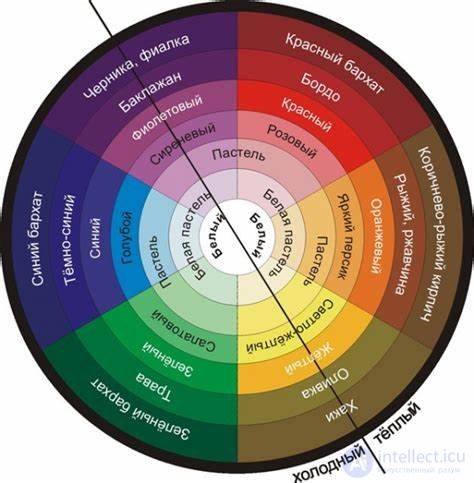
A color circle or color wheel is an abstract illustrative arrangement of color hues in a circle, showing the relationships between primary colors, secondary colors, tertiary colors, and so on.
Some sources use the terms «color wheel» and «color circle» interchangeably; however, one term or the other may be more common in certain fields or specific versions, as noted above. For example, some reserve the term «color wheel» for mechanical rotating devices, such as color tops, filter wheels, or Newton's disc. Others classify various color circles as color discs, color diagrams, and varieties of the color scale
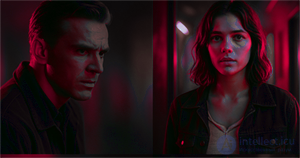
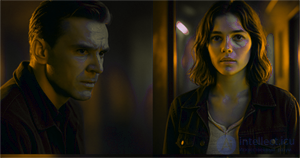
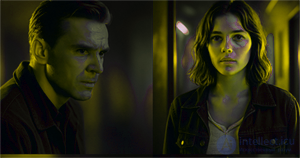
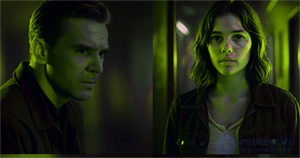
| Color | Emotional meaning | Application examples | Execution examples |
| Warm tones (orange, yellow) | Coziness, nostalgia, warmth | Family scenes, flashbacks |  |
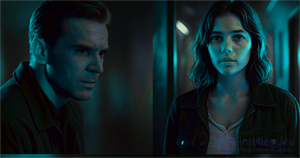
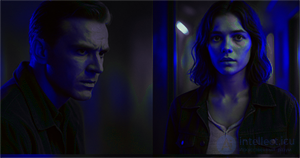
| Cool tones (blue, light blue) | Loneliness, fear, detachment | Thrillers, dramas |  |
|
Red
|
this color belongs to the warm colors and is an
expression of magnetic, life-giving force,
which is why on a psychological level it has a
stimulating effect on a person's vital energy and
activity. It is used to energize
people, and for holding revolutions and demonstrations
|
Action, dramas horror, action films |
|
|
Orange
|
is an important energy source for
the perception of new ideas, while simultaneously giving an impulse for their realization.
|
|
|
|
Yellow
|
it belongs to the warm colors and, being associated in our
minds with sunlight, evokes in us a feeling of upliftment.
Yellow has a stimulating effect on intellect and intuition.
|
|
|
|
Green
|
is connected with the processes of the development of organic life and
is the source of the energy necessary for it.
It supports the processes of growth and change as an
inevitable and necessary part of human
life and makes a person more flexible and open. It is used for calming
|
Sci-fi, horror |
|
|
Light blue
|
above all has a calming effect on
the nervous system, bringing you into a state of inner peace and
joyful detachment. Dark light-blue tones increase
your capacity for the conscious and positive
expression of strong emotions.
|
|
|
|
Blue
|
has the same properties as light blue, however due to
the higher intensity of the color, its effect on
the human body is significantly stronger. It is used for calming
|
|
|
|
Violet
|
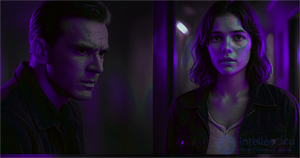
•has a strong influence on the human spirit. Thanks to
the strong effect of violet on the subconscious,
you can free yourself from deep-seated fears and transform
them into a creative force.
|
Psychological scenes |
|
| White |
this is the color of purity, hope, and a new beginning. It symbolizes a new chapter in life, a blank sheet of paper ready for creativity and self-expression. White is also associated with innocence and chastity. |
 |







Comments