
Lecture
Lighting is one of the most important tools of visual storytelling in cinema. It shapes mood, guides the viewer's attention, creates depth, highlights characters, and sets the tone of a scene. In this module we will look at classic techniques of film lighting, examine how light helps create drama, and how color influences the viewer's perception.
A basic setup used for even and expressive lighting of objects in the frame. It consists of three light sources:
Key Light — the main light source. Creates form and volume.
Fill Light — softens the shadows cast by the key light. Positioned on the opposite side.
Back Light — separates the subject from the background, creating a silhouette and a sense of depth.
Example uses: interviews, dialogue scenes, portrait shots.
Three-point lighting is a standard method used in visual media such as theater, video, film, photography, computer graphics, and 3D computer graphics. By using three separate positions, a photographer can light the subject (for example, a person) as desired, as well as control (or eliminate) the shading and shadows created by direct lighting.
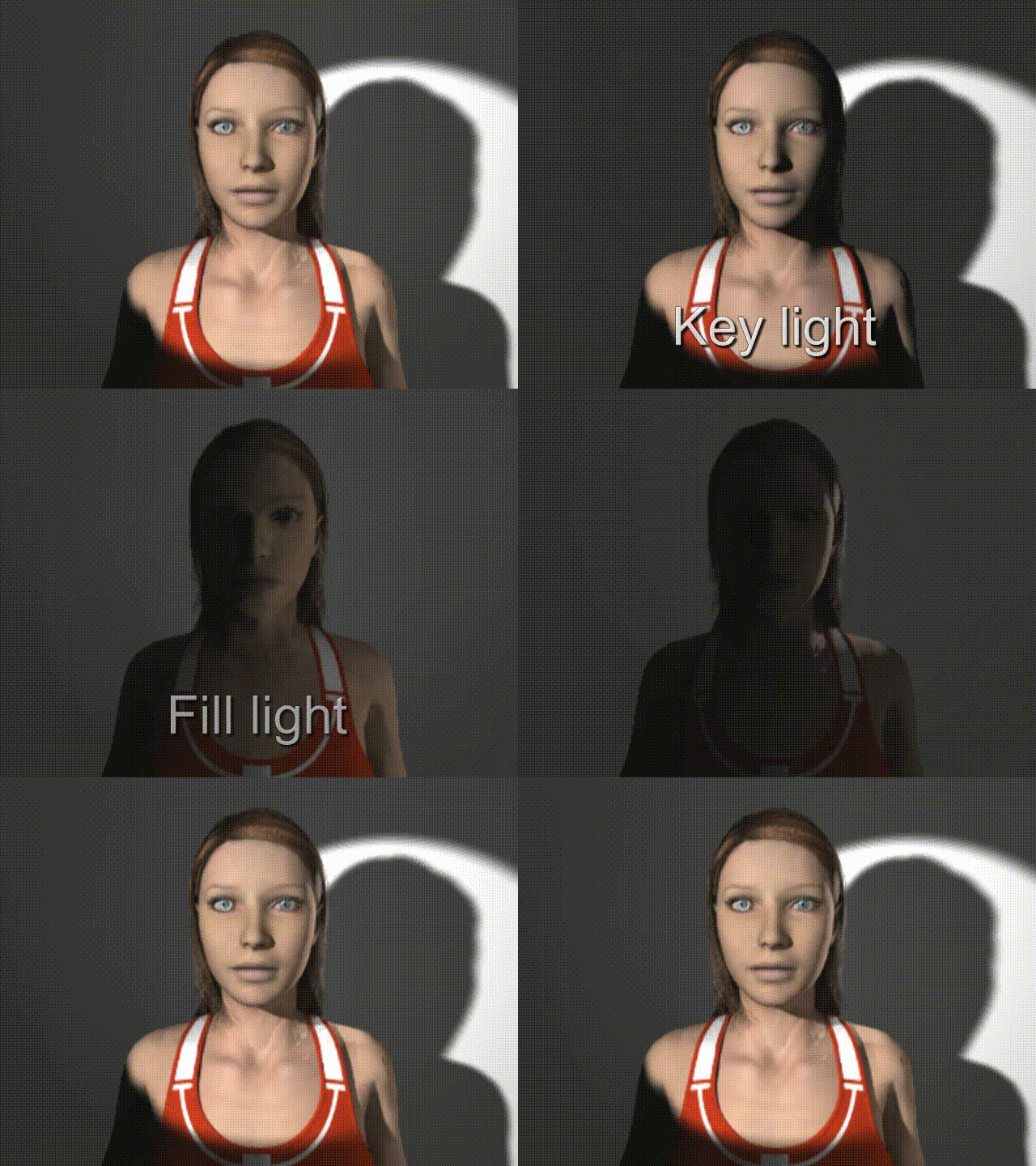
The key light, as its name implies, shines directly on the subject and serves as its main light source; the intensity, color, and angle of the key light largely determine the overall lighting scheme of the shot.
In indoor shots, the key is usually a dedicated lamp or the camera's flash. In outdoor daytime shots, the sun often serves as the key light. In this case, of course, the photographer cannot position the light where they want, so instead they frame the shot to best capture the sunlight, perhaps waiting until the sun reaches the desired position.
An animated demonstration of three-point lighting
The fill light also shines on the subject, but at an angle to the key and is often placed lower than the key (roughly at the level of the subject's face). It balances the key by illuminating shaded surfaces and reducing or eliminating chiaroscuro effects, such as the shadow cast by a person's nose onto the rest of the face. It is usually softer and less bright than the key light, up to half its intensity. A complete lack of fill light can cause harsh contrasts (due to shadows) on the subject's surface, depending on the sharpness of the key light. Sometimes, as in low-key lighting, this is an intentional effect, but shots meant to look more natural and less stylized require fill light.
In some situations, a photographer may use a reflector (such as a piece of white cardboard mounted off-camera, or even a white-painted wall) as fill light instead of a lamp itself. Reflecting and redirecting the key light's rays back onto the subject at a different angle can create a softer, more subtle effect than using another lamp.
Light from behind, from the hair or shoulder, shines on the subject from the back, usually though not necessarily from one side. Back light differs from a kicker or hair light in that it contributes to part of the shading on the visible surface of the subject.
Backlighting gives the subject a rim of light that separates it from the background and emphasizes its contours. This creates a subtle outline around the subject without necessarily affecting its visible front surface.
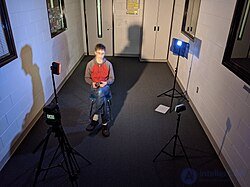
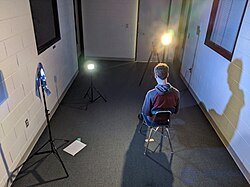
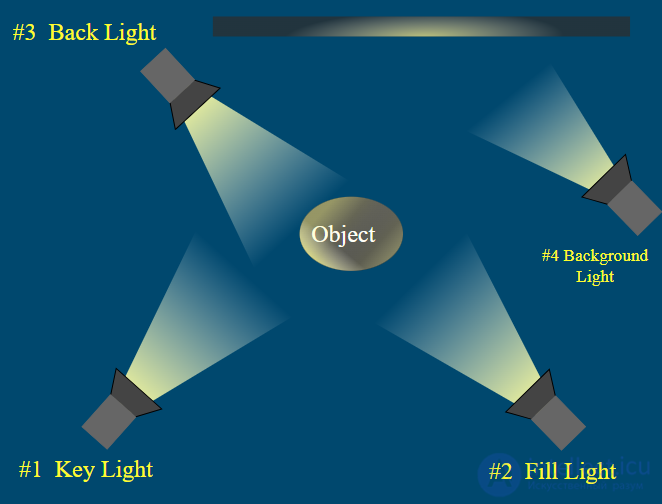
A typical four-point lighting scheme
Adding a fourth light source, the background light, creates a four-point lighting scheme.
The background light is placed behind the subject(s), on a high grid or low to the ground. Unlike the other three light sources, which illuminate foreground elements such as actors and props, it illuminates background elements such as walls or street sets. This technique can be used to eliminate shadows cast by foreground elements onto the background, or to draw more attention to the background. It also helps compensate for the camera's one-eyed nature, meaning it helps the camera convey depth in the subject.
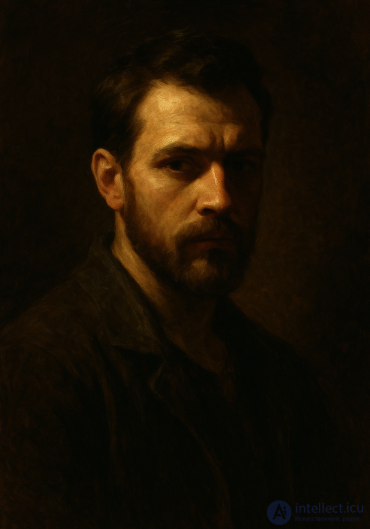
A style borrowed from painting. Characterized by a distinctive triangle of light under the eye on the shadowed side of the face.
A single light source at an angle of ~45° from the side and above.
Shadows are retained, but part of the face remains lit — creating a dramatic, realistic effect.
Used in dramas, film noir, and psychological thrillers.
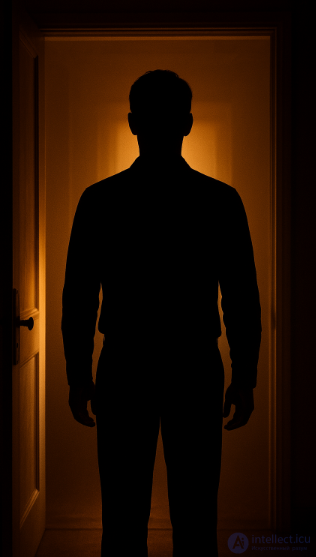
A technique in which the subject is darkened while the background is lit. The face or figure becomes a black silhouette.
Absence of light from the front, strong backlight or background light.
Often used to enhance mystery, drama, and tension.
Example: a hero entering a room, farewell scenes, the death of a character.
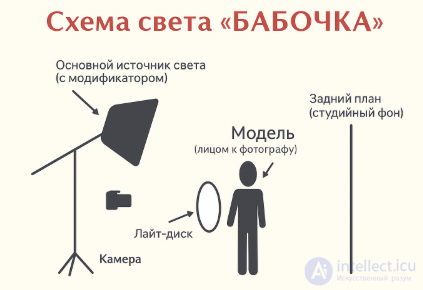
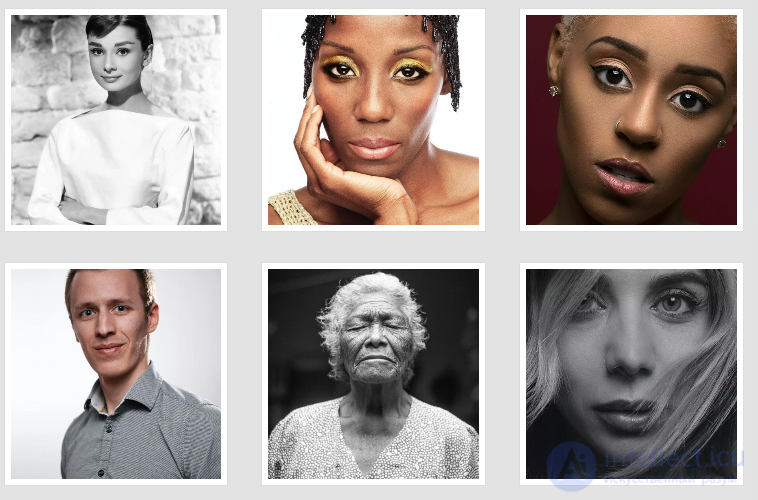
Butterfly lighting, also known as Paramount lighting, creates a characteristic shadow under the nose resembling the shape of a butterfly, hence the name. This style is often used for classic Hollywood portraits, especially in old cinematography, to accentuate the cheekbones and give the face a refined, elegant look.
Given your interest in dramatic lighting, you might enjoy experimenting with variations of this scheme—for example, by adding fill light from the side or playing with contrast to create more expressive shadows.
Lighting can influence spatial perception:
Foreground: lit brightly, focuses attention.
Midground: soft lighting, balance.
Background: subdued or backlit, adds layers and space.
Using haze or fog to diffuse light.
Dividing space with color and tone.
Directional light that creates diagonals and contrasts.
High Contrast Lighting — dark shadows, strong highlights.
Light through blinds, fabric, water — dramatic shadow patterns.
Narrow-beam light on the face — psychological tension.
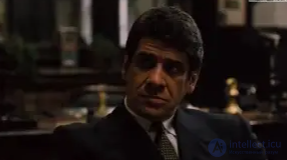
Dark scenes with minimal fill light.
Faces in shadow symbolize secrecy, power, and internal conflict.
Mixing warm and cool light.
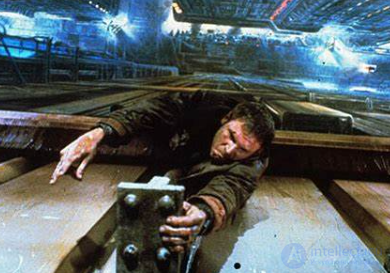
Silhouettes against city lights — alienation, loneliness.
Neon light enhances the dystopian atmosphere.
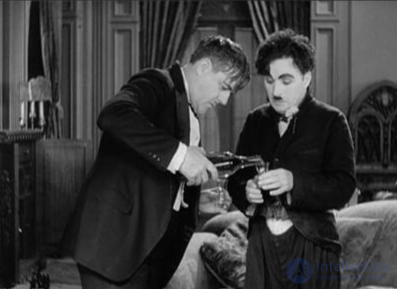
Charlie Chaplin used the classic scheme to emphasize the character's emotions.
Simple lighting highlights the expressiveness of the acting.
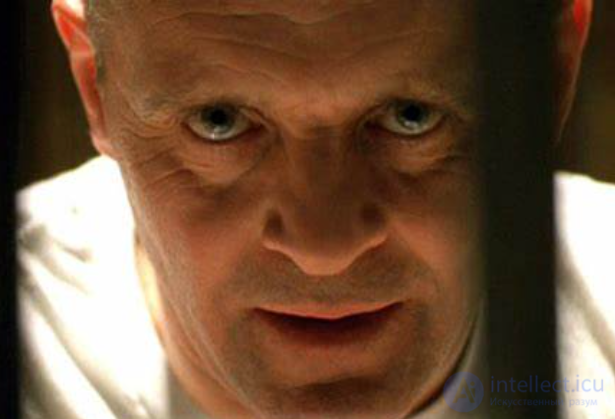
Using light from below and from the side to create tension.
Contrasty treatment of Hannibal Lecter's face heightens the sense of unease.
Lighting in film is a language. It doesn't just make the image visible—it speaks to the viewer, shaping feelings and reactions. A deep understanding of light allows the director, cinematographer, and production designer to create visually rich and expressive scenes.

Comments