
Lecture 26 min.
Mesmerism and vitalism are two philosophical and scientific concepts that played a significant role in world history, especially in medicine, philosophy and the natural sciences in the 18th and 19th centuries. Although these ideas are regarded as obsolete from the standpoint of modern science, they influenced the development of a number of fields, including psychotherapy, biology and metaphysics.
Vitalism (from Latin vitalis, "of life") is an obsolete doctrine holding that living organisms contain an immaterial, supernatural force that governs the phenomena of life, the "vital force" (Latin vis vitalis), also called the "soul", "entelechy", "archeus" and so on. The theory of vitalism postulates that processes in biological organisms depend on this force and cannot be fully explained by the laws of physics and chemistry.
Vitalism developed on the scale of whole civilizational epochs:
As chemistry and biology accumulated experimental data, and after Friedrich Wöhler's synthesis of urea in 1828, vitalism lost its significance. At present it is classed among non-academic theories and is often used as a pejorative epithet
Vitalist views have their roots in animism. Although they were generally accepted, attempts to create a plausible scientific model began in the early 17th century, when it was proposed that matter exists in two entirely different forms, distinguished by their behaviour in relation to heat. These two forms were called "organic" and "inorganic". Inorganic matter can be melted and returned to its original state once heating stops. Organic structures "cake" when heated, passing into new forms that cannot be restored to their former state simply by ceasing to heat them. There was debate over whether the cause of the difference between these two forms of matter was the existence of a "vital force" present only in "organic matter".
The germ theory of disease, supported by the invention of the microscope in the 16th century, reduced the importance of vitalism in Western medicine, and the role of the organs in the functioning of the body became better understood, lessening the need to explain the phenomenon of life by means of mystical "vital forces". Nevertheless, some scientists still considered vitalist ideas necessary for a complete description of nature.
In the early 19th century Jöns Jacob Berzelius, known as one of the fathers of modern chemistry, rejected the mystical explanations of vitalism, but debate nevertheless continued about the existence of a regulating force within living matter that sustains its functions. Carl Reichenbach later developed the theory of the "Odic force", a form of life energy that permeates living beings. This concept never gained much support, despite Reichenbach's authority. Vitalism is now often used as a derogatory epithet. Yet, despite this, Ernst Mayr, a co-founder of the modern evolutionary synthesis and a critic of vitalism and reductionism, wrote in 2002:
It would be unhistorical to ridicule the vitalists. When reading the works of the leading vitalists, such as Driesch, one has to agree that many of the basic problems of biology cannot be resolved by a philosophy like that of Descartes, in which the organism is considered merely a machine... The logic of the critics of vitalism was impeccable. But all their attempts to find a scientific answer to all the so-called vitalistic phenomena ended in failure... In rejecting the philosophy of reductionism, we are not attacking analysis. No complex system can be understood other than through careful analysis. In any case, the interaction of the components must be taken into account just as much as the properties of the individual components.
The idea that bodily functions are governed by a vitalistic principle present in all living things has roots reaching back at least to ancient Egypt . In Greek philosophy the Milesian school proposed natural explanations derived from materialism and mechanism. By the time of Lucretius, however, this explanation had been supplemented (for example, by Epicurus's unpredictable clinamen ) , and in Stoic physics the pneuma took over the role of the logos . Galen held that the lungs extract pneuma from the air , which the blood carries throughout the body . [ 8 ]
In Europe, medieval physics was influenced by the idea of pneuma , which helped shape later theories of the aether .
The English anatomist Francis Glisson (1597–1677) and the Italian physician Marcello Malpighi (1628–1694) were vitalists. [ 9 ] Caspar Friedrich Wolff (1733–1794) is considered the father of epigenesis in embryology , that is, he marks the moment when embryonic development came to be described in terms of cell proliferation rather than the embodiment of a preformed soul. However, this degree of empirical observation did not fit the mechanistic philosophy: in his Theoria Generationis (1759) he attempted to explain the emergence of an organism through the action of a vis essentialis (an organizing, formative force). Carl Reichenbach (1788–1869) later developed the theory of the odic force , a form of life energy that permeates living beings.
In the 17th century, modern science responded to Newtonian action at a distance and the mechanism of Cartesian dualism with vitalist theories: whereas the chemical transformations undergone by non-living substances are reversible, so-called "organic" matter is permanently altered by chemical transformations (for example, cooking). [ 10 ]
As Charles Birch and John B. Cobb put it , "the claims of the vitalists came to the fore again" in the 18th century: [ 9 ] " The followers of Georg Ernst Stahl were active, as were others, such as the brilliant physician Francois Xavier Bichat of the Hotel Dieu". [ 9 ] However, "Bichat departed from the tendency typical of the French vitalist tradition, gradually freeing himself from metaphysics , in order to combine it with hypotheses and theories that met the scientific criteria of physics and chemistry". [ 11 ] John Hunter recognized "a 'living principle' in addition to mechanics". [ 9 ]
Johann Friedrich Blumenbach influenced the establishment of epigenesis in the life sciences in 1781 by publishing Über den Bildungstrieb und das Zeugungsgeschäfte . Blumenbach cut up the freshwater hydra and established that the removed parts regenerate. He posited the presence of a "formative drive" ( Bildungstrieb ) in living matter. But he pointed out that this name,
Like similar names applied to any other kind of vital force, explains nothing in itself: it serves only to designate a particular force formed by the combination of the mechanical principle with that which is susceptible of modification.

The synthesis of urea in the early 19th century from inorganic compounds refuted the vitalist hypothesis that only organisms can produce the components of living things.
Jöns Jacob Berzelius , one of the founders of modern chemistry in the early 19th century , argued that a regulating force must exist in living matter to maintain its functions. [ 10 ] Berzelius maintained that compounds can be distinguished by whether they require any organisms for their synthesis ( organic compounds ) or not ( inorganic compounds ). [ 12 ] Vitalist chemists predicted that organic materials could not be synthesized from inorganic components, but Friedrich Wöhler synthesized urea from inorganic components in 1828. [ 13 ] However, modern accounts do not support the popular belief that vitalism died when Wöhler made urea. This Wöhler myth , as the historian Peter Ramberg called it, arose from a popular history of chemistry published in 1931, which, "ignoring all pretensions to historical accuracy, turned Wöhler into a crusader who made attempt after attempt to synthesize a natural product that would refute vitalism and lift the veil of ignorance, until 'one fine day the miracle happened'". [ 14 ] [ 15 ] [ b ]
Between 1833 and 1844 Johannes Peter Müller wrote a physiology textbook titled Handbuch der Physiologie , which remained the leading textbook in the field for most of the nineteenth century. The book showed Müller's commitment to vitalism; he asked why organic matter differs from inorganic matter, then went on to a chemical analysis of blood and lymph. He describes in detail the circulatory, lymphatic, respiratory, digestive, endocrine, nervous and sensory systems in a wide variety of animals, but explains that the presence of a soul makes each organism an indivisible whole. He argued that the behaviour of light and sound waves shows that living organisms possess a vital energy that the laws of physics could never fully explain. [ 16 ]
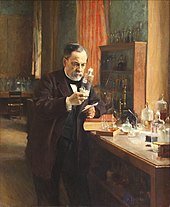
Louis Pasteur argued that only life can catalyse fermentation . Painting by Albert Edelfelt , 1885.
Louis Pasteur (1822–1895), after his famous refutation of the theory of spontaneous generation, conducted several experiments that, in his view, supported vitalism. According to Bechtel, Pasteur "wrote fermentation into a more general programme describing particular reactions that occur only in living organisms. These are irreducibly vital phenomena". Rejecting the claims of Berzelius, Liebig , Traube and others that fermentation is the result of chemical agents or catalysts inside cells, Pasteur concluded that fermentation is a "vital action". [ 1 ]
Hans Driesch (1867–1941) interpreted his experiments as proof that life does not obey physico-chemical laws. [ 5 ] His main argument was that if an embryo is cut after its first division or two, each part grows into a complete adult. Driesch's reputation as an experimental biologist suffered as a result of his vitalist theories, which scientists since his time have regarded as pseudoscience. [ 5 ] [ 6 ] Vitalism is a superseded scientific hypothesis, and the term is sometimes used as a pejorative epithet . [ 17 ] Ernst Mayr (1904–2005) wrote:
It would be unhistorical to ridicule the vitalists. When one reads the works of one of the leading vitalists, like Driesch, one is forced to agree with him that many of the basic problems of biology simply cannot be solved by a philosophy of Descartes, in which the organism is viewed as merely a machine... The logic of the critique of the vitalists was impeccable. [ 18 ]
Vitalism has become such a disgraceful belief over the past fifty years that no biologist living today would want to be classified as a vitalist. Nevertheless, remnants of vitalist thinking can be found in the works of Alister Hardy , Sewall Wright and Charles Birch , who seem to believe in some immaterial principle in organisms. [ 19 ]
Other vitalists included Johannes Reinke and Oscar Hertwig . Reinke used the word neovitalism to describe his work, claiming that it would ultimately be tested by experiment, and that it was an improvement on other vitalist theories. Reinke's work influenced Carl Jung . [ 20 ]
John Scott Haldane adopted an anti-mechanistic approach to biology and an idealist philosophy early in his career. Haldane saw his work as confirming his belief that teleology is an essential concept in biology. His views became widely known with his first book, Mechanism, Life and Personality , in 1913. [ 21 ] Haldane borrowed arguments from the vitalists to use against mechanism; however, he was not a vitalist. Haldane regarded the organism as fundamental to biology: "we perceive the organism as a self-regulating entity", "any attempt to analyse it into components that can be reduced to a mechanistic explanation violates this central experience". [ 21 ] Haldane's work influenced organicism . Haldane maintained that a purely mechanistic interpretation cannot explain the characteristics of life. Haldane wrote a number of books in which he tried to show the untenability of both vitalism and the mechanistic approach to science. Haldane explained:
We must find a different theoretical basis for biology, founded on the observation that all the phenomena in question tend towards such a coordination that they express what is normal for the adult organism.
— [ 22 ]
By 1931 biologists had "almost unanimously abandoned vitalism as a recognized belief". [ 22 ]
In the 18th century the vitalist theory of "animal magnetism" of F. A. Mesmer was popular. However, the Russian term for "animal magnetism", a translation of Mesmer's term magnétisme animal, is inaccurate for four reasons:
Mesmer's ideas became so popular that King Louis XVI convened two commissions to investigate mesmerism. One was headed by Joseph Guillotin, the other by Benjamin Franklin, and it included Jean Sylvain Bailly and Lavoisier. The commissioners studied Mesmer's theory and watched patients fall into a trance. In Franklin's garden a patient was led to five trees, one of which had been "mesmerized"; the patient embraced each tree in turn to receive the "vital fluids", but collapsed at the "wrong" tree. At Lavoisier's house, four ordinary cups of water were offered to a "susceptible" woman, and the fourth cup provoked convulsions. But the woman calmly drank the "mesmerized" contents of the fifth, believing it to be ordinary water. The commissioners concluded that "fluids without imagination are powerless, whereas imagination without fluids can produce the effect of the fluid". This is an important example of the victory of the power of reason and controlled experiment over false theories. Vitalist ideas are sometimes considered unscientific because they are untestable; here the theory was not only tested but found to be false.
In the history of chemistry vitalism played a leading role, distinguishing organic from inorganic substances, following the Aristotelian distinction between the mineral kingdom and the kingdoms of animals and plants. The main premise of these vitalist views was that organic substances, unlike inorganic ones, possess a "vital force". It followed, and was predicted, that organic compounds could not be synthesized from inorganic ones. However, chemistry advanced, and in 1828 Friedrich Wöhler synthesized urea from inorganic components. Wöhler wrote Berzelius a letter in which he said that he had witnessed "a great tragedy in science: the slaying of a beautiful hypothesis by an ugly fact". The "beautiful hypothesis" was vitalism; the "ugly fact" was a test tube of urea crystals.
According to the generally accepted view of the progress of chemical science, the discoveries that followed rejected the "vital force" as more and more life processes became explicable by chemical or physical phenomena. Nevertheless, vitalism is not believed to have died at precisely the moment when Wöhler synthesized urea. The "Wöhler myth", as the historian of science Peter J. Ramberg called it, originated in a popular-science book on the history of chemistry published in 1931, which, "ignoring all pretensions to historical accuracy, turned Wöhler into a knight who made attempt after attempt to synthesize a natural substance that would refute vitalism and tear away the veil of ignorance, until 'one fine day the miracle happened'".
The main anti-mechanistic thesis in chemistry is the teleological character of processes that can no longer be explained mechanically at the cellular level (see, for example, Albrecht-Buehler).
Some of the greatest minds of the time continued to investigate vitalism. Louis Pasteur, soon after his famous refutation of the theory of spontaneous generation, conducted several experiments that, he felt, supported the theory of vitality. According to Bechtel, Pasteur "applied fermentation to a more general programme describing particular reactions that take place only in living organisms. They are not applicable to vital phenomena." In 1858 Pasteur showed that fermentation occurs only in the presence of living cells and in the absence of oxygen. This led him to describe fermentation as "life without air". He found no confirmation of the claims of Berzelius, Liebig, Traube and others that fermentation occurs through the action of chemical agents or catalysts inside cells, and concluded that fermentation is a "vital action".
An original systemic biochemical conception of life was developed in 1871–1911 by Edmund Montgomery.
Widespread fame in the USSR was gained by the discussion of Olga Lepeshinskaya's theory (later not confirmed) of the formation of new cells from structureless "living matter". At a joint conference of the USSR Academy of Sciences and the USSR Academy of Medical Sciences in 1950 this theory was supported by a number of histologists and by all the speakers who addressed it, including T. D. Lysenko. Professors at medical institutes were obliged to cite Lepeshinskaya's teaching in every lecture (as a transformation of the non-living into the living). The theory subsequently met with condemnation from critics as a politicized and unscientific trend in Soviet biology.
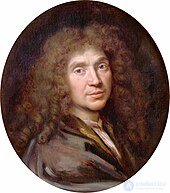
The 17th-century French playwright Molière satirized vitalism in his 1673 play The Imaginary Invalid .
Vitalism has sometimes been criticized for evading a question by inventing a name. Molière parodied this fallacy well in The Imaginary Invalid , where a charlatan "answers" the question "Why does opium cause sleep?" with "Because of its dormitive virtue (that is, its sleep-inducing power)". Thomas Henry Huxley compared vitalism to asserting that water is what it is because of its "aquosity". His grandson Julian Huxley in 1926 compared the "vital force" or élan vital to explaining the working of a railway locomotive by its élan locomotif ("locomotive force").
Another criticism is that the vitalists failed to rule out mechanistic explanations. This is fairly obvious in retrospect for organic chemistry and developmental biology , but the criticism goes back at least a century. In 1912 Jacques Loeb published The Mechanistic Conception of Life , in which he described experiments on how a sea urchin could have a pin for its father, as Bertrand Russell put it ( Religion and Science ). He set out the following challenge:
"... we must either succeed in producing living matter artificially, or find the reasons why this is impossible" (pp. 5–6)
Loeb spoke about vitalism more specifically:
"It is therefore unwarranted to go on asserting that, besides the acceleration of oxidation, the beginning of individual life is determined by the entry of a metaphysical 'vital principle' into the egg; and that death is determined, besides the cessation of oxidation, by the departure of this 'principle' from the body. In the case of the evaporation of water we are satisfied with the explanation given by the kinetic theory of gases, and do not demand that, to repeat Huxley's well-known joke, the disappearance of 'aquosity' also be taken into account. (pp. 14–15)
Bechtel states that vitalism "is often regarded as an unfalsifiable and therefore pernicious metaphysical doctrine". For many scientists "vitalist" theories were unsatisfactory "holding positions" on the road to a mechanistic understanding. In 1967 Francis Crick , one of the discoverers of the structure of DNA , declared: "And so to those of you who may be vitalists I would make this prophecy: what everyone believed yesterday, and you believe today, only cranks will believe tomorrow ".
Although many vitalist theories have in fact been falsified, especially mesmerism, the pseudoscientific persistence of untested and untestable theories continues to this day. Alan Sokal published an analysis of the widespread acceptance among professional nurses of "scientific theories" of spiritual healing. (Pseudoscience and Postmodernism: Antagonists or Fellow-Travelers?). The use of a technique called therapeutic touch was considered especially by Sokal, who concluded that "almost all the pseudoscientific systems to be considered in this essay are philosophically based on vitalism", adding that "mainstream science has rejected vitalism since at least the 1930s for a multitude of good reasons that have only strengthened over time".
Joseph C. Keating Jr. discusses the past and present roles of vitalism in chiropractic and calls vitalism a "form of biotheology ". He goes on to explain that:
"Vitalism is a discarded tradition in biology which supposes that life is sustained and explained by an immeasurable, intelligent force or energy. The supposed effects of vitalism are manifestations of life itself, which, in turn, are the basis for deriving this concept in the first place. This circular reasoning offers a pseudo-explanation and may mislead us into believing that we have explained some aspect of biology when in fact we have only labelled our ignorance. 'Explaining the unknown (life) by the unknowable (Innate)', suggests the chiropractor Joseph Donahue, 'is absurd'."
Keating considers vitalism incompatible with scientific thinking:
"Chiropractors are not alone in recognizing the tendency and capacity of human physiology for self-repair and self-regulation. But we undoubtedly stand out among the professions that claim scientific validity because of our unrelenting adherence to vitalism. As long as we promote the 'One cause, one cure' rhetoric of Innate, we must expect ridicule from the wider community of the medical sciences. Chiropractors cannot have it both ways. Our theories cannot be both dogmatically upheld vitalistic constructs and scientific. The purposefulness, consciousness and rigidity of Palmer's Innate must be rejected."
Keating also mentions Skinner's point of view:
"Vitalism is many-faceted and has arisen in many fields of scientific inquiry. The psychologist B. F. Skinner , for example, pointed to the irrationality of attributing behaviour to mental states and traits. Such 'mental way stations', he argued, constitute superfluous theoretical baggage that does not contribute to the development of causal explanations, replacing them with an inscrutable psychology of the 'mind'.
According to Williams, "today vitalism is one of the ideas that form the basis of many pseudoscientific health-care systems, which claim that diseases are caused by a disturbance or imbalance of the body's vital force". "Vitalists claim to be scientific, but in fact they reject the scientific method with its basic postulates of cause and effect and provability. They often consider subjective experience more reliable than objective material reality".
Victor Stenger argues that the term "bioenergetics" "is applied in biochemistry to denote the easily measured exchanges of energy within organisms, as well as between organisms and the environment, that occur through ordinary physical and chemical processes. However, this is not what the new vitalists mean. They envision the bioenergetic field as a holistic living force that goes beyond reductionist physics and chemistry".
Such a field is sometimes explained as electromagnetic, although some proponents also make confused appeals to quantum physics. Joanne Stefanatos asserts that "The principles of energy medicine originate in quantum physics." Stenger offers several explanations of why this line of reasoning may be misplaced. He explains that energy exists in discrete packets called quanta. Energy fields are made up of their component parts and therefore exist only when quanta are present. Consequently, energy fields are not holistic but rather a system of discrete parts that must obey the laws of physics. This also means that energy fields are not instantaneous. These facts of quantum physics place limits on the infinite, continuous field that some theorists use to describe so-called "human energy fields." Stenger goes on to explain that the effects of electromagnetic forces have been measured by physicists to an accuracy of one part in a billion, and so far there is no evidence that living organisms emit a unique field.
Vitalistic thinking has been identified in children's naive biological theories: "Recent experimental results show that most preschoolers tend to choose vitalistic explanations as the most plausible. Vitalism, together with other forms of intermediate causality, represents a unique set of causal devices for naive biology as a core domain of thought."
Mesmerism is a doctrine associated with the name of the Austrian physician Franz Anton Mesmer, who in the 18th century developed a theory known as "animal magnetism."
Main ideas: Mesmer claimed that there is a certain universal energy or "fluid" circulating in the universe and affecting people's health. He believed that many illnesses are caused by a disruption of the flow of this energy in the body, and proposed methods of treatment using his own magnetic field or special "magnetic" objects to restore balance.
Historical context: Mesmerism became popular in Europe in the late 18th century, especially among the elite, despite scepticism from the medical community. Over time Mesmer's methods became more mystified, and his ideas influenced early forms of hypnosis and psychotherapy. Later the French scientist Jean-Martin Charcot used hypnosis techniques to treat hysteria, and Mesmer's work influenced Sigmund Freud and the development of psychoanalysis.
Influence on culture: Mesmerism also influenced literature and art. Some Romantic writers, such as Edgar Allan Poe and Hoffmann, used mesmerist imagery in their works to explore themes of mind control, will and otherworldly forces.
Vitalism is a philosophical doctrine based on the idea that living organisms possess a special vital force or principle that distinguishes them from non-living matter. This principle is called the "vital force" and is not subject to physico-chemical laws.
Main ideas: Vitalists claimed that life cannot be explained solely through physical and chemical processes. They believed in the existence of a certain "vital force" (for example, entelechy in Aristotle or "vis vitalis" among later adherents of vitalism) that governs living beings.
Historical context: Vitalism was popular in science and philosophy up to the 19th century. One of the well-known supporters of vitalism was the German physician and biologist Georg Ernst Stahl, who held that vital processes are governed by an immaterial force. However, in the early 19th century, with the development of chemistry and biology, scientists such as Friedrich Wöhler and Justus Liebig began to undermine vitalist ideas. Wöhler's synthesis of urea from inorganic substances in 1828 became a symbol of the decline of vitalism, since it demonstrated that organic substances can be obtained from inorganic materials without the involvement of a "vital force."
Influence on science: Although vitalism as a scientific theory was refuted, its ideas continued to influence the philosophy of life, biology and even psychology. For example, the philosopher Henri Bergson in the early 20th century developed the idea of the "élan vital," a special creative impulse that underlies life.
The ideas of mesmerism and vitalism played an important role in the intellectual and cultural life of Europe in the 18th and 19th centuries. They reflected attempts by the human mind to understand the nature of life, health and consciousness against the background of the scientific and philosophical debates of the time.
Mesmerism laid the foundation for the further development of psychology and psychotherapy by proposing ideas about the influence of one mind on another, which found its continuation in hypnosis and the theory of the unconscious.
Vitalism stimulated important discussions in biology and philosophy, pushing scientists to seek material explanations of vital processes and to develop the science of living things, which ultimately led to the triumph of the mechanistic worldview in science.
These concepts, despite their refutation by modern science, formed important stages in the evolution of scientific thought and remain an interesting cultural and historical phenomenon.

Comments