
Lecture 5 min.
The Roman civil war of AD 68–69, also known as the Year of the Four Emperors (Latin: annus quattuor imperatorum), was a period in the history of the Roman Empire (AD 68–69) during which four rulers succeeded one another on the throne: Galba, Otho, Vitellius and Vespasian.
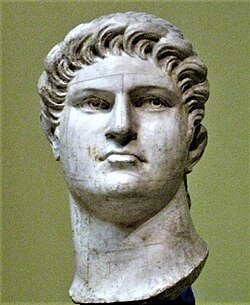

In March AD 68, Gaius Julius Vindex, governor of Gallia Lugdunensis, raised his legions against the emperor Nero. The governor of Upper Germany, Lucius Verginius Rufus, was ordered to suppress the revolt. Realizing that he could not cope with Rufus's troops on his own, Vindex called for help on Servius Sulpicius Galba, governor of Hispania Tarraconensis, who was popular with the troops, and proposed that he declare himself emperor. After initially hesitating, Galba eventually supported the revolt. The legions stationed in Spain and Gaul proclaimed him emperor, and he set out to join forces with Vindex.
In May AD 68, Rufus's troops, encamped at Vesontio, attacked Vindex's legions on their own initiative and defeated them. The remnants of the rebel legions fled and joined Galba. Verginius Rufus's troops proclaimed their commander emperor, but Rufus allowed Galba's army, which was marching on Rome, to pass, declaring that he was entrusting himself and his legions to the hands of the Senate.
Gaius Nymphidius Sabinus, the praetorian prefect, decided to support Galba, promising the Praetorians donatives in his name. Thus Nero lost all protection and was forced to flee Rome. He made his way to the villa of one of his freedmen, where he committed suicide on 9 June.
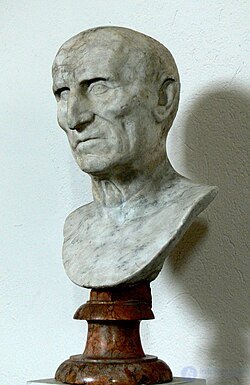
Galba's entry into Rome was marked by a massacre: he ordered his troops to attack a legion of marines raised by Nero, which had come out to meet the new emperor to ask for the right of Roman citizenship. Soon after entering the capital, Galba incurred the displeasure of the Romans by ordering a search for, and the recovery of, the lavish gifts that Nero had distributed in recent years, in order to replenish the state treasury. The soldiers and Praetorians were also dissatisfied with the emperor, on learning that they would not receive the money that Sabinus had earlier promised them in Galba's name for their loyalty to the new ruler. The first to show open hostility, in January AD 69, were the legions of Lower Germany, who proclaimed their governor Vitellius emperor. On learning of this, Galba decided to appoint a successor for himself. This was Lucius Calpurnius Piso. The Praetorian Guard, which had expected rewards for going over to Galba's side, was once again left with nothing and was on the verge of mutiny. Marcus Salvius Otho, who had wished to be adopted in place of Piso, took advantage of this. He organized a conspiracy against Galba, who was killed by the Praetorians in the Forum on 15 January AD 69. His head, impaled on a pike, was carried through the streets of the city for several days. Piso died on the same day. Otho was proclaimed princeps by the Senate.
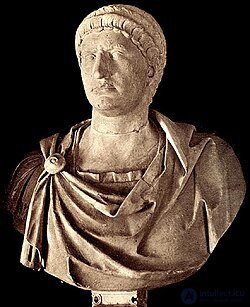
The new emperor faced a struggle with Vitellius, who had a more combat-ready army at hand: he relied above all on the Upper German legions, hardened in battle, whereas Otho assembled the units stationed in Rome and Italy, whose soldiers had been corrupted by idleness, frequent handouts and the fawning of their commanders. But four Illyrian legions were approaching, and he also had the fleet on his side, which made it possible to bring up supplies and provisions without interruption. In the war that unfolded in Northern Italy, Otho's generals won the first three minor battles, but on 14 April AD 69 they were defeated in the first Battle of Bedriacum (not far from Cremona). On learning of this, Otho committed suicide.
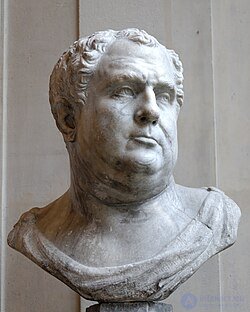
The Senate recognized Vitellius as emperor on 19 April AD 69. Having become princeps, Vitellius gave himself up to extravagant banquets and festivities, while the soldiers loyal to him engaged in looting and murder. In this way he managed to turn the population of Rome against himself. And when, in July AD 69, the eastern and Danubian legions swore allegiance to Vespasian, governor of the province of Judaea, this badly shook Vitellius's position. Vespasian's supporter Marcus Antonius Primus, with the legions of Moesia and Raetia, invaded Italy and in the second Battle of Bedriacum defeated the Vitellian forces, after which he marched on Rome; during the assault on the city on 20 December AD 69, Vitellius was led by soldiers along the Via Sacra and finally killed and thrown into the Tiber.
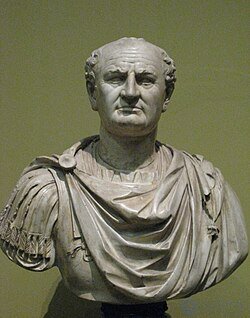
After the murder of Vitellius, Titus Flavius Vespasianus was recognized as emperor and founded a new dynasty, the Flavians, which ruled until AD 96.

Comments