
Lecture 3 min.
The Year of the Five Emperors was a period when five emperors succeeded one another in Ancient Rome (AD 193).
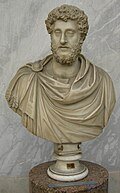
The Roman emperor Commodus was a very peculiar ruler; he took part in gladiatorial combats. Often he did not deal with affairs of state at all and withdrew into himself. This caused discontent among many, and on 31 December 192 conspirators got into a banquet held for him on the occasion of his assumption of the consulship, putting poison in the emperor's food. Since the poison did not have the expected effect, Commodus was strangled later by the athlete Narcissus, with whom the emperor wrestled.
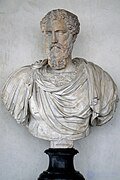
After the death of Commodus, one of the participants in the conspiracy, Pertinax, was proclaimed emperor. He was the first emperor from among the freedmen. Despite his age (he was over 60), Pertinax was energetic. He allowed farmers to occupy as much land as they could cultivate. The emperor abolished all the duties and taxes created under the tyranny to raise large sums, and established liberal practices. However, the reforms were not liked by the military, who considered that their rights were being curtailed. The peak of discontent came with the execution of several officers who were preparing an attempt on the emperor's life. In March 193, after a reign of 80 days, Pertinax was killed by legionaries.
The legionaries decided to elect as emperor the one who would pay them more. Pertinax's father-in-law Sulpicianus, who was in the palace, offered each soldier 20,000 sesterces. The senator Didius Julianus heard the news of the election of an emperor and decided to try his luck, offering the soldiers 25,000 sesterces each. This price was not outbid, and thus the throne was bought with money for the first time. During his reign Julianus distinguished himself in nothing in particular. Because he could not pay the legionaries, on the 66th day of his reign he was arrested in his own palace. The emperor offered each of them 30,000 sesterces, but was killed.
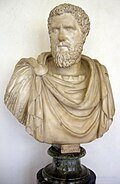
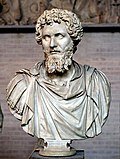
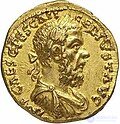
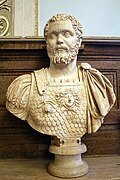
Already during the reign of Julianus, Septimius Severus proclaimed himself emperor. However, in the east Pescennius Niger rose against him. He received his nickname from his rival Clodius Albinus. Niger had strong support in Syria and Egypt, but was crushed and killed while attempting to escape to Parthia. Clodius Albinus took advantage of this: at first acting in alliance with Severus, he betrayed him and in 196, with the support of the British legions, was proclaimed Augustus, and in February 197 was crushed and killed in battle with Severus. After this, order in the empire was restored.


Comments