
Lecture
- …we are truly alive only at those points where the current of communication flows. M.K. Mamardashvili
The term homo loquens (speaking man) belongs to the terminological series opened by homo sapiens ‘rational man’: homo faber ‘man — the maker of tools’, homo liber ‘free man’,
homo ludens ‘playing man’ and others. The term homo loquens (from Latin homo — man and loquens — speaking), or in Russian «speaking man», designates a person who speaks (writes), listens (reads), and, in a broad sense, a person participating in speech communication. Compared with the Russian term «speaking man», the Latin term is more convenient, since it evokes not only one type of speech activity — speaking.
The question of homo loquens as an object of philology has its roots in the history of this science: speaking man was already being singled out, differentiated, and reflected upon in the Ancient world. He appears in various guises. Ancient philologists viewed man in connection with solving the problems of establishing a text's authorship and its interpretation. In ancient rhetoric, man became the central figure, appearing in two roles — that of the orator and that of the audience:
«A speech consists of three elements: the orator himself, the subject he speaks about, and the person to whom he addresses himself; the latter is in fact the final end of the whole matter (I mean the listener)» (Aristotle).
A fundamental role in granting man the status of an object of philology was played by the works of W. von Humboldt. The development of philology as a whole, and of the sciences and disciplines that make it up,
from Humboldt to the mid-twentieth century, proceeds under the banner of the struggle to turn philology toward man. Let us cite one of Humboldt's judgments: «language is a world lying between the world of external
phenomena and man's inner world».
Thus the great philologist of the past explained the reason for the unity of man and language. Humboldt's influence is present in works on both linguistics and literary studies. Thus the American linguist of the first half of the twentieth century, E. Sapir, took the next step in reinforcing the unity of philology and man:
«On the whole it is clear that interest in language has recently gone beyond properly linguistic problems, …linguists must become aware of the significance their science may have for the interpretation of human behavior as a whole»1. Let us also cite the assessment of V.A. Zvegintsev (1910—1988), who defines «linguistics… as the science of man's communicative behavior or, more precisely, of the activity of human communication»2.
These testimonies in fact complement one another. On the whole it turns out that language and man are inseparable. In the science of language a new triad emerges: man — language — communication. Among works in the field of literary studies, the works of the French literary scholar and critic C.A. Sainte-Beuve (1804—1869) stand out; he laid the foundations for understanding literary creation on the basis of studying the writer's personality and life experience. In twentieth-century literary studies, one of the most influential figures is unquestionably M.M. Bakhtin. In his cycle of works on Dostoevsky one finds the following judgment: «Man really exists in the forms of “I” and “the other” (“you”, “he” or “man”)»3. On this basis, at different periods of his scholarly work Bakhtin considers two pairs of categories: author — hero, author — reader. Taken together, these prove sufficient grounds for recognizing man as the central object of literary studies. Indeed: «Life by its very nature is dialogic. To live means to participate in dialogue — to question, to attend, to respond, to agree, and so on» (Ibid.).
One of the central tasks of contemporary literary studies is the study of how a literary work is perceived by the reader (listener). This task is set by reception aesthetics — a trend in literary studies and criticism of the twentieth and twenty-first centuries (R. Ingarden, H.R. Jauss, W. Iser, and others). If the text of a work is not changed by the reader, then its meaning depends on the reader, on his «dialogue» with the author and the text. This trend draws on the ideas of hermeneutics, psychology, semiotics, communication studies, and other humanities that have focused their interest on man. By the end of the twentieth century came the realization that speaking man is an object of philology. What happened? In the mid-twentieth century the humanities underwent an anthropological turn (Ancient Greek anthrōpos — man and logos — teaching, science). In the humanities, man becomes the priority object of research, the condition for understanding social processes. It became clear that ignoring man as the chief value hinders the understanding of many ethical, aesthetic, communicative, and other processes. This movement also swept up the philological sciences. The manifestation of the anthropological turn in philology was a reorientation of research away from language, text, and the literary work as «products» of human activity, toward man as the «protagonist» of research. In connection with this, philology's positions among the humanities are strengthened. The basis of this process is the development of philology's ties with humanities semiotics, hermeneutics, communication theory, psychology, sociology, and other sciences. In this situation it turned out that man, in his various facets, is studied by an entire spectrum of sciences and scholarly disciplines. Man as «homo loquens» only at the turn of the century acquires «residence» in philology as its object. As an illustration, let us consider the situation in the science of the language of imaginative literature. Until the mid-twentieth century, the study of the language of literary works was reduced mainly to identifying the figurative (expressive, pictorial) means in the text under study. Therefore studies were often constructed as inventories of these means. Thus, historical color in the prose of one regional writer is demonstrated by the following means: the reflection of characters' dialectal pronunciation (the fricative «g» in the affirmative particle aga is rendered by the author with the letter «kh»: Akha!); historicisms (The voivode angrily shouted at the household maids); archaisms (gorazdo — very: The husband got quite drunk, and the horse gnaws at the drunkard); grammatical variants of literary vocabulary (den'ga instead of den'gi: «Ten altyns and two den'gi,» the peasant offered, looking around); and others. This in fact establishes the language of the text as a system, but not language in action. This data has less value for understanding the role of language in creating artistic reality, because artistic reality consists not only of the separate elements of the invented world but also of the relations between them, and, most importantly, of the author's evaluations, the author's attitude. Moreover, from individual elements of the text it is often impossible to determine what kind of reality the reader is dealing with — fictional or documentary: all the examples cited could well have been recorded in non-fictional texts belonging to their own time.
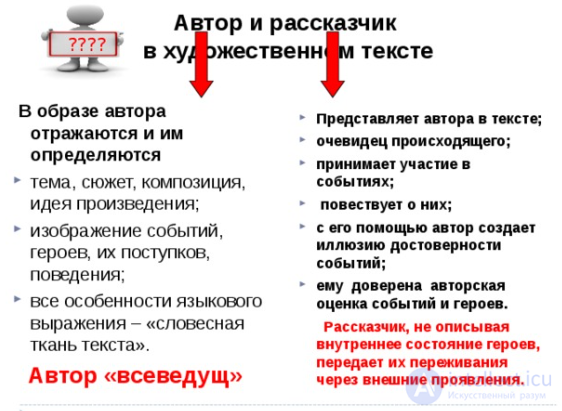
In the 1960s—1970s, in the further development of the ideas of V.V. Vinogradov and G.O. Vinokur, the most important question became that of the image of the author, i.e., of how the author constructs the text: what the author «entrusts» to the narrator, what — to the character, how dialogue and monologue, direct, indirect, and other types of reported speech relate to the «author's» word, and so on. It is in these speech relations, in the palette of speech means, that, according to Vinogradov, the image of the author is created. Recall how the texts of the stories of, for example, A.P. Chekhov, are constructed. In them the character's speech layer clearly predominates. This means that the author not only «entrusts» his characters with the «work» of self-revelation, but also «delegates» to them the performance of his own, authorial functions connected with description, narration, evaluation, plot construction, and so on. Let us cite as an illustration A.P. Chekhov's story
«A Long Tongue» (1888). In this short story the narrator is endowed with service functions analogous to those of a playwright — the author of stage directions. The narrator indicates
who is speaking, where, and when. Occasionally remarks are given about the characters' facial expressions and gestures.
Here is the beginning of the story:
Natalya Mikhailovna, a young lady who had arrived that morning from Yalta, was dining and, chattering away tirelessly, was telling her husband about the wonders of the Crimea. Her husband, delighted, gazed
tenderly at her rapturous face, listened, and now and then asked questions…
The heroine's frivolous chatter, her blatant lying (at the beginning of the scene: — Actually, I saw them (the Tatar guides. — A.Ch.) from a distance, in passing… and then: — I ride up to her with my guide…; — My Suleiman never overstepped the bounds with me… and the like), the incantatory repetitions (I'm not some Julia to you…; I know very well what you're thinking! I know what you're thinking…; I know what you're thinking about! You always have such nasty thoughts! and the like) — all this serves to expose the heroine, who in effect informs on herself to her husband.
Thus it is not the linguistic means in the manifestation of language as a system, but the author of the text as a kind of director — that is what proves essential for the study of the language of imaginative literature.
From the mid-twentieth century in the world (from the mid-1980s in our own country), the status of speech communication and of man as its subject undergoes a change. This is the second circumstance that contributed to the promotion of homo loquens among the objects of philology: it drew philology's attention to man. Man as the subject of speech communication is distinguished by activeness and independence, regardless of which function — that of the speaker (writer) or of the listener (reader) — he performs at any given moment. In this situation the problem of understanding becomes more acute.
In the Soviet period, the model of understanding and interpreting texts was set by party-state documents and propaganda. Consequently, the interpretation of texts had to be unambiguous (for example, even in the school literature textbook and by all teachers of this subject). This made understanding «collective», where the collective is both society as a whole and each of its constituent groups (social, national, age-based, professional, and so on), and made communication essentially monological in nature, when one person speaks and the rest listen and obey him. If the content of a text is evaluated from the standpoint of party-mindedness, then social and communicative life is arranged so that everything not conforming to this criterion is deemed incorrect. Thus, in 1936 a decree of the Central Committee of the CPSU(b) banned the staging of D. Bedny's play «Bogatyri» (The Heroes): it was seen as an attempt to glorify the brigands of Kievan Rus and to indiscriminately blacken the bogatyrs4
.
From the mid-1980s the situation in our country began to change: the unambiguous model of understanding and interpretation became a thing of the past. Understanding turns into something individual, which corresponds to its essence: understanding is understanding by a subject. According to M.M. Bakhtin, «all understanding is the correlation of a given text with other texts…». Each subject has his own «set» of texts, his own understanding of them, his own «favorite» ways of correlating texts with one another! Accordingly, the monological principle of communication gives way to the dialogical one. This means that both participants in the act of communication have equal rights to influence one another, to the truth. Let us cite a fragment of a dialogue between the journalist B. Notkin (B.N.) and A.N. Shokhin (A.Sh.), a political figure, economist, member of the Russian Government (1994, March): B.N. I heard a joke like this / not shock therapy / but Shokhin therapy… / / A.Sh. Regardless of these labels / the main thing / is to grasp the point / which consists in the fact / that (…) we must hold
inflation at a low level…5
.
The material cited shows the absence of any monopoly on truth on the part of either the journalist or his interlocutor, who occupies a high position in the structure of power. This is precisely what means that
this dialogue is a dialogue not only in form but in substance. Thus the ties among man, language, and text are revealed.
These ties have become, in a sense, the load-bearing structure of contemporary philology as a branch of humanities knowledge. Let us consider the role of each component of these ties. First of all let us turn to man. «Is man not sufficiently himself without language?» asks the German-American scholar O. Rosenstock-Huessy (1888—1973). And he answers: «No! Man needs self-realization. Self-realization is possible only through language». (See fragments of O. Rosenstock-Huessy's book in the reading materials given below.)
Now let us consider language in its relation to man. Translating the works of E. Benveniste into Russian, Yu.S. Stepanov formulated the French author's main thesis:
«language is made to the measure of man, and this measure is imprinted in the very organization of language (emphasis in the text. — A.Ch.)».
Benveniste posed what might seem a naive question: if language is an instrument of communication, to what does it owe this property? In the scholar's view, the answer is this: «it is precisely in language and
through language that man is constituted as a subject»6. (See fragments of E. Benveniste's book in the reading materials given below.)
Let us cite several illustrations proving the French scholar's thesis. In languages there exists a category of words built around the speaker's designation of himself, i.e. with
the self at the center. See, for example, the following series of words in modern Russian: I — my — in my opinion — at my place (= here) — now (= at the time when I am here). There exist such sentence
structures that testify to the presence of a person in the situation, although he is not named: Singing could be heard behind the wall; There is noise in the house.
It is presupposed that, correspondingly, on the other side of the wall or of the house there is at least one person who hears the singing or the noise.
Man, furthermore, constitutes himself in the text as well. Compare two well-known texts «about a maple» (we give fragments):
My maple, my fallen maple, my frozen maple,
Why do you stand bowed beneath the white blizzard?
Or did you see something? Or did you hear something?
As if you had gone for a walk beyond the village.<…>
(S. Yesenin)
and
The autumnal world is meaningfully arranged And inhabited.
Enter it and let your soul be at peace, like this maple.
…Do not forget that it will straighten up again,
Not bent,
But made wise by earthly reason
The autumn maple
(N. Zabolotsky).
Each of the authors appears in his own distinctive way: these ways of self-constitution are usually described in terms of the «lyrical hero», the «image of the author», and so on. The relation «man and text»: the text is created by man and for man (see the discussion of the utterance in Chapter 3). The text «lives» in the world of human communication. Numerous examples of the vicissitudes of this life are known from the history of Russian literature. Beginning in the 1970s—1980s, so-called «returned» literature appeared in our country — works by writers who had long been banned (E. Zamyatin, A. Platonov, in part M. Bulgakov, B. Pasternak, and others); while the writings of a number of authors regarded, for example, in the mid-twentieth century as exemplary, «classic», dropped out of active life.
Test items
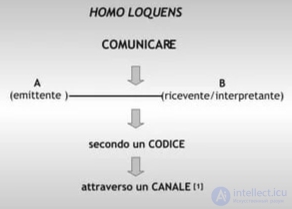
1. The term homo loquens means
2. Ancient philologists viewed man in connection with solving the problems of establishing a text's authorship and its interpretation
3. In ancient rhetoric, man became the central figure, appearing in two roles –
4. A fundamental role in granting man the status of an object of philology was played by the works of
5. A fundamental role in granting man the status of an object of philology was played by the works of
6. Among works in the field of literary studies, a fundamental role in granting man the status of an object of philology was played by the works of
7. Until the mid-twentieth century, the study of the language of literary works was reduced mainly to
8. For the study of the language of imaginative literature, what proves essential is
9. One of the central tasks of contemporary literary studies is the study of
10. Reception aesthetics − a trend in literary studies and criticism of the XX—XXI centuries, studying

12. The realization that speaking man is an object of philology came
13. The trend in literary studies that sets itself the task of studying the perception of a literary work by the reader (listener) is called

14. The anthropological turn in the humanities occurs
15. In the middle of the XX century, the priority object of research in the humanities becomes
16. The manifestation of the anthropological turn in philology was
17. In connection with the anthropological approach, the development of philology's ties with the humanities is strengthened, namely with
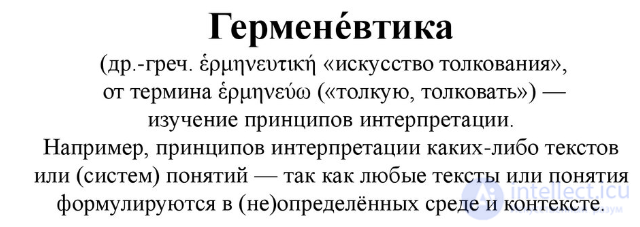
18. The text is created
19. In the 1960—1970s, the most important question in literary studies became
20. The change in the status of speech communication and of man as its subject in our country occurs
21. Understanding turns into something individual, which corresponds to its essence: understanding is understanding by a subject
22. In the philological sciences, man acts as
23. Man as the subject of speech communication is distinguished by
24. Man as the subject of philology is
25. Man as an object of philology (homo loquens) — is those aspects, facets of man as a whole that constitute the subject of interest of
26. The basic objects of philology are
27. The abilities and characteristics of man that determine the activity of creating and perceiving texts containing any type of reality lie in the following planes:
28. The abilities and characteristics of man that determine the activity of creating and perceiving texts containing any type of reality lie in the following planes:
29. The linguistic personality encompasses
30. The concept of the creative personality covers
31. The study of homo loquens is conducted within the framework of such disciplines as
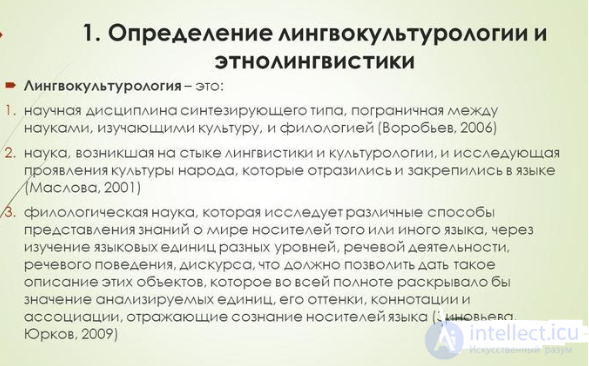
32. The study of homo loquens is conducted within the framework of such disciplines as
33. The study of homo loquens as an object of philology is conducted within the framework of a number of scholarly disciplines, which are linked
34. The study of homo loquens as an object of philology is conducted within the framework of a number of scholarly disciplines:
35. The processes of text understanding are studied
36. The generalizing scholarly direction that studies homo loquens as an object of philology is
37. The interests of the philological theory of communication are focused
38. The integration of the philological sciences and disciplines is served by such disciplines as
39. Linguistics studies homo loquens as
40. Literary studies is interested in homo loquens as
41. Contemporary linguistics and literary studies turn out to be closely connected

Comments