
Lecture
[Natural language — in linguistics and philosophy of language, a language used for human communication (as opposed to formal languages and other types of sign systems, also called languages in semiotics) and not deliberately created (as opposed to artificial languages). The vocabulary and grammatical rules of a natural language are determined by usage and are not always formally fixed.
Language is one of the sign systems, but a system of a special
kind. It is held that language is a universal sign system:
by means of language, in principle, any content can be expressed. This does not mean that natural language can convey all the nuances of content, for example, of a musical work, or
even, it would seem, of one of the simplest things — color. The known limitations of language are felt by writers as well. See the lines from a poem by S. Esenin (emphasis mine — A.Ch.):
...I would like to go back to that place,
So that, to the rustle of young goosefoot,
I might drown forever into the unknown
And dream, boyishly — into smoke.
But to dream of something else, something new,
Incomprehensible to the earth and the grass,
What the heart cannot express in words
And what man does not know how to name.
However, quite often in the process of communication a person resorts to
the help of other sign systems, other «languages» (used below without quotation marks). Usually they are grouped into several
classes. Let us note the main ones.
1) International artificial languages. The best known is the language Esperanto. It was invented by the Polish physician Zamenhof in the second half of the 19th century. The language
received its name from its inventor's pseudonym: Esperanto — one who hopes. Nowadays literature is published in Esperanto, as well as an online newspaper,
a news radio station operates; on one of the websites songs are posted
in Esperanto.
2) Symbolic languages of science. These languages combine
the formulas of mathematics, chemistry, linguistics, and other sciences, along with the rules for composing and using them.
3) Programming languages. These are languages intended for writing computer programs.
The languages named in groups 1—3 (artificial sign systems) are used for communicative purposes, but in
limited spheres. Following the principle of artificial languages, in
fiction, writers invent languages
for nonexistent (fictional) peoples. Such, for example, is
the Elvish language in the novels of J. Tolkien (1892—1973).
4) Paralanguages (from the Ancient Greek prefix para — near). Under the notion of paralanguage are subsumed sound and graphic means:
timbre, tempo, loudness, melody, features of pronunciation,
type of handwriting, font, letter size, color, underlining, and so on.
These are means that are supernumerary from the point of view of language
as a system, and hence optional. Thus, for example, in advertising the name of the advertised product may be marked
by means of paralanguage: FLOUR / flour / Flour, and so on.
5) Kinetic means (from the Ancient Greek kinētikos — setting
in motion): the language of the body and its parts (more narrowly — the language of gestures).
A well-known example from Russian communicative culture:
a nod signifies agreement. Features of nonverbal human behavior
are described by G.E. Kreidlin (Nonverbal Semiotics:
The Language of the Body and Natural Language. Moscow, 2004). Let us give one example from his work. On the meaning of the gesture of a finger to the temple: in German
culture — a person somewhat out of his senses; in some African
cultures — deep in thought; in France: a person about whom one
says: stupid; in Holland, on the contrary — intelligent («possesses intellect»).
The functions of the languages of the 4th and 5th groups are manifold: they are used to enhance the expressivity of an utterance (4), or as its replacement (5). For example: when addressing a child: — Run to me!
(with arms outstretched toward the listener) (4); — Shall we go? — In answer, only a nod (5).
Among sign systems one also numbers complex sign systems,
which are called sign systems of culture («artistic semiotics»). These are the languages of fiction,
folklore, dance, music, sculpture, graphic art, cinema, photography, and so on. Their specificity consists in the fact that the content they express
serves as a basis, which is then filled with meaning,
or, in the language of semiotics, the signifier of a sign becomes
the signified of a new sign — from the sphere of artistic semiotics. Thus, the hero of N.V. Gogol's tale «The Overcoat», Akaky Akakievich
Bashmachkin, expresses himself two-thirds of the time in sentences that are incomplete,
broken off, made up of pronouns, interjections, consisting of
function words and the like. See the dialogue between Akaky Akakievich and the tailor:
— Well, here I am, Petrovich, that thing...
It must be understood that Akaky Akakievich expressed himself for the most part
through prepositions, adverbs, and finally such particles as have absolutely no meaning whatsoever. And if the matter was very difficult, he even had the habit of not finishing his sentences, so that
very often, having begun a phrase with the words: «This, really, quite that...»,
and then nothing more would follow, and he himself would forget, thinking that he had already said it all.
— What is it then? — said Petrovich...
— Well, here I am, that, Petrovich... you see the overcoat, the cloth...you see,
everywhere else it's quite sound, it's gotten a bit dusty, and looks, as it were, old, but it's new, it's just that in one place a little
that... on the back, and also here on one shoulder it's worn through a bit, and here
on this shoulder a little — you see, that's all. And not much work is needed... .
The semantic incompleteness of the words making up the basis of the character's speech part is, in this case, a sign of the voiceless official.
Works of fiction, of journalism,
and others, when «transferred» into a film, onto a television
screen, onto the theatrical stage, undergo modification, since their
language begins to live by the laws proper to the «languages»
of cinema, television, theater. Therefore changes in the language inevitably occur, sometimes barely perceptible.
Compare fragments of two texts:
(1) ...and the unfortunate state councillor turned to stone entirely;
(2) EP sits as if he'd swallowed a crutch.
Fragment (1) is taken from B. Akunin's novel «The State Councillor». Here the hero's outward state is conveyed through the metaphor turned to stone, intended to reinforce the impression of the hero's inner discomfort (hence the addition of the particle entirely),
to produce an artistic effect.
In the text of the screenplay (2), a different metaphorical construction is used: as if he'd swallowed a crutch, which preserves all the functions of the metaphor turned to stone, but possesses greater «visual concreteness», which is precisely what is needed in a screenplay — as a cue
for the actor.
Let us return once more to the view, given in section 3.1, of
F. de Saussure, according to which recognizing language as one of
the objects of philology presupposes that in philology and in linguistics both the understanding of language and the tasks of its study differ.
Philology, as a body of humanities disciplines and scholarly
fields, regards language as an object of philology, i.e., it studies in language that which is general and essential for all the philological
disciplines. This general element is the functional nature of language, its organization and mechanisms of operation, its place among sign
systems, and its capacity to interact with them. In these respects, language faces the other objects of philology —
the text and homo loquens. (See the excerpts from R. Jakobson's book given below among the reading
materials.)
Each of the philological disciplines has its own tasks in studying
language.
Linguistics studies language in its entirety, i.e., as one
of the objects of reality, in its relations to other objects of reality. For literary studies, language is significant as
an instrument of verbal creativity.
The close ties between linguistics and literary studies are maintained in contemporary scholarship by semiotics (from Greek sēmeiōtikē — the study of signs). The point is that both language, and
the texts created by means of language, and works of fiction and of oral folk-poetic creativity, are all sign systems.
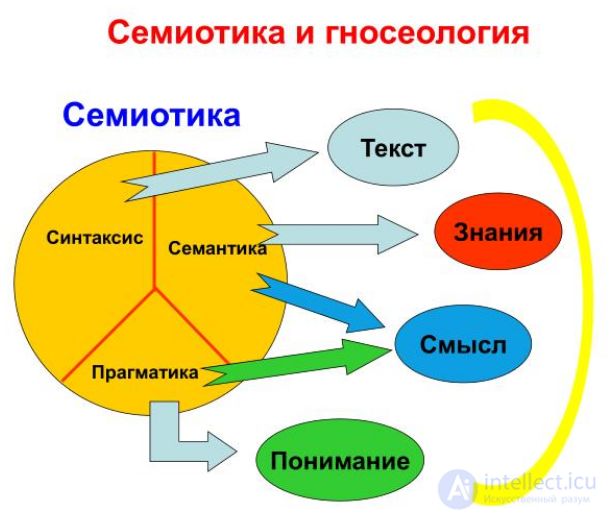
There exists a branch of semiotics that studies language, which, from
the point of view of semiotics, is a universal sign system
interacting with other sign systems.
There exists a branch of semiotics that studies literature
(fiction and folklore) — this is literary
semiotics.
Thus, by the end of the 20th century, the semiotics of language and the semiotics of literature took shape. In the semiotic study of language and literature
it turned out to be fundamentally common to recognize that both language and
literature «live» in action. The semiotics of language and the semiotics of
literature form a field that goes by the name of humanistic (from Latin humanitas — human nature; culture, spiritual education) semiotics.
Humanistic semiotics stands out in contrast to logico-mathematical semiotics and serves as one of the
integrating principles in contemporary philology. It allows one to see not only the signs of language and literature, but also the text
as a complex sign (a sign sequence). Accordingly, the semiotic study of language and literature carries them beyond the bounds of philology — into the broad circle of the humanities.
What could be more reasonable than a dictionary? It informs,
gives information, even teaches, if one takes the trouble to read it, and not only
to consult it for reference; without long speeches, without empty rhetoric,
it dispenses knowledge strictly, democratically, to anyone who wants it. And yet this compactly assembled, even in some ways simplified thing (given
the most intricate interweaving of facts, concepts, and matters of which
the world is composed) silently poses to us (nothing is less talkative than
a dictionary) the most important, the sharpest, perhaps even the most vertiginous problems that it is given to the human
mind to know and to discuss.
The first of these is bound up with the infinity of words in language. No one
knows how many words the French language consists of. Language changes with every minute, in every new place, in the course of pronouncing
countless new utterances; sometimes such a new word (or even not
a new one, but simply an «altered» old one) spreads, propagates, «takes root», and can be caught and entered into a dictionary (though it may, of course, soon disappear from there again). A dictionary continually
struggles against time and space (social, regional,
cultural), but each time suffers defeat; life is always broader
and faster, and it prevails — not over language, but over its codification.
That is why more and more new dictionaries are required. That is also why, in
creating each new dictionary, the idea of the «essential» arises anew: since the whole mass of words is boundless, let us fix some relevant level (depending on the specialty of the
dictionary or its readership), which will spare us from disquieting infinity and allow us to create a dictionary complete in
virtue of the selectivity of its word list; the possibility of working with it is a great relief; but let us not deceive ourselves — it constitutes only
a small visible part of the iceberg. In any case, knowing this,
we can discern, in this modest object which many consider merely a simple reference tool, the central riddle
of the universe — its infinity, or, to use a less metaphysical word, its elusiveness.
Now the second source of vertigo. We have gathered words, given
them definitions — the result is a dictionary. We have gathered things (naturally,
ones possessing names), given them a description — the result is an encyclopedia.
Sometimes, as in the present dictionary, both operations are combined,
producing a dictionary of words and things, an encyclopedic dictionary. Although
the complementarity of the two operations — the normative one (defining the use of words) and the descriptive one (describing the properties of things) — has been felt among us since as early as the 17th century, such dictionary-encyclopedias seem to be few. This is a rather paradoxical fact:
for in reality — and here a most intricate philosophical
dispute opens up — every word entails a thing or a whole cluster of things,
but also every thing can exist for people only insofar as it is
covered, consecrated, acknowledged by some word. Do words refer to
things? Yes, but at the same time also to other words. Hence the separation of words and things as two distinct and hierarchically related levels is a historical phenomenon, as M. Foucault has shown.
This separation means that we take up the position of realism, which acknowledges the thing in itself, apart from the subject speaking of it, and makes of the word a simple
instrument of communication; such a view was, in the Middle Ages, opposed by the nominalist tradition, which was, as is well known, vanquished by the spirit of modern European culture. Since the triumph of realism
we suppose that, on the one hand, we speak, and on the other — we manufacture
things; on the one hand, we utter something, adorn it, and idealize it, and on the other — we build, produce, sell, and appropriate something; on
one side — art (words), on the other — science (facts). Although
the dictionary is itself a historical product of this bourgeois
reason, if one looks closely, it in fact undermines it: for in order
to describe a thing, to pass from word to thing, other words are required,
and so on to infinity. Look, for instance, into the present dictionary: what
is a «face»? Part of the skull. But what is a «part», a «skull»? By what
right do you stop here and not go further? Where do
words end? What lies beyond them? Language is not only man's privilege, but also his prison. This is what the dictionary reminds us of.
Finally, a third astonishing property of this thing considered so modest: the dictionary goes beyond its own instrumentality. We
suppose that it is a necessary tool of knowledge, and that is true; but it
is also a machine that produces reveries; generating itself, from word to word, it in the end merges with our faculty of imagination. On the dictionary page — or on the several pages that
one keeps wanting to leaf through — before our consciousness or our sight
(if there are illustrations) pass the most powerful conductors of reverie: continents, people, epochs, tools, all manner of phenomena of Nature and society. A precious paradox: the dictionary at once allows us
to settle in, to grow accustomed, and compels us to wander among the unfamiliar; it
both reinforces knowledge and gives impetus to imagination. Each word is like a ship: at first it seems closed, tightly locked within its
precisely fitted framework; but very easily it sets off of its own accord
on a voyage, moves toward other words, other images, other
desires; and so it turns out that the dictionary is endowed with a poetic function. Mallarmé and Francis Ponge credited it with a refined creative power. Poetic imagination is always marked by clarity, and in
the clarity of the dictionary lies the source of the joy with which it is read by poets and
often by children.
To these philosophical and poetic functions must be added the most vivid role that the dictionary plays within the historically
determined society in which we live. In France the dictionary, in its various
forms, has been a participant in the greatest battles of ideas. Born
in the 16th century, that is, at the dawn of the modern age, it dynamically, often partially, followed the gains won by the spirit of objectivity, and hence of tolerance; a mediating instance of publicly accessible knowledge, it took part in the formation of a democratic
cognitive practice. Now, however, a new question arises. The dissemination of knowledge now depends not only on books (and hence on dictionaries), but also (chiefly, perhaps?) on the so-called mass media; and
since this dissemination is massive, mobile, and unstable in character
(for it is carried out by means of speech, not writing), knowledge acquires a certain false naturalness; we speak less than we
listen, we are imperceptibly steeped in what we hear, we pass from one
approximate idea to another, subjecting nothing to verification; words become unconscious myths, entering into the service of that
the soft (because anonymous) power now wielded by the press,
radio, and television; we are told more and more, while we ourselves speak
worse and worse. The dictionary calls us to order. It tells us
that genuine communication, an honest exchange of opinions, is possible only
through the strict use of the fine nuances of language. Sometimes I hear
an author reproached for writing in «special jargon»; I want to answer such people in the words of Valéry: «Are you one of
those people for whom no dictionary exists?» The dictionary reminds us
that language is not given to us once and for all at birth; that no one by himself
is a model of clarity; that sound communication cannot be the fruit of verbal slackness; in a word, that each of us
must struggle with language, that this struggle goes on unceasingly, that for
it one needs a weapon (such as a dictionary) — so vast, so mighty, and
so cunning is our language. The fact that dictionaries persistently live on and are renewed, that they
are created and produced with the greatest care — all this tells us
that they embody a kind of vow to society: since conflicts between people are inevitable (as we are assured), let
them at least never flare up over verbal misunderstandings.
Words, alas, are neither true nor false, for language has no power
to prove its own truth; but they can be accurate, like
notes — and it is to just such a music of linguistic relations that
a good dictionary calls us.
M.M. Bakhtin. Author and Hero. Toward the Philosophical Foundations of the Human Sciences
<...> The terminological indeterminacy and confusion at this methodologically central, pivotal point of linguistic thought are the result of ignoring the real unit of speech
communication — the utterance. Indeed, speech can exist in reality only in the form of concrete utterances of individual speaking people, subjects of (this) speech. Speech is always cast in the form of an utterance belonging to a particular speech subject, and outside
this form it cannot exist. However different utterances may be
in their scope, their content, their compositional structure, as units of speech communication they possess common
structural features, and above all quite definite
boundaries. We must dwell in detail on these boundaries, which have an especially essential and fundamental character.
The boundaries of each concrete utterance as a unit of speech communication are determined by the change of speech subjects, that is, by the change of
speakers. Indeed, speech communication is an «exchange of thoughts» in all spheres of human activity and everyday life. Every utterance — from
a short (single-word) remark of everyday dialogue to a large novel or scholarly treatise — has, so to speak, an absolute beginning
and an absolute end: before its beginning — the utterances of others, after its
end — the answering utterances of others (or at least the silent
active-responsive understanding of the other, or, finally, a responsive action
based on such understanding). The speaker finishes his utterance in order to yield the floor to another or to make room for the other's active-responsive understanding. The utterance is not a conventional unit, but
a real unit, clearly delimited by the change of speech subjects,
ending with the transfer of the floor to another, as it were by a silent «dixi»,
sensed by the listeners [as a sign] that the speaker has finished. <...>
Let us move on to the second feature, inseparably linked with the
first. This second feature is the specific finalization of the utterance.
The finalization of the utterance is, as it were, the inner side
of the change of speech subjects: this change can take place precisely because
the speaker has said (or written) everything that he wanted to say at the given moment or
under the given conditions. Listening or reading, we clearly
sense the end of the utterance, as if we hear the speaker's concluding «dixi»
. This finalization is specific and is determined by particular criteria. The first and most important criterion of the finalization
of an utterance is the possibility of responding to it, or more precisely and more broadly —
of taking a responsive stance toward it (for example, carrying out
an order). This criterion is met both by a short everyday question,
such as «What time is it?» (which can be answered), and by an everyday request, which can be carried out or not, and by a scholarly presentation, with which one can agree or disagree (wholly or
in part), and by a novel, which can be evaluated as a whole.
Some degree of finalization is necessary in order for it to be possible to react to
an utterance. For this it is not enough for the utterance to be
understandable in linguistic terms. A perfectly comprehensible and complete
sentence, if it is a sentence and not an utterance consisting of
a single sentence, cannot evoke a responsive reaction: this is understandable,
but it is not yet everything. This «everything» — the mark of the wholeness of an utterance —
does not lend itself to either grammatical or abstractly semantic definition.
This finalized wholeness of the utterance, which ensures the
possibility of a response (or of responsive understanding), is determined by three
factors (or moments), inseparably bound together in the organic whole of the utterance:
The first factor — the exhaustion of the object and meaning of the topic of the utterance — differs profoundly in different spheres of speech communication.
This exhaustion can be almost completely full in certain
spheres of everyday life (purely factual questions and equally
factual answers to them, requests, orders, and so on), in certain
business spheres, in the area of military and production commands and
orders, that is, in those spheres where speech genres bear a maximally standardized character and where the creative moment is almost entirely absent. In creative spheres (especially, of course, in the scholarly one), on the contrary,
only a very relative exhaustion of the object and meaning is possible; here one can speak only of a certain minimum of finalization allowing a responsive stance to be taken. Objectively the subject
is inexhaustible, but, becoming the topic of an utterance (for example, of a scholarly
work), it acquires a relative finalization under given
conditions, given the current state of the question, on the given material, given
the goals set by the author, that is, already within the limits of a particular authorial plan. Thus we inevitably find ourselves facing the second factor, which is inseparably linked to the first.
In every utterance — from a single-word everyday remark to
large, complex works of scholarship or literature — we grasp, understand, sense the speech plan or speech will of the speaker, which determines the whole of the utterance, its scope, and its boundaries.
We form an idea of what the speaker wants to say, and it is by this speech plan, this speech will (as we understand it), that we measure
the finalization of the utterance. This plan determines both the very choice of subject (under the given conditions of speech communication, in the necessary connection with preceding utterances), and the boundaries and
the exhaustion of its object and meaning. It determines, of course, also
the choice of the generic form in which the utterance will be constructed
(this is already the third factor, to which we shall turn next). This plan — the subjective moment of the utterance — combines in an inseparable unity with the objective object-and-meaning side of it,
limiting the latter, linking it to a concrete (individual)
situation of speech communication, to all its individual circumstances, to its personal participants, to the preceding
utterances of theirs. Therefore the immediate
participants in communication, oriented in the situation and in the preceding utterances, easily and quickly grasp the speech plan, the speech will of the speaker, and from the very beginning of the speech sense the unfolding whole of the utterance.
Let us move on to the third and, for us, most important factor — to
the stable generic forms of the utterance. The speaker's speech will is realized above all in the choice of a particular speech
genre. This choice is determined by the specifics of the given sphere of speech
communication, by object-and-meaning (thematic) considerations,
the concrete situation of speech communication, the personal composition of its
participants, and so on. And further the speaker's speech plan, with all its
individuality and subjectivity, is applied and adapted to the chosen genre, taking shape and developing within a particular
generic form. Such genres exist above all in all the most diverse spheres of oral everyday communication, including the most familiar and the most intimate.
We speak only in particular speech genres, i.e. all
our utterances possess definite and relatively stable typical forms of construction of the whole. We possess a rich repertoire of oral (and written) speech genres. In practice we use them confidently and skillfully, but theoretically we may not even know of their existence. Like Molière's
Monsieur Jourdain, who, speaking in prose, had no idea he was doing so, we speak
in a variety of genres without suspecting their existence. Even in
the freest and most relaxed conversation we cast our speech into
particular generic forms, sometimes clichéd and stereotyped, sometimes more flexible, plastic, and creative (creative
genres are found in everyday communication as well). These speech genres are given
to us almost as our native language is given to us, which we speak freely and [without] theoretical study of grammar. Our native language — its
vocabulary and grammatical structure — we learn not from dictionaries
and grammars, but from concrete utterances that we hear and
that we ourselves reproduce in living speech communication with the people around us. We assimilate the forms of language only in the forms of
utterances and together with these forms. The forms of language and the typical
forms of utterances, i.e. speech genres, enter our experience and
our consciousness together and in close connection with one another. To learn to speak — means to learn to construct utterances (because we speak
in utterances, not in separate sentences and, of course,
not in separate words). Speech genres organize our speech almost
as grammatical forms (syntactic ones) organize it.
We learn to cast our speech into generic forms, and, hearing another's speech, we already guess its genre from the very first words, we anticipate
a certain scope (that is, the approximate length of the speech whole), a certain compositional structure, we foresee the end, that is, from
the very beginning we possess a sense of the speech whole, which then
only becomes differentiated in the process of speech. If speech genres
did not exist and we did not command them, if we had to
create them anew in the process of speech, freely and for the first time constructing each utterance, speech communication would be almost impossible. <...>
Alongside such standard genres there existed and exist, of course, also more free and creative genres of oral
speech communication: genres of salon conversations on everyday, social,
and aesthetic themes, genres of table talk, of intimate-friendly, intimate-family conversations, and so on (a nomenclature of oral speech
genres does not yet exist, and even the very principle of such a nomenclature is not yet clear). Most of these genres lend themselves freely to creative
reworking (like artistic genres, and some, perhaps, even more so), but creatively free use is not the same as creating a genre anew — one must possess a genre well
in order to use it freely. <...>
The sentence, like the word, possesses a completeness of meaning and
a completeness of grammatical form, but this completeness of meaning is abstract in character, and it is precisely for this reason that it is so definite; it is the completeness of an element, but not the finalization of a whole.
The sentence as a unit of language, like the word, has no author. It
belongs to no one, like the word, and only by functioning as a whole utterance
does it become the expression of the position of an individual speaker in a
concrete situation of speech communication. This brings us to a new,
third feature of the utterance: its relation to the speaker himself (the author of the utterance) and to other participants in speech communication. <...>
Thus, addressivity, the addressed quality of the utterance, is its constitutive feature, without which there is not and cannot be an utterance. The various typical forms of such addressivity and the various
typical conceptions of addressees are constitutive, defining
features of different speech genres.
Unlike utterances (and speech genres), the significative units of language — the word and the sentence — are by their very nature devoid
of addressivity: they belong to no one and are addressed to no one. Moreover, by themselves they are devoid of any relation to another's
utterance, to another's word. If a separate word or sentence is addressed, directed at someone, then what we have before us is a complete utterance,
consisting of a single word or a single sentence, and the addressivity
belongs not to them as units of language, but to the utterance. A sentence surrounded by context acquires addressivity only through the
whole utterance, as its constituent part (element)1
.
Language as a system possesses an enormous store of purely linguistic
means for expressing formal addressivity: lexical
means, morphological ones (corresponding cases, pronouns, personal verb forms), syntactic ones (various patterns
and modifications of sentences). But they acquire genuine addressivity
only within the whole of a concrete utterance. And the expression of
this genuine addressivity is of course never exhausted by these special linguistic (grammatical) means alone.
1 Let us note that interrogative and imperative types of sentences, as a
rule, figure as complete utterances (in the corresponding speech genres).
They may also be entirely absent, and the utterance may nonetheless very acutely
reflect the influence of the addressee and his anticipated responsive reaction.
The selection of all linguistic means is made by the speaker under the greater
or lesser influence of the addressee and his anticipated response.
When a separate sentence, taken out of context, is analyzed, the traces of addressivity and of the influence of the anticipated response,
the dialogic responses to preceding others' utterances,
the weakened traces of the change of speech subjects that have furrowed the utterance from within, are lost, effaced, because all this is alien to
the nature of the sentence as a unit of language. All these phenomena are connected
with the whole of the utterance, and wherever this whole
falls outside the analyst's field of vision, they cease to exist for him. This is
one of the reasons for that narrowness of traditional stylistics to which we
have pointed. Stylistic analysis, encompassing all aspects of style, is possible only as an analysis of the whole utterance and only within that
chain of speech communication of which this utterance is an inseparable link. <...>
On Subjectivity in Language
If language, as is commonly said, is an instrument of communication, then
to what does it owe this property? The question may seem surprising, as all
those cases seem surprising in which the obvious appears to be called into question.
<...>
In actual fact, the comparison of language with an instrument — and for
such a comparison to be even comprehensible, language must be
compared with a material instrument — ought to inspire great mistrust, like any simplified conception of language. To speak of an
instrument means to set man against nature. Picks, arrows,
wheels do not exist in nature. People made them. Language, however, is in man's nature, and man did not make it. We are constantly inclined naively
to imagine some primordial epoch when an already fully formed human being discovers another like himself, an equally fully formed human being, and between them a language gradually begins to develop. This is pure fantasy. It is impossible to imagine a human being
without language and inventing a language for himself. It is impossible to imagine
an isolated person managing to become aware of the existence
of another person. In the world there exists only man with language, man speaking to another man; language, thus, necessarily
belongs to the very definition of man.
All the properties of language: its nonmaterial nature, its symbolic
mode of functioning, its articulate character, the presence of content — are already sufficient for the comparison with a tool, which separates from man his attribute — language, to appear doubtful.
Of course, in everyday practice the back-and-forth movement of speech gives rise to the idea of an exchange, and that is why that «thing» which,
as it seems to us, we exchange, appears to us to perform
an instrumental or mediating function, which we tend to hypostatize as an «object.» But — let us stress once again — this role belongs to speech.
As soon as we attribute this function to speech, we can raise
the question of just what predisposes speech to perform it. For
speech to ensure «communication,» it must be granted
authority to perform this function by language, since speech represents nothing other than the actualization of language. Indeed,
we must seek the basis of this property in language. It lies,
as it seems to us, in one feature of language, which is little noticed, being obscured
by its «obviousness,» and which we can for now characterize only in general terms.
It is precisely in language and thanks to language that man is constituted as a
subject, for only language confers reality, its own reality, which is the property of being — upon the concept of «Ego» — «my self.»
The «subjectivity» in question here is the capacity of the speaker to represent himself as a «subject.» It is determined
not by the feeling one has of oneself, which every person has (this feeling,
insofar as it can be observed, is merely
a reflection), but as a psychic unity, transcendent with respect to the sum of experience gathered, which this unity unites, and which ensures the permanence of consciousness. We maintain that
this «subjectivity,» whether considered from the point of view of phenomenology or of psychology, is nothing other than the manifestation,
in man, of a fundamental property of language. He who says «ego» is «ego.» Here we find the very foundation of «subjectivity,»
defined by the linguistic status of «person.»
Awareness of oneself is possible only through opposition. I can
use I only when addressing someone who, in my address,
appears as you. Such a dialogic condition defines
the person, for it presupposes a reversible process, whereby I become you in the speech of someone who in turn designates himself as I.
Here we find a principle whose consequences must
be developed in every direction. Language is possible only because
each speaker represents himself as a subject, referring to himself as I in his own speech. By virtue of this, I constitutes the other person, who, being absolutely external with respect
to my «I,» becomes my echo, to whom I say you and who
says you to me. The polarity of persons — this is precisely the fundamental condition in language, in relation to which the very process of communication,
which served as our starting point, is merely a pragmatic
consequence. This polarity, moreover, is quite peculiar; it represents a special type of opposition, having no analogue
anywhere outside language. It signifies neither equality nor symmetry: «ego»
always occupies a transcendent position with respect to «you,»
yet neither term is conceivable without the other; they stand
in a relation of complementarity, but by the opposition «interior ~ exterior,» and at the same time in a relation of mutual reversibility.
It is useless to seek a parallel to these relations: none exists.
Man's position in language is unique.
Thus the old antinomies of «I» and the «other,» the individual and society, collapse. What we find is a dual essence, which it would be wrong and mistaken to reduce to a single original term, whether one considers
this single term to be the «I,» which supposedly must first assert itself in its own consciousness before then opening itself to the consciousness of the «other»; or whether one considers this single original term to be society, which as a whole exists, as it were, prior to the individual, and from which the individual is set apart only as he becomes aware of
himself. It is precisely in the reality of the dialectical unity, uniting both terms and defining them in mutual relation, that
the linguistic foundation of subjectivity lies. <...> or a plan for a systematic encyclopedia
<...>
However, the idea of gathering, as far as possible, the whole
mass of linguistic material in its full extent, of making within
it a comparison according to every conceivable law of analogy, so that, understanding
language as an effect, one might create and perfect it in accordance
with human behavior, or, understanding it as a cause, one might draw conclusions about the inner world of peoples, and all this together with philosophical consideration of
general human nature and with historical consideration of the destinies
of various peoples — this idea, I believe, still remains
unattended to, and yet it deserves the most serious attention,
since it adds to those already existing not only a new science, but
a new type of scholarly research.
<...> It has long been the prevailing opinion that differences between languages
are a regrettable obstacle on the path of culture, and that the study of languages is a necessary evil of any education. It occurs to no one that
language is not merely a means for understanding the people who
speak it, or the writer who writes in it. Hence the mistaken
tendency to judge the importance of a language by the perfection of
its literature, complete disregard for languages that have no literature at all,
and a distorted method of language teaching, in which effort is directed solely toward understanding the works of writers.
<....>Language, and not only language in general, but each individual language, even
the poorest and crudest, is in itself and for itself a subject
deserving the closest reflection. Language is not simply, as is
commonly said, an imprint of the ideas of a people, since the multitude of its signs does not allow the discovery of any ideas existing separately from it;
language is the united spiritual energy of a people, miraculously
imprinted in certain sounds, and comprehensible, in this form and through
the interrelation of its sounds, to all who speak it, arousing
in them roughly the same energy. Man as a whole is not contained within
the bounds of his language; he is more than what can be expressed in words; but
he must enclose his elusive spirit in words in order to fasten it down by something,
and use words as a support for reaching what
lies beyond their bounds. Different languages are by no means different designations of one and the same thing, but different visions of it; and if this thing
is not an object of the external world, each [speaker] creates it in his own way,
finding in it exactly as much of his own as is needed
to grasp and take in another's thought. Languages are hieroglyphs into which man encloses the world and his imagination; while
the world and the imagination, constantly creating one picture after another according to laws of similarity, remain on the whole unchanged, languages themselves develop, grow more complex, expand. Through the diversity of languages,
the wealth of the world and the diversity of what we come to know in it
is opened up to us; and human existence becomes broader for us, since languages give us,
in distinct and effective features, different ways of thinking and perceiving. Language always embodies the distinctiveness of an entire
people, and therefore one need not fear in it either intricacy or an excess
of fantasy, which some consider undesirable. What they give
us at once is a full, pure, and simple human nature, and if
we penetrate the depths of their mysteries, a fresh stream of the undying fantasy of other peoples bursts into our dry rationality, enclosing
every impression that the young world grants their still unjaded senses, in the shell of a living and mobile image.
The study of the languages of the world is also a universal history of the thoughts and feelings of humankind.
It must describe the peoples of all countries and all degrees of cultural development; it must encompass everything that concerns man.
Edward Sapir pointed to the evident fact that «language is a purely referential communication process as it is embodied in every known society.» The science of language investigates the structure of speech messages
and the code underlying them. The structural characteristics of language are interpreted in light of the tasks they perform in various processes of communication, and, consequently, linguistics can be briefly defined as the study of communication carried out by means of speech messages. We analyze these messages taking into account all factors pertaining to them, such as the inherent properties
of the message itself, its addresser and its addressee, either actual or merely presumed by the addresser to be the recipient.
We study the nature of the contact between these two participants in the speech act; we seek to identify the code common to the addresser and the addressee; we try to find the common features, as well as the differences,
between the encoding operations performed by the addresser, and
the decoding ability possessed by the addressee. Finally, we try to determine the place occupied by a given message in the context of
surrounding messages, which either belong to the same
act of communication, or link a remembered past with an anticipated future, and we pose the fundamental question of the
relation of the given message to the universe of discourse.
In examining the roles of the participants in a speech act, we must distinguish several essential aspects of their interaction, namely:
the basic form of their relations, the alternation of encoding and decoding processes during communication, and the cardinal
differences between these aspects in dialogic speech and in monologue. A question that requires study is the expansion of the «radius
of communication,» understood as the totality of turns and responses among people of a given set, and the expansion
of the audience of monologic speech, which may be addressed to whomever «it concerns.» At the same time, researchers in the fields of psycho1
Roman Jakobson. Language in relation to other communication systems. — In: «Linguaggi nella società e nella tecnica». Milano, 1970, p. 3—16.
logy, neurology, and above all linguistics are finding it increasingly
evident that language is a means not only of interpersonal but also of intrapersonal communication. This latter
area, formerly underestimated or simply ignored,
has now, largely under the influence of the brilliant studies of L.S. Vygotsky and A.N. Sokolov, become topical, sharpening
important questions in the study of the inner existence of speech and of various
aspects of inner speech, which forms, programs, and completes our utterance and, in general, governs the internal and
external sides of our speech behavior, as well as our silent response to any messages. Among the many problems
to which Charles Sanders Peirce, with his characteristic perceptiveness,
devoted more attention than his contemporaries did, was the problem of the substance and significance of a person's silent inner dialogues with
himself, «as if it were someone else.» Speech interaction, bridging spatial barriers between interlocutors, also encompasses the temporal aspects of linguistic communication, linking together the past, present, and future of one
person.
Although among all the messages employed in human communication, speech messages play the dominant role, we
must nevertheless also take into account the other kinds of messages
used in human society, and investigate their structural and functional characteristics, without forgetting, however, that for all
humankind the primary means of communication is language, and
that such a hierarchy of communicative means is necessarily reflected
in all the other, secondary types of messages transmitted by man, causing a dependence of one kind or another of these messages upon
language, and in particular upon command of language and its use for
accompanying or explaining any other messages. Every message consists of signs; accordingly, the science of signs, called semiotics, deals with the general principles underlying the
structure of all signs, taking into account their use within messages and the character of those messages, as well as the particularities of the various sign systems and of the messages that use these different types of signs.
Semiotics, which was foreseen by the philosophers of the 17th—18th centuries and whose foundations
were laid at the end of the 1860s by Charles Sanders Peirce and, at the turn of the 19th—20th centuries, by Ferdinand de Saussure (who called this science somewhat differently — sèmiologie), is now, in various
countries, undergoing a process of rapid and vigorous development.
Semiotics, as the study of communication by means of all
types of messages, forms a concentric circle closest to
linguistics as the study of communication by means of speech messages; the next, wider concentric circle is formed by
the general science of communication, which includes social anthropology, sociology, and economics. One can cite again and again Sapir's
still-relevant reminder that «every cultural
system and every single act of social behavior explicitly or
implicitly presupposes communication.» It should be remembered that, whatever
level of communication we may be considering, it, like any other level, presupposes an exchange of messages of one kind or another and
therefore cannot be conceived apart from the semiotic level,
which in turn assigns the leading role to language. The question of the semiotic and, in particular, linguistic components present in every system of human communication must
serve as an important guiding factor in future research
into all types of social communication. The experience accumulated by linguistic science has already come to be taken into account and creatively used
in contemporary anthropological and economic research — truly creatively, since a carefully elaborated and productive linguistic model cannot be mechanically transferred
to another field; this model is effective only when it does not
come into conflict with the autonomous properties of the corresponding
subject area.

Comments