Testing (examples of test items)
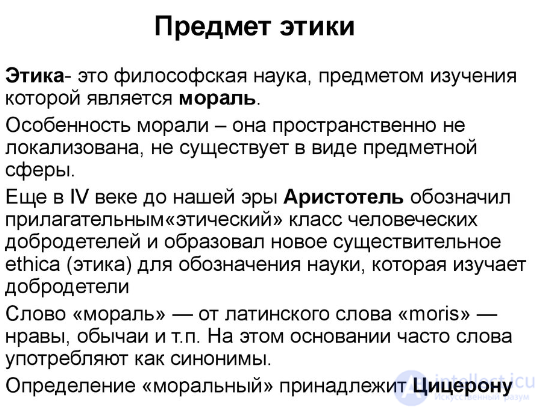
1. The term «ethics» was introduced by:
- a. Plato;
- b. Aristotle;*
- c. Socrates.
2. The term «moral» was introduced by:
- a. Cicero;*
- b. Aristotle;
- c. Plutarch.
3. Morality is:
- a. a synonym for ethics;
- b. the subject matter of ethics;*
- c. both options are incorrect.
4. Human behavior is characterized by:
- a. constant adherence to the norm;
- b. constant violation of the norm;
- c. constant balancing between these states.*
5. The space of morality is:
- a. relations between people;*
- b. the inner world of the person;
- c. the sphere of aesthetics.

6. The highest social function of morality is expressed in:
- a. the preservation of human society;*
- b. the regulation of the behavior of social groups;
- c. the improvement of a person's well-being.
7. The Chinese philosopher, founder of the social-ethical theory:
- a. Confucius;*
- b. Lao Tzu;
- c. Gautama.
8. In the works of Homer there is a description of:
- a. individual morality;
- b. group morality;
- c. both options are incorrect.*
9. The work of the ancient Greek poet Hesiod devoted to the teaching about the right way of life:
- a. «Theogony»;
- b. «The Iliad»;
- c. «Works and Days».*
10.The ethical teaching of the «Seven Sages» was expressed:
- a. in treatises;
- b. in aphorisms;*
- c. in works of literature.
11.The ethical teaching based on the harmony of numbers was created by:
- a. Plato;
- b. Pythagoras;*
- c. Heraclitus.
12.Who is the author of the following statement: «All things and all men, coming upon them suddenly, will Fire judge and seize»:
- a. Democritus;
- b. Pythagoras;
- c. Heraclitus.*
13.The author of the term «euthymia» is:
- a. Democritus;
- b. Plato;*
- c. Pythagoras.
14.The Sophist, author of the works «On Ambition» and «On the Virtues»:
- a. Hippias;
- b. Antiphon;
- c. Protagoras.*
15.Who is the author of the following statement: «Man is the measure of all things: of the things that are, that they are, of the things that are not, that they are not»:
- a. Pythagoras;
- b. Protagoras;*
- c. Hippias.
16.Socrates laid the foundations of a direction in ethics that is called:
- a. intellectualism;*
- b. nihilism;
- c. criticism.
17.According to Socrates, virtue is identical with:
- a. knowledge;*
- b. pleasure;
- c. both options are incorrect.

18.The Cynics were proponents of:
- a. asceticism;*
- b. nihilism;
- c. hedonism.
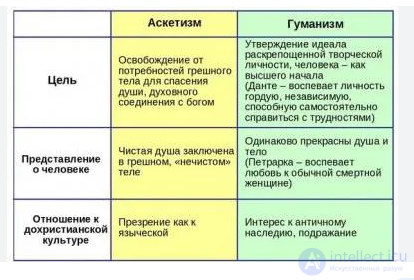
19.The term «hedonism» means:
- a. the enjoyment of material goods;*
- b. the enjoyment of spiritual goods;
- c. detachment from everything in this world.
20.According to Plato, the highest good is:
- a. sensual pleasure;
- b. the unity of truth, measure, and beauty;*
- c. a myth.
21.Plato described the path to attaining the highest good in the dialogue:
- a. «The Symposium»;
- b. «Philebus»;*
- c. «Phaedo».
22.Plato is considered the founder of:
- a. social ethics;*
- b. bioethics;
- c. the ethics of nonviolence.
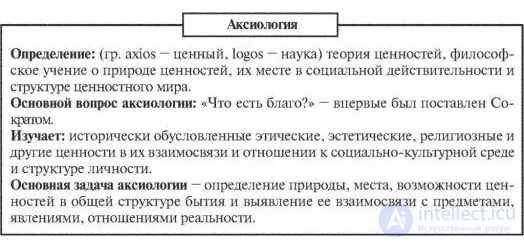
23.The teaching about the existence of objective values in the world is called:
- a. axiology;*
- b. Socratism;
- c. Platonism.
24.The founder of the philosophical school of the Cynics is considered to be:
- a. Diogenes;*
- b. Antisthenes;
- c. Crates.
25.Ethics acquired an independent status in the works of:
- a. Plato;
- b. Socrates;
- c. Aristotle.*
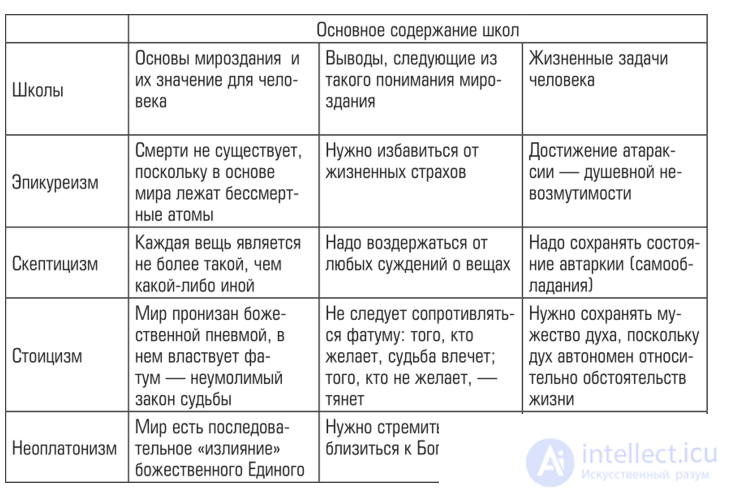
26.Ataraxia presupposes:
- a. the satisfaction of needs;
- b. the absence of suffering, the ability to master one's passions, and the capacity to need nothing;*
- c. sensual pleasure.

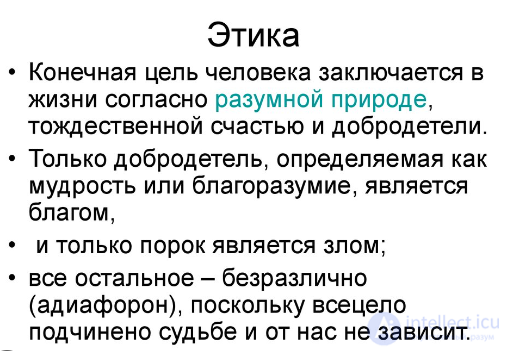
27.The term «adiaphoron» was introduced into ethics by:
- a. the Cynics;
- b. the Epicureans;
- c. the Stoics.*
28.The author of the work «On Duties» is:
- a. Aristotle;
- b. Cicero;*
- c. Aurelius Augustine.
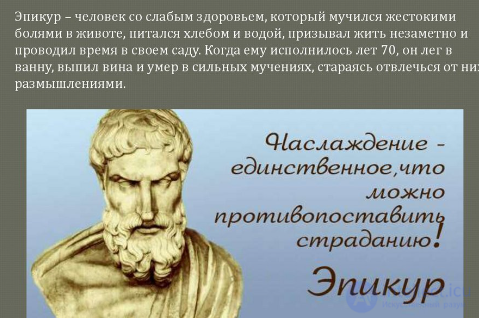
29.The author of the statement «Live unnoticed» is:
- a. Heraclitus;
- b. Epicurus;*
- c. Socrates.
30.According to Aristotle, the excess of the passion of fear is:
- a. courage;*
- b. boldness;
- c. cowardice.
31.According to Aristotle, the mean of the passion for disposing of the goods of life is:
- a. generosity;*
- b. prodigality;
- c. stinginess.
32.According to Aristotle, the mean of the passion for social interaction in pleasant company is:
- a. wit;
- b. buffoonery;*
- c. boorishness.
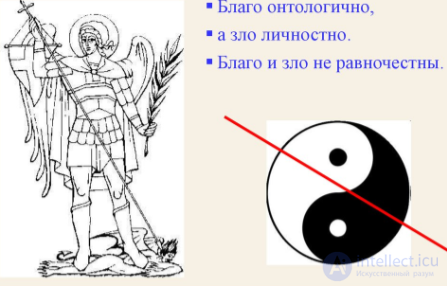
33.According to Aurelius Augustine, evil is:
- a. ontological;*
- b. non-ontological;
- c. both options are incorrect.
34.The author of the work «Confessions» (early 4th century) is:
- a. Augustine of Hippo;*
- b. Ambrose of Milan;
- c. Irenaeus of Lyon.
35.The author of the work «Ethics, or Know Thyself» is:
- a. Thomas Aquinas;
- b. Peter Abelard;
- c. Albertus Magnus.*
36.Thomas Aquinas is the author of:
- a. the «Summa Theologica»;
- b. «Questions on the Virtues»;
- c. both options are correct.*
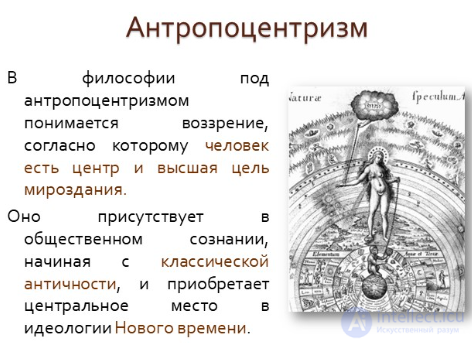
37.A characteristic feature of the ethics of the Renaissance is:
- a. theocentrism;
- b. anthropocentrism;*
- c. cosmocentrism.
38.The author of the work «On the True and the False Good» is:
- a. G. Bruno;
- b. L. Valla;
- c. M. Ficino.*
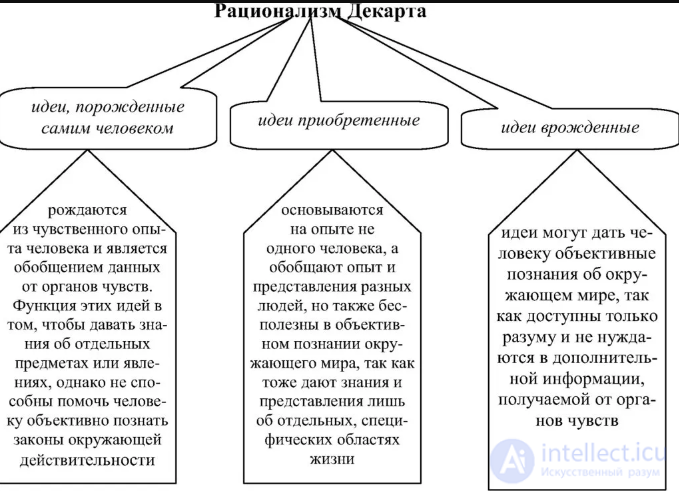
39.R. Descartes set forth his ethical views in the work:
- a. «Discourse on the Method»;*
- b. «Nicomachean Ethics»;
- c. «Magna Moralia».
40.The geometric method in ethics was first applied by:
- a. B. Spinoza;
- b. R. Descartes;*
- c. Nicholas of Cusa.
41.The author of the theory of theodicy in the ethics of the Modern era is:
- a. Aurelius Augustine;
- b. G. Leibniz;*
- c. B. Spinoza.
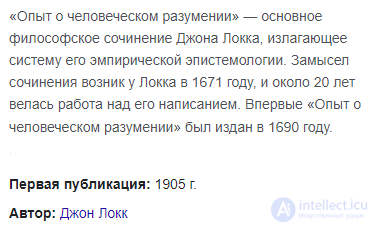
42.J. Locke set forth his ethical views in the work:
- a. «An Essay Concerning Human Understanding»;*
- b. «Two Treatises of Government»;
- c. both options are correct.
43.The term «moral sense» was introduced into ethics by:
- a. G. Bruno;
- b. J. Locke;*
- c. E. Cooper.
44.Sentimentalism as a direction in ethics arose:
- a. in the 17th century;
- b. in the 18th century;*
- c. in the 19th century.
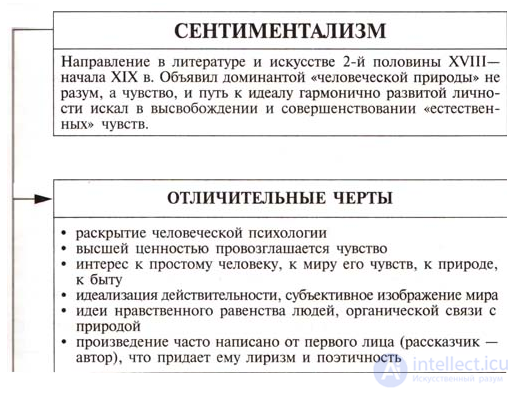
45.Not a representative of sentimentalism is:
- a. the Earl of Shaftesbury;
- b. D. Hume;
- c. C. Helvetius.*
46.D. Hume is the author of the work:
- a. «An Enquiry Concerning the Principles of Morals»;*
- b. «An Inquiry into the Original of Our Ideas of Beauty and Virtue»;
- c. «Ethics».
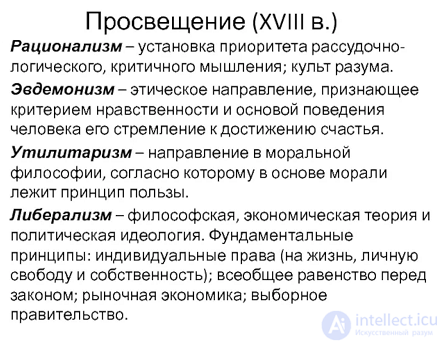
47.A characteristic feature of the ethics of the Enlightenment is:
- a. sensualism;
- b. rationalism;*
- c. nihilism.
48.C. Helvetius's ethical views were set forth in:
- a. «On the Mind»;*
- b. «Ethics»;
- c. «On Man».
49.A proponent of the idea of natural morality was:
- a. J.-J. Rousseau;*
- b. D. Diderot;
- c. both options are incorrect.
50.A proponent of ethical pragmatism was:
- a. D. Diderot;
- b. C. Helvetius;
- c. both options are correct.*
51.The founder of the «ethics of duty» is:
- a. I. Kant;*
- b. G. Hegel;
- c. F. Schelling.
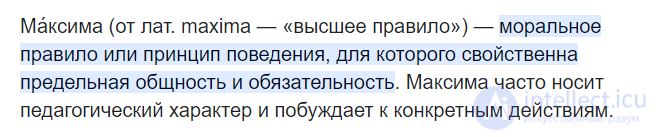
52.According to the «ethics of duty», duty is expressed in the impulse to perform or not perform some act, which is called:
- a. an axiom;
- b. a maxim;*
- c. a demand.
53.The position according to which a person must obey the law because it exists and demands certain actions, and not for the sake of a reward, is called:
- a. rigorism;
- b. nihilism;
- c. legalism.*
54.In the «ethics of duty», the law requiring of a person such behavior as can become a universal demand is called:
- a. the hypothetical imperative;
- b. the categorical imperative;*
- c. the universal law of morality.
55.According to the «ethics of duty», a person, in acting morally, brings good to:
- a. society;*
- b. themselves;
- c. both options are correct.
56.The author of the work «The Vocation of Man» is:
- a. I. Kant;*
- b. I. Fichte;
- c. F. Schelling.
57.G. Hegel set forth his ethical teaching in the work:
- a. «The Phenomenology of Spirit»;
- b. «The Philosophy of History»;
- c. «The Philosophy of Right».*
58.How many elements in a moral act does G. Hegel distinguish?
- a. three;
- b. four;
- c. five.*
59.The founder of ethical utilitarianism is considered to be:
- a. J. S. Mill;
- b. J. Bentham;*
- c. A. Schopenhauer.
60.S. Kierkegaard is the author of the work:
- a. «The World as Will and Representation»;
- b. «On the Genealogy of Morals»;
- c. «Fear and Trembling».*

61.The philosopher who called his ethical theory «immoralism»;
- a. F. Schelling;
- b. I. Fichte;
- c. F. Nietzsche.*
62.The founder of «metaethics» is:
- a. G. E. Moore;*
- b. A. Bergson;
- c. M. Scheler.
63.The aim of metaethics is:
- a. the study of the language of ethics;*
- b. the study of people's actions;
- c. the study of the history of ethics.
64.According to ethical absolutism, good and evil are:
- a. evaluative concepts;*
- b. ontological concepts;
- c. a fiction.
65.The values that define good in terms of its content are called:
- a. happiness;
- b. the good;
- c. both options are correct.*
66.In the ethics of the Modern era, good is understood as:
- a. blessedness;
- b. justice;
- c. the good will.*
67.G. Leibniz classified evil into the following types:
- a. metaphysical, physical, moral;
- b. moral, ontological, natural;
- c. physical, natural, moral.*
68.Ethical dualism presupposes:
- a. recognition of the ontological status of good alone;
- b. recognition of the ontological status of evil alone;
- c. recognition of the ontological status of both good and evil.*
69.Not among the dualistic religions is:
- a. Manichaeism;
- b. Zoroastrianism;
- c. Christianity.*
70.Ethical relativism presupposes:
- a. the absence of rigid boundaries between good and evil;*
- b. recognition of the ontological status of evil alone;
- c. both options are incorrect.
71.The totality of a person's inner experiences regarding forthcoming or completed actions constitutes:
- a. the subjective side of the act;*
- b. the objective side of the act;
- c. both options are incorrect.
72.Acts performed consciously are called:
- a. intentional;*
- b. unintentional;
- c. both options are incorrect.
73.The conception of «consequentialism» presupposes:
- a. evaluating an act by its motives;
- b. evaluating an act by its actions;
- c. evaluating an act by its consequences.*
74.The element of moral consciousness that exists in the form of a dialogue:
- a. duty;
- b. conscience;*
- c. both options are incorrect.
75.The element of moral consciousness that exists in the form of a command:
- a. duty;*
- b. conscience;
- c. both options are correct.
76.The author of the work «A Theory of Justice» is:
- a. B. Russell;
- b. J. Dewey;
- c. J. Rawls.*
77.The conception of freedom according to which it is rooted in the essence of things:
- a. theological;*
- b. naturalistic;
- c. creative.
78.The conception of freedom according to which it is an everyday reality:
- a. liberal;
- b. existential;*
- c. rationalistic.
79.The domain of public opinion in which there have taken hold the evaluations and values that constitute the moral experience of society and of social groups as it has developed at a given moment is called:
- a. mores;
- b. public morality;*
- c. both options are incorrect.
80.The conception of ideal relations between people, expressed in values and norms, is called:
- a. good;
- b. morality;
- c. ethics.*
81.The doctrine of the autonomy of the will was developed by:
- a. G. Hegel;
- b. I. Kant;*
- c. F. Schelling.
82.A proponent of the naturalistic origin of morality is:
- a. H. Spencer;*
- b. Aurelius Augustine;
- c. both options are incorrect.
83.Not a proponent of virtue ethics was:
- a. B. Franklin;
- b. A. MacIntyre;
- c. A. Bergson.*
84.A proponent of the ethics of value was:
- a. N. Hartmann;
- b. M. Scheler;
- c. both options are correct.*
85.The conception that grounds morality in the demand of God is called:
- a. sociological;
- b. naturalistic;
- c. theonomous.*

86.The conception that grounds morality in the demand of society is called:
- a. naturalistic;
- b. sociological;*
- c. rationalistic.
87.Proponents of the «ethics of discourse» are:
- a. J. Habermas;
- b. K.-O. Apel;
- c. both options are correct.*
88.The conception that grounds morality in its obligatory character is called:
- a. voluntarist;*
- b. deontological;
- c. both options are incorrect.
89.The conception that grounds morality in its capacity to make a person happy is called:
- a. eudaimonism;*
- b. voluntarism;
- c. conventionalism.
90.The American philosopher C. Peirce was a proponent of:
- a. ethical perfectionism;
- b. ethical pragmatism;*
- c. ethical voluntarism.
91.A proponent of the ethics of nonviolence was:
- a. L. N. Tolstoy;
- b. M. Gandhi;
- c. both options are correct.*
92.The author of the work «On Resistance to Evil by Force» is:
- a. I. A. Ilyin;*
- b. V. S. Solovyov;
- c. M. Luther King.
93.The term «deontology» was introduced by:
- a. B. Spinoza;
- b. J. Bentham;*
- c. G. Leibniz.
94.The formation of the professional ethics of the psychologist is associated with:
- a. D. Hume;
- b. C. Jung;
- c. S. Freud.*
95.A means of regulating the behavior of the psychologist is:
- a. the ethics committee;
- b. the ethical code of the psychologist;
- c. both options are correct.*
96.Among the principles of the professional ethics of the psychologist is:
- a. the principle of responsibility;
- b. the principle of accuracy in one's work;
- c. both options are correct.*
97.The content of the psychologist's questions to the client during psychological counseling must conform to:
- a. ethical and legal legitimacy;*
- b. a morally positive effect;
- c. the accessibility of psychological assistance.
98.The principle of overcoming a conflict of interest will be realized in the case of:
- a. the psychologist not using their official position for the purpose of personal gain;*
- b. criticism of colleagues' work;
- c. keeping the client's personal data confidential.
99.The suggestion of subjectivity is:
- a. the ability, in communication, to orient oneself toward the existing capabilities of the subject;
- b. the ability, in communication, to orient oneself not only toward the existing but also toward the prospective capabilities of the subject;*
- c. the ability to listen.
100. In the work of the psychologist, what is impermissible is:
- a. the influence of personal convictions on professional activity;
- b. manipulation of the client
- c. both options are correct.*
Testing (including the practice test and training test). Criteria for evaluating answers on the test (including the practice test and training test): from 0 to 39 % correct answers to the questions – not passed; from 40 to 100 % correct answers to the questions – passed.


Comments