
Lecture 47 min.
Nuclear weapons belong to weapons of mass destruction (along with biological and chemical weapons). A nuclear munition is an explosive device that uses nuclear energy released as a result of an avalanche-like chain nuclear reaction of fission of heavy nuclei and/or a thermonuclear reaction of fusion of light nuclei.
Radiological weapons are a type of weapon of mass destruction (WMD) that uses the ionizing radiation of radioactive materials as the damaging factor. The simplest variant of a radiological weapon is the "dirty bomb", consisting of a container with a radioactive isotope (or isotopes) and an explosive charge; when the explosive charge is detonated, the container with the isotopes is destroyed and the radioactive substance is dispersed by the shock wave over a large area. The specific design of the bomb may vary depending on the quantity and properties of the source material. One variant of a "dirty bomb" could be the deliberate detonation of a non-military installation that uses radioactive materials.
The "nuclear triad" is a generally accepted international term denoting the nuclear-armed strategic armed forces of a state, which comprise three components:
Dividing a state's strategic nuclear warheads among several types of strategic nuclear armed forces makes it impossible to destroy the entire combat-ready nuclear arsenal in the event of a surprise enemy attack and provides greater flexibility in its use. Even if the arsenals of any two components are completely destroyed, the third must be capable of delivering a retaliatory strike that guarantees the destruction of the enemy or the infliction of unacceptable damage on it.
There are a number of substances capable of sustaining a fission chain reaction. Nuclear weapons use uranium-235 or plutonium-239. In nature, uranium occurs as a mixture of three isotopes: 238U (99.2745% of natural uranium), 235U (0.72%) and 234U (0.0055%). Only the isotope 235U sustains a nuclear chain reaction. To ensure the maximum energy yield of a uranium nuclear bomb, the 235U content in it must be at least 80%. Therefore, in the production of weapons-grade uranium, uranium enrichment is carried out to increase the share of 235U.
An alternative to uranium enrichment is building a plutonium bomb based on the isotope plutonium-239. Plutonium does not occur in nature; this element is produced artificially by irradiating 238U with neutrons. Technologically, such irradiation is carried out in nuclear reactors. After irradiation, the uranium with the plutonium produced in it is sent to a radiochemical plant, where the accumulated plutonium is extracted chemically. By adjusting the irradiation parameters in the reactor, the predominant production of the required plutonium isotope is achieved.
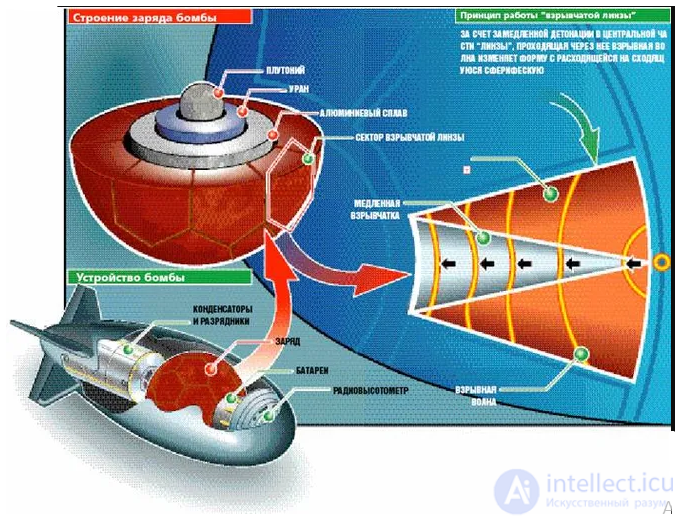
Thermonuclear weapons (hydrogen bomb) are a type of nuclear weapon whose destructive power is based on the energy of the nuclear fusion reaction of light elements into heavier ones (for example, the fusion of one helium atomic nucleus from two deuterium atomic nuclei), in which energy is released.
Having the same damaging factors as nuclear weapons, thermonuclear weapons have a much greater possible explosive yield (theoretically limited only by the quantity of available components). It should be noted that the frequently mentioned claim that radioactive contamination from a thermonuclear explosion is much weaker than from an atomic one applies to fusion reactions, which are used only together with much "dirtier" fission reactions. The term "clean weapon", which appeared in English-language literature, fell out of use by the end of the 1970s. In fact, everything depends on the chosen type of reaction used in a particular device. Thus, including elements made of uranium-238 in a thermonuclear charge (the uranium-238 used undergoes fission under the action of fast neutrons and yields radioactive fragments; the neutrons themselves produce induced radioactivity) allows the total explosive yield to be increased considerably (up to five times) and significantly (by a factor of 5-10) increases the amount of radioactive fallout .
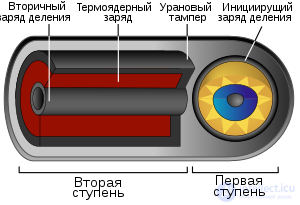
The Teller-Ulam design for a two-stage munition ("thermonuclear bomb"
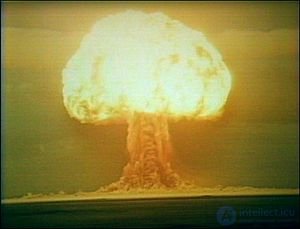
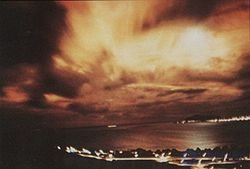
The fireball of the RDS-6s explosion
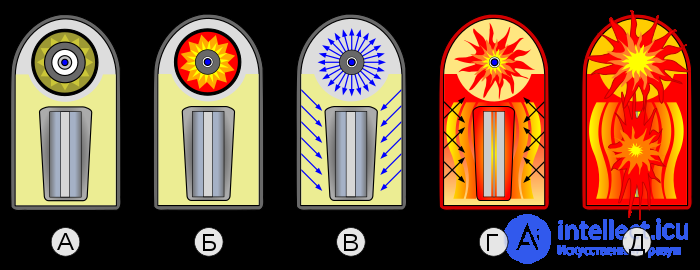
The cobalt bomb is a theoretical modification of a nuclear weapon that produces heavy radioactive contamination of the terrain even with a comparatively weak nuclear explosion. It is a radiological weapon.
Theoretically it is a thermonuclear munition in which the outermost casing contains not uranium-238 but cobalt. Natural cobalt is a monoisotopic element, consisting 100% of cobalt-59. During the explosion this casing is irradiated by a strong neutron flux. As a result of neutron capture, the stable cobalt-59 nucleus is converted into the radioactive isotope cobalt-60. The half-life of cobalt-60 is 5.2 years; beta decay of this nuclide produces nickel-60 in an excited state, which then passes to the ground state, emitting one or several gamma quanta.
The activity of one gram of cobalt-60 is estimated at 41.8 TBq (1130 Ci). To ensure contamination of the entire surface of the Earth at a level of one gram per square kilometer, about 510 tons of cobalt-60 are required . In that case, a lethal dose could be accumulated in less than 10 years.
It is officially believed that cobalt bombs have not yet been built, and no country has them in its arsenal. Small quantities of cobalt were used in one of the British nuclear device tests on 14 September 1957 as radiochemical tracers . Cobalt-60 is a common product of underground and surface nuclear explosions, formed as a result of neutron activation of iron (as well as cobalt and nickel) in the steel structures surrounding the charge and in the soil, which usually contains several percent iron . In particular, cobalt-60 was detected on the ground surface at the sites of the industrial underground nuclear explosions "Taiga", "Craton-3", "Crystal" and "Chagan", as well as at sites of the Semipalatinsk test site where Soviet surface nuclear and thermonuclear tests were conducted; at the site of the first nuclear explosion, "Trinity", at the Alamogordo range (USA); and at the test sites of the French range in Algeria
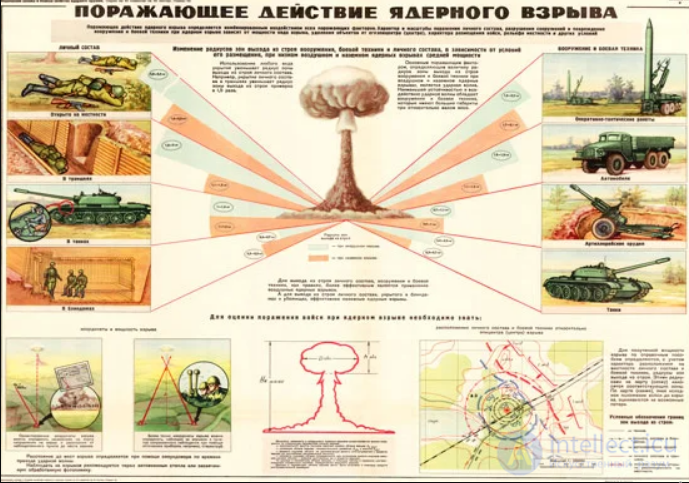
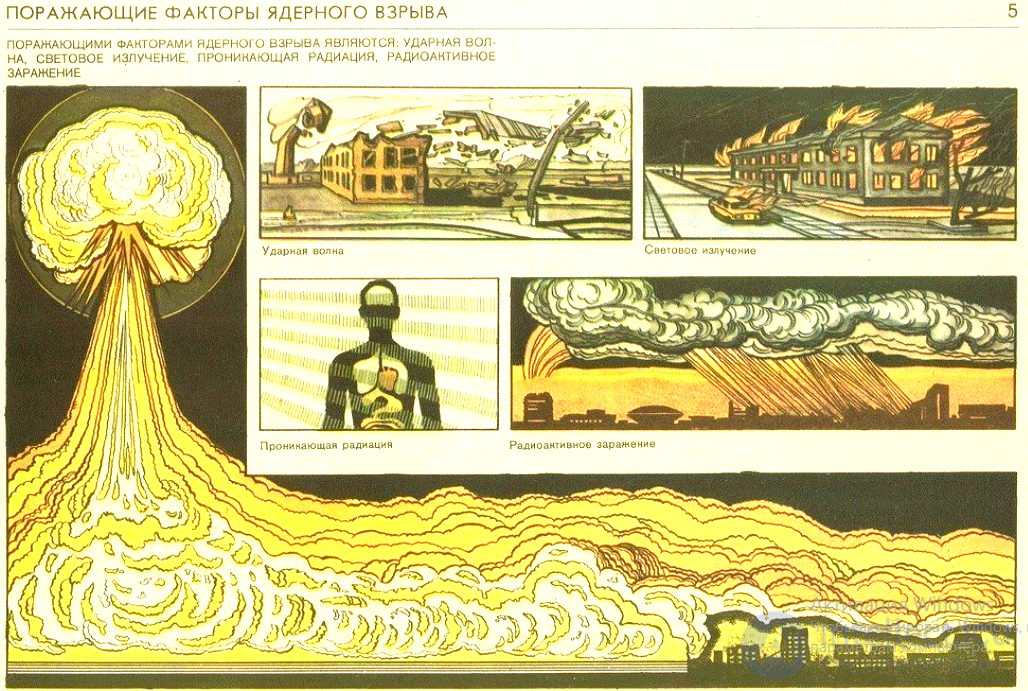
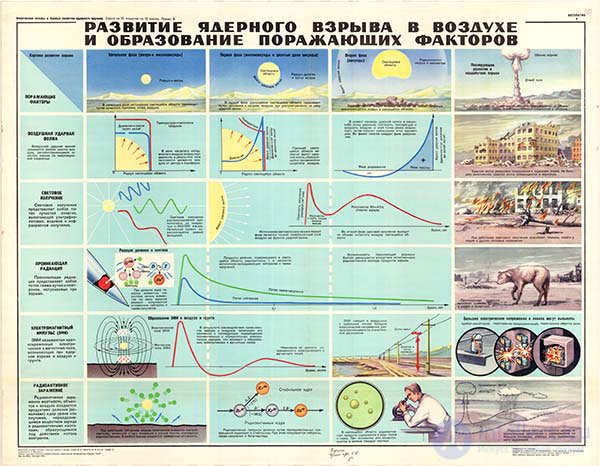
In a surface nuclear explosion, about 50% of the energy goes into forming the shock wave and the crater in the ground, 30–50% into light radiation, up to 5% into penetrating radiation and electromagnetic radiation, and up to 15% into radioactive contamination of the area.
In an air burst of a neutron munition, the shares of energy are distributed peculiarly: the shock wave takes up to 10%, light radiation 5–8%, and about 85% of the energy goes into penetrating radiation (neutron and gamma radiation)
The shock wave and light radiation are similar to the damaging factors of conventional explosives, but the light radiation in the case of a nuclear explosion is considerably more powerful.
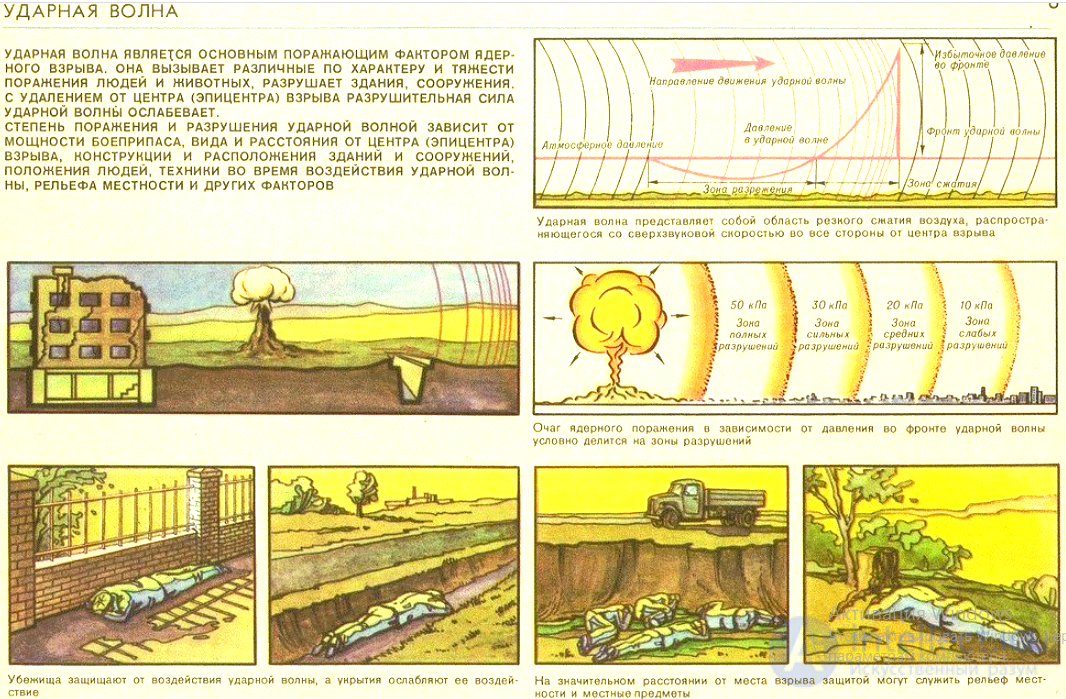
The shock wave destroys structures and equipment, injures people, and has a throwing effect through the rapid pressure change and the dynamic pressure of the air. The rarefaction that follows the wave (a drop in air pressure) and the reverse movement of air masses toward the developing nuclear mushroom cloud can also cause some damage.
Light radiation acts only on unshielded objects, that is, those not covered in any way from the explosion; it can cause ignition of combustible materials and fires, as well as burns and eye damage in humans and animals.
Penetrating radiation has an ionizing and destructive effect on the molecules of human tissues and causes radiation sickness. It is especially important in the explosion of a neutron munition. Protection from penetrating radiation is offered by the basements of multistory stone and reinforced-concrete buildings and by underground shelters buried at least 2 meters deep (a cellar, for example, or any shelter of class 3–4 and above); armored vehicles also provide some protection.
Radioactive contamination: in an air burst of relatively "clean" thermonuclear charges (fission-fusion), this damaging factor is reduced to a minimum. Conversely, in the case of an explosion of "dirty" variants of thermonuclear charges built on the fission-fusion-fission principle, of a surface or buried explosion in which neutron activation of substances contained in the soil occurs, and even more so of the explosion of a so-called "dirty bomb", it can be of decisive importance.
The electromagnetic pulse disables electrical and electronic equipment and disrupts radio communications.
Depending on the type of charge and the conditions of the explosion, the energy of the explosion is distributed differently. For example, in the explosion of an ordinary nuclear charge of medium yield (10 — 100 kt) without an increased output of neutron radiation or radioactive contamination, the shares of energy yield at various altitudes may be as follows :
| Shares of energy of the effects of a nuclear explosion | |||||||||
| Altitude / Depth |
X-ray radiation |
Light radi- ation |
Heat of the fireball and cloud | Air shock wave |
Deforma- tion and ejection of soil |
Compression wave in the ground |
Heat of the cavity in the ground |
Penetrating radia- tion |
Radio- active sub- stances |
|---|---|---|---|---|---|---|---|---|---|
| 100 km | 64 % | 24 % | 6 % | 6 % | |||||
| 70 km | 49 % | 38 % | 1 % | 6 % | 6 % | ||||
| 45 km | 1 % | 73 % | 13 % | 1 % | 6 % | 6 % | |||
| 20 km | 40 % | 17 % | 31 % | 6 % | 6 % | ||||
| 5 km | 38 % | 16 % | 34 % | 6 % | 6 % | ||||
| 0 m | 34 % | 19 % | 34 % | 1 % | less than 1 % | ? | 5 % | 6 % | |
| Depth of a camouflet explosion | 30 % | 30 % | 34 % | 6 % |
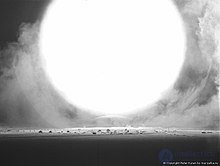
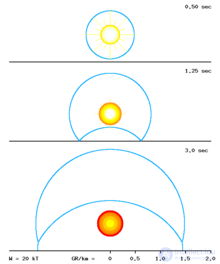
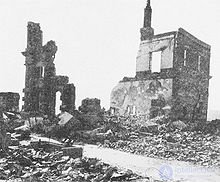
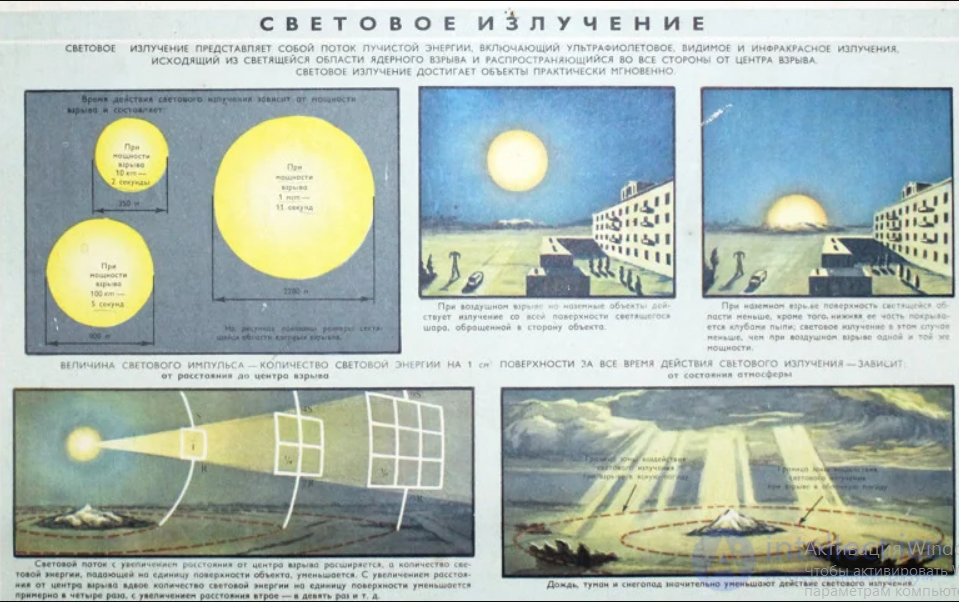
The maximum surface temperature of the luminous region is usually 5700-7700 °C. When the temperature drops to 1700 °C, the glow ceases. The light pulse lasts from fractions of a second to several tens of seconds, depending on the yield and conditions of the explosion. As an approximation, the duration of the glow in seconds equals the cube root of the explosion yield in kilotons. The radiation intensity can exceed 1000 W/cm² (for comparison, the maximum intensity of sunlight is 0.14 W/cm²). Light radiation is a flow of radiant energy that includes the ultraviolet, visible and infrared regions of the spectrum. The source of light radiation is the luminous region of the explosion: the parts of the munition, the surrounding soil and the air that have been heated to high temperatures and vaporized. In an air burst the luminous region is a sphere; in a surface burst it is a hemisphere.
The effect of light radiation can be ignition and burning of objects, melting, charring, and large thermal stresses in materials.
When light radiation acts on a person, it causes eye damage and burns on exposed areas of the body, and it may also damage areas covered by clothing.
Any opaque barrier can serve as protection from the effect of light radiation.
In the presence of fog, haze, heavy dust and/or smoke, the effect of light radiation is also reduced.
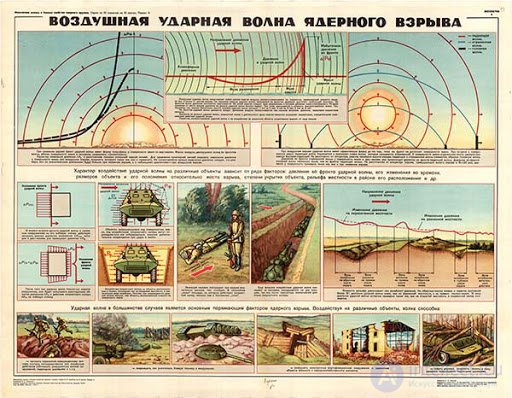
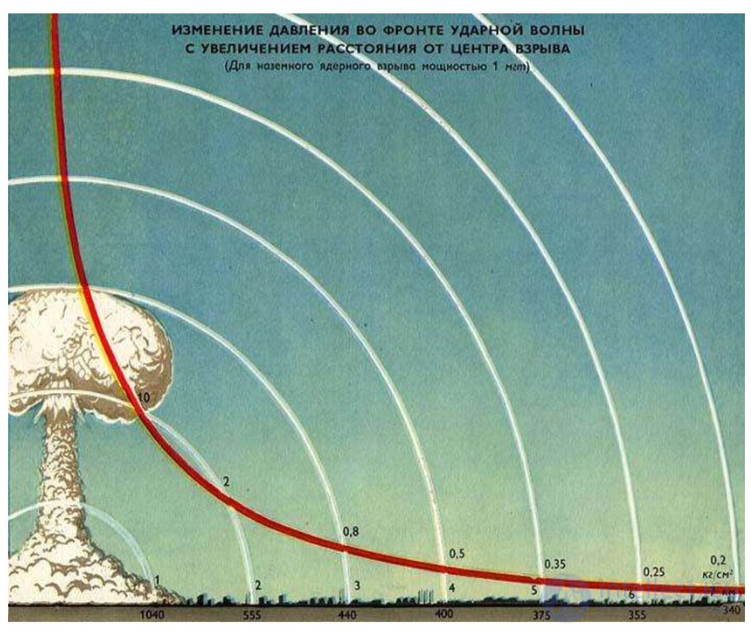
Most of the destruction caused by a nuclear explosion is due to the action of the shock wave. A shock wave is a compression jump in a medium that moves at supersonic speed (more than 350 m/s in the atmosphere). In an atmospheric explosion, the compression jump is a small zone in which an almost instantaneous increase in the temperature, pressure and density of the air occurs. Immediately behind the shock wave front, the air pressure and density decrease, from a slight decrease far from the center of the explosion to almost a vacuum inside the fireball. A consequence of this decrease is a reverse flow of air and a strong wind along the surface, with speeds of up to 100 km/h and more, toward the epicenter. The shock wave destroys buildings and structures and injures unprotected people, and close to the epicenter of a surface or very low air burst it produces powerful seismic vibrations capable of destroying or damaging underground structures and utilities and injuring the people inside them.
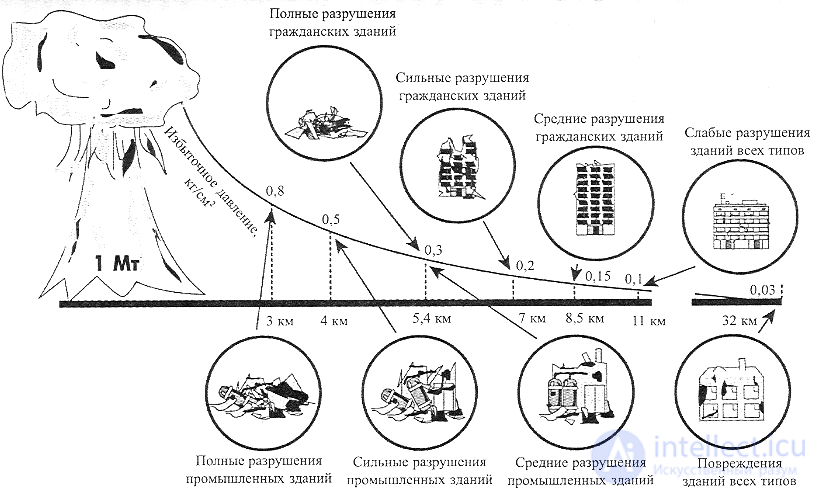
Most buildings, except specially reinforced ones, are seriously damaged or destroyed under an overpressure of 2160—3600 kg/m² (0.22—0.36 atm / 0.02-0.035 MPa).
The energy is spread over the entire distance traveled, and because of this the force of the shock wave decreases in proportion to the cube of the distance from the epicenter.
Shelters serve as protection from the shock wave for people. In open terrain, the action of the shock wave is reduced by various depressions, obstacles and folds of the terrain.
In the West, glass fragments are singled out as a separate factor associated with the shock wave: glass shattered by the shock wave breaks into fragments that fly away from the explosion and can seriously injure and even kill people behind the glass.
Destruction of buildings and structures caused by overpressure:
720 kg/m2 (1 psi, pounds per square inch) - windows and doors are blown out;
2160 kg/m2 (3 psi) - destruction of residential buildings;
3600 kg/m2 (5 psi) - destruction or severe damage of monolithic reinforced-concrete buildings;
7200 kg/m2 (10 psi) - destruction of especially strong concrete structures;
14400 kg/m2 (20 psi) - only special structures (such as bunkers) can withstand this pressure.
The radii of these pressure zones can be calculated with the following formula: R = C * X0.333,
R is the radius in kilometers, X is the yield in kilotons, and C is a constant that depends on the pressure level:
C = 2.2 for a pressure of 1 psi
C = 1.0 for a pressure of 3 psi
C = 0.71 for a pressure of 5 psi
C = 0.45 for a pressure of 10 psi
C = 0.28 for a pressure of 20 psi
The shock wave affects people in two ways:
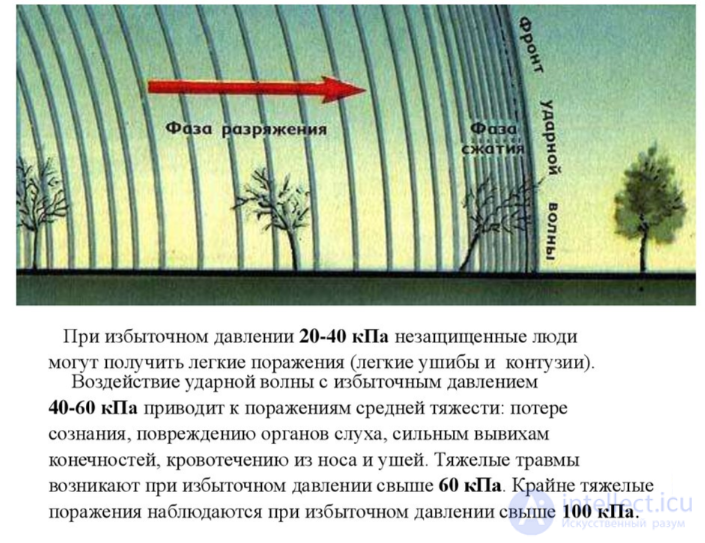
Direct action of the shock wave and indirect action of the shock wave (flying debris of structures, collapsing walls of houses and falling trees, glass fragments, stones). These effects cause injuries of differing severity: Light injuries - 20-40 kPa (contusions, minor bruises). Moderate injuries - 40-60 kPa (loss of consciousness, damage to the hearing organs, dislocated limbs, bleeding from the nose and ears, concussion). Severe injuries - over 60 kPa (severe contusions, fractured limbs, damage to internal organs). Extremely severe injuries - over 100 kPa (fatal). An effective way to protect against the direct effect of the shock wave is to take cover in protective structures (shelters, radiation shelters, and quickly erected improvised shelters built by the population). Ditches, ravines, caves, mine workings and underground passages can be used for shelter; you can also simply lie down on the ground away from buildings and structures.
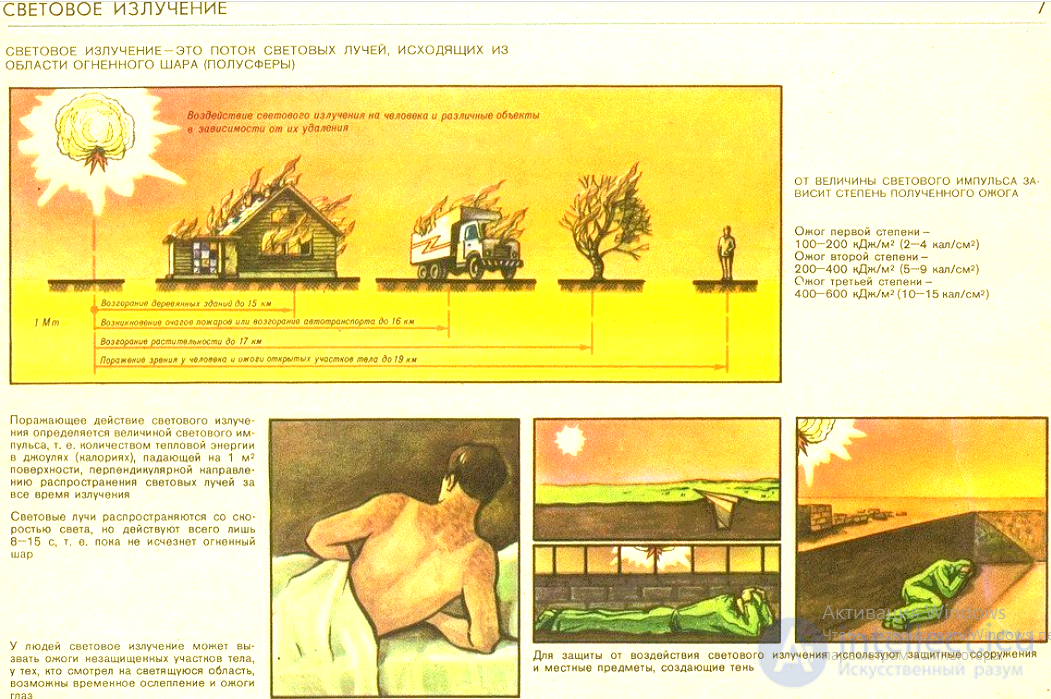
Thermal (light) radiation is a flow of radiant energy (ultraviolet and infrared rays). The source of thermal radiation is the luminous region of the explosion, consisting of vapors and air heated to a high temperature. Thermal radiation propagates almost instantaneously and lasts, depending on the yield of the nuclear weapon, 20-40 seconds. However, despite the brevity of its action, its effectiveness is very high. Thermal radiation accounts for 35% of the total energy of a nuclear explosion. The energy of thermal radiation is absorbed by the surfaces of the bodies it illuminates, which heat up as a result. The temperature can be such that the surface of an object chars, melts, ignites, or the object evaporates.
The damaging effect of thermal radiation is characterized by the thermal pulse, that is, the amount of light energy falling, over the duration of the radiation, on 1 cm2 of a surface perpendicular to the direction of the light rays. The unit of measurement of the thermal pulse is 1 cal/cm2.
Thermal radiation can cause burns on exposed areas of the body, blinding of people and animals, and charring or ignition of various materials. Injury to people from thermal radiation appears as burns of four degrees on the skin and as an effect on the eyes.
Thus, at a thermal pulse of 2-4 cal/cm2, unprotected people may suffer first-degree burns (redness, swelling, edema of the skin - 100-200 kJ/m2).
At 4-6 cal/cm2 - second-degree burns (blisters of various sizes filled with a clear yellowish fluid form on edematous skin - 200-400 kJ/m2).
At 6-12 cal/cm2 - third-degree burns (complete necrosis of the skin and formation of ulcers - 400-600 kJ/m2)
At a thermal pulse of more than 12 cal/cm2 - fourth-degree burns (charring of the skin, necrosis of the deep layers of the skin and the underlying tissue (subcutaneous fat, muscles, bones) - more than 600 kJ/m2).
Effect of thermal radiation on the eyes: temporary blindness - up to 30 minutes. Burns of the cornea and eyelids. Burn of the fundus of the eye - blindness.
|
Thermal radiation causes skin burns, the degree of which depends on the power of the bomb and the distance from the epicenter: |
|||
|
Burn severity |
20 kt |
1 Mt |
20 Mt |
|
1st degree |
2.5 cal/cm2 (4.3 km) |
3.2 cal/cm2 (18 km) |
5 cal/cm2 (52 km) |
|
2nd degree |
5 cal/cm2 (3.2 km) |
6 cal/cm2 (14.4 km) |
8.5 cal/cm2 (45 km) |
|
3rd degree |
8 cal/cm2 (2.7 km) |
10 cal/cm2 (12 km) |
12 cal/cm2 (39 km) |
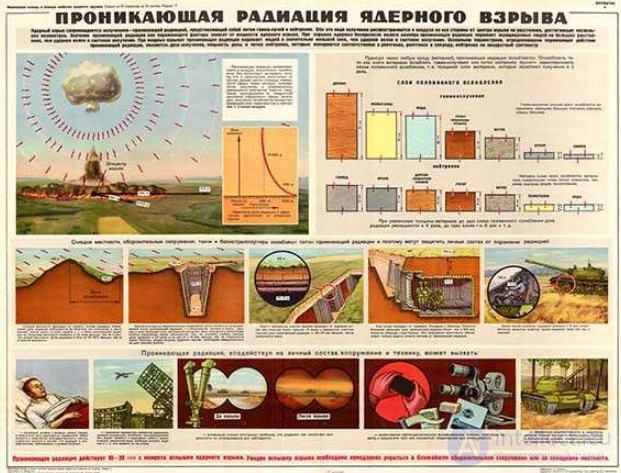
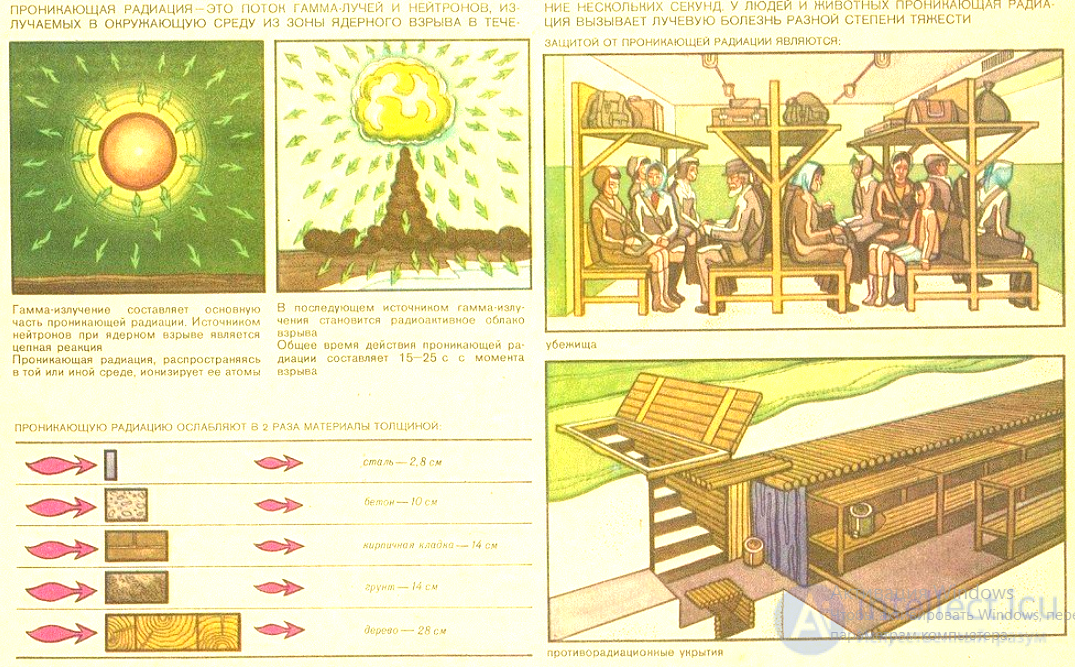
Penetrating radiation (ionizing radiation) consists of gamma radiation and a flux of neutrons emitted from the nuclear explosion zone over a period of a few seconds to tens of seconds.
Penetrating radiation is a flux of gamma rays and neutrons emitted from the explosion region over several seconds. Because of very strong absorption in the atmosphere, penetrating radiation injures people only at a distance of 2-3 km from the site of the explosion, even for high-yield charges. The distances over which the flux is attenuated by a factor of 10, for various explosion yields:
1 kt: L = 330 m
10 kt: L = 440 m
100 kt: L = 490 m
1 Mt: L = 560 m
10 Mt: L = 670 m
20 Mt: L = 700 m.
Thus, the radiation level at any distance from the epicenter can be calculated:
Dose is the dose of penetrating radiation in rad, D is the distance in meters, L is the attenuation constant, and X is the yield of the explosion in kilotons.
When penetrating radiation passes through any medium, its effect is weakened. Different types of radiation affect the body differently, which is explained by their different ionizing abilities.
Thus, alpha radiation, which consists of heavy charged particles, has the greatest ionizing ability. But because of ionization, their energy decreases quickly. Therefore, alpha radiation cannot penetrate the outer (horny) layer of the skin and poses no danger to humans until substances that emit alpha particles get inside the body.
Beta particles collide with neutral molecules less often along their path, so their ionizing ability is lower than that of alpha radiation. Energy loss is slower as well, and their penetrating ability in body tissues is greater (1-2 cm). Beta radiation is dangerous to humans, especially when radioactive substances get on the skin or inside the body.
Gamma radiation has a comparatively low ionizing activity, but because of its very high penetrating ability it poses a great danger to humans.
The attenuating effect of penetrating radiation is usually characterized by the half-value layer, that is, the thickness of material passing through which the radiation is reduced by half. Thus, penetrating radiation is halved by the following materials:
Lead - 1.8 cm; soil, brick - 14 cm; steel - 2.8 cm; water - 23 cm; concrete - 10 cm; wood - 30 cm.
Radiation sickness, degree 1 - mild - 100-200 rem,
Radiation sickness, degree 2 - moderate - 200-400 rem,
Radiation sickness, degree 3 - severe - 400-600 rem,
Radiation sickness, degree 4 - extremely severe - more than 600 rem.
The radius of injury from penetrating radiation in atmospheric explosions is smaller than the radii of injury from thermal radiation and the shock wave, since it is strongly absorbed by the atmosphere. Penetrating radiation injures people only at a distance of 2-3 km from the site of the explosion, even for high-yield charges; however, a nuclear charge can be deliberately designed to increase the share of penetrating radiation in order to inflict maximum damage on personnel (the so-called neutron weapon). At high altitudes, in the stratosphere and in space, penetrating radiation and the electromagnetic pulse are the main damaging factors.
Penetrating radiation can cause reversible and irreversible changes in materials and in electronic, optical and other devices, through disruption of the crystal lattice of matter and other physico-chemical processes under the action of ionizing radiation.
Protection against penetrating radiation is provided by various materials that attenuate gamma radiation and the neutron flux. Different materials react differently to these radiations and protect differently.
Materials containing elements with a high atomic mass (iron, lead, low-enriched uranium) protect well against gamma radiation, but these elements behave very poorly under neutron radiation: neutrons pass through them relatively easily and in doing so generate secondary capture gamma rays, and also activate radioisotopes, making the shielding itself radioactive for a long time (for example, the iron armor of a tank; lead, however, does not show secondary radioactivity). Example of half-value layers for penetrating gamma radiation : lead 2 cm, steel 3 cm, concrete 10 cm, masonry 12 cm, soil 14 cm, water 22 cm, wood 31 cm.
Neutron radiation, in turn, is well absorbed by materials containing light elements (hydrogen, lithium, boron), which scatter and absorb neutrons effectively and over a short path, are not activated, and give off much less secondary radiation. Half-value layers for the neutron flux: water, plastic 3 - 6 cm, concrete 9 - 12 cm, soil 14 cm, steel 5 - 12 cm, lead 9 - 20 cm, wood 10 - 15 cm. The best absorbers of neutrons are hydrogen (though in the gaseous state it has a low density), lithium hydride and boron carbide.
There is no ideal homogeneous shielding material against all kinds of penetrating radiation. To make protection as light and thin as possible, layers of different materials have to be combined to absorb, in sequence, first the neutrons and then the primary and capture gamma radiation (for example, the multilayer armor of tanks, which also takes radiation protection into account; the protection of the heads of missile silo launchers made of containers with lithium hydrates and iron with concrete), and materials with additives are also used. Concrete and moistened soil backfill, widely used in the construction of protective structures, are universal, since they contain both hydrogen and relatively heavy elements. Concrete with a boron additive (20 kg of B4C per 1 m³ of concrete) is very good for construction: at the same thickness as ordinary concrete (0.5 - 1 m) it provides 2 - 3 times better protection against neutron radiation and is suitable for protection against the neutron weapon .
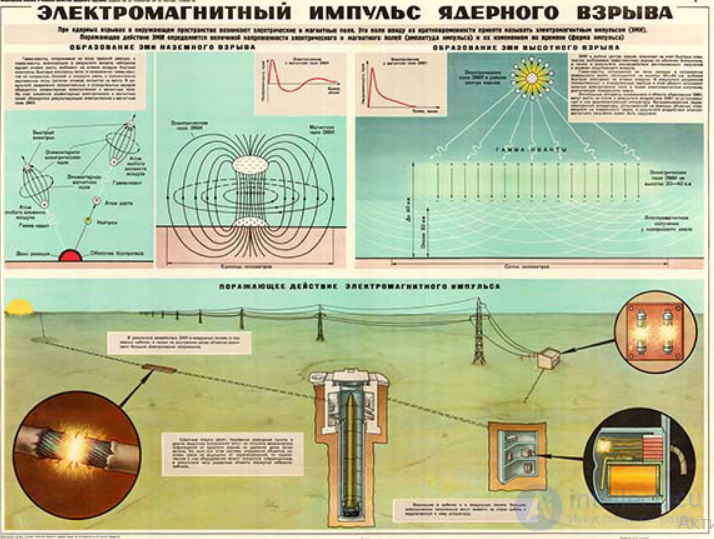
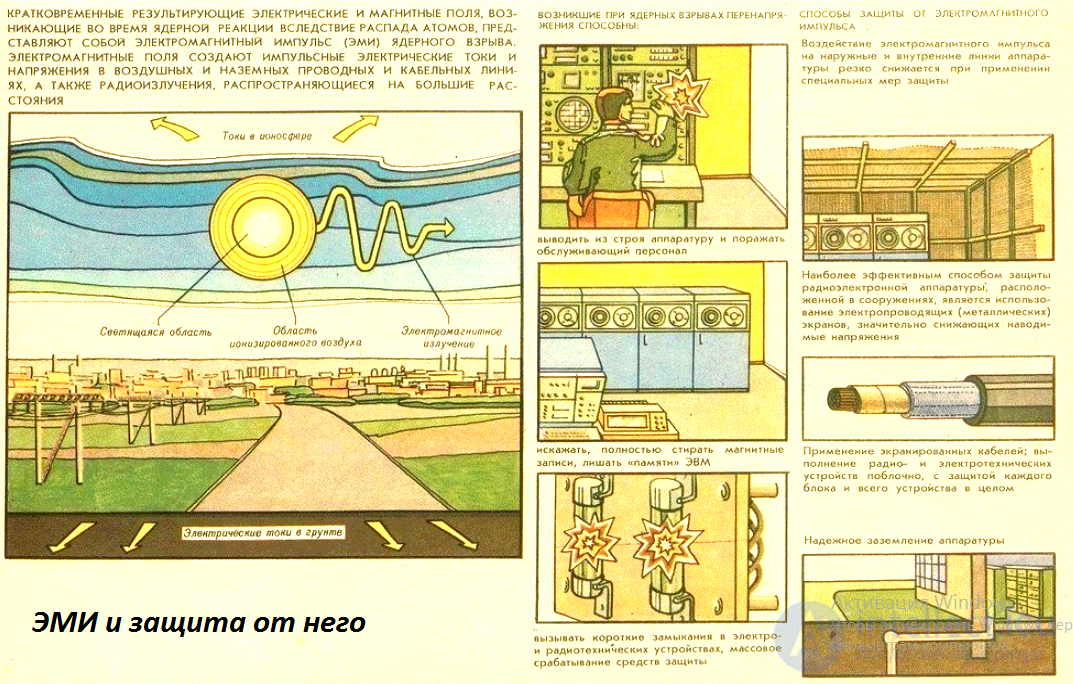
In a nuclear explosion, strong currents in the air ionized by radiation and thermal radiation produce a very strong alternating electromagnetic field, called the electromagnetic pulse (EMP). Although it has no effect on humans, the EMP damages electronic equipment, electrical appliances and power lines. In addition, the large number of ions produced after the explosion interferes with the propagation of radio waves and the operation of radar stations. This effect can be used to blind a missile attack warning system.
The strength of the EMP varies with the altitude of the explosion: below 4 km it is relatively weak, it is stronger for an explosion at 4-30 km, and especially strong for a burst altitude above 30 km (see, for example, the high-altitude nuclear detonation experiment Starfish Prime).
The EMP arises as follows:
Under the influence of the EMP, a voltage is induced in all unshielded extended conductors, and the longer the conductor, the higher the voltage. This leads to insulation breakdown and failure of electrical equipment connected to cable networks, for example, transformer substations and so on.
The EMP is of great importance in a high-altitude explosion of 100 km or more. In an explosion in the surface layer of the atmosphere it does not decisively damage low-sensitivity electrical equipment, and its radius of action is overlapped by other damaging factors. But it can disrupt and disable sensitive electrical and radio equipment at considerable distances - up to several tens of kilometers from the epicenter of a powerful explosion, where other factors no longer produce a destructive effect. It can disable unprotected equipment even in strong structures designed for the heavy loads of a nuclear explosion (for example, missile silos). It has no damaging effect on people .
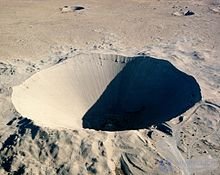
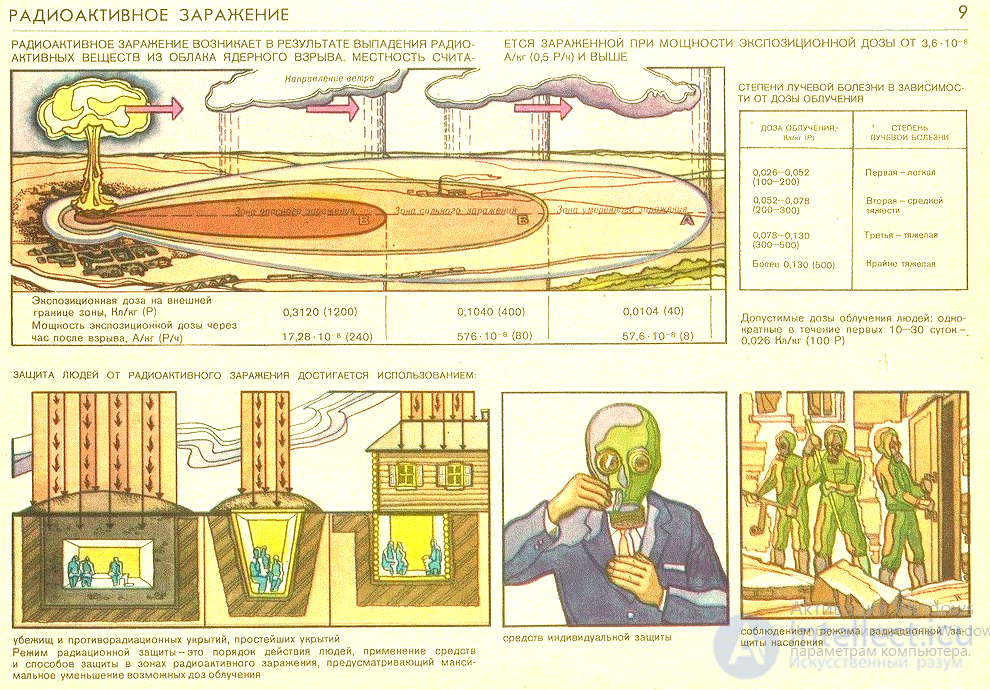
Radioactive contamination is the result of the fallout of a significant quantity of radioactive substances from the cloud lifted into the air. There are three main sources of radioactive substances in the explosion zone: fission products of the nuclear fuel, the part of the nuclear charge that did not react, and radioactive isotopes formed in the soil and other materials under the action of neutrons (induced radioactivity).
Settling on the surface of the earth in the direction of the cloud's movement, the explosion products create a radioactive area called the radioactive trail (fallout plume). The density of contamination in the area of the explosion and along the path of the radioactive cloud decreases with distance from the center of the explosion. The shape of the trail can vary widely depending on environmental conditions, for example, wind speed and direction.
The radioactive products of the explosion emit three kinds of radiation: alpha, beta and gamma. Their effect on the environment lasts a very long time. Owing to the natural process of radioactive decay, the intensity of the radiation decreases, especially sharply in the first hours after the explosion.
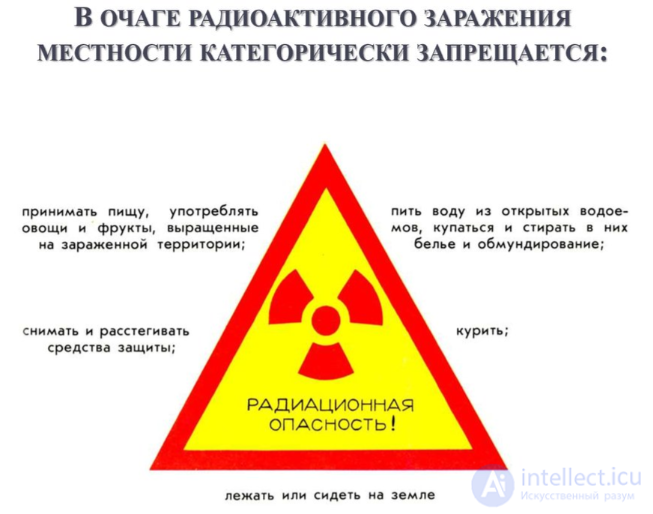
Injury to people and animals from radiation contamination can be caused by external and internal irradiation. Severe cases may be accompanied by radiation sickness and a fatal outcome.
Fitting a nuclear warhead with a cobalt shell causes contamination of the territory with the dangerous isotope 60Co (a hypothetical dirty bomb).
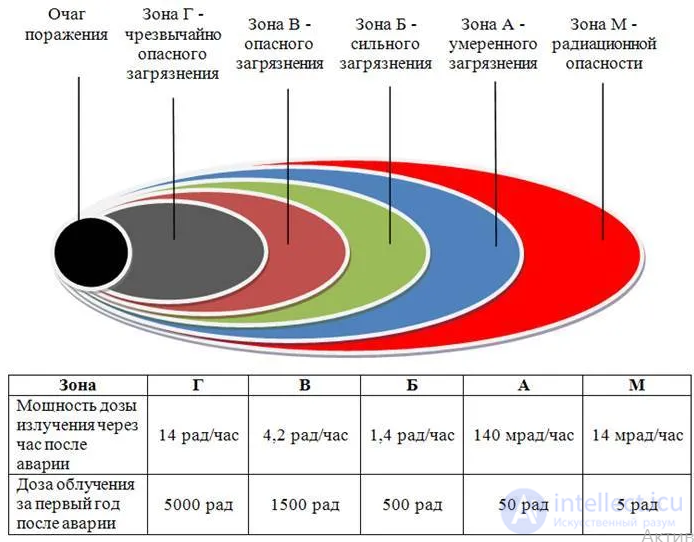
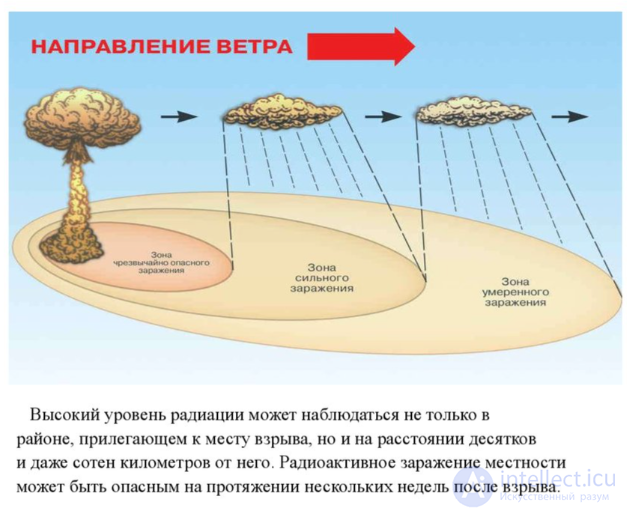
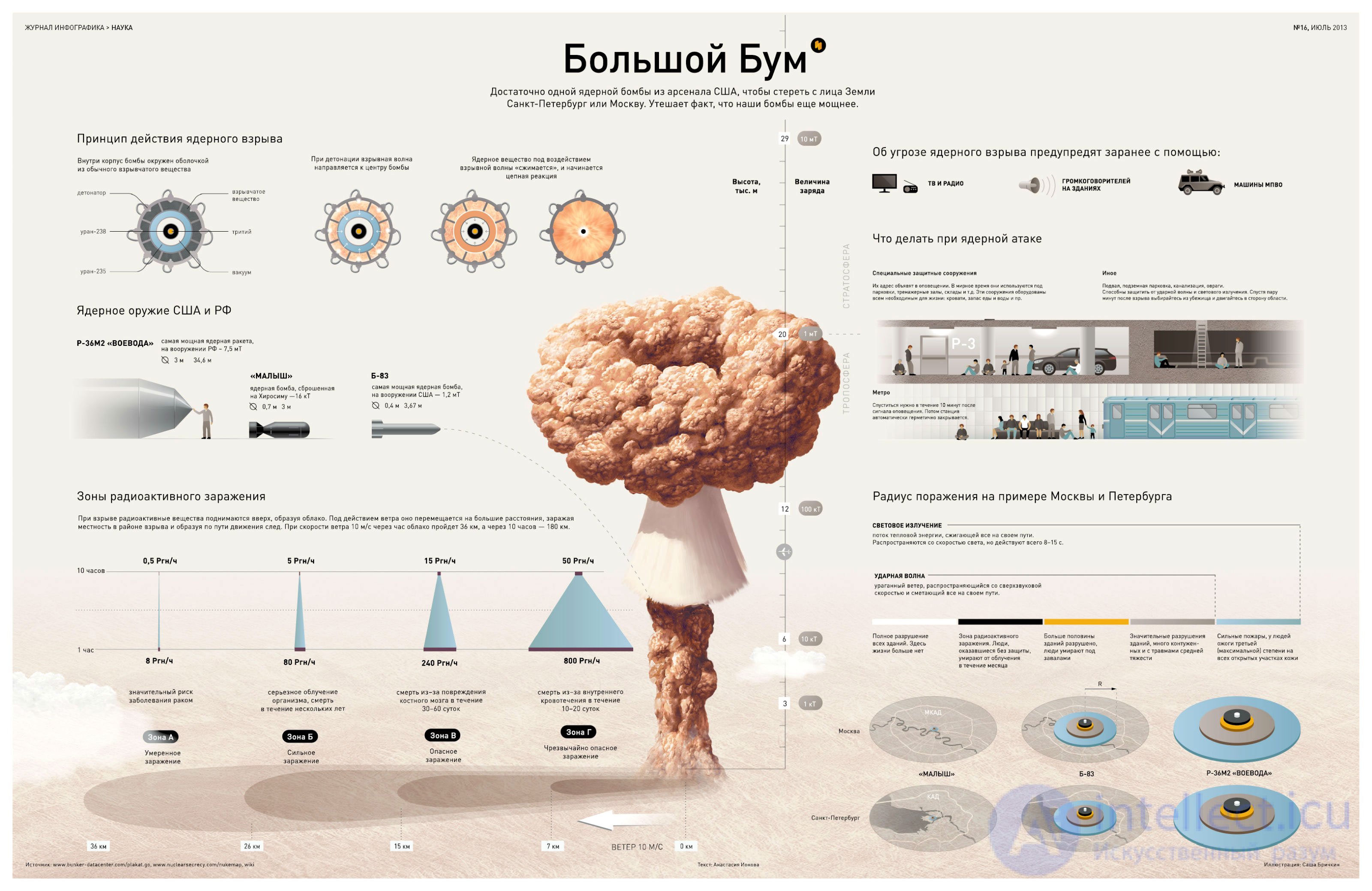
Zone A - moderate contamination - from 40 to 400 rem. The moderate contamination zone is the largest in size. Within it, the population in the open can receive mild radiation injuries during the first day after the explosion.
Less than 100 rem. Such doses have no significant effect on health. Changes in the composition of the blood begin at 25 rem. These changes include a general change in the content of white blood cells (a decrease in lymphocytes), a decrease in platelets, and a slight decrease in red blood cells; this condition can be detected only by a blood test and is established within several days after irradiation. The changes in the body last about a month. At 50 rem, weakening of the lymph nodes and reduced immunity become noticeable. 80 rem gives a 50% probability of temporary sterility in men.
100-200 rem. Symptoms of moderate severity. Nausea is possible (in half of cases at 200 rem), sometimes accompanied by vomiting, appearing 3-6 hours after receiving the dose and lasting from several hours to a day. This is followed by a period of remission, during which the victim feels normal. Changes in the blood gradually increase because of natural loss and non-replacement of blood cells. After 10-14 days the next deterioration in well-being occurs: loss of appetite (in 50% at 150 rem), malaise, fatigue (in 50% at 200 rem), continuing for about a month. During this time there is increased morbidity because of reduced immunity, and temporary sterility in men. For doses at the upper end of this range the clinical picture is similar, except for a shorter remission period, more pronounced symptoms and a longer recovery period.
200-400 rem. The illness is fairly serious. The main affected tissue of the body remains the blood-forming (hematopoietic) tissue. Nausea is observed in 100% of victims at an exposure of 300 rem, and in half of cases it is accompanied by vomiting. Initial symptoms appear after 1-6 hours and last 1-2 days. After 7-14 days of remission they return, and hair loss, malaise, fatigue and diarrhea may be added to them. At doses above 350 rem, bleeding from the mouth, subcutaneous bleeding and hematuria (blood in the urine) appear. Permanent sterility in men is possible, and recovery takes several months.
Zone B - severe contamination - from 400 to 1200 rem. In the severe contamination zone the danger to people and animals is higher. Severe radiation injuries are possible here even after a few hours in the open, especially during the first day.
400-600 rem. At such radiation doses, mortality without serious medical care (bone marrow transplantation) rises sharply: from 50% at 350 rem to 90% at 600. Initial symptoms occur between 30 minutes and 2 hours after exposure and continue for up to two days. After 1-2 weeks all the signs characteristic of exposure to 200-400 rem appear, only in a much more severe form. Death occurs after 2-12 weeks from numerous hemorrhages and infection with some disease (immunity is practically absent). The recovery period is about a year, and the blood composition normalizes even later. Sterility may develop in women.
600-1000 rem. The bone marrow dies off almost completely. There is no chance of survival without a bone marrow transplant. The initial deterioration of condition occurs after 15-30 minutes and continues for 2 days. After a latent period of 5-10 days, death occurs within 1-4 weeks.
Zone C - dangerous contamination - from 1200 to 4000 rem. The dangerous contamination zone has the highest radiation levels. Even at its boundary, the total radiation dose over the time of complete decay of the radioactive substances reaches 1200 R, and the radiation level 1 hour after the explosion is 240 R/h. During the first day after contamination, the total dose at the boundary of this zone is about 600 R, that is, it is practically lethal. And although the radiation doses then decrease, staying outside shelters on this territory remains dangerous for a very long time.
More than 1000 rem. Such high doses of ionizing radiation cause immediate disruption of metabolism, diarrhea, bleeding, loss of fluid by the body and disturbance of the electrolyte balance.
At doses of 1000 - 5000 rem this time is reduced to 5-30 minutes. If the victim manages to survive this period, a phase of apparent well-being follows, lasting from a couple of hours to a couple of days. The terminal phase lasts 2-10 days, during which the patient falls into prostration, loses appetite, and bloody diarrhea begins. The victim lapses into delirium, then coma. Treatment at such doses is aimed only at easing the suffering of the dying.
Zone D - extremely dangerous contamination - from 4000 to 7000 rem. A 100% lethal zone for humans.
Receiving more than 5000 rem causes disorders that directly affect the nervous system. A person instantly loses orientation and a little later lapses into a coma. Death occurs within two days.
According to estimates, a dose of 8000 rem, for example from a neutron bomb, leads to an instantaneous lapse into coma and subsequent death.
To protect the population from radioactive contamination, all available protective structures are used (shelters, radiation shelters, basements of multi-story buildings, subway stations). These protective structures must have a sufficiently high attenuation factor (K att) - from 500 to 1000 times and more, since the radioactive contamination zones have high radiation levels. In the contamination zones the population must take radioprotective drugs from the AI-2 first-aid kit (No. 1 and No. 2).
A nuclear explosion in a populated area, like other catastrophes involving large numbers of casualties, destruction of hazardous industries and fires, will lead to severe conditions in the area of its action, which will be a secondary damaging factor. People, even those who did not receive significant injuries directly from the explosion, may very likely die from infectious diseases and chemical poisoning. There is a high probability of burning in fires or simply being badly hurt while trying to get out of the rubble.
A nuclear attack on a nuclear power plant can lift into the air significantly more radioactive substances than the bomb itself could yield. With a direct hit and vaporization of a reactor or a storage facility for radioactive materials, the area of land unsuitable for life for many decades will be hundreds and thousands of times larger than the contamination area from a ground nuclear explosion. For example, for the vaporization of a 100 MW reactor by a 1-megaton nuclear explosion, versus a plain 1 Mt ground nuclear explosion, the ratio of the areas of territory with an average dose of 2 rad (0.02 Gray) per year is as follows: 1 year after the attack - 130,000 km² and 15,000 km²; after 5 years - 60,000 km² and 90 km²; after 10 years - 50,000 km² and 15 km²; after 100 years - 700 km² and 2 km² .
People who find themselves in the area of the explosion experience, in addition to physical injuries, a powerful depressing psychological impact from the terrifying sight of the unfolding nuclear explosion, the catastrophic scale of destruction and fires, the disappearance of the familiar landscape, the multitude of dead, maimed and dying people, decomposing corpses that cannot be buried, the death of relatives and loved ones, the realization of the harm done to one's own body, and the horror of approaching death from developing radiation sickness. The result of such an impact among survivors of the catastrophe is the development of acute psychoses, as well as claustrophobic syndromes from the realization that it is impossible to get out onto the surface of the earth, and persistent nightmarish memories that affect all subsequent existence. In Japan there is a separate word for the people who became victims of the nuclear bombings - "Hibakusha".
Unacceptable damage is the death of a significant part of the population, the destruction of key elements of the infrastructure, and the impossibility of reproducing military materiel and equipment.
In 1967 the US Secretary of Defense Robert McNamara introduced into the military-political lexicon the term assured-destruction capability, which he closely linked with the concept of unacceptable damage. McNamara himself defined this link as follows (a quotation from R. McNamara's speech of September 18, 1967, San Francisco): "...The cornerstone of our policy remains deterrence from nuclear strikes against the United States or its allies. This is made possible for us by maintaining the capability to inflict unacceptable damage on any single aggressor or coalition of aggressors at any moment during an exchange of nuclear strikes, even in the case of a surprise first strike. The above may be defined as our assured-destruction capability..." .
In essence, McNamara proposed a strategy of "whoever shoots first dies second." He introduced the criterion of unacceptable damage, defining it through the scale of destruction inflicted on the adversary and treating it as the fundamental measure of the sufficiency of US nuclear forces. The values of the criterion indicators of unacceptable damage were set as the destruction of one third of the Soviet population and two thirds of Soviet industry. These quantitative values were obtained without regard to what could actually deter the USSR, and were based instead on the effectiveness of nuclear strikes against densely populated areas. In the 1960s, Pentagon analysts believed that McNamara's criterion of unacceptable damage was met by delivering 400 Mt to targets on Soviet territory.
Washington was guided by the McNamara criterion in determining the quantitative composition and combat capabilities of strategic offensive arms, which were supposed to ensure that it could be met under any conditions in which a military conflict might be unleashed. McNamara's closest aides, A. Enthoven and W. Smith, spoke quite plainly on this point: "Deterrence was translated into assured destruction, and assured destruction into quantitative indicators of sufficiency... The main reason we settled on 1,000 Minuteman missiles, 41 Polaris submarines and about 500 bombers was that the effect of further increasing their number would be smaller than the costs associated with it." In other words, they believed that, from the point of view of the McNamara criterion, this composition of strategic forces had the optimal "cost-effectiveness" ratio. Before R. McNamara there had also been various estimates of the scale of use of nuclear forces, but these were expressed not in terms of the unacceptability of the consequences but in terms of requirements for nuclear forces. McNamara and his team were the first to pose and resolve the question of the sufficiency of the damage inflicted on an adversary. Nevertheless, the following estimates from the "pre-McNamara period" deserve attention:
The criteria of the "pre-McNamara" period presented above were justified by expert judgment, which made them imprecise (the range of estimates was 50-400 NW).
In the 1970s, the understanding of the criteria of unacceptable damage deepened considerably. In order to optimize the use of US nuclear forces, and also to slow the recovery of an adversary's economy in the event of war, not only direct but also indirect damage to the economy began to be taken into account [5, 6]. This is the origin of the concept of selective strikes against key branches of industry. The Americans applied a similar approach to assessing their own vulnerability at the regional, sectoral and national levels. On the one hand, this made it possible, by the early 1980s, to develop an integrated approach to the problems of protecting the civilian sector together with military planning, mobilization preparation of the economy, and negotiations on reducing strategic nuclear arms. On the other hand, it led to a deeper understanding of the criteria of unacceptable damage, which allowed, for example, a move away from the McNamara criterion as early as the late 1970s and the adoption of the criterion of H. Brown (a well-known physicist and Secretary of Defense in the administration of J. Carter). According to Brown's criterion, unacceptable damage, taking various factors into account, was ensured by delivering 200 megaton-class warheads, that is, it was reduced by a factor of 2 relative to McNamara's estimates.
In the 1980s, approaches to developing criteria of unacceptable damage became differentiated according to the nature and variant of the strike and the importance of the targets, and were supplemented by qualitative characteristics of the state of a country as a socio-economic and political community. In this period there arose the approach to identifying criteria of unacceptable damage that remains relevant to this day, based on defining possible post-nuclear states and minimizing their number. The basic idea of this approach in Western research was put forward by Arthur Katz in his work "Life after Nuclear War: The Economic and Social Impacts of Nuclear Attacks on the United States," published under the auspices of Cambridge University in 1982. In particular, the following levels of a country's functioning were identified:
According to evidence in the open press, similar approaches were and remain relevant for domestic military-strategic thought as well. To this day the problem of identifying criteria of unacceptable damage (CUD) is formulated in terms of determining the required post-nuclear state of a country, sustained over some period of time. The need to make these states concrete and to parameterize them is currently the main source of methodological problems. Note that to date this task has not been fully solved. At the same time, by the mid-1980s the level of development of mathematical tools already made it possible to link the identified post-nuclear state of the subject or object of deterrence with the number of delivered warheads, which can be regarded as one of the dimensions of the criterion of unacceptable damage. In particular, Anglo-Saxon "think tanks" gave various answers to this question (see Table 1).
Table 1 – Results of selected Western studies on the unacceptability of the consequences of using nuclear weapons
| No. | Name | Structure and parameters | Consequences |
| 1 | Stanford Institute | Selective strikes with 750-1250 NW of multiple-warhead ICBMs against enterprises of 15 basic branches of US industry | Loss of 33% of the production capacity of these branches. The surviving capacity would be unable to function with its former efficiency. US gross national product would not exceed 65-75% of the prewar level. Recovery time of 9 years |
| 2 | Cambridge University | 300-800 NW of various yields (across US territory) | Infliction of unacceptable damage on the United States |
| 3 | RAND Corporation | 200-300 NW (across US territory) | Disruption of regional economic ties, as a result of which the US economy would no longer be a single whole |
| RAND Corporation | 500 NW of 550 kt each and 200-300 NW of 100 kt each (across US territory) | Complete collapse of the economy. Population losses would amount to 65% (one week after the strikes, without taking protective measures into account) |
At the present stage, the approaches that have become most widespread in identifying criteria of unacceptable damage are those based on assessing the level of destruction of military and economic potentials and the time needed to restore them, as well as an approach based on mathematical geopolitics, in particular one that uses the concepts of geopolitical status and geopolitical distance [10, 11]. Setting aside the advantages and disadvantages of these approaches, it must be stated that both are based on the need to make the post-nuclear states of the object of deterrence concrete.
Thus, for several decades the concept of unacceptable damage served as fundamental in considering such categories as parity, strategic stability, superiority, deterrence and the military-strategic balance, which made it possible to resolve successfully vital issues connected with disarmament, the conclusion of arms reduction treaties, and decisions on the directions of further development of strategic arms.
A reasonable question arises about the advisability of revisiting the established approaches. We will structure the discussion of this question in a "thesis-antithesis" form. To do so, let us examine in more detail the theses presented earlier, which, in the opinion of their authors, are a sufficient basis for abandoning (or revising the substance of) the category of "unacceptable damage."
Remember:
Mutually Assured Destruction is a Cold War military doctrine according to which the use of weapons of mass destruction by two opposing sides would lead to the complete annihilation of both, which makes any attempt to apply a first-strike doctrine pointless. In the Western world the doctrine is known by the term Mutually Assured Destruction (MAD, literally "insane"), introduced by the scientist John von Neumann.
The doctrine of mutually assured destruction is a clear example of a Nash equilibrium, in which neither side, being armed, can either start a conflict with impunity or disarm unilaterally.
It is possible that the "nuclear threshold" could be crossed and nuclear weapons used in one form or another. This is a concept that arose during the development of the nuclear strategies of the great powers, in particular the strategy of flexible response: if the powers want to avoid a general nuclear war, it is necessary to determine at what stage of escalation of a conflict there may arise a temptation to use nuclear weapons, that is, to cross the threshold from a conflict with conventional means to nuclear means; obviously, the higher this threshold, the greater the chance of avoiding a general nuclear catastrophe. Since 1945 there have been no cases of combat use of nuclear weapons. But the experience of using nuclear weapons (and nuclear explosions) in Japan, the USA and the USSR - at Hiroshima, Nagasaki, Nevada, Totskoye and Chernobyl - has shown that limited use of nuclear weapons is entirely possible. One of the arguments of opponents of the "nuclear winter" theory is that since 1945 more than 2,000 nuclear tests have been conducted in the world, which is comparable to the effect of a permanent nuclear conflict. The development of a strategy of coercion pushes the nuclear powers to look for an answer to the question: can nuclear weapons be used as a full-fledged weapon?
At present there are several theoretical proposals on this question:
To develop a full-fledged nuclear strategy, rather than a theory, it is necessary to test nuclear weapons as a combat weapon. Debates about which weapon is more effective - nuclear, biological or chemical - so far have no practical evidence behind them. Only this option would allow strategists to develop a theory of the combat use of nuclear weapons. It is quite likely that the strong powers would choose some peripheral region for this purpose, where limited use of nuclear weapons would not threaten global consequences. This would make it possible to assess the effects of nuclear weapons as a combat weapon, evaluate the consequences of their use and determine their purpose.

Comments