
Lecture 18 min.
Radiation sickness is a disease resulting from exposure to various types of ionizing radiation, with symptoms that depend on the type of damaging radiation, its dose, the location of the radiation source, and the distribution of the dose over time and across the body of the living being (for example, a human). The dangerous consequences of radiation sickness are severe immunodeficiency and, as a result, opportunistic infections, and disorders of the blood-forming organs, which disrupt the functioning of all internal organs; large doses cause multiple organ failure.
Radiation sickness should not be confused with local radiation injuries caused by ionizing radiation (for example: radiation reaction, radiation burn, radiation dermatitis (L58, L59), radiation ulcer, radiation hepatitis, radiation pneumonitis (J70.0), radiation fibrosis of the lung (J70.1), postradiation kyphosis (M96.2), postradiation scoliosis (M96.5), radiation osteonecrosis of the jaw (K10.2), radiation mucositis of the oral cavity (K12.3), radiation gastroenteritis and colitis (K52.0), radiation proctitis (K62.7), radiation cystitis (N30.4), etc.)[ For other pathologies caused in a particular case by exposure to ionizing radiation, ICD-10 provides the additional codes W88, Y63.2, Y63.3, Z57.1.
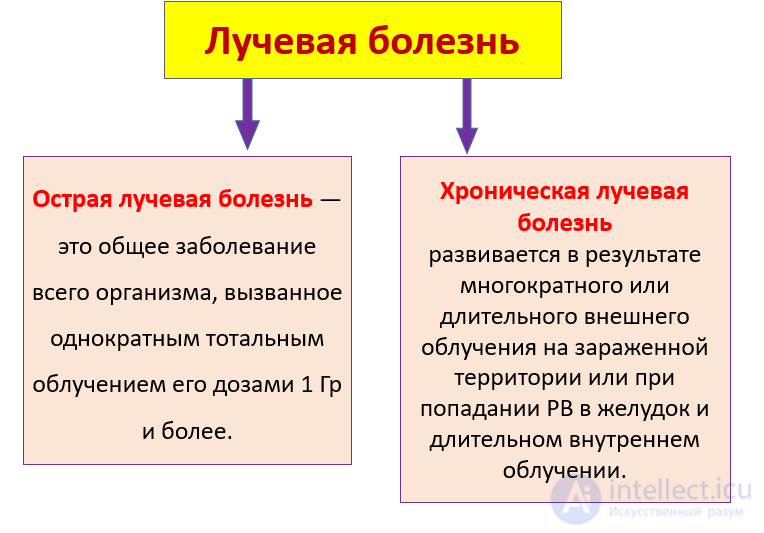
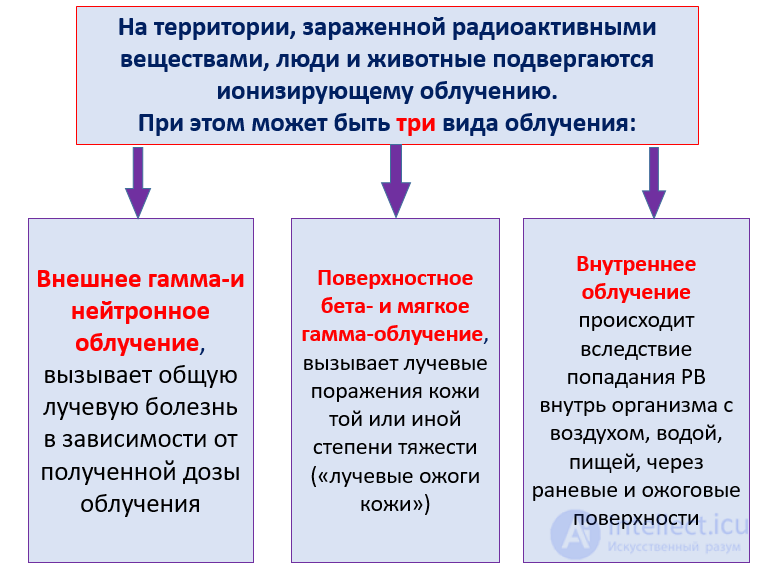
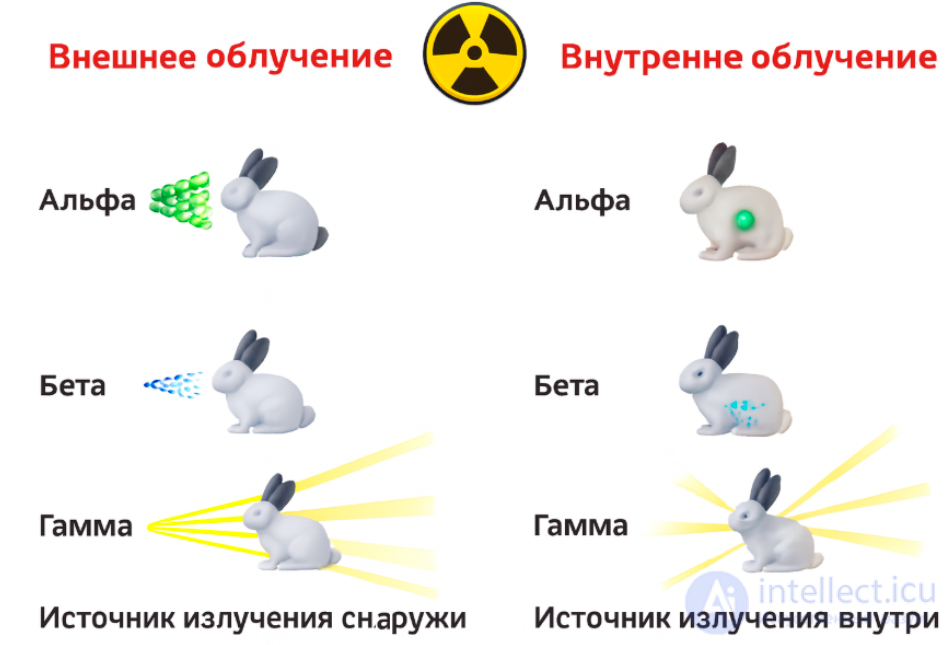
In humans, radiation sickness can be caused by external or internal irradiation — when radioactive substances enter the body with inhaled air, through the gastrointestinal tract or through the skin and mucous membranes, or as a result of injection.
The general clinical manifestations of radiation sickness depend mainly on the total dose of radiation received. Depending on the degree of exposure per unit of time, either acute radiation sickness develops (large doses over a short period of time) or chronic radiation sickness (small doses over a long period of time, or in fractions, as a result of the cumulative effect of radiation in the cells).
Acute:
Chronic:
The biological effect of radiation is the set of morphological and functional changes in a living organism that arise under the influence of irradiation
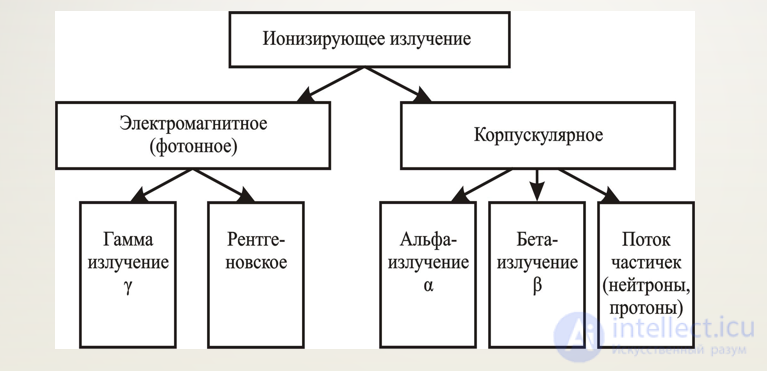
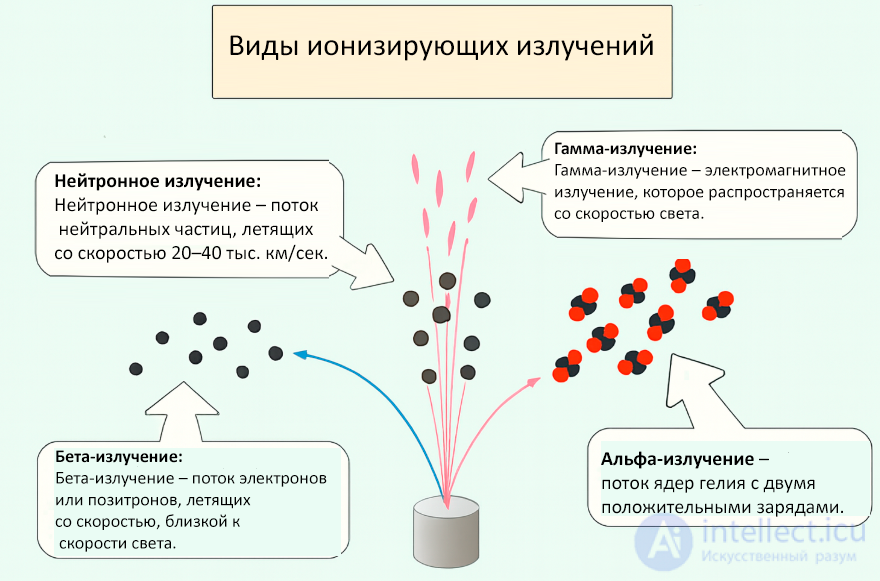
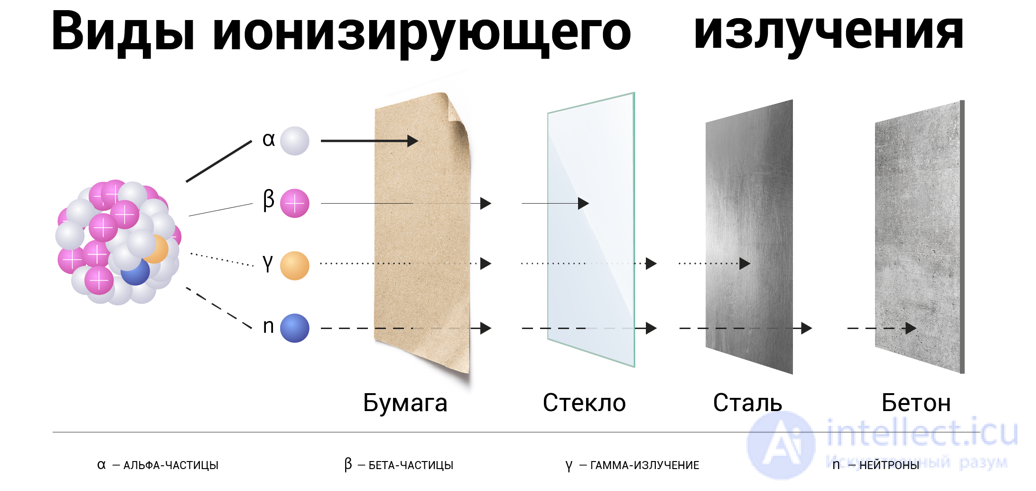
| Type of radiation | Nature of radiation | Penetrating ability | Protection methods |
|---|---|---|---|
| Gamma radiation | Electromagnetic (X-ray) | Very high | Stone walls reduce the dose 10-fold, wooden walls 2-fold, water 40–100-fold |
| Alpha radiation | Stream of helium nuclei | Weak (microscopic) | Easily stopped by a sheet of paper or by skin; dangerous if it enters the body |
| Beta radiation | Stream of electrons | Higher than alpha, lower than gamma | Stopped by aluminum, plastic, thick clothing |
| Neutron radiation | Stream of neutral particles | The highest of all | Hydrogen-rich materials are effective — shelters, thick layers of water, deep soil |
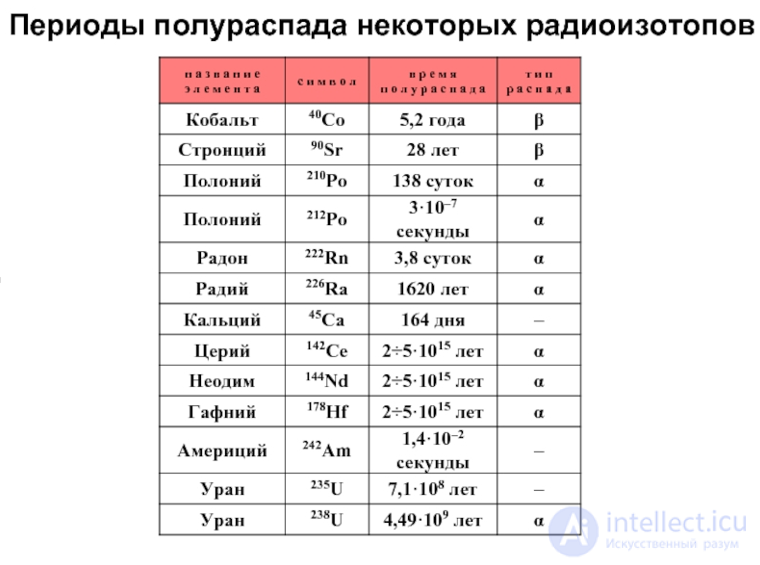
The half-life of an isotope is the time it takes for half of the atoms of a given radioactive substance to decay.
Put simply:
If you have a radioactive material, after one half-life there will be half as much of it, after two — four times less, after three — eight times less, and so on.
Features:
Each isotope has its own half-life — from fractions of a second to billions of years.
The decay process is random, but on average it follows a statistical law.
The half-life does not depend on external conditions (temperature, pressure, etc.).
Example:
Uranium-238 → half-life ~4.5 billion years
Iodine-131 → ~8 days
Radon-222 → ~3.8 days
Why is it important to know the half-life?
In nuclear power
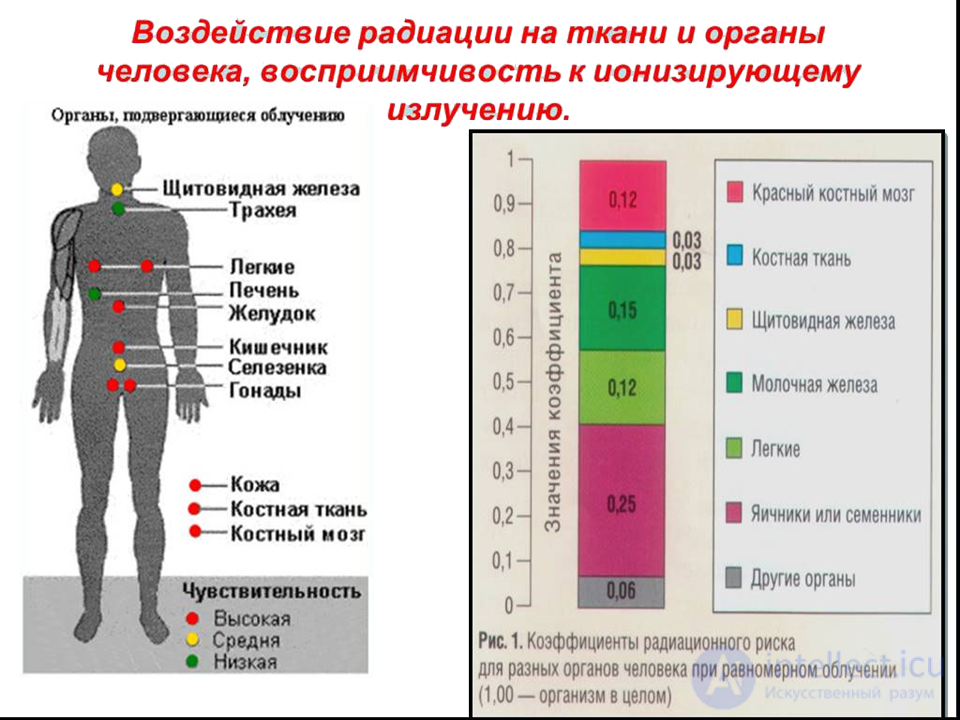
In radiation protection
In medicine (radiotherapy, diagnostics)
In archaeology (radiocarbon dating)
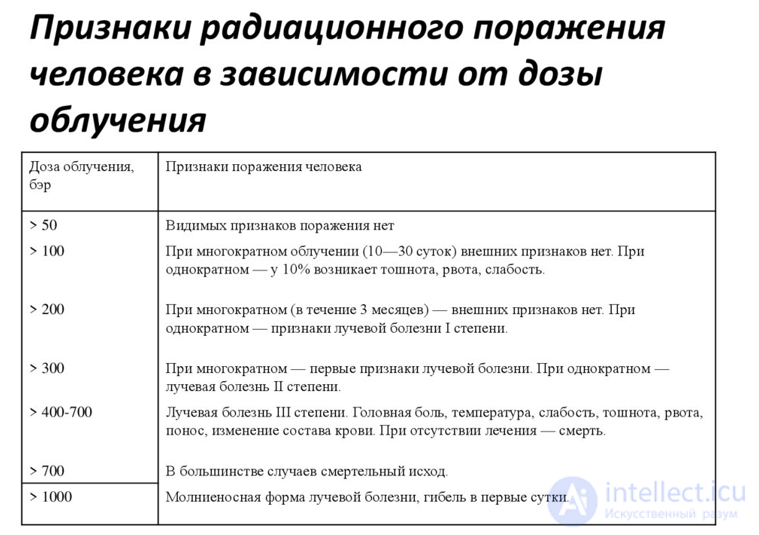
Acute radiation sickness (ARS) develops as a result of relatively uniform irradiation at a dose of more than 1 Gy (100 rad) over a short period of time.
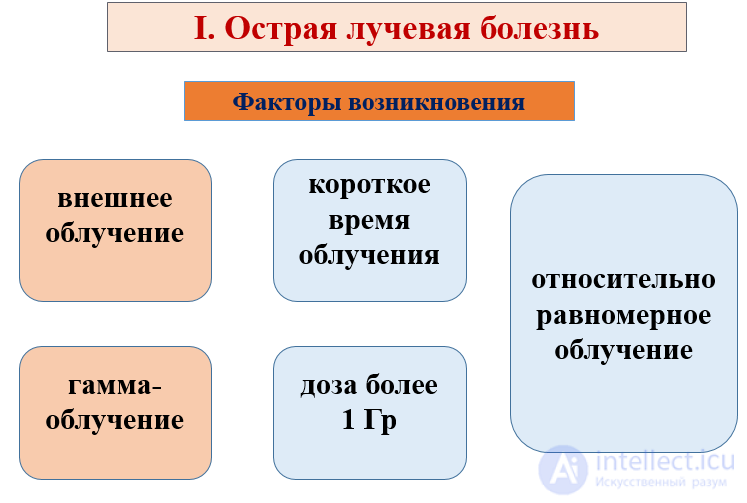
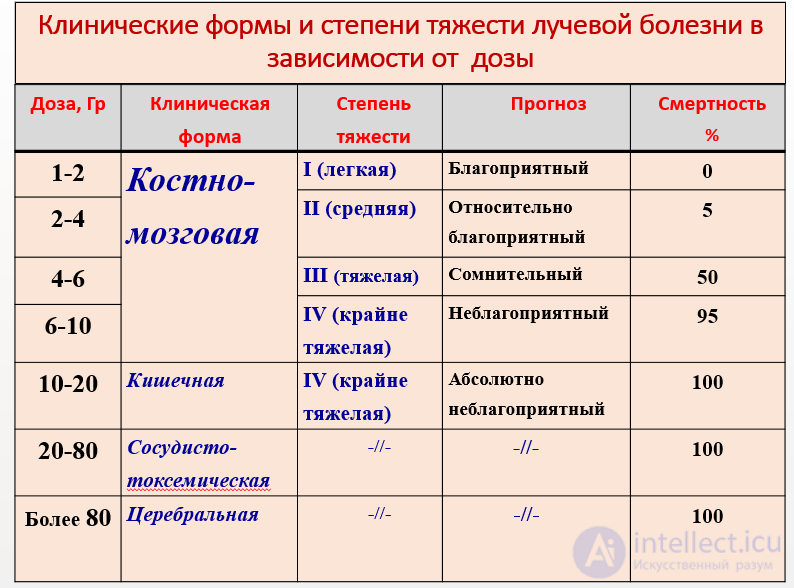
Doses up to 1 Gy (100 rad) cause relatively mild changes that may be regarded as a pre-illness state. Doses above 1 Gy cause the bone marrow or intestinal forms of acute radiation sickness of varying severity, which depend mainly on damage to the blood-forming organs. Single-exposure doses above 10 Gy are considered absolutely lethal.
Acute radiation sickness is characterized by a periodic course and a multi-syndrome clinical picture, in which the leading manifestations, depending on the radiation dose, are:
| Dose | Definition | Units of measurement |
|---|---|---|
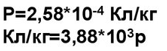
| Exposure dose | A quantity used to characterize the degree of ionization of air under the influence of X-ray and gamma radiation | R (C/kg) |
| Absorbed dose | The amount of radiation energy absorbed by a person | Gy |
| Equivalent dose | A quantity used to account for different types of radiation | Sv (100 rem = 1 Sv) |
| Quantity | SI unit / SI dose rate | Non-SI unit / Dose rate | Notes |
|---|---|---|---|
| Activity | 15 kBq | 1 Ci | 1 Bq = 1 decay/sec |
|
Radiation dose (Absorbed dose) |
1 Gy (gray) = 1 J/kg, Rate Gy/sec |
1 rad, Rate rad/sec |
1 Gy = 100 rad 1 rad=10−2 J/kg=10−2 Gy |
| Equivalent dose |
1 Sv (sievert) = 1 J/kg, Rate Sv/sec |
1 rem, Rate rem/year |
1 Sv=1 Gy
1 Sv=100 rem=100
1 rem=10−2 Sv
|
| Exposure dose |
C/kg (coulomb/kg), Rate A/kg |
1 R (roentgen), Rate R/sec |
 |
Additional relationships:
1 Sv = 1 Gy = 1 J/kg = 100 rad
1 Sv = 1 Gy ≈ 100 rad ≈ 100 rem ≈ 100 R
Diagnosis and determination of the severity of ARS
Physical dosimetry
Absorbed dose 1 rad ≈ 0.6 R with one-sided irradiation and 0.9 R with multi-sided irradiation on the track of a radioactive cloud.
Biological dosimetry
counts of leukocytes, lymphocytes, platelets
Forms of ARS depending on the absorbed dose
Bone marrow form of ARS
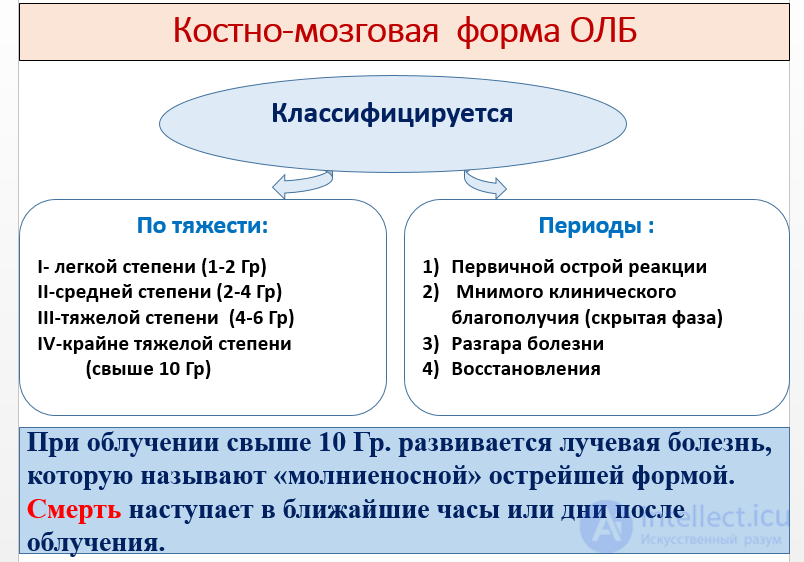
Period of primary reactions
In the period of primary reactions,
4 groups of symptoms appear:
Duration of the latent period:
Grade 1 – up to 30 days;
Grade 2 – 15 – 28 days;
Grade 3 – 8-15 days;
Grade 4 – may be less than 6-8 days
Period of peak illness
It is expressed in the following clinical syndromes:
Intestinal form. At a radiation dose of 10-20 Gy.
Gastrointestinal disorders, enteritis, dehydration and bleeding predominate; death occurs within the first 8-16 days.
Toxemic (vascular) form at radiation doses of 20-80 Gy.
Cerebral symptoms and collapse take the leading place in the clinical picture, and the pathogenesis is based on intoxication of the body with products of tissue breakdown.
Death occurs within the first 4-7 days.
Cerebral form
(absorbed dose of more than 80 Gy) – direct damage to the CNS. It manifests as profound disturbances of CNS function in the form of cerebral symptoms – agitation, disorientation, adynamia, exhausting vomiting, convulsions, respiratory disturbance, collapse.
Death occurs within the first hours up to 3 days
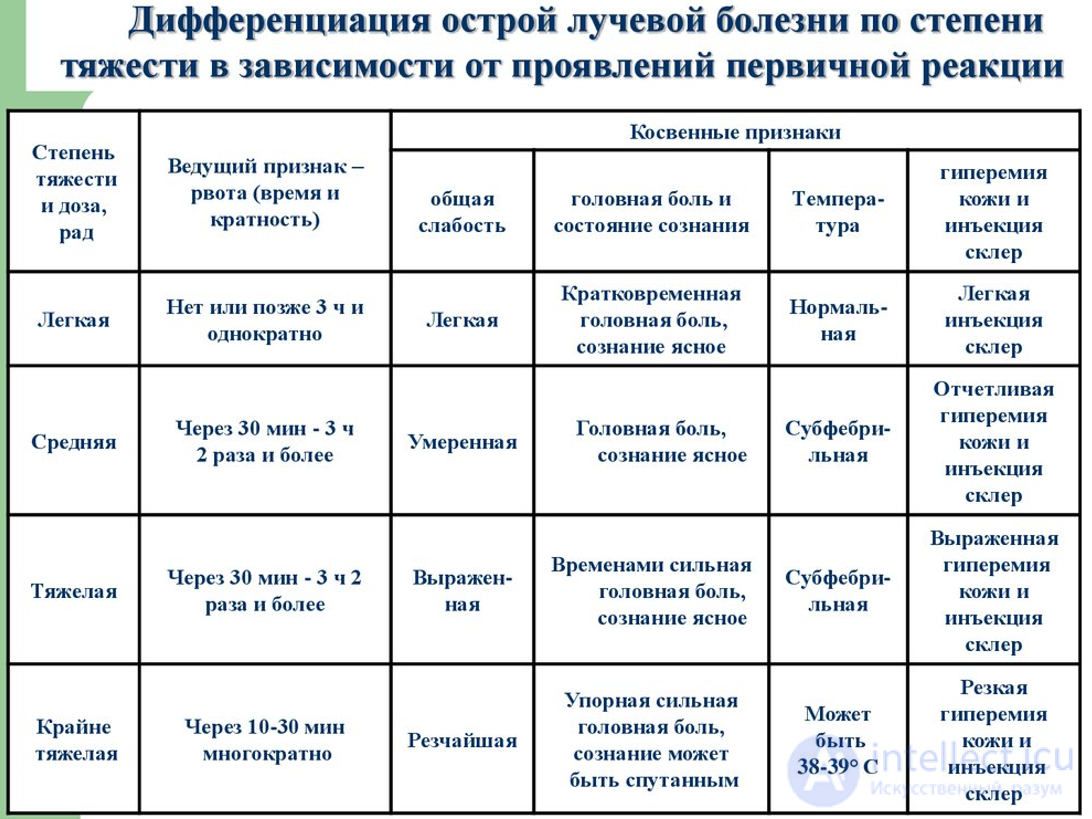
Chronic radiation sickness (CRS) develops as a result of prolonged continuous or fractionated irradiation of the body at doses of 0.1—0.5 Gy/day with a total dose exceeding 0.7—1 Gy. CRS from external irradiation is a complex clinical syndrome involving a number of organs and systems, the periodic course of which is linked to the dynamics of the formation of the radiation load, that is, to the continuation or cessation of irradiation. The distinctive feature of chronic radiation sickness is that in actively proliferating tissues, thanks to intense processes of cell renewal, the possibility of morphological restoration of tissue organization is preserved for a long time. At the same time, stable systems such as the nervous, cardiovascular and endocrine systems respond to chronic radiation exposure with a complex set of functional reactions and an extremely slow buildup of slight dystrophic changes.
Chronic radiation sickness was first studied and diagnosed in the 1950s in workers of the Mayak Production Association and residents of the settlements along the Techa River.
Classification of CRS by severity:
Other mammals also suffer from acute and chronic radiation sickness, but the radiation doses leading to the disease differ depending on the species — by default, the article describes it as it applies to humans.
Chronic exposure to ionizing radiation over several years at a total dose of 0.1—0.5 Sv per year manifests as a reduction in the nonspecific resistance of the macroorganism in some individuals and is detected in epidemiological surveys of population groups, i.e. it is stochastic. At a dose above 0.3 Sv per year, the incidence of cataracts increases. Stochastic effects of low doses depend on the total collective dose and do not occur with certainty in every individual exposed to a given dose, but an increase is observed in the frequency of occurrence (the number of people in whom they occur) in a sample exposed to the same dose, which is due to differences in the irradiated areas of the body, differing radioresistance of organisms, and their functional state at the moment of irradiation (pp. 52-61, 1988).
The disease usually develops 2—5 years after the start of irradiation. Clinical and morphological manifestations develop slowly and progress gradually. At a total dose of up to 1.0—1.5 Gy the disease does not develop; irradiation at a dose of 1.0—1.5 to 4—5 Gy produces mild and moderately severe forms of the disease. A total dose of more than 4—5 Gy is associated with a severe course of the disease. By severity, (1) mild, (2) moderately severe and (3) severe forms of chronic radiation sickness are distinguished.
Conventionally, 3 degrees of chronic radiation sickness are distinguished: mild, moderate and severe.
The signs of chronic radiation sickness, unlike those of the acute form, are spread out over time. They are associated with damage to individual organs and tissues by radionuclides and are not as clearly expressed as in ARS.
Grade I is characterized by neuroregulatory disorders of the cardiovascular system and unstable, moderate leukopenia;
In grade II, the neuroregulatory disorders become more pronounced, with the appearance of functional insufficiency of the digestive glands, the cardiovascular system and the nervous system, disturbance of some metabolic processes, and persistent moderate leukopenia and thrombocytopenia;
In grade III, marked leukopenia and thrombocytopenia appear, anemia develops, and atrophic processes arise in the mucosa of the gastrointestinal tract.
Three stages of the disease are distinguished:
Some authors add to these stages an initial one, characterized by functional disorders of the brain.
The mild form proceeds with minor changes in the bone marrow and other organs, and recovery usually occurs 7-8 weeks after the exposure ends. In the moderate form, the leading feature is hemorrhagic syndrome (hemorrhages are most often found on the skin of the abdomen, chest and inner surface of the thighs), hypoplastic anemia, and atrophic changes of the skin and mucous membranes, especially of the nasopharynx and upper respiratory tract. The disease is protracted, lasting for years, and exacerbations are provoked by nonspecific factors (infection, overexertion). Complete recovery usually does not occur after the exposure ends. In the severe form of the disease, bone marrow syndrome (aplastic anemia) is of principal importance; the disease has a steadily progressive course and ends in death from hemorrhagic or infectious complications.
Late effects of irradiation are somatic and stochastic effects that appear a long time (several months or years) after a single exposure or as a result of chronic irradiation.
They include:
One of the most characteristic features of radiation sickness is that, after a very long interval following exposure (10-20 years or more), against a background of apparently complete recovery, morbid phenomena arise that are called the late effects of irradiation.
Group I – somatic diseases
An increase in cases of the following is observed:
Group II - tumors
Radiation carcinogenesis:
-The most common types of tumors caused by the effects of radiation proved to be
Thyroid cancer is observed in about 10 people out of 1000 irradiated, and breast cancer in 10 women out of 1000 (per each 1 Gy of individual absorbed dose).
Group III – genetic consequences
Two types of late effects are usually distinguished: somatic, which develop in the irradiated individuals themselves, and genetic, which are hereditary diseases developing in the offspring of irradiated parents.
Somatic late effects include, first of all, shortened life expectancy, malignant neoplasms and cataract. In addition, late effects of irradiation are noted in the skin, connective tissue, and the blood vessels of the kidneys and lungs, in the form of induration and atrophy of the irradiated areas, loss of elasticity and other morphofunctional disorders leading to fibrosis and sclerosis, which develop as a result of a complex of processes including a decrease in the number of cells and dysfunction of fibroblasts.
The division into somatic and genetic effects is quite arbitrary, since the nature of the damage depends on which cells were irradiated, i.e., in which cells the damage arose – somatic or germ cells. In both cases the genetic apparatus is damaged, and consequently the resulting damage can be inherited. In the first case it is inherited within the tissues of the given organism, falling under the concept of somatic mutagenesis, and in the second – also in the form of various mutations, but in the offspring of the irradiated individuals.
After the action of radiation on the body, depending on the dose, deterministic and stochastic radiobiological effects may arise. Unlike deterministic effects, stochastic effects, such as carcinogenesis or malignant transformation, have no clear dose threshold for their manifestation. As the radiation dose increases, only the frequency of these effects increases. The diagnosis of radiation sickness is based mainly on blood test data. Of the hematological indicators after irradiation, the most reliable is a sharp decrease in the number of leukocytes, especially lymphocytes .
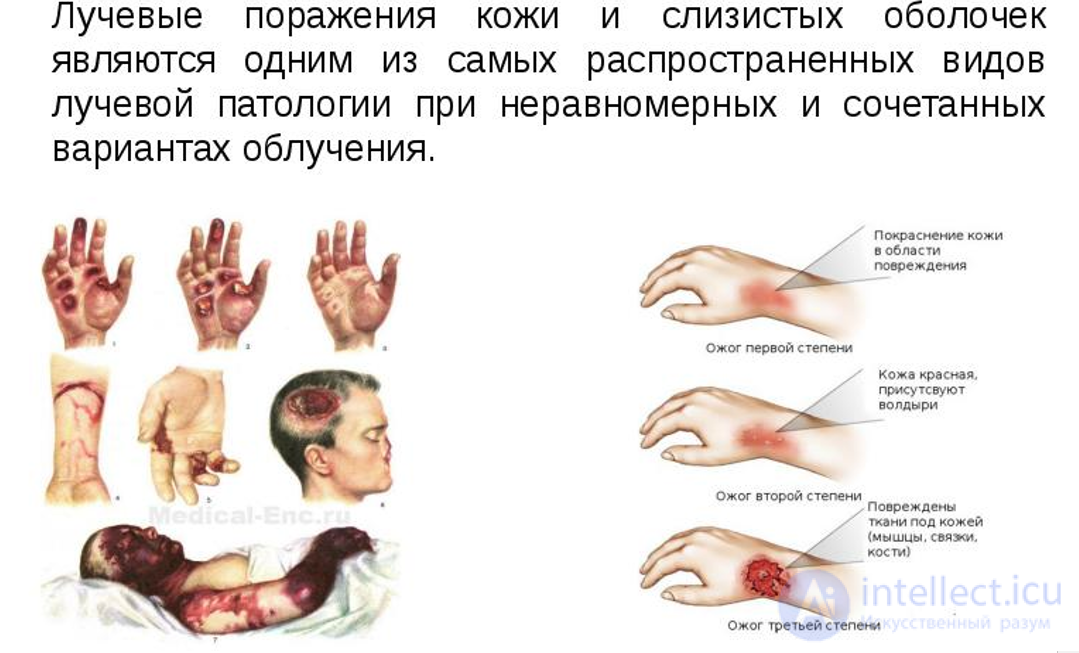 5 Gy - temporary hair loss, skin peeling, pigmentation.
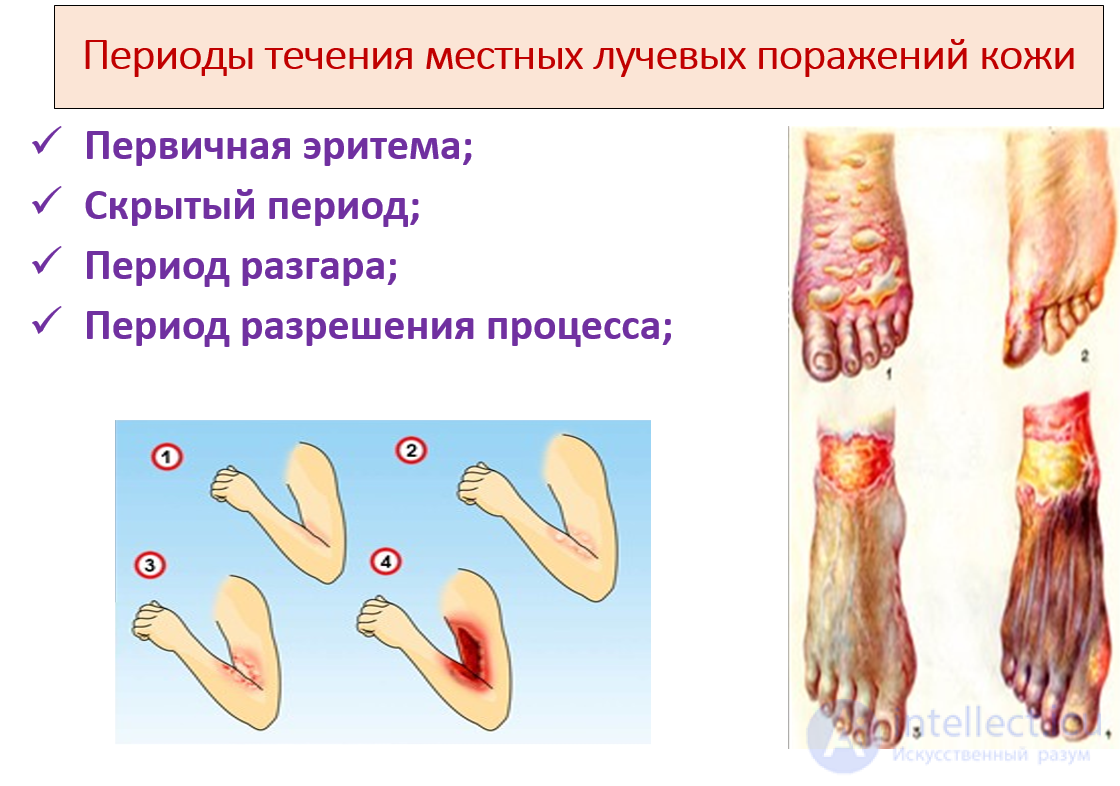
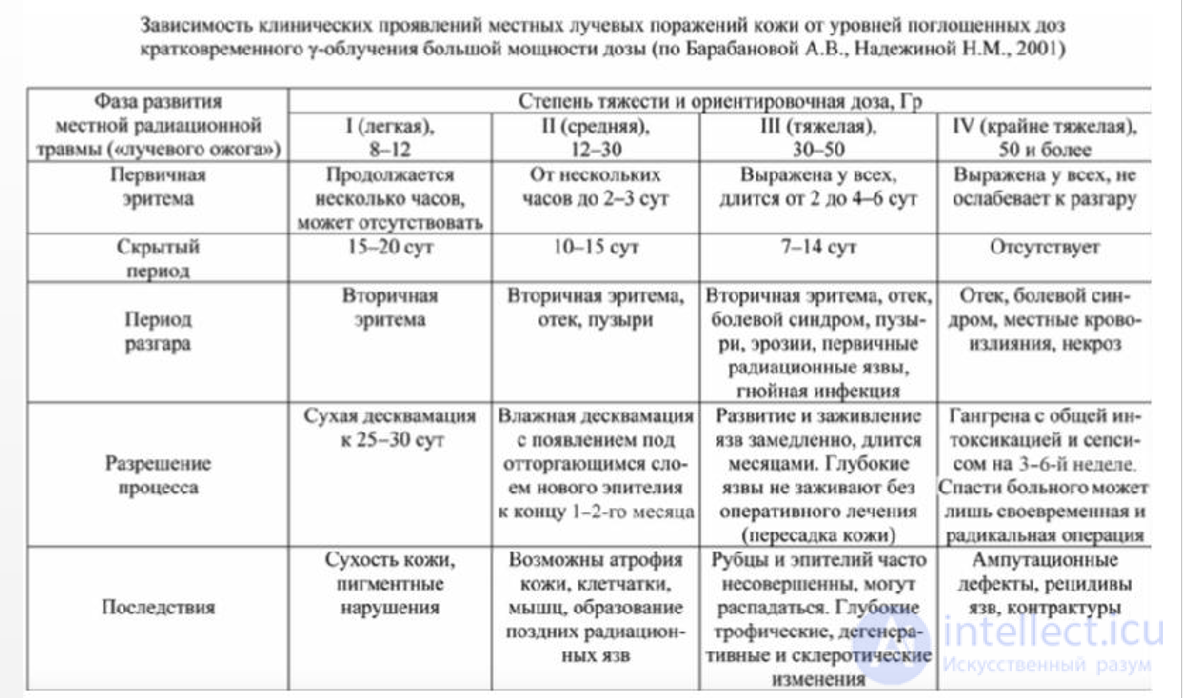
Skin lesions have 4 grades:
Grade I (mild) lesion (at a beta-radiation dose of 8—12 Gy) - erythematous dermatitis.
Grade II (moderate) lesion (at a beta-radiation dose of 12—20 Gy) - bullous dermatitis.
Grade III (severe) lesion (at a beta-radiation dose of 20— 25 Gy) - ulcerative dermatitis.
Grade IV (extremely severe) lesion (at a beta-radiation dose of 25—50 Gy) - extremely severe radiation burns.
Local radiation injuries of the skin
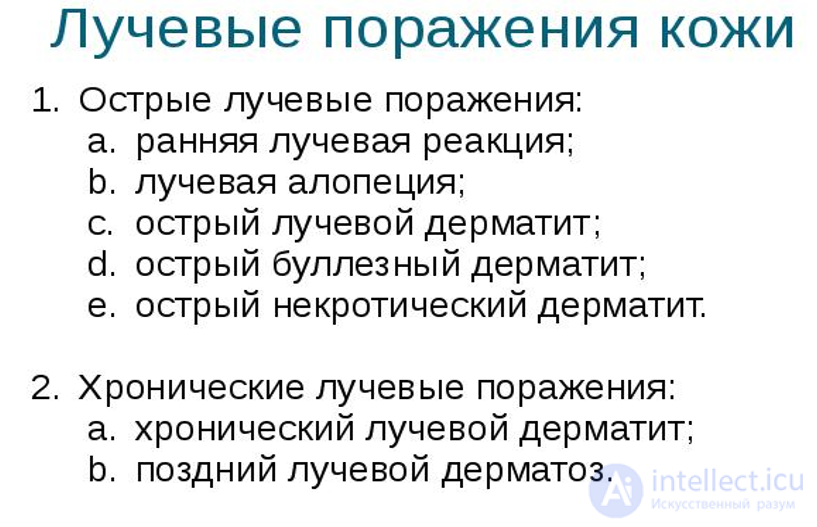
Periods of the course of local radiation injuries of the skin
- these are injuries combining mechanical and (or) thermal trauma with radiation sickness.
(Radiation-mechanical, radiation-thermal)
4 periods in CRI:

Comments