
Lecture
Learn how to retain candidates and fill open positions.
The linear career ladder is a thing of the past, and changing jobs has become far more common. As a result, it is natural that candidates who accepted your offer the first time around may be interested in opportunities with you in the future.
In a market led by passive job seekers, candidate nurturing is vital to effective hiring, especially in today's environment, with the additional challenges brought by COVID-19. In this article we will break down the elements of candidate nurturing and discuss 11 best practices that will help you engage busy professionals.
What is candidate nurturing?
How does candidate nurturing work?
Best practices for candidate nurturing
The hiring funnel and how to manage it
Candidate nurturing is the process of engaging job seekers throughout the entire hiring process. In recent years this practice has become more necessary. Employees are more inclined to change jobs, which means that candidates who turned down an offer, or who never received one, may be open to other opportunities at your company later on.
Candidate nurturing is the process of involving job seekers in the hiring process.
It is especially important during a hiring pause; even if you are not interested in filling open roles right now, at some point you will need to. Candidate nurturing ensures that your talent pool contains qualified professionals when the time comes to hire more aggressively. On top of that, nurturing makes the application and interview process less intimidating and more people-centered.
Candidate nurturing follows the three stages of the buyer's journey: awareness, consideration and decision. In fact, it helps to think of a candidate as a consumer. If you call someone out of the blue, you would not start discussing contracts right away. As with closing a sale, signing a new employee takes time. This is where candidate nurturing begins. Below we break down the key elements of nurturing candidates for a job opening.
NURTURING CAMPAIGNS
Nurturing efforts are often organized into campaigns, which are a series of internal steps triggered by a candidate's actions; when a candidate completes an action (for example, views a job posting), a nurturing campaign is triggered (for example, the candidate is sent an email reminding them to apply).
Engagement campaigns begin as soon as a candidate opts in to receive information (or takes an action that gives you their contact information), for example by subscribing to the company newsletter. Once you have their information, usually their email address, you can use branded content to spark their interest in your company and gently guide them toward submitting a job application.
CANDIDATES
Think about whom you are trying to attract and what type of content they like to engage with. Work with hiring managers to define the ideal candidate for the role, and create additional personas based on the different kinds of people you hope to attract. You would not want to flood a programmer's inbox with blogs about account management. That is not only a waste of time, but it also distracts a qualified candidate from your brand and its open opportunities.
Remember: just because a candidate did not receive your offer does not mean you should stop nurturing them. These are the people you will probably reach out to first when a new role becomes available. They are also the candidates who may need the most care; they may still feel a slight sting of rejection, and reopening the conversation with an impersonal informational email could be a turning point for your relationship.
TIMING
Deliver content that is relevant to the candidate based on where they are in the hiring process. If a candidate has only just come into contact with your brand (that is, at the awareness stage), do not send them hyper-specific content. At this stage your nurturing efforts should focus on introducing them to your company's mission, core values and any other basic information.
In addition, different candidates are more likely to engage with content at different times of day. There is plenty of data on the best times to send emails, but you can use your own internal data to make a more precise decision. Timing should also take frequency into account. No one wants to wake up to an email from the same company every day.
However, in-demand professionals are on the job market for only 10 days, so you are eager to respond to them quickly. Think about whom you are nurturing and how attractive they are to your competitors when deciding how often to send them content.
AUTOMATION
As noted above, candidate nurturing is an extensive process. Nurturing candidates manually throughout the entire hiring process would drain all your resources, so automation is key. Recruitment automation tools can streamline your nurturing process and make it more efficient.
Consider how you reject a candidate: your applicant tracking system can automatically send emails to people to whom you are not extending an offer. However, rejection emails should be tailored to the candidate; a candidate who meets most of your job requirements should not receive the same rejection as one who meets only two of them. Automation tools can create templates and run campaigns tailored to specific candidates.
In addition, changing your approach to rejection letters can help draw qualified candidates into your talent community and keep them engaged. For shortlisted candidates or finalists, consider a phone call. It is much more personal than an email, and it shows that you truly care.
As you outline your candidate nurturing strategy, keep the following 11 best practices in mind.
First of all, work with your marketing department to develop strong nurturing campaigns. Personalized content and emails are central parts of a successful candidate nurturing strategy, and both are areas of marketing expertise. Use their knowledge to target your ideal candidate effectively and keep them engaged throughout the hiring process.
The marketing team is also skilled at defining a persona based on the buyer's journey. Rely on them to provide a clear description of your ideal candidate and any variations you want to engage with. From there you can create customized content and campaigns to encourage candidates to apply.
When creating a candidate persona, consider the following: demographics; years of experience; skills and background; personality; education; geographic location; technical knowledge. The more specific you can get, the more effective your nurturing efforts will be.
Your personas should reflect variations in your outreach and nurturing efforts; the way you nurture candidates for an executive position should differ greatly from the way you nurture college students for an internship. Even so, where possible, try to get into the details. Customize emails for your most desirable candidates and deliver good or bad news personally. This will make your chosen people feel valued and keep them interested.
Email marketing is one of the most important aspects of candidate nurturing. Most professionals use their email throughout the day and browse the web during lunch breaks or on the go. Build custom workflows and automate the emails that are sent when a candidate performs a specific action.
Create resources for job seekers that they can use during the application and interview process. This is especially helpful for job seekers who have viewed your job posting but have not yet applied.
In addition, providing resources to rejected candidates strengthens your employer brand and reinforces your reputation as an empathetic employer. Not only that, but candidates may return to your site for more information and eventually apply for a different role.
The key to attracting passive candidates is to meet them where they are. If they are not actively looking for work, they will not spend time on job board sites. Instead, look to online hubs, including social media platforms, news outlets and professional community sites. Given the popularity of Instagram, Facebook, Twitter and so on, social media recruiting is a must.
Event marketing is a more complex but very effective nurturing strategy. It not only promotes your employer brand and positions your company as a thought leader, but also gives you the chance to meet candidates on a personal level. You can also hold webinars or video conferences to engage employees while working remotely.
Face-to-face interaction says far more about a candidate's qualifications than a resume does; you can begin the interview process before the person becomes part of your talent pool. Meeting candidates through recruiting events helps them form a connection with your company. From that point on, they are more likely to engage with the content you offer and to apply to your open roles.
If you parted ways with an employee on good terms, there is no reason you should not stay in touch. After all, they may be interested in rejoining your team later, when another role becomes available.
Include them in your mailing list for as long as they wish to remain on it, and keep them up to date with company newsletters, press releases and important updates. To increase your chances of rehiring a former employee, give every departing employee an exit interview to get honest feedback.
You do not need to limit yourself to the written word. Video content, photos and audio recordings can be a great way to catch a candidate's attention and stand out from the crowd. Thought-leadership pieces are great, but a job is about more than just work. Highlight your company culture in a video tour of your office and showcase your people in a photo collage of employees.
The effectiveness of your nurturing campaigns depends on the accuracy of your data. Duplicate contacts or inaccurate personal information will make your efforts seem impersonal and insincere. In addition, dirty data can make it harder to gain analytical insights and optimize your nurturing efforts. Regularly review and organize your candidate database to make sure your information is correct and up to date.
Monitor how candidates respond to your nurturing efforts and record key recruiting metrics such as email open rate, click-through rate and conversion rate. Analyze the data and use your insights to optimize your nurturing strategy.
Remember that every candidate is unique and deserves an individual experience, especially your top contenders. Nevertheless, refining your strategy to match your persona more closely will give you a solid foundation for nurturing candidates.
Building a talent pool of passive candidates is a central part of any hiring strategy, but candidate nurturing especially so. Courteously engaging candidates before they are ready to make a move means you will be on their radar as a leading employer when they become active job seekers.
Recruiting is a complex process, but at its core it is marketing: if you want to turn your candidates into hires, just as marketers look at converting leads into sales, you must make sure your hiring funnel is as strong as possible. It must be personal, you must stay in constant contact, and you must build relationships.
In essence, the hiring funnel lets you break a complex hiring process into distinct stages, and then break each stage down into goals and tasks. The hiring funnel usually begins with awareness of you as an employer and (ideally) ends with the hiring of a new employee.
However, make no mistake: the hiring funnel is not a simple process. It consists of several stages, each of which can contain many obstacles. For example, if one stage takes too long to get through, you may lose candidates. Or perhaps you attract candidates who are not suited to your roles and, as a result, spend precious time screening applications.
So how do you build a robust hiring funnel and manage it?
Check out the tips for the different stages of the recruitment funnel:
A hiring funnel is a framework you should follow that guides you through the entire hiring process from start to finish, narrowing the pool of candidates until you are left with the desired number of hires. The hiring funnel aims to interest potential candidates and engage them.
The hiring funnel can be broken down into 7 stages:
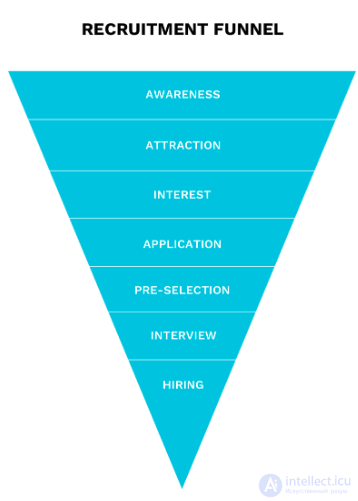
If you want to build an effective hiring funnel and manage it well, break each stage down into smaller steps. These manageable blocks can be defined as goals (which must be achieved) and tasks (which must be assigned). This way nothing slips through the cracks, and what could be an intimidating process becomes manageable.
1. Focus on employer branding. According to a Glassdoor survey, 76% of job seekers want to know what makes a company an attractive place to work before applying there. So figure out what makes your company great, make sure it is clearly defined, and consistently promote that messaging across all your communications, both external and internal.
2. Maintain a social media presence. Social media is a great place to share jobs, connect with people and showcase your company culture. A Pew Research Center study found that 35% of job seekers used social media to check out a company before applying there. Encourage followers to interact with you by asking questions or possibly running contests.
3. Write a compelling job description. It all starts with the job description, one of the first things every potential candidate sees. Perfecting it is crucial to finding the right candidates: you want to convey enough information about the opening and your brand to whet their appetite without overwhelming anyone.
4. Advertise where your ideal candidates are. Do not use a one-size-fits-all approach to advertising and share job postings far and wide, or you will be swamped with only unsuitable candidates. Instead, review your recruitment channels, take a targeted approach to advertising, and place your job posting only where your ideal candidates are likely to look. For example, on targeted online job sites, in industry publications, on social media sites, or even in a local newspaper.
At the same time, specialized job boards attract a large number of qualified candidates, so they can be especially helpful in your search.
5. Use programmatic job advertising. Use analytics and machine learning to target a specific audience. Programmatic advertising uses algorithms to show your job posting only to people who match your ideal candidate profile, thereby reducing the number of unsuitable applications you receive and saving you time and money.
6. Improve your careers site. Ensure the careers page of your website contains as much information about the company and the job as possible, such as the benefits of working at your company, the work-life balance, your approach to flexible working, the career development opportunities that exist, and, if possible, include employee testimonials.
7. Showcase employee stories. Make short videos or conduct interviews in which current employees talk about who they are, what they do, what they like about working at your company and what benefits there are.
McKinsey shares stories of its employees from around the world, giving potential candidates a chance to learn more about life and work at the company.
8. Be ready to answer potential candidates' questions. Interested candidates are likely to get in touch before committing to filling out an application form, so have someone available to field their questions or put a system in place for responding to candidate messages. Consider adding an FAQ section to your careers page to answer common questions.
9. Consider using a chatbot. Recruitment technology should not only be used in the CV screening process. Consider using a chatbot to respond to candidates, which will let you focus on more important tasks. A chatbot can answer questions at any time of day or night, and if the chatbot cannot help, it can forward the candidate's request to someone who can.
10. Pay attention to your employer reviews. We live in a world of open communication, and if you have a dissatisfied employee, chances are they have not kept their grievances hidden. So it is worth paying attention to employer reviews and monitoring the sites that allow employees to review their employer, such as Glassdoor, Indeed, Comparably and CareerBliss. These sites can be useful whether the reviews are positive or negative - if you see any points you consider relevant, act on them.
Failing to keep an eye on your employer reviews can put many potential candidates off applying.
11. Reach out to previous candidates. Every candidate who has ever applied to your company should be kept in your ATS. Typically only one person is hired for each vacancy, but that does not mean that all the other shortlisted candidates should not be contacted again. Use candidate rediscovery technology to build a list of suitable potential candidates from your existing talent pool and reach out to them.
12. Make the application process simple. According to a CareerBuilder survey, 60% of candidates will abandon a job application, even for a job that really appeals to them, because the application process was too long and confusing.
13. Optimize the application for mobile. The desktop application has had its time; nowadays 66% of candidates will apply for jobs using their mobile phones. To avoid losing any of these candidates by making them wait to complete the application later, optimize the application for mobile phones.
14. Send a confirmation email. Do not leave candidates in the dark about where they stand with their application. Send an automatic reply to every application received, in which you thank the candidate for applying and tell them what happens next and what timeline you expect. Include in the email a way for the candidate to get in touch if they have any questions in the meantime. You can also ask the candidate to let you know if they find alternative employment in the meantime, so that a) you do not waste time considering them, or b) they might be a preferred candidate, in which case you could consider making a counter-offer.
... And yet 84% of candidates expect a personal email response. Neglecting communication with candidates from the very start does not make a good impression of you as an employer.
15. Assess candidates for the right skills and qualities. This is where you narrow candidates down to a select group of potential employees. Analyze the predictors of job performance for each role; these should be the characteristics against which you assess your candidates. Common assessments include cognitive ability testing, personality questionnaires, culture-fit assessment and more. Depending on the number of applications you receive for each job posting, try to select around 10-15% for an interview.
16. Make the pre-screening process engaging. If the average time to hire is 24 days, you want the entire application process to be as engaging as possible. That includes pre-screening. Consider creating an assessment experience unique to your company. You can include company videos with realistic job previews, game-based assessments, or situational tests.
70% of companies that use pre-hire assessments do so early in the application process or after an initial résumé screening.
17. Eliminate bias. Don't let bias guide you. Familiarize yourself with the most common hiring biases so you can avoid them, and put in place strategies that reduce bias in the hiring process.
18. Assemble diverse interview panels. To rule out the possibility of bias during interviews, make sure you have a wide range of interviewers on the panel, all of whom look for and value different qualities in a candidate.
19. Consider peer interviews. You don't have to work alongside the candidate you are interviewing, so why not let one of their potential colleagues interview them instead. Not only do candidates tend to relax more when they are not surrounded by authority figures, but by bringing in an existing employee to interview them, they will learn what the job involves, and can determine from personal experience whether the candidate has the potential and the skills to do the work.
20. Assess interpersonal skills. The fact that a candidate lacks some skills doesn't mean you should write them off. Job-specific hard skills can always be taught; teaching someone to play well with others, communicate, show up on time and work in a team cannot be done. Those are soft skills, and they should not be overlooked.
If you want your company to grow successfully, you need to hire employees with the right interpersonal skills.
21. Standardize interviews. Don't let interviewers resort to their own lines of questioning. For a fair interview, make sure every candidate is asked the same questions, and don't let interviewers stray too far from those questions.
22. Use interview scorecards. Instead of relying on one person's opinion, ask all interviewers to score candidates against previously established criteria, and then rank the candidates by their total score or their average score.
23. Prepare a personalized offer for your chosen candidate. Today's candidates care about more than what ends up in their paycheck. So find out what matters to your chosen candidate and include it in your offer. Chances are, if your chosen candidate is a top talent, they will be in demand and may be receiving offers from other sources. So make your offer as attractive as possible. Think, for example, about including your flexible working policy, health benefits, or insurance.
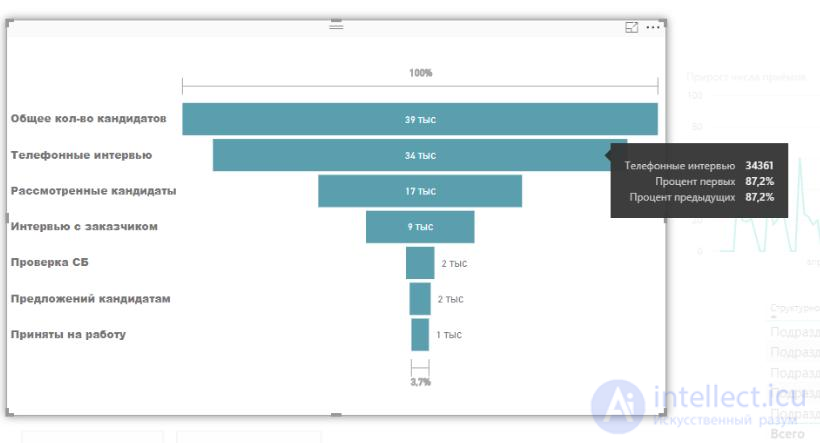
24. Track conversion rates between stages and from top to bottom, and compare them with benchmarks. You will be able to see where the problems in the hiring process lie and prepare to optimize them.
25. Visualize your funnel to better understand who your candidates are and how they move from one stage of the process to another, as well as to identify where the leaks are.
26. Build a powerful recruiting tech stack. Choose software that fits your needs. There is so much technology available to help you hire that narrowing down the digital options can feel overwhelming. While there is no single recruiting technology that will help you throughout the entire recruiting funnel, you can assemble your own from a variety of technologies that fit your needs. So take the time to learn what technologies are available to you, how they work, how they can help solve your problems and tasks, and how they can improve your company's recruiting efforts.
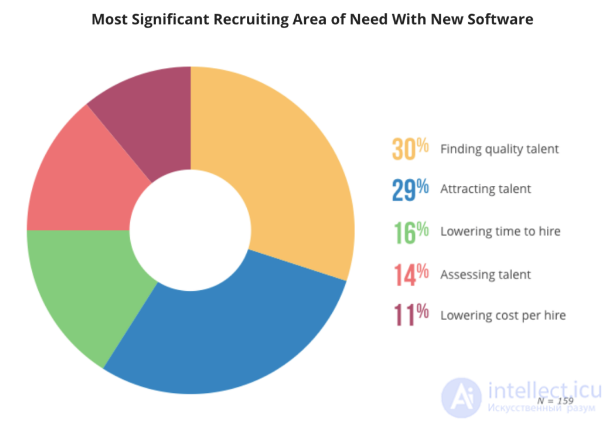
Analyzing your needs will help you choose the right recruiting software.
27. Use metrics to determine what works. How will you know which stages of the hiring funnel work for you if you don't track metrics such as time to hire, cost per hire, and quality of hire? By tracking these metrics, you can test and adjust, continuously improving the hiring process.
28. Track time to hire, both overall and by stage.
Building an effective, leak-free hiring funnel is no easy task, but you can start implementing some of our practical tips right away and improve your recruiting process. You will have interested, qualified candidates from whom you can build a shortlist, your interviews will be better, time to hire will drop, and quality of hire will rise.

Comments