
Lecture
The theory of international relations is a discipline within which international relations are examined from a theoretical standpoint. This discipline traces and analyzes the general regularities of international relations in the form of concepts . Ole Holsti describes the functioning of international relations theory as a pair of tinted sunglasses that allow a person to see different color tints of the surrounding world, but not the whole of reality. For example, a realist may disregard a certain phenomenon in international relations, whereas a constructivist may consider that same phenomenon to be highly important. The three most popular theories in international relations are realism, liberalism, and Marxism.
Theories of international relations can be divided along the following lines: «positivist/rationalist» theories, which focus on analysis from the state’s point of view, and «post-positivist/reflectivist» theories, which include broader concepts of security beyond the state’s perspective (taking into account cultural, economic, and social factors in the conduct of international politics). Notably, theories with opposing ideas in international relations quite often coexist with one another in geopolitics — for example, constructivism, institutionalism, Marxism, and others. Nevertheless, today the most widespread schools of international relations are realism and liberalism. The number of adherents of social constructivism is also growing .
The theoretical study of international relations traces its origins back to the period after the First World War, when a department of international relations was opened at the University of Wales. A second wave of study began in the late 1930s. Well-known researchers of this period include E. H. Carr, author of The Twenty Years' Crisis, and Hans Morgenthau, author of Politics Among Nations. The first schools of international relations in the interwar period focused on studying the phenomenon in which the balance of power as a principle for conducting international politics was replaced by the principle of collective security. These thinkers were called «Idealists». The fiercest critique of this school is considered to be the «realist» analysis put forward by Carr.
Explanatory and constitutive approaches in international relations theory serve as dividing lines when classifying the various theories of international relations. Explanatory theories are those that view the world as something not amenable to theoretical analysis — a given reality that must simply be accepted. Constitutive theory treats theoretical analysis as a tool that helps to understand the surrounding reality by discovering common underlying regularities across different phenomena.
Throughout the entire course of human historical development, international relations have occupied a significant
place in the life of every state, society, and individual. The emergence of nations,
the creation of interstate borders, the formation and change of political regimes, the establishment
of various social institutions, the enrichment of cultures, the development of art, science, and technical
progress and an effective economy are closely linked to trade, financial, cultural, and
other exchanges — that is, to international relations. Their significance is growing even further in our
day, under conditions of globalization, when all countries are woven into a dense, branching network
of diverse interactions that affect the volume and nature of production, the types of goods
created and their prices, standards of consumption, and people’s values and ideals, at a time when humanity
feels its unity in the face of global challenges. For contemporary Ukraine, the theoretical
understanding of international relations is an exceptionally urgent and important task,
given the annexation of Crimea, Russian aggression in the Donbas, and the need to determine the fateful choice
of the further development of our state amid a world of conflicting interests and its own national
interests.
The course «Theory of International Relations» belongs to the mandatory academic disciplines,
is an integral part of the compulsory cycle of professional training disciplines in the
curriculum, and corresponds to the study programs of the specialty
"International Relations, Public Communications, Regional Studies".
Aim of the course: to form an objective understanding of the system of humanity’s existence
within the contemporary paradigm of its development; to acquire theoretical knowledge and gain
practical skills in conducting a state’s foreign policy adequate to the times; to master
the fundamental theoretical concepts and to study the arguments of the leading political science schools
on the foundations and development of international relations.
Objectives of the course: to substantiate the theoretical and methodological foundations for
the formation and development of paradigms of the system of international relations; to master the methods and
concepts used in the study of international relations („state”, „functions of the state”, „system of civil society”,
unipolarity, etc.); to acquire knowledge of the teachings of the leading scientific and theoretical schools and
directions of research in international relations; to trace the interaction and interdependence in the
formation and development of international relations and world politics; to characterize the paradigms
of international relations; to study the regularities in the development of the system of international relations;
to identify the main threats to humanity and seek ways to counter them; to grasp the concept of "Pax Americana" and the consequences of a unipolar system of human development; to form an adequate
understanding of the current realignment of forces and the formation of a system of international security;
to substantiate the place and role of Ukraine in the contemporary system of international relations.
Students taking the course «Theory of International Relations» should
know the content of the most important categories and concepts of international relations; the most important principles
of the scientific schools of international relations theory and understand the peculiarities of their interpretation of
contemporary reality; the nature of the most important features, mechanisms, and driving forces of international
relations; the features and mechanisms of the functioning of international relations in the spheres of politics,
economics, culture, and information; the essence and specifics of the principles of international order;
be able to apply the basic concepts and categories of international relations
relations; to independently interpret information about real events in the field of international
relations; to correctly apply methods of scientific research and analyze phenomena and
processes of the modern world; to navigate the main trends and problems in the development of the
global international system. One should remember the words of the classic American theorist of
international relations James N. Rosenau, which he said for the «World Political
Processor» website: «You are fortunate to be studying international relations. It is a complex subject,
given the whole variety of actors and processes it encompasses. But you are
fortunate because the search for understanding of all this complexity is a challenge. Responding to it
requires imagination and talent, but often develops imagination and talent as well. So take up the challenge and
grow. It will lead you to new heights of self-knowledge».
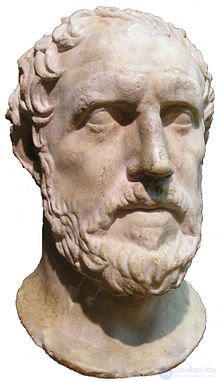
Thucydides, author of the History of the Peloponnesian War, is considered the first realist.
Realism, or political realism, has been the dominant discipline since its very inception. This theory is based on the works of Thucydides, Machiavelli, and Thomas Hobbes. Early realism can be characterized as a reaction to interwar idealist thinking. The outbreak of the Second World War was viewed by realists as proof of the inadequacy of idealist thinking. There are many strands of realism, but its foundational principles remain statism, survival, and self-help.
Realism draws several key conclusions: nation-states are unitary actors that conduct foreign policy as players within an anarchic system of international relations, operating on a geographic basis. The anarchic international system is capable of regulating the interaction of states. Any nation-state is a primary actor on the international stage. Consequently, as the highest organizational form, states exist in constant competition with one another. A state behaves in one way or another as an autonomous, rational actor pursuing its own interests, with the principal goal of maintaining and strengthening its own security and, as a consequence, its sovereignty and survival. Realism holds that in pursuing their interests, states accumulate resources, and the further nature of interaction among states is determined by the amount of resources accumulated. This determines the level of a state’s power. A state’s power, in turn, is determined by its military, economic, and political capabilities.
In the 20th century, two strands emerged — offensive and defensive realism. Proponents of both concepts believe that states in international relations are guided by the motive of survival, and, fearing uncertainty as a result, build up their power. From the standpoint of defensive realism (K. Waltz, S. Walt, R. Jervis), a security dilemma arises — a paradoxical situation in which measures taken by one state to ensure its national security are perceived by another as a threat to its own security. The paradox lies in the fact that an increase in the power of state A under conditions of international anarchy may provoke countermeasures by state B and, consequently, trigger a conflict that neither state A nor state B actually intended. The task of the state is to ensure its own security. Proponents of offensive realism (J. Mearsheimer, R. Gilpin, F. Zakaria) believe that security can only be ensured through the constant growth of one’s own capabilities and power.
Neorealism, or structural realism, is a development of realism first described by Kenneth Waltz in Theory of International Politics. There are various strands of neorealism. Neorealism is often referred to as «modern realism». Waltzian neorealism holds that the effect of structure must be taken into account when explaining the behavior of different countries. Structure is understood as a) the fundamental principle governing the functioning of the international system, namely anarchy, and b) the distribution of capabilities among states. Waltz calls into question the traditional realist approach to state power viewed solely in terms of military strength, and instead reveals the concept of state power as a combination of a state’s capabilities across various spheres (social, cultural, economic, political).
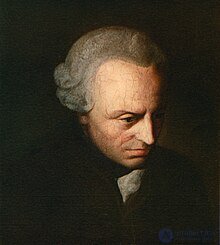
Kant’s works on perpetual peace were the first contribution to democratic peace theory.
The predecessor of liberalism was «idealism». Idealism, or utopianism, was viewed critically by realists. In international relations, idealism (also called «Wilsonianism», associated with American President Woodrow Wilson) is a political school of thought that holds that a state’s foreign policy should be subordinate to the needs of its domestic policy. To clarify the picture, consider the following example: an idealist may sincerely believe that the fight against poverty at home must necessarily be accompanied by the fight against poverty abroad. Wilsonian idealism was the forerunner of liberalism, which gained wide recognition after the Second World War.
Liberalism holds that state preferences, rather than state capabilities, are the primary determinants of state behavior. Unlike realism, where the state is treated as a unitary actor, liberalism allows for pluralism in state action. Consequently, preferences will differ from state to state, depending on culture, economic system, or political regime. Liberalism also holds that interaction among states is not limited to the issue of state security, but also occurs through commercial firms, organizations, and private individuals. As a result, instead of an anarchic system of international relations, the concept of a more complex arrangement of the IR system is introduced. For example, a given country’s film industry can spread its culture around the world — this is a direct indication of the power of culture in international relations. Another conclusion of this theory is that mutual benefit is attainable through cooperation and interdependence — this is the guarantee of stability.
Neoliberalism, liberal institutionalism, or neoliberal institutionalism — is a development of liberalism. This theory holds that international political institutions can enable states to cooperate successfully in international relations. Its guiding idea can be formulated as follows: the intensification and worldwide spread of the free market, both extensively — on an international scale — and intensively — into all spheres of society. Thus, neoliberalism exhibits a fundamental affinity with globalization, especially in the economic sphere. As it penetrates the global economy, the free international market begins to directly influence international relations — the role of transnational corporations grows. Under these conditions, state interests begin to play an important, but no longer primary, role.
One version of postliberal theory argues that within today’s globalized world, states are effectively compelled to cooperate in order to ensure their security and sovereign interests. The difference from classical liberalism lies in the reinterpretation of the concepts of sovereignty and autonomy. Autonomy becomes a highly problematic concept, moving away from such traditional notions as freedom, self-determination, and agency, and acquiring an increasingly complex form. It is important to note that autonomy is linked to a state’s capacity to govern well. Similarly, sovereignty shifts from a matter of rights toward a matter of obligations. In a globalized world, international organizations are able to hold sovereign states accountable for various actions. This circumstance leads to a situation in which sovereignty loses its original meaning. Nevertheless, this theory should not be regarded as the only correct one. The only possible way to interpret postliberal theory is the idea that there is not, and will not be, any international organization capable of maintaining global stability and security or of resolving the problem of anarchy in the system of international relations. But there is a drive to solve these problems, which is precisely why many states voluntarily relinquish certain rights for the sake of fuller autonomy and sovereignty — in other words, states delegate part of their sovereignty to an international organization, which in turn protects the interests of those states. Another version of postliberalism holds that societal forces are highly significant for understanding the essence of a given state and of the international system as a whole. Without understanding society’s contribution to the political system and other spheres of a state’s political life, it is impossible to understand the causes of the rise and fall, weakness, or strength of particular countries. Moreover, the influence of societal forces on politics and the economy, on state bodies and institutions, provides certain empirical evidence that certain shifts are occurring today in the system of international relations.
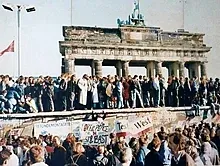
The emergence of constructivism as a theory of international relations began after the fall of the Berlin Wall (pictured) and the collapse of communism in Eastern Europe.
Constructivism is understood as a theory that calls into question the ideas of neorealists and neoliberals. The key principle of constructivism is the belief that international politics is shaped by uncontested ideas, collective values, culture, and social identity. Constructivism argues that international reality is constructed on the basis of social values that give new meaning to the material world (ideas close to socialism). This theory arose out of debates surrounding the scientific method in international relations and the role of theories in the formation of new international forces.
The failure of realists and liberals to predict the end of the Cold War sharply raised the standing of constructivists. Constructivism criticizes the traditional statist approach of liberalism and realism to the analysis of international relations, emphasizing that international relations are a social construction. Whereas in international relations realism deals mainly with security and material power, and liberalism focuses more on economic interdependence and factors of domestic politics of states, constructivism is most focused on analyzing the role of ideas in the system of international relations. By «ideas», constructivists mean goals, threats, fears, identities, and other elements of perceived reality that influence states and non-state actors of international relations. Constructivists believe that ideational factors often have goals and outcomes over the long term, and this is an advantage over materialist theories (realism, liberalism). For example, constructivists note that an increase in the US military is more likely to be perceived negatively in Cuba or Russia (historically hostile states), whereas in Canada and the United Kingdom (historical allies of the US) it will be perceived positively. Consequently, the perception of the same phenomenon in international relations may differ depending on the conditions in which states find themselves. Moreover, constructivists do not regard anarchy as a constant feature of the international system,[25] arguing for the extreme mutability and subjectivity of this phenomenon in the words of Alexander Wendt: «Anarchy is what states make of it». Constructivists also believe that social norms shape and change international politics over time to a far greater extent than issues of national security (the core concept of realists).
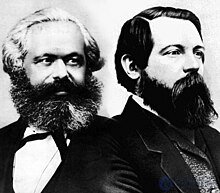
Portrait of Karl Marx and Friedrich Engels.
Marxist and neo-Marxist theories of international relations reflect the realist/liberal views of the state as permanently conflicting and cooperating, but these theories place great emphasis on the economic and material aspects of the international system. The Marxist approach demonstrates the significant role of historical materialism and concludes that economic issues have, over the course of human history, taken precedence over all others, thereby making social class the object of study in Marxism. The Marxist approach views the international system as an integrated capitalist system pursuing the goal of accumulating as much capital as possible.
One notable Marxist approach to international relations theory was formulated by Immanuel Wallerstein — world-systems analysis. This analysis argues that capitalism, within the framework of globalization, has created a small number of developed industrial countries that exploit all the other developing countries. After the collapse of the USSR and the disintegration of the communist system, Marxism is today experiencing a revival.
The critique of Marxism is that it focuses excessively on materialism.
The English School of international relations, also known as liberal realism, rationalism, or British institutionalism, holds that there exists a «society of states» at the international level, despite anarchy (the absence of a world leader and world government). Notably, despite its name, most representatives of this school are neither British nor English.
Functionalism developed against the backdrop of European integration. It is closest in ideas to realism, but differs from it in that the focus is not on the state’s own interests, but on the common interests of a group of countries. Once the process of integration between states begins, it is extremely difficult to stop.
Critical theory — a research approach within international relations theory that took shape and became influential at the turn of the 1970s–1980s, and is associated above all with researchers such as R. Cox and A. Linklater.

Comments