
Lecture 13 min.
Mythology (Greek μυθολογία from μῦθος — "legend", "tale" and λόγος — "word", "narrative", "teaching") — a distinctive form of human consciousness, a way of preserving traditions amid a changing reality; the principal method of communal-tribal thinking; the most ancient way of conceptualizing surrounding reality and the human essence. It includes folk narratives (myths, epics, etc.). Mythology is studied within scholarly disciplines, for example, comparative mythology
Mythology differs from folklore: myth is a body of ideas about the world that is accepted by the bearer of mythological consciousness as real and unquestionable knowledge, unlike folklore, which is not obliged to be perceived as something truthful and lifelike. Folklore is an artistic and aesthetic reflection of the world and, being in a sense a product of mythology, it retains some of its features without becoming equal to it.
N. B. Mechkovskaya concludes on this point: "Mythology is the historically first form of a people's collective consciousness, a holistic picture of the world in which the elements of religious, practical, scientific, and artistic cognition are not yet distinguished or separated from one another. Folklore is the historically first artistic (aesthetic) collective creativity of a people (verbal, verbal-musical, choreographic, dramatic)."
The main task of myth is to set patterns and models for every important action performed by a person; myth serves to ritualize everyday life, giving a person the chance to find meaning in life.
PRE-SCIENCE is a preparatory stage on the path toward the formation of science, one that regards the emergence of properly scientific knowledge as occurring by the 17th century. According to this view, two stages are distinguished on the path to the formation of science: the preparatory stage and the properly scientific stage.
Science is a field of human activity aimed at developing and systematizing objective knowledge about reality. This activity is carried out through the collection of facts, their regular updating, systematization, and critical analysis. On this basis, new knowledge or generalizations are synthesized that describe observed natural or social phenomena and point to cause-and-effect relationships, which makes prediction possible. Those hypotheses that describe a set of observed facts and are not refuted by experiments are recognized as laws of nature or society (see scientific method).
The main stages in the development of science:
Development of natural science according to Budanov
Development of natural science according to Ilyasov
Development of natural science according to Bondarev (2003)
Models of the development of natural science:
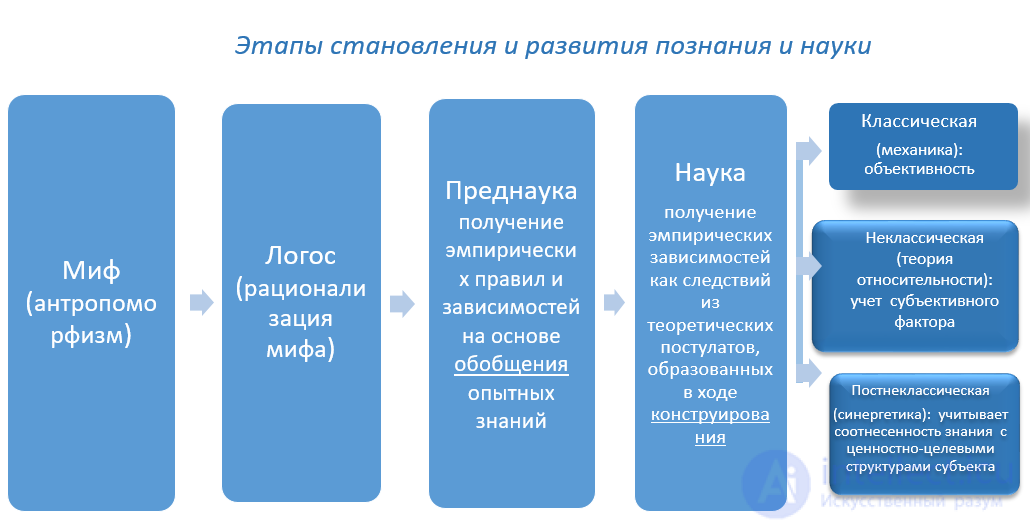
Stages in the formation and development of cognition and science
Ancient Egypt is considered the cradle of pre-science.
It was from here that the seeds of scientific knowledge spread to
India, China, Ancient Greece, and Rome.
Pre-science appeared in Egypt at least as far back as the 4th millennium BC.
The emergence of pre-science was driven by practical needs, above all related to:
The development of agriculture contributed to the emergence of
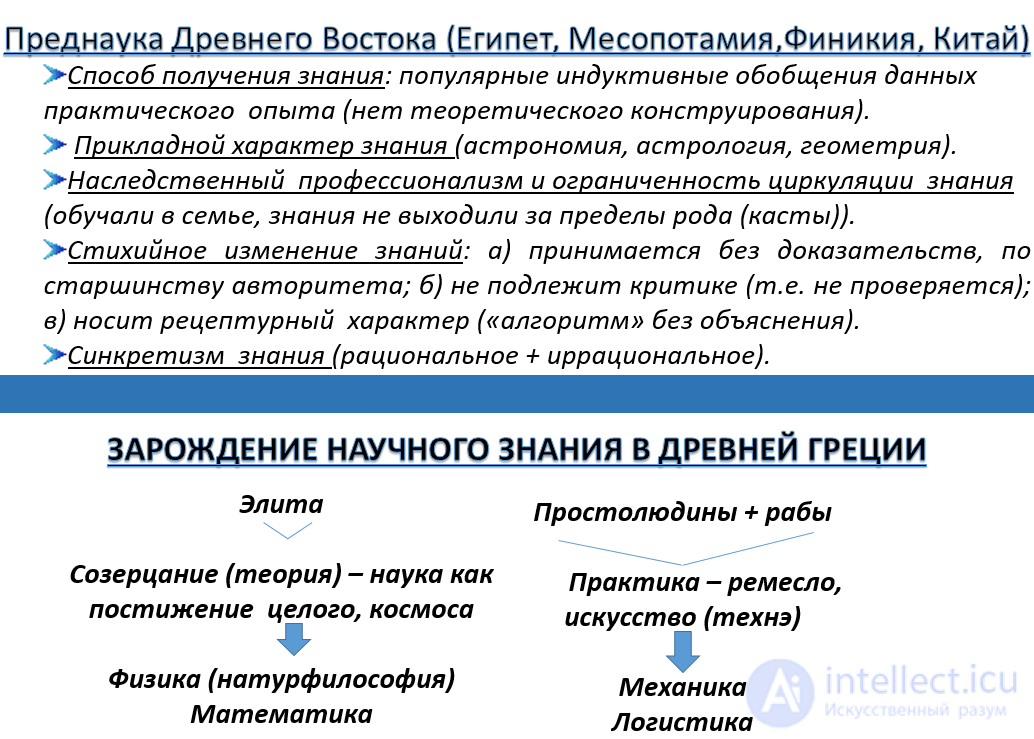
Pre-science of the Ancient East (Egypt, Mesopotamia, Phoenicia, China)
Depending on which aspect is taken into account, we get different starting points for the development of science:
Different specific sciences also have different times of origin.
Thus, antiquity gave the world mathematics, the early modern period gave the world modern natural science, and in the 19th century social science emerged.
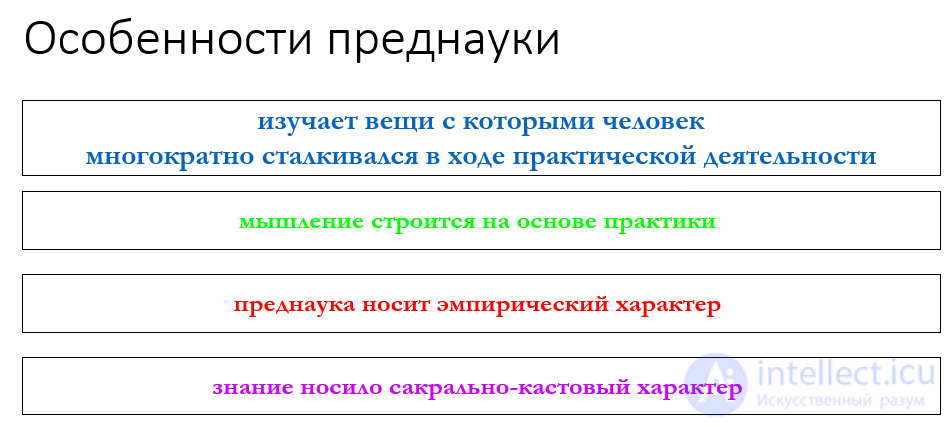
Features of pre-science
The Renaissance also touched astronomy: in 1543, the Polish priest Nicolaus Copernicus, who had studied in Italy, published a book in which he revived the idea of Aristarchus of Samos that the Earth revolves around the Sun. However, as in ancient times, this theory did not agree with astronomers' observations, in particular with the observations of the Danish astronomer Tycho Brahe, who had compiled extensive and precise astronomical tables. In 1609, Johannes Kepler, astronomer and astrologer at the court of the German emperor, analyzed Tycho Brahe's tables and, through painstaking calculations, showed that the Earth revolves around the Sun — not in a circle, but in an ellipse. Thus, the scientists of the early modern period for the first time surpassed the scientists of the ancient world.
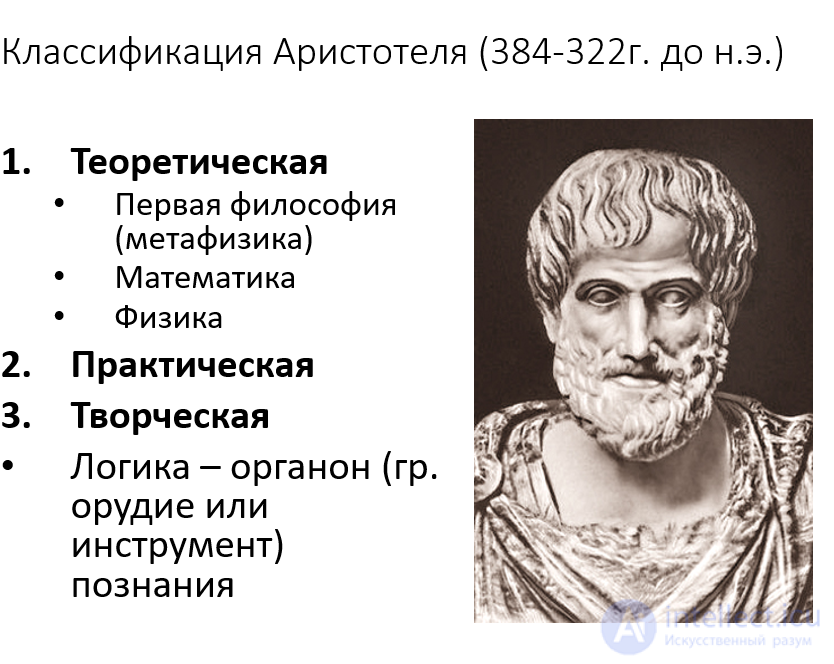
Experimental confirmation of Kepler's theory was provided by the great Italian scientist Galileo Galilei. Since ancient times, the main objection to the heliocentric theory had been that the Moon revolves around the Earth — and by analogy it was believed that other celestial bodies must also revolve around the Earth. In 1609, Galileo was one of the first to build a spyglass and used it to make many discoveries that were sensational for the time. He discovered many new stars and found four satellites orbiting Jupiter — it now became clear that the Moon is not a planet but a satellite, similar to the satellites of Jupiter, while planets, unlike satellites, revolve around the Sun. Galileo vigorously spoke out in support of Copernicus's teaching and was brought before the Inquisition; he was forced, kneeling, to publicly renounce his "errors." Galileo was already 70 years old at the time, and he spent the rest of his life under house arrest — but continued to work and conduct experiments. He established that Aristotle had been wrong in claiming that heavy bodies fall faster than light ones, that a cannonball travels along a parabola, and that the period of a pendulum's swing does not depend on its amplitude. Galileo discovered the law of inertia, the law of uniformly accelerated motion, and established the principle of superposition of motions. These discoveries marked the beginning of modern mechanics.
Galileo's experiments were continued by his student Torricelli (1608-1647), who discovered the vacuum and atmospheric pressure and created the first barometer. The study of the vacuum interested scientists in many countries. The Frenchman Blaise Pascal climbed one of the mountains with this barometer and found that atmospheric pressure falls as one ascends. The German Otto von Guericke and the Englishman Robert Boyle invented the air pump at almost the same time. Boyle also established that the volume occupied by a gas is inversely proportional to its pressure (the well-known Boyle-Mariotte law). The study of the pendulum begun by Galileo was continued by the Dutchman Christiaan Huygens (1629-95), who created the first pendulum clock in 1657.
As science developed, the problem of properly grounding scientific truths and theorems was addressed. The English philosopher Francis Bacon, in his work "Novum Organum" (1620), gave a definition of the inductive and deductive methods of proof. The French philosopher René Descartes (1596-1650) introduced into the new science the rules of mathematical proof; he insisted on the necessity of proving every assertion. When Descartes was asked to prove that he existed, he replied: "I think, therefore I am." Descartes was the first to depict curves as graphs of functions and created analytic geometry; he introduced the concept of "quantity of motion" (the product of mass and velocity — mv) and established the law of conservation of quantity of motion in the absence of external forces.
Descartes's ideas were taken up by Isaac Newton (1643-1727). Newton's greatest discovery was his "second law of mechanics," which stated that "the change in the quantity of motion is proportional to the applied force." The "change in the quantity of motion" is the mass multiplied by the derivative of velocity, so the second law gave rise to differential calculus. Another of Newton's great discoveries was the law of universal gravitation; in proving it, Newton used the formula for centrifugal force obtained earlier by Huygens.
The honor of creating differential calculus was disputed with Newton by the famous German scientist Gottfried Leibniz (1646-1716). Leibniz, in particular, established the law of conservation of kinetic energy. The work of Leibniz and Newton in mechanics and differential calculus was continued by the Swiss scientist Johann Bernoulli (1667-1748).
The scientists' successes attracted the attention of kings and ministers. In 1666, the famous minister of Louis XIV, Jean-Baptiste Colbert, persuaded the king to allocate funds for the creation of the French Academy of Sciences. This was a restoration of the traditions of the Alexandrian Mouseion; the Academy established an observatory, a library, and research laboratories, and published a scientific journal. Academicians were paid a large salary; among the academicians were such celebrities as Huygens and Leibniz. Colbert set the Academy practical tasks; under Picard's direction, a degree of the meridian was precisely measured and an accurate map of France was drawn up — and it turned out that the size of the country was smaller than had previously been thought. Louis XIV joked that "the gentlemen academicians have stolen part of his kingdom from him." Huygens's student Denis Papin created the steam cylinder and worked on developing a steam engine. Huygens and Papin were Protestants; when persecution of Protestants began in France after the revocation of the Edict of Nantes, they were forced to leave the country. Papin went to Germany, where he built the first steam engine, installed it on a boat, and in 1709 arrived in London on this "steamboat." He asked the Royal Society of London for money to continue his work. The Royal Society had been founded at approximately the same time as the French Academy, and its president at the time was Isaac Newton. However, the English government gave the Society practically no funds, and it was forced to refuse Papin. Papin died in poverty, and it is unknown what became of the first steamboat.
Following the example of Louis XIV, many European kings hastened to establish their own academies. In 1710, the Berlin Academy was founded on Leibniz's initiative. In 1724, shortly before his death, Peter I signed a decree establishing the Russian Academy of Sciences. The chief celebrity of the Russian Academy was Bernoulli's student, the famous Swiss mathematician Leonhard Euler. Euler continued the development of the theory of differential equations begun in the works of Leibniz and Bernoulli. The theory of differential equations was the greatest discovery of the 18th century; it turned out that all processes involving the motion of bodies are described by differential equations, and by solving them one can find the trajectory of motion. In 1758, the French mathematician and astronomer Clairaut calculated the trajectory of Halley's Comet, taking into account the gravitational pull of Jupiter and Saturn — this was a brilliant demonstration of the capabilities of the new theory. This theory found its culmination in Joseph Lagrange's famous book "Analytical Mechanics," published in Paris in 1788.
examples
Stages in the development of philosophy
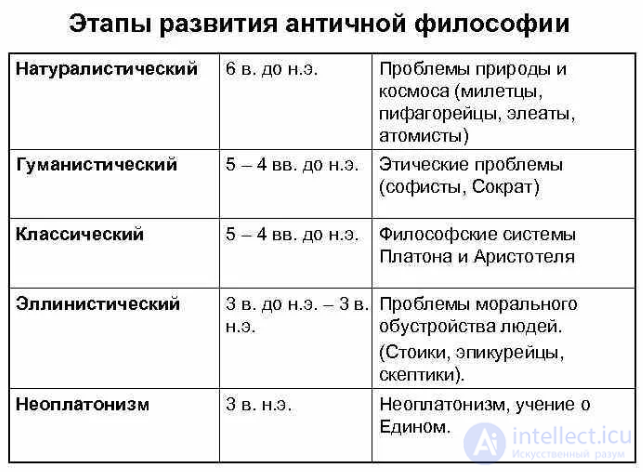
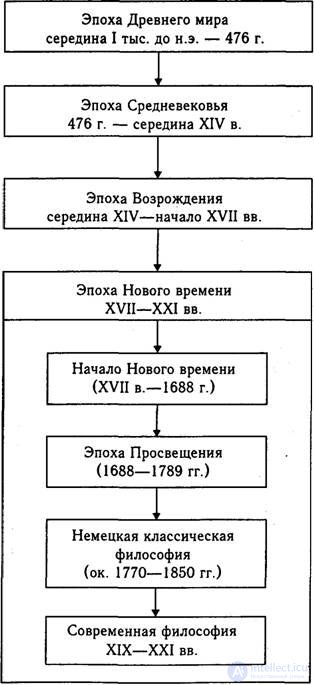
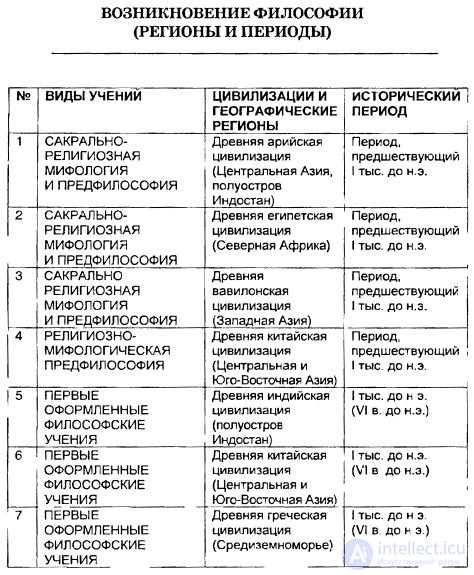
stages in the development of history
|
stages |
characteristics |
|
1. The origins of historical scholarship |
Works often had a mythological plot, which is why their veracity was doubted. |
|
2. Historical scholarship of the ancient world |
-There is no clear division between the sciences.
-A clear distinction between reality and fantasy was not always made.
-Works are not always objective and truthful.
-Historians often embellished the merits of rulers and portrayed their opponents negatively.
|
|
3. Historical science in the Middle Ages. |
-The decisive influence of religion.
-Clergy played the role of historians. They kept records of the lives of holy martyrs.
-An attempt to combine different chronicles.
Contradictory sources |
| 4. Historical science in the early modern period |
-The search for patterns in historical development and its driving forces.
- Scientific approaches to studying the past took shape.
- The principles of historicism and objectivity are applied.
|
|
5. Historical science in the 20th century |
-Dynamic development of science.
-The past of the countries of Asia and Africa is studied.
-A diversity of approaches to studying history.
-A divergence between history and political science.
-Semi-official versions, the suppression of facts, and the distortion of truth gained ground.
Process of reassessing the past |
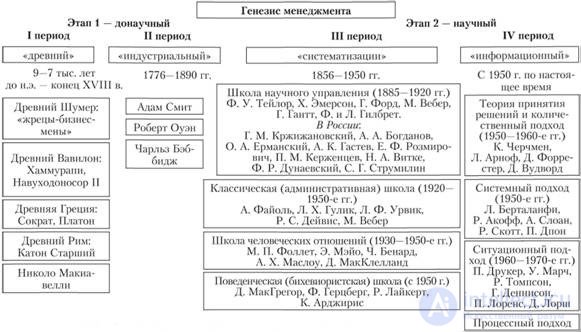
development of management
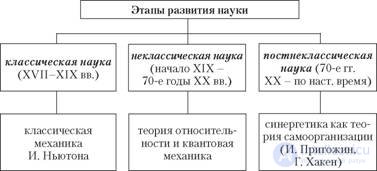
stages in the development of the exact sciences
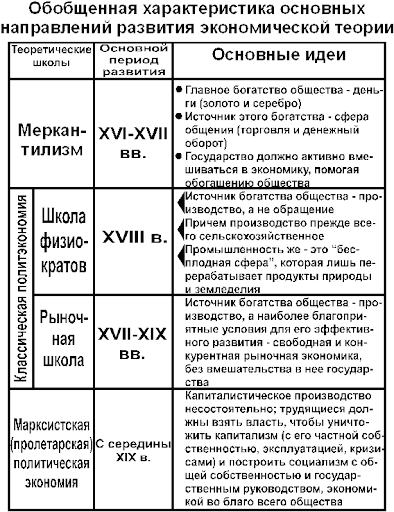
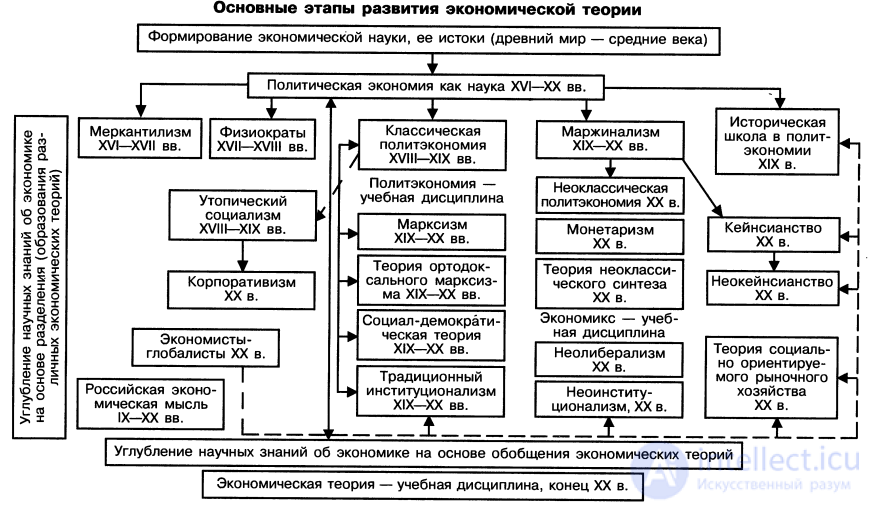
stages in the development of economics
Stages in the development of political science
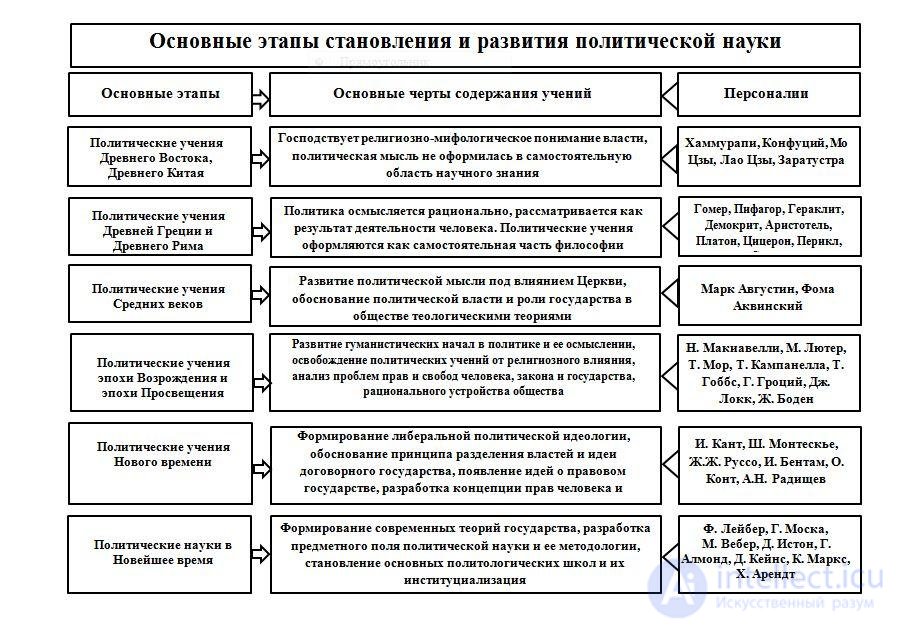
stages in the development of psychology
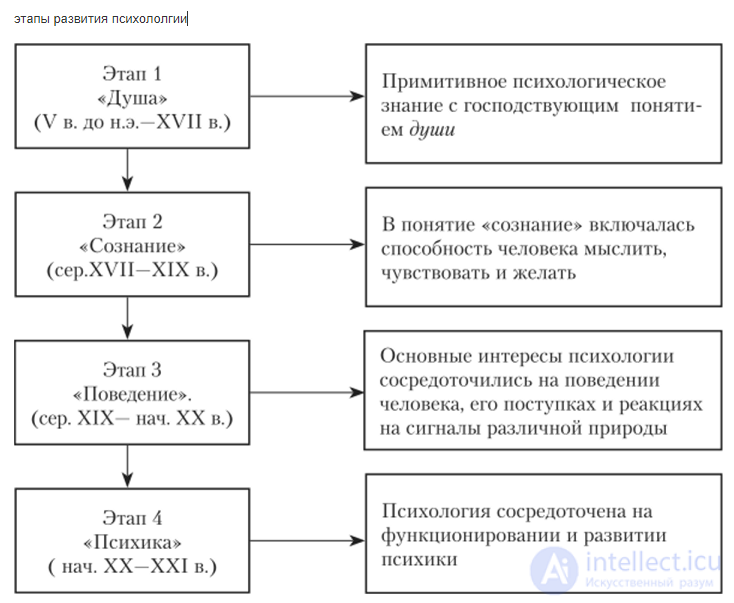
Stages in the development of logistics
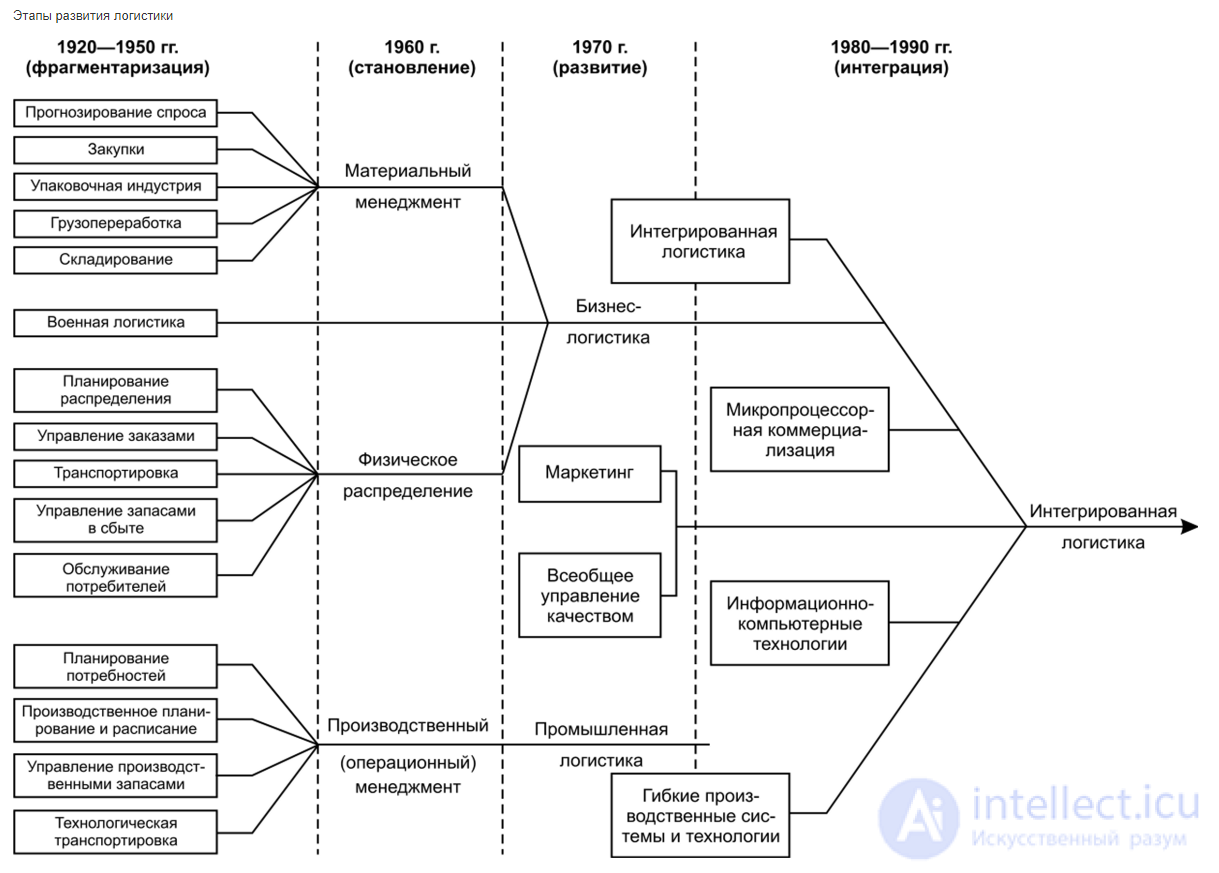
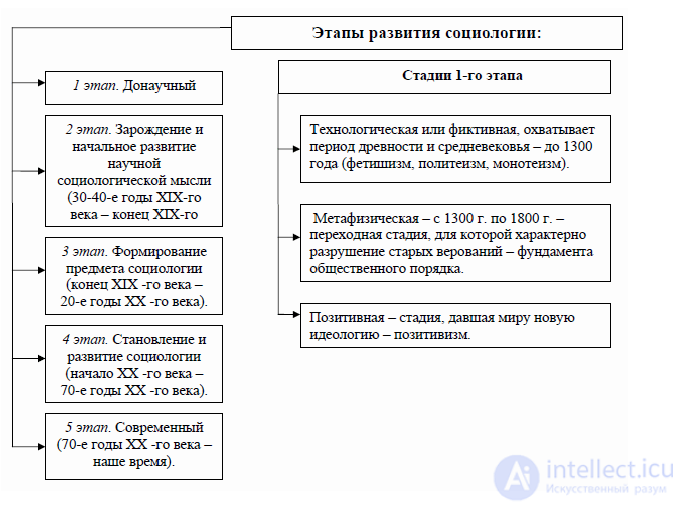
Stages in the development of sociology
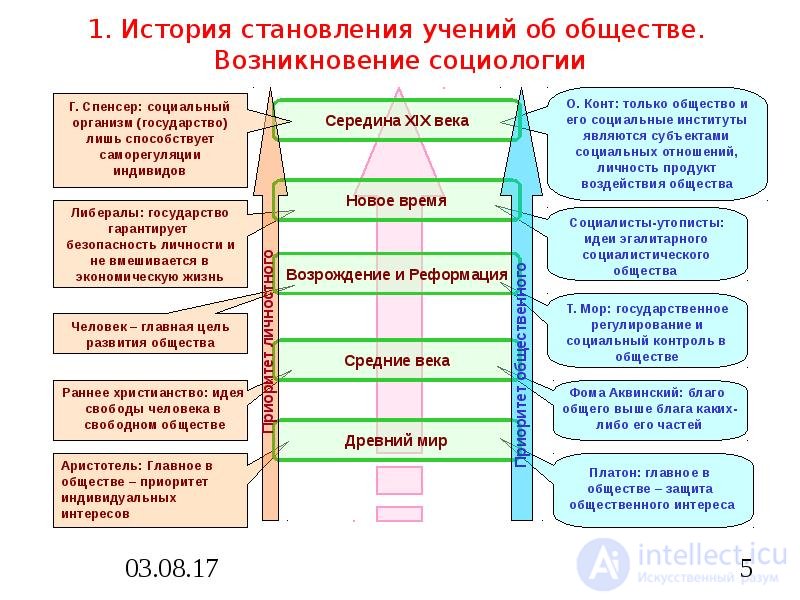
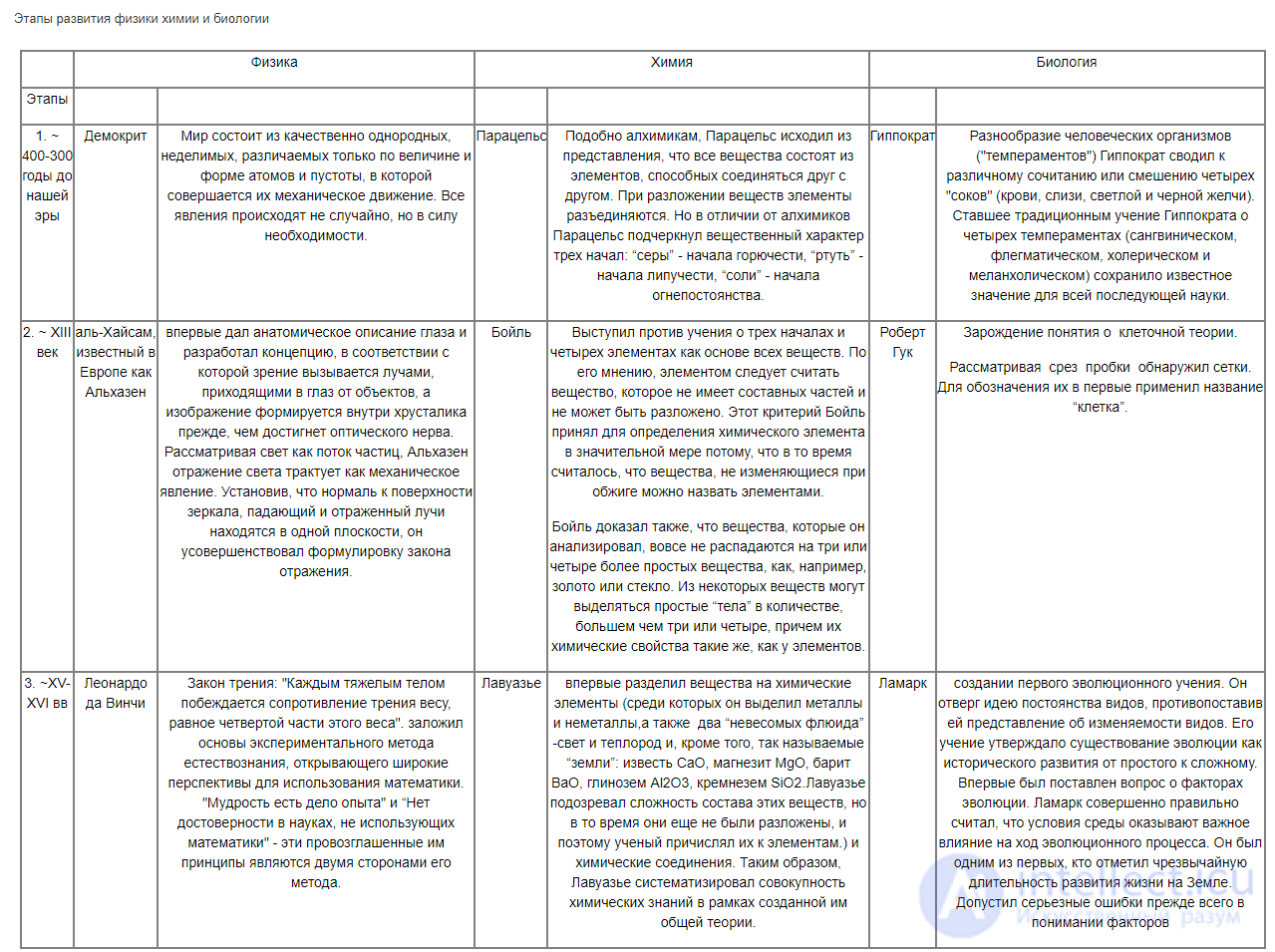
Stages in the development of physics, chemistry, and biology
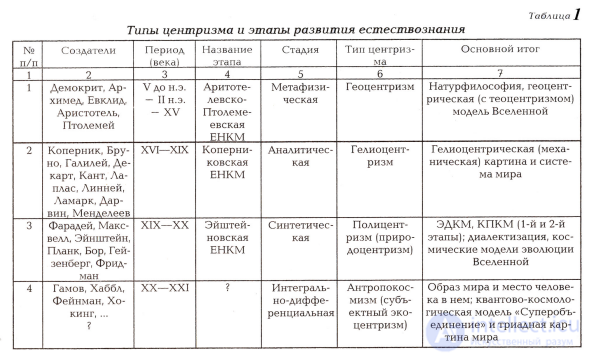
Stages in the development of natural science
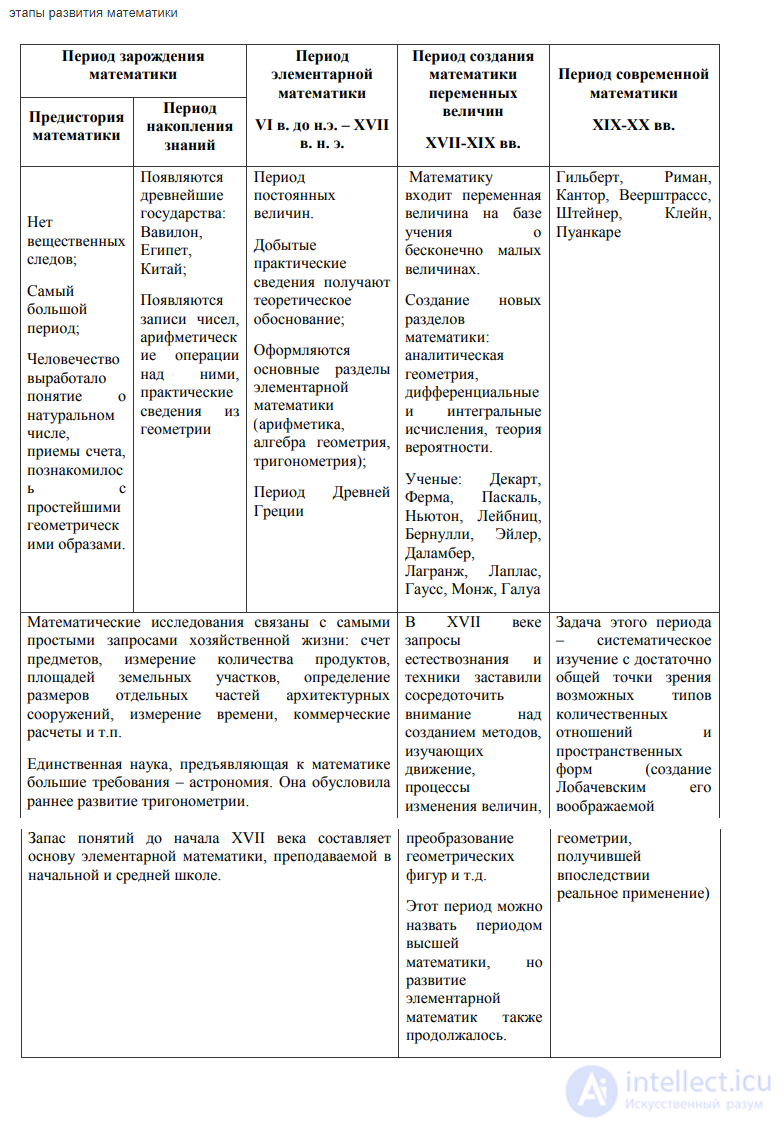
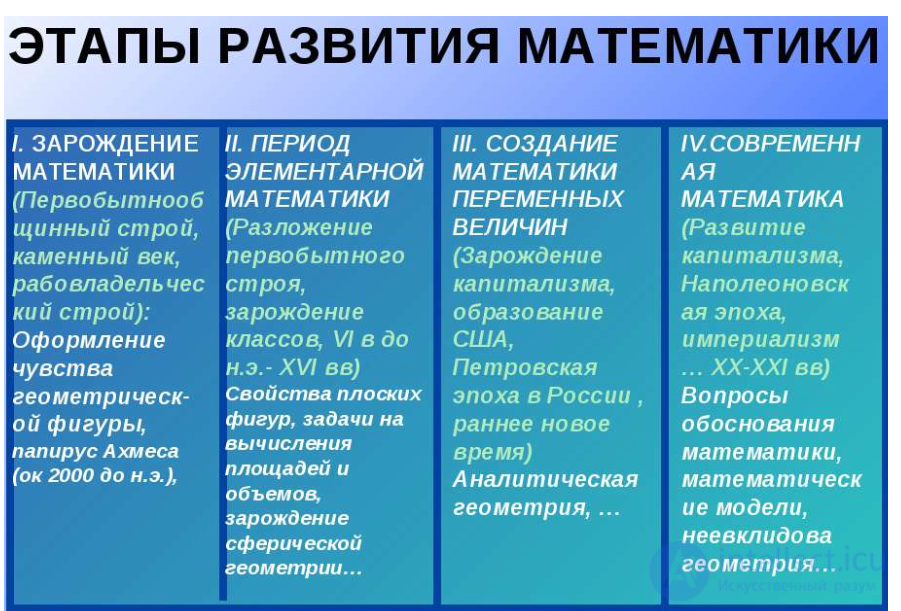
stages in the development of mathematics
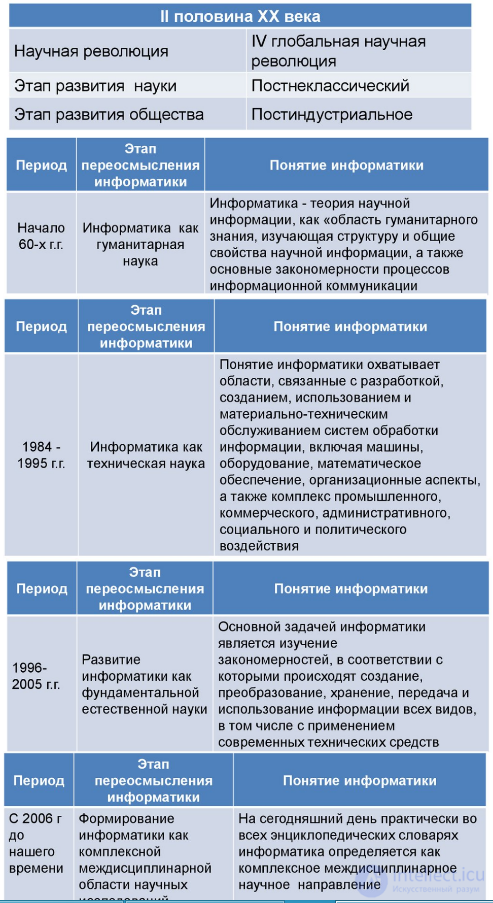
Stages in the development of computer science

Comments