
Lecture 6 min.
Cyberart, or cyber art (Cyberart), is a form of art created with the help of computer
software and hardware, often in an interactive or multimedia format. It
has gained great popularity in our time thanks to the development and popularization of digital technologies.
Cyberart is still quite young, so at this moment we have a unique opportunity
to trace the path by which an entire milestone in art took shape, one that is no less significant than
traditional art, which has existed for hundreds of years.
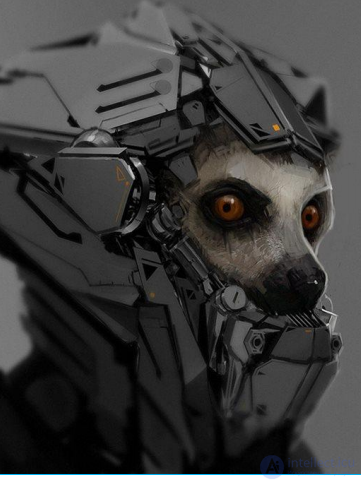
But what exactly does cyberart include, if it holds the same significance as traditional
art, which grew and developed over the course of many years? In order to understand this, we must
first find out what this still quite young cyberart actually includes. Here are a few main
directions of cyberart:
The full list is quite extensive and, surprisingly, similar to the list of directions included in traditional
art. But what could this mean? The answer is quite simple: cyberart is just as major a
direction in art as traditional art. In other words, with the emergence of cyberart, all
art began to split into two directions, which have their own sub-directions, albeit
fairly similar ones.
But what exactly is the distinctive feature of cyberart and the directions it includes? To answer this
question, let us look at what the directions of cyberart listed in the table above actually represent.
Visual art:
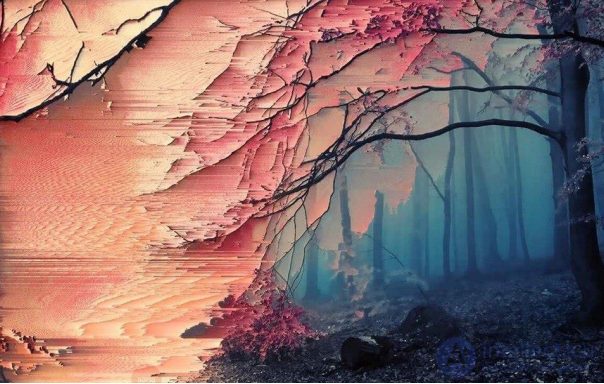
Generally, visual art, or, as it is also called, digital art, provides the typical examples of cyberart that we see almost every day: on the internet, on advertising signs... It owes much of its
popularity within cyberart largely to the convenience of creating the artwork itself.
Now artists could experiment and not be afraid of making mistakes, since at any stage
the work can be corrected without having to redraw the whole picture from scratch. Also, when creating a piece
in digital format, no consumable materials such as pencils, paints, and the like are used.
No, all that is needed to create it is a computer, ideally a graphics tablet, and a program
in which the image will be created.

But besides artwork created on graphics tablets, there is also a direction known as ASCII art. This type of graphics is distinguished by the fact that it is created using text characters and pseudo-graphic symbols. Such an image can either be drawn by hand or converted from an ordinary graphic image into this format using conversion programs.
Music: Next in line is music. Here things are somewhat simpler: cyber-music is created either using computer components or programmatically, with the help of electronic instruments. We can often hear examples of the latter at concerts, on the radio, and on television. This genre of music, created with electronic instruments, even has its own name - electronic music, which in turn is divided into several other genres.
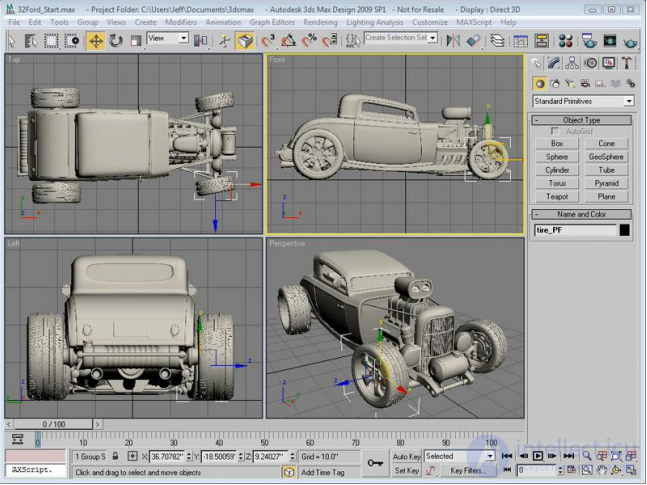
Sculpture: As already mentioned, cyberart also includes sculpture, referred to here as 3D modeling. 3D modeling is the process of developing a three-dimensional visual image of a desired object. Computer "sculpture" has the same advantages as digital art, namely the ability to correct one's mistakes without redoing the entire work, and the absence of any consumption of materials. With 3D modeling, one can recreate Renaissance sculptures, or model a three-dimensional mug. Later, the model can be printed on a 3D printer, thereby bringing it into our physical world.
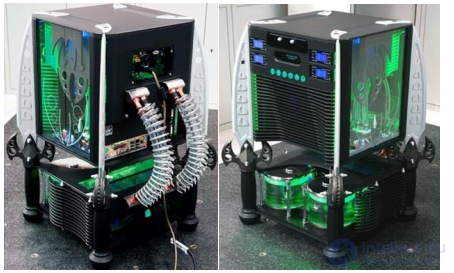
Design: Often, when people talk about design related to computers, what comes to mind is web design. Indeed, this is a very popular branch of cyberart in this field. Many people earn their living designing websites and applications, and because there are so many such people and employers have a wide choice, designers have to give it their all, bringing their most attractive ideas to life in order to secure a project. Design in the world of cyberart can also be said to include the design of computers themselves, their cases, devices, and everything else.

Cyber-poetry and cyber-prose:
Also, for about seventeen years now there has existed such an art form as cyber-poetry and cyber-prose, the peak of popularity of which fell in the first half of the 2000s, but which has, unfortunately, faded by now. Initially, computers were used only to help poets find rhymes, but this gave rise to the creation of programs that could write poems, and later prose as well. Yes, poems created by a program are quite peculiar, and some make no sense at all, but it is precisely because of this that they are interesting. Here, for example, is one of the poems written by a computer: "The streetlights fade at the edge, the ground blizzard has cackled, a faded waltz leaf of love has sprawled out its pouch of dreams." © CYBER-PUSHKIN 1.0 BETA
Computer games and VR technologies:
There remains one more type of cyberart, one that is exclusively its own achievement. This is, oddly enough, the creation of games. Yes, exactly that. However you feel about games - whether you love or hate them - they remain a work of art that combines visuals, music, a storyline, and controls that are pleasant for the user. It is, in a sense, an entire structure built from several separate art forms harmoniously woven together. Nor should we forget the developments of recent years - virtual reality. This too is a whole art form - the creation of entire amazing worlds into which a person can immerse themselves completely. Think about how often you have dreamed of finding yourself on a warm sea shore on a frosty winter day, or dreamed of stepping into the world of your favorite book and personally meeting its characters? Virtual reality can help you with this right now. And now consider - isn't this real art after all - the ability to transport a person into another reality, even if only in their mind?

Comments