
Lecture
The Russian psychologist S. L. Rubinstein wrote: "Personality forms the foundation that, from within, determines the interpretation of the human psyche as a whole. All mental processes constitute the psychological content of a person's life. Each type of mental process makes its own specific contribution to the richness of his inner life" . At various stages of ontogenesis, as a person forms as a personality, he strives to master the ways and methods of self-realization and control over the conditions of his existence. In interacting with the surrounding reality, a person not only passively reproduces the forms of interaction with society that he has assimilated, but is also himself a participant in its development, and is therefore capable of changing existing conditions based on his own values. Mastery of the ways and methods of self-realization takes place under conditions of the active functioning of a person's cognitive, perceptual, and emotional mechanisms, and the development of his worldview and spiritual culture.
Psychological safety of the personality can be viewed as a complexly structured system of mental processes. Specific feelings of safety are the first level in the structure of an individual's psychological safety. This least-studied area may become a subject for further research. The second level is the subject's perception and evaluation of everything around him, of what he does, and of what happens to him, from the standpoint of the greater or lesser probability of negative consequences for his inner world and the surrounding reality. The third level is the forecast-evaluation of the probability of the future occurrence of everything that constitutes the substantive content of psychological safety. The model we propose represents a schematic attempt to reflect the content of psychological safety (Diagram 1).
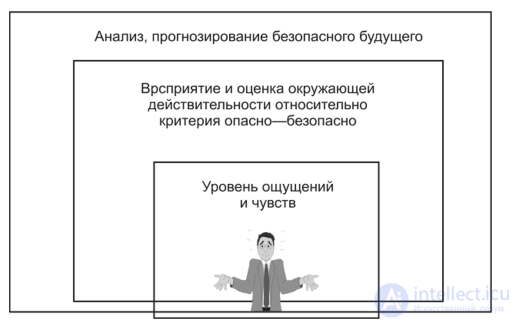
Diagram 1. Level-based organization (structure) of psychological safety
Thus, the psychological safety of the personality can be defined from the standpoint of:
The psychological safety of the personality is determined by a complex of its cognitive, emotional-volitional, and characterological features, together with the orientation and worldview formed in the process of socialization.
The mechanisms of the process of forming and developing an individual's psychological safety are determined by his behavior in various situations. The choice of a mode of behavior is determined by the subjective understanding of the situation. For example, a feeling of threat or fear arises when a person assesses a situation as dangerous and, in his view, does not have sufficiently reliable ways of resolving it (an overestimation of the objective danger). Consequently, a threat by itself is not yet a source of psychological danger. People who have developed skills for working in dangerous conditions and have mastered ways of eliminating a personal threat typically do not experience fear, uncertainty, or depression. In cases where a threat arises unexpectedly, a person has to search for a way out of the situation, changing previously existing forms of behavior and plans of action. A feeling of threat may arise if a person has no opportunity to satisfy needs that are essential to him. These considerations lead to an obvious conclusion: the higher the level of certainty and knowledge about the modes of action that allow a problem to be solved under given conditions, the higher the level of psychological safety.
One of the first mechanisms for assimilating social experience, including safe behavior, is a child's imitation of the models of safe behavior displayed by an adult. The child imitates the words, gestures, facial expressions, actions, and deeds of his parents. From the way a child plays, we can judge what he has seen and what experience he has assimilated. For example, when playing
"mothers and daughters," a girl reproduces the relationships and behavior of her parents.
Through the mechanism of identification, patterns of behavior are assimilated in the affective, social, and professional spheres. Identification, being one of the leading mechanisms of a person's socialization in society, accompanies the operation of many of its other mechanisms, such as the social evaluation of desired behavior, conformity, and others. It depends on factors of culture, religion, and era, and undergoes substantial changes in the modern world, which often contributes to the emergence of negative social-psychological phenomena.
The mechanism of social evaluation of desired behavior is carried out in the process of social control. The reaction of others serves as a reinforcing and shaping factor, while the image of mutual perception acts as a regulator of behavior. Positive social evaluation (evaluation-as-support, evaluation-as-approval) activates the subject's actions toward safe behavior, raises his self-esteem, and fosters creative activity. Constant negative evaluation gives rise to feelings of insecurity, shame for one's actions, the experience of exposure and disgrace, feelings of guilt, and so on.
Conformity is a widely distributed mechanism of socialization. This concept is closely related to the term "social conformism," which denotes the uncritical acceptance of the standards, norms, stereotypes, and so on that dominate in society. Conformity can also act as a mechanism operating at the level of society as a whole. The set of factors that drive a person toward conformity is conventionally divided into external and internal ones. Here, external factors operate as a threat, while internal factors operate as a need.
From early childhood, a person learns a simple truth: disagreement with those around him, with the group, threatens to result in punishment. The sanctions can vary: physical punishment, scolding, being ignored, and so on. Among individuals united into groups, the degree of intolerance toward dissent increases many times over. In real life, many people are afraid of becoming outcasts, and this fear drives them toward conformity. They prefer to follow the norms of the group rather than risk not being accepted by others. Conformity is a consequence of normative social influence, and it, in turn, acts as a universal social norm of human behavior.
The process of forming and developing psychological safety involves a person's reflection of external conditions in the form of a certain subjective model, which serves as the basis for the preliminary psychological programming of actions and for their regulation in any given activity. Here, different subjects within the same environment may experience varying degrees of safety.
Thus, the psychological safety of the personality is conditioned by the particular features of an individual's interpretation of reality across the whole range of its social processes, events, and relationships. A change in reality leads to a change in the indications of consciousness and the generation of new life goals. This allows us to speak of psychological safety as the outcome of the continuous operation of cognitive and evaluative processes. The action of motivational-need-based mechanisms and previously formed relationships, both mediated by and mediating the subject's process of perception, drives him toward forming his own psychological safety.
Conclusions
• The safety of human life activity is a mandatory condition for survival. The main problems are, for the most part, created by the person himself, which makes evident the need to cultivate his responsibility for his own actions and to form a culture of safety.
Questions for discussion

Comments