
Lecture
The problem of the human factor, in the context of ideas about threats to the safety of the person and the environment that determine human behavior and the character of his interpersonal relations, became a subject of study in the theory of catastrophes and conflict situations.
By the 1930s, Russian and foreign psychologists, when examining the causes of injuries and accident rates, began to take into account not only unfavorable personality qualities but also other factors: occupational fatigue, monotony, stress, the level of staff competence, the characteristics of workers' motivation, and the psychological climate in the organization. The American psychologist S. Shellow and his associates carried out a clinical study of accidents at a streetcar station in Milwaukee (USA). The following causes of accidents were found: 37% of employees were incapable of the work; 28% had an improper attitude toward the work; 24% displayed harmful habits; 18% were deficient personalities (probably psychological incapacity); 13% showed a lack of experience; 9% had slow learning; 8% had an unsuitable state of health.
Modern statistics show that in 70—90% of cases the cause of accident and injury rates is the human factor, which is due to the following:
All this led to the development of a policy in the field of accident prevention, providing for the selection of personnel with allowance for individual behavior, as well as the design of equipment that is safer from the standpoint of ergonomics .
Examining the causes of the growth in injuries in connection with the human factor, one can conclude that the development of technology outpaces psychological measures for protection against its dangerous and harmful effects. Diagram 3 presents the "sequential model of accident occurrence" proposed by the English mathematician and economist D. Ramsey. This model assumes that there is a series of characteristic personal properties capable of influencing the probability of an accident. Let us note that at each stage in the development of an injury-prone situation, its course and outcome are determined by the psychophysiological characteristics of the performer, which are largely common to injury-prone occupations.
According to the scheme presented, the first stage is the perception of danger. There are not many jobs that require sensory perception above the average level, and it usually ensures efficiency rather than safety in the work, as, for example, with inspectors. However, there are a small number of jobs where high sensory sensitivity serves to recognize dangerous signals. Thus, for example, miners with high and low levels of occupational safety differ substantially in the level of this characteristic. The perception of danger is not related to sensory characteristics alone. Attention properties play a significant role here, which, according to research by I. P. Bondarev, M. N. Isaeva, O. V. Malikova, and others, are criterial in the selection of workers in 60—80% of all injury-prone occupations.
In the 1960s—1990s, attempts were made at developments in the field of industrial psychology, in particular "Features of Working with Subordinates at Chemical Fuel Processing Plants" . Special studies in our country and abroad have shown that 60—90% of injuries in industry and transport occur in connection with delayed or erroneous human actions. A number of technogenic disasters that swept across Russia at the end of the twentieth century confronted the state with the task of ensuring the safety of the technogenic environment at the legislative level.
On December 15, 2002, the State Duma adopted the federal law "On Technical Regulation," which pointed to the need to "carry out a comprehensive substantiation of the role of the hu-
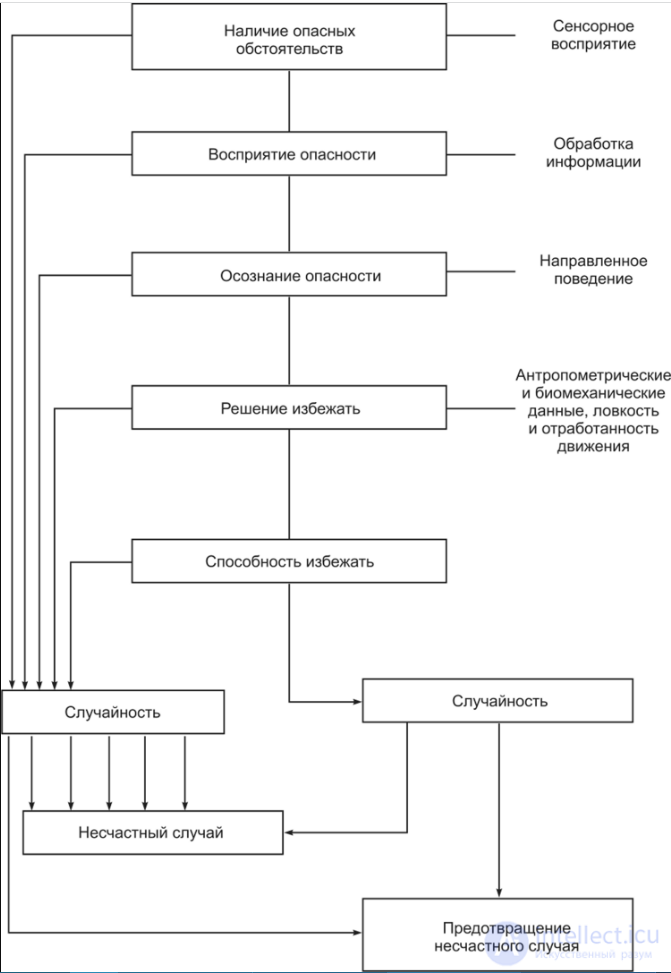
Diagram 3. Stepwise model of the occurrence of an unfortunate
accident due to the human factor as one of the main sources of technogenic threats and as one of the basic barriers in the development of catastrophic situations at all stages of the formation and implementation of scientific and technical policy in the field of ensuring the safety of the technogenic sphere."
In 2003, the Ministry of Education of the Russian Federation launched the program "Safe Educational Institution," which focused attention on fire safety. However, ensuring safety in general education institutions depends 80% on the corresponding knowledge and skills of students, as well as staff, and only 20% on the technical condition of the building. At the All-Russian Conference "Education and Safety: Problems, Concepts, Reality," held in Moscow in April 2005, it was noted that over the past decade the risks for students at educational institutions could be ranked as follows:
In a rapidly changing, globalizing world, new threats to humanity are approaching, and the main problems are for the most part created by human beings themselves. Consequently, it becomes obvious that there is a need to cultivate a person's responsibility for his actions and to form a culture of safety, which includes: first, knowledge of the surrounding world and the characteristics of hazards; second, knowledge of oneself and one's own features; and third, the formation of qualities inherent in a personality of the safe type. World practice shows that a huge reserve (up to 80%) for the prevention of injuries and accidents lies in developing, among workers, the ability to foresee the emergence of dangerous situations in the workplace and safe patterns of thinking, action, views, and psychological attitudes.
Conclusions
Questions for Discussion

Comments