
Lecture
It is quite difficult to generalize decision-making methods in the field of occupational safety, since the problems relating to occupational safety, their nature, and the decisions taken change substantially as an enterprise develops. The life cycle of an enterprise, from its creation to its closure, can be divided into six main stages: design, construction, commissioning, operation, maintenance and modification, and decommissioning and demolition.
At each stage of the life cycle, decisions relating to occupational safety are made that are not only specific to that particular stage of development but also affect some or all of the other stages of development. Decisions in the field of occupational safety also differ in nature depending on the organizational level at which they are made. G. Hale (1994) distinguishes three levels of decisions regarding compliance with occupational safety rules and standards at an enterprise:
Hale emphasizes that the three levels discussed are abstract concepts corresponding to three different kinds of feedback. They should not be regarded as an analogue of a hierarchical chain: workers — shop floor — senior management, since the activity characteristic of each abstract level is carried out in different ways. The way tasks are distributed reflects the level of culture and working methods of each company. Occupational safety problems are solved through a process of problem-solving and decision-making. According to Hale, this process, based on the problem-solving cycle, has much in common with the three levels of occupational safety management described above. The problem-solving cycle is a model of an idealized procedure broken down into steps, intended for analyzing and making decisions on safety problems triggered by potential or current deviations from desired, anticipated, or planned levels of safety (Diagram 4).
The way problems are framed is directly related to the quality of the solutions expected to be found. A change in how a problem is framed entails an entirely new approach to solving it. One example of a shift in the field of occupational safety science in recent years is a move in focus from elements of production operations toward organizational decisions and working conditions, which contributes to creating a coherent work situation.
Occupational safety management encompasses a wide range of diverse problems, the solution of each of which depends on factors such as the life cycle, the organizational level, the phase of the problem-solving process, or the level of severity that needs to be reduced. In this sense, developing decisions relating to occupational safety is just as complex
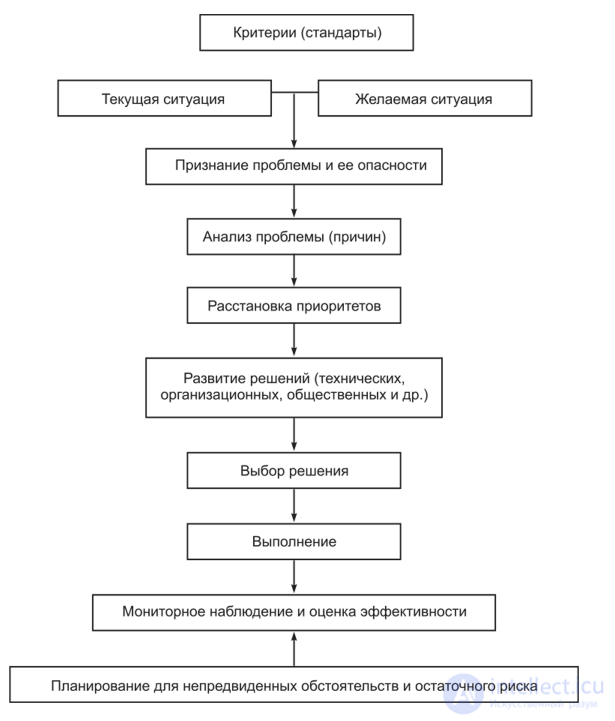
Diagram 4. The cycle of the problem-solving process
a process, as is the development of decisions related to other management problems.

Comments