
Lecture
When conducting experimental scientific research, the researcher:
1. states the research problem in terms of the domain;
2. builds a model of the object under study and determines the vector of informative parameters

that adequately describes it within the scope of the stated problem;
3. using technical means, performs the measurement, recording and processing of the instantaneous values of the observed processes

in order to determine the vector of informative parameters

describing the model
of the process;
4. based on the results of the information processing, establishes a one-to-one correspondence between the vectors
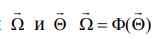
which is used to build the sought-for model of the object;
5. analyses the results obtained;
6. if the results are satisfactory – the experiment is over; otherwise,
it is necessary to repeat steps 3, 4 (the accuracy of the results obtained
is unsatisfactory), or steps 2-4 (the parameter vector

does not fully describe the behaviour of the object), and sometimes even steps 1-4 (a different problem is posed).
It should be noted that tasks 1, 2 and 4, 5 are, as a rule, solved by a specialist
in the given domain, who formulates and interprets it in terms of the domain, while task 3 – by specialists in the field of measurement and processing of measurement information.
Such a division of functions between the researcher and the specialist in the field of measurement and processing of measurement information allows the latter to abstract away from specific physical objects and the vector of physical
parameters

and move directly:
1. to the mathematical description of the processes under study and the determination of
the parameter vector

sufficient for solving the stated problem;
2. to the collection of information using primary transducers;
3. to the estimation of the parameter vector

using technical means;
4. to the analysis of the accuracy of the results obtained;
5. to the approximation of the functional dependences obtained by means of parametric models.
Each of the listed tasks has its own specific features,
while the effectiveness of solving the fourth and fifth – depends on the technical means used, which are, as a rule, built on the basis of modern information-measuring and computing equipment.
The main subsystem of any technical means intended
for obtaining and processing measurement information: automated
systems for scientific research (ASSR), information-measuring systems
(IMS), processor-based measuring systems (PMS), – is the measuring-and-computing channel.
By a measuring-and-computing channel is meant a set
of hardware and software tools intended for measuring the instantaneous
values of the corresponding physical quantity, processing the measurement results and presenting the final results in a form convenient for further use.
Let us consider the structure of a single measuring-and-computing channel.
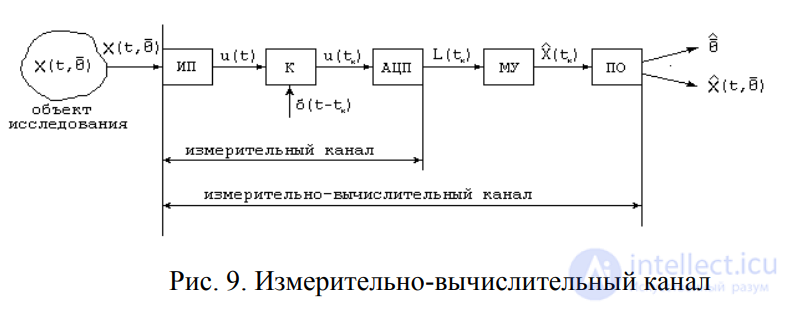
Fig. 9. Measuring-and-computing channel
The following notation is used in Fig. 9:
MT – measuring transducer (sensor);
C – commutator (switch);
ADC – analogue-to-digital converter:
SU – scaling unit;
PU – processing unit.
Let us consider the transformations that the signals undergo in the measuring-and-computing channel.
Regardless of the nature of the physical quantity being measured, at the output of the MT
we obtain an electrical signal. In this case, each value of the physical quantity is put into correspondence with a well-defined value of the electrical
quantity: 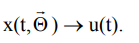
The main requirement placed on the MT is linearity:

where k = const – conversion coefficient.
It should be noted that if the relationship between 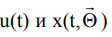 is nonlinear, then the conversion function is linearised, using, for example,
the least squares method.
After the MT, the signal under study is fed to the input of the commutator.
In the commutator, the continuous signal u(t) is converted into a sequence of samples spaced from one another by an interval 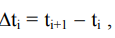
, i.e. the sampling operation is performed:
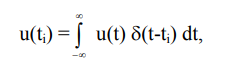
where 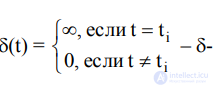 is the Dirac function.
Note that during commutation two variants are possible:
Δti = const - regular sampling;
Δti = random - irregular sampling.
After commutation the signal is fed to the analogue-to-digital converter, where it is successively subjected to the procedures of quantisation and coding.
Quantisation is the procedure of assigning the continuous value of the process
u
(ti) to the nearest permitted integer level.
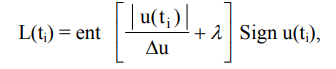
where – ent - is the operation of taking the integer part of a number;
– - the quantisation step by level;
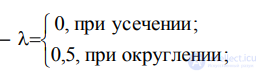
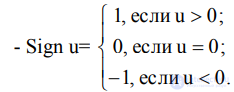
- the sign function.
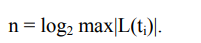
As a result of quantising the signal we obtain an integer number of quanta, which
can be coded in various ways. When using the binary number system with weights 8-4-2-1, the number of binary digits needed for
representing L (ti) is determined by the expression:
It should be emphasised that in the case of a single-channel system the operations of
commutation and analogue-to-digital conversion coincide. In multichannel systems, as a rule, one commutator is used for several channels.
After the analogue-to-digital converter the signal is fed to the input of
the scaling unit, the output signal of which equals:
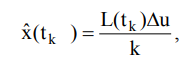
i.e. in this case the reverse conversion takes place: reduction of the electrical
signal to the measured physical quantity.
Next, the signal is fed into the processing unit – a device implementing one algorithm or another for obtaining an estimate of the parameters of the physical process  In this case, two approaches to solving the estimation problem
are possible:
- in express-analysis mode, algorithm AΘ is used to estimate the vector of unknown parameters
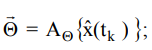
;
- in monitoring and recording mode, algorithm As is used to obtain
an estimate of the signal
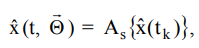
, it is recorded on some intermediate medium and then processed. In this case there is a delay in processing the information and, consequently, in obtaining the result.
The first approach will be called statistical measurement, the second
– statistical processing.
By statistical measurement we mean the measurement of probabilistic characteristics of random processes using special technical means operating in real time.
By statistical processing we mean the estimation of probabilistic
characteristics of random processes on a computer, recorded on an intermediate
medium, with a delay in processing the information.
With a view to increasing the efficiency of scientific research, especially
when studying new objects, there arises the need to develop and investigate new algorithms for estimating the vector of unknown parameters –
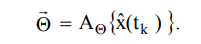
It should be noted that the algorithms can be investigated both by analytical methods and by the method of simulation modelling on a computer, the essence
of which lies in analysing their metrological characteristics using pseudorandom sequences generated by means of
a computer. A large number of interesting and important monographs and articles have appeared, devoted to the methodology, planning, design and execution of modelling. Most of them describe the method known
as the Monte Carlo method. The modern interpretation of this term is based
on the work of von Neumann and Ulam, carried out in the late nineteen-forties, in which they applied a special mathematical method to solve a problem in nuclear physics, whose experimental investigation is very expensive and whose analytical solution is very complex.
As a rule, the implementation of this method includes the following main
blocks:
• simulation of input processes and external actions;
• real and ideal models, and their difference;
• formation of changes in the model's parameters:
- under the influence of external factors;
- in the case of technological spread across a set of instances;
- in the case of temporal instability;
• primary statistical processing to determine the statistical
characteristics of the observed processes for the given trials;
• secondary statistical processing and control of the computer experiment:
- joint processing of a set of experimental results;
- determining the required number of model runs and making decisions, under sequential planning, on continuing or ending
the experiment;
- controlling the model parameters and the values of external factors;
- controlling the system time;
• a system time sensor;
• a control program synchronising the modelling process.
The functional diagram of system modelling, explaining the interaction of the individual blocks, is shown in Fig. 10.
The complexity of the simulation model and the computer time expenditure in its
investigation will largely depend on the principle of simulation modelling used.
Given that the main principle for designing automated systems for the automation of scientific research, IMS, and processor-based
measuring devices is aggregate design, it is most expedient, when constructing the model, to use the principle of block modelling, the essence of which comes down to the following:
• on the basis of decomposition of the ASSR, IMS, PMS a library is created
of models of standard blocks for modelling input actions, destabilising factors, and blocks of real systems.
• on the basis of the developed block models, a model of
the system is constructed in accordance with its structure, with the possibility of monitoring intermediate sequences corresponding to real physical points
of the system.
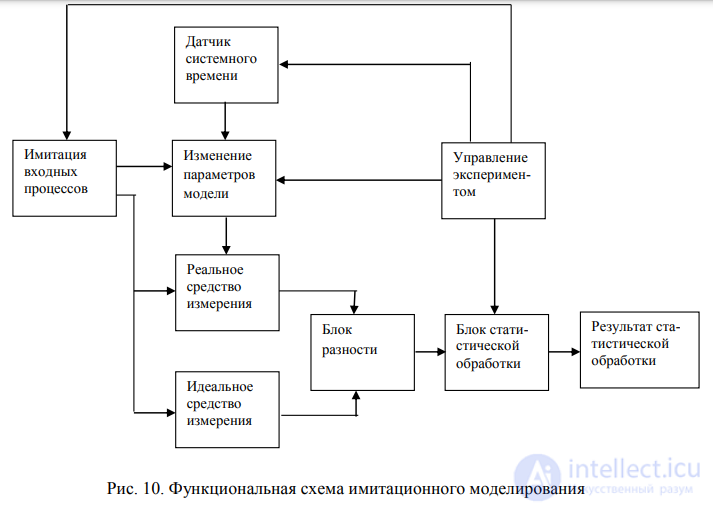
Fig. 10. Functional diagram of simulation modelling
The advantages of block models are:
• flexibility, ease of changing the configuration of the system model, the possibility of tracing intermediate results; correspondence to the mathematical model;
• the possibility of unifying modelling procedures by creating
a library of standard procedures;
• uniformity and simplicity in constructing models of diverse structures;
• the possibility of automating the procedure for constructing system models.
The disadvantages of block modelling include:
• an increase in modelling time;
• the need for a large amount of memory to store the library of models.
The cost of modelling and the reliability of the results obtained
largely depend on the decisions made at the experiment-planning stage,
especially when determining the required number of trials and choosing the input
actions, and so on.
According to the procedure set out in RTM 25139-74, the maximum value of the modulus of the estimation errors may be chosen as the metrological characteristic 
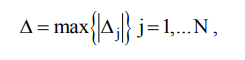
where N is the number of trials, depending on the confidence level Pd. Thus, if
Pd = 0.95, then the number of trials equals 29, irrespective of the error distribution law.
The structure of the applications software package for simulation modelling
of algorithms for estimating the characteristics of non-equidistant time series,
containing both processing and control programs, consists of
the following main blocks:
• setting the input actions with the required characteristics;
• primary statistical processing of information;
• secondary statistical processing of information;
• algorithms for estimating probabilistic characteristics;
• service (utility) blocks;
• determining the methodical error and its components;
• determining the instrumental components of the error.
One of the important stages of simulation modelling is the choice,
justification and modelling of the signals used in the model experiment. The solution of this problem is determined by the modelling objective function,
the purpose of the system under study, and so on. Since, when modelling ASSR,
IMS and PMS, the main task is to determine the metrological characteristics under certain constraints on technical and economic indicators,
an essential requirement placed on the reference (test) signal is the possibility of using it to estimate the error of the measurement result of a given device over the specified class of input actions.
Given the great variety of tasks to be solved and the corresponding measuring
devices, there can be no unambiguous answer as to the form of the reference signal.
The final decision on the choice of the form of the reference signal for specific types of measuring devices should be made based on the results of laboratory studies.
In the most general form, the choice of a reference signal is carried out:
• by choosing the worst-case signal from the set of possible input signals, in order to guarantee the error of the measurement result;
• by forming a set of typical signals, i.e. the input signals that occur most often
or the signals of greatest interest to the researcher;
• by forming a set of typical signals that include
the worst-case signal.
The main requirements placed on reference signals are as follows:
• a specified form of the probabilistic characteristics;
• membership of the class of input signals for which the given device is intended;
• stability over time;
• the deviation of the current characteristics from the calculated ones must not exceed the permissible value.
In some cases, besides random signals, there arises a need to use deterministic reference signals.
The number of input signals processed simultaneously in the system
model is determined by the complexity of the system, the complexity of the model, the number of
channels, and so on, i.e. the modelling system must provide for the possibility of generating N signals with both identical and different characteristics.

Comments