
Lecture
Structural identification, i.e. identification in the broad sense, or "black box" identification, occurs when there is no prior information about the object: the structure of the object, the class of the object, its dimensionality, etc. are unknown. The main task of structural identification is determining the structure of the model [3, 8, 10]. Within the scope of structural identification, it is necessary to identify the significant state variables, choose the general structure and type of the model, and the class of equations that will be used to describe the observed process; to identify the significant ones. Successfully solving the problem of structural identification requires the use of prior information about the physical, chemical, or other phenomena occurring in the process, knowledge of the formal analytical properties of models, and engineering skill and intuition. To date, there are no general formal approaches to solving the problem of structural identification, and the structural identification stage is often reduced to a heuristic specification of the model structure based on prior information about the object.
Determining the class of models:
Determining the form of the equations:
Choosing the order of the model:
Checking the identifiability of the structure:
Evaluating the quality of the model:
General recommendations have been developed for solving structural identification problems [11]:
1. Isolating the object from the external environment.
The stage of isolating the object is determined by the goals and the control algorithm. However, it is impossible to formulate a goal without a preliminary model of the control object, so even before the goal is formulated, some model must be chosen. As a rule, the first-approximation model is one built on the basis of physical, chemical, mechanical, and other control laws. The process of isolating the object from the environment is a sequential transition from simple models of the object to more complex models by "growing the model" through the inclusion of certain elements of the environment that were not initially taken into account in the model but have a significant effect on the functioning of the object.
Such a cumbersome procedure can hardly be formalized, so at this stage of structural identification the method of expert survey is widely used, and based on its results a decision is made about the structure of the object, its interaction with the environment, the possible states of the environment, etc.
2. Ranking the inputs and outputs of the object by the degree of their influence on the fulfillment of the control goals in the object.
The stage of ranking the inputs and outputs of the object identifies all possible candidates for the role of inputs and outputs, singling out the most significant ones among them. The selection of inputs must meet the following requirements:
Ranking of the input variables is carried out according to the rank Ki. The input that has the greatest effect on the achievement of the goals in the object has rank Ki =1. The inputs are arranged in ascending order of the
ranks. Ranking based on the ranks of the input variables can be carried out using methods of expert assessment, direct ranking, or the paired-comparison method [11].
3. Determining the rational number of inputs and outputs of the object taken into account in the model.
Determining the rational number of input and output variables is also carried out on the basis of expert assessments. The selection starts with the minimum number of inputs and outputs, and by gradual expansion the optimal number of input and output variables is chosen.
4. Determining the type (class) of models.
When choosing the class of the model, the following recommendations should be followed.
The type of model is given in the form:
F = (L, N, M , D), (1.5)
where L, N, M, D are Boolean variables, that is, variables taking the value either 0 (no) or 1 (yes) and defining the main properties of the model: L – linearity; N – continuity; M – multidimensionality; D – determinism. Identification usually begins with calculating the simplest model, namely, the object is represented as a linear, continuous, one-dimensional, and deterministic model
F = (1,1, 0,1).
Construction should begin with a physical model (based on known laws of physics, without forgetting the purpose of building the model).
An attempt should be made to transform the model to the form of a linear reg-
ression:
yi = a0 +a1 u1 +...+an un. (1.6)
5. Choosing the goodness-of-fit criterion.
The model of the object is always inexact. The inaccuracy of the model relative
to the object is determined by the residual function
ei = ym − yi , (1.7)
i
where ym is the value of the i-th output variable of the model;
yi is the value of the i-th i output variable of the object.
Thus, the residual function serves as the optimality criterion (or goodness-of-fit criterion) in identification problems.
The best function is chosen based on the minimum of this criterion.
Minimization of the criterion can be carried out using the following methods:
• Least squares method.
Estimation by the least squares method does not require any prior information about the object.
The identification criterion has the form
J = ET IE → min , (1.8)
e1
where E is the error of the system, E = e2 ; I is the identity matrix.
Men
• Markov estimates (or the generalized least squares method).
To apply Markov estimates, the covariance matrix of the additive noise must be known:
ξ[n(1)n(1)]L ξ[n(1)n(k)] ,(1.9)
N =MKM K
ξ[n(k)n(1)]
ξ[n(k)n(k)]
where ξ[n(i)n( j)] is the correlation function of the additive noise for time instants i, j.
The covariance matrix must be known a priori, based on the characteristics of the noise disturbances acting on the control object
(Fig. 1.5).
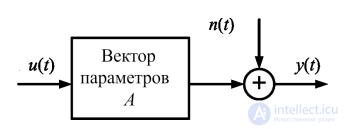
Fig. 1.5. Diagram of the object for the identification problem
The identification criterion has the form
J = ET N −1E → min. (1.10)
• Maximum likelihood method.
In addition to the noise characteristics, the maximum likelihood method requires prior knowledge of how the variables influence one another, represented in the form of correlation matrices.
It is known a priori that the sample values of the output variables Y are random variables with joint probability distribution p( y(1),L, y(k), A).
A posteriori (after measurements), the realizations of these random variables become known: y(1) = c1, ..., y(k) = ck. From them, the parameter
vector A is determined. The functional relationship between c1, ..., ck and A is called the likelihood function and is determined by the joint prob-
ability distribution (multidimensional case)
L = p(c1, ..., ck , A). (1.11)
The likelihood function is a function of the estimated model parameters A.
The identification criterion has the form
L{c1, ..., ck , A} → max. (1.12)
Information criterion methods:
Inverse problem methods:
Heuristic and neural-network methods:
Building models based on physical laws:
Structural identification is necessary in cases where:
Examples include problems in bioinformatics, economics, energy, and the control of complex technical systems.

Comments