
Lecture 27 min.
Vacuum (from Latin vacuus — empty) is space free of matter. In engineering and applied physics, vacuum is understood as a medium consisting of gas at a pressure significantly below atmospheric . A vacuum is characterized by the ratio between the mean free path of gas molecules λ and the characteristic size of the medium d. The quantity d may be taken as the distance between the walls of a vacuum chamber, the diameter of a vacuum pipeline, and so on. Depending on the value of the ratio λ/d, one distinguishes low ( ), medium (
 ) and high (
 ) vacuum.
In practice, a strongly rarefied gas is called a technical vacuum. In macroscopic volumes, an ideal vacuum cannot be achieved in practice, because at a finite temperature all materials have a nonzero saturated vapor density. In addition, many materials (in particular thick metal, glass and other vessel walls) are permeable to gases. In microscopic volumes, however, achieving an ideal vacuum is possible in principle.
The measure of the degree of rarefaction of a vacuum is the mean free path of gas molecules {\displaystyle \lambda } , associated with their mutual collisions in the gas, and the characteristic linear size {\displaystyle d}
 of the vessel containing the gas.
Strictly speaking, a technical vacuum is a gas in a vessel or pipeline at a pressure lower than that of the surrounding atmosphere. According to another definition, when gas molecules or atoms cease to collide with one another, and gas-dynamic properties give way to viscous ones (at a pressure of about 1 mmHg), one speaks of reaching a low vacuum ({\displaystyle \lambda \ll d} ; 1016 molecules per 1 cm³). Usually, between the atmospheric air and a high-vacuum pump there is a so-called forevacuum (backing) pump, which creates a preliminary rarefaction, so a low vacuum is often called a forevacuum. As the pressure in the chamber is lowered further, the mean free path {\displaystyle \lambda } of the gas molecules increases. When {\displaystyle \lambda /d\gg 1}, gas molecules collide with the walls much more often than with one another. In this case one speaks of a high vacuum (10−5 mmHg; 1011 molecules per 1 cm³). Ultrahigh vacuum corresponds to a pressure of 10−9 mmHg and below. Experiments using a scanning tunneling microscope, for example, are usually carried out in ultrahigh vacuum. For comparison, the pressure in space is several orders of magnitude lower — 109 molecules per 1 cm³ (a billion molecules per cubic centimeter), and in deep space it can even reach 10−16 mmHg and below (1 molecule per 1 cm³) .
A high vacuum in the microscopic pores of some crystals and in ultrathin capillaries is achieved even at atmospheric pressure, because the diameter of the pore or capillary becomes smaller than the mean free path of a molecule, which in air under normal conditions is ~60 nanometers .
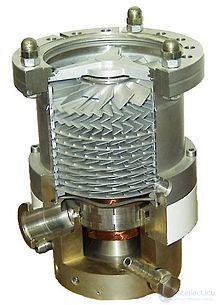
The devices used to achieve and maintain a vacuum are called vacuum pumps. Getters are used to absorb gases and to create the required degree of vacuum. The broader term vacuum technology also includes instruments for measuring and controlling vacuum, for manipulating objects and carrying out technological operations in a vacuum chamber, and so on. High-vacuum pumps are complex technical devices. The main types of high-vacuum pumps are diffusion pumps, based on the entrainment of residual-gas molecules by a flow of working gas; getter and ion pumps, based on embedding gas molecules in getters (for example, titanium); and cryosorption pumps (mainly for creating a forevacuum).
Even in an ideal vacuum at a finite temperature there is always some thermal radiation (a photon gas). Thus, a body placed in an ideal vacuum will sooner or later come into thermal equilibrium with the walls of the vacuum chamber through the exchange of thermal photons.
A vacuum is a good thermal insulator; heat transfer in it occurs only by thermal radiation, since convection and conduction are excluded. This property is used for thermal insulation in thermos flasks (Dewar flasks), which consist of a container with double walls, the space between which is evacuated.
Vacuum is widely used in electrovacuum devices — vacuum tubes (for example, the magnetrons of microwave ovens), cathode-ray tubes, and so on.
In quantum physics, the physical vacuum is understood as the lowest (ground) energy state of a quantized field, having zero momentum, angular momentum and other quantum numbers. Such a state does not at all necessarily correspond to emptiness: a field in its lowest state may be, for example, a field of quasiparticles in a solid or even in an atomic nucleus, where the density is extremely high. The physical vacuum is also the name given to space completely devoid of matter, filled with a field in such a state . Such a state is not absolute emptiness. Quantum field theory asserts that, in accordance with the uncertainty principle, virtual particles are constantly created and annihilated in the physical vacuum: the so-called zero-point oscillations of the fields occur. In some specific field theories the vacuum may have nontrivial topological properties. In a theory there may exist several different vacua, differing in energy density or other physical parameters (depending on the hypotheses and theories used). The degeneracy of the vacuum under spontaneous symmetry breaking leads to the existence of a continuous spectrum of vacuum states, differing from one another in the number of Goldstone bosons. Local energy minima at different values of some field, which differ in energy from the global minimum, are called false vacua; such states are metastable and tend to decay, releasing energy, by passing into the true vacuum or into one of the lower false vacua.
Some of these predictions of field theory have already been successfully confirmed by experiment. Thus, the Casimir effect and the Lamb shift of atomic levels are explained by zero-point oscillations of the electromagnetic field in the physical vacuum. Modern physical theories are based on some other notions about the vacuum. For example, the existence of several vacuum states (the false vacua mentioned above) is one of the main foundations of the inflationary theory of the Big Bang.
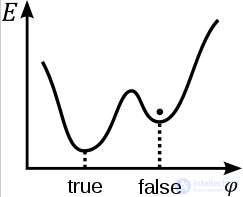
False vacuum is a state in quantum field theory that is not a state of globally minimal energy but corresponds to a local minimum of it. Such a state is stable for a certain time (metastable), but can "tunnel" into the true vacuum state.
Einstein vacuum is an occasionally used name for solutions of the Einstein equations in general relativity for empty spacetime, without matter. A synonym is Einstein space.
The Einstein equations relate the metric of spacetime (the metric tensor gμν) to the energy-momentum tensor. In general form they are written as
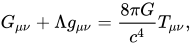
where the Einstein tensor Gμν is a definite function of the metric tensor and its partial derivatives, R is the scalar curvature, Λ is the cosmological constant, Tμν is the energy-momentum tensor of matter, π is the number pi, c is the speed of light in vacuum, and G is Newton's gravitational constant.
Vacuum solutions of these equations are obtained in the absence of matter, that is, when the energy-momentum tensor is identically zero in the region of spacetime under consideration: Tμν = 0. Often the lambda term is also set equal to zero, especially when studying local (noncosmological) solutions. However, when vacuum solutions with a nonzero lambda term (lambda-vacuum) are considered, such important cosmological models arise as the de Sitter model (Λ > 0) and the anti-de Sitter model (Λ < 0).
A trivial vacuum solution of the Einstein equations is flat Minkowski space, that is, the metric considered in special relativity.
Other vacuum solutions of the Einstein equations include, in particular, the following cases:
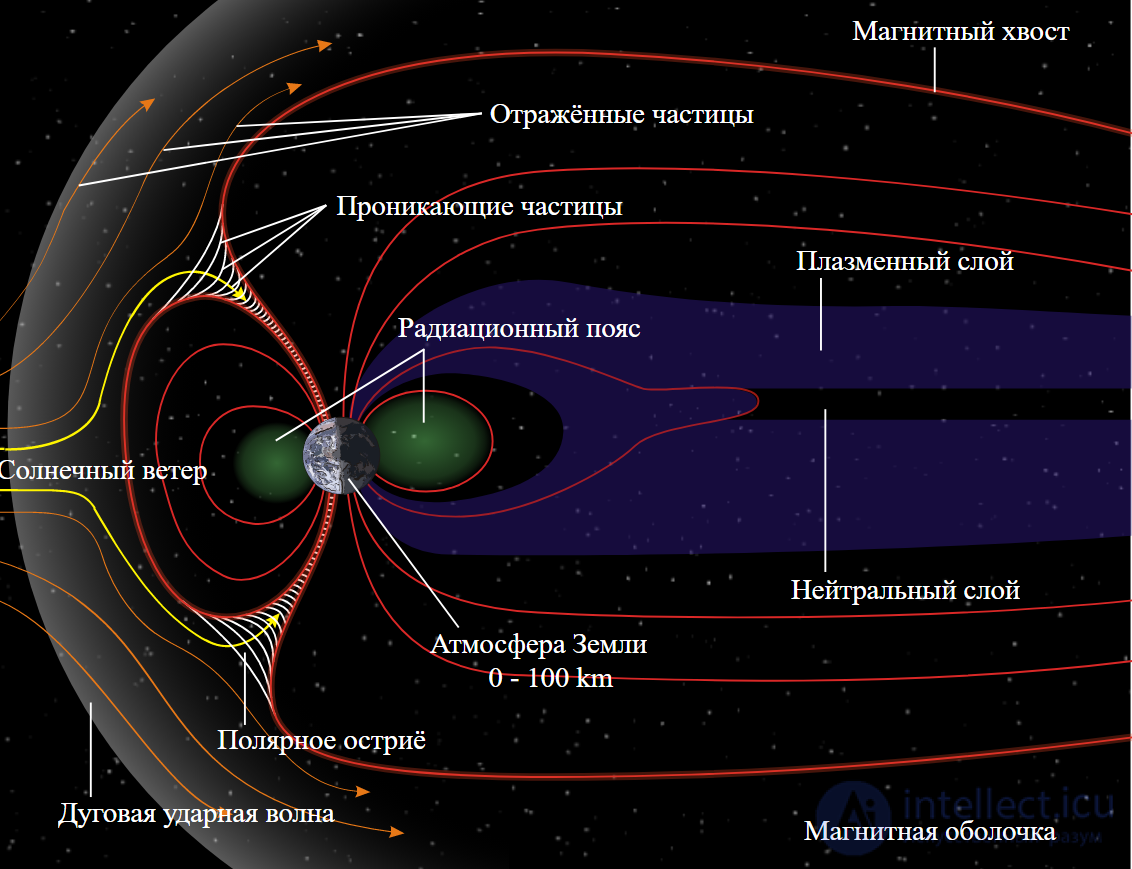
Outer space is a nonideal vacuum: a rarefied plasma filled with charged particles, electromagnetic fields, and sometimes stars
Outer space has a very low density and pressure and is the best approximation of a physical vacuum. The vacuum of space is not truly perfect: even in interstellar space there are a few hydrogen atoms per cubic centimeter. The density of ionized atomic hydrogen in the intergalactic space of the Local Group is estimated at 7×10⁻²⁹ g/cm³ .
Stars, planets and moons hold their atmospheres by gravitational attraction, and as such an atmosphere has no sharply defined boundary: the density of the atmospheric gas simply decreases with distance from the object. The Earth's atmospheric pressure falls to about 3.2×10⁻² Pa at an altitude of 100 km — at the so-called Kármán line, which is the common definition of the boundary with outer space. Beyond this line, the isotropic gas pressure quickly becomes negligible compared with the radiation pressure from the Sun and the dynamic pressure of the solar wind, so the definition of pressure becomes difficult to interpret. The thermosphere in this range has large gradients of pressure, temperature and composition, and varies strongly with space weather.
The density of the atmosphere over the first few hundred kilometers above the Kármán line is still sufficient to produce significant drag on the motion of artificial Earth satellites. Most satellites operate in this region, called low Earth orbit, and must fire their engines every few days to maintain a stable orbit.
Outer space is filled with a large number of photons, the so-called cosmic microwave background radiation, as well as a large number of relic neutrinos, which cannot yet be detected. The current temperature of this radiation is about 3 K, or −270 °C .
The idea of a vacuum (the void) had been a subject of dispute since the time of the ancient Greek and Roman philosophers. The atomists — Leucippus (c. 500 BC), Democritus (c. 460—370 BC), Epicurus (341—270 BC), Lucretius (c. 99—55 BC) and their followers — held that everything that exists is atoms and the void between them, and that without a vacuum there would be no motion, since atoms could not move if there were no empty space between them. Strato (c. 270 BC) and many philosophers in later times believed that the void could be "continuous" (vacuum coacervatum) and "dispersed" (in the gaps between particles of matter, vacuum disseminatum).
By contrast, Aristotle (384—322 BC) and a number of other philosophers held that "nature abhors a vacuum". The concept of the "fear of the void" (horror vacui), which originated even before Aristotle, with Empedocles (c. 490—430 BC) and other philosophers of the Ionian school, became dominant in the philosophical thought of medieval Europe and acquired religious and mystical features.
Some prerequisites for the empirical study of vacuum existed as early as antiquity. Ancient Greek mechanics created various technical devices based on the rarefaction of air. For example, water pumps operating by creating a partial vacuum under a piston were known as early as the time of Aristotle. A drawing has survived to our time of a fire pump invented by Ctesibius, the "father of pneumatics" (c. 250 BC). Water pumps of this type were in effect the prototypes of the vacuum piston pump that appeared almost two thousand years later. Ctesibius's student, Hero of Alexandria, developed a piston syringe for drawing out pus, which was also essentially a vacuum device.
The empirical study of vacuum began only in the 17th century, with the end of the Renaissance and the beginning of the modern scientific revolution. By that time it had long been known that suction pumps could lift water to a height of no more than 10 meters. For example, in the treatise De re metallica ("On Mining") by Georgius Agricola (1494—1555), there is a picture of a chain of water pumps for pumping water out of a mine.
Galileo, in his Discourses and Mathematical Demonstrations Relating to Two New Sciences (1638), the book that completed the rout of Aristotelian physics, pointed out, referring to practice, that the height to which suction pumps lift water is always the same — about 18 cubits. In this book he describes, among other things, what is in effect a vacuum device with a piston, needed to compare the tensile strength of water and of a solid, although he explains the resistance to stretching characteristic of solids and liquids by the fear of the void, assuming that tiny empty pores exist between the particles of matter and expand when stretched.
Under the influence of Galileo's treatise, which pointed out the limits of the "fear of the void", in 1639—1643 Gasparo Berti built a device on the facade of his house in Rome (in later terminology, a water barometer tube), which can be regarded as the first apparatus for the physical study of vacuum. In the upper, closed glass part of the tube, more than 10 m high, above a water column balanced by atmospheric pressure, an empty space was observed (in fact it was filled with water vapor at a pressure equal to the vapor pressure of water at the ambient temperature, as well as with dissolved air released from the water, so the pressure in the cavity was about 0.1 atmosphere). Emmanuel Maignan fixed a small bell and a hammer in this cavity. By acting on the hammer with a magnet, he made it strike the bell. As a result of this first experiment in vacuum in history (more precisely, in a rarefied gas), it was found that the sound of the bell was muffled[10].
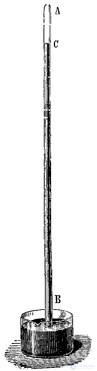
The scholar Raffaello Magiotti[11] (1597—1656) of Rome reported the experiments of Berti and Maignan to Galileo's student, the Florentine Evangelista Torricelli. In doing so, Magiotti suggested that a denser liquid would come to rest at a lower level[12]. In 1644 Torricelli (with the help of Vincenzo Viviani, another student of Galileo) succeeded in creating the first vacuum chamber. His work on theories of atmospheric pressure served as the basis for further experimental techniques. A Torricellian vacuum (the Torricelli void) is obtained by filling a long glass tube, sealed at one end, with mercury and then inverting it so that the open end of the tube is below the surface of the mercury in a wider open vessel[13]. The mercury flows out of the tube until the weight of the mercury column is balanced by atmospheric pressure. A vacuum forms in the mercury-free space at the upper, sealed end of the tube. This method underlies the operation of the mercury barometer. At standard atmospheric pressure, the height of the mercury column balanced by atmospheric pressure is 760 mm.
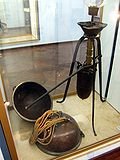
Around 1650 the German scientist Otto von Guericke invented the first vacuum pump (a piston cylinder with a water seal), which made it possible to easily evacuate air from sealed containers and to experiment with vacuum[14]. The pump, which its author called antlia pneumatica, was still very far from perfect and required at least three people to work the piston and the valves, which were submerged in water to better isolate the resulting void from the outside air. Nevertheless, with its help Guericke was able to demonstrate many properties of vacuum, in particular by performing the famous experiment with the Magdeburg hemispheres. Guericke also built a water barometer, similar in operating principle to Torricelli's mercury barometer, although because water is less dense than mercury, the height of the water column balancing atmospheric pressure is 13.6 times greater — about 10 meters. Guericke was the first to find that vacuum does not conduct sound and that combustion ceases in it[15].
Guericke's vacuum pump was significantly improved by Robert Boyle, which enabled him to carry out a number of experiments to determine the properties of vacuum and its effect on various objects. Boyle found that small animals die in a vacuum, a flame goes out, and smoke settles downward (and is therefore subject to gravity just as other bodies are). Boyle also found that the rise of liquid in capillary tubes occurs in a vacuum as well, and thereby refuted the then-prevailing view that air pressure is involved in this phenomenon. Conversely, the flow of liquid through a siphon in a vacuum stopped, which proved that this phenomenon is caused by atmospheric pressure. He showed that during chemical reactions (such as the slaking of lime), and also during the mutual friction of bodies, heat is released in a vacuum as well.
Humans and animals exposed to vacuum lose consciousness after a few seconds and die of hypoxia within a few minutes, but these symptoms are generally not like those portrayed in popular culture and the media. Reduced pressure lowers the boiling point at which blood and other biological fluids should boil, but the elastic pressure of the blood vessels prevents the blood from reaching its boiling point at 37 °C[16]. Although the blood does not boil, the formation of gas bubbles in it and in other body fluids at low pressures, known as ebullism (aerial emphysema), is a serious problem. The gas can swell the body to twice its normal size, but the tissues are elastic enough to prevent it from rupturing[17]. Swelling and ebullism can be prevented by a special flight suit. Shuttle astronauts wore a special elastic garment called the Crew Altitude Protection Suit (CAPS), which prevents ebullism at pressures above 2 kPa (15 mmHg)[18]. Rapid evaporation of water cools the skin and mucous membranes to 0 °C, especially in the mouth, but this does not pose a great danger.
Animal experiments show that after 90 seconds in a vacuum, rapid and complete recovery of the organism usually occurs, but a longer stay in a vacuum is fatal and resuscitation is useless[19]. There is only a limited amount of data on the effects of vacuum on humans (usually from cases where people were involved in accidents), but it is consistent with the data obtained from animal experiments. Limbs can remain in a vacuum for much longer if breathing is not impaired[20]. Robert Boyle was the first to show, in 1660, that vacuum is deadly to small animals.
The degree of vacuum is determined by the amount of matter remaining in the system. Vacuum is defined primarily by absolute pressure, but a complete characterization requires additional parameters, such as temperature and chemical composition. One of the most important parameters is the mean free path (MFP) of the residual gases, which indicates the average distance a particle travels between one collision and the next during its free flight. As the gas density decreases, the MFP increases. The MFP of air at atmospheric pressure is very short, about 70 nm, while at 100 mPa (~1×10⁻³ torr) the MFP of air is approximately 100 mm. The properties of a rarefied gas change strongly when the mean free path becomes comparable to the dimensions of the vessel containing the gas.
Vacuum is divided into ranges according to the technology required to achieve or measure it. These ranges have no universally accepted definitions, but a typical division looks as follows[21][22]:
| Pressure (mmHg) | Pressure (Pa) | |
|---|---|---|
| Atmospheric pressure | 760 | 1.013×10+5 |
| Low vacuum | from 760 to 25 | from 1×10+5 to 3.3×10+3 |
| Medium vacuum | from 25 to 1×10⁻³ | from 3.3×10+3 to 1.3×10⁻¹ |
| High vacuum | from 1×10⁻³ to 1×10⁻⁹ | from 1.3×10⁻¹ to 1.3×10⁻⁷ |
| Ultra-high vacuum | from 1×10⁻⁹ to 1×10⁻¹² | from 1.3×10⁻⁷ to 1.3×10⁻¹⁰ |
| Extreme high vacuum | <1×10⁻¹² | <1.3×10⁻¹⁰ |
| Outer space | from 1×10⁻⁶ to <3×10⁻¹⁷ | from 1.3×10⁻⁴ to <1.3×10⁻¹⁵ |
| Absolute vacuum | 0 | 0 |
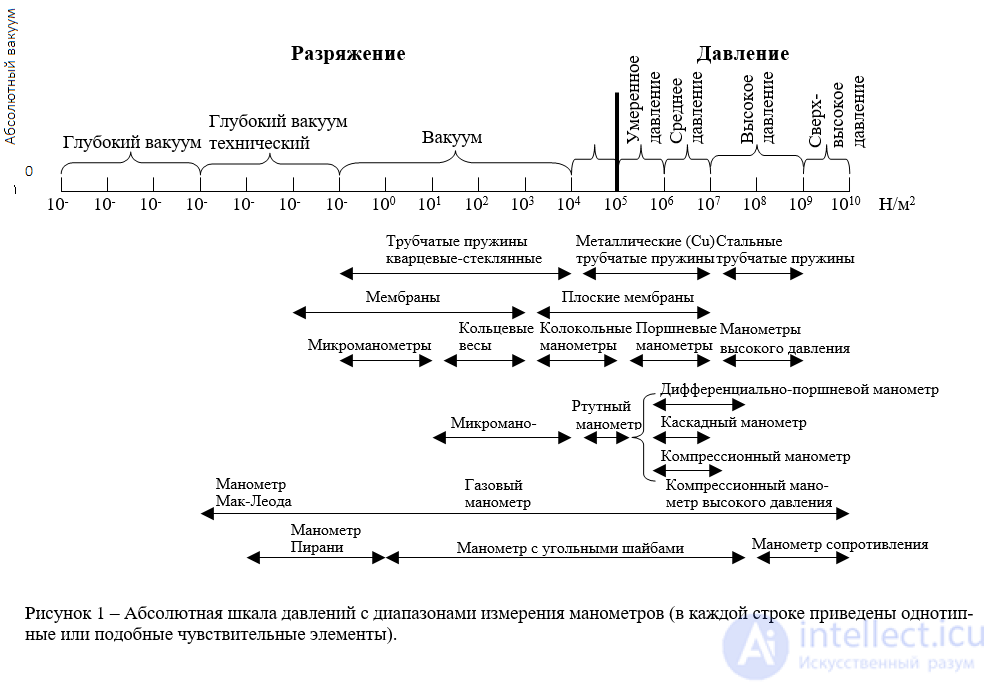
Figure 1 – Absolute pressure scale with the measurement ranges of pressure gauges (each row shows gauge sensing elements of the same or similar type).
Applications
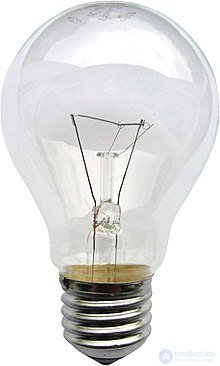
Vacuum is useful for many processes and is used in various devices. It was first applied in mass-produced goods in incandescent lamps, to protect the filament from chemical degradation. The chemical inertness of materials provided by vacuum is also useful for electron-beam welding, cold welding, vacuum packaging, and vacuum frying. Ultra-high vacuum is used in the study of atomically clean substrates, since only a very high vacuum keeps surfaces clean at the atomic level for a sufficiently long time (from minutes to a day). In high and ultra-high vacuum, the resistance of air is eliminated, allowing particle beams to deposit or remove materials without contamination. This principle underlies chemical vapor deposition, vacuum evaporation (physical vapor deposition), and dry etching, which are used in the manufacture of semiconductors and optical coatings, as well as in surface chemistry. Reduced convection provides thermal insulation in thermos flasks. Deep vacuum lowers the boiling point of a liquid and promotes low-temperature outgassing, which is used in freeze-drying, adhesive preparation, distillation, metallurgy, and vacuum cleaning. The electrical properties of vacuum make possible electron microscopes and vacuum tubes, including cathode-ray tubes. Vacuum circuit breakers are used in electrical switchgear. Vacuum arc remelting is of industrial importance for producing certain grades of steel or high-purity materials. The elimination of air friction is useful for flywheel energy storage and ultracentrifuges.
Vacuum is commonly used to produce suction, which has an even wider range of applications. The Newcomen steam engine used vacuum rather than pressure to drive its piston. In the 19th century, vacuum was used for traction on Isambard Brunel's experimental atmospheric railway. Vacuum brakes were once widely used on trains in Great Britain, but, except on heritage railways, they have been replaced by air brakes.
Intake manifold vacuum can be used to power auxiliary equipment on automobiles. The best-known application is the vacuum booster, which increases braking force. Vacuum was formerly also used in vacuum-operated windshield wipers and in Autovac fuel pumps. Some aircraft instruments (the attitude indicator and the heading indicator) are usually vacuum-driven, as insurance against the failure of all the (electric) instruments, since early aircraft often had no electrical systems, and since there are two readily available sources of vacuum on a moving aircraft, the engine and the Venturi tube. Vacuum induction melting uses electromagnetic induction in a vacuum.
Maintaining a vacuum in the condenser is important for the efficient operation of steam turbines. A steam ejector or a liquid ring pump is used for this purpose. The usual vacuum maintained in the steam space of the condenser at the turbine exhaust (also called the turbine condenser pressure) is in the range of 5 to 15 kPa, depending on the type of condenser and the ambient conditions.
Evaporation and sublimation in a vacuum is called outgassing. All materials, solid or liquid, give off some vapor (gas is released), and their outgassing becomes significant when the vacuum pressure falls below their vapor pressure. The vaporization of materials in a vacuum has the same effect as a leak and can limit the attainable vacuum. Evaporation products can condense on nearby colder surfaces, which can cause problems if they coat optical instruments or react with other materials. This causes great difficulties in spaceflight, where a darkened telescope or solar cell element can ruin a costly mission.
The most common outgassing product in vacuum systems is water absorbed by the chamber materials. Its amount can be reduced by drying or baking the chamber and removing absorbent materials. Evaporating water can condense in the oil of rotary vane pumps and sharply reduce their pumping speed if a gas ballast device is not used. High-vacuum systems must be clean, with no organic substances remaining in them, in order to minimize outgassing.
Ultra-high vacuum systems are generally baked, preferably under vacuum, to temporarily increase the evaporation of all materials and drive them off. After most of the evaporating materials have been driven off and removed, the system can be cooled to reduce the vaporization of materials and minimize residual outgassing during operation. Some systems are cooled well below room temperature with liquid nitrogen to stop residual outgassing completely and, at the same time, to create a cryopumping effect in the system.
Gases generally cannot be pushed out, so a vacuum cannot be created by suction. Suction can spread and dilute a vacuum, allowing high pressure to drive gases into it, but before suction can occur, the vacuum must be created. The simplest way to create an artificial vacuum is to expand the volume of a chamber. For example, the diaphragm muscle expands the chest cavity, which increases the volume of the lungs. This expansion reduces the pressure and creates a low vacuum, which is soon filled with air forced in by atmospheric pressure.
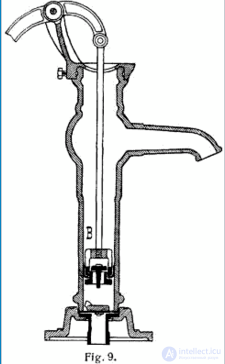
To keep evacuating a chamber indefinitely without continually enlarging it, the compartment doing the evacuating can be sealed off, purged, expanded again, and so on many times. This is the operating principle of positive displacement (gas-transfer) pumps, for example the hand water pump. Inside the pump, a mechanism expands a small sealed cavity to create a vacuum. Because of the pressure difference, some of the fluid from the chamber (or the well, in our example) is pushed into the small cavity of the pump. Then the pump cavity is sealed off from the chamber, opened to the atmosphere, and compressed to its minimum size, expelling the fluid.
The explanation above is a simple introduction to evacuation and is not typical of the whole range of pumps in use. Many variations of positive displacement pumps have been developed, and many pump designs are based on radically different principles. Momentum transfer pumps, which bear some resemblance to the dynamic pumps used at higher pressures, can achieve a much higher quality of vacuum than positive displacement pumps. Gas-binding (entrapment) pumps, capable of capturing gases in a solid or absorbed state, often operate without moving parts, without seals, and without vibration. None of these pumps is universal; each type has serious limitations on its applicability. All of them have difficulty pumping gases of low molecular mass, especially hydrogen, helium, and neon.
The lowest pressure that can be achieved in a system, apart from the pump arrangement, also depends on many factors. Several pumps can be connected in series in so-called stages to achieve a higher vacuum. The choice of seals, chamber geometry, materials, and pumping procedures will all have an effect. Taken together, all of this is called vacuum technology. And sometimes the ultimate pressure is not the only essential characteristic. Pumping systems differ in oil contamination, vibration, selective pumping of certain gases, pumping speeds, intermittency of operation, reliability, or tolerance of high leak rates.
In ultra-high vacuum systems, some very "strange" leak paths and sources of outgassing must be taken into account. The water-absorbing capacity of aluminum and palladium becomes an unacceptable source of vapor, and even the adsorption capacity of hard metals such as stainless steel or titanium has to be considered. Some oils and greases will boil in a high vacuum. It may be necessary to consider the effect of the metal's crystal structure on the permeability of metal chamber walls, for example, the alignment of the grain direction of metal flanges parallel to the face of the flange.
The lowest pressures currently achievable under laboratory conditions are about 10-13 torr (13 pPa). However, pressures lower than 5×10-17 torr (6.7 fPa) have been measured indirectly in a cryogenic vacuum system. This corresponds to ≈100 particles / cm3.

Comments