
Lecture
Veterinarians and pet owners, unfortunately, often encounter signs of pain in animals. In some situations it is obvious: the pet has been injured or has had surgery. In others it is not so obvious: a dog or cat has simply become lethargic and plays less, the cat has started to develop matted fur or has become aggressive and won't let itself be petted. Owners of a sick animal often ask, "Is it in pain right now? What is it feeling?", while others say, "Why does it need painkillers? It isn't hurting, is it?"
Our pets cannot talk, so we do not always realize right away that an animal is suffering and in pain. To notice and recognize pain in your pet in time, you need to know what to look for.
Every animal is an individual, so the way pain shows itself can vary. Even so, there are some general signs that can help you understand that your pet is in pain. First of all, this is a change in behavior: cats most often become quieter than usual, avoid other animals or people, and hide. Dogs, on the contrary, may try to attract a person's attention. Agitation, restlessness, vocalization (meowing, howling, moaning, absence of purring, barking, whining) and aggressive behavior are possible (the animal is frightened, does not understand what is happening to it, and may consider you the cause of its discomfort).
Lameness, reluctance to move, reluctance to get up, as well as decreased or absent appetite (anorexia), can be signs of pain. In addition, tachypnea (an increased breathing rate), tachycardia (an increased heart rate), and elevated blood pressure and temperature are often present. Extremely severe pain can lead to shock and collapse.
Pain syndrome can, among other things, also show itself as seizures. They look like this: a sudden fall, a "glassy" stare, profuse salivation; the animal arches its back and throws its head back, and then tonic contractions of the limbs begin. The whole episode passes without loss of consciousness and usually lasts no more than 3-5 minutes. You should know that the only thing you can do to help the animal in such a situation is to keep it from injuring itself (place it on something soft and remove any objects nearby).
All of these manifestations of pain are non-specific and can occur in many other diseases, so in such cases diagnostic testing is necessary to rule out or confirm particular diagnoses.
If you notice signs of pain in your cat or dog, contact one of our veterinary centers immediately.
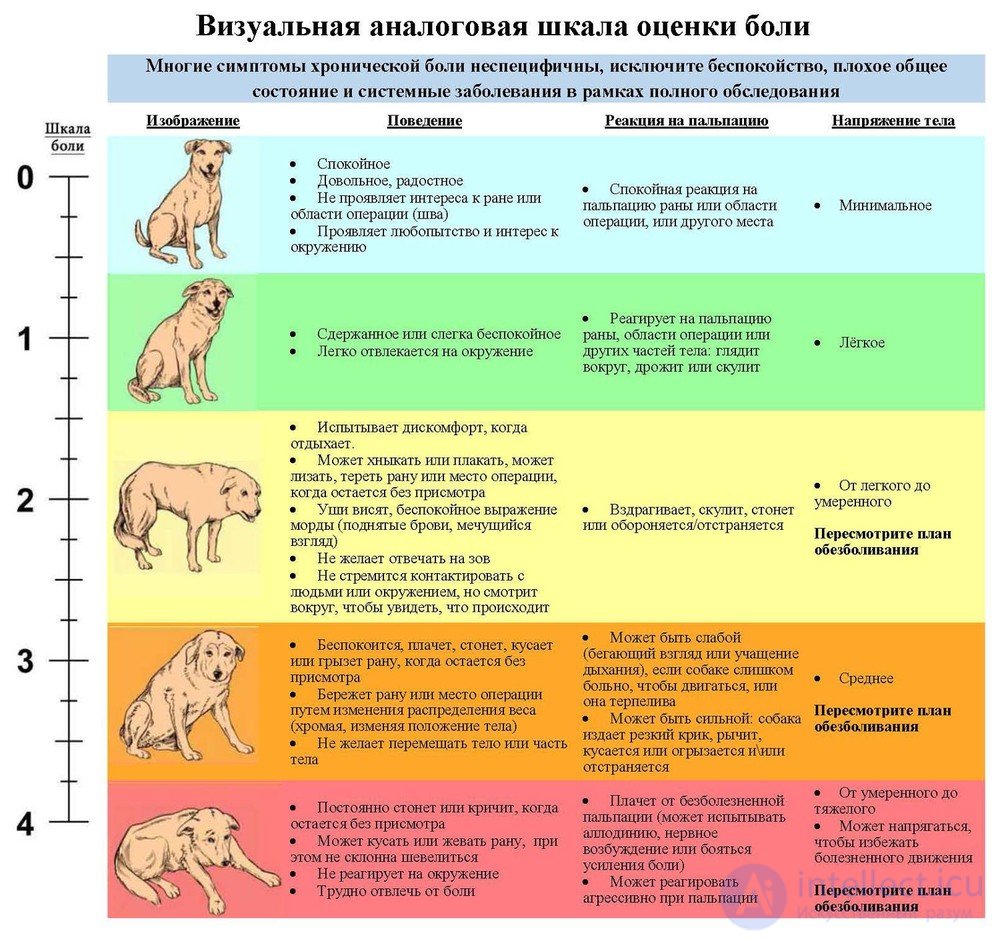
So, the following are normal for dogs:
· Activity and mobility: energetic movement, enjoyment of movement, playfulness, ease in changing posture, tolerance of movement and exercise
· Expressions of mood and appropriate behavior: alertness, restlessness, sadness, playfulness
· The ability and desire to eat and drink
· Signs of stress and control of its level: vocalization, depression, reaction to other dogs and people, etc.
· Visible signs of pain: comfort level, lameness, etc.
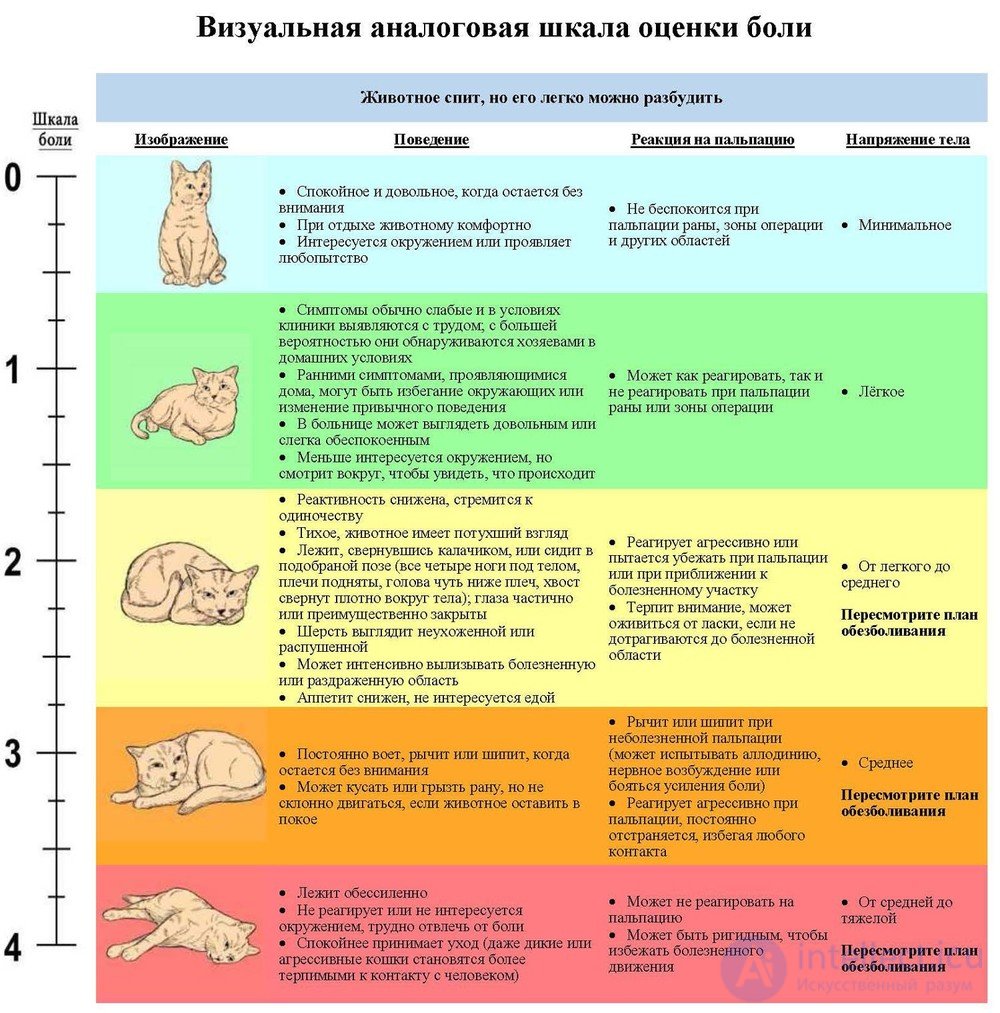
The following are normal for cats:
To find out the patient's pain level, the veterinarian will ask you to assess the following important points over the past 7 days:
And finally, your overall assessment of your pet's quality of life over the past week.
Pain needs immediate management; pain is always harmful. Pain that has become chronic is very difficult to control. According to the experience of our colleagues in human medicine, pain leaves lasting traces: it changes how we and our beloved pets perceive the world, and it changes our character and our social behavior. A cat or dog that has undergone, for example, surgery with inadequate pain relief (including, for instance, tail docking at 3 days of age without anesthesia) may change and lose its cheerfulness, become more aggressive or suffer from depression. Owners often attribute changes in a pet's behavior and activity to age rather than to the very common osteoarthritis.
We sincerely ask you: if after reading this material it seems to you that your animal is in pain, do not put off a visit to your veterinarian! Don't be in pain!

Comments