
Lecture
In the humanistic concept of education and upbringing now being developed, as reflected in the <National Doctrine of Education of the Russian Federation> and in the documents of the State Council under the President of the Russian Federation (2001), the emphasis is placed on the need for a constant search for the inner potential of the individual given by nature, and on stimulating the individual's own inner efforts in the process of learning, upbringing and self-development.
The humanistic orientation of the work of the teacher-educator and the social teacher becomes especially in demand: one who is able not only to accept - understand the pupil, but also to help him or her become a personality, a subject of his or her own life activity, and not only an object of influences, including pedagogical ones.
Humanistic education aims at the harmonious development of the personality of the pupil and presupposes a humane character of the relationship <teacher-student> as participants, as subjects of the pedagogical process. That is why today the main principle of pedagogical activity is becoming the <person-centered approach>, which presupposes that the teacher studies and knows in depth all aspects of the pupil's personality, his or her abilities, characteristics, ideals, needs and motives of activity, and, above all, the creation of a humanistic educational environment and of conditions that ensure this harmonious development.
In today's crisis conditions the pupil needs more attention, care and <a more delicate pedagogical touch to his or her personality> (N.E. Shchurkova).
In this connection, the most urgent of the problems is the problem of the practical organization of person-centered interaction between the teacher and the pupil, and of teaching this approach to the future teacher. The essence of this approach is interpreted ambiguously in the psychological and pedagogical literature by researchers (V.A. Slastenin, V.D. Shadrikov, I.S. Yakimanskaya, E.V. Bondarevskaya, V.A. Petrovsky, A.V. Mudrik, N.E. Shchurkova, V.Yu. Pityukov, O.S. Gazman, G.K. Selevko and others). Their works reveal the essence of the concepts <personality>, <pedagogical influence>, <pedagogical interaction> and person-centered interaction>. Therefore, first of all we help future teachers to understand the concepts <pedagogical influence>, <pedagogical interaction> and <person-centered pedagogical interaction> .
N.E. Shchurkova and V.Yu. Pityukov assert that <pedagogical influence> is exercised by the teacher for the purpose of developing the child's personality and moving him or her to the position of a subject. The authors stress that pedagogical influence is not just any influence, but the influence of a teacher who is a bearer of consciousness, will and attitudes, and who is therefore aware of the connections of his or her own <I> with other <I>s and with the world as a whole. This anticipation of the future development of the pupil's personality is formed in the teacher on the basis of knowledge of the nature of the child and of the regularities of his or her development, and of the expediency of pedagogical influences; and pedagogical influence is filled with social meaning, since the teacher acts on behalf of society and its interests. Therefore the teacher must convey to the child the world at the level of the high cultural achievements accumulated by humanity. On the whole, pedagogical influence is a special kind of activity of the teacher, his or her delicate touch to the personality, aimed at revealing its potential capacity to be and to become a subject of activity and of its own life.
Pedagogical influence is carried out as the disclosure, demonstration and transmission of the teacher's personal value attitude toward anyone or anything. And the pupil's response, as he or she inwardly experiences this attitude (empathy, a feeling of joy, or perhaps anger, displeasure, etc.) and manifests it in words, facial expression and actions, depends on how vividly the teacher manages to express himself or herself. Influence that is carried out correctly, both pedagogically and psychologically, ensures adequate interaction of the teacher with the pupil, with a group of children, and with the class collective.
And pedagogical interaction is a special form of connection between the participants of the educational process, in the course and as a result of which there is a mutual enrichment of the intellectual, emotional and activity spheres of the participants of this process; it has a socially significant character.
Interaction may be direct, immediate, when there is direct contact between the subjects, or indirect, mediated through some objects, actions, exchange of information, or other people.
Today the person-centered interaction <teacher-pupil> is of current importance; it presupposes recognizing the child's personality not so much as an object as a subject of upbringing and education, a partner in the educational process. The student, the pupil, is the main subject of the educational process.
The aim of <person-centered pedagogical interaction> of the teacher with the pupil is to create favorable conditions and to promote the pupil's personal development, the formation of his or her moral orientations, and his or her self-determination (V.A. Slastenin, I.S. Yakimanskaya, E.V. Bondarevskaya, A.V. Mudrik, O.S. Gazman and others).
The basis for the formation of the capacities for self-development, self-determination, self-realization, self-rehabilitation and self-organization of the personality is physical and mental health, morality and abilities, which determines the content of the teacher's person-centered interaction with students (O.S. Gazman).
The child's personal growth (the formation of his or her general culture, moral consciousness, self-awareness and behavior, and need for self-development) is promoted by the humanistic orientation of pedagogical interaction. In interaction, the determining factor is the position of the teacher, proceeding from the interests of the child's development: understanding, recognition and acceptance of the child as a full-fledged partner, and giving him or her help.
The interaction of teachers and schoolchildren takes place in different systems: among schoolchildren, between teachers and children, and among teachers. The interaction of teachers and students plays a guiding role in relation to the others. At the same time, the style of the <teacher-student> relationship depends on the nature of relationships in the teaching staff and is determined by the characteristics of relationships among children in the student collective, the main aim of which is regarded as the development of the personality, of the collective and of its educational possibilities.
Researchers consider the main characteristics of interaction to be mutual cognition, mutual understanding, mutual influence and compatibility. At the same time, it must be understood that the interaction of the parties is not an end in itself, but the most important means, a way of successfully solving the set educational, upbringing and developmental tasks.
Thus, an indicator of effectiveness (I.P. Andriadi and others) in terms of mutual understanding is the objectivity of knowledge of each other's best personal qualities, interests and hobbies, and mutual interest in each other; in terms of mutual influence - the ability to reach agreement on disputed issues, taking each other's opinion into account, accepting the other as an example, and changing behavior and actions after comments and recommendations addressed to each other; in terms of mutual actions - maintaining constant contacts, active participation in joint activity, coordination of actions, help, support for one another, and coordination of efforts.
By types and forms of interaction, the following are distinguished:
The various approaches and types of interaction attest to the many-sidedness and multi-aspect nature of this process.
According to scholars and practitioners, the most effective for the development of the collective and of the individual is cooperative interaction, which is characterized by knowledge, reliance on the positive in the personality, trust, goodwill, objectivity, activity of both sides, and dialogue.
Dialogic interaction has an especially great educational potential. It ensures equality of the partners' positions, respectful attitude toward each other, acceptance of the partner as he or she is, a sincere exchange of opinions, openness, sincerity, and absence of prejudice.
Suppression, indifference (unconcern for one another) and formal relations are unacceptable. The main way of moving to other, more fruitful types of interaction is inclusion in joint collective creative activity, creating conditions for shared experiences, each person's contribution to the common result, and creating conditions of <responsible dependence> (A.S. Makarenko).
The ways of developing interaction as cooperation and subject-subject relations are: a positive attitude toward joint creative work, joint planning, analysis of the results of the activity, awareness of its goal and personal meaning; creating a situation of free choice of kinds and methods of activity by its participants, the availability of good, full information about the state of affairs in the class and the group and about each participant in the activity; and the organization of collective creative activities, which is the most effective for developing cooperation, interaction, mutual assistance and healthy competition, and in the course of which the personality of both the teacher and the pupil is revealed most fully (M.I. Rozhkov, L.V. Bayborodova).
Today the task has become acute of taking a step to a higher level in the organization of the teaching and upbringing process, of moving from the informational type to the person-centered one, which to a greater degree promotes the development and self-development, self-affirmation and self-realization of the pupil's personality. To solve it means to create favorable conditions in which this can be realized and, above all, a good psychological climate, benevolent and trusting relationships, and relations of cooperation <as equals>.
As we have already noted, many scholars study the problem of person-centered interaction. Thus, for example, I.S. Yakimanskaya believes that all teaching and upbringing is in essence the creation of conditions for the development of the personality and, consequently, is developmental and person-centered . And the main thing is how to understand the personality and where to look for the sources of its development. Researchers name the following as these sources:
In our experience, the process of teaching the future teacher person-centered pedagogical interaction includes not only a thorough explanation to students of the psychological and pedagogical foundations and ways of implementing it, but also the formation of practical skills for putting it into practice.
Students are asked, on the basis of the results of their work during teaching practice at school, to fill in a supporting <Chart-scheme>) - a technological map of the teacher's person-centered interaction with students (P.A. Sheptenko, G.A. Voronina). They complete this map through deep reflection on, and practical implementation of, the whole logic of the teaching and upbringing process during the psychological and pedagogical practicum (3rd year) and the in-service teaching practice (4th year).
This scheme provides for the following sections:
|
1 |
2 |
3 |
4 |
5 |
|
Characteristics of the pupil's personality with an orientation toward the positive |
The problem field of the pupil's personality |
Reference persons for the pupil in society |
The field of coincidences (of interests, enthusiasms, hobbies) of the teacher and the pupil |
Prospects for the pupil's development and personal growth. Methodological recommendations for overcoming difficulties and ways of creating a <situation of success> in the teacher's interaction with the pupil |
The future teacher (social teacher) is advised to pay special attention to filling in the first column <Characteristics of the features of the pupil's personality with an orientation toward the positive>, since it includes the parameters of the personality and its structural components and requires identifying and recording the positive qualities of the personality; taking them into account, the student organizes the corresponding psychological and pedagogical work on correcting negative features (reflecting them in the second column) and, accordingly, the work carried out with the pupil.
The following are identified: the child's state of health, features of his or her physical development, attitude toward learning activity (successful or unsuccessful, the foundations and motives of learning, interest in subjects); features of temperament, character, memory, thinking and attention; ideal, moral values (patriotism, citizenship, knowledge, work, family, friends, etc.); vocational orientation (motives, intentions); enthusiasms, hobbies (clubs, sections, circles, forms of leisure); self-esteem of the personality (overestimated, underestimated, adequate); the merits of the personality, and so on. The characteristics of the personality are presented on the basis of recommended and proven methods, questionnaires, tests and observations.
In the last, fifth column <Prospects for the pupil's development and personal growth. Methodological recommendations for overcoming difficulties and ways of creating a situation of success in the teacher's interaction with the pupil> the student must trace and define the trajectory of the child's development and personal growth, organized by the teacher, the reference persons and the pupil himself or herself. This includes overcoming gaps in knowledge and providing individual and group help in learning activity through the creation of a <situation of success>; using methods and techniques of positive reinforcement and psychological support (O. Gazman), extending credit in advance to the personality; and using the potential of the sphere of free communication (focusing attention on using positive influences and neutralizing negative ones).
In the course of all his or her work in the class and in recording its results in the supporting scheme, the student has to make interdisciplinary connections and to turn to his or her psychological and pedagogical knowledge of the essence of the personality, its structural components, the types of the nervous system, and psychophysiological characteristics. The future teacher masters the pedagogical skills of observing and identifying, first of all, the positive qualities of the pupil's personality in order to rely on them in work; of knowing the child's status in the family, in the peer collective and among reference persons; and, of course, of learning the problem field of the personality, that is, which negatives he or she will have to work on eliminating. And above all, the student needs to feel and see the new formations in the child's personality resulting from the teaching and upbringing work carried out by the school, in the class, and personally by himself or herself - in the pupil's attitude to work, study, an assignment, labor, himself or herself, his or her behavior, and his or her attitudes to people, the collective, comrades and friends - using the materials of his or her own observations and research.
Thus, the presented "Map-Scheme" must reflect the entire teaching and upbringing work of the student, the future teacher, the whole logic of the educational process, and above all the attempt to ensure at least a minimal degree of personal growth for both the pupil and the student.
Unfortunately, as experience and our research show, not all students cope successfully with this research assignment. Some students approach the task superficially, or even purely formally, without revealing the essence, content and forms of implementation of the pedagogical goals they have set, and above all without reflecting their own substantial work carried out with pupils or with an individual, using the entire psychological and pedagogical background of their training for successful pedagogical activity.
A continuous change of prospects and the setting of new and increasingly difficult tasks is an essential condition for the progressive movement of a collective. It has long been established that, for a number of reasons, the teacher's direct influence on a pupil may be of little effectiveness: better results are achieved by influence through the schoolchildren around him. A. S. Makarenko took this into account when he put forward the principle of parallel action (Fig. 9.3), based on the requirement to influence a schoolchild not directly but indirectly, through the primary collective. Each member of the collective is under the parallel influence of at least three forces: the educator, the activists and the whole collective. Influence on the individual is exerted both directly by the educator (parallel 1) and indirectly, through the activists and the collective (parallels 3 and 2). As the level of development of the collective rises, the educator's direct influence on each individual pupil weakens, while the influence of the collective grows stronger.
The principle of parallel action is applicable already at the second stage of a collective's development, when the role of the educator and the strength of his educational influence are still considerable. At higher levels of development of the collective, the influence of the activists and of the collective increases. But this does not mean that the educator stops influencing pupils directly altogether: he now relies more and more on the collective, which itself becomes the bearer of educational influence (the subject of education). In the writ-
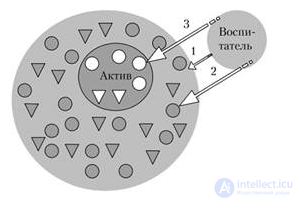
Fig. 9.3. The principle of parallel action
ings of A. S. Makarenko one can find numerous examples of the successful application of the principle of parallel action. In particular, Makarenko never looked for the specific culprits of misconduct, giving the collective the right to deal with their offences, while he himself only subtly guided the actions of the activists.
Over time, the practice of school education was enriched with new examples of applying the principle of parallel action. However, alongside the skilful, thoughtful use of the advantages of parallel action, ill-considered decisions also occur. In particular, this principle is used for the collective condemnation of offenders: if some pupils were negligent in a task, the punishment is imposed on the whole collective. For example, because someone did poorly on duty, the class has to do duty again for a whole week, performing work out of turn. Naturally, such a pedagogical action provokes sharp condemnation of the classmates' misdeed, and its consequences cannot always be foreseen. A. S. Makarenko advised using this principle very carefully, since the collective may punish the offenders quite severely.
Makarenko attached great importance to the style of relations within the collective. He considered the distinguishing features of a well-formed collective to be:
Will the technology of coercive upbringing survive in the modern school? To better understand the ideas of collectivist education, let us turn to the personality of A. S. Makarenko, his life path, and his understanding of the educational process. Makarenko will remain in the history of pedagogy regardless of whether his technology lives on or is rejected. But his ideas, goals and deeds will be clearer to us if we pay attention to some moments of his life and work. Let us reread the pages of the first volume of his works.
"In 1920 the Poltava provincial department of public education entrusted me with the task of organizing and managing a colony for juvenile (minor) offenders," he writes in one of his statements . It was here that his system of collective education was created. The fact that it came from a colony for juvenile offenders characterizes this system in the most negative way. Anyone with even a little knowledge understands how a colony differs from a normal educational institution, which is why Makarenko's desire to bring the school, and through it the country, closer to the regime of the colony was viewed negatively by many of his contemporaries. Only the support of the NKVD, as an institution of the totalitarian system, made its spread possible. "The Russian labour school must be completely rebuilt, since at present it is bourgeois in its conception," Makarenko writes further. But today we are building a democratic school, fitted into market conditions. Will Makarenko's methods help us in this? "It is assumed <...> that the individual will act correctly solely because of positive motives. This is absurd. <...> As soon as action begins, it requires order and completion, constancy, composure and endurance" – here Makarenko demonstrates the typical mindset of a prison guard who considers everyone criminal from the outset.
For many years the authority of A. S. Makarenko was unshakable, but recently attitudes toward the technology of collective education he created have changed. The processes of democratization and humanization of education have pushed teachers to rethink former values. Alternative views of Makarenko's educational system have appeared. One of the first researchers to take a critical look at the system of collectivist education was Doctor of Pedagogical Sciences, Professor Yu. P. Azarov. Let us quote an excerpt from his book "You Will Not Rise, Old Man" (Moscow, 1989).
"...What makes Makarenko terrible is that he is talented. That he became the singer not of an outward dictatorship, but of a deeply inward one, when violence is gladly accepted by those against whom it is directed. Makarenko created a set of primitive dogmas that were easily implanted in the minds of teachers: for the collective, through the collective, in the collective! School is a factory! Major key! We do not care about the individual! Conscience, harmonious development, compassion are bourgeois categories. We are creating a pedagogy of parallel action, and that means spitting on the suffering of each individual person, so long as the collective tramps along in a fanfare march toward the victories laid out for it! Makarenkoism has exhausted itself!"
Today teachers have effectively split into two camps: some agree to preserve the technology of coercive collective education in the school, while others are categorically against its use in a democratic society. The press is full of contradictory opinions that try to combine, in a single line, concepts that do not fit together: collective and individual, coercion and freedom, humanism and socialism. (Our textbook is not free of this either: rethinking comes with too much difficulty.) The technology of coercive education is sought to be preserved by teachers who are concerned about the decline in good upbringing, the decline in the morals of young people, and society's departure from former values. Nostalgia for the former strict upbringing is also fed by the sentiments of the majority of ordinary people: let there be suppression and lack of freedom rather than permissiveness and anarchy. The contrast between the behaviour of young people today and in the recent past is simply too great. Unable to act in the new democratic conditions, many educational institutions in fact carry out upbringing by the very methods that were characteristic of the coercive system of collectivist education. Hence the conflicts and the stratification into opposing groups, from which collectives can no longer be assembled. Only time will help us gradually become accustomed to the space of democracy, humanism and freedom. We are in the process of moving toward such a space, and artificially running ahead promises us nothing good. We can copy as many models of education existing in countries of developed democracy as we like, but we cannot change established approaches immediately and completely.
All of the above allows us to draw the following conclusions:
1. Such an organization of the training of the future teacher (social pedagogue) in person-oriented interaction contributes favourably to mastering the theoretical and methodological-technological foundations of this approach and influences the development of the future teacher's professional and personal capacities and abilities; the student enriches his or her psychological and pedagogical knowledge, develops creative pedagogical thinking, masters psychological and pedagogical terminology and the language of science, learns to give an adequate self-assessment of his or her pedagogical capacities and abilities (organizational, communicative, psychotherapeutic, corrective, constructive, gnostic:), acquires the skill of using interdisciplinary connections (pedagogy, psychology, pedagogical technology:), and above all learns to determine the prospects for the pupil's personal growth.
2. By implementing the person-oriented approach in organizing the teaching and upbringing process, the future teacher (social pedagogue) masters its most complex form of implementation, the dialogic form, which defines subject-subject interaction and an increase in the degree of freedom of the participants in the pedagogical process, and the self-actualization and self-presentation of the future teacher's personality. Technologies of this type provide for transforming the superposition of the teacher and the subordinate position of the pupil into personally equal positions. Such a transformation is due to the fact that the teacher does not so much teach and educate as actualize and stimulate the pupil toward development and create conditions for self-movement. Naturally, this requires abandoning role masks and including the emotional and value-based experience of both the teacher and the pupil in the interaction.
The degree of effectiveness of person-oriented pedagogical technologies depends significantly on how fully the human being is represented in them in his or her manifold subjecthood and subjectivity, how his or her characteristics are taken into account, and what the prospects are for their development and decline. Hence the priority of subject-meaning-based teaching and upbringing over informational teaching, and the orientation toward forming in children subjective pictures of the world, as opposed to unambiguous "programmatic" notions. Meaning-seeking dialogue and the inclusion of learning tasks in the context of life problems are priority forms of organizing pedagogical interaction.
Person-oriented technologies mean the personalization of pedagogical interaction, which requires the adequate inclusion of personal experience in this process. Depersonalized pedagogical interaction is rigidly determined by role prescriptions, which contradicts the polysubject (dialogic) nature of interaction.
The personalization and dialogization of the educational process is not a return to "pair pedagogy", since they rely on a whole system of forms of cooperation. When these are used, a certain sequence and dynamics must be observed: from the teacher's maximum help in solving learning and upbringing tasks to a gradual growth of the pupil's own activity, up to full self-regulation in the teaching and upbringing process and the emergence of partnership relations between them. The restructuring of forms of cooperation, linked to a change in the positions of the teacher and the pupil, leads to the possibility of self-change of the subject of upbringing and teaching, who independently paves his or her own path of self-development (V. A. Slastenin, N. G. Rudenko).
3. By mastering the theory and the methodological-technological basis of the person-oriented pedagogical approach and interaction, the future teacher (social pedagogue), who possesses a high level of pedagogical culture and reaches the heights of pedagogical activity, will in the long run be able and obliged to use his or her potential for his or her own personal and professional growth.

Comments