
Lecture
The socio-psychological climate of a team reflects the nature of relationships between people and the prevailing tone of the public mood in the team, which is connected with satisfaction with living and working conditions, the style and level of management, and other factors.
The socio-psychological climate of a team is connected with a certain emotional coloring of the psychological ties within the team, which arise on the basis of closeness, sympathy, and compatibility of characters, interests, and inclinations.
The concept of psychological climate reflects the nature of relationships between people, the prevailing tone of the public mood, the level of management, and the conditions and characteristics of work and leisure in the given team.
The socio-psychological qualities of a person that have a positive influence on the formation of the socio-psychological climate include integrity, responsibility, discipline, activity in interpersonal and intergroup relations, sociability, good manners, and tact. People who are inconsistent, selfish, tactless, and so on have a negative influence on the climate. The well-being of people, and through it the general climate of the team, is also influenced by the characteristics of mental processes (intellectual, emotional, volitional), as well as by the temperament and character of the team members. In addition, a person's preparation for work, that is, his or her knowledge, abilities, and skills, plays an important role. A person's high professional competence inspires respect, can serve as an example for others, and thereby contributes to the growth of skill among the people who work with him or her.
Alongside "psychological climate," the following terms are also used:
Thus, psychological climate can be viewed as the emotional coloring of the psychological ties among team members, arising on the basis of their closeness, sympathy, and compatibility of characters, interests, and inclinations. The psychological atmosphere is determined above all by a person's attitude toward the work for the sake of which the group or team exists, and by satisfaction with work.
The main tasks of optimizing the climate include the following:
Because employees spend a large share of their time at the workplace, management must, in order to create maximum effectiveness in its employees' work, constantly work on optimizing and improving the psychological climate.
All forms of influence on the socio-psychological climate can conditionally be divided into five types :
The methods of regulating the socio-psychological climate described above certainly do not exhaust all the variants of techniques used in psychology; however, they reflect the main ways of influencing the socio-psychological climate of a team. A manager must develop the skills and abilities to assess a situation accurately and choose the most suitable method.
The socio-psychological qualities of a person that positively influence the formation of a favorable socio-psychological climate include integrity, responsibility, discipline, activity in interpersonal and intergroup relations, sociability, good manners, and tact
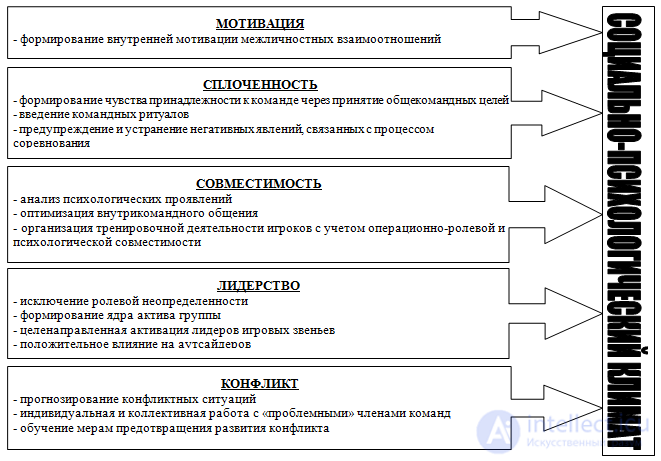
Fig. 1. Factors influencing the formation of a positive socio-psychological climate
The next factor that significantly influences the psychological climate in a team is the manager himself or herself as a leader, who can substantially affect the nature of interpersonal relationships in the work team, the attitude toward joint activity, and satisfaction with the conditions and results of work.
Three leadership styles are distinguished:
- The democratic style develops sociability, trust in relationships, and friendliness. There is no feeling that decisions are imposed from outside, from "above." This style implies the participation of team members in management and contributes to optimizing the psychological climate.
- The authoritarian style usually breeds hostility, submissiveness and servility, envy, and distrust. But if this style leads to success that justifies its use in the eyes of the group, it contributes to a favorable psychological climate, as, for example, in sports or in the army. Even if a manager uses an authoritarian management style, it can be positive if, when making a decision, he or she takes the interests of employees into account, explains the choice to them, makes his or her actions understandable and well-founded, in other words, pays more attention to establishing a firm and close connection with subordinates.
- The laissez-faire style results in low productivity and quality of work and dissatisfaction with joint activity, and leads to the formation of an unfavorable psychological climate. The laissez-faire style can be acceptable only in some creative teams.
A great effect in creating a positive climate in an organization comes from shared experiences of significant life phenomena and events, and from socializing in free time. This brings unity and cohesion and shapes the team, but along this path one must beware of group egoism, narrow group interests, and confrontation with other groups.
The psychological climate in a group is based on the individual characteristics of each participant, their mutual sociability, assessments and opinions, reactions to the words and actions of others, and also the social experience of the group members.
To create a favorable psychological climate in a team, a manager should assemble a team in which people are compatible with one another:
It is also necessary for the manager to perform the following functions:
When analyzing psychological compatibility, it is important to take into account the types of communicative behavior (classification by V.M. Shepel):
Three levels of compatibility are distinguished:
Working cohesion is the result of employee compatibility. It ensures the greatest possible success of joint activity at minimal cost.
A manager should carefully monitor that the organization's activity has satisfactory information support. Employees' low communicative competence also leads to communication barriers, growing tension in interpersonal relations, misunderstanding, distrust, and conflicts.
The ability to state one's point of view clearly and precisely, mastery of techniques of constructive criticism, skills of active listening, and so on create the conditions for satisfactory communication in an organization.
If a manager makes excessive demands, criticizes employees in public, punishes often and rewards rarely, does not value their contribution to joint activity, threatens, tries to intimidate them with dismissal, loss of a bonus, and so on, behaves in accordance with the slogan "the boss is always right," does not listen to the opinion of subordinates, and is inattentive to their needs and interests, then he or she creates an unhealthy working atmosphere.
A good manager should pay attention to the following factors:
1. Selection of employees. For every management, the professional qualities and skills of a potential employee are important. When hiring an employee, one must also pay attention to his or her psychological profile. If during the interview the candidate displays qualities such as greed, aggressiveness, or inflated self-esteem, he or she should be refused the job. Such an employee can become a source of conflicts in the work team.
2. Employees' interest in the results of their work. It is very important that an employee be enthusiastic about his or her work and strive to achieve the best results. A planned vacation, material incentives, career growth prospects, and the opportunity to study and improve one's professional skills are the factors that influence an employee's interest in work.
3. Working conditions. Unfavorable working conditions can affect the psychological climate in the work team. Extraneous noise, a poorly equipped workplace, and poor sanitary and hygienic conditions can become a source of irritability among employees.
4. The role of the manager in the team. Managers who treat their subordinates with disdain or provoke hostility in them, as a rule, do not obtain good performance from the team as a whole. The most optimal is the democratic style of behavior: an employee is not afraid to make a mistake or to ask questions, and does not feel excessive demands or imposed decisions. There is always an opportunity to change the moral and psychological climate in a team. Holding corporate parties and celebrations, congratulating employees, and rewarding them are the events that help to unite workers. By working to improve the climate in the team, every manager ensures for himself or herself satisfied employees who work in a cohesive way and toward results.
The absence of mutual respect and trust makes people take a defensive position and protect themselves from one another; the frequency of contacts decreases, communication barriers and conflicts arise, a desire to leave the organization appears, and, as a consequence, the productivity and quality of the work performed decline.
The formation of the psychological climate is influenced not only by attitudes toward the work and toward labor, but also by how each member of a group or class treats themselves and other people.
A person is always in some emotional state: cheerful and optimistic, or sad and sorrowful, or depressed and gloomy. This shows in their mood. Moreover, every person has a so-called general tone of mood that is characteristic of them in particular. One person's mood is very often transmitted to other people with whom they communicate, work, or study. Psychological research shows that a person with a persistently gloomy mood, whose negative emotional experiences arise without any significant objective reasons, spreads this state to the other people with whom they come into contact. As a result, a general depressed mood may arise in the group. Therefore, it is far from irrelevant to the overall psychological state of a group or collective what mood each of its members is in. In the East, a tradition has survived according to which a person has no right to display not only a bad mood, but also grief or sorrow. This tradition requires people to keep a friendly expression on their face in all cases, so as not to burden others with their worries and troubles. Our culture has no such tradition, but, apparently, everyone should strive to come to the group or collective in a good mood, with a kindly smile and with joy, remembering that the mood of the people around them depends to a large extent on them.
On the other hand, it is well known that constantly displayed cheerfulness and exaltation in the expression of one's feelings, even positive, upbeat ones, also has a depressing effect on the people around, tiring them and often causing irritation, especially when one person's optimism does not match the mood of the others. Therefore, what matters is not only the nature of a person's emotional state, but also how well this state fits the overall situation, as well as the measure (degree) of its expression.
The general atmosphere in a collective is strongly influenced by the degree of a person's self-confidence. It can be difficult to deal not only with a self-confident person, but also with an insecure one who constantly doubts both his abilities and skills and the success of the common cause. A nervous atmosphere can develop in the collective as a result.
Among contemporary researchers, the work of N.V. Samoukina is noted. To create an optimal working environment in a work collective, N.V. Samoukina proposes carrying out the following measures:
It should also be noted that if the collective has a scientific and pedagogical orientation, additional factors must be considered that determine a normal psychological climate in a research and/or educational institution, as proposed by E.V. Shorokhova :
The characteristics of the mental processes (intellectual, emotional, volitional) of group members, their temperament and character, have a greater influence on the general climate of a scientific and/or pedagogical collective than they do in a production collective. In addition, an important role is played by a person's preparation for work, that is, their knowledge, skills, and abilities.

Comments