Here are examples of common misconceptions . Each entry is written as a correction; the misconception itself is usually implied rather than stated outright. These entries are brief summaries of their main topic articles, which can be consulted for more detail.
Art and culture
Food and cooking
- Searing meat does not seal in moisture; in fact, it causes moisture loss. Meat is seared so that it browns , improving its color and flavor.
- Monosodium glutamate ( MSG ) does not cause headaches or other symptoms of the so-called Chinese restaurant syndrome , nor is there evidence that some people are especially sensitive to MSG.
- Twinkies have a shelf life of about 45 days (25 in their original recipe) -far shorter than the common (and somewhat joking) myth that Twinkies remain edible for decades or longer. They typically stay on a store shelf for only 7 to 10 days.
- Children have not been killed or seriously harmed by poisoned candy or fruit given to them by strangers on Halloween or at other times, although there have been cases of people poisoning their own children.
- Most food can be eaten long after its expiration date , with the exception of some perishable products.
- Seeds are not the hottest part of a chili pepper . In fact, the seeds contain only a small amount of capsaicin , the compound that produces a sensation of heat in mammals. The highest concentration of capsaicin is found in the placental tissue ( the pith ), to which the seeds are attached.
- Turkey meat is not especially rich in tryptophan and does not cause more drowsiness than other foods.
Food history

Fortune cookies are associated with Chinese cuisine , but were actually invented in Japan and are almost never eaten in China, where they are regarded as American.
- Fortune cookies are not found in Chinese cuisine , despite being ubiquitous in Chinese restaurants in the United States . They were invented in Japan and brought to the US by Japanese immigrants. In China they are regarded as American and are rarely found.
- Before refrigeration, spices were not used to mask the flavor of rotting meat. Spices were an expensive luxury; those who could afford them could also afford good meat, and there are no contemporary documents urging the use of spices to disguise the taste of bad meat.
- Steak tartare was not invented by Mongol warriors who tenderized meat under their saddles.
- Whipped cream was not invented by Francois Vatel at the Chateau de Chantilly in 1671; the recipe is attested at least a century earlier in Italy, though the name creme Chantilly only appeared in the 19th century.
- Catherine de' Medici and her entourage did not introduce Italian cuisine to the French royal court and thereby create French haute cuisine.
Microwave ovens
- Microwave ovens do not heat food through a special resonance of water molecules in the food, but through dielectric heating .
- Microwave ovens do not cook food from the inside out. 2.45 GHz microwave ovens can only penetrate about 1 centimeter ( 3 / 8 inch) into most foods. The interiors of thicker foods are mostly heated by heat conducted from the outer parts.
- Microwave ovens cannot cause cancer, because microwave radiation is non-ionizing and therefore does not carry the cancer risk associated with ionizing radiation such as X-rays . No studies of cancer risk from microwaves have found any carcinogenicity from microwave radiation, even at exposure levels far exceeding those people might encounter from leaking ovens.
Law, crime and the military
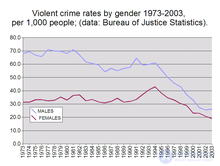
The violent crime rate has fallen over the past several decades.
- Waiting 24 hours before filing a missing person report is rarely necessary . In cases where there is evidence of violence or an unusual absence, US law enforcement often stresses the importance of beginning an investigation immediately. The UK government website states in bold print: “You do not need to wait 24 hours before contacting the police”.
- Twinkies were not claimed to be responsible for the murders of San Francisco mayor George Moscone and city supervisor Harvey Milk . At Dan White's trial, the defense successfully argued that White's capacity was diminished by severe depression. Although his eating Twinkies was cited as evidence of that depression, it was never held to be a cause of the killings.
- The United States Armed Forces have generally prohibited enlistment in lieu of a suspended sentence (that is, an option for convicts to avoid imprisonment) since 1980 . US Navy protocols discourage such a practice, while the other four branches have specific rules against it.
- Legal tender laws in the United States do not require that a private business, individual or organization accept cash as payment, although it must be treated as valid payment for debts owed to a creditor.
- In the United States police officers are not required to identify themselves as police when working undercover or in a sting operation, and officers may lie while engaged in such work. An entrapment defense instead focuses on whether the accused was induced by improper pressure (such as threats) or deception on the part of law enforcement to commit crimes they otherwise would not have committed.
- From 1993 to 2017 the number of violent crimes in the United States declined. The violent crime rate fell by 49% over that period, and the number of gun homicides decreased.
- The First Amendment to the United States Constitution generally only restrains government restrictions on freedom of religion , speech , the press , assembly or petition , not restrictions imposed by private individuals or businesses, unless they are acting on behalf of the government . Other laws may limit the ability of private businesses and individuals to restrict others' freedom of speech.
- Neither the Mafia nor other criminal organizations drowned their victims in cement overshoes . This method was used only in isolated cases to sink (already) dead bodies.
Literature
- Many quotations are inaccurate or attributed to people who never said them, and quotes from little-known or unknown authors are often attributed to more famous figures. Commonly misquoted people include Albert Einstein , Adolf Hitler , Winston Churchill , Abraham Lincoln , William Shakespeare and the Buddha .
Music
Many songs attributed to "Weird Al Yankovich" have no connection to the real "Weird Al" Yankovic.
- “ Edelweiss ” is not the national anthem of Austria , but an original composition written for the musical The Sound of Music . The national anthem of Austria is “ Land der Berge, Land am Strome ” (“Land of the mountains, land by the river”).
- Phil Collins did not write his 1981 hit “ In the Air Tonight ” about witnessing someone drown and then confronting the person in the audience who let it happen.
- The tune of “ Twinkle, Twinkle, Little Star ”, the “ Alphabet Song ” and “ Baa, Baa, Black Sheep ” was not composed by Mozart at the age of 5; it was already a popular French folk tune when he composed a set of variations on it at the age of 25 or 26.
- Mozart was not Austrian . During his lifetime, Salzburg was not part of the Archduchy of Austria , but was, in essence, a sovereign state called the Prince-Archbishopric of Salzburg in the Bavarian Circle of the Holy Roman Empire . Only in 1805, 14 years after his death, was Salzburg annexed to the Austrian Empire .
- Mozart did not die of poisoning and was not poisoned by his colleague Antonio Salieri or anyone else. This false rumor arose soon after his death and was dramatized in the well-known 1984 film “ Amadeus” .
- The Minuet in G major by Petzold is commonly attributed to Johann Sebastian Bach , although the piece was identified in the 1970s as a movement from a harpsichord suite by Petzold. The misconception stems from the “ Notebook for Anna Magdalena Bach” , a collection of pieces by various composers (mostly Bach) in which the minuet appears . Compositions doubtfully attributed to Bach are catalogued as " BWV Anh. ", short for " Bach-Werke-Verzeichnis Anhang; appendix to the catalogue of Bach's works", and the minuet is listed as BWV Anh. 114.
- The " Minute Waltz " runs to about two minutes on average, as originally written. Its name comes from the adjective minute , as in small , not the noun; hence the confusion arising from the heteronym.
- “ Don't Worry, Be Happy ”, written and sung by Bobby McFerrin , is commonly thought to have been sung by Bob Marley . Indeed, a YouTube video titled “Bob Marley - Don't Worry Be Happy” has racked up more than 146 million views. However, the famous reggae musician Marley never recorded a version of “Don't Worry, Be Happy”, as he died seven years before the song was written. “ Three Little Birds ”, which Marley did write, contains a similar line: “don't worry about a thing, 'cause every little thing gonna be all right”.
- Parody singer "Weird Al" Yankovic did not write or perform most of the songs and comedy sketches attributed to him or to "Weird Al Yankovich" online .
Religion
- Not all religions teach that there is a god or gods in the Western sense. For example, Buddhism and Jainism have no creator god, and Unitarian Universalism has no set doctrine of belief at all.
Buddhism
- The historical Buddha is not known to have been obese. The “Fat Buddha” or “Laughing Buddha” is a 10th-century Chinese folk figure named Budai . In Chinese Buddhist culture, Budai came to be venerated as an incarnation of Maitreya , the Bodhisattva who will become a Buddha to restore Buddhism after the teachings of the historical Buddha, Siddhartha Gautama , have been forgotten.
Judaism
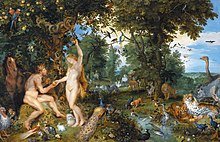
The fruit of the Garden of Eden, often depicted in art as an apple, is not named in the
Book of Genesis .
- The forbidden fruit mentioned in the Book of Genesis is never identified as an apple, a misconception widely depicted in Western art. The original Hebrew texts mention only a tree and its fruit . Early Latin translations use the word “ malum” , which can mean “evil” or “apple” depending on whether the A is short or long, respectively, although by that time the difference in vowel length had already disappeared from spoken Latin. In early Germanic languages the word “ apple” and its cognates usually meant simply “fruit”. German and French artists commonly depicted the fruit as an apple starting in the 12th century, and in John Milton's “ Areopagitica” of 1644 the fruit is explicitly called an apple. Jewish scholars have suggested the fruit could have been a grape, a fig, an apricot or an etrog .
- Although forbidden by the Book of Leviticus , having tattoos does not mean a person cannot be buried in a Jewish cemetery, as is commonly believed, just as violating any other prohibition does not ultimately bar a Jew from burial in a Jewish cemetery.
Christianity
- Jesus was most likely not born on a date corresponding to December 25 - the date on which his birth is traditionally celebrated as Christmas . It is more likely that he was born either in spring or possibly summer , while December 25 falls at the start of winter in the Northern Hemisphere . Furthermore, although the modern era is supposed to count the years since his birth, it is unlikely he was born in the year 1 or 1 BC , as such a numbering system would suggest. Modern historians place the date closer to between 6 BC and 4 BC .
- The Bible does not say that exactly three magi came to visit the infant Jesus , that they were kings or rode camels, or that their names were Caspar, Melchior and Balthazar, nor does it say what color their skin was. Three magi are inferred because three gifts are described, but all we actually know is that there was more than one (at least 2); there could have been many more, and they were probably accompanied by a retinue on their journey. Artistic depictions of the Nativity have almost always shown three magi since the 3rd century. The Bible only gives an upper limit of 2 years for the interval between the birth and the visit ( Matthew 2:16 ), and artistic depictions and the proximity of the traditional dates of December 25 and January 6 support the popular belief that the visit took place in the same season as the birth, but later traditions varied, and the visit took place no more than two years afterward. The association of the magi with kings stems from attempts to link the visit to prophecies in the Book of Isaiah .
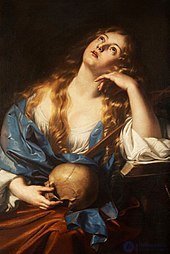
No biblical or historical evidence supports the claim that Mary Magdalene was a prostitute.
- The idea that Mary Magdalene was a prostitute before meeting Jesus is not found in the Bible or other early Christian writings. The misconception probably arose from a conflation of Mary Magdalene, Mary of Bethany (who anoints Jesus's feet in John 11:1–12 ) and the unnamed “sinful woman” who anoints Jesus's feet in Luke 7:36–50 .
- The apostle Paul did not change his name from Saul. He was born a Jew with Roman citizenship inherited from his father, and so held a Hebrew name and a Greco-Roman name from birth. Luke notes the coexistence of both names in Acts 13:9 : “... Saul, who was also called Paul ...”.
- The Roman Catholic dogma of the Immaculate Conception does not claim that Jesus or his mother Mary were born of a virgin . Rather, it states that Mary was preserved from original sin from the moment of her conception.
- Roman Catholic doctrine does not hold that the pope is sinless or always infallible. Catholic doctrine since 1870 does hold that dogmatic teaching contained in divine revelation , proclaimed by the pope (deliberately and under very specific circumstances; usually called ex cathedra ), is free of error, although official invocations of papal infallibility are rare . While most theologians hold that canonizations meet this standard, otherwise the most recent popes have completed their reigns without a single invocation of infallibility. Otherwise, even when he is acting in his official capacity, the dogma does not claim he is free from error.
- St. Peter's Basilica is not the mother church of Roman Catholicism, nor is it the pope's official seat. Those distinctions belong to the Archbasilica of St. John Lateran , which is located in Rome outside Vatican territory, but over which the Vatican has extraterritorial jurisdiction. This also means St. Peter's Basilica is not, strictly speaking, a cathedral. However, St. Peter's Basilica is used as the main church for many papal functions.
- Members of The Church of Jesus Christ of Latter-day Saints (the LDS Church) no longer practice polygamy. The LDS Church currently excommunicates any member found practicing polygamy within the organization. However, some Mormon fundamentalist sects still practice polygamy within their groups. See Mormonism and polygamy for more.
Islam
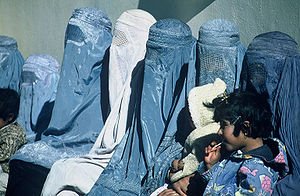
- Most Muslim women do not wear a burqa (also spelled “burka” or “burqua”), which covers the body, head and face with a mesh screen to see through. Many Muslim women, though not all, cover their hair with a hijab or their hair and face (except the eyes) with a niqab .
- A fatwa is not a binding legal opinion issued by an Islamic scholar on Islamic law ; therefore fatwas from different authors often disagree with one another. The common misconception that the word means a death sentence probably stems from the fatwa issued by Iran's Ayatollah Ruhollah Khomeini in 1989 against the writer Salman Rushdie , who, he said, was sentenced to death for blasphemy . This event brought fatwas wide media attention in the West.
- The word “ jihad ” does not always mean “ holy war ”; literally the word means “struggle” in Arabic. Although there is a concept called “ jihad bil saif ”, or jihad “by the sword”, many modern Islamic scholars generally say it implies an effort or struggle of a spiritual nature. Scholar Louay Safi states that “misconceptions and misunderstandings about the nature of war and peace in Islam are widespread both in Muslim societies and in the West”, both since and before September 11.
- The Quran does not promise martyrs 72 virgins in heaven. It mentions companions, houris , for all people in heaven - martyrs or not - but no number is given. The source for the 72 virgins is a hadith in the Sunan al-Tirmidhi of Imam al-Tirmidhi . Hadiths are sayings and actions of the prophet Muhammad reported by others, and as such are not part of the Quran itself. Muslims are not required to believe every hadith, and this applies especially to hadiths with a weak chain of transmission, such as this one. Moreover, the correct translation of this particular hadith is disputed. However, the same collection of Sunni hadiths considers the following to be strong ( hasan sahih ): “The martyr has six things with Allah . He is forgiven from the first drop of blood (that he sheds), his place is shown to him in Paradise, he is protected from the punishment of the grave, he is made safe from the greatest terror, a crown of honor is placed upon his head - and its jewels are better than the world and what is in it - he is married to seventy-two wives among the naive houris ( al-hur al-'ayn ) of Paradise, and he may intercede for seventy of his close relatives ”.
The Baha'i Faith
- Because adherents of the Baha'i Faith believe in the divine origin of Judaism, Christianity, Islam and several other major world religions, it is sometimes wrongly assumed that the Baha'i Faith is a synthesis of those other religions, or that it teaches that all of these major world religions are equally applicable today. Rather, the Baha'i Faith teaches progressive revelation, based on the belief that each of the earlier major world religions represents a successive stage in the development of humanity, and that God intends for His followers to recognize each new Revelation and follow its teachings.
Atheism
- Not all atheists believe that gods do not exist. Definitions of atheism vary: at minimum it is the absence of belief in the existence of gods; it can also be the position that gods do not exist.
Sports

Marcus Torregrossa wears a black belt in BJJ with a red bar denoting first degree
- Abner Doubleday did not invent baseball , and it did not originate in Cooperstown, New York . It is believed to have developed from other bat-and-ball games such as cricket and rounders, and to have first taken its modern form in New York.
- A black belt in the martial arts does not necessarily indicate an expert level or mastery. It was introduced in judo in the 1880s to denote competence in all the basic techniques of the sport. Progression after 1st dan (the first black-belt rank) varies by martial art. In judo and other martial arts such as Brazilian jiu-jitsu , holders of higher master ranks are awarded alternating red-and-white panels, and the highest-ranking grandmasters wear solid red belts. Other arts, such as taekwondo, use black belts with several gold bars to indicate the holder's dan rank.
- The use of triangular corner flags in English football is not a privilege reserved for teams that have won the FA Cup in the past, despite a widespread belief to the contrary that inspired a scene in the film “ Twin Town” . The Football Association's rules say nothing on the matter, and the choice of which flag to use is often left to whoever is responsible for a club's home ground.
- India did not withdraw from the 1950 FIFA World Cup because their team played barefoot, which supposedly violated FIFA rules . In fact India withdrew because the country's governing body, the All India Football Federation (AIFF), was not sufficiently prepared for the team to take part, and cited various reasons for withdrawing, including a lack of funding and prioritizing the Olympics . However, this myth is often repeated as fact in India and abroad (especially during World Cups). The AIFF itself may have been the source of the myth.
Language List of common misconceptions about language learning
- Nonstandard, slang or colloquial terms used by native English speakers are sometimes considered not to be real words, despite appearing in many dictionaries. All words in English became accepted because they came into common use over a given period of time; thus there are currently many regional words that are not part of the standard language or are considered inappropriate in formal speech or writing, but the notion that they are somehow not words is mistaken. Examples of words sometimes claimed not to be words include “ irregardless ”, “conversate”, “funner”, “wards”, “impactful” and “thusly”, all of which appear in many dictionaries as English words.
- The pronunciation of coronal fricatives in Spanish did not arise as an imitation of a lisping king. Only one Spanish king, Peter of Castile , is documented as having a lisp, and the current pronunciation arose two centuries after his death.
- The Chevrolet Nova sold quite well in Latin American markets; General Motors did not need to rename the car. While “ no va ” does mean “doesn't go” in Spanish, “ nova ” was readily understood to mean “new” because of its resemblance to the Spanish word “nueva”, with which it shares a common origin. Drivers in Mexico and Venezuela, where it was first sold, bought it readily. Despite claims to the contrary, there was no need to change the model's name.
- Sign languages differ around the world. Apart from the pidgin International Sign , each country generally has its own native sign language, and some have more than one (although there is also substantial similarity among all sign languages).
- Eskimo peoples, such as the Inuit and Yupik , do not have an unusually large number of words for snow in their languages . The myth is based on a misinterpretation of Franz Boas's original statement, which noted that Eskimos had many words for various concepts related to snow; Boas observed that the same could be said of English.
- The word “the” was never pronounced or written “ye” in Old or Middle English . The confusion seen in the common phrase “ ye olde ” arises from the use of the letter thorn (þ), which in Middle English represented the sound rendered in modern English as “th”. In blackletter script, þ and y were hard to distinguish, meaning “þe” (
 ) looked very much like “ye”.
- The Hopi do have a concept of time , and the Hopi language has ways of expressing temporal concepts, although they are organized differently than in Western languages.
- The Chinese word for “crisis” (危机) is not made up of characters meaning “danger” and “opportunity”; the first does indeed mean danger, but the second instead means “a critical point” (the original meaning of “crisis”). The myth was perpetuated mainly by a campaign speech of John F. Kennedy .
- Speakers of African-American Vernacular English do not simply replace “is” with “be” in all tenses without adding meaning. In fact, speakers of AAVE use “be” to mark habitual grammatical aspect, a distinction not explicitly marked in standard English.
English etymology
Main articles: List of common false etymologies and List of common misconceptions about English usage
- The word “ fuck ” did not originate in Christianized Anglo-Saxon England (7th century AD) as an acronym for “ Fornication Under Consent of the King”; nor did it originate as an acronym for “For Unlawful Carnal Knowledge”, nor as a sign hung over adulterers in the stocks , nor as a criminal charge against British armed-forces personnel ; nor did it arise during the Battle of Agincourt in the 15th century as a corruption of “ pluck yew ” (an idiom wrongly attributed to Englishmen referring to the longbow ). Modern English was not spoken until the 16th century, and words such as “fornication” and “consent” did not exist in any form in English before the Anglo-Norman influence of the late 12th century. The earliest recorded use of the word “fuck” in English dates from c. 1475, in the poem “ Flen flyys ”, where it is spelled fuccant (conjugated as if it were a Latin verb meaning “they fuck”). It is of Proto-Germanic origin and is related to either the Dutch fokken, the German ficken, or the Norwegian fukka .
- The word “crap” is not a back-formation from the surname of British plumber Thomas Crapper , nor does his name derive from the word “crap”, although the surname may have helped popularize the word. The surname “Crapper” is a variant of “Cropper”, which originally referred to someone who harvested crops. The word “crap” ultimately derives from the medieval Latin crappa , meaning “ chaff ”.
- The expression “ rule of thumb ” did not originate from a law permitting a man to beat his wife with a stick no thicker than his thumb, and there is no evidence such a law ever existed. The true origin of the phrase remains unclear, but the false etymology has been widely reported in the media, including The Washington Post (1989), CNN (1993) and Time magazine (1983).
- The word “ gringo ”, as a term for a foreigner in Latin America, did not originate during the Mexican–American War (1846–1848), the Venezuelan War of Independence (1811–1823), the Mexican Revolution (1910–1920), or the American Old West ( c. 1865–1899) as a corruption of the English lyric “green grow” from “ Green Grow the Lilacs ” (an Irish folk song) or “ Green Grow the Rushes, O ” (an English folk song) as sung by American soldiers or cowboys ; nor did it arise in any of these periods as a corruption of the phrase “Green, go home!”, which is falsely claimed to have been shouted at American troops dressed in green. The word originally simply meant “foreigner” and is likely a corruption of the Spanish word griego for “Greek” (in keeping with the idiom “ it's Greek to me ”).
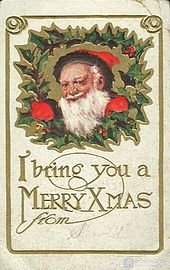
“Xmas”, alongside a modern Santa Claus, used on a Christmas card (1910)
- The anti-Italian slur wop does not derive from an acronym for “without papers” or “without passport”, as is widely believed; it actually derives from the term guappo (roughly meaning thug ) and was in use before 1908, predating modern immigration laws. An alternate etymology holds that the derogatory term derives from the Italian dialectal guappo, meaning “dandy”, from the Spanish guapo.
- Wetback , an ethnic slur for Mexican immigrants arriving in the US, has nothing to do with sweaty farm labor or any other activity after migrating, but rather refers solely to the effect of the presumed method of immigration, crossing the Rio Grande , which would leave one's back wet.
- “ 420 ” was not derived from a Los Angeles police or penal code for marijuana use . In California, police code 420 means “juvenile disturbance”, and section 420 of the California Penal Code prohibits obstructing entry onto public land. The use of "420" began in 1971 at San Rafael High School , where it referred to the time, 4:20 pm, when a group of students would go to smoke.
- “Xmas” did not arise as a secular scheme to “take Christ out of Christmas”. X stands for the Greek letter chi, the first letter of ριστóς ( Christós ), Greek for “Christ”. The use of the word “Xmas” in English can be traced back to 1021, when monks in Britain used X in place of “Christ” as an abbreviation when translating classical manuscripts into Old English. The Oxford English Dictionary records the earliest known use of “Xmas” for “Christmas” as dating to 1551.
Film and television
- Jerry Lewis was not a celebrated icon in France. Within French filmmaking and critical circles he was known for his tight creative control over his films and the unconventional techniques he used in them, but this reputation never extended to the general public. Lewis was held in comparably high regard by critics across much of continental Europe.
- Jane Russell never wore the special bra designed by director Howard Hughes for the filming of “The Outlaw” . She said the “ridiculous” contraption hurt so much that “I never wore it in “ The Outlaw ” , and he never knew. He wasn't about to take my clothes off to check whether I had it on. I just told him I did”.
History
Ancient
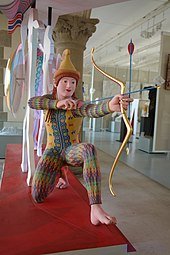
Ancient Greek sculptures were originally painted in bright colours.
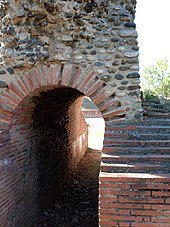
A
vomitorium in the Roman amphitheatre at Toulouse
- Ancient Greek and Roman sculptures were originally painted in bright colours ; they appear white today only because the original pigments have worn away. Some well-preserved statues still bear traces of their original colouring.
- There is no curse on the tomb of Tutankhamun for those who disturb it . This is a media invention of 20th-century tabloid journalists.
- The ancient Greeks did not use the word “ idiot ” ( Ancient Greek : ἰδιώτης , romanized : idiṓtēs ), to disparage people who took no part in public life or did not vote. Ἰδιώτης simply meant a private individual, as opposed to a government official. The word later came to denote any non-specialist or layperson, then someone uneducated or ignorant, and much later came to mean someone stupid or mentally deficient.
- There is no evidence that the Roman salute , in which the arm is fully extended forward or diagonally with the fingers together, was actually used in ancient Rome for greeting or any other purpose. The idea that the salute was popular in ancient times originated in an 1784 painting by the French artist Jacques-Louis David, “ The Oath of the Horatii ” , which inspired later salutes, most notably the Nazi salute .
- Vomiting was not a common feature of Roman banquets . In ancient Rome, an architectural feature called a vomitorium, was a passageway through which crowds entered and exited a stadium, not a special room used for purging food during a meal.
- The death of the Greek philosopher Hypatia of Alexandria at the hands of a mob of Christian monks in 415 , for the most part , resulted from her involvement in a bitter political feud between her close friend and student Orestes , the Roman prefect of Alexandria, and Bishop Cyril , not her religious views. Her death also had nothing to do with the destruction of the Library of Alexandria, which had probably ceased to exist centuries before Hypatia was born.
- Scipio Aemilianus did not plough under the city of Carthage or sow it with salt after its defeat in the Third Punic War .
- Contrary to popular belief, the Roman dictator Julius Caesar was not born by caesarean section . At the time, such a procedure would have been fatal to the mother, and historical evidence indicates that Caesar's mother was alive during his lifetime. Although the names are similar, the caesarean section was not named after Caesar, as is commonly believed; it more likely derives from the Latin verb caedere , meaning “to cut”.
Middle Ages and Renaissance
See also: List of medieval myths
- The Middle Ages were not a “time of ignorance , barbarism and superstition ”, and the Church did not place religious authority above personal experience and rational inquiry. Historian of science Edward Grant writes: “If revolutionary rational thought was expressed in the Age of Reason , it was made possible by a long medieval tradition that established the use of reason as one of the most important human activities”. Moreover, historian of science David Lindberg says that, contrary to popular belief, “a late-medieval scholar rarely experienced the coercive power of the Church and would have considered himself free (particularly in the natural sciences) to follow reason and observation wherever they led ”. Describing the period as the “ dark ages ” in this regard is a common misconception that persists to this day among non-specialists.
- Although it is true that average life expectancy today is, by any measure, far higher than in the Middle Ages and earlier, there is no evidence that adults in the Middle Ages typically died in their 30s or 40s. According to the statistics, this was the average figure at birth , since the earlier low life expectancy was very heavily skewed by high infant and childhood mortality. On the other hand, the average life expectancy of people who reached adulthood was considerably higher. For example, a 21-year-old man in medieval England could expect to live to 64. Age-specific estimates , especially life expectancy beyond childhood, can differ sharply from life expectancy at birth, particularly in pre-industrial times.
- There is no evidence that Vikings wore horns on their helmets ; this would have been highly impractical in battle. In fact, the image of horned-helmeted Vikings comes from the stage design of Richard Wagner's opera cycle “The Ring of the Nibelung” from 1876 .
- Vikings did not drink from the skulls of their vanquished enemies . This was based on a mistranslation of the skaldic poetic use of ór bjúgviðum hausa (branches of skulls) to mean drinking horns.
- The Vikings did not name Iceland “ Iceland ” as a ploy to discourage others from settling it. Naddodd and Hrafna-Flóki Vilgerðarson saw snow and ice on the island when they travelled there, which gave the island its name. Greenland, on the other hand, was named in the hope that it would help attract settlers.
- King Canute did not command the tide to turn back in a fit of deluded arrogance. His intention that day, if the incident actually happened, was most likely to prove to the members of his court that no man is all-powerful, and that we must all submit to forces beyond our control, such as the tides.
- There is no evidence that iron maidens were used for torture or were even invented in the Middle Ages . Instead, they were assembled in the 18th century from several artefacts found in museums to create striking objects intended for (commercial) exhibition.
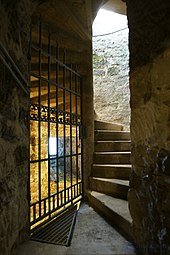
A counterclockwise spiral staircase at Hohenzollern Castle in Germany. The choice of a counterclockwise or clockwise spiral had more to do with convenience than with hindering a right-handed attacker on the castle.
- Spiral staircases in castles were not built clockwise to hinder right-handed attackers. Although clockwise spiral staircases are more common in castles than counterclockwise ones, they were even more common in medieval structures with no military role, such as religious buildings. Studies of spiral staircases in castles have concluded that “the role and placement of spirals in castles ... had a far stronger domestic and status-related role than a military one” and that “there are enough examples of counterclockwise staircases in Britain and France in the [ 11th and 12th centuries] to indicate that the choice must have depended on both physical convenience and architectural practicality, and that there was no military doctrine requiring clockwise staircases for combat effectiveness or advantage ”.
- Plate armour worn by European soldiers did not stop them from moving around or require a crane to get them into the saddle. They naturally fought on foot, and could mount and dismount without help. In fact, soldiers equipped with plate armour were more mobile than soldiers wearing mail armour (chainmail), since mail was heavier and required a stiff padded layer underneath because of its flexibility. It is true that the armour used in tournaments in the late Middle Ages was considerably heavier than the armour used in war, which may have contributed to this misconception.
- Whether chastity belts , devices intended to prevent women from engaging in intercourse , were invented in the Middle Ages is disputed by modern historians. Most surviving chastity belts are now considered to be either deliberate fakes or 19th- and early-20th-century anti-masturbation devices. The latter were made because of the widespread belief that masturbation could cause insanity , and were mostly bought by parents for their teenage children.
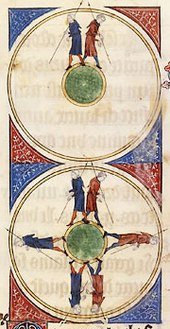
Medieval depiction of a spherical Earth.
- Medieval Europeans did not believe that the Earth was flat . Scholars had known the Earth was spherical since at least 500 BC. This myth was created in the 17th century by Protestants to oppose Catholic teachings.
- Christopher Columbus's efforts to win support for his voyages were hindered not by a belief in a flat Earth, but by well-founded fears that the East Indies were farther away than he thought. In fact, Columbus badly underestimated the Earth's circumference because of two calculation errors. He and his entire crew would have died of starvation, thirst or scurvy had they not fortuitously reached the Caribbean islands off the coast of North America. The myth that Columbus proved the Earth was round was propagated by writers such as Washington Irving in “A History of the Life and Voyages of Christopher Columbus” .
- Christopher Columbus was not the first European to visit the Americas: Leif Erikson and, possibly, other Vikings before him explored Vinland , which was either the island of Newfoundland , part of present-day Canada, or a term for Newfoundland and parts of the North American mainland. . The ruins at L'Anse aux Meadows prove that at least one Norse settlement was built in Newfoundland, corroborating the account in the Saga of Erik the Red . Columbus also never reached land that is now part of the mainland United States of America; most of the landings made by Columbus during his four voyages , including the initial landing on 12 October 1492 (the anniversary of which forms the basis of Columbus Day ), were made on Caribbean islands that are now independent countries. Columbus did, however, land on the South American mainland during his third voyage to the Americas (1498–1500) .
- The people of Mexico under the Aztec Empire did not mistake Hernán Cortés and his men for gods during Cortés's conquest of the empire . This myth came from Francisco López de Gómara, who never visited Mexico and invented the myth while working for the retired Cortés in Spain years after the conquest.
- Marco Polo did not import pasta from China. This misconception arose in the Macaroni Journal , published by a food-industry association with the aim of popularising the use of pasta in the United States. Marco Polo describes a food resembling “lasagna” in his Travels , but he uses a term he was already familiar with. Durum wheat , and thus pasta as it is known today, was introduced by Arabs from Libya during their conquest of Sicily in the late 9th century, according to a bulletin of the National Pasta Association , thus predating Marco Polo's travels to China by about four centuries.
- The Inquisition did not require belief in geocentrism over heliocentrism because of the Bible. Rather, a geo-heliocentric model of the world was the dominant model at the time, supported by evidence such as stellar parallax , which remained undetectable until the 1800s. On the contrary, the main factor contributing to the delay in support for the Copernican model was the fact that much of the evidence for heliocentrism had already been adequately explained by the Tychonic system.
Early modern
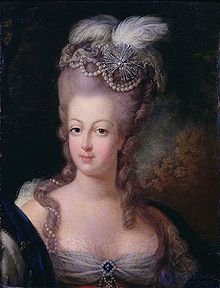
The phrase “ let them eat cake ” is commonly attributed to Marie Antoinette .
- Contrary to the popular image of the Pilgrim Fathers , the first settlers of Plymouth Colony in North America did not typically wear all black, and their hats were shorter and rounder than the tall buckled hat widely depicted. Instead, their fashion followed that of the late Elizabethan era : doublets , jerkins and ruffs . Both men and women wore the same kinds of shoes, stockings, capes, coats and hats in various colours, including red, yellow, purple and green. According to Plimoth Plantation historian James W. Baker, the traditional image took shape in the 19th century, when buckles had become a kind of symbol of quaintness . (The Puritans , who also settled in the colony of Massachusetts around the same time, did often wear all black.)
- The familiar story that Isaac Newton was inspired to investigate the nature of gravity by an apple striking him on the head is almost certainly apocryphal. All Newton himself ever said was that the idea came to him while he was sitting “in a contemplative mood” and “was occasioned by the fall of an apple”.
- Those accused in the Salem witch trials in North America were not burned at the stake; about 15 people died in prison, 19 were hanged, and one was pressed to death .
- Marie Antoinette did not say “ let them eat cake ”, upon hearing that the French peasantry was starving for lack of bread. The phrase was first published in Rousseau's “ Confessions” , when Marie was only nine years old, and most scholars believe it was either invented by Rousseau himself or was uttered by Marie-Thérèse , wife of Louis XIV . Even Rousseau (or Marie-Thérèse) did not use those exact words, but rather Qu'ils mangent de la brioche , meaning “Let them eat brioche ” ( a rich kind of bread). Marie Antoinette was under attack from radical Jacobins ; political activists therefore attributed the phrase “let them eat cake” to her, to publicise an image of her as out of touch with her subjects.
- George Washington did not have wooden teeth. His dentures were made of gold, hippopotamus ivory, lead, animal teeth (including horse and donkey teeth) and, probably, human teeth purchased from slaves.
- The signing of the United States Declaration of Independence did not take place on 4 July 1776. After the Second Continental Congress voted to declare independence on 2 July, the final wording of the document was approved on 4 July, and it was printed and distributed on 4–5 July. The actual signing, however, took place on 2 August 1776.
- Benjamin Franklin did not propose using the wild turkey as a symbol of the United States instead of the bald eagle . Although he did serve on a committee that tried to design a seal after the Declaration of Independence , his own proposal was an image of Moses . His objections to the eagle as a national symbol and his preference for the turkey were expressed in an 1784 letter to his daughter, written in response to the Society of the Cincinnati's use of the former; he never voiced this opinion publicly.
- Benjamin Banneker did not recall from memory and reproduce Pierre (Peter) Charles L'Enfant's plan for the city of Washington, D.C. , nor did he assist in planning or surveying that city, nor did he write one of the first almanacs in the United States, nor did he invent a clock, and he was not among the first to record observations of periodical cicadas ( for further information and references, see “ Benjamin Banneker § Mythology” ).
- No bill to make German the official language of the United States was ever rejected by a single vote in the House of Representatives , and no such law was ever proposed at the state level. In 1794, a petition from a group of German immigrants was rejected by a procedural vote of 42 to 41, which would have required the government to publish some laws in German. This was the basis of the Muhlenberg legend , named after the then Speaker of the House, Frederick Muhlenberg , a Speaker of German descent who abstained from the vote.
Modern
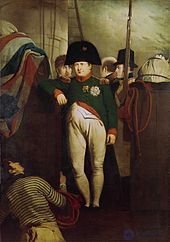
Napoleon on the Bellerophon , a painting depicting Napoleon I by Charles Lock Eastlake . Napoleon was taller than his nickname
Le Petit Caporal suggests.
See also: False memory § Commonly held false memories
- Napoleon Bonaparte was not short. In fact, he was slightly taller than the average Frenchman of his time. At his death in 1821, the French emperor's height was recorded as 5 feet 2 inches in French feet , which in English measurements is about 5 feet 7 inches (1.70 m). His nickname Le Petit Caporal (the Little Corporal) was actually a term of endearment. Napoleon was often accompanied by his Imperial Guard, who were selected for their height — this may have contributed to the perception of his being relatively short.
- Cinco de Mayo is not Mexico's Independence Day , but a celebration of the Mexican army's victory over the French at the Battle of Puebla on 5 May 1862. Mexico's declaration of independence from Spain in 1810 is commemorated on 16 September.
- The purchase of Alaska was broadly popular in the United States, both with the public and the press. Opponents of the purchase, who dubbed it “Seward's Folly”, after Secretary of State William H. Seward , who negotiated it, were a minority at the time.
- Cowboy hats were not initially popular on the western American frontier , where bowler or derby hats were the typical headgear. Aggressive marketing of the Stetson “ Boss of the Plains ” model in the years following the American Civil War was the main driving force behind the cowboy hat's popularity, since its distinctive dented crown did not become standard until nearly the end of the 19th century.
- Despite being frequently referenced in culture and society at large, the idea that Victorian-era doctors invented the vibrator to treat female “hysteria” by inducing orgasm is the product of a single work that has been rejected by most historians.
- The Great Chicago Fire of 1871 was not caused by Mrs. O'Leary's cow kicking over a lantern. A newspaper reporter later admitted he had invented the story to produce more colourful copy .
- The claim that Frederic Remington, while on assignment in Cuba in 1897, telegraphed William Randolph Hearst : “ There will be no war . I wish to return”, and that Hearst replied: “Please remain. You furnish the pictures, and I'll furnish the war” is unfounded. This anecdote was originally included in a book by James Creelman , although there is no evidence that the telegram exchange ever actually took place, nor substantial evidence that it did not.
- Immigrants' surnames were not Americanized (whether voluntarily, by mistake, or otherwise) upon arrival at Ellis Island . Officials there kept no records beyond checking the ship manifests drawn up at the port of departure, and there simply was no paperwork that would have let them change surnames, let alone any law to that effect. At the time, in New York, anyone could change the spelling of their name simply by adopting the new spelling. Such changes are often called “ Ellis Island specials ”.
- The now-familiar image of Santa Claus ( Father Christmas ) as a jolly old man in red robes was not created by the Coca-Cola company as an advertising gimmick. Although he had historically been depicted with varying features and robe colours, Santa Claus had already taken on his modern form in popular culture and was already widely used in advertising by other companies and other media by the time Coca-Cola began using his image in the 1930s. .
- Franklin D. Roosevelt's paralytic illness is now thought unlikely to have been poliomyelitis , as was diagnosed at the time in 1921, but rather to be consistent with Guillain-Barré syndrome .
- The Italian dictator Benito Mussolini “ did not make the trains run on time”. Most of the repair work had been carried out before Mussolini and the Fascists came to power in 1922. Records from the era also suggest that the legendary punctuality of the Italian railways was more propaganda than reality.
- There was no widespread outbreak of panic across the United States in response to Orson Welles's 1938 radio adaptation of H. G. Wells's The War of the Worlds . Only a very small share of the radio audience even listened to it, and isolated reports of scattered incidents and an increased number of calls to emergency services the next day were played up by newspapers eager to discredit radio as a competitor for advertising. Both Welles and CBS, who initially responded apologetically, later concluded that the myth had worked in their favour, and embraced it enthusiastically in the years that followed.
- There is no evidence that Polish cavalry ever mounted a bold but futile charge against German tanks using lances and sabres during the German invasion of Poland in 1939. This story may have arisen from German propaganda efforts following the attack at Krojanty , in which a Polish cavalry brigade caught German infantry by surprise in open terrain, charged and scattered it successfully, before being driven off by armoured cars . While Polish cavalry still carried a sabre for such occasions, it was trained to fight as highly mobile dismounted cavalry ( dragoons ) and was equipped with light anti-tank weapons.
- During the Nazi occupation of Denmark in the Second World War, King Christian X of Denmark did not thwart Nazi attempts to identify Jews by wearing a yellow star himself. Jews in Denmark were never required to wear the Star of David. The Danish resistance did, however, help most Jews escape the country before the end of the war.
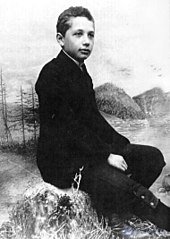
Albert Einstein , photographed at age 14, did not fail mathematics in school.
- Albert Einstein did not fail mathematics (he never “flunked a maths exam”) in school. On seeing a newspaper column making this claim, Einstein said: “I never failed in mathematics ... Before I was fifteen I had mastered differential and integral calculus ”. Einstein did, however, fail his first entrance exam to the Swiss Federal Polytechnic (ETH) in 1895, when he was two years younger than his fellow applicants, though he scored very well in mathematics and science, and passed on his second attempt. .
- The actor Ronald Reagan was never seriously considered for the role of Rick Blaine in the 1942 classic “Casablanca” , which was ultimately played by Humphrey Bogart . This belief originated from an early studio press release announcing the film, which used his name to generate interest in it. But by the time it was released, Warner Bros. knew Reagan would be unavailable for any roles for the foreseeable future, since he could no longer postpone his entry into military service. Studio records show that producer Hal B. Wallis had always wanted Bogart to play the part.
- US Senator George Smathers never gave a speech to a rural audience describing his opponent, Claude Pepper , as an “ extrovert ” whose sister was a “ thespian ”, in the evident hope that they would confuse these with similar-sounding words such as “pervert” and “lesbian”. Time , which is sometimes cited as the source, described the story of the alleged speech as far-fetched at the time, and no Florida newspaper reported any such speech during the campaign. The lead reporter covering Smathers said he always gave the same stock speech. Smathers offered US$10,000 to anyone who could prove he had given the speech; it was never claimed.
- Rosa Parks was not sitting in the front (“white”) section of the bus during the event that made her famous and sparked the Montgomery bus boycott . Rather, she was sitting at the front of the rear (“coloured”) section of the bus, where African Americans were required to sit, but refused to give up her seat to a white man who asked for it (which was also the expected action for African Americans at the time).
- US President John F. Kennedy's words “ Ich bin ein Berliner ” are standard German for “I am a Berliner”. There is a widespread belief that, by not omitting the indefinite article “ein”, he changed the sentence's meaning from the intended “I am a citizen of Berlin” to “I am a Berliner ” (a Berliner being a type of German pastry resembling a jelly doughnut), amusing Germans across the city. Although the word “Berliner” is used for a jelly doughnut in the north, west and south-west of Germany, it is not used in or around Berlin itself, where the usual word is “Pfannkuchen” (literally “pancake”).
- The African-American intellectual and activist W. E. B. Du Bois did not renounce his American citizenship while living in Ghana shortly before his death , as is often claimed. In early 1963, his membership of the Communist Party and his support for the Soviet Union led the US State Department not to renew his passport while he was already in Ghana overseeing the creation of the Encyclopedia Africana . On leaving the embassy, he declared, in protest, his intention to renounce his citizenship. But although he did accept Ghanaian citizenship, he never actually renounced his American citizenship, and may not even have intended to.
- When bar manager Kitty Genovese was murdered near her apartment in Queens in 1964, there were not 37 neighbours who stood by and watched, none of whom called the police until she was already dead, as The New York Times originally reported, sparking widespread public outrage that persisted for years. . It was later reported that the police report the Times had originally relied on was inaccurate, that Genovese was attacked twice in different locations, and that, although many witnesses heard the attack, they heard only brief fragments and did not realise what was happening. only six or seven actually reported seeing anything. Some did call the police; one of them said: “I didn't
продолжение следует...
Продолжение:
Часть 1 Examples of Common Misconceptions
Часть 2 Science and technology - Examples of Common Misconceptions
Часть 3 See also - Examples of Common Misconceptions
See also


Comments