
Lecture 4 min.
Money-supply rehabilitation is an important instrument of state economic policy, aimed at stabilizing the national currency and restoring confidence in the financial system. Under conditions of inflation, crises, or the threat of the depreciation of money, the state resorts to various measures to improve money circulation. Classical rehabilitation methods traditionally include redenomination, devaluation, revaluation, confiscatory reforms, and credit-and-monetary restrictions. However, alongside these there are also indirect mechanisms, which are not always recognized as official rehabilitation instruments but in practice perform the function of withdrawing or redistributing funds from the population. Such mechanisms include inflation, tax reforms, government loans, lotteries, and stock market volatility.
The term "money-supply rehabilitation," at the level of the national currency, refers to the state's measures for the financial rehabilitation of the economy and the stabilization of money circulation. It is not about individual enterprises, but about the entire system.
Rehabilitation (from the Latin sanatio — recovery, healing) is a system of measures to avoid bankruptcy (structural restructuring, restructuring of accounts payable, changes to the range of products manufactured, workforce reductions, elimination of redundant structural units and divisions, and so on). Rehabilitation can be carried out with the participation of banks, executive authorities, commercial organizations, and others.
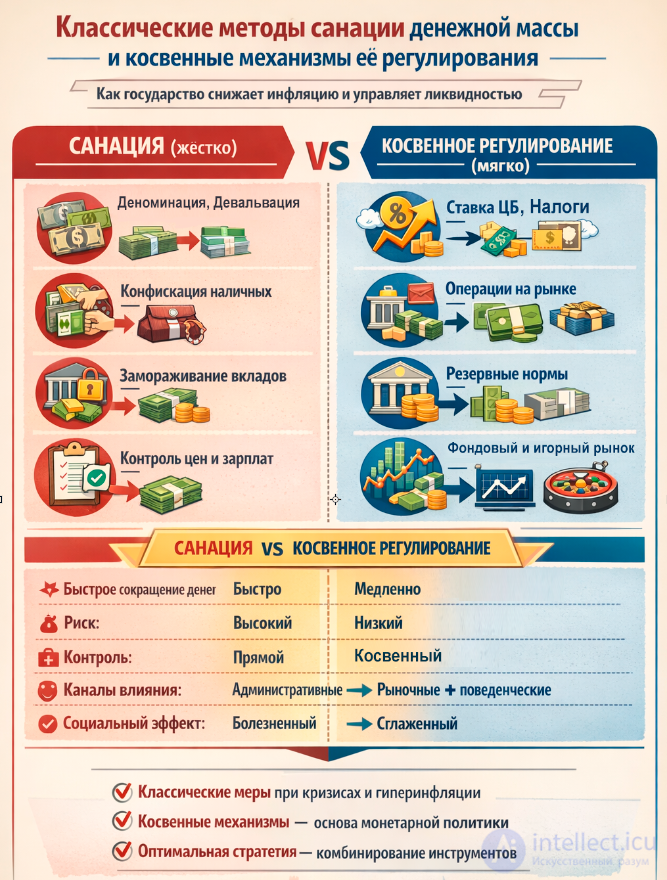
Table 1. Main methods of state rehabilitation of the money supply
| Method | Essence | Example of application |
|---|---|---|
| Redenomination | Replacement of old banknotes with new ones at a fixed ratio | Russia 1998: 1,000 old rubles = 1 new ruble |
| Devaluation | Lowering the official exchange rate of the national currency against foreign currencies | Argentina periodically lowers the peso's exchange rate to stimulate exports |
| Revaluation | Raising the exchange rate of the national currency | Switzerland has, on occasion, strengthened the franc |
| Confiscatory reform | Forced withdrawal of part of the money supply (for example, limiting the exchange of old banknotes) | USSR 1947: currency exchange with limits on amounts |
| Credit rehabilitation | Restriction or restructuring of loans, regulation of interest rates | The central bank lowers rates to stimulate the economy |
| Fiscal measures | Changes to tax policy to regulate money circulation | Introduction of new taxes or tax breaks to reduce inflation |
| Issuance-based rehabilitation | Controlled issuance of new money to cover a budget deficit | During crises, the US used "quantitative easing" (QE) |
| Monetary restrictions | Restriction of cash circulation, shift to cashless payments | India 2016: withdrawal of large banknotes to combat the shadow economy |
The goal of money-supply rehabilitation is to reduce inflation, restore confidence in the currency, and stabilize the economy. The methods can be mild (monetary policy, credit measures) or harsh (confiscatory reforms, abrupt redenomination).
| Mechanism | Essence | Effect |
|---|---|---|
| Lotteries and gambling | Voluntary participation by the population; money goes to the budget or to organizers | Reduced liquidity among the population, increased state revenue |
| Stock market (volatility, crises) | Depreciation of assets, redistribution of capital | Withdrawal of part of investors' savings, concentration of capital |
| Inflation | Gradual depreciation of money | Reduced real purchasing power, hidden withdrawal of funds |
| Tax reforms | Raising taxes, introducing new levies | Redistribution of money from the population to the state |
| Monetization of public debt | Issuance of bonds purchased by the population | Channeling money into the budget, restriction of free liquidity |
| Forced savings | Restriction of cash transactions, encouragement of deposits | Freezing of part of the money in the banking system |
| Monetary restrictions (limits on cash) | Restriction of large cash payments | Reduced cash turnover, control over the shadow economy |
| Government loans/bonds "on credit" | Raising funds from the population through mandatory subscriptions | Withdrawal of money from the population under the guise of investments |
| Default or debt restructuring | Depreciation of government obligations | Losses for bondholders, reduction of the money supply |
Thus, the classical methods of money-supply rehabilitation represent direct and targeted actions by the state, aimed at improving the national currency and stabilizing money circulation. Indirect mechanisms, by contrast, act indirectly, reducing liquidity among the population and redistributing resources in favor of the state or large financial structures. Their effect can be less predictable, but taken together they also contribute to reducing monetary pressure in the economy. A comparative analysis of these approaches allows for a deeper understanding of the complexity of financial policy and its impact on society.

Comments