
Lecture 34 min.
Finance (Fr. finances — funds, monies) is defined in academic and textbook literature as the totality of economic relations arising in the process of forming, distributing and using centralized and decentralized funds of monies . This usually refers to the earmarked funds of the state or of business entities (enterprises). The most important concept in the field of finance is the budget.
In Western academic and textbook literature, general definitions of finance are usually not given, and finance is interpreted quite broadly. Usually it is specified which finances are meant: public, corporate or personal finance. Public finance is understood as the process and mechanism of forming and using government resources, the balance of revenues and expenditures, and the corresponding methods of control . Corporate finance is understood as "the proper management of money" or "the art and science of managing money" . Thus, the terms "financial management", "managerial finance", "corporate finance" and "business finance" are practically equivalent and interchangeable . Finance theory is understood to include arbitrage pricing theory, capital structure theory, portfolio theory, the theory of pricing of financial assets and options, and other theories founded by H. Markowitz, W. Sharpe, R. Merton, F. Modigliani, M. Miller, J. Tobin, A. Black and others.
The term "finance" is also used to mean the economic science and discipline that studies the corresponding sphere of economic relations.
The word finance is often used colloquially to mean money.
The term financing means the provision (supply) of funds.
 Banknotes of the world's countries
Traditionally, finance is divided into public finance (centralized, state and municipal finance) and private finance (decentralized). The latter includes both corporate finance (the finance of organizations) and household finance (personal and family finance).
The most significant distinguishing feature between public and private finance is that public finance and private-sector finance pursue different goals. The main goal of the private sector is to generate profit, that is, to increase the exchange value of capital as much as possible through reproduction and/or speculation. Public finance, in turn, aims at the distribution and redistribution of public goods consumed at the national and regional levels (more on the target functions of finance). In addition, for public finance, expenditures are primary, since financing is provided for clearly regulated tasks and functions of a public entity. For private finance, revenues are primary, and all activity is aimed at obtaining income, which is subsequently used at the discretion of the individual.
Because household finance differs substantially from corporate finance, these categories are treated as separate; thus, finance in general is classified into:
Within corporate finance, because of their specific nature and special role, the finance of the financial services sector is singled out separately, primarily the finance of credit institutions (banks) and the finance of insurance organizations. Sometimes the finance of nonprofit organizations and the finance of small business are also singled out.
Finance (primarily public finance) is studied within the academic disciplines of "Finance", "Finance and Credit", "Finance, Money Circulation and Credit". These disciplines study money and the socio-economic relations connected with the forming, distributing and using of material resources. Finance is an applied economic discipline.
Financial management (primarily corporate) is studied within the discipline of financial management, as well as "finance of organizations (enterprises)". Management of a bank's finances is usually studied within the discipline of "Banking". Control over financial flows is studied within the discipline of "Financial Control".
Methods and models for analyzing financial information are studied within financial mathematics. Financial mathematics is the foundation of financial management.
 Financial District (Manhattan)
Modern interpretations of the term finance originate in cameralism — the German variant of mercantilism — a science concerned with the problem of forming and earmarking the use of the state treasury[27] [28][29][30][31]. By finance, the cameralists meant the management of revenues intended for use for the needs of the state[32]. The concepts of "cameral science" and "financial science" were sometimes used as synonyms in Western literature, but after chamber colleges, which included the police, were established within the structure of the cameral economy, the term "finance" acquired an independent, narrower meaning: "...a branch of government activity whose purpose is the acquisition, preservation and proper use of the material values necessary for state power, and which consists in managing its own economy or in overseeing state revenues and expenditures. These concerns of government … constitute the subject of what is called finance, financial administration, government economy or the economy of the state"[33] (in pre-revolutionary Russia the term was used in the same sense as in Germany (see[34]).
In English-language literature of the second half of the 19th and early 20th century, the term "finance" was not interpreted as unambiguously as in German. In particular, Webster's dictionary (1886 edition) stated that finance is "the revenue (revenue) of a ruler or a state; sometimes, the income of a private individual"[35]. Thus, this definition reflects the view of a narrow circle of Western scholars of the time, according to which the sphere of finance was limited only to the revenues of the state[36][37][38], and, moreover, indicates that the term "finance" was used not only in relation to the public sector of the economy but also to the private sector. In the second half of the 19th century, the context of finance discussed not only government revenues and expenditures but also speculation in securities, the accumulation of capital and the interest rate on loan banking capital, as important aspects of financial science (see, for example[39]). The book "The Theory of Finance" by the English author H. King does not mention the public sector of the economy at all, but discusses profit, actuarial calculations, and simple and compound interest on loan capital[40]. F. Cleveland's definition of finance is also telling in this regard: "Finance is a branch of business dealing with the raising and expending of the funds needed to equip and operate an undertaking. … What are funds? How is it best to get them? How is it best to use them? The answers to these three questions cover the whole field of finance"[41]. It is notable that K. Marx, in his "Capital", also uses the term "finance" in the context of money capital, banks and exchanges[42].
The transfer of the semantic content of the term "finance" from the public to the private sector of the economy occurred as a result of metonymy (according to C. Plehn's book "Introduction to Public Finance"[43] (1921)). As a consequence, when used without qualifying adjectives ("public", "personal", "corporate"), the term "finance" acquired a broader meaning than it originally had, and, besides the public sector, came to cover matters of capital, profit, and the revenues and expenditures of enterprises and private individuals. In this connection, in order to remove the ambiguity of the adjective "financial" arising from this metonymy, C. Plehn, and following him M. Hunter, pointed out that with regard to public finance it is more correct to use the adjective "fiscal", speaking of a "fiscal year" rather than a "financial year"[44][45].
The use of the term "finance" without qualifying adjectives, referring only to the public sector of the economy, was characteristic above all of the German school of thought. Such an interpretation of finance reflects an early stage in the development of Western financial science and has now lost its relevance. The other extreme is the use of the term "finance" (without qualifying adjectives) only in the context of the private sector of the economy. This approach to interpreting the term is also often found in modern Western textbook and academic literature (see, for example[46][47][48][49][50]). The dominant approach in modern Western literature has become the predominant use of the term "finance" with qualifying adjectives (public, personal, corporate) and a broad interpretation of the general term (without these adjectives).
"Public finance" is associated with the activity of the state (or local authorities) consisting in obtaining and applying the funds necessary to perform their proper functions[51], with the process and mechanism of forming and using government resources, the balance of revenues and expenditures, and the corresponding administrative control . Some authors[52] also emphasize that the subject of public finance lies on the border between economics and politics, and note that in modern societies the revenues and expenditures of public authorities consist almost exclusively of monetary receipts.
Public finance is based on the theory of the distribution of public goods. Its essence is that there exist certain goods (national defense, the maintenance of public order, roads, etc.) whose need cannot be satisfied and paid for individually through commodity-money exchange. As a consequence, the need for such collective goods cannot be met through the market mechanism. On this basis, the distribution of public goods is taken on by the state, represented by central and local authorities, through the budgets of the corresponding levels. "Government expenditure is part of the consumption of society, in which the state acts as a regulating body" [53]. Through fiscal and budgetary instruments, public goods are not only distributed but also redistributed. In particular, redistribution can be carried out through a combination of high taxes on well-off citizens and subsidies to low-income citizens. Thus, by redistributing goods between high-income and low-income segments of the population, the concept of social justice and humanism is realized: "If we believe that society as a whole has a moral duty to help the weak, then helping the poor produces a common good" [54].
Corporate finance is concerned with the acquisition and distribution of the funds or resources of a corporation with the aim of maximizing shareholder wealth [55], with the efficient and effective management of resources and cash flows to achieve the organization's goals, which implies "planning and control over the provision of resources (where they are raised from), the allocation of resources (where they are deployed), and final control over resources (whether they are being used effectively or not)"[56]. Western authors distinguish two key concepts of corporate finance that are of the utmost importance in decision-making — the relationship between risk and return, and the concept of the time value of money. Some authors[57] define finance as the assessment and management of risk, on the basis that, from the point of view of finance, "a corporation is a collection of risky cash flows".
The theory of Soviet (socialist) finance occupies a special place in world financial scholarship; it is a modified version of the Western theory of public finance, adapted to the Soviet economic model and to Marxist ideas[58].
First of all, it should be noted that, in contrast to the theory of distributing public goods through finance and personal goods through market exchange, Karl Marx proposed a scheme for distributing goods in a society based on collectivism, under which value was measured not indirectly through money but directly through labor time (more broadly, through labor). "The individual labor time of each individual producer is the part of the social working day contributed by him, his share of it. He receives from society a receipt stating that he has contributed such and such an amount of labor (after deducting his labor for the social funds), and with this receipt he draws from the social stock of consumption goods as much as costs the same amount of labor"[59]. Such a scheme of distributing goods by receipts did not presuppose the existence of money, so many Soviet economists viewed the period of socialism as "the beginning of a transition to direct exchange of products and the withering away of money, credit, and finance"[60] and proceeded from the assumption that, after the victory of socialism, "finance would be „buried“ as a relic of capitalism"[61]. However, the practice of the early years of Soviet rule showed that abandoning money as a measure of value was premature. Communist ideology was forced to acknowledge that money would remain in the USSR as a tool of the bourgeois economy which, in the words of Joseph Stalin, "the Soviet government took into its own hands and adapted to the interests of socialism"[62].
A key distinguishing feature of the Soviet economic model, already by the end of the second five-year plan (1938), was that the share of public property amounted to 98.7% of all the country's productive assets (the remaining 1.3% being the personal property of collective farmers and small artisans)[63]. That is, the entire economy effectively had public status, and the state, acting on behalf of society, took full charge of distributing goods. The state budget of the USSR covered not only the expenditures traditionally characteristic of the capitalist economic model (public administration, national defense, law enforcement, road construction, and the like) but also the bulk of the costs of expanded reproduction (productive capital investment). The USSR state budget effectively became a public investment fund managed by the state, through which resources were redistributed among various enterprises and branches of the public economy. It was precisely this character of the Soviet economy that formed the basis of the Soviet interpretation of "finance" as "Soviet" or "socialist" finance.
The formation of scholarly approaches to interpreting public finance that took into account the realities of the socialist economic model began with an academic discussion at a meeting held in 1944 by the Directorate of Educational Institutions of the USSR Ministry of Finance. The main conclusions of the discussion were:[64]
The discussion had a serious impact on the entire subsequent course of development of Soviet financial scholarship. Under its influence, three scholarly concepts of Soviet finance took shape in the USSR over the following twenty-five years: the distributive concept, the reproductive concept, and the concept of E. A. Voznesensky (sometimes called the legal concept).
 Chase Manhattan Bank stock certificate
The author of this (the most widespread) Soviet concept of public finance is V. P. Dyachenko (the Moscow school), who held that "there are no grounds for abandoning, in application to socialist society, thehistorically established concept of state finance"[65]. What was meant was a conception of finance as distributive monetary relations connected with the existence and functioning of the state[66], which was also envisaged by the Western theory of distributing public goods. However, the term "distribution" came to mean not only the distribution of public goods between the sphere of production and the sphere of consumption, but also the process of splitting the gross monetary proceeds of public production enterprises (the so-called "primary distribution")[58]. In this way, the original concept was adapted to the conditions of the Soviet economic model through an implicit terminological arrangement. Moreover, because the production sector had been fully socialized, the concepts of "centralized funds" and "decentralized funds" were introduced to mark the distinction between public funds (in the sense accepted by Western scholarship) and the funds of private enterprises, which in the USSR had likewise become public. Thus finance (of the socialist state) was defined as "a system of monetary relations on the basis of which, through the planned distribution of income and accumulations, the formation and use of the state's centralized and decentralized funds of monetary resources is ensured in accordance with its functions and tasks"[67].
The distinction between socialist and capitalist finance was underscored still further by the division of enterprise finance into a productive component and a distributive component. Here, the so-called "primary distribution" (of gross income among the enterprise's various funds) was included in "the finance of the socialist state," while the "productive" component — the relations arising in the process of producing and selling output and mediating that process, that is, the monetary side of relations in the movement of value in its productive form (fixed assets, raw materials, components, finished output) — was set apart as an independent category, "the finance of the branches of the USSR national economy"[68].
Alongside the universally recognized distributive (redistributive) function of public finance, Soviet financial theorists also identified a control function. The first function is common to the state finance of any social formation; however, in the socialist economy the distributive function was not limited to redistributing monetary resources but also extended to the relations of the primary distribution of national income. The control function was defined as a function specific to Soviet finance[69]. At the same time, the term "redistribution" lost its original meaning (distribution from the rich to the poor) in Soviet financial theory and came to be interpreted as the distribution of what flowed into the state budget after the so-called "primary distribution" within production enterprises. Thanks to this "redistribution," the USSR could sustain planned loss-making enterprises and even entire branches, whose losses were covered through the state budget out of the profits of other public enterprises and branches.
 King Midas on a gold coin
The author of this concept is A. M. Aleksandrov (the Leningrad school). The reproductive concept differed fundamentally from the distributive one in that the monetary relations within enterprises were not divided into a distributive component (the so-called "primary distribution") and a reproductive component (so-called mediation), but were combined into a single whole called "mediation of the production process" and included in full within the subject area covered by the concept of "the finance of socialism." As a result of this approach, all the monetary relations falling under the concept of "the finance of socialism" formed a system of two types of relations — "mediating" relations and "distributive" relations (in the genuine sense of the word, as originally adopted in the Western theory of distributing public goods). Here, finance, besides its control and distributive functions, was also credited with the function of "mediating the circulation of productive assets". "In this function, finance serves not only the phases of the circuit 'M — C' and 'C — M,' but also the phase of the movement of enterprise funds in their productive form"[70].
Thus, (socialist) finance is defined as "a system of monetary relations that mediate the circulation of productive assets in the national economy on an expanded basis and ensure the formation and use of various funds to meet the diverse needs of socialist society"[71].
The long-running scholarly debate between the proponents of the distributive and the reproductive concepts essentially came down to the question of the extent to which the finance of Soviet enterprises and branches of the national economy should be included within public finance. At the same time, both concepts excluded from the finance of socialism personal finance and the finance of non-productive enterprises and organizations, which included all institutions of healthcare, education, culture, and sport. Thus, the reproductive concept, too, did not cover the entire subject area of finance.
The author of this concept is Ernest Aleksandrovich Voznesensky (the Leningrad school). He proceeded from the premise that, first, financial relations, including taxes, are relations of value (monetary relations), and, second, only those monetary relations that are regulated by the state are financial in nature[72]. Underlying this approach is one of the distinctions between public finance and private-sector finance as accepted by Western financial theorists. C. Shoup characterizes this distinction as "the degree of impartiality of the rules by which the government allocates its services and ... the burden of covering expenditures". Impartiality presupposes that the rules are established by decree and backed by sanctions applied equally to all violators. A family, by contrast, "distributes among its members the goods consumed in the household according to informal and often shifting criteria"[73]
Thus, within this concept, finance represents "a system of monetary relations having an imperative form"[74]. Since, in the USSR, strict imperative regulation applied not only to the sphere of distributing public goods, as was the case in capitalist countries, but also to the sphere of production together with the non-productive sphere, in Voznesensky's version the system of socialist finance covered almost the entire subject area. The only exception was that part of monetary relations which Western scholarship classified under the concept of "personal finance," since the latter do not take an imperative form, except for "the payment of taxes, insurance contributions, loan repayments, and the like"[75] At the same time, purchases of manufactured goods and food (which are, in essence, commodity-money relations) made by budget-funded organizations were classified by Voznesensky as belonging to the finance of the socialist state, on the grounds that state procurement, too, was subject to strict regulation.
Textbooks on finance published in the post-Soviet space since the collapse of the USSR mostly continue to set out the principal theoretical concepts of Soviet (public) finance. In doing so, the definitions of the category of finance as a rule repeat (without the adjectives "Soviet" and "socialist") the definitions found in Soviet textbooks. An exception is the concept developed by S. P. Zakharchenkov, according to which finance represents the purposeful movement of the exchange value of capital in monetary terms[76] .
Financial activity is the application of a range of techniques and procedures that individuals and organizations use to manage their finances. The difference between income and expenses, and the assessment of investment risk, are especially important here.
If income exceeds expenses (that is, there is a surplus), the difference can be lent out at interest or invested in some business or in the purchase of property. This is the essence of financial activity — if there are free financial resources, they should be put to work so as to generate additional income.
If expenses exceed income (that is, there is a deficit), the missing financial resources need to be made up. This can be done by taking out a loan, or by issuing shares or bonds on an exchange. In the modern world a borrower does not have to go looking for a lender in person — one can go to a bank or an exchange, and the relevant financial institution will find a lender for a certain fee. Or, conversely, it will find a borrower for a lender. The whole point of banking and exchange activity, essentially, consists in efficiently connecting those in need of funds with those who have free funds available.
As already mentioned, a bank serves as an intermediary between borrowers and lenders. In practice this works as follows: a lender (depositor) comes and puts their free money into a bank account (a deposit) in order to earn interest on their deposit. Then a borrower comes to the bank to obtain a loan. The bank lends the depositor's money to the borrower at interest, and that interest includes income for the depositor, income for the bank itself, and an additional percentage to insure against the risk of the loan not being repaid.
An exchange likewise serves the purpose of connecting lenders and borrowers, but, unlike a bank, it does not have its own "financial buffer" — that is, it cannot set money aside as a deposit until a borrower appears. An exchange can connect a lender and a borrower only in real time. A bank, on the other hand, can hold funds aside: a lender (depositor) may come to the bank today, while a borrower (wanting to take the depositor's money as a loan) may not appear until a month later.
In addition, an exchange trades deposits and loans in an indirect form. Someone wishing to take out a loan issues shares or bonds on the exchange. A share represents the owner's stake in the borrowing company, and therefore also serves as collateral for the loan. A bond is likewise a form of loan, but, unlike a share, it does not confer ownership rights in the borrowing company, although it may provide for some separate collateral. Interest (dividends, coupon) may also be paid on shares and bonds. If no dividend is paid on a share, it is assumed that the share will rise in price, and the lender who bought the share will only be able to realize the profit due to them after selling the now more expensive share.
The functions of finance in Russia differ depending on the interpretation. The Moscow concept distinguishes the following functions of finance:
as well as the fiscal and stimulating functions.
7. accumulative.
According to the St. Petersburg concept, the following functions of finance are distinguished:
 Bank vault
Financial services
Bank vault
Financial services
A general term describing the services of companies whose activity is connected with monetary or investment services.
Financial services include the following types of services:
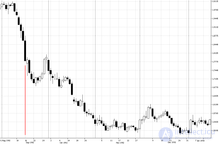 Black Wednesday (1992) (GBP/USD chart)
The development of capitalism has reached the point where commodity production… has already been undermined, and the main profits go to the "geniuses" of financial manipulation. At the root of these manipulations and swindles lies the socialization of production, but the gigantic progress of humanity, which has worked its way through to this socialization, benefits the speculators.
Lenin,A financial market is a market covering above all the capital market and the money market, often represented by exchanges. It serves trade in financial assets, manages financial risks and facilitates investment. It is customary to divide it into the following financial markets:
According to IMF estimates, the current value of financial products on the global market exceeds the value of output of the real economy by three and a half times[77].
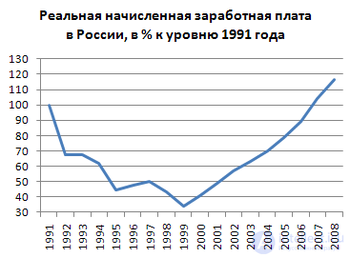 Household finance
Keeping personal accounts and planning personal income and expenses (drawing up a financial plan) is not mandatory. But using such approaches allows for a more rational use of available resources. A number of typical sources of income and areas of expenditure are usually taken into account.
Analysis identifies reserves (for example, unused assets) and considers options for using or selling them.
When planning over a long period, the possibility of inflation must be taken into account.
 New York Stock Exchange on Wall Street
Enterprise finance
New York Stock Exchange on Wall Street
Enterprise finance
The main task of corporate finance is the financial support of an organization's activity. It is also important to find the optimal balance between business profitability and financial risk. To meet a business's current financial needs, short-term bank loans are usually taken out. To meet long-term needs, bonds or shares without a fixed dividend are more often issued. Such strategic decisions about loans or share issuance ultimately determine the very structure of an organization's capital.
Another crucial aspect of corporate finance is investment decisions, that is, decisions on investing available free funds. After all, an investment is the placement of a free asset in the hope that it will increase in value over time. Investment management is a crucial aspect of finance at any level, and the corporate level is no exception. Before making an investment decision, the following factors need to be analyzed:
Financial management in organizations is in many ways similar to accounting. But accounting deals with recording operations that have already taken place (and, consequently, with "historical" financial information). Financial management, on the other hand, looks to the future and deals with analyzing the efficiency of, and planning, financial operations yet to come.
The definition of the concept of a tax is set out in Article 8 of the Tax Code of the Russian Federation (a kind of "tax constitution"). Under this regulatory act, a tax is a mandatory, individually non-refundable payment levied on organizations and individuals in the form of the alienation of funds belonging to them under a right of ownership (economic control or operational management), for the purpose of financing the activities of the state and (or) municipalities. This definition points to the distinguishing features of a tax as against other types of payments to the budget: mandatory character, individual non-refundability, monetary character (under the current tax system, taxes may take only a monetary form, unlike the tax system in effect before the Tax Code of the Russian Federation came into force), and the earmarked purpose of the payment (to finance the activities of the state and/or municipalities).
Fees are mandatory contributions levied on organizations and individuals, the payment of which is one of the conditions for state bodies, local self-government bodies, and other authorized bodies and officials to perform legally significant acts in respect of the payers of the fee, including the granting of certain rights or the issuance of permits (licenses). This definition shows how a fee differs from a tax: in particular, a fee, unlike a tax, is not always mandatory, but only when, with respect to its payer, some state body performs "legally significant acts" — that is, there is an element of "individual compensation."
Today taxes are the most important and the largest part of government revenue (the fiscal function of taxes). By manipulating tax rates, the state can influence the economy, spurring on one or another economic sector (or, say, a geographic region), or, conversely, restraining growth in some area (the regulatory function of tax).
Taxes are direct or indirect. A direct tax is a tax levied by the state directly on the taxpayer's income or property. An indirect tax is a tax on goods and services, set as a markup on the price or tariff. Indirect taxes also take the form of excise duties (including a universal excise) and customs duties.
Here are the main taxes that provide revenue for the budgets of the budget system of the Russian Federation:
Russia's modern tax system is built on the Tax Code of the Russian Federation and the laws of the constituent entities and the regulatory acts of local self-government adopted in accordance with it, as well as on subordinate acts of various executive bodies. Oversight of the correctness, completeness and timeliness of tax payments is entrusted to the Federal Tax Service, which was formed within the Ministry of Finance of the Russian Federation.
The tax system of the Russian Federation has three levels (federal, regional — at the level of the constituent entity — and local). At present the tax system does not match the budget system in the number of levels (in fact, since 2006 a fourth, "unofficial" budget level has been introduced at the level of local budgets: the budgets of municipal districts, the budgets of urban districts, and the budgets of the intracity municipal entities of the federal cities of Moscow and St. Petersburg). However, this seeming contradiction gives rise to no objections, since all local taxes (as well as part of the federal taxes and tax regimes) are divided among the local levels in proportions corresponding to their status, on the basis of the provisions of the Budget Code of the Russian Federation.
Government bonds deserve a separate mention (they are also called "government loan bonds"). These securities are issued by the country's government and distributed both domestically and abroad. It is, in effect, a loan that the state itself takes out for its own needs. Naturally, the richer and more stable a state is, the more willingly it is given credit and the more willingly its bonds are bought. This is why the United States is the country with the largest government debt in the world. Many countries (Russia included) hold the funds of their state treasury in securities issued by the US government. The more effectively a state can put borrowed money to use, the more advantageous it is to take out the loan. Conversely, if a state cannot cover the interest on a loan, then its borrowings become a heavy burden on the state budget.
State revenue is distributed among the following main spending categories:
Among the forms of appropriation are subsidies, grants and subventions.
Financial economics is a branch of economic science that studies the relationships between financial quantities such as price, added value, share capital and so on. Financial economics is particularly focused on studying the influence of real economic indicators on financial indicators. Here are the main areas of research:

Comments