
Lecture
Это продолжение увлекательной статьи про информационная культура.
...
security, believing that small companies are not as interesting to hackers as large ones. This is a misconception. Small business is in fact quite attractive to internet fraudsters, first of all because it is not very concerned about information security.
Not every small business has an IT specialist on staff, but pirated software and "bootleg" antivirus programs are common. Data may be kept in publicly accessible folders, and the keys to the remote banking system may be kept in a manager's desk drawer. The use of smartphones and tablets for work also increases the risk of corporate information leaks.
As the analysis of incidents shows, attackers as a rule do not hunt a specific company, but "set" viruses "loose" on everyone who comes along.
"Those who are less protected or not protected at all become the first 'victims' of hackers, who, by penetrating a company's information network, steal secret keys and data on transactions or clients," says Mark Pnosev, Director of the Information Technology Department at Intellect Bank.
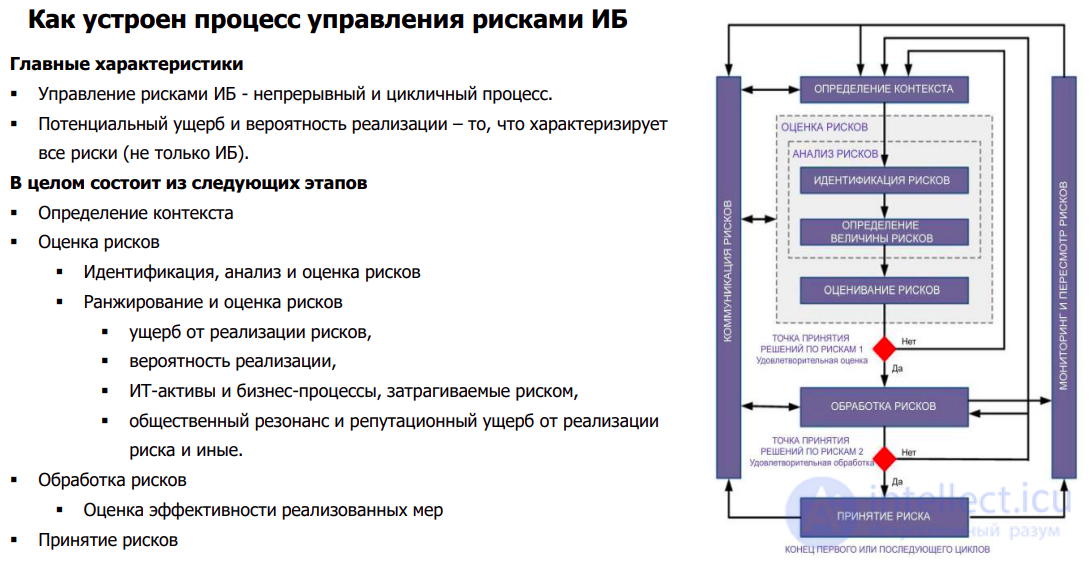
Enterprise information security is a state of protection of corporate data in which its confidentiality, integrity, authenticity and availability are ensured.
On March 10, 2021, Positive Technologies reported the results of an analysis of network activity monitoring in 41 companies that ran pilot projects deploying PT Network Attack Discovery (PT NAD) and a system for early detection of complex threats (PT Anti-APT), which includes PT NAD. The analysis revealed suspicious network activity in most of the companies, and malware was found in every government and industrial organization.
According to the results of the pilot projects, suspicious network activity was detected in 90% of companies, for example traffic hiding, launching of network scanning tools, and attempts to start processes remotely. Experts note that using NTA systems makes it possible not only to detect suspicious connections in time, but also to consult the history of a host's network activity and check whether there were other similar attempts.
The tasks of enterprise information security systems vary:
Enterprise information security can be ensured only with a systematic and comprehensive approach to protection. Full-fledged EIS implies continuous monitoring of all important events and states affecting data security and is carried out year-round[77].
Enterprise information security is achieved through a whole set of organizational and technical measures aimed at protecting corporate data. Organizational measures include documented procedures and rules for working with different kinds of information, IT services, protection tools, etc. Technical measures consist of using hardware and software for access control, leak monitoring, antivirus protection, firewalling, protection against electromagnetic emissions, and so on[78].
Ensuring information security is a continuous process that includes five key stages:
The process of ensuring information security begins with an assessment of assets: identifying the organization's information assets, the factors that threaten this information, its vulnerabilities, and the significance of the overall risk to the organization. The program for protecting these assets will be drawn up depending on the assets. Once the risk has been identified and quantified, it becomes possible to choose a cost-effective countermeasure to reduce that risk.
The goals of an information security assessment:
There are five main types of assessment:
When conducting the assessment, documents such as the following should be examined:
Once the above policies and procedures have been obtained, each of them is examined for significance, validity, completeness and relevance, since policies and procedures must correspond to the purpose defined in the document.
After the assessment, it is necessary to develop policies and procedures that define the intended state of security and the list of work required. No policy means no plan on the basis of which the organization can develop and carry out an effective EIS program.
The following policies and procedures need to be developed:
Implementing the security policy consists of implementing technical means and direct controls, as well as selecting security staff. Changes may be required in the configuration of systems that lie outside the competence of the security department, so system and network administrators must take part in carrying out the security program.
When any new security systems are applied, qualified personnel are needed. An organization cannot protect secret information without involving its employees. Proper professional retraining is the mechanism for providing employees with the necessary information.
Employees must know why security issues are so important and must be trained to identify and protect secret information.
The audit is the last step in the process of implementing information security. It determines the state of information security within the organization, the creation of appropriate policies and procedures, the putting into operation of technical controls, and the training of personnel[79]
The era of the information society has created unprecedented new
opportunities for people: for their development and education, work, information exchange, social communication and cooperation. At the same time, tendencies have emerged that are hard to assess as positive. The first is the virtualization of social practices, the shift of the spheres that define a person from real existence to digital existence. Scholars regard this phenomenon
as a special challenge and an existential risk, since modern people satisfy many of their needs related to communication, education, creativity and family through the virtual environment.
The transfer of values into the virtual environment leads to dependence on it
and, at the same time, to a weakening of real social ties.
The second important tendency is that, in parallel with the virtualization of the social environment, social threats and risks are being virtualized; they exist on the Internet almost unhindered and actively affect various categories of its users.
Information Culture and Information Security of Schoolchildren
For Internet-dependent people, the inability to enter the virtual space is a source of severe discomfort. It has been established that higher levels of online activity correlate directly with higher online risks.
Children and teenagers, the representatives of the "digital generation," are active Internet users and extremely often show
carelessness in doing so, being convinced that their personal computers and mobile devices are safe. Research has established
that children of primary school age are highly sensitive
to negative Internet content; and in adolescence the accessible, but far from always useful and positive, Internet information,
virtual entertainment, contacts in Internet communities and the like may
cause deviant behavior. In this connection, there is an urgent need
to develop methods and ways of self-preservation in the information space, and mastery of them should become a vital
component of the information culture of modern people.
The problem of the conscious and safe use of electronic
resources is currently being studied in several directions. Foreign and domestic studies have described and classified information risks on the Internet. S. Livingstone includes among them
bullying, exposure to sexual images, sexting, meeting online contacts in the real world, Internet addiction, gambling, and grooming.
According to the classification by
N. Giant, there are three main categories of risks:
The most common forms of these are physical threats, sexual abuse, bullying and harassment, theft
of personal data, unlawful behavior, exposure to unwanted
content, addiction to being online, copyright infringement, viruses and spam. These risks may be connected with the use of various
information and communication resources and technological means,
including visiting websites and online chats, social networks, instant messaging, online gaming sites, and the use of mobile phones, digital media and game consoles.
Based on an analysis of the requests to the "Children Online" helpline, four categories of online risks have been identified: communication, technical, content and consumer risks, corresponding to the four main spheres of activity on the Internet. A separate category comprises
Internet addiction risks. In recent years there has been a growing number of
crimes committed using the network, such as violations of privacy and of personal and family secrets, and industrial espionage. One of the new risks is terrorism, in the spread of which the mass media on the Internet play a special role.
Information risks are also present in the educational
environment; they have been systematized and correlated with the areas of activity in an educational institution.
The positions of foreign and domestic researchers on
how to counter information risks are united by the idea
of the need to develop information culture, media culture, and
a person's ability to be present in the Internet environment consciously and safely. At the same time, it is noted that prohibitions and shielding from "wrong" information are of little effectiveness. Preventive Internet safety training programs are needed, oriented to
different audiences and age categories of users and taking into account
newly emerging information risks and threats. Experience with such
programs, widely represented in European countries, is beginning to build up
in domestic practice as well. It is telling that the organization of preventive work is now also oriented to
preschoolers.
Two complementary approaches can be distinguished for ensuring
the information security of the personality of children and teenagers: the personality-developing and the restrictive-prohibitive, whose "balance"
changes in the process of socialization. If younger children are not
able to set barriers against harmful content on their own, then with the expansion of the space of personal autonomy in adolescence and youth, as ICT competence
and intellect develop, external restrictions are overcome relatively easily
[19] and the internal resources of the personality
for maintaining one's own safety in the information environment become increasingly important.
People have long spoken of the growing role of information in the life of modern humans, but few realized the possible consequences of informatization, which today is assessed as a global trend of social development. Its essence lies in strengthening the information component in social production and in information acquiring the status of the most important factor of cultural development. Numerous sociological studies prove that informatization is not merely a declared phenomenon. "Informatization is an organic socio-economic process of creating optimal conditions for satisfying information needs and for realizing the rights of citizens and organizations to use the information resources of civilization with the use of new information technologies"11. The concept of informatization is much broader than mere computerization or automation. The essence of those concepts is connected with the development of the technical base. Informatization, by contrast, is aimed at improving the quality of work and human life by providing free access to information. In informatization, particular attention is paid to a set of measures aimed at ensuring the full use of reliable and timely knowledge in all types of human activity
This is an important period in the history of society, characterized by large-scale social changes. Quite a few phrases are used to describe the new social order, of which the most enduring has proved to be "information society." This is a society whose level is determined to a considerable extent by the quantity and quality of the information accumulated and used. The most important indicator of the information society is that each of its citizens has equal rights and opportunities to freely produce and promptly receive any information of interest to them, except in cases restricted by law. The information society has the following main features:
.The information society is taking shape throughout the world. In the 1990s this problem was discussed at meetings organized by the Council of Europe, the European Community and UNESCO. Russia has not stood aside from this problem either. In recent years Russia has been moving from an industrial society to an information society. It is clear that the information resource will play the decisive role in it. In the national report of the Russian Federation to the 2nd UNESCO International Congress, informatization of the education system was named as one of the main mechanisms of its reform. "This marks the aspiration of Russia to enter the world educational space, based on new information technologies"
One of the main tasks in the field of informatization of education is the development of information culture, i.e. the creation of a learning environment that would stimulate the very process of cognition. Our children live in a world where the newest electronic communications have become a reality that, for them, has always existed. The computer is becoming part of the natural surroundings in the perception of the new generation and is an attribute of reality. How do the processes of informatization of society affect our children? According to V.P. Chudinova, head of the social research department of the Russian State Children's Library (RSCL), the situation in which a child enters book culture is changing today: "the symbolic status of reading and its prestige are falling; the perception of printed text and information is changing (perception becomes more superficial and fragmentary, 'mosaic'); the motivation for reading and the repertoire of reading preferences are changing (interest in thrillers, horror books and comics is growing); printed products with a wider range of visual material are preferred (hence the popularity of illustrated magazines and comics among children and teenagers)"
.Today's children are an "unfamiliar tribe," unlike the previous generations of the country, which built a powerful book culture. There are serious changes in the everyday life of children, and especially teenagers, characterized by independence from restrictions on information in time (late-night TV, the Internet), in place (player, laptop), and in content. Our time is characterized by global informatization and the development of mass media. The once "most reading" country in the world can no longer categorically refute the increasingly frequent claims about the decline of the Gutenberg era. But for the very essence of the human being, abandoning reading would be a catastrophe, because this activity is the optimal path for the development of all spheres of human culture.
Today the nature of reading among children and teenagers is changing: it is becoming pragmatic. One of the main tasks in the conditions of the informatization of society is to see not only the changes in the appearance and habits of readers who will live in the developing new "electronic culture," but also to help them perceive the elements of the new culture critically, and to develop in the child and teenager a high culture of reading text in any form of its presentation (printed or electronic). A child is far from always able to choose a book independently: there are truly huge numbers of them, and a beginning reader often does not know what he or she wants. There is no problem if it is a school assignment, a specific topic or an established interest. But finding themselves in "free flight," wanting to find simply "something interesting," even a teenager may become lost, or grab the first thing that comes to hand, or follow the beaten path, each time picking nothing but adventure stories from the sea of literature.
It is very important that between the child and the book there stands a wise and tactful adult (a parent, teacher or librarian) who would find the living thread of genuine childhood interest, professionally assess the psychological and intellectual abilities of the developing personality, and lay out before the child a suitable spectrum of books. To survive and preserve book culture, libraries need to understand that besides printed products there exist and develop other information carriers. This means that libraries must look for new directions in their work, relying on non-traditional information carriers. Technical progress cannot but affect the information activity of libraries, so the traditional image of the library as a place that lends out printed publications is unlikely to survive. The book and electronic media should not be rivals. The level of technical development of society today makes it possible to devise and put into practice ever new ways of delivering information to the consumer. Computers are now installed in many libraries and electronic catalogs are being created; ready-made bibliographic databases are also used, for example "LIKS-Izbornik," an electronic recommendation index (created by the RSCL), which is very popular among children aged 5 to 15.
The program is named this way for a reason. "LIKS" stands for "local information computer system," and as early as the 16th century an "izbornik" in Rus' was a collection of the best writings gathered together. "LIKS-Izbornik" combines text and visual material, and the possibility of play and choice. "LIKS-Izbornik" contains about 20,000 books of all genres by the best authors on various topics. With the help of the program one can not only select literature that suits the reader's age and mood and compile an individual reading list, but also find information about outstanding people, writers and fairy-tale characters. In 1998 the same library completed work on a multimedia version, called "Book Hour." This is not an electronic catalog guaranteeing exhaustive information. This release of the computer program is not merely illustrated and voiced. The youngest children can now listen to a favorite fairy tale or a funny poem, and parents got a special section, "Books in Your Home," which helps to build a children's home library. The search system is addressed to children up to 15.
The structure of the program consists of five main sections for children and one additional section for parents. Each section, in turn, develops according to its own scenario, in order to reflect the view of literature from different points of view and to satisfy the varied motivations of children's demand. The youngest children can now listen to a favorite fairy tale or a funny poem, and parents got a special section, "Books in Your Home," which helps to build a children's home library. "Book Hour" is an attempt at an engaged dialogue between the bibliographer and the potential reader, an effort to help find one's own path to the book, to form artistic taste, to instill the skill of independent search and the ability to make a conscious choice"15. The very process of searching for a book is meant to benefit the child and broaden his or her horizons. In 2001 the RSCL created the website "Bibliogid" (www.bibliogid.ru), addressed first of all to parents. Many regional libraries successfully use the RSCL's developments in their daily work. The information society is a society governed by law. In this society, libraries act as the guarantor of the child's right to information.
They must provide information on a wide range of topics of interest to children, connected both with formal education and with individual needs. Moreover, libraries actively speak up for children's rights, defending and promoting them at the most varied levels. In this work, cooperation with other state and public organizations and institutions is especially important; among other things, it helps to strengthen the library's status as a reliable, creatively active partner. Children's libraries serve as a window into the adult world for the child. Most of the library collections are aimed at the upbringing and education of the child, at helping him or her to grow. Libraries are changing: from repositories of knowledge they are increasingly turning into information centers where the child, armed with all modern information tools, sets out on his or her own to search for knowledge, and where the child for the first time begins to create a culture that to adults, people of another generation, may at first seem strange and surrogate, but which has the right to exist and develop.
Russia's entry into the modern information space requires raising not merely the general cultural level of information consumers, but purposefully raising their information culture. Libraries are precisely what can help the younger generation to overcome the transitional stage from childhood to maturity.
Developing the information culture of children and adolescents
A systematic approach and curricula. Today libraries remain practically the only free source of information connected with education. Therefore the children's library and the school library must become an information center for students, teachers and parents. Schools and libraries need to create conditions that stimulate the child's self-education and personal self-development, the need to search for information, and the mastery of the fundamentals of information culture. All of this should be aimed at providing information support for school curricula and at activating the students' learning activity. At the Arkhangelsk Regional Children's Library named after A. P. Gaidar, work on fostering information culture has been carried out for a number of years. As early as the late 1990s it became obvious that the programs of library and bibliographic knowledge developed by the State Republican Children's Library largely did not correspond to the spirit of the times.
New requirements began to be placed on library and bibliographic literacy, and new components were introduced. In 1998 the Methodological and Bibliographic Department, together with the Information and Methodological Center of the regional administration's education department, coordinated with school libraries the program "Library and Information Knowledge for Schoolchildren" for students of grades 1–9, taking into account present-day needs. The State Republican Children's Library program was taken as the basis. The program is open and exemplary in nature and was drawn up in accordance with the following main aims and requirements:
The principle of continuity implies a gradual increase in the complexity of the material from grade to grade while preserving the integrity of the course, which is intended not only to equip students with a body of knowledge and skills for working with information, but also to shape an information worldview. The principle of accessibility means that the material studied corresponds to the age characteristics of the students. Implementing the principle of accessibility requires observing problem adequacy. Problem adequacy is the maximum reflection in the content of the curriculum of real-life problems that are relevant to the given age group and directly related to mastering the course. Students are offered a range of concepts from information science, library science and book studies.
The program provides for the gradual accumulation and consolidation of knowledge and skills and for a logical interconnection of topics. The aim of the program is to form and develop in students the skills of library and bibliographic literacy and a culture of reading as component parts of a person's information culture. Taking into account the overload of the educational process, we included the essential minimum of library and information knowledge for students of grades 1–9. The program is not cumbersome and provides for one or two sessions per year with the children of each year of study. In our view, this makes it possible for the librarian of any school to put the program into practice at a sufficiently good qualitative level. Specialized knowledge is given with regard to the age characteristics of students and is developed dynamically from grade to grade, on a step-by-step principle, ensuring continuity in learning. Mastering this course will allow students to reduce the intellectual and time costs of doing homework and to improve the quality of their knowledge by mastering more productive methods of study. The lessons are structured so that they are interesting, emotional and accessible in content, and involve the active participation of the schoolchildren.
In this connection, most sessions include practical tasks with which the mastery of the material covered can be checked. Depending on the content of the topic and the age and level of preparation of the students, the program gives the librarian wide opportunities to choose methodological approaches and techniques for presenting specific material. Both traditional forms (a discussion lesson, a lecture lesson, a practical workshop, a creative lesson) and game-based and competitive forms, which younger and middle-aged children enjoy (a contest, a game, a tournament, a quiz), can be used to conduct the sessions. When using them, one must remember that knowledge presented in ready-made form is assimilated worst of all. It is far more effective to direct children along the path of independent research.
A great deal in a child's fate as a reader depends on their first visit to the library. It should leave a bright and happy memory. Considering that play is the most important means of stimulating children's creativity, we pay great attention precisely to game forms. For first-graders there is the dramatized quiz "Meeting the Heroes of Favorite Books" during the session "Getting to Know the Library"; the creative lesson "Let's Make a Book Ourselves" and an exhibition-contest for the best illustration to a favorite book at the session "The Structure of a Book". For second-graders there is the dramatized session "A Journey to the Library, or the Story of How Malvina and Pinocchio Learned to Choose Books" on the topic "Choosing Books in the Library". For third-graders there is the bibliographic game "A Journey to Superland", the final session on the topic "The First Encyclopedias, Dictionaries and Reference Books". As the material becomes more complex, the role of independent work grows, which should be matched to the personal interests of adolescents and to their needs in educational and social activity.
Thus, in the practical part of the session "The Reference and Bibliographic Apparatus of the Library" (grade 7), the students are asked to select literature in accordance with their own interests. In the session "Methods of Independent Work with a Book" (grade 9), senior students search for and select information and compile lists of the literature used for the topics of the essays and reports they need in the learning process. The program provides that by the end of the course every schoolchild should
Not all school libraries have catalogs, a good reference book collection, or a sufficient number of periodicals. Therefore the range of topics has become traditional for us. These are excursions, sessions promoting the library's reference and bibliographic apparatus (RBA), an introduction to reference literature, and reviews of periodicals. Some of these library sessions are reflected in the methodological manual "A Journey to Bookland: Library Sessions for Children Aged 6–10" 18. The library sessions included in the manual feature children's favorite characters such as Pinocchio, Malvina, the postman Pechkin, and the cheerful girl Klepa. When conducting sessions under the program, school librarians can use our materials or fill the topics of the sessions with their own content. For eighth-grade students of Lyceum No. 19 in Arkhangelsk a program has been compiled for a more in-depth study of the subject "Fundamentals of Information Culture". The lyceum concluded an agreement on joint activity with the Arkhangelsk Regional Children's Library named after A. P. Gaidar. The program is carried out at the children's library and presupposes that students already have a certain level of knowledge of the basics of library and bibliographic literacy and a culture of reading. It can be said that it logically continues and deepens the previous program. Over three days the schoolchildren acquire and consolidate a large body of knowledge, abilities and skills in the fundamentals of information culture. The aim of the program is to organize scattered knowledge about information culture and to form a holistic picture of the information world. The course is designed for 9 hours and aims to develop in students
In content, the program is presented in two sections: library science and technology. The library science section makes it possible to form a view of the library as an information environment, with its reference and bibliographic apparatus, providing access to the whole variety of information sources. The task of the technology section is to give the schoolchild basic ideas about the personal computer and to present an overview of the possibilities of the new information technologies used in the modern children's library. In the sessions the children not only gain knowledge about the history of the library, its book collection, periodicals and local history literature, but also learn to work with the library's RBA: catalogs and card files, bibliographic guides and reference literature, and acquire the basics of computer literacy. They consolidate the knowledge gained in a practical session, selecting literature on the topic of an essay, compiling lists of literature, and answering the questions of a test and a questionnaire. Over the period of work with this program, more than 800 people have been tested. From the test results it can be concluded that up to 50% of students fully master the material presented to them (23.7% answer all the test questions correctly; 26.3% make one mistake). The remaining schoolchildren make 2–3 mistakes in their answers, which can also be considered satisfactory. Among the activities specifically carried out to raise the level of readers' information culture, the following should be named:
A great effect is also achieved through direct contact between the librarian and the user. Therefore individual conversations on questions of information culture, conducted mainly by the bibliographer on duty, are relevant. Communicating with readers every day and receiving their requests, we do not stop to think that our relationship takes on the character of cooperation. It is precisely cooperation, because from the moment the reader makes an inquiry, whether with a question on a particular topic, with a request to clarify data about a work, or with a wish to find out the meaning of a certain fact or term, there arises a shared object of work for the reader and the librarian, which remains so at all stages of reference and bibliographic service (RBS).
Experience of communicating with readers has revealed problems in school education and in the work of library systems on developing the information culture of children and adolescents. The country still has no established system for training information consumers. Schools have no special discipline aimed at forming students' information culture. To obtain additional data on the level of information culture of adolescent readers, we conducted a questionnaire survey of senior students. Its aim was to find out what the attitude of today's young people is to information and to new information technologies, what they know about information resources, and whether they can find their way around them. As the basis for our study we took the questionnaire of A. A. Vitukhnovskaya 16, Associate Professor at the Karelian State Pedagogical Institute and Candidate of Pedagogical Sciences, supplementing it with our own questions. The questionnaire includes 15 questions.
The main group of questions concerns knowledge of information resources, which are regarded as the totality of all kinds of information on traditional and non-traditional media. Today the main information institutions are libraries of all kinds and departmental affiliations. However, besides them, many other institutions are also engaged in the creation, collection, processing, storage, retrieval and dissemination of information: information services, inquiry offices, statistical centers, the mass media, and numerous divisions of practically all organizations, enterprises and firms. Some of them are united into networks and have telecommunication channels, distributed collections and databases, and a consolidated reference and search apparatus. Unfortunately, so far the network approach to forming information resources in the country and in the regions is extremely poorly developed, yet today's schoolchildren must already be preparing for life in new conditions, when on the
basis of automated access and communication systems they will be able to receive any information at any time in any place in the country. The questionnaire was completed by more than a hundred senior students. On the whole, the results of such studies showed that 90% of readers use the services of the RBA, and 88% consider that the library gives great help in mastering the school curriculum. To the question "If you need to find literature on a topic of interest, you use..." readers answered as follows: 47.2% gave preference to the reference and bibliographic collection (encyclopedias, dictionaries, reference books, bibliographic guides), 15.3% to the systematic card file of articles, 16.5% to the systematic catalog, 13.6% to the alphabetical catalog, and 7.4% to the local history catalog.
At the same time, observations show that readers find their way poorly around the library's reference and bibliographic apparatus, which, along with catalogs, includes a number of bibliographic card files and various kinds of bibliographic, information and reference publications. This fact indicates that most schoolchildren are unfamiliar with many of the important parts of the library's reference and bibliographic apparatus and do not see their interrelation or their capacity to complement each other in searching for information. The question about the purposes of visiting the library gave the following results: 30.1% – writing an essay; 55.9% – preparing a report or presentation; about 8.3% – self-education; about 5.7% named other purposes, such as "to read an interesting book" or "to get a good grade". The answers to the question "What sources do you use?" showed that the children work with various sources of information.
It was especially gratifying that Internet resources and books go in parallel, with a preference for the latter: 92% – books, 67.8% – the Internet. This is how the modern information society should develop. Despite the rapid development of global information networks, the book must keep its position. To the question "If you do not find the literature you need in your own library, then..." the answers were distributed as follows. "I go to another one" – 46.4%. The children named the Gaidar Regional Children's Library, the M. V. Lomonosov Central City Library and its branches, the N. A. Dobrolyubov Regional Scientific Library, and school libraries. 12.7% resort to the telephone, and 10.5% order books through interlibrary loan (ILL). Quite a lot, 30.4% of those surveyed, "manage without a library for now". Answering the question of which institutions (other than libraries) hold information resources, 43.4% could not name anything, and 46.7% named the Internet. About 14.7% named bookstores, 11.1% museums, and 1.7% archives.
Probably, although they know many other similar institutions, schoolchildren do not associate them with information. In the course of the survey we only lightly touched on the question of local information retrieval systems (IRS), wanting to understand the adolescents' attitude toward them. The question about individual (personal) card files gave the following results: the answer "An individual (personal) card file is very important, I make card files of my books, discs, etc." was given by 35.7% of those surveyed; 25% stated that "it would be good to have one, but I don't know where to start"; 39.3% honestly stated that "they can easily find everything they need without card files". In asking about card files we wanted to find out whether schoolchildren understand how difficult it is to create an IRS, even if it is only a factual or bibliographic card file in the traditional card form. 46.5% of those surveyed considered that "it is very simple"; the rest saw the problem in formatting the records (26.1%) or in systematizing them (26.1%), and some in both.
We constantly receive confirmation of these answers in sessions, when we see that most readers can neither compile a bibliographic description nor systematize objects. A similar problem is found with the condensation of information, in particular with its simplest kind, annotation. Knowing this from our work experience, we posed only a terminological question: "An annotation is..." and listed possible answers: "a brief summary of a book or article", "a technical term", "I don't know what it is". Opinions were divided in favor of the first, correct answer (66.3%), but it turned out that a third of those surveyed (33.7%) do not know the meaning of this word. The next group of questions concerned modern information technologies. We considered it important to find out schoolchildren's view of the role in the life of society of informatics, which until recently was regarded as the science of programming languages. The majority (57.1%) characterized informatics as the science of information and of information processes carried out with the help of a computer; 10.7% said it is about information and information processes in general. Still quite a few consider that informatics is the science of programming (35.7%). The development of this topic was a question on the role of the computer. The absolute majority of students answered that "the computer is for everyone" (100%). These answers show that adolescents now look at the computer as a means necessary to a person in everyday life, with the help of which information processes can be optimized.
Likewise, the overwhelming majority (95.7%) have an opportunity to work on a computer somewhere: at home, at school, in the library, or at friends' places. We asked a question about databases (DB). The answer "Databases are very convenient, I know how to use them" was given by 43.2% of students; "I know they are good, but I don't know how to approach them" – 35.4%; "I don't know what it is" – 21.4%. The question of what counts as a document gave an unexpected result. 74% of those surveyed consider a document to be exclusively "a paper with a stamp". 70.3% also include a book among documents, whereas other information media (feature and documentary films, sound recordings, compact discs) are not associated in adolescents' minds with the concept of a "document".
The study conducted confirmed that the level of information culture of adolescents remains low. At the same time, their information worldview has changed positively; their understanding of the role of new information technologies in all spheres of life has deepened.
The aim of our empirical study was
to identify the degree of awareness among students of primary, middle
and senior grades, teachers and parents of the problems of information security on the Internet, including finding out their attitude to information risks and to ways of ensuring information security.
The survey involved 164 schoolchildren of primary, middle and senior grades, 58 parents and 37 teachers. The study was conducted at the Internet Development Foundation together with the Faculty of Psychology of Lomonosov Moscow State University. Since our respondents included primary school students, a special version of the questionnaire adapted to their age characteristics, which had passed a preliminary expert review, was
developed for them. In this version of the questionnaire, not only were the wording of the questions and answers changed to make their content more accessible, but questions that could provoke children's interest in possibly new harmful content were also excluded
for them.
The processing of the results combined frequency analysis and qualitative analysis of the answers to open questions.
The data we obtained confirm facts established earlier in similar surveys about the high online activity of schoolchildren of various ages. All the schoolchildren who took part in the study noted in their answers that they had used the Internet every day during the year. On weekdays 69.3% of younger schoolchildren spend less than an hour online, 43.8% of adolescents spend from 3 to 12 hours, and about half of senior students spend from 3 to 5 hours. Time spent online increases on weekends: 23% of younger schoolchildren, about 43% of adolescents and 50% of senior students spend from 3 to 12 hours on virtual entertainment and leisure online. A common activity online for all students is searching for a variety of interesting information, including educational information (41% of younger schoolchildren, 41.2% of adolescents, 35.4% of senior students).
The most harmful content, in the students' opinion (30% of younger schoolchildren, 24.3% of adolescents, 17.9% of senior students), is viruses. Senior students quite often encounter bullying (23.1%). Ways of responding to online risks in different age groups were identified. Thus, when making new friends online, students of all categories are ready to share information about their first and last name, interests and hobbies; adolescents and senior students are ready to give their age. Only 23.8% of primary school students, 5% of adolescents and 16.1% of senior students provide no information about themselves.
In the case of abusive treatment, schoolchildren most often choose the strategy of ignoring, avoid further contacts, and actively use a "blacklist" (47% of younger schoolchildren, 54.5% of adolescents, 36.8% of senior students). 11.8% of primary school children turn to their parents for help in such situations. 35.3% of younger schoolchildren, 40% of adolescents and 23.1% of senior students are ready to discuss with their parents the possibility of meeting a new friend from a social network, and to ask them for advice or permission. 23.5% of primary school students are ready to go to the meeting together with their parents, while
20% of adolescents and 15.4% of senior students may tell only their friends about the meeting, or go to the meeting alone. A cautious attitude toward virtual acquaintances (the ability to refuse a meeting and a friendship) was found in 23.5% of younger schoolchildren, 30% of adolescents and 15.4% of senior students. 7.7% of students in the senior grades avoid virtual acquaintances altogether. Many students rate highly their skills in selecting suitable sites, "cleaning" the computer of viruses, using "blacklists", and resisting fraud.
According to the student survey, far from all parents (20.3% in primary school, 14.6% in middle school, 30.5% in high school) take an interest in their child's online activities, monitoring and guiding
them. Some adults limit the time a child spends on the Internet (13% in primary school, 18.7% in middle school, 13% –
in high school). Some add their own child's page as a "friend" on social networks in order to stay informed about the child's interests and circle of contacts (11.1% in primary school, 16.7% in middle school, 17.5% among high school students).
In most situations, parents give their children the necessary help and support in solving problems that arise online – they explain what to do and help them out of difficult situations. Nevertheless, 28.6% of high school students encountered inaction and helplessness on the part of adults and had to deal with the problems on their own. It is worrying that it is far from rare for adults to be unaware of the problems their child has encountered – 16.7% of parents of primary school children, 19% of parents in middle school,
and 21.4% of parents of high school students.
To ensure information security, parents talk with their children about the rules for using the Internet (25% in the lower grades, 35% in the middle grades, 55.6% in the upper grades). In addition, 31.8% of parents of primary school students and 30% of parents in middle school limit their children's internet activity time. Furthermore, 22.7% of primary school students use the Internet only under parental supervision.
To protect children from the influence of harmful information products, some parents resort to technical or software access restrictions: 18.6% in the primary grades, 22.2% in middle school,
and 18.8% at the upper level. Information that is not appropriate for the children's age is restricted by 20.3% of parents of primary school students,
26% of parents of middle school students, and 18.8% of parents of high school students. In addition, parents of primary and middle school students (15.3% and 14.8%
respectively) restrict communication with strangers who are much older than the child. 18.8% of parents of high school students pay
attention to the confidentiality of personal information and personal data. There were also respondents who ban contacts with barely known people without permission or in the absence of an adult: 22% in the lower grades, 18.5% in middle school, 12.5% at the upper level.
Most parents are aware of the adverse effects of ICT on a child: 81.2% in primary school,
77.8% in middle school, 80% in high school. Assessing the time children spend in front of a computer monitor, parents gave the following figures: 94.2% in primary school and 100% in middle school – from a few minutes to 3 hours, and in high school – from 1 to 5 hours. Note that the answers of primary school children and teenagers and of their parents to the same question differ significantly, which in our view indicates that parents clearly underestimate the level of their children's online activity.
Many parents are familiar with the concept of internet addiction and gaming
addiction: 76.5% in the lower grades, 60% in the middle grades, 83.3% in the upper grades.
Among the signs of this phenomenon, parents named an evident need of the child to spend free time at the computer, on social networks, playing computer games; a pathological attachment to the virtual world with a decline of interest in real, live communication; loss of control over the time spent in front of the monitor; irritability when there is no access to the network, and protests and tantrums when restrictions and bans on Internet use are imposed. At the same time, 17.6% of parents of primary school students, 40% of parents in middle school and 16.7% of parents of high school students stated that they had never encountered these phenomena.
Many parents use software tools on the home computer to ensure information security: 41.2% –
in the lower grades, 30% in the middle grades, 60% in the upper grades. However, a considerable share of adult respondents still neglect safety measures: 47.1%, 70% and 40% respectively. Probably, quite a large
share of parents still underestimates the degree of danger of information influence on the fragile psyche of children and adolescents. At the same time,
some of the respondents indicated that the computer and the Internet have a negative effect on their relationship with the child: 16.7% in the lower grades, 10% in the middle grades. According to the answers received, disagreements and quarrels in the family most often arise over disputed questions about the length of time spent on the Internet; some of the parents noted that they
are alarmed by the appearance of withdrawal and secretiveness in their child. Meanwhile, 66.7% of parents of primary school children, 90% of parents of adolescents and 83.3% of parents of high school students, on the contrary, are convinced that the child's use of the computer and Internet resources has no influence whatsoever on relationships within the family.
Parents monitor their children's use of the Internet daily in the following shares: 88.2% in primary school, 60% in middle school, 50% in high school. 84.2% of parents of primary school students constantly keep track of the sites their children visit; however, in middle school only 40% do so, and 10% do not exercise such control at all; in high school,
50% of parents exercise this control occasionally, 16.7% rarely, and 33.3% never.
Thus, in most cases parents are able to assess how much time a child spends online, but are often unable to
check what the child is doing there. A qualitative analysis of the parent questionnaire data also provided information on parents and children having separate email
accounts: it turned out that adults often have no access to the child's correspondence because they do not know the password. Many parents are able to view the child's page on social networks, but do so rarely, only occasionally. At the same time, parents regularly hold conversations with their children about the possible threats coming from social networks, computer games,
and malicious websites.
Judging by the student questionnaires, teachers often help them find the necessary information (33.3% of high school students answered this way), explain the benefits and harms of certain websites (30.5% in the primary grades, 29.4% in the middle grades), and give advice on the safe use of the Internet (23.5% in middle school, 13.3% in high school) and on the rules of communication online (17.4% in primary school, 17.6% in middle school, 20% –
at the upper level).
The qualitative analysis also made it possible to identify teachers' ideas about the main ways of ensuring students' safety on the
Internet, which the teachers identified as joint work of the school and the family to prevent negative information influence on the child's personality, and the development of information literacy, resilience and critical thinking.
To ensure students' information security, 57.1% of teachers use traffic filtering tools, and 28.6% personally monitor the time and type of online activities. Teachers demonstrated good knowledge of a wide range of means of protecting a schoolchild from the negative influence of information products and the ability to apply these means in practice, which include, in particular, technical or
software access restrictions (indicated by 33.3% of respondents), restrictions depending on the child's age (16.8%), and a ban on contacts with barely known people without permission or in the absence of an adult (25%). 60% of teachers are aware of internet addiction and gaming addiction. However, 80% of teachers stated that they do not use software tools to ensure students' information security. It turns out that, despite a good command of the basics of information security, teachers by no means always use the full arsenal of means for achieving it.
The analysis of the questionnaire results allows us to draw conclusions about what the ratio of personality-developing and restrictive-prohibitive approaches to ensuring schoolchildren's information security should be, taking into account the patterns of their maturation. The empirical part of our research confirmed that the older the students are, the more time they spend on the Internet, and the less of it
under adult supervision, despite the prevalence of restrictive attitudes among teachers and parents. Because external restrictive filters against harmful content weaken as the social activity of a developing personality expands, it is extremely important to develop children's critical thinking as early as possible and to teach them the basics of safe use of electronic resources. Children should be given information culture skills, taught ways of resisting information risks and of critically and thoughtfully evaluating information obtained through the Internet, starting from primary school age or even preschool age.
Since adolescents and older schoolchildren are, for
продолжение следует...
Часть 1 Information Culture and Security for Schoolchildren and Employees, Risk Assessment
Часть 2 Enterprise Information Security - Information Culture and Security for Schoolchildren
Часть 3 See also - Information Culture and Security for Schoolchildren and

Comments