
Lecture
Mind transfer (or consciousness transfer) is a hypothetical process in which information about human consciousness (such as its thoughts, memories, and personality) is transferred from one physical medium (usually the brain) to another, more advanced medium (such as a computer or robot). The concept of mind transfer is discussed in science fiction literature and in academic circles, but at present there is no technology that would allow such a transfer to be carried out.
Currently, research in the field of mind transfer is concentrated on more limited tasks, such as developing brain-computer interfaces that allow people to control technology with their thoughts. Methods of improving cognitive function and restoring damaged brains using neurotechnology are also being studied.
Mind uploading — is a speculative process of whole brain emulation, in which brain scanning is used to completely imitate a person's mental state in a digital computer. The computer would then run a simulation of the brain's information processing so that it would respond in essentially the same way as the original brain and would have a reasonable, conscious mind.
Substantial fundamental research in related fields is being conducted in neuroscience and computer science, including the mapping and modeling of animal brains, the development of faster supercomputers, virtual reality, brain-computer interfaces, connectomics, and the extraction of information from a dynamically functioning brain. According to proponents, many of the tools and ideas needed for mind uploading already exist or are currently in active development; nevertheless, they acknowledge that others are still highly speculative, but say that they still remain within the realm of engineering possibility.
Mind uploading could potentially be performed by one of two methods: copy-and-upload or copy-and-delete via the gradual replacement of neurons (which can be regarded as gradual destructive uploading) until the original organic brain ceases to exist and the computer program simulating the brain takes over control of the body. In the case of the first method, mind uploading would be achieved by scanning and mapping the characteristic features of the biological brain, and then storing and copying that informational state into a computer system or other computing device. The biological brain may not survive the copying process, or it may be intentionally destroyed during it in some variants of uploading. The simulated mind may reside in virtual reality or in a simulated world supported by an anatomical three-dimensional simulation model of the body. Alternatively, the simulated mind may reside in a computer inside (or be connected to or remotely control) a robot (not necessarily humanoid) or a biological or cybernetic body.
Among some futurists and within the transhumanist movement, mind uploading is regarded as an important proposed technology for life extension or immortality (known as «digital immortality»). Some believe that mind uploading is currently the best way of preserving the identity of the species, as opposed to cryonics. Another goal of mind uploading is to provide a permanent backup of our «mind file», to enable interstellar space travel, and to serve as a means for human culture to survive a global catastrophe by creating a functional copy of human society on a computing device. Whole brain emulation is discussed by some futurologists as the «logical endpoint» of the current fields of computational neuroscience and neuroinformatics devoted to modeling the brain for medical research purposes. It is discussed in artificial intelligence research publications as an approach to strong AI (artificial general intelligence) and, at the very least, weak superintelligence. Another approach is seed AI, which would not be based on existing brains. Computational intelligence such as an upload could think much faster than a biological human, even if it were not more intelligent. According to futurists, a large-scale society of uploads could lead to a technological singularity, meaning a sudden decrease in the time constant of the exponential development of technology. Mind uploading is a central conceptual feature of numerous science fiction novels, films, and games.
Many neuroscientists believe that the human mind is largely an emergent property of the information processing performed by its neural network.
Neuroscientists have stated that important functions performed by the mind, such as learning, memory, and consciousness, are caused by purely physical and electrochemical processes in the brain and are governed by applicable laws. For example, Christof Koch and Giulio Tononi wrote in IEEE Spectrum:
Consciousness is part of the natural world. We hold that it depends only on mathematics and logic and on the not-yet-fully-understood laws of physics, chemistry, and biology; it does not arise from some magical or otherworldly quality.
Prominent computer scientists and neuroscientists have predicted that advanced computers will be capable of thinking and even achieving consciousness, including Koch and Tononi, Douglas Hofstadter, Jeff Hawkins, Marvin Minsky, [10] Randal A. Koene, and Rodolfo Llinás. [11]
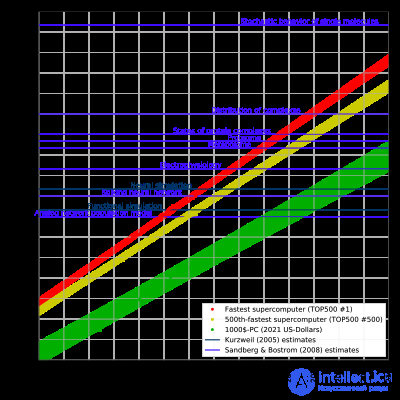
Many theorists have presented models of the brain and established a number of estimates of the amount of computational power required for partial and complete simulation. [ Edit ] Using these models, some have calculated that uploading could become possible within decades if trends such as Moore's law continue. [12] As of December 2022, such technology is almost entirely theoretical. Scientists have yet to find a way in which computers could feel human emotions, and many argue that consciousness uploading is impossible. [13]
Theoretically, if the information and processes of the mind could be separated from the biological body, they would no longer be bound to the individual limitations and lifespan of that body. Furthermore, the information in the brain could be partially or fully copied or transferred to one or more other substrates (including digital storage or another brain), thereby — from a purely mechanistic point of view — reducing or eliminating the «mortality risk» of that information. This general proposal was discussed in 1971 by biogerontologist George M. Martin of the University of Washington. [14]
An «uploaded astronaut» could be used instead of a «living» astronaut in crewed spaceflight, avoiding the dangers of weightlessness, the vacuum of space, and cosmic radiation to the human body. This would allow the use of smaller spacecraft, such as the proposed StarChip, and would allow virtually unlimited interstellar distances to be traveled. [15]
In mind uploading via the copy-and-transfer method, the main focus is on data acquisition rather than on maintaining the brain's data. A set of approaches known as loosely-coupled offloading (LCOL) can be used in an attempt to characterize and copy the mental content of the brain. [16] The LCOL approach may take advantage of self-reports, life logs, and video recordings that can be analyzed by artificial intelligence. A «bottom-up» approach may focus on the specific resolution and morphology of neurons, the timing of neuron impulses, and the timing at which neurons produce action-potential responses.
Proponents of mind uploading cite Moore's law in support of the notion that the necessary computational power is expected to become available within a few decades. However, the actual computational requirements for running an uploaded human mind are very difficult to quantify, which potentially makes such an argument misleading.
Regardless of the methods used to capture or recreate the functions of the human mind, the processing requirements are likely to be enormous due to the large number of neurons in the human brain, as well as the considerable complexity of each neuron.
In 2004, Henry Markram, lead researcher of the Blue Brain Project, stated that «[their] goal is not to build an intelligent neural network», based solely on the computational requirements of such a project. [18]
It will be extremely difficult, because in the brain every molecule is a powerful computer, and we would need to model the structure and function of trillions upon trillions of molecules, as well as all the rules governing their interactions. You would literally need computers that are trillions of times larger and faster than anything that exists today. [19]
Five years later, after successfully simulating part of a rat's brain, Markram was much bolder and more optimistic. In 2009, as director of the Blue Brain Project, he stated that «a detailed, functional artificial human brain could be built within the next 10 years». [20] Less than two years later, the project was deemed poorly managed, its claims exaggerated, and Markram was asked to resign. [21] [22]
The computational power required depends heavily on the chosen level of scale of the simulation model:
| Level | CPU requirement (flops) |
Memory requirement (TB) |
$1 million supercomputer (earliest year achieved) |
|---|---|---|---|
| Analog network population model | 10 15 | 10 2 | 2008 |
| Spiking neural network | 10 18 | 10 4 | 2019 |
| Electrophysiology | 10 22 | 10 4 | 2033 |
| Metabolome | 10 25 | 10 6 | 2044 |
| Proteome | 10 26 | 10 7 | 2048 |
| State of protein complexes | 10 27 | 10 8 | 2052 |
| Distribution of complexes | 10 30 | 10 9 | 2063 |
| Stochastic behavior of single molecules | 10 43 | 10 14 | 2111 |
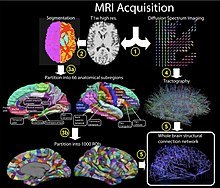
When modeling and simulating the brain of a specific person, a brain map or connection database showing the connections between neurons must be extracted from an anatomical brain model. For a simulation of the whole brain, this network map must show the connectivity of the entire nervous system, including the spinal cord, sensory receptors, and muscle cells. Destructive scanning of a small sample of mouse brain tissue, including synaptic detail, has been possible since 2010.
However, if short-term memory and working memory involve prolonged or repeated activation of neurons, as well as intraneuronal dynamic processes, it may be difficult to extract the state of the electrical and chemical signals of synapses and neurons. In that case, the uploaded mind might experience a loss of memory of events and mental processes immediately preceding the brain scan.
It is estimated that a complete brain map would occupy less than 2 x 10 16 bytes (20,000 TB) and would store the addresses of connected neurons, the synapse type, and the «weight» of the synapse for each of the brain's 1015 synapses. However, the biological complexities of true brain function (such as epigenetic states of neurons, protein components with multiple functional states, etc.) may prevent an accurate prediction of the amount of binary data needed to faithfully represent a functioning human mind.
One possible method of mind uploading is serial sectioning, in which brain tissue, and possibly other parts of the nervous system, are frozen and then scanned and analyzed layer by layer, which for frozen samples at the nanoscale requires a cryo-ultramicrotome, thereby capturing the structure of the neurons and their interconnections. [24] The exposed surface of the frozen neural tissue would be scanned and recorded, and then the surface layer of tissue would be removed. Although this would be a very slow and labor-intensive process, research is currently underway to automate the collection and microscopy of serial sections. [25] The scans would then be analyzed, and a neural network model would be recreated in the system into which the mind is being uploaded.
There are uncertainties with this approach using current microscopy methods. If it is possible to reproduce a neuron's function from its visible structure alone, then the resolution provided by a scanning electron microscope will be sufficient for such a technique. [25] However, since the function of brain tissue is partly determined by molecular events (especially at synapses, but also elsewhere on the neuron's cell membrane), this may not be sufficient to capture and model neuronal function. It may be possible to extend serial-sectioning techniques and capture the internal molecular structure of neurons using sophisticated immunohistochemical staining methods, which could then be read out via confocal laser scanning microscopy. However, since the physiological origin of the «mind» is currently unknown, this method may not have access to all the biochemical information needed to recreate the human brain with sufficient accuracy.
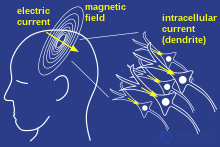
It is possible to create functional three-dimensional maps of brain activity using advanced neuroimaging technologies such as functional MRI (fMRI, for mapping blood-flow changes), magnetoencephalography (MEG, for mapping electrical currents), or a combination of several methods to build a detailed three-dimensional model of the brain using non-invasive and non-destructive techniques. Today, fMRI is often combined with MEG to create functional maps of the human cortex while performing more complex cognitive tasks, since the methods complement each other. Although current imaging technology lacks the spatial resolution needed to gather the information required for such scanning, it is predicted that important recent and future developments will substantially improve both the spatial and temporal resolution of existing technologies. [27]
Work continues in the field of brain modeling, including partial and complete modeling of certain animals. For example, the roundworm C. elegans, the fruit fly Drosophila, and mice have been modeled to varying degrees.
The Blue Brain Project of the Brain and Mind Institute at the École Polytechnique Fédérale de Lausanne, Switzerland, is an attempt to create a synthetic brain by reverse-engineering the circuits of the mammalian brain.
At the heart of the concept of «mind uploading» (or, more precisely, «mind transfer») lies a broad philosophy according to which consciousness rests on the brain's information processing and is, in essence, an emergent function arising from high-level patterns of organization in large neural networks, and that the same organizational patterns could be realized in other processing devices. Mind uploading is also based on the idea that the human mind (the «self» and long-term memory), just like non-human minds, is represented by the current pathways of the neural network and the weights of the brain's synapses, rather than by a dual and mystical soul and spirit. The mind, or «soul», can be defined as the informational state of the brain and is immaterial only in the same sense that the informational content of a data file or the state of computer software currently residing in a computer's working memory is immaterial. The data that defines the informational state of the neural network can be captured and copied as a «computer file» from the brain and re-implemented in a different physical form. [28] This does not deny that minds are well adapted to their substrates. [29] An analogy for the idea of mind uploading is copying the temporary informational state (the values of variables) of a computer program from a computer's memory to another computer and continuing its execution. The other computer may have a different hardware architecture, but emulate the hardware of the first computer.
These questions have a long history. In 1775, Thomas Reid wrote: [30] «I would be glad to know… whether my brain will lose its original structure, and whether, when a hundred years hence the same materials are so curiously fabricated as to become a sentient being, that being, I say, would be me; or, if two or three such beings were formed out of my brain, would they all be me, and hence one and the same sentient being».
A considerable share of transhumanists and singularitarians place great hopes on the belief that they could become immortal by creating one or more non-biological functional copies of their brain, thereby leaving behind their «biological shell». However, the philosopher and transhumanist Susan Schneider argues that, at best, uploading would create a copy of the original person's mind. [31] Schneider agrees that consciousness has a computational basis, but this does not mean that we can upload and survive. In her view, «uploading» would likely result in the death of the original person's brain, while only outside observers could sustain the illusion that the original person is still alive. For it is implausible to think that someone's consciousness would leave the brain and travel to a distant location; ordinary physical objects do not behave that way. Ordinary objects (rocks, tables, etc.) are not simultaneously here and somewhere else. At best, a copy of the original mind is created. [31] Neural correlates of consciousness, a subfield of neuroscience, hold that consciousness can be regarded as a state-dependent property of some ill-defined, adaptive, and tightly interconnected biological system. [32]
Others have objected to such conclusions. For example, the Buddhist transhumanist James Hughes pointed out that this consideration goes so far that if one believes the «self» is an illusion, concern for survival is not a reason to avoid uploading, [33] and Keith Wiley presented an argument according to which all resulting minds produced by uploading procedures are granted equal primacy in their claims to the original identity, so that the survival of the self is determined retroactively from a strictly subjective standpoint. [34] [35] Some have also argued that consciousness is part of an extra-biological system that has yet to be discovered; therefore, it cannot be fully understood within the current constraints of neuroscience. Without consciousness transfer, true mind uploading or eternal immortality can hardly be achieved. [36]
Another potential consequence of mind uploading is that the decision to «upload» might then create a mindless symbol manipulator instead of a conscious mind (see «Philosophical zombie»). [37] [38] Should we consider an upload conscious if it exhibits behavior that strongly indicates the presence of consciousness? Should we consider an upload conscious if it verbally insists that it is conscious? [39] Could there be an absolute upper limit on processing speed, above which consciousness cannot be sustained? The mystery of consciousness precludes a definitive answer to this question. [40] Many scientists, including Kurzweil, firmly believe that the answer to whether a particular entity possesses consciousness (with one hundred percent certainty) is fundamentally unknowable, since consciousness is inherently subjective (see solipsism). Despite this, some scientists firmly believe that consciousness is a consequence of computational processes that are neutral with respect to substrate. In contrast, many scientists believe that consciousness may be the result of some form of substrate-dependent quantum computation (see quantum mind). [41] [42] [43]
In light of the uncertainty about whether uploads should be considered conscious, Sandberg proposes a cautious approach: [44]
Principle of Assuming the Most (PAM): assume that any emulated system may have the same mental properties as the original system, and treat it accordingly.
The process of developing emulation technology raises ethical questions related to animal welfare and artificial consciousness. [44] The neuroscience required to develop brain emulation will require experiments on animals, first on invertebrates and then on small mammals, before moving on to humans. Sometimes animals would simply need to be euthanized in order to extract, slice, and scan their brains, but sometimes behavioral and in vivo measures would be required that could cause pain to living animals. [44]
Furthermore, depending on one's views on consciousness, the resulting simulated animals themselves could suffer. [44] Bancroft argues for the plausibility of consciousness in brain simulations based on David Chalmers's «fading qualia» thought experiment. He then concludes: [45] «If, as I have argued above, a sufficiently detailed computer simulation of the brain is potentially functionally equivalent to an organic brain, it follows that we should consider extending protection from suffering to simulations». Chalmers himself has argued that such virtual realities would be genuine. [46] However, if mind uploading occurs and the upload is not conscious, significant opportunity costs could arise. In the book «Superintelligence», Nick Bostrom expresses concern that we might build a «Disneyland with no children». [47]
Reducing the suffering of simulations could be helped by developing virtual equivalents of anesthesia, as well as by excluding processing related to pain and/or consciousness. However, some experiments may require a fully functioning simulation of a suffering animal. Animals could also suffer accidentally due to flaws and a lack of understanding of which parts of their brain are suffering. [44] Questions also arise regarding the moral status of partial brain emulations, as well as the creation of neuromorphic emulations that draw inspiration from the biological brain but are organized somewhat differently. [45]
Brain emulations could be erased by computer viruses or malware without needing to destroy the underlying hardware. This could make killing easier than it is for physical people. An attacker could use the computational power for their own purposes. [48]
Many questions arise regarding the legal personhood of emulations. [49] Will they be given the rights of biological people? If a person makes an emulated copy of themselves and then dies, does the emulation inherit their property and position? Could an emulation ask to «pull the plug» when its biological version is terminally ill or in a coma? Would it help, for a period of several years, to treat emulations as minors so that the biological creator retains temporary control? Would criminal emulations be punished with the death penalty, or would they be given forced data modification as a form of «rehabilitation»? Could an upload have the right to marry and to child custody? [49]
If simulated minds become a reality and are granted rights of their own, it may be difficult to ensure the protection of «digital human rights». For example, social-science researchers might be tempted to secretly subject simulated minds, or entire isolated communities of simulated minds, to controlled experiments in which many copies of the same minds are subjected (sequentially or simultaneously) to different test conditions.
A study conducted by cognitive scientist Michael Laakasuo showed that attitudes toward mind uploading are shaped by a person's belief in an afterlife; the existence of mind-uploading technology could threaten religious and spiritual notions of immortality and divinity. [50]
Emulations could be preceded by a technological arms race driven by first-mover advantages. Their emergence and existence could lead to an increased risk of war, including inequality, power struggles, intense loyalty and willingness to die among emulations, as well as new forms of racism, xenophobia, and religious prejudice. If emulations operate much faster than humans, human leaders may not have enough time to make wise decisions or negotiate. It is quite possible that people would react violently to the growing power of emulations, especially if it lowers human wages. Emulations may distrust one another, and even well-intentioned protective measures could be interpreted as an insult. [48]
In Robin Hanson's book «The Age of Em», numerous hypotheses are put forward about the nature of a mind-uploading society, including that the most common minds would be copies of adults with personalities conducive to long hours of productive specialized work. [52]
Kenneth D. Miller, professor of neuroscience at Columbia University and co-director of the Center for Theoretical Neuroscience, has expressed doubt about the practicality of mind uploading. His main argument is that reconstructing neurons and their connections is itself a difficult task, but far from sufficient. The brain's operation depends on the dynamics of the exchange of electrical and biochemical signals between neurons; therefore, capturing them in a single «frozen» state may not be enough. Furthermore, the nature of these signals may require modeling down to the molecular level and beyond. Therefore, without rejecting the idea in principle, Miller believes that the complexity of an «absolute» duplication of an individual mind is insurmountable for the next several hundred years. [53]
There are very few possible technologies from whose development people have abstained. Neuroscience and hardware-computing technologies that could make brain emulation possible are widely sought after for other reasons, and their development will logically continue in the future. We may also have brain emulations for a short but significant period on the way to human-level artificial intelligence not based on emulation. [52] Assuming that emulation technology does arise, the question is whether we should accelerate or slow its development. [48]
Arguments in favor of accelerating brain emulation research:
Arguments in favor of slowing brain emulation research:
Emulation research would also accelerate neuroscience in general, which could speed up medical advances, cognitive enhancement, lie detectors, and capabilities for psychological manipulation. [58]
Emulations are easier to control than de novo artificial intelligence, because
Against these considerations, Bostrom notes some drawbacks:
Because of the anticipated difficulties that a superintelligence created through whole brain emulation could pose for the control problem, computer scientist Stuart J. Russell, in his book «Human Compatible», rejects its creation, simply calling it an «obviously bad idea».
Ray Kurzweil, Google's Director of Engineering, has long predicted that by 2045 people will be able to «upload» their entire brains into computers and achieve «digital immortality». The Global Futures 2045 International Congress in New York claims to hold a similar set of beliefs. [62] Mind uploading is also supported by a number of researchers in neuroscience and artificial intelligence, such as the late Marvin Minsky. [ citation needed ] In 1993, Joe Strout created a small website called the «Mind Uploading Home Page» and began advocating for the idea in cryonics circles and elsewhere online. This site has not been actively updated in recent years, but it gave rise to other sites, including MindUploading.org, run by Randal A. Koene, who also moderates a mailing list on the subject. These advocates view mind uploading as a medical procedure that could ultimately save countless lives.
Many transhumanists eagerly await the development and deployment of mind-uploading technology, and transhumanists such as Nick Bostrom predict that it will become possible in the 21st century thanks to technological trends such as Moore's law.
Michio Kaku, in collaboration with Science, produced the documentary «Sci Fi Science: Physics of the Impossible», based on his book «Physics of the Impossible». In the fourth episode, titled «How to Teleport», it is mentioned that mind uploading using methods such as quantum entanglement and whole brain emulation using advanced MRI apparatus could allow people to travel enormous distances at speeds close to the speed of light.
The book «Beyond Humanity: CyberEvolution and Future Minds» by Gregory S. Paul and Earl D. Cox is devoted to the possible (and, in the authors' view, almost inevitable) evolution of computers into intelligent beings, but also deals with the transfer of the human mind. Richard Doyle's book Wetwares: Experiments in PostVital Living broadly examines uploading from the perspective of distributed embodiment, arguing, for example, that humans are currently part of an «artificial life phenotype». Doyle's vision reverses the polarity of uploading, in which artificial life forms, such as uploads, actively seek biological embodiment as part of their reproductive strategy.
The concept of mind uploading contains numerous paradoxes. For instance, if it is possible to create an exact copy of a consciousness, then it is also possible to create several such copies (both virtual and material), and, as an option, to preserve the living original in parallel with the copy created[12]. From a materialist point of view, consciousness is inseparable from the body, and interpretations such as «the same person exists in several places in space at the same time» are rejected as absurd, and all copies are recognized as equivalent at the moment of creation, subsequently developing each along its own path, roughly like twins[12]. According to this same point of view, the transfer of consciousness is impossible, even if the original is destroyed in the course of the readout, because in that case the material substrate of consciousness — the brain — perishes, meaning that theoretically only copying (in any number) is possible[12]. Sometimes similar reasoning is supplemented by idealist claims that the same person cannot be the subject of more than one life experience at once, and therefore cannot exist in two places at the same time. Consequently, not even a single copy of consciousness can be created (a copy with the original preserved).
Some philosophers believe that the concept of uploading and downloading consciousness is based on a mistaken doctrine of the independence of personhood from the body. According to the view expressed, for example, by Corliss Lamont, personhood is the life, function, or activity of the body. It is an acting body, a living body; more precisely, it is a body acting and living in a certain way, closely tied to the brain and to the rest of the central nervous system. In his view, personhood can be abstracted from the human body no more than breathing or digestion can. That is, personhood is thus a quality of the body, not an independently existing thing.
If one considers the hypothesis of the quantum nature of consciousness, then an important argument against the possibility of mind uploading is the no-cloning theorem of quantum theory, which states that it is impossible to create a perfect copy of an arbitrary unknown state. On the other hand, if quantum processes are not very essential to human consciousness, then the precision of copying quantum information about the brain's state permitted by this theorem would be sufficient.
The hypothesis of the possibility of «mind uploading» is also criticized by dualist theories of consciousness, which postulate the existence of an immaterial conscious substance — the soul — which, dualists believe, cannot be simulated or transferred to another medium.
Some examples are given in order of priority.
In general, consciousness transfer is a complex and multifaceted issue, involving numerous ethical, legal, and philosophical challenges, and requires further research and technological development in order to be realized.


Comments