
Lecture
1. Health as a factor in a manager's effective performance.
2. Stress in a manager's work. Managing emotional states.
3. Life crises and a manager's work.
Scientific and technological progress, the accelerating pace of modern life, information overload, and environmental pollution have a serious impact on the health of people in general and of managers in particular.
Systematic overloads and the states of tension that result from them are becoming ever more common for a manager. Modern managerial work is the most striking example of an overly intense rhythm of life. As a rule, in his daily work a manager is focused on solving many tasks. All this causes intense nervous activity, which in turn demands great effort and tension.
If a person fails to escape from a state of overexcitation and overstrain for a long time, there may be a danger that some mental or physical illness will develop. This chapter deals with how to preserve your health and capacity for work.
Health and its components. Health... How often lately we hear this word. What does it actually mean? In S.I. Ozhegov's dictionary, health is understood as «the correct, normal functioning of the organism, its complete physical and mental well-being». Yet it is very difficult to define unambiguously what health is. What some consider normal health, others may perceive as ill health. According to S.A. Volkov, «a healthy person can be considered one who is, at the very least, able to adequately solve professional, family and personal problems» .
According to WHO materials, health is a state of complete physical, mental and social well-being, and not merely the absence of disease or physical defects.
The turn of the century is marked by the urgency of the health problem in all its aspects.
This is promoted by:
All this has led to a sharp rise in the so-called «diseases of the century» (cardiovascular, oncological, ulcer-related, mental and other diseases). The number of alcoholics and drug addicts has risen sharply. Possibly these diseases are a consequence of many people's inability to adapt quickly to turbulent changes in living conditions. It goes without saying that life is not easy for modern people. But it is doubly hard for a manager.
A modern manager (specialist) works, as a rule, in conditions of:
That is why a manager is in a state of stress almost constantly. Systematic overloads and the states of tension that result from them are becoming ever more common for a manager. If he fails to escape from a state of overexcitation and overstrain for a long time, there may be a danger that some illness will develop. How can he protect himself from this premature aging and from disease?
Before we try to answer this question, let us see what the components of health include.
Three types of health are usually distinguished:
Physical health is a stable functional state of the organism that ensures the successful vital activity of a person (the vital activity both of individual tissues, organs and systems and of the organism as a whole). It is important to note that a stable functional state is considered within the limits of the age norm.
It is very important to perceive yourself as a healthy person. It is no accident that there is a saying: as long as a person does not think about his health, he is healthy.
Physical health is, as a rule, associated with biological (functional) age, that is, with the functional maturity of the organism. The criteria of biological age change depending on the period of development and include:
Mental health is assessed by three main criteria:
In our case, with regard to health, adaptation is understood as a person's ability to relate consciously to the functions of his organism (for example, digestion, excretion, etc.) and the ability to regulate his mental processes (to manage his thoughts, feelings and desires). There are limits to the content of individual adaptation, but there are also regularities common to all people. The criterion of successful adaptation is a person's ability to live in modern geosocial conditions.
Socialization with regard to health is understood in three main manifestations:
Thus the criterion of successful socialization is a person's ability to live under modern social norms, in the «I — others» system.
Individualization (individuation) is understood as the ability:
* first, to be aware of one's own uniqueness and individuality as a value and not to allow other people to destroy it;
* second, to compare one's own individuality with the manifestations of the individuality of other people.
Thus the criterion of successful individualization (individuation) is a person's ability to relate to himself and to those around him as to individuals.
Having considered the components of mental health, we can draw the following conclusion. A mentally healthy person is characterized by his capacities for adaptation, socialization and individualization. Every person has these capacities, and the degree of their realization is determined by the social situation, that is, by the everyday conditions of a person's development in which he realizes himself, his thoughts, capacities, desires and qualities.
A few words about the spiritual health of a person.
Its main signs and indicators include the following:
Spiritual health is manifested in a person's connection with the whole world and is expressed in:
The most fruitful studies of spiritual health are those by representatives of humanistic psychology. Thus A. Maslow held that spiritually healthy people possess special characteristics that distinguish them from other people on a number of indicators. These people have satisfied their needs for safety, belonging, love, respect and self-respect, and therefore can strive for self-actualization, that is, for the fulfillment of their mission, calling and destiny, and for the unity of their personality.
The characteristics of healthy people confirmed by A. Maslow's observations include the following:
1. Objective perception of reality. Spiritually healthy people are less emotional and more objective in their perception of reality, and tolerant of contradiction and uncertainty. They welcome doubt and untrodden paths.
2. Full acceptance of oneself, others and nature. Spiritually healthy people accept themselves as they are, at both the mental and the physiological level, and feel the joy of life in doing so (they have a good appetite, sleep, sex). They are understanding of the basic biological processes in the organism. In a similar way they perceive others and humanity as a whole.
3. Spontaneity, simplicity and naturalness of behavior. As M.E. Litvak (1997) aptly remarked, it is as easy to deal with these people as with Japanese technology. However, this simplicity of communication does not mean that they are accessible to everyone at any moment, or that they are equally simple «inside».
4. Absorption in and devotion to some cause (being centered on the problem rather than on oneself). Spiritually healthy people are committed to some task, duty, calling or beloved work that they regard as their life mission. In A. Maslow's words, they live to work, rather than work to live.
5. Independence and a need for privacy. They greatly need the inviolability of their inner life and solitude, communion with themselves.
6. Autonomy, independence from culture and environment. They rely more on their own potential and on inner sources of growth and development. In this sense they are self-sufficient, that is, truly independent, and not merely in the sense of declaring their position.
7. Freshness of appraisal and perception. Spiritually healthy people perceive every day of their lives as an exciting and thrilling event. For them, seeing the hundredth rainbow is as beautiful and wonderful as seeing the first rainbow of their lives.
8. Peak or mystical experiences. These people are capable of experiencing moments of intense excitement or high tension, ecstatic states. When are they experienced? At culminating moments of love and intimacy, of creativity, insight, discovery and merging with nature.
9. Social interest, a sense of belonging, of unity with others, benevolence. This is expressed in compassion, sympathy and love for all humanity (often in the form of an older brother's attitude to a younger one).
10. Deep interpersonal relationships. These people have a narrow circle of contacts, since real communication, a state of spiritual unity with others, requires time and effort. However, their communication is marked by the depth of the feelings experienced. Moreover, these people are characterized by a high sense of empathy and compassion.
11. A democratic character type. These people have no prejudice toward another class, race, religion, sex, age, profession, sexual orientation, or other attributes of status. They readily learn from anyone, provided there is something to be learned from him. At the same time they do not consider everyone without exception to be equal. A. Maslow wrote: «These individuals, themselves being an elite, also choose an elite as friends, but it is an elite of character, ability and talent, not of birth, race, blood, name, family, age, youth, fame or power».
12. Distinguishing means from ends. In everyday life they are more definite, consistent and firm than others about what is right and what is wrong, good or bad. They adhere to definite moral and ethical norms, although few of them are religious in the orthodox sense of the word. At the same time, for them the process itself sometimes matters more than the goal, however noble.
13. A philosophical sense of humor. These people prefer a benevolent, philosophical humor that mocks the folly of humanity as a whole, unlike other people, who may enjoy jokes that mock someone's inferiority, humiliate someone, or are indecent. The humor of spiritually healthy people brings a smile, not laughter.
14. Creativity, a creative approach to life. They are characterized by a natural and spontaneous creativity, which allows them to carry out an ordinary task in a new way each time. Moreover, their creative approach shows itself above all in everyday matters, rather than, as with outstanding talents, in poetry, art, music or science. That is why A. Maslow once remarked that there is more creativity in a first-class soup than in second-rate poetry.
15. Resistance to enculturation. They are in harmony with their culture, yet retain a certain inner independence from it. They are conventional and no different from others, until the demands of the culture touch their fundamental, basic values.
What has been said above may lead to the conclusion that spiritually healthy people are angels. They have shortcomings and, like other people, are imperfect. However, they remind us that the potential for a person's psychological growth, his chance of becoming spiritually healthy, is much higher than what humanity has achieved.
The appendix to the chapter contains the «Personal Orientation Inventory», which makes it possible to determine a person's degree of self-actualization and spiritual health.
Human health: what does it depend on? Let us figure out what our health (especially physical health) depends on. Based on data from the World Health Organization, four groups of generalized factors influencing the state of our health can be singled out.
Lifestyle includes:
· norms of human behavior in typical situations.
Given how important lifestyle is, it is worth taking a closer look at the factors that support physical health.
The leading ones are usually considered to be:
Of breathing we rarely think as long as our respiratory organs are healthy. It is performed automatically, although if we wish we can control it. In the body, physiological and biochemical processes take place without the participation of consciousness and are governed by the autonomic nervous system.
Breathing has long received close attention in the East. In the West, and in our country, it did so much later. Some say that one should breathe more deeply, while others believe that shallow breathing is more beneficial (according to the Buteyko method). During strenuous physical work, deep breathing is needed to supply oxygen to biochemical processes. Breathing by the Buteyko method, when carbon dioxide accumulates in the body, brings the body, as it were, to the edge beyond which its reserve capacities begin to open up. It is effective in many diseases, but it cannot be used constantly.
Yogis have worked out different variants of breathing (pranayamas), which include four stages of roughly equal duration: inhalation — pause — exhalation — pause. The duration of the stages is chosen individually, but is usually 4—8 seconds per stage, gradually increasing to 10—14 seconds. Such breathing has a healing and even rejuvenating effect.
Recently, much attention has been paid to the problem of nutrition.
There are different ways of eating — raw food diet, plant-based mono-diet, vegetarianism, animal-based mono-diet, and mixed diet. It has been proven that any of them can be used, but the last is the least effective.
There are several commandments of nutrition:
* eat four times a day and regularly;
* consume only foods of living nature. The main attention should be given to fresh fruits and vegetables (raw if possible) and so-called fiber (coarse-ground bread, bran bread, and so on). It is recommended to consume no more than 80 g of fat per day and to make sure that it is unsaturated, that is, vegetable and not fried. Consumption of sugar and salt must be reduced to a minimum. What we eat should on average be absorbed at 80—90%. Fats delay and reduce this absorption to 60%, while vegetables and fruits increase it by 10—15%;
Movement is the basis of life. The body's need for movement is realized to the greatest extent in various kinds of physical exercise and in walking. The maximum effect is achieved by performing a large number of cyclic movements of not very high intensity. The main point is not simply to increase the strength and flexibility of the body, but to strengthen the body's self-regulation.
The easiest way to introduce physical exercise into your life is to increase your daily physical activity. Brisk walking — is a cheap, simple, safe and the most popular form of exercise. Replace with walking all car trips over short distances. Dancing and taking part in sports competitions are an effective and fun way to burn excess calories. Slow running is an accessible and effective kind of physical activity, since it provides an antigravity regime (because of the flight phase). Thanks to blood flow and gas exchange in the lungs, waste products are removed better, and the work of the endocrine and nervous systems improves. A state of mild positive stress creates adaptive mechanisms for more difficult stressful influences and helps strengthen the immune system.
Increase the intensity of your workouts slowly and gradually. Then you will not be frightened by the need to put great effort into exercise (and people often quit sports out of fear of this). Let the load in your workouts grow naturally, in accordance with your desire and need. Stop exercising immediately if it begins to cause you discomfort, weakness or painful sensations.
The concept of stress. In everyday use, the word "stress" is used in a very broad sense. What is stress? It means tension, pressure or burden, load. "Stress" is a word borrowed from the English language and meaning "tension."
The concept itself was taken from the arsenal of materials science, where it denotes the pressure (load) applied to a material when it is tested. The word "stress" entered the literature of medicine and psychology in the mid-1930s. In 1936, the journal "Nature" published a short communication by the Canadian physiologist H. Selye entitled "A Syndrome Produced by Diverse Nocuous Agents." This marked the beginning of the establishment, in scientific and everyday usage, of one of the most fashionable theories of the twentieth century.
In stressful situations, processes of physical and mental-psychological adaptation to external and internal influences take place. Accordingly, stress itself can be regarded as a protective reaction to external and internal stimuli (stressors). At the same time, stress is a complex of emotional states arising in response to various extreme influences.
Stress is a set of protective reactions of the body, a state of tension arising in difficult life situations. Fig. 17 shows the influence of stress intensity on individual performance; two zones are distinguished.
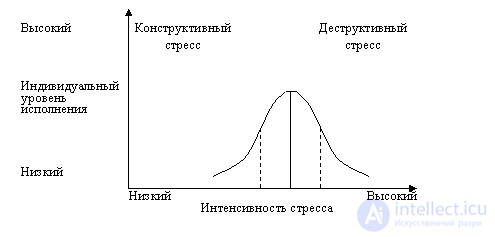
Figure 17 - The influence of stress on individual performance
In the zone of constructive stress, an increase in its intensity leads to an improvement in the individual level of performance; in the destructive zone, an increase in intensity leads to the opposite effect.
Conclusion: there is an optimal level of stress that ensures high effectiveness of activity.
Stress is often the result of several causes, for example psychological pressure at work, poor working conditions, and an inability to organize and manage one's time effectively. To overcome stress, it is necessary to identify its causes. Using a diagram that reflects the main causes of work stress (Fig. 18) helps with this.
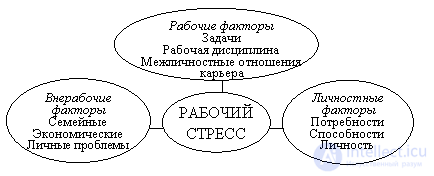
Figure 18 - The main factors of work stress
Through the stress reaction, the body tries to restore the balance disturbed by the action of aggressors. H. Selye showed how stress is connected with the gradual exhaustion of the body's reserves as it tries to adapt to new conditions. In this process, for example, the part of the autonomic nervous system that is responsible for the body's activity and working capacity is activated.
 H. Selye called the complex of these reactions the general adaptation syndrome and described three stages of this syndrome. The first stage is the alarm reaction, expressed in the mobilization of all the body's resources in response to an external influence that disturbs the balance of vital processes. It is followed by the stage of resistance, when the body manages to cope with the harmful influences. During this period, increased stress resistance may be observed.
If the action of harmful factors cannot be eliminated and overcome for a long time, the third stage — exhaustion — sets in. The body's adaptive capacities decline. During this period it resists new harmful influences less well, and the risk of illness increases. However, the onset of the third stage is not inevitable.
Since prehistoric times, when cavemen lived under constant threat of attack, the human body has acquired the property of reacting in a particular way to any tension. Finding himself in a threatening situation, primitive man had to mobilize all his strength quickly, defending himself or running from danger. When we sense danger, the following happens in our body:
Based on this, the main psychophysiological signs of stress can be considered to be:
* a feeling of depression arises. A person who has just avoided an accident could feel in his body, at the moment of danger, all of the listed physiological changes. Similar, though less strong, consequences occur in less dangerous situations.
Unfortunately, if a person cannot control himself and is unable to come out of stressful states quickly, small but irreversible changes take place throughout the body. How this happens is still not entirely clear, but numerous studies confirm that, having become persistent, these changes give rise to a feeling of weakness and illness in a person and contribute to the emergence of new stress.
Stress is a natural and inevitable feature of life. According to H. Selye, the absence of stress is equivalent to death, and even in sleep a person experiences slight stress. In the early stages of human society, stress arose in conditions of the need for physical survival (obtaining food, shelter, fire, a partner for procreation). In modern society (especially under the conditions of the scientific and technological revolution), our stressors have very little to do with the basic mechanisms of survival and much more to do with social success, with the generation of ever-growing demands of living standards, and with the need to meet the expectations of others and of ourselves.
We all need a certain level of stress if we do not want to be bored and feel unhappy. But the necessary level of stress differs for each person. From person to person, not only the level of need for stress changes, but the very content or kind of stress that is needed.
"Good" and "bad" stress. Later H. Selye supplemented his theory, expressing the idea that not all stress is harmful: stress is an integral part of life and cannot be avoided. It is important, in his opinion, to maintain a level of stress that is optimal for oneself and allows one to act most effectively. In this case stress is the "spice and flavor of life." Whether stress will have a harmful effect on health or not depends on the appropriate dose, the type of load and the response to the stimulus.
Stress as pressure, load or tension is neutral. Our body does not distinguish whether positive or negative stress is acting on it. What decides here is how you yourself evaluate the situation mentally and emotionally. For example, you will most likely perceive the following situations in everyday working life as positive:
In such situations you yourself control your behavior and pursue your own goals, that is, you are autonomous and independent. The form of tension that arises in this case has a favorable effect on you, stimulates, motivates and releases energy. Positive stress is called eustress or eu-stress (Greek eu — good).
Negative stressful situations arise for the most part when you feel alienated and dependent, when you are under the strong influence of circumstances. In this case you are limited in your ability to influence the course of events and feel more like a victim. Negative stress is designated by the word distress (Greek "dis" — bad). This includes all acutely or chronically arising situations that you perceive as unsatisfactory, threatening or frightening. It may be either "everyday nerve-racking hassle" or extraordinary circumstances.
Whether stress has a positive effect on you or harms you depends on the dose and, naturally, on the type of load. As the German specialists F.T. Gottwald and W. Howald note, the longer and more intensely a stimulus acts, and the more varied and unusual the loads themselves are, the stronger the reactions they cause. If you, as a manager, have had difficulties in communicating with one of your subordinates for weeks (duration), and this conflict greatly troubles you (intensity), if you are experiencing such a conflict situation for the first time (novelty) and it possibly extends to other employees as well (multiplicity), then the dose of stress received turns out to be maximal. Thus, whether stress itself is harmful to your health or not is determined by the duration, intensity, novelty and multiplicity of the stressful situation.
When you work too much and are heavily loaded, this in itself does not harm you as long as the work brings you joy and you are accompanied by success. But if disappointment and failure are added to the strain, the risk of illness rises significantly.
Factors that cause stress (or stressors). It is important to understand that there are certain stressors capable of causing stress, factors that produce an excess of the body's ability to respond adequately to external influences. A stressor (synonyms — "stress factor," "stress situation") is usually understood as an extraordinary or pathological stimulus; an extreme influence, significant in strength and duration, that causes stress.
In the most general terms, the following types of stressors are usually distinguished:
* physiological (excessive pain, noise, polluted air, unfavorable nutrition, exposure to extreme temperatures, the taking of a number of medicinal drugs, and so on);
* psychological (information overload, unrealistic expectations and claims, critical events in life, competition, a threat to social status, self-esteem, the immediate circle, and so on).
According to D. Fontana, for the analysis of the stressors of occupational stress and of managers' stress one should rely on a somewhat different classification.
From this point of view, two large groups of stressors can be distinguished:
* stressors of work activity;
· stressors of non-work activity.
Stressors of work activity are divided into:
- general and
- specific.
Let us consider general stressors.
These include the following
1. Poor organization of work (delays, irresponsibility, irregularity), that is, a lack of system in the work. The organization is feverish from time to time. It often operates in fire-brigade mode. The manager, in turn, operates in a vertical structure built on a hierarchical principle, and the irregularity and lack of system in the work of a higher-level manager immediately affects the work of lower-level managers.
2. A shortage of staff, which forces one to perform, besides one's own duties, the duties of others as well. This reduces the time needed to carry out one's immediate duties. In these conditions either the work is done poorly, because its volume has increased sharply, or it is done to a high standard, but this quality comes at too high a price — through extreme exertion.
3. Working hours (work in overtime and at inconvenient hours). The human body has natural, cyclical rhythms over the course of a day, a week, a year. These include periods of sleep and of active work. When work forces a person to violate the natural rhythm, stress accumulates.
4. A manager's work requires overtime. It is hard to squeeze into the strict framework of the working-time schedule. In addition, the work of any manager involves dealing with sudden crisis problems.
5. Status problems (low status, a small salary, insufficient prospects for promotion). For most professional managers, work becomes part of their personality. However, for all its importance, when society and the state value it lowly, when others tend to regard what the manager does as something of no particular importance or as a job that anyone can handle, it is hard to preserve a sense of dignity and self-worth.
The possibility of promotion helps one recognize as valuable both one's own professionalism and one's confidence in long-term prospects. Without it, the manager acquires an acute feeling that time is passing, leaving him in a state of stagnation and sometimes hopelessness.
5. Over-organization, formalism and meeting fuss (unnecessary rituals and procedures). The most obvious manifestations of this stressor are unnecessary "paper-pushing" and endless meetings. These factors cause stress in themselves, since the manager gets the feeling that he spends as much time writing insignificant, unnecessary reports and submitting all kinds of data as on the work itself.
The likelihood of stress increases as the manager realizes the poorly concealed fact that the demands for constant reports and the holding of lengthy meetings are nothing other than an attempt by higher-level managers to justify their own busyness, raise their status and importance, and strengthen their own position.
6. Uncertainty and unpredictable development of events in the organization. Uncertainty pulls the manager out of the familiar environment in which he is well oriented and feels stable. In an organization, uncertainty can take the form of frequent changes in local policy without any explicable necessity. As a result, the manager never knows exactly what is happening and what will happen.
By what means do higher-level managers create uncertainty? Most often through sudden changes in the goals and tasks of the work and in duties, and through frequent moves of staff both horizontally and vertically. All this destroys the certainty and clarity of the situation, predictability and the sense of security, and plunges the manager into stress.
Specific stressors in a manager's work require separate consideration. By these we mean stressors that are inherent not so much in the work itself as in the way in which managerial activity is carried out at the corresponding level. The specific stressors include the following.
1. Unclear role responsibilities. Sometimes a manager has no clear official instructions about what he is supposed to do and where the limits of his responsibility lie. An unclear list of functional duties puts the manager in a very vulnerable position: if he does nothing, he is told that he must act; if he shows initiative, he is accused of exceeding his authority and of fighting for a special place in the organization.
2. Role conflict, which arises when two aspects of the manager's work turn out to be incompatible. In a manager's work, this kind of stressor can arise from loyalty to the interests of the organization and the demands of higher-level managers combined with the same attitude toward subordinates. Role conflict often leads to psychological confusion: whatever the manager does, he turns out to be wrong by at least one criterion. This causes an internal conflict, a fear of exposure and of judgment by management. And the result is a feeling of one's own inadequacy and low self-esteem.
3. Unrealistically high claims, striving for perfection. A manager may constantly expect too much of himself, forcing himself to work at full strength and still remaining dissatisfied with the results. Because of this, he is deprived of the chance to relax and feel that the work has been done well. These unrealistic claims are marked by a number of features:
An unrealistic assessment of prospects is relentlessly followed by negative, oppressive feelings and by failure itself. For example, if a manager is due to speak at a meeting and, before it begins, thinks "I'll be torn to pieces today," he inevitably puts himself in a situation in which he will feel constrained, insecure and under enormous pressure. And if everything at the meeting ends relatively well for the manager, his anxieties will not disappear. After all, he expected failure, and it did not happen, which means something is wrong here and it is too early to calm down. So it is not the situation as such that brings the manager to stress, but exclusively how he evaluates it and applies it to himself.
4. Peculiarities of interaction with higher-level managers and their disregard for the manager's opinion. Higher-level managers can cause stress because they can affect the manager's life and work materially and morally (a larger or smaller salary, opportunities for promotion, and so on). In addition, they may trust the manager or not, be pettily fault-finding, constantly interfere in what the manager does, and be constantly stingy with praise and generous with criticism. As a result, the manager feels underappreciated, satisfaction from work dulls, and in the end — stress.
A manager prefers to feel that he has some power and is able to influence events, and that his personal preferences and ideas for improving the quality of work will be recognized. However, when the manager's proposals and opinions, and the manager himself, are ignored, this causes a high level of disappointment and tension. This factor is especially stressful when no one but the manager knows the existing system and its shortcomings better.
5. Peculiarities of interaction with colleagues at the same level.
First, a manager is often tied only by vertical relationships, to the detriment of horizontal interaction. Under these conditions he is limited in his ability to discuss professional problems, to receive not only approval and support but also criticism and evaluation, that is, what we call feedback, and to reassure himself with the awareness that colleagues experience the same difficulties as the manager. For most managers such a situation leads to a growing sense of vulnerability and to the exhaustion of professional resources. In addition, isolation creates the feeling that no one could cope with the manager's workload as well as he does. This leads to an intensification of his activity and to stress.
Second, an inadequate style of higher-level management that fails to meet employees' needs often creates a power vacuum. It inevitably begins to be filled by power struggles among employees, pressure on the management, squabbles, and disarray, both horizontally and vertically.
Finally, third, the inevitable struggle for status, for a special place in the organization, and the defense of territorial claims or privileges lead to various forms of settling scores between colleagues at the same level.
6. Peculiarities of interaction with clients and subordinates. Difficult clients or subordinates can cause stress when clashes with them are either completely unexpected or unfair and unjustified. In the first case the manager expects pleasant (or at least neutral) relations, but runs into coldness and verbal aggression. In the second case the manager is faced with claims and accusations that in essence relate to the system and the general situation rather than to the particular manager of that system. The effort to remain "polite and correct" does not ease the situation in the least. On the other hand, if he loses control of himself, the manager feels even worse, perceiving this conflict as evidence of his own unprofessionalism.
A few words about the influence of the emotional factor. Here it is hard to avoid two extremes. On the one hand, a manager cannot, as if by magic, renounce feelings of liking and disliking, sympathy and antipathy, and even love and hatred. A manager's functions include making decisions that affect the fates of others. These decisions are colored by various feelings, however impartial the manager may try to appear.
On the other hand, any manager may be under the influence of the so-called "emotional burnout (exhaustion) syndrome," when he perceives a subordinate not as a "living" person but as some object of his activity, an element of a complex system. Sometimes a manager may become convinced that a subordinate has various feelings, opinions, wishes, and views, but that the manager is not obliged to take them into account in his work, and moreover that taking them into account only harms the common cause. Such approaches cannot fail from time to time to cause the manager stress.
7. Peculiarities of managerial work. From the point of view of stress-generating potential, managerial work has a number of peculiarities.
First, any manager is from time to time seized by a feeling of professional inadequacy. The pace of technological change in our time is so great that the amount of knowledge required to keep up with life reaches dizzying proportions. The manager gets the feeling that he lacks education, experience, and skills. The effort needed to master new knowledge and experience takes more and more time and energy each year. The manager faces a choice: either to try with all his might to keep up with the times and tackle an impossible task, or to remain in the rear with a negative sense of his own competence and professionalism. In turn, the impossibility or inability to rise to the level of his professional duty brings about a feeling of personal defeat, especially in specialists with a high sense of professional responsibility.
Second, managerial work involves overloads, time pressure, and constant switching from one kind of activity to another. Sometimes strict time limits and a fixed schedule become a driving force for work. However, this should not go on constantly, since it is fraught with stress. Any manager, along with the traditional breaks in work, needs short pauses (from a few hours to a few days) between finishing one work task and moving on to the next. During this relative lull he can discharge the accumulating tension, look around, relax, and really get rid of everything superfluous. Without these brief respites the manager feels almost trapped. He does not have a minute to stop and objectively analyze the results of his work.
Third, managerial work is characterized by monotony and a lack of variety. From time to time a manager needs new impressions in order to maintain composure and creative potential. His activity, which consists basically of performing administrative duties, leads to a state of monotony. A number of professionals, according to D. Fontana's apt remark, admit that in the mornings, as they get ready for work, they experience an almost panicky state, since they are sure of the sameness and inevitability of all the events of the coming working day. The point is not that these events are undesirable in themselves. It is simply that their predictability reaches the point beyond which its soothing effect is lost and sameness, monotony, drabness, and narrowness appear. Why is monotony associated with stress? Because the sameness of certain aspects of work sharply reminds the manager of time slipping away.
Fourth, a manager often makes decisions with an obvious lack of necessary work-related information, or when it is impossible to pass the necessary instructions to the appropriate bodies. This usually creates a feeling of incomplete control over events. Sometimes a direct attempt to obtain the needed information turns from a short, easily accomplished task into something lengthy, often extremely fruitless and leading to severe stress.
The so-called non-work stressors successfully compete with stress at work.
These usually include the following.
1. Stress caused by a spouse. It arises mainly as a result of a clash of either temperaments or interests (unwillingness to help around the house, staying late at work, jealousy, different views on life, marital infidelity, etc.).
2. Stress caused by children. The problem of fathers and children is as old as the world, and yet it still makes itself felt. The manager notices that the children do everything entirely wrong, not "the way it should be done," forgetting that in his time he did exactly the same. He tries to "teach them about life" and to pass on his life experience to them. But he realizes with bitterness that the children learn less from him than from life itself. For some reason they prefer to learn from their own mistakes.
3. Stress caused by parents and relatives. Here is the same problem of fathers and children, but seen from the other side. The manager cannot understand why he, a person who influences the fates of several hundred people, still remains a son or daughter who can continue to be raised. If this is bound up with any form of dependence, stressful states are guaranteed.
4. Stress caused by the home environment. The main point here is that the manager has too many household duties and too little time to carry them out.
5. Stress caused by environmental pressure on the manager's family. This includes noisy neighbors, financial problems related to paying household bills, everyday problems that arise from time to time, and so on.
Stress management. The traditional way of fighting stress is to take alcohol, coffee, or various medications. However, they have side effects and have one destructive effect or another on health. We have already pointed out the contradictory nature of using alcohol under stress. The main drawbacks of taking alcohol as an anti-stress remedy include the following:
Does this mean that alcohol cannot play an anti-stress role in individual cases? No, but it cannot replace other, more effective and lasting help. Even if alcohol is used under stress, consumption must be kept moderate: no more than three doses a day for men and two doses for women (a dose is a glass of dry wine, or a shot of vodka or cognac, or 250-300 g of beer).
The most powerful (and often ignored) means of getting rid of stress is a person's mind. The only thing is to learn to manage it skillfully and in good time. On the other hand, the ability to manage one's own mind is itself stress management.
By stress management is usually meant a set of strategies, methods, and techniques that allow a person to prevent the negative effect of stressors or to reduce this effect to a minimum.
I. Stress prevention. One must prepare for stress in advance, because no one in this world has yet managed to avoid it. But managing it successfully is within the power of any person, including a manager. Stress prevention rests on the following main approaches.
First, a wise attitude to one's own life and its active construction.
In any situation there is a way out and a choice. A difficult situation tests our strength: will we endure or not? If we do not endure, who besides us and our loved ones will be worse off for it? And if we do endure, who in the end will turn out to be the winner? Even the most dramatic situation does not imply an absolute and unambiguous algorithm of action. Even in the harshest realities there is room to maneuver, relative freedom, and choice.
According to R.L. Krichevsky (1996), the principles of a wise attitude to life include the following.
1. Constantly set and pursue life goals commensurate with our abilities. This does not mean giving up one's aspirations, including those involving a certain degree of risk. One needs to think about how realistic our aspirations are and to choose goals that are just slightly above our real abilities. As H. Selye wrote: "Aim for the highest goal within your reach and do not enter into a struggle over trifles."
This principle requires a certain dynamism in our attitudes. A manager with a large set of flexible attitudes and a sufficiently large number of near-term and long-term goals (a "gallery of goals"), who is able to replace them, shows in case of failure his ability to manage stress.
2. Be able to tell the main from the secondary. This principle directs us to find some main, dominant line of life and warns against chasing momentary, chance goals. Yet it is often in the pursuit of them that a whole life passes unnoticed. R. Niebuhr once wrote: "God, give us the serenity to accept calmly what we cannot change; the courage to change what we can; and the wisdom to distinguish one from the other."
3. Know the extent of your influence on events, that is, be realistic in assessing both your own abilities and the situation in which you find yourself. Ignoring this principle leads not only to a needless waste of energy but also to distress. H. Selye advises: "Whatever life situation you encounter, first think whether it is worth fighting."
4. Be able to approach a problem from different sides. This means seeing emerging problems from multiple perspectives, being able to look at them from different sides and positions, and taking a flexible approach in evaluating people and events. The French thinker Montaigne once remarked: "A man suffers not so much from what happens as from how he evaluates what happens."
This principle requires the objectification of stress, that is, an objective evaluation of what at first seemed catastrophic or tragic.
5. Prepare yourself for any unexpected events in advance. By attuning ourselves to possible, and even unforeseen, turns of events, we show a certain flexibility and realism in our approach to reality, rid ourselves of unnecessary illusions, and sometimes thereby prepare ourselves for rather unpleasant news.
6. Perceive reality as it is in fact, not as it is in our imagination. Again this is about realism in assessing what is happening around us, which allows us to perceive and solve emerging problems sensibly, without evading them or withdrawing into a shell of illusions.
7. Try to understand those around you. An adequate understanding of others, in particular of the motives of their behavior, and insight into their inner world make it possible to choose more flexible lines of behavior, avoid unnecessary clashes, and ultimately secure for oneself some level of psychological comfort.
8. Be able to draw positive experience and lessons from everything that happens. Any experience gained (whatever its sign), provided it is seriously reflected upon and appropriate conclusions are drawn, can significantly broaden our ability to assess people and situations, thereby also contributing to better adaptation to life.
9. Live life to the full at every given moment. Despite and in spite of the difficulties of our life, we must live rather than merely exist; live every day and every hour; live every moment of the life allotted to us. To live... More than two thousand years ago Marcus Aurelius said: "Our life is what we think it is." His statement holds true in our time as well.
It is important not only to build one's life wisely but also to actively construct one's everyday reality. Active people are distinguished by the fact that events, as a rule, do not catch them unprepared. They are characterized by:
They are, as a rule, well informed and know how to be in the right place at the right time. Sometimes for this reason they are not quite fairly called lucky. In fact, these people seem so thanks to their active and rational actions;
* decisiveness. They force themselves to act while others are still hesitating. In general, decisiveness is not identical to impulsiveness. Impulsive people do not anticipate the development of events and act hastily even when "danger" is almost at hand;
* courage. The need to act quickly and decisively implies an element of conscious risk. Some are ready to take this risk on themselves, while others delay (and in the long run bring even greater risk upon themselves);
* good stress resistance. Active people are very often able to act while in a state of stress and at the same time keep a sober ability to follow the development of events. By contrast, people who are highly susceptible to stress try to distance themselves from the stressful situation, avoiding or denying it.
However, while actively constructing the reality of one's life, one should not forget about those around us. Our activity means a change in our behavior, but these changes may prove stressful for others. A situation arises in which a reduction of stress for the manager may mean an increase of stress for subordinates. To avoid such a development of events:
* notify your subordinates in
продолжение следует...
Часть 1 A Manager's Health: Preventing and Overcoming Stress and Life Crises
Часть 2 3 LIFE CRISES AND THE MANAGER'S ACTIVITY - A Manager's

Comments