
Lecture
These tests are designed to check and reinforce knowledge of the topic of sociolinguistics — the science that studies the connection of language with society, culture, social groups, and the conditions of communication.
The questions will help you understand how language changes depending on age, occupation, region, social role, communicative situation, and cultural environment. The tests also allow you to check your knowledge of such concepts as dialect, local vernacular, language norm, verbal behavior, the social variability of language, and language change.
Each question offers several answer options, but only one option is correct. Read the wording of the task carefully and choose the most accurate answer.
After successfully completing the tests, the participant will be able to receive a certificate confirming mastery of basic knowledge of sociolinguistics.
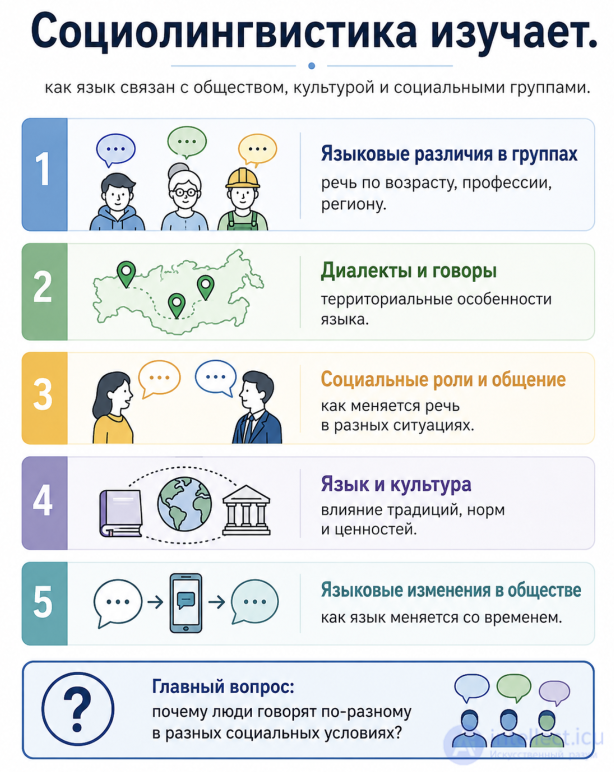
1. Sociolinguistics studies…
Hint
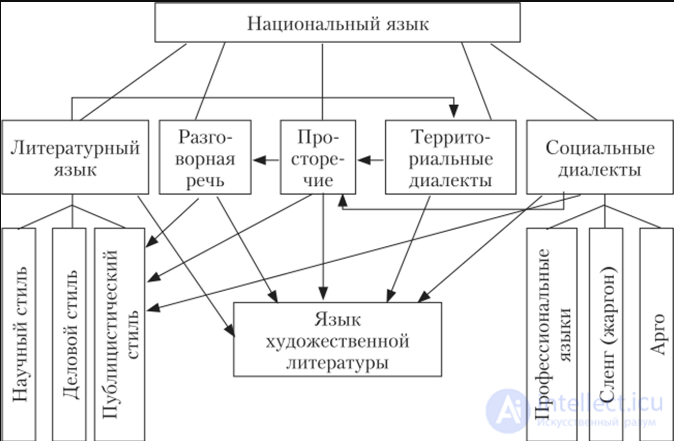
2. The forms of existence of a language are…
3. The totality of linguistic formations serving a given society within the boundaries of a particular region or state is characterized through the concept of…
hint: this concept means — the sociolinguistic characteristic of a particular locality, historical or geographical area, ethnic region, state or its administrative units, group of states, or any other territory within which the areal and social interrelation, as well as the functional interaction of the forms (and styles) of a given language or of several languages, is examined.
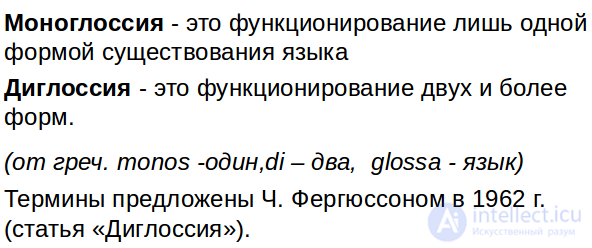
4. Most languages are characterized by…
5. The social roles of speakers are one of the important characteristics of…
hint: People's verbal communication takes place in different situations, is caused by different reasons, and pursues the solution of various communicative tasks. The conditions for the formation of verbal communication at a given moment in time and under given circumstances are called .... (this is also the correct answer)
6. The following processes and phenomena can be explained by factors external to language:
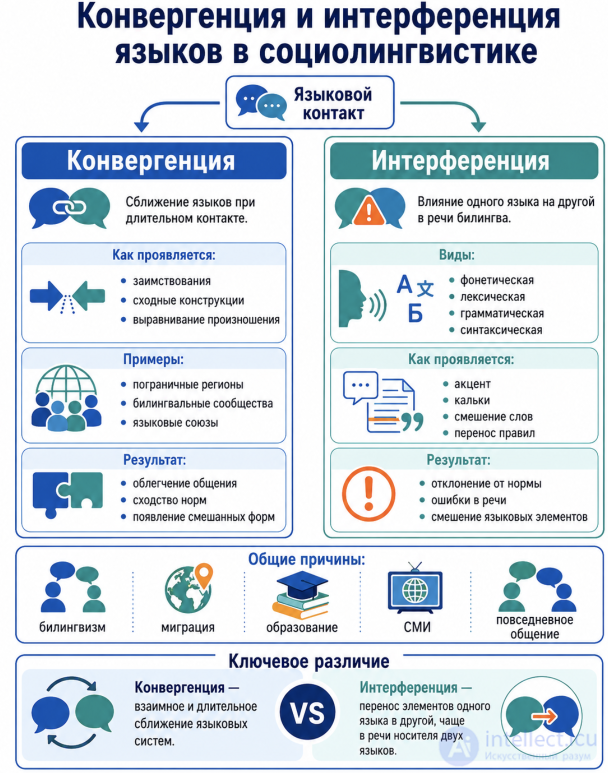
7. Examples of a language union (Sprachbund) may be:
8. A balanced multilingual situation is the case in…
9. The main linguistic spheres that allow for conscious social influence are…
10.. The components of the technology of language planning may be considered…
11. The idea of the correspondence of structural language types (isolating, agglutinative, inflectional, etc.) to different socio-economic formations belongs to…
12. Rigid boundaries between the standard and non-standard forms of existence of a language, for example the archaization of the Czech standard language, the absence of borrowings in it, and so on, are explained by
13. The description of the Russian language as more emotional, reflecting the uncontrollability of feelings and the irrationality of Russian national consciousness, can be designated as…
14. Choose the typological characteristics of the Russian language:
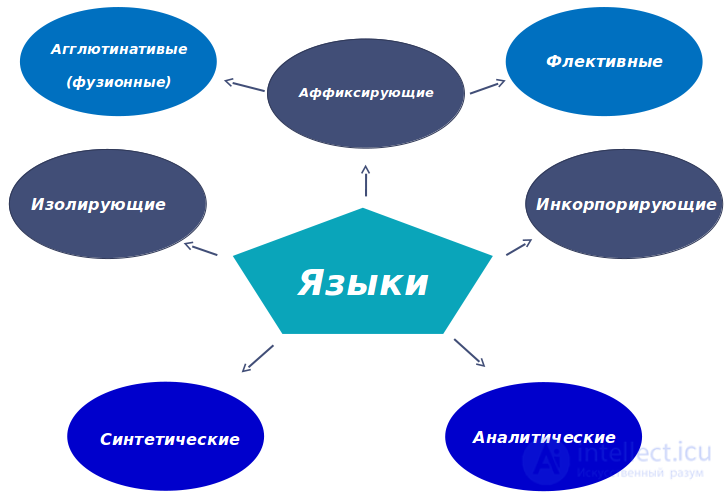
Affixing languages (the main way of expressing grammatical meaning is affixation). For example, Russian.
Isolating languages (grammatical meaning is expressed by means of function words, word order, and intonation). For example, Chinese.
Incorporating languages (the fusion of morphemes occurs not at the level of the word but at the level of the sentence). For example, the languages of American Indians.Fusion (Lat. fusio — merging) — a way of combining morphemes in which phonetic changes (alternations) at the morpheme boundary make the location of the morpheme boundary non-obvious.
An agglutinative language (from Lat. agglutinatio — gluing) — a language with a structure in which the dominant type of word formation is the agglutination ("gluing") of various formants (suffixes or prefixes), each of which carries only one meaning.
The agglutinative structure is opposed to the flective (inflectional) one, in which each formant carries several inseparable meanings at once (for example, case, gender, number, etc.). Agglutinative languages usually contain many suffixes/morphemes within a single word.Synthetic languages - languages in which the lexical and grammatical meaning of a lexeme are expressed within a single word.Example: Russian
Analytic languages Languages in which the lexical and grammatical meaning are expressed within different lexemes.Example: English
15. Find the incorrect statement:
16. Which languages today have the status of "world languages"?
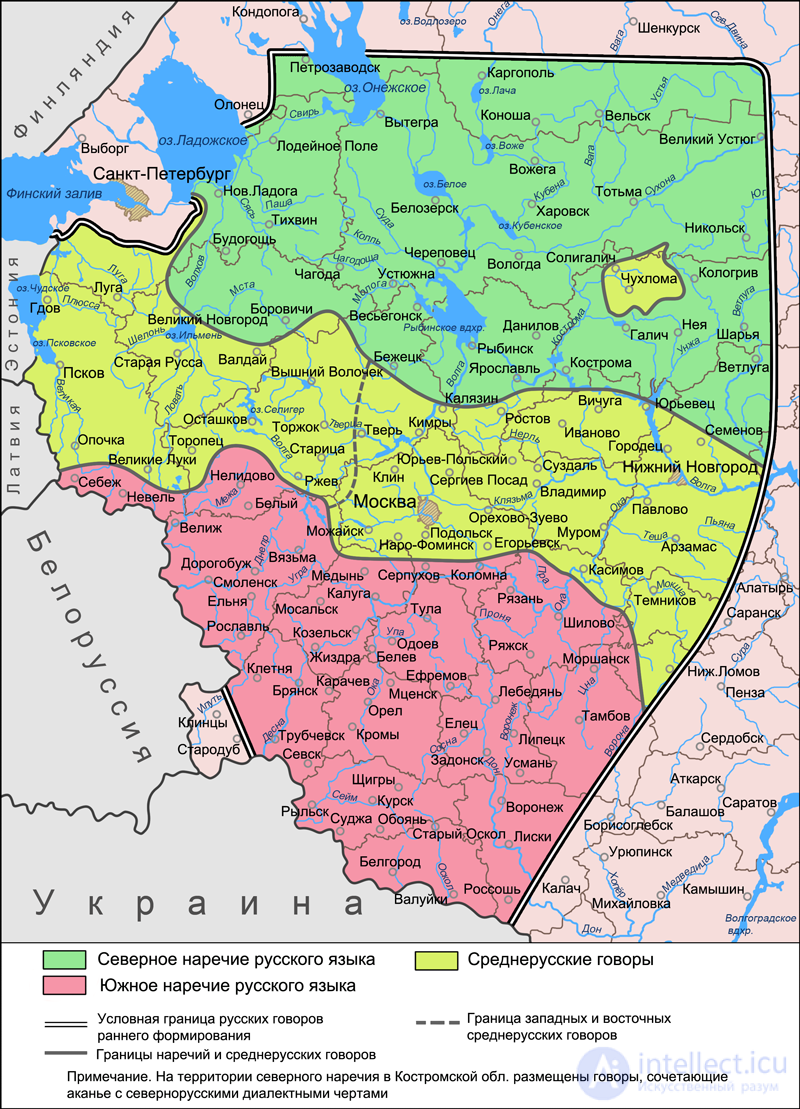
17. The Central Russian dialects include:
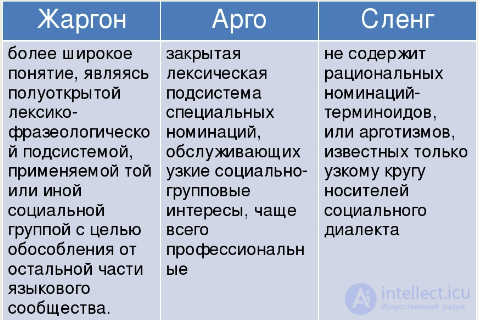
18. Find an example of argot (thieves' cant):
19. Identify the discourse types of the politician..
I have lived here for more than one year. I have seen and felt how painfully people experience the division of their country...I am ready to take direct part in developing a strategy of cooperation... I think that this long-overdue initiative is able to give additional impetus ...to the interaction...I believe that this document has stood the test of time.
20. Determine the sex of the text's author (masculine grammatical forms in it are rendered as neutral):
"The head of the heating network complained about the delay in his salary, yet he was, as they say, "hungover." I noted this in the conversation, to which he replied that there had been a holiday and his wife had congratulated him. The head of the heating network has a very good wife, caring and generous; her home is probably always warm"
Answers to the sociolinguistics test

Comments