
Lecture
Mass transfer — a spontaneous and irreversible process of transporting mass of a portion of a substance in space with a nonuniform field of chemical potential, in the direction of decreasing chemical potential
Technological processes whose rate is determined by the rate of transfer of a substance from one phase to another are called mass-transfer processes, and the equipment used to carry out these processes is called mass-transfer equipment. The main mass-transfer processes are absorption, adsorption, extraction, rectification, drying, crystallization, dissolution, and melting.
In the technology of building materials, drying, dissolution, melting, and crystallization are of the greatest importance. The remaining processes listed are also relevant to the technology of building materials, since they are applied in the production of polymers and in the manufacture of plastic-based building materials from them.
Let us consider only the main mass-transfer processes in the technology of building materials.
DRYING – the removal of moisture from solid moist materials by its evaporation. Drying is of great importance in the technology of almost all building materials, especially in the production of ceramics of all types. The drying process consists of the transition of water from a solid material into the vapor or gas phase.
CRYSTALLIZATION – the separation of a solid phase in the form of crystals from solutions and melts. Crystallization from solutions occurs during the hardening of binding materials; crystallization from melts occurs during the firing of ceramic products and in the production of Portland cement clinker. Crystallization is characterized by the transition of a substance from the liquid phase to the solid phase.
From the examples given, it can be seen that what these processes have in common is the transition of a substance from one phase to another – MASS TRANSFER. This transition is associated with the phenomena of convective transport and molecular diffusion, which is why such processes are called mass-transfer, or diffusion, processes.
Mass transfer refers to the transition of a substance from one phase to another in the direction of achieving equilibrium. All mass-transfer processes are reversible. At least three substances participate in mass transfer: the donating substance – the first phase, the receiving substance – the second phase, and the distributed substance, which passes from one phase to another.
In astrophysics, mass transfer is the process by which matter gravitationally bound to a body, usually a star, fills its Roche lobe and becomes gravitationally bound to a second body, usually a compact object (a white dwarf, a neutron star, or a black hole), and eventually accretes onto it. This is a common phenomenon in binary systems and can play an important role in certain types of supernovae and pulsars.
Mass transfer is widely used in problems of chemical engineering. It is used in reaction engineering, separation engineering, heat transfer engineering, and many other branches of chemical engineering, such as electrochemical engineering.
The driving force of mass transfer is usually the difference in chemical potential, if it can be determined, although other thermodynamic gradients may be associated with mass flow and can also induce it. A chemical species moves from regions of high chemical potential to regions of low chemical potential. Thus, the maximum theoretical extent of a given mass-transfer process is usually determined by the point at which the chemical potential is uniform. For single-phase systems, this generally means a uniform concentration throughout the phase, whereas for multiphase systems, chemical compounds often favor one phase over others and reach a uniform chemical potential only when most of the chemical substance is absorbed into the preferred phase, as in liquid–liquid extraction.
Although thermodynamic equilibrium determines the theoretical extent of a given mass-transfer operation, the actual rate of mass transfer will depend on additional factors, including the flow pattern within the system and the diffusive capacity of particles in each phase. This rate can be quantified by calculating and applying mass-transfer coefficients for the entire process. These mass-transfer coefficients are usually published as dimensionless numbers, often including the Peclet number, the Reynolds number, the Sherwood number, and the Schmidt number, among others.
There is a notable similarity in the commonly used approximate differential equations for the transfer of momentum, heat, and mass. The molecular transport equations – Newton's law for fluid momentum at low Reynolds number (Stokes flow), Fourier's law for heat, and Fick's law for mass – are very similar, since they are all linear approximations to the transport of conserved quantities in a flow field. At higher Reynolds numbers, the analogy between mass, heat, and momentum transfer becomes less useful due to the nonlinearity of the Navier–Stokes equation (or, more fundamentally, the general momentum conservation equation), but the analogy between heat and mass transfer remains good. Much effort has been devoted to developing analogies among these three transport processes so that one could be predicted from the others.
In general form, the material balance of mass-transfer processes can be established
as follows. Let us denote the mass flow rates of the distributing phases along their interface (in kg/h) as G and L, and the concentration of the distributed substance as Y (kg/kg) and X (kg/kg), respectively. If Y > Yp, and there are no losses, then Y decreases while X increases. For an element of surface we have:

Integrating within the limits from the initial to the final concentrations Yn – Yk and Xn – Xk, we obtain:

From equation (7) we calculate the mass flow rates of the distributing phases:
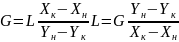
If equation (6) is integrated from the initial to the current concentrations, we obtain G(Yn-Y) = L(X-Xn).
From which:
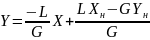
Here L/G – the specific flow rate of one of the distributing phases. This equation in general form:

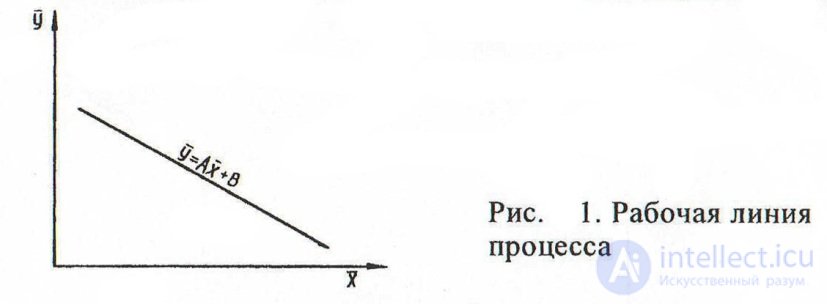
From equation (10) it can be seen that the concentration of the substance in the distributing phases is related by a linear dependence. The equation of the line expressing the relationship between the working concentrations is called the operating line of the process.
"Mass-transfer materials" is a term commonly used in the context of engineering and chemical technology. This term refers to materials or substances that are used to carry out mass-transfer processes in various systems, such as distillation columns, absorption and extraction apparatus, filters, and other devices for separating the components of mixtures.
Mass-transfer processes involve the movement of the mass of one or more components of a mixture from one phase to another, and mass-transfer materials play a key role in facilitating these processes. Depending on the specific system and task, mass-transfer materials can be quite diverse. Here are a few examples of such materials:
Absorbents: These materials are used to absorb gases or vapors from a gas mixture. An example is the use of water as an absorbent for removing carbon dioxide from gas mixtures in air-purification apparatus.
Ion-exchange resins: Used for exchanging ions in liquid solutions and can be used, for example, in water-purification processes.
Separation membranes: Membrane materials that allow the separation of mixture components based on differences in permeability to different molecules.
Sorbents: These materials are used to absorb liquid or gaseous components from mixtures. Activated carbon, for example, can be used to purify water from organic contaminants.
Packing materials for distillation columns: Materials used to separate liquid components in the distillation process, such as plastic packing for columns.
Mass transfer in chemistry and engineering: In chemical engineering and chemical processes, "mass-transfer materials" may refer to materials used for mass exchange, such as adsorbents, ion-exchange resins, membrane materials, and others, which are applied in processes of separation and purification of substances, for example, in the chemical industry.
Materials in the environmental field: In the context of the environment, "mass-transfer materials" may be related to materials used to improve the quality of water, air, and soil, for example, for removing pollutants, absorbing harmful substances, or exchanging ions.
Materials for biomedical applications: In the field of biomedical research, "mass-transfer materials" may refer to materials used to study and monitor mass-transfer processes in organisms, such as hydrogel materials or nanomaterials.
Industrial materials and filters: In industry and filtration, "mass-transfer materials" may be related to materials used for the separation and filtration of substances, such as filter materials, membranes, and sorbents.
For an accurate understanding of the term "mass-transfer materials," it is important to consider the context in which it is used, since it can have different meanings in different fields of science and industry.
Mass transfer underlies many technological processes widely used for separating substances or for purifying them from harmful or ballast impurities, and sometimes, conversely, for joining materials. These processes are usually multistage and involve both the transfer of a substance within a single phase and its transition across a phase boundary.
Technologies based on mass transfer include the following:
Diffusion Processes
Membrane Processes
|
Sorption Processes
Heat-and-Mass-Transfer Processes
Extraction Processes
|

Comments