
Lecture
The bourgeois-democratic revolution of 1905 sparked intense public interest in political subjects and substantially changed the system of mass media. The Tsar’s Manifesto of 17 October 1905 proclaimed freedom of speech and permitted political controversy in the newspapers (though, naturally, calls to overthrow the state system by force, as well as the incitement of religious or ethnic hatred, remained banned). With this new openness political parties began to appear: Social-Democratic and Socialist-Revolutionary newspapers emerged from the underground, and new newspapers and journals were founded for the People’s Socialists, the “people’s freedom” party, the “17 October” party, the Trudoviks, the industrialists, the Kadets, and so on. These were new types of publications: manifesto newspapers, call-to-action newspapers, discussion leaflets. Thanks to party, trade-union, youth and satirical newspapers, the number of periodicals rose from 1,002 to 1,797 between 1900 and 1906 [38].
It is true that just a year later, in 1907, the number of publications was cut back to 1,542 — a result of the government’s measures to stabilize public life and the introduction of judicial liability for incitement to destroy the state system. Extremist party publications were banned. The press began examining the mistakes of its conduct during the revolution: a number of intellectuals — Berdyaev, Frank, Bulgakov, Struve and others — published a collection of “penitent” essays called “Vekhi”. .
Nevertheless, the years 1909–1913 were a period of civilized openness and flourishing for the Russian press. The country had a Constitution in force, a parliament was in session, and the powers of censorship were limited by law. Parties in opposition to the government had the right to publish legal newspapers: the Bolshevik faction of the RSDLP in the State Duma published the newspapers “Zvezda”, “Nevskaya Zvezda”, “Rabochy”, and “Pravda”; the right wing of the Kadet party published the newspaper “Rech”, and the Party of People’s Socialists published the journal “Russkoye Bogatstvo”, and so on. By 1913 the Russian press system numbered nearly 3,000 titles, and by 1918 nearly 4,000.
At the same time, the growth in the number of publications was largely explained by the desire to earn decent profits. “There is no doubt that publishing enterprise in the field of the contemporary press is now no different from other kinds of commercial enterprise,” believed the interior minister of the day, M. L. Goremykin [39]. Indeed, publishing a newspaper in pre-revolutionary Russia produced quick results. S. M. Propper acquired the right to found “Birzhevye Novosti” for 13 rubles. Within just five years, on his newspaper earnings, he began buying houses and estates, became a councilman of the St. Petersburg city duma, and received the rank of commercial councillor [40]. The son of a village clerk, I. D. Sytin, worked from the age of fifteen for a merchant who sold lubok prints; at thirty he bought a lithographic press, hired artists, and began running the business himself. Ten years later his workshop already had 50 lithographic presses. Sytin’s printing house soon printed 180 textbooks a year for public schools — 60 percent of all the textbooks published in the country. On the advice of A. P. Chekhov, the entrepreneur set up the newspaper “Russkoye Slovo”: its circulation at the start of the 20th century was 13,200 copies, and by 1916 already 739,000 [41]. The main authors of “Russkoye Slovo”, which became an all-Russian “news factory”, were the reporter Vladimir Gilyarovsky and the feuilletonist Vlas Doroshevich, whose sketches of everyday life and manners in Moscow captivated the public with their vigor and sharpness of thought. The war correspondent V. Nemirovich-Danchenko became the paper’s principal source of information from the fronts of the Russo-Japanese and Russo-German wars; the newspaper avoided political assessments of public life, preferring to write about the private lives of particular people, mostly the poor.
The paper’s own correspondents were stationed in every corner of Russia and abroad. In St. Petersburg the paper had a bureau with a staff of 100 people. Its large editorial apparatus made it possible to conduct polls on the most important political issues. Here is how Gilyarovsky describes the atmosphere in the editorial office of “Russkoye Slovo”: “With the arrival of V. M. Doroshevich the paper not only came alive, it began to sparkle. V. M. Doroshevich — the “king of the feuilletonists” and a superb editor — threw himself fully into the work. He raised the staff’s fees to unprecedented levels and introduced the strictest discipline in the office... The editorial building was built on the model of a great Parisian newspaper: corridors everywhere, and each of the leading staff members had —
his own office; in the lobby and reception area boys hung about for errands, along with clerks to announce visitors: no outsider could go in to see any staff member without being announced...” [42].
Doroshevich’s wish to give the newspaper a universal, entertaining character is clearly visible in his highly eloquent editorial program. He wrote:
“A newspaper...
In the morning you sit down for tea. Your good acquaintance comes in to see you. He is an entertaining man, an interesting man.
He ought to be decent and well-mannered; it is pleasant if he is witty as well.
He tells you what is new in the world.
He tells it in an interesting way, he tells it in a captivating way.
He will not let you be bored for a single minute.
You listen with interest even to the driest yet most important subjects. He shares his views on things with you. There is no need at all for you to agree with him on everything. But what he says must be solid, well thought out, weighty.
Sometimes you disagree, but you hear him out with attention and interest, as an intelligent and pleasant opponent.
He makes you smile several times at a well-aimed remark.
And he leaves, leaving behind the impression of a half hour pleasantly spent.
That is what a newspaper is...
You are sitting at home.
A man comes to you for whom no distance exists.
He tells you:
— Set aside your own life for a minute. Let’s take up someone else’s. The life of the whole world.
He takes you by the hand and leads you to wherever things are interesting right now.
A war, a parliament, a celebration, a catastrophe, a criminal trial, a theatre, a learned assembly.
Such-and-such is happening there.
He leads you there, shows you how it happens, makes you an eyewitness.
And now you yourself are present, you see how, where, and what is happening.
And having lived the world’s life for half an hour, you remain full of thoughts, excitement, and feelings.
That is what a newspaper is” [43].
The steady development of the press was interrupted by the revolutions of 1917. On the third day after the October coup — on 27 October 1917 — the Council of People’s Commissars adopted the Decree on the Press, under which newspapers and journals were to be shut down immediately if they called for open resistance to or disobedience of the government; sowed discord through the slanderous distortion of facts; or called for acts of a criminally punishable nature. Since almost any sharp statement unwelcome to the authorities, any criticism of the government’s actions, could be fitted under these formulas, virtually all publications were closed down. The only press left in the country was the press accountable to the Bolshevik party. The decree promised that “as soon as the new order is consolidated, complete freedom will be established for the press, within the bounds of responsibility before a court...” [44]. It took 73 years to wait for that.
Under conditions of authoritarianism and a one-party system, strict control was established over the printed word and journalistic personnel, along with an unquestionable hierarchy: the subordination of media editorial offices to party committees and to the propaganda departments of regional committees or of the CPSU Central Committee. In the early 1930s the social-class principle of differentiating the press (enshrined in newspaper titles such as “Rabochy i Pakhar”, “Serp i Molot”, “Bednota”, and so on) gave way to a territorial-branch principle, reflecting society’s drive toward social uniformity, and a system of district and multi-copy factory newspapers developed. Special attention was paid to the grassroots press. In the 1970s Leningrad published 90 factory newspapers and 22 institute newspapers. At the same time the city of five million published only three daily newspapers — “Leningradskaya Pravda”, the youth paper “Smena”, and “Vecherny Leningrad”, as well as “Leninskiye Iskry” (for the Young Pioneers, three times a week). In the 1960s they were joined by the weekly “Stroitelny Rabochy”. The twentieth century is the century of electronics. But for many years the city had only one television studio and one radio station — Leningrad Radio. Local radio, however, became widespread — broadcasting editorial offices operated in every rural district and at every major enterprise.
At the start of the 20th century, Russian publishers, editors, and journalists were worried that sooner or later capitalist entrepreneurs would take final possession of the press and organize its work in the image and likeness of other branches of industry. But they hoped that if capital did take over, it would seize only the newspapers. Journals, especially the “thick journals”, with their sharply defined political orientation and high standing among readers, “hold little temptation for capitalist entrepreneurs: they exist chiefly for the so-called intelligentsia... they interest the public only through their ideological side and can serve neither as an instrument of industrial influence nor as a source of enrichment”, so wrote the journal “Vestnik Evropy” in its 7th issue for 1910. Capitalist relations, however, were penetrating journalism ever more deeply, seizing new positions, including in journal publishing as well.
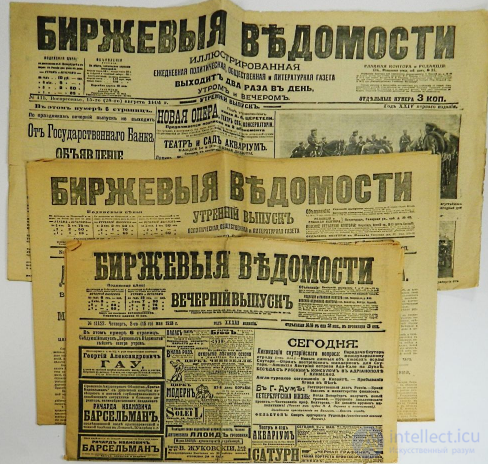
At the turn of the 19th and 20th centuries the cost of launching a new periodical, especially a newspaper, grew considerably. Whereas in the 1880s an initial capital of 40,000–50,000 was enough, by 1904 that sum had grown to 250,000–300,000 rubles. This was beyond the power of a single person. It was for this reason that entrepreneurial firms began entering the publishing business, and by the 1910s the involvement of banks in publishing periodicals increased, which particularly alarmed journalists and readers.
Newspapers and journals tried to resist this by forming various publishing societies and partnerships. Such partnerships, which included the leading members of the editorial staff, were set up mainly to publish the most influential and serious newspapers and journals. But, as S. N. Krivenko bitterly observed, “cooperative-style partnership enterprises never took hold here, and the few of them that survived completely lost their cooperative character and turned into enterprises that were, in essence, purely capitalist” . I. I. Yasinsky – a longtime staff member of “Birzhevye Vedomosti” – recalled how the paper’s publisher, S. M. Propper, decided to set up just such a partnership: he divided the capital into a great many shares, distributed them among the staff, and then bought them back cheaply, once again becoming the sole owner.
S. M. PROPPER – a Swiss who had taken Russian citizenship – was one of the characteristic figures in Russia’s publishing world. “He – is a thoroughbred publisher, – wrote S. Yu. Witte about him, under whose patronage the first edition of “Birzhevye Vedomosti” had been brought out, – his one goal is to get rich” .
To secure larger profits, Propper brought out a second edition of the paper aimed at the provincial public, since the first had a specialized character and had not been popular. The second edition was produced in the form of a mass-circulation newspaper, had a good provincial section, and numerous supplements. One of these – the journal “Ogonyok” – was destined for a long life, albeit later in a different state and a different press system.
I. I. Yasinsky recalled: “As an employer, Propper was, in essence, unbearable. He interfered in everything, calling himself merely the paper’s treasurer, haggled with the staff over every kopeck, especially if expenses went beyond the budget he had approved” . To secure advertisements for his paper, he resorted to blackmail, branding as insolvent, in the exchange-news section, any firms that had refused to place advertisements with him.
L. M. Klyachko (pen name Lvov), one of the well-known journalists of the time, described Propper’s publishing methods. In September, before the start of the subscription campaign, the publisher would invite all the popular feuilletonists to “Birzhevye Vedomosti”. They were immediately given advances, paid an increased per-line fee, and printed often and readily. “Once the subscriptions were collected – “the Moor had done his duty”, all the more so since most subscribers took a full year, since it was only yearly subscribers who received the numerous supplements on more favorable terms” .
S. M. Propper and his newspaper “Birzhevye Vedomosti” became, for his contemporaries, a symbol of the bourgeois press.
The publishing house of I. D. SYTIN was likewise a capitalist enterprise, but, unlike Propper, Sytin had the reputation of an enlightener who published the works of Russian writers and books for the common people. This reputation was helped by Sytin’s origins – the son of a peasant, he began his working life as a “boy” in the shop of the merchant Sharapov. Together with a band of itinerant pedlars – traders in lubok literature for the common people – he tramped through many provinces of southern Russia. Russian society’s sympathy was also won by the fact of Sytin’s closeness to the publishing house “Posrednik”, which operated under the aegis of L. N. Tolstoy. I. D. Sytin’s main business was his book-publishing house, which printed the works of Russian writers, books for the common people that were sold at fairs, and calendars. Once he was established as a publisher, Sytin also took up periodicals. The first and most beloved journal for the publisher was “Vokrug Sveta”, which remained his personal property for a long time. It was the newspaper “Russkoye Slovo”, already discussed in detail, that brought him and his publishing house their greatest fame. Sytin’s publishing house also owned the journals “Vestnik Sporta i Turizma”, “Vestnik Shkoly”, “Dlya Narodnogo Uchitelya”, “Zarya”, “Mirok”, “Modny Zhurnal”, “Nuzhdy Derevni”, “Pchyolka”, “Iskry”, and so on – some of them were supplements to “Russkoye Slovo”. Besides journals, the publishing house took part in issuing the newspapers “Duma”, “Russkaya Pravda”, “Pravda Bozhiya”, and others. In the last years before the revolution, Sytin’s firm published the Moscow newspapers “Ranneye Utro” and “Vecherniye Izvestia”. In 1916 Sytin bought A. F. Marks’s publishing house, with its journal “Niva”, the most widely circulated in the country. Sytin’s firm had bookshops and branches in St. Petersburg, Warsaw, Yekaterinburg, Irkutsk, Kiev, Rostov-on-Don, Odessa, Samara, Saratov, and at the Nizhny Novgorod Fair.
The activity of I. D. Sytin has been thoroughly studied in modern scholarship. E. A. Dinershtein devoted a large, interesting book to him, “I. D. Sytin”, which appeared in 1983. In the early 1990s a thorough study by Charles Ruud, “Russian Entrepreneur, Moscow Publisher Ivan Sytin”, was translated into Russian; it gathers a great deal of material both on the activity of the publishing house and on the newspaper “Russkoye Slovo”.
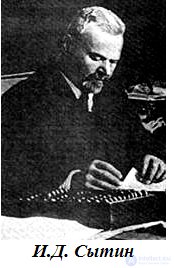
I. D. Sytin
In 1998 another book by E. A. Dinershtein appeared, devoted this time to a different publisher: “A. S. Suvorin. A Man Who Made a Career”.
Unlike Sytin, Suvorin was first and foremost a publisher of periodicals. The book output of his publishing firm served to support the finances of Suvorin’s newspapers and journals, the chief of which was “Novoye Vremya”. He was practically the first entrepreneur to put newspaper publishing on capitalist rails. “Suvorin was probably the only exemplary and pioneering bourgeois newspaperman in Russia” .
“Novoye Vremya” with its huge rotary and other presses, its numerous staff of employees (clerks, typesetters, proofreaders, and so on) and workers, with various institutions for them (a pension fund, a school, and so on), is a well-run factory”, – wrote Krivenko .
Suvorin created and headed one of the first newspaper-and-publishing concerns in Russia. Having begun publishing “Novoye Vremya” in 1876, in 1882 he founded a publishing house and set up a book trade. Besides books, the publishing house issued the “Russky Kalendar” and the reference publications “Ves Peterburg”, “Vsya Moskva”, and “Vsya Rossiya”, whose publications remain interesting and useful to this day. In addition to his main creation, “Novoye Vremya”, A. S. Suvorin published and financed the “Zemledelcheskaya Gazeta”, the newspapers “Moskovsky Telegraf”, “XX Vek”, “Russkaya Zemlya”, “Malenkaya Gazeta”, “Vecherneye Vremya”, and the journals “Istorichesky Vestnik”, “Russkoye Obozreniye”, “Naborshchik i Pechatny Mir”, “Konsky Sport”, “Lukomorye”, and others.
Besides a printing house equipped with the most up-to-date machinery, Suvorin owned 30,000 desyatinas of forest and a paper mill, which made it possible to supply the concern with paper. After the writer’s death, during the First World War, paper imports from Finland – which produced 80% of Russia’s entire paper supply – were cut off, and many newspapers found themselves facing a paper shortage. Suvorin’s publishing house was able to supply itself.
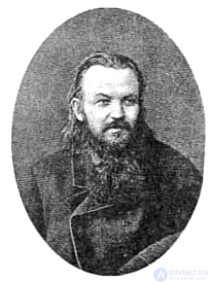
A. S. Suvorin in 1876
The publisher of periodicals well understood the importance of a well-organized system for distributing the press. In a country of vast distances and a poorly developed railway network, this was no simple matter.
Postal delivery was expensive, consuming up to 18% of subscription money. When retail trade in newspapers and journals began to spread at the turn of the century, it was mostly established in the capitals; printed matter reached the provinces poorly . In 1913 retail sales were conducted in 409 of Russia’s 1,280 towns.
Taking all this into account, Suvorin set up his own Agency for the distribution of his printed output. He bought the right to sell the newspapers and books he published on the country’s railways. At that time Russia had 60 railways; on 44 of them the sale of books, newspapers, and journals was organized through 600 kiosks set up at railway stations, wharves, and resorts. This side of Suvorin’s activity provoked a great deal of discontent among other publishers.
Suvorin’s publishing house had branches in Moscow, Odessa, Kharkov, Saratov, and Rostov-on-Don. It was hard for one person to run such a large business, so in 1911 the publishing, printing, and book-trading “Association “Novoye Vremya”” was established, with a basic capital of 4 million rubles. Among the shareholders, besides the Suvorin family, were A. I. Guchkov, N. N. Shubinsky, S. G. Morozov, A. A. Stolypin, N. L. Bark, and also the Volga-Kama Commercial Bank. But chaos reigned in its affairs, which grew worse after Suvorin’s death in 1912. Of course, such a huge enterprise could not function without setbacks and unpleasantness. Some staff members were involved in financial speculation, others sat on the boards of banks, which in the eyes of contemporaries was a terrible sin. In 1914 a former staff member of the paper, V. Snesarev, published a scandalous, “exposing” book about the disorder in the paper’s publishing house – “The Mirage of “Novoye Vremya””.
It should be noted that the largest Russian publishers created firms very similar in character to those that exist today in the developed countries of the world. Among modern publishing concerns, specialists distinguish “horizontal” and “vertical” ones. “Horizontal” concerns combine periodicals with the branches of production needed to publish them. “Vertical” ones are conglomerates, “an association of spheres of activity not technologically connected to one another” . Suvorin’s publishing enterprise was just such a conglomerate. Besides enterprises for producing and distributing periodicals and books, he owned a theater, to which he devoted a great deal of soul, time, strength, and resources.
But for all its entrepreneurial character, Suvorin’s publishing business differed from the publishing firms that appeared in the twentieth century, whose sole aim was profit. Suvorin was probably the last entrepreneur in Russian journalism to combine in one person three roles – publisher, editor and author of his own newspaper. It was not for nothing that Slonimsky, in an article entitled “The Periodical Press and Capitalism” published in “Vestnik Evropy”, called him an “ideological capitalist”. “In ...a wealthy newspaper... (meaning “Novoye Vremya”. – S.M.) the principle of permanent staff sharing in the publication’s income as shareholders has long been applied – though without sufficient consistency. If not in the present, then for the future it is highly desirable to strive for the universal and systematic application of this same guiding principle” . E.A. Dinershtein, in his book, provides interesting and little-known information about the social sphere developed at Suvorin’s enterprises. Running the printing house cost him more than it did others, since his wage rates were higher than those of his competitors. The workers lived in communal artel apartments, enjoyed free lighting and certain communal services, and had access to a mutual insurance fund, a library, a pharmacy with free dispensing of medicines, and their own doctor and medical assistant[10].
A.F. MARKS’s publishing house was popular in the country, having created the most widely read journal, “Niva”, which was issued with an enormous number of varied supplements. Moreover, in “Niva” A.F. Marks acted not only as the manager of the journal’s finances but, according to the testimony of his staff, personally read through all the material submitted to the editorial office and decided questions on the purchase of works for the journal and his publishing house. Contemporaries noted the role of “Niva”’s publisher in educational activity. But the scandalous notoriety that clouded the publisher’s memory for many years came from Marks’s purchase of all rights to publish the works of A.P. Chekhov for a term of 50 years. Chekhov signed this agreement, but his contemporaries believed that the writer came out badly from the deal. Many articles and books devoted to this agreement appeared in 1904, after the deaths of Chekhov and Marks, and it continued to be written about in Soviet times.
P.P. Soykin was a well-known publisher who issued books and journals, the most popular of which became the journal “Priroda i Lyudi”.
Almost all publishing firms began, in the late nineteenth century, as the business of a single person; having later turned into joint-stock companies, they continued to bear their founder’s name. In the 1910s a great many genuine joint-stock companies arose, each with a fixed number of shareholders. The joint-stock company “Izdatel” issued “Novosti” and “Syn Otechestva”. Affiliated with it was Palizen’s large paper-manufacturing enterprise. The paper produced at his mills went straight into his own printing house, which issued two newspapers, the journal “Zhivopisnoye Obozreniye”, and books.
The publishing house “Kopeyka” in St. Petersburg was a joint-stock company, owning, besides “Gazeta-Kopeyka”, the journal “Solntse Rossii” and a book-publishing house. The Moscow publishing house, which had a printing house, a book-publishing house, the newspapers “Kommersant”, “Vecherniye Izvestia”, “Trudovaya Kopeyka”, and the journals “Zhenskoye Delo” and “Detsky Mir”, was organized on joint-stock lines.
Capital also began to penetrate the provincial press: for example, “Priazovsky Kray” was published by the Don Joint-Stock Company of Printing and Publishing.
By 1908–1914 the role of bank capital in publishing was growing stronger. Private publishing houses were increasingly being squeezed out by trusts in which the banks played first fiddle. Banks and banking houses began to take even the most “ideological” organs of the press into their own hands, including the central organs of various parties. The newspaper “Rech” – the central organ of the Kadet party – suffered enormous losses in its first years, and its founder and first publisher, the engineer Yu.B. Bak, went bankrupt. To set matters right, “Rech” maintained ties, through one of its staff members, with the Azov-Don Bank, and, through board member M.M. Vinaver, with several other banks as well. This drew attacks from ill-wishers of the party and its newspaper. The banking house of P.P. Ryabushinsky financed a number of Moscow newspapers, and “Golos Moskvy” existed on funds provided by the Guchkov brothers.
Foreign capital, too, began to penetrate the publishing business. “Utro Rossii” was linked to French and English banks; “Russkaya Volya”, founded at the height of the First World War, maintained relations with German banks; and although Russia and Germany were adversaries, German banks took part in financing the Black Hundred newspaper “Russkoye Znamya”, which in society was often mockingly called the “Prussian Banner”[11].
Russian journalists watched this process with alarm. A.S. Suvorin’s eldest son, A.A. Suvorin (pen name Poroshin), published in these years the newspaper “Novaya Rus”, which launched a “crusade” against the banks, but it closed quickly owing to financial difficulties. After Suvorin’s death, his sons and heirs Mikhail and Boris failed to hold on to “Novoye Vremya”, and the newspaper was sold to the banks. In 1915 a Russo-French bank began taking part in its publication. The elder brother – Alexei – made a grand scandal of it with his brothers, complete with gunfire. The sale of “Novoye Vremya” grieved not only him but the readers as well. This is what M.K. Lemke wrote in his book “250 Dney v Tsarskoy Stavke”: “The passing of “Novoye Vremya” into the hands of the banks worries the officers greatly. What are they to read now? ...There are, they say, some other private newspapers, “Russkiye Vedomosti”, for instance, but they are very serious and there is nothing at all interesting in them”[12].
In the report, mentioned more than once, delivered to the Moscow Society of the Russian Press, S. Melgunov said: “Like the tentacles of an octopus, various industrial and banking syndicates are drawing ever tighter around the press, and with it the writer...”.
Very few newspapers remained independent, free of bank capital. Among them were “Russkiye Vedomosti” – the chief printed organ of the Russian intelligentsia – “Kiyevskaya Mysl”, and a few others. Such independence attracted the particular sympathy of the educated reader who cared about the country’s fate.
Despite the “despotism of capital”, which at times frightened people more than the “despotism of autocracy”, the Russian press, newspapers included, continued to live and develop.
The Russian thick monthly, which for a very long time remained the principal type of periodical in the press system, took shape under the specific conditions of Russia, where the shortage of books and the enormous extent of the territory left readers who did not live in the capitals with the opportunity to draw on information of interest to them and to read good literature only in the pages of a journal. Russian journalists called it a journal of the “ordinary Russian type”. This kind of publication combined within itself a literary miscellany, a political newspaper, and a distinctive encyclopedia. At the turn of the century the “slowness” of the thick journals gave rise to talk that their time had passed. But the journal of the “ordinary Russian type” managed to adapt to the changed historical conditions and continued to be the most influential periodical publication in the twentieth century as well.
“Our Russian literature (taken as a whole) has, among its many distinctive features, one that sets it apart very sharply from Western European literature. This feature is the considerable prevalence of the so-called thick journals,” noted the bibliographer N.A. Ulyanov in 1912, in the preface to his compiled “Ukazatel Zhurnalnoy Literatury”. Everyone who wrote about the development of the press system in the country noted that the thick journal – a type of periodical brought to life by the distinctive conditions of Russia – plays a special role specifically in Russian journalism.
The most general characteristics of the thick journal are: first, its length (up to 300–500 pages); second, the range of subjects within its field of attention; third, the special composition of each issue, which combined a literary-artistic miscellany, a political newspaper, and a distinctive scholarly encyclopedia. These three objects of the thick journal’s attention, these three spheres of its interest, appear within a given issue in a ratio determined by the distinctive character of the historical period and the state of the readership. At different times one of them might come to the fore, pushing the others into the background, but never displacing them altogether. This is clearly seen when one studies the history of the thick journal in Russia.
In the nineteenth and early twentieth centuries, journals in the European press were for the most part divided by specialty, by branch of learning. They were aimed at their own specific readership rather than at a broad circle of educated people. The type of publication of this kind was the review – the revue – made up of short articles, each issue forming a complete whole with no serialized material. Books, being readily available in the West, left the journal “only a small place in the literary market”.
In Russia, with its vast territories, its rare oases of culture, its lack of good transport links and its limited number of books, it was precisely the journal that became the sole supplier of imaginative literature, of various information about topical events, and of reports on the achievements of science. “For 7–10 roubles,” writes N.A. Ulyanov, “the subscriber receives 12 thick issues, in which an experienced editorial staff presents the reader with the most varied material to satisfy his curiosity. The journal, to a certain degree, satisfies an acute need – acute especially for the provinces – to keep up with the intellectual life of all mankind. Having paid the subscription fee, one is provided for a whole year in this respect by the articles of one’s journal” . Serialized novels and lengthy articles played a large role in this type of periodical, creating in the reader an “effect of anticipation” for the next issue and compelling him to subscribe for a full year.
A full characterization of the thick journal as a type of publication is given in an article by D.E. Maksimov, published in 1930 in the collection “Iz Proshlogo Russkoy Zhurnalistiki”. The author of the article not only showed the reasons for the appearance of the thick journal in the system of Russian journalism but also singled out the chief type-forming features of this kind of publication. The contradiction between the needs of the intelligentsia and the absence of the necessary books in the provinces “was resolved by the creation of the form of the thick journal, which made it possible to combine within a single volume a kind of scholarly encyclopedia, a literary-artistic miscellany, and a political newspaper,” D.E. Maksimov aptly observed .
For almost an entire century, the thick journal was the dominant type of periodical in the system of Russian journalism. The journal “Vestnik Evropy”, created by N.M. Karamzin and M.T. Kachenovsky, became the first classic thick journal in Russia. Aiming to acquaint the reader with the life of Europe by reprinting extracts from 12 European newspapers, “Vestnik Evropy” very quickly acquired the departments characteristic of later thick journals: fiction and criticism, political and scholarly. The professional interests of its long-serving publisher M.T. Kachenovsky – a professor at Moscow University and a historian – brought the scholarly departments to the fore. Thus there appeared not only the “journal of the ordinary Russian type”, as contemporaries called it, but also its variant – the “encyclopedic thick journal”. It found its fullest expression in O. Senkovsky’s publication “Biblioteka dlya Chteniya”. In creating it, the publisher took as his model the Parisian “Bibliotheque Universelle” (the universal library), but, as almost always happened in Russia, the European model underwent a significant transformation, turning into a journal of the “ordinary Russian type”. “Moskovsky Telegraf”, “Teleskop”, and “Biblioteka dlya Chteniya” were encyclopedic journals. They placed emphasis on enlightening their readers, acquainting them with the achievements of scholarly thought. “The encyclopedic journal, to a certain extent, broke through the class boundaries of journalism. It was a journal about everything and for everyone, not only for the narrow circle of the educated nobility, predominantly of the capital” .
The famous opposition journals “Sovremennik” and “Otechestvennye Zapiski” of N.A. Nekrasov and M.E. Saltykov-Shchedrin were likewise classic thick journals. They appeared at the sharpest moments in the country’s history, when the intensity of political passions forced the editors to reduce the “scholarly encyclopedia” to a minimum, concentrating all attention on covering political events, which pushed into the background even so traditional an area for the Russian journal as imaginative literature. D.E. Maksimov and B.I. Esin called the type of journal created by “Sovremennik” and “Otechestvennye Zapiski” the publicistic type. In such a journal the political newspaper comes to the fore, its material printed in the publicistic departments that existed in every thick journal: “Internal Review”, “Foreign Review”, “Provincial Review”, “From Public Life”, and others. The distinctive genre of the review made it possible to describe the events of the past month, comment on them, and express one’s attitude toward what was happening. A review usually consisted of a series of short articles devoted to the chief events of the month. The subjects of these articles were given in the subheading. Thus, for example, in the eighth issue of “Vestnik Evropy” for 1909, the “Internal Review” consisted of the following articles: “Unfulfilled Expectations”, ““His Majesty’s Opposition” and the Official Press”, “A Moderately Reactionary Programme”, and “Suspension of the Newspaper “Slovo””. Even literary criticism very often took the form of a review; it is enough to recall the famous articles of V.G. Belinsky.
The journal’s ideological programme, its orientation, was expressed in the thick journal’s analytical surveys and chronicle departments. “Journalism, pursuing chiefly social and educational aims,” writes D.E. Maksimov, “naturally brought reviews and articles to the fore, while treating fiction as an unavoidable concession to the unserious reader. That is why the non-fiction departments (especially the political review) were given so much space.” For the Russian thick journal, especially in its publicistic variety, a special attitude toward fiction was characteristic, fiction being not merely a “concession to the unserious reader”. More important was the fact that in a journal “the literary works placed in it are perceived by the reader first and foremost as the views of the journal itself, and only secondarily as the individual opinions of authors holding one worldview or another. The literary personality of a writer taking part in an ideologically well-defined organ helps to make sense of, and lends support to, not so much the separate parts of the journal (an article, a poem, and so on) as the journal as a whole” .
The type of the thick journal actively dictated its own requirements to the literary material placed in an issue. Not every literary work could be published in its pages, but only one attuned to its programme. Moreover, the context of the journal lent a novella or short story new shades of meaning, perhaps not intended by the writer at all. “It is well known that in the traditional publicistic type of Russian journalism,” D.E. Maksimov continues his thought, “every organ that is solidly assembled in ideological terms depersonalizes, to a certain degree, the material placed within it, which acquires a special function there compared with the one that would be proper to this material outside the journal. Material included in the journal loses its individual shades of meaning and turns to the reader its summary, typological side, both ideologically and, in part, aesthetically” .
Thus the ratio of departments, the role of fiction, political news, and encyclopedic material within an issue help to determine the character of the journal under consideration and to classify it as belonging to the encyclopedic, publicistic, or literary subtype.
The “ordinary Russian type” of journal, best adapted to the distinctive conditions of Russia and familiar to the reader who knew well what he wanted and could expect to find in the journal issue he received, often dictated its own terms to journal editors. Thus, for example, “Vestnik Evropy”, revived in 1866, was conceived along the lines of the English quarterlies, but by the end of its second year of publication it was forced to become a monthly of the “ordinary Russian type”, since a reader was not satisfied with an issue appearing only once every three months. To achieve this, “all it needed was to turn into permanent departments what had until then been of a more or less random character in it – fiction and the chronicle,” the editor of “Vestnik Evropy”, K.K. Arsenyev, later related .
In 1892 the journal “Mir Bozhy” appeared, which subsequently played a notable role in the system of Russian journals. But it had been conceived as a publication “for youth and self-education”. In the second half of the 1890s the journal turned into a socio-political and literary publication of the same “ordinary Russian type”.
The journal “Zhizn”, created as a journal for family reading, “Obrazovaniye”, originally called “Zhenskoye Obrazovaniye”, and several others that arose in the 1890s inevitably transformed into traditional thick publications.
This was brought about, first, by the demands of the audience, which wanted to see the new journal as the kind it had grown accustomed to reading over the nearly hundred-year history of the development of journalism. Second, social life, which had grown more complex in the pre-revolutionary period, demanded of editors broad, generalizing coverage and detailed commentary – precisely what the thick journal was so well adapted to provide.
But at the turn of the nineteenth and twentieth centuries the development of newspapers pushed the journal from first place in the press system. Talk of the death of this type of publication could be heard everywhere. The journal “Sovremennaya Zhizn” wrote in 1906 that the thick journals were “too slow and too cumbersome to serve as the main channels of intellectual currents in acute periods of public life. True, their solidity, their thoroughness in working out the tasks of the time, are far superior to the methods of the frivolous press. But when the center of gravity of people’s interests lies not in theoretical but in practical creativity, so long as there is no voluntary or involuntary lull, no reaction – this solidity is of little help to them” .
The main charge levelled at the thick journal was slowness and unwieldiness. But there were other reasons for the declining prestige of publications of this type. The accelerating pace of historical development, the growing complexity of social life, and rising literacy among the population led to a significant increase in the reading public, which was interested in a wider range of not only social but also scientific and cultural problems. The thick journal, for all its universality, no longer satisfied all the demands of readers. Interest in scientific problems, for instance, rose considerably, all the more so as the scientific and technical progress of the early twentieth century encouraged it. The thick journals noticed this: at the turn of the century the role of encyclopaedic material increased, and much attention was devoted to questions of education and enlightenment. For a fairly short time the journals once again became encyclopaedic. But the considerable differentiation of the sciences, and the interest in the natural sciences – mathematics, chemistry, medicine, and so on – called into being a large number of specialised publications for prepared readers and popular-science publications for those merely interested. “Vestnik Znaniya”, “Vestnik i Biblioteka dlya Samoobrazovaniya”, “Znaniye dlya Vsekh”, “Vokrug Sveta”, and “Priroda i Lyudi” fully accomplished these encyclopaedic tasks in the twentieth century.
Before the first Russian revolution, and again in 1905–1907, the course of events forced the thick journals to concentrate once more on making sense of what was happening. At that time almost the entire press was political, and the journals took on the character of opinion journalism. But the growth of political newspapers, especially party organs, presented serious competition to the journal.
Another new feature of the age affected the fate of the thick journal: the emergence of new literary movements and schools, which provoked a great deal of public response and sharpened the literary struggle. The “manifesto journals” that appeared at the very end of the nineteenth century – “Mir Iskusstva”, “Novy Put”, “Vesy”, and others – were better suited to resolving complex aesthetic questions. Works of literature began to be published not in journals but in various miscellanies put out by numerous publishing houses, around which writers of different tendencies gathered. The collections of the “Znaniye”, “Shipovnik”, “Severnye Tsvety”, “Skorpion”, and many other publishing houses made it possible to display one's work without the ideological “addition” imposed by a journal's tendency. Imaginative literature, its very best examples, was also gradually moving out from under the cover of the traditional publication, since it had grown too cramped there. This does not mean that the thick journals were left entirely without good fiction: after the revolution of 1905–1907 many Russian writers returned once more to the solid publications read by the intelligentsia, and even tried to give them a predominantly literary character, but in the years leading up to the revolutionary upheavals of 1917 this process “did not take hold”. During the years of class struggle, the First World War, and revolutions, works of opinion journalism came to the fore. Theatrical and art reviews disappeared from the thick journal: the development of theatre and the fine arts, and the growing complexity of aesthetic debate in these fields as well, encouraged the formation of specialised publications – theatrical, artistic, musical, and so on.
At the turn of the nineteenth into the twentieth century the thick journal again quickly passed through all the stages of development this type of publication had undergone in the nineteenth century: from an encyclopaedic type to one given over to opinion journalism. But whereas in the previous century each stage had lasted 30–40 years, at the start of the new century the journal's subtype changed every 5–10 years.
And despite all the talk of the death of the thick journal, it did not die, it did not disappear, but once again proved the viability of the “ordinary Russian” publication within a qualitatively changed system of journalism. “Sovremennaya Zhizn” proved right: the thick journal, which had receded into the background during a period of social upheaval, once again took its place during the lull of reaction, when the time came for an in-depth analysis of the revolutionary storms that had been lived through: this type of journal once again proved that it was best suited of all for such work.
The classical type of the thick journal in the twentieth century remained loyal to “Vestnik Evropy”, “Russkoye Bogatstvo”, “Russkaya Mysl”, “Mir Bozhy”, “Sovremenny Mir”, and other publications, but under the influence of social demands they were forced to change.
By 1913 illustrated weeklies made up almost a third of the Russian journalism system – a compromise type of periodical that best met the demands of the press in the difficult period of wars and revolutions. The illustrated weekly combined features of the daily newspaper and the thick monthly. Its weekly appearance allowed it to respond to events more quickly than a journal of the “ordinary Russian type”. At the same time, its much greater volume than a newspaper's, and the chance to prepare and think material through for longer, gave the weekly that advantage of “generalising coverage” of which the thick publications were so proud. The development of technical capabilities allowed the weekly journal to introduce illustrations into each issue as an obligatory component. Publishers chose the weekly as a type of periodical for the most varied purposes: for family reading, for self-education, for popularising science, and for different audiences, such as women's and children's.
At the turn of the nineteenth into the twentieth century, art, including literature, became a component part of a single socio-aesthetic movement of the age, the offspring of a new period in Russian history. For the first time in the history of Russian literature, universally recognised realism had to share its influence over readers with representatives of modernism, above all with its most powerful and fruitful trend – symbolism.
The new art felt the need to give its principles an aesthetic grounding and to explain its aims and objectives to society. At first its representatives published individual articles and manifesto pamphlets, but soon created a type of journal new to Russia, the manifesto journal, for which European publications served as a prototype. But, as had so often happened before, the European models underwent such significant changes that it was the Russian manifesto journals that came to exert a considerable influence on the development of art in Europe. “Mir Iskusstva” achieved worldwide fame, and its centenary was marked in 1998.
The Great Patriotic War was the most difficult trial the Soviet state had ever faced. From its very first days it became a nationwide struggle for the freedom and independence of our people, who made the decisive contribution to the defeat of the fascist aggressors. The war, which lasted almost four years, culminated in the greatest victory in the history of mankind, and the role of Soviet journalism in achieving it cannot be understated.
V.I. Lenin pointed out precisely the importance of the moral support of the troops: “In every war, victory is ultimately determined by the state of mind of the masses who shed their blood on the field of battle.” In this connection, the study of the role of Soviet journalism during the years of the Great Patriotic War is both interesting and topical. It is obvious that it played a considerable role in integrating Soviet society in the face of the enemy, while at the same time itself experiencing the significant impact of the war.
Let us consider the specific features of the functioning of the Soviet media system during the war period. The war immediately changed the entire appearance of the Soviet press: the number of even central newspapers fell by more than half - before the war there had been 39, and only 18 remained. Many central trade newspapers ceased publication, such as “Lesnaya Promyshlennost”, “Tekstilnaya Promyshlennost”, and others. Some specialised central newspapers were merged . On 24 June 1941 the Soviet Information Bureau was created, one of whose tasks was to provide brief summaries of military-operational reports. During the war some two thousand daily summaries were prepared, 122 “In the Last Hour” bulletins, and 2,373 items of material in all .
The Hitlerites waged their struggle to enslave the Soviet people not only by force but also with the weapon of the word. In the temporarily occupied territory the fascists published dozens of newspapers, whose pages claimed that it was not Hitler's Germany but the Soviet state that was to blame for unleashing a war unprecedented in human history. This lie was spread both in newspapers and in the radio broadcasts of the Hitlerites. As early as August 1941, in the territories occupied by the fascists, the Hitlerites were publishing the newspapers “Orlovskiye Izvestia” (later “Rech”), “Smolensky Vestnik”, “Novy Put” (Klintsy), “Novaya Zhizn” (Roslavl), “Novoye Vremya” (Vyazma), and “Belorusskaya Gazeta” in the Belarusian language (Minsk). In 1942 the newspaper “Kolokol” appeared in Smolensk, intended for the peasants of the occupied territories. In 1943 Vlasovite newspapers began to be set up: “Za Svobodu” (Smolensk), “Zarya” (Berlin), and “Dobrovolets” in Russian and Ukrainian (Berlin).
As for the military press, at the start of the war the Main Political Directorate, in defining the content of military newspapers, pointed to the basic tasks: explaining the resolution of the Central Committee of the CPSU(b) and the Council of People's Commissars of the USSR of 29 June 1941 on the designs of the Hitlerite clique and the programme for mobilising the forces of the Soviet people to fight the enemy; mobilising servicemen to carry out orders and fostering in them confidence in victory over the enemy; cultivating heroism and combat skill; propagandising the requirements of the military oath, and the struggle to strengthen military discipline. From the start of the Great Patriotic War a network of war correspondents developed at the front. In 1942 the Directorate of Propaganda and Agitation of the Central Committee of the CPSU(b) and the Main Political Directorate of the Red Army approved the regulation “On the Work of War Correspondents”, according to which the tasks of war correspondents were of an informational and propagandistic character.
The network of military newspapers was significantly expanded. The newspaper “Krasnaya Zvezda” - the organ of the People's Commissariat of Defence - was strengthened. The editorial staff was reinforced with new talents: P. Pavlenko, A. Surkov, V. Grossman, K. Simonov, I. Ehrenburg, and 114 members of the Union of Writers.
The measures taken to restructure the press were, of course, forced ones: they made it possible to overcome, to a considerable extent, the difficulties in organising printed propaganda at the front. By the end of 1942 the task of creating a mass press in the Armed Forces in keeping with the demands of wartime had been accomplished: by that time there were 4 central, 13 front, 60 army, 33 corps, and 600 divisional and brigade newspapers being published. There were quite a few newspapers at the fronts and in the army in the languages of the peoples of the USSR: the newspaper of the 2nd Baltic Front, “Suvorovets”, was published in eight languages, and the newspaper of the 3rd Ukrainian Front, “Sovetsky Voin”, in seven . Figures are cited showing that, for example, in 1944 almost 800 newspapers were published at the fronts, with a combined single-issue print run exceeding 3 million copies . There were also publications produced by the soldiers themselves: “Okopnaya Pravda”, and the wall newspaper “Minomyotchik”.
During the war years radio broadcasting, the most immediate means of information, became especially indispensable; its first wartime broadcasts appeared simultaneously with the government announcement of Nazi Germany's treacherous attack on the Soviet Union. Unfailingly, beginning with the very first radio broadcasts about events at the front, they ended with the appeal: “The enemy will be smashed, victory will be ours!”. The increased role of radio broadcasting under wartime conditions is attested by the prompt establishment of branches of All-Union Radio in Kuibyshev, Sverdlovsk, and Komsomolsk-on-Amur. In November 1942 broadcasting in Ukrainian and Belarusian began from Moscow. At the same time, the radio station named after T. Shevchenko broadcast in Ukrainian from Saratov, and the writer and journalist Yaroslav Halan was an active contributor to it. The radio programmes “Letters to the Front” and “Letters from the Fronts of the Patriotic War” became permanent fixtures. Over two million letters were used in them, thanks to which more than 20 thousand servicemen at the front found their relatives, who had been evacuated to the eastern regions of the country .
Already in 1941 the Germans also began setting up their own radio broadcasting. In Smolensk it began in
продолжение следует...
Часть 1 Russian Journalism of the 20th Century
Часть 2 Russian journalism in the second half of the twentieth century

Comments