A good example of a universal gesture is a shrug. This gesture shows that a person does not know or does not understand what you are talking about. This is a multiple gesture consisting of three main parts: a demonstration of the open palms, that is, the absence of threatening objects in them; raising the shoulders in order to protect the throat from attack; eyebrow raising, i.e. a universal sign of submission.
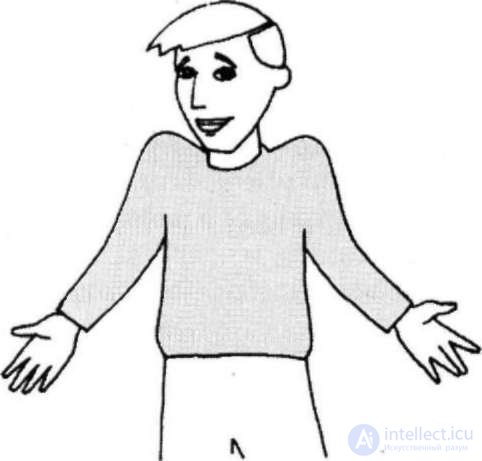
Shrugging demonstrates obedience Just as verbal languages differ from each other, so non-verbal signals in different cultures can have different meanings. While a certain gesture can be quite common in a certain country and have an absolutely unequivocal interpretation, in another country its meaning may be completely opposite. We will discuss national differences later (see "Body Language" on the left).


Comments