
Lecture
A journalistic text is not simply a set of words and sentences arranged on a page in a free order. It must have a certain structure. Of course, the presence of the points listed below does not guarantee that the text will be of high quality, but it makes it easier to understand how an article differs from a random piece of text.
A journalistic work - is the end result of the journalist's process of cognizing phenomena of social life; it is a "phenomenon of social practice", since it is closely connected with all spheres of society, exerts a significant influence on it, and is the result of social, literary and spiritual creativity, in which both the aesthetics of documentalism and the aesthetics of artistic depiction of social life are embodied.
Journalistic works – all or almost all – carry elements of publicistic writing and are publicistic. The habitat of a publicistic work is the information and communication space of society, which includes the mass communication media (MCM) and the mass media (MM). In the information and communication system, four worlds constantly interact: the real world, the world of the author, the world of the work, and the world of the audience that consumes the products created by the author and the editorial staff.
This system is characteristic of all kinds of creative activity – scientific, technical, artistic, publicistic. The specific feature of publicistic activity lies in the heightened actualization of the relationships between the author and the audience, the author and the world around him, and the audience and both the real world and the world of the publicistic work.
The interaction of all the links is shown in Fig. 4.1.
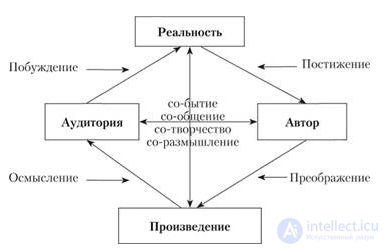
Fig. 4.1. Interaction of the four worlds in the information and communication system
Fig. 13.1 presents a universal scheme for creating and analyzing any journalistic work. In the future it will also help you determine the stages of work on a newspaper, magazine, radio or television piece, and analyze the reasons for your success or failure. For now, as you become familiar with the elements of content and form and the various pictorial and expressive means, refer to the scheme to understand how they are interrelated and how they interact with each other.
As is well known, the main purpose of journalistic work is to convey information. A person can express and perceive a thought, idea or image most precisely and unambiguously through words. A specially organized verbal sequence becomes the text of a journalistic work, or its literary basis.
The literary basis is a necessary and sufficient part in print periodicals. Some newspaper and magazine materials are accompanied by photographs, drawings or other illustrative and graphic materials, but these are auxiliary elements. In accordance with the chosen genre in print periodicals (a newspaper, magazine, almanac), the literary basis of a journalistic work is precisely an article, a sketch, a feuilleton or a report. In radio broadcasting the literary basis takes on a sound embodiment, and on TV an image is added to it. In the electronic press the literary basis is called a script. Thus the left column (the literary basis) is relevant to every kind of journalism, but by itself defines only print. The left and middle columns (literary basis and sound) together allow us to speak of a radio work, and all three components (literary basis, sound and image) of a television work.
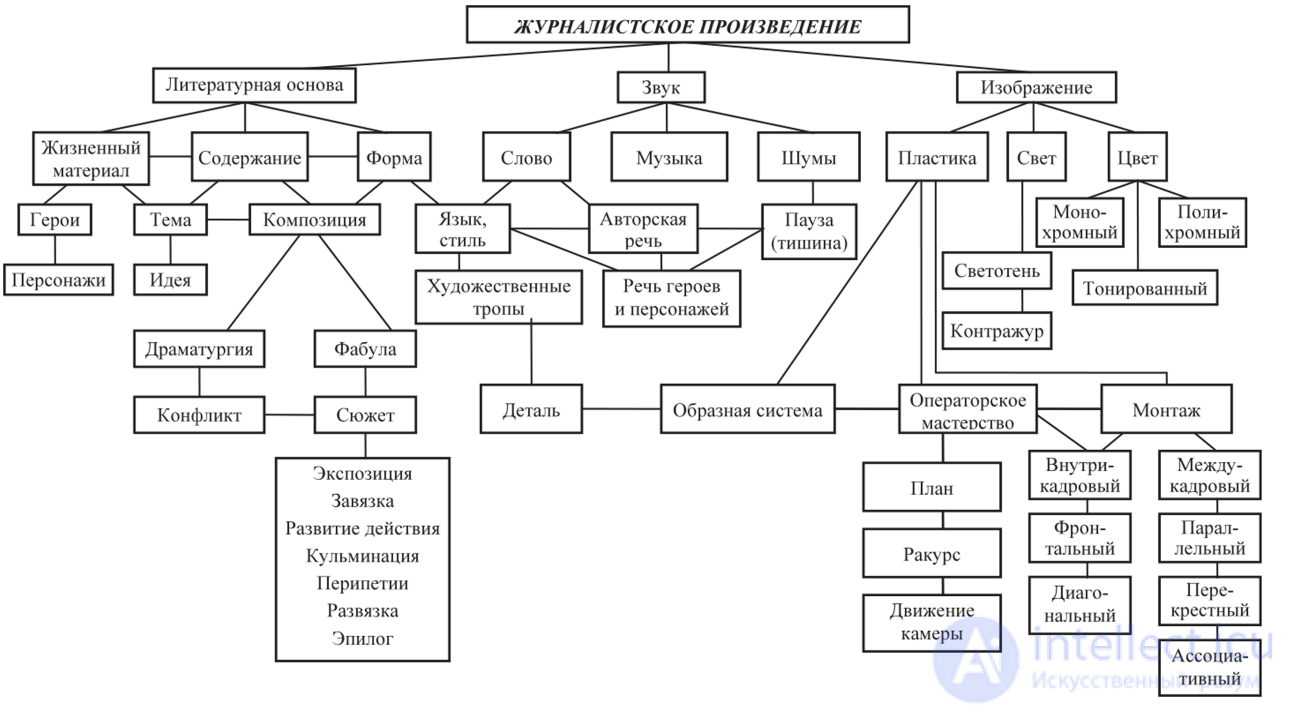
Fig. 13.1. Scheme for creating a journalistic work
For any journalist, in whatever mass medium he works and to whichever kind of journalism he devotes himself, the foundation of foundations is the left column (which is why it is called the literary basis). In turn, the basis of this component of a journalistic work is life itself, with all its inexhaustible variety of people, events, ideas, phenomena and facts.
Life material is the social reality studied by the author and placed at the basis of the journalistic work. This reality is always immeasurably richer than the literary basis, the journalistic text. One of the most important secrets of professional skill is the ability to choose from the whole variety of the real world only what is necessary in a given journalistic piece. In essence, the problem of choosing an event, a hero, a detail, a defining word is fundamental in the journalistic profession. All our lives we face choices – and the more successfully we solve this problem, the more effective our creative work is.
What standards does a journalist apply to life material, and on what does he base his choice? The chosen (or assigned) theme and idea of the work are extremely important here.
Theme (from Greek thema — a proposition being discussed) is the subject of depiction. It is also the question singled out by the author as the most important for the given material.
Idea (from Greek idea — concept, notion) is the main thought of the work, the expression of the author's position. An idea may precede the study of life material; it focuses the author's views on reality and is determined by his moral convictions, tastes and preferences. On TV the idea is often conditioned by the channel's broadcasting policy.
Put simply, the theme is w h a t it is about, and the idea is w h y. Just as life material is broader than the literary basis, so the theme is broader than the idea. Various journalistic works can be devoted to one and the same theme, but each of them will have its own idea.
Sometimes the theme of a journalistic work is suggested to the author by the surrounding situation, by events taking place, or by the people he wants to write about, their deeds and actions. More often the journalist looks for heroes in accordance with the chosen theme (or one commissioned by the editorial office). In journalism, as in literary studies, the central, main characters of a work are called heroes. The people who surround the central figure are characters.
As in literature, the hero of a journalistic work does not necessarily have to be entirely positive. Recall the protagonist of Sholokhov's "Quiet Flows the Don" – how contradictory is the restless personality of Grigory Melekhov! And not all heroes of journalistic materials are ideal by any means. In life, one-sided phenomena, events and facts are rare, just like the people around us. But if the central figure of your material is an unequivocally negative person, he cannot be called a hero even in the literary sense. Negative images are always characters. So you would never say: "The main hero of the article 'The Fiend' in the newspaper 'Megapolis-Express' is a maniac killer." Such a phrase is not merely illiterate, it is nonsense.
But now the first stage of journalistic work – gathering information – is complete. The life material has been studied, the theme and idea determined, the heroes selected, and all the characters of the future work are known. The content is clear. What form will the accumulated material take? Finding a form for the work that is adequate to its content is perhaps one of the most important components of journalistic skill. Composition is of particular importance here.
Composition (from Lat. compositio — composing, arrangement, connection, joining) is the regular construction of a work, the harmonious relationship of its individual parts (components) forming a single whole. Composition is the principle of organizing the material depicted by the author. As S. Eisenstein wrote, speaking of cinema, it is "a construction that serves first of all to embody the author's attitude to the content and at the same time to make the viewer take the same attitude to this content."
Composition is usually determined by the topic and the idea, and consists of a combination of selected events and facts that reveals their deeper connection and expresses the author's position. Through composition, the author arranges the material in a sequence that matches the authorial intention, keeps the audience's interest from fading, focuses its attention on the main point, and leads it to the necessary conclusions.
When working on composition, a journalist depends to a certain extent on the fabula (from Lat. fabula — a tale, a story) — the chain of real events in their real sequence, which is what the piece narrates. In a documentary work the fabula does not depend on the author; it is a given, what actually happened. Proceeding from the fabula, the author builds the plot of his work.
Plot (from Fr. sujet — subject) — the course of the narrative, the way of revealing (and developing) a theme on the basis of its dramaturgy.
We will return to the plot and its components, but for now we must mention a new concept that arose in defining the plot. It is so important that, in essence, without it no work that is at all interesting and engaging, true to life and able to attract the audience's attention can be created. This is the dramaturgical understanding of life material.
Dramaturgy — is a way of organizing life material, and at its basis there is always conflict — a clash of two opposing principles: the positive and the negative, good and evil, nobility and baseness, truth and lies, honor and dishonor, life and death, white and black... this list is endless, just as the diversity of the material and spiritual world is endless. In essence, this is life itself, with its complex and beautiful dialectic — the constant clash of different, opposing principles, constant overcoming, striving toward an ideal and its unattainability — and a new striving.
The ability to identify conflict as the driving spring of social development, of human actions, of various natural phenomena, and on the basis of this conflict to build one's work dramaturgically — this is one of the main secrets of professional mastery for a journalist, a writer, an artist, a performer. All these professions are akin in their creative attitude and their understanding of reality. And for a journalist, a creative approach to documentary material is revealed largely in the compositional distinctiveness of his work.
The conflict underlying the dramaturgy will help you turn the fabula (the real sequence of events) into a well-structured plot (an artistically organized narrative about these events). The components of the plot include:
Certain elements of the plot may be omitted in one or
another journalistic work, and their order may change. Everything depends on the author's intention. Suppose you begin your piece directly with the climax — the most important moment — and only then tell how the events that led to such an outcome developed. The plot is not a compositional formula with immutable parameters, but a tool of creativity that in skilled hands gives remarkable results. At the stage of studying this chapter it will be enough if you can identify plot devices in other people's (and your own) journalistic pieces. In time you will learn to do this professionally. And the melodic, emotional and semantic coloring of your pieces will be achieved through language and style — also extremely important components of form.
Since we mentioned melodic coloring, think about it: how many wonderful melodies have been created, and will still be created, with just seven notes in eight octaves! What then can be said of the inexhaustible riches of a language with its enormous vocabulary and its grammatical and syntactic possibilities?! Through language and style a journalist not only describes events, characters and the appearance of his subjects as precisely as possible, but also shows his own individuality and makes his pieces recognizable and unlike others. (Isn't this where a journalist's personal fame begins, and isn't this the source of his popularity?) It is no accident that they say: the style is the man.
Working on an individual style of authorial language is the primary concern of anyone engaged in literary work. In any case, journalistic literary language differs from everyday speech in its precision, vividness and imagery. One of the tools here is the use of artistic tropes.
Trope — is a manner of expression, a figure of speech, an image.
You should be able to distinguish and use in your pieces such tropes as, for example, simile, epithet, metaphor, and so on.
You will work on the language of your pieces all your life. All your life you and your editors will fight verbal clichés in the name of clear, easily understood language with convincing comparisons and vivid metaphors.
Sometimes novice journalists seem to be embarrassed to speak simply and clearly. It seems to them that a piece will look more convincing if it is written in a dry, official or, on the contrary, pompous language, with pretentious vocabulary and abstruse expressions. George Orwell, the author of the famous satirical novel "1984", wrote in his essay "Politics and the English Language" about writers who do not choose words for their meaning but simply "string together long strips of words which have already been set in order by someone else". By way of illustration Orwell took a passage from Ecclesiastes and "translated" it into modern, cliché-ridden English.
I returned, and saw under the sun, that the race is not to the swift, nor the battle to the strong, neither yet bread to the wise, nor yet riches to men of understanding, nor yet favour to men of skill; but time and chance happeneth to them all.
And here it is in modern language:
Objective consideration of contemporary phenomena compels the conclusion that success or failure in competitive activities exhibits no tendency to be commensurate with innate capacity, but that a considerable element of the unpredictable must invariably be taken into account .
This is a parody, but it is not far from the truth. Pick up a fresh issue of a newspaper and you will certainly come across literary clichés so worn with frequent use that readers either no longer notice them at all, or perceive them only as parody. "Police armed to the teeth", "the calm before the storm", "overcome with grief", "blood-curdling details", "the reins of power", "put on the back burner", "a storm in a teacup", "a walking encyclopedia".
The beginning of any journalistic piece is extremely important. In Western journalism the first sentence of a news item, article or video report is called the lead — from the word "leader" (first, foremost). Indeed, having read or heard the lead, the reader, listener or viewer decides whether to read (listen, watch) further.
The first sentence is usually born in creative agony. A lead can be called successful if it clearly presents the main information — and in such a way that it does not resemble other reports on the same subject. A lead must have maximum impact with a minimum of words. There is no place here for secondary details, general or abstract phrases, vagueness, or confusion in the chronology of events.
Here is an example of reporting craftsmanship that has stood the test of time thanks to its lead; it has been cited in Western journalism textbooks since 1917.
"Paris. Mata Hari, which in Javanese means "morning eye", is dead. She was shot as a spy by a squad of Zouaves at the Vincennes barracks. She died literally looking death straight in the eye, for she did not allow her eyes to be covered with a blindfold, as is customary before an execution."
You certainly know of the legendary figure of Mata Hari. But have you ever wondered what her name means? Had the author of this news report not given the translation of the name from Javanese, the last sentence would hardly have made such an impression on the reader.
One more remark about language. From your school syntax textbook you know about direct and indirect speech. All this applies to the print periodical press as well. However, for journalists working in radio and television it is more convenient to speak of the author's text and the speech of the heroes and characters, because in essence both are direct speech recorded on magnetic tape or videotape. (On TV the speech of the heroes is also called synchs — a professional term that arose at the time when the statements of those being filmed were recorded with a synchronous film camera.)
The difference between the speech of the heroes and the author's speech lies first of all in style. Never try to make more literary the speech of a person invited to the microphone or camera. His speech should be as individualized as possible; stylistic slips and even professional jargon are permissible in it (provided, of course, that it is understandable to the listeners).
A journalistic text, as a rule, is distinguished by good literary language and figurative speech; bureaucratese, slang and obscene language are out of place here. However, in each individual case, in each specific piece, language performs its own special functions and depends entirely on the topic and idea of the work, as well as on the individuality of the author.
• how a journalistic text differs from a school essay
In literature classes schoolchildren are taught how to express their thoughts logically and correctly. The main purpose of an essay is to show the teacher how well the student has mastered this skill. As a rule, essays simply repeat other people's opinions and ideas, and for an outside reader these texts are completely uninteresting. An editor spends no more than 30 seconds reading such material, and then sends it to the wastebasket.
An example of a non-journalistic text.
Here is the beginning of an article that could easily pass for an essay on the topic "Relations between generations". Even the most resilient teacher would fall asleep by the end of this paragraph:
"Many people claim that the young generation does not respect them at all, treats them not as elders and the wise, but as peers, or even worse. But I want to stand up for young people. We are at a rather difficult age, our life values and priorities are not yet quite settled, and our attitude toward someone depends on how that person behaves toward us in a given situation."
• how a journalistic text differs from an Internet post.
Editorial offices very often receive texts that were previously published in the "Notes" on the VKontakte site or on Livejournal.com. Outwardly such posts resemble one of the most prestigious genres of journalism – the author's *COLUMN*. Only publications usually print columns by well-known journalists, whose opinion readers will find interesting. And who is interested in the muddled musings of some Slavik-the-Melancholic Trofimov or an author with the nickname basilisk?
An example of a non-journalistic text.
The Internet is stuffed to the brim with articles like this:
"Geniuses come to a bad end. Or a terrible one from the point of view of other ordinary people, non-geniuses. I know very few exceptions to this rule, or rather – exactly one as of today. Maybe tomorrow there will be more, or maybe even that one will change, who knows. For me the fate of geniuses has always been, strangely enough, a sort of incomprehensible presence of God. A person does something beautiful and divine, after which his life is cut short extremely quickly, which causes even more stupor than his genius."
• how a journalistic text differs from Fiction
Many novice authors confuse journalism with fiction. They send editorial offices lengthy texts with an ornate style and a multitude of metaphors. To understand the meaning of such works, you have to struggle for a long time through a forest of adjectives and subordinate clauses.
Here is a very typical sample of such texts:
"Before. What was I before? I loved to call my way of life a "sad youth", I complained about grown-ups, I looked sullenly at the people in the subway, so boring, so closed in on themselves. That time is remembered as one cold and damp autumn; it marched by, leaving me a stack of notebooks with my thoughts, marched by, so that the following year it could give me that very spring."

Comments