Speech development in a child is one of the most important aspects of overall development. The ontogenesis of speech comprises successive stages, from the first sounds to the mastery of complex syntactic constructions and connected speech. This test will help you check your knowledge of the processes by which speech skills form, their age-related characteristics and key developmental milestones. The questions cover the stages from cooing to phrasal speech, as well as the factors that influence speech formation.The answers to the test items will allow you to understand more deeply the regularities of speech development in children and to assess your own level of competence in this area.
1. At what age do a child's first words usually appear?
- a) 2-3 months
- b) 6-8 months
- c) 10-12 months *
- d) 1.5 years
2. Which stage of speech development precedes babbling?
- a) Cooing *
- b) Murmuring
- c) Producing words
- d) Phrasal speech
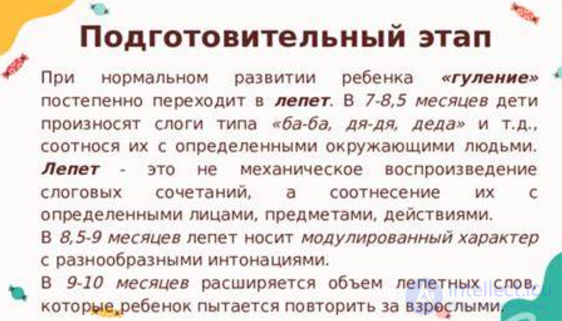
3. Which of the following belongs to the pre-linguistic stage of speech development?
- a) Cooing and babbling *
- b) Use of simple words
- c) Formation of phrases
- d) Refinement of word meanings
4. Which phase is characterized by active use of intonation before words appear?
- a) Sentence-word speech
- b) Intonational-rhythmic phase *
- c) Lexical phase
- d) Semantic phase
5. What is called a child's "passive vocabulary"?
- a) Words that the child understands *
- b) Words that the child says
- c) Words that the child uses with errors
- d) Words that the child hears but pays no attention to
6. At approximately what age does a child begin to use simple sentences?
- a) 1 year
- b) 2 years *
- c) 3 years
- d) 4 years
7. Which process begins with the formation of words and phrases?
- a) Babbling
- b) Cooing
- c) Lexico-grammatical leap *
- d) Reflexive vocalization
8. Which of the following factors has the greatest influence on a child's speech development?
- a) Innate abilities
- b) The parents' level of intelligence
- c) Communication with those around the child *
- d) The number of toys
9. Which of the following is a key task of the phrasal speech stage?
- a) Enrichment of vocabulary *
- b) Mastery of articulation
- c) Imitation of sounds
- d) Development of reflexive speech
10. Which ability develops first in the ontogenesis of speech?
- a) Understanding the meanings of words *
- b) Use of questions
- c) Construction of complex sentences
- d) Reading
11. What contributes to accelerating a child's speech development?
- a) An abundance of toys
- b) Reading books aloud *
- c) Watching television
- d) Complete silence
12. At approximately what age does a child's active speech stage begin?
- a) 6-8 months
- b) 10-12 months
- c) 1.5-2 years *
- d) 3-4 years
13. Which sounds do children begin to produce first?
- a) Complex consonants
- b) Simple vowels *
- c) Sibilants
- d) Consonant clusters
14. What is the main feature of a child's babbling?
- a) Use of long words
- b) Repetition of identical syllables *
- c) Deliberate construction of sentences
- d) Various verb forms
15. When does a child usually begin to understand the meaning of simple words?
- a) 2 months
- b) 6 months *
- c) 12 months
- d) 18 months
16. Which stage of speech development is accompanied by the use of diminutives?
- a) Babbling
- b) Phrasal speech
- c) Concrete-situational speech *
- d) Semantic leap
17. Which of the following promotes the development of articulation?
- a) Repeating sounds after adults *
- b) Listening to music
- c) Watching cartoons
- d) Silence
18. Which of the first words do children most often say?
- a) "мама" (mama, 'mom') *
- b) "папа" (papa, 'dad')
- c) "дай" (day, 'give')
- d) "игрушка" (igrushka, 'toy')
19. What is considered the critical age for the start of speech acquisition?
- a) 2 years *
- b) 3 years
- c) 4 years
- d) 5 years
20. What function does "expressive speech" perform?
- a) Communication and expression of emotions *
- b) Understanding the speech of others
- c) Translating thoughts into words
- d) Memorizing words
21. At what age does a child usually begin to ask simple questions?
- a) 1-2 years
- b) 2-3 years *
- c) 3-4 years
- d) 4-5 years
22. Which of these stages is the final one in speech development?
- a) Babbling
- b) Concrete-situational speech
- c) Development of connected speech *
- d) Cooing
23. What is a "protoword"?
- a) The child's first real word
- b) An indistinct combination of sounds *
- c) A complete sentence
- d) Repetition of adults' sounds
24. What role does imitation play in speech development?
- a) It speeds up the process of speech acquisition *
- b) It hinders the development of articulation
- c) It leads to pronunciation errors
- d) It has no effect on speech
25. Which type of speech develops first in a child?
- a) Inner speech
- b) Expressive speech
- c) Impressive (receptive) speech *
- d) Dialogic speech
26. What is the main feature of the cooing stage?
- a) Auditory coordination
- b) Voluntary production of sounds *
- c) Imitation of adults
- d) Word building
27. At approximately what age does a child begin to distinguish the mother's voice?
- a) From birth
- b) 1 month *
- c) 3 months
- d) 6 months
28. Which of the skills must be developed for the formation of phrasal speech?
- a) The ability to construct sentences *
- b) The skill of memorizing sounds
- c) Repetition of individual words
- d) Mastery of the alphabet
29. What function does babbling perform?
- a) Helps the child explore sounds *
- b) Serves for communication with those around
- c) Is used to express emotions
- d) Builds vocabulary
30. Which of the following is most important for the formation of correct pronunciation?
- a) Listening to music
- b) The example of adult speech *
- c) Silence
- d) Playing with toys
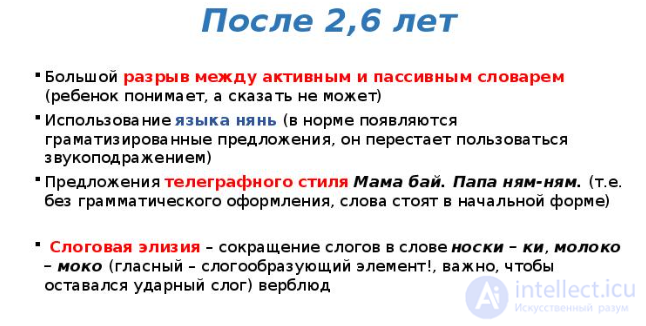
31. What is syllable elision?
- a) Omission of individual letters when writing a word
- b) Deliberate simplification of a word's sound composition by omitting syllables *
- c) Formation of new words by combining several roots
- d) Lengthening of a syllable to make pronunciation easier
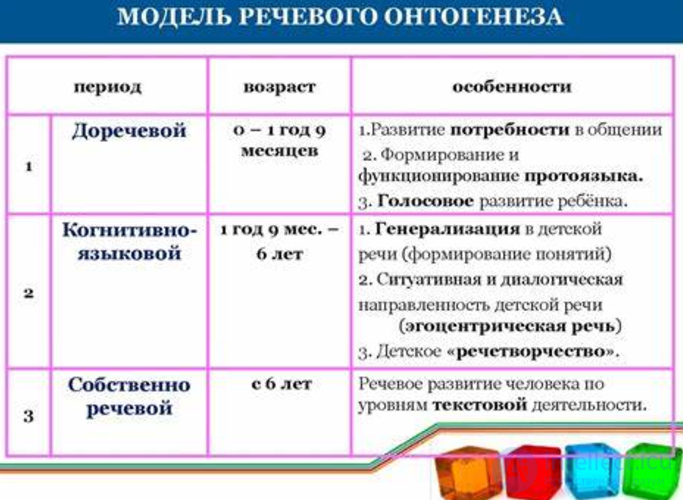
32. What is the ontogenesis of speech?
- a) The study of differences in speech across cultures
- b) The process of an individual's speech development from birth to maturity *
- c) The development of language as a system in the history of humankind
- d) Analysis of the structure of speech sounds
33. What is called babbling?
- a) Pronouncing words with errors
- b) Repetition of syllables, often identical ones *
- c) Understanding adults' speech
- d) Simplification of sounds in pronunciation
34. What is passive vocabulary?
- a) Words that the child pronounces
- b) Words that the child understands but does not actively use *
- c) Words that the child hears for the first time
- d) Words that the child does not understand
35. What does the term "active vocabulary" mean?
- a) Words that the child understands
- b) Words that the child actively uses in speech *
- c) All the words that the child hears
- d) The first syllables and sounds
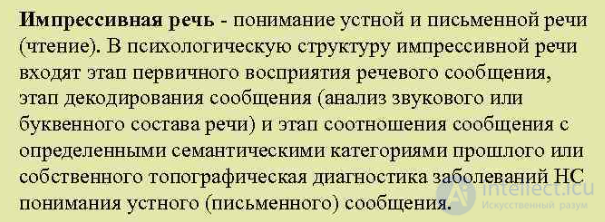
36. What is impressive (receptive) speech?
- a) Speech that the child understands *
- b) Speech that the child reproduces
- c) Speech addressed to those around
- d) Speech consisting of syllables
37. What is expressive speech?
- a) Speech aimed at expressing thoughts and emotions *
- b) The process of perceiving the speech of others
- c) The first stage of speech development
- d) Producing meaningless sounds
38. What is articulation?
- a) The ability to distinguish speech sounds
- b) Voluntary control of the speech organs to produce sounds *
- c) Simplification of speech for understanding
- d) The first attempts to construct phrases
39. What is phonemic hearing?
- a) The ability to distinguish melodies and rhythms
- b) The ability to perceive and distinguish speech sounds *
- c) The skill of understanding intonation
- d) The ability to pronounce complex sounds
40. What is phrasal speech?
- a) Use of individual sounds and syllables
- b) Construction of sentences from several words *
- c) Repetition of sounds without awareness of their meaning
- d) Mastery of the sound system of the language
41. What is a semantic leap?
- a) Accelerated growth of the lexical stock *
- b) The appearance of the first conscious words
- c) Formation of correct pronunciation
- d) Development of understanding of grammatical constructions
42. What does the term "concrete-situational speech" mean?
- a) Speech tied to the perception of concrete objects and actions *
- b) The ability to use abstract concepts
- c) The process of constructing complex phrases
- d) The stage of repeating after adults
43. What is a protoword?
- a) The child's first conscious word
- b) An indistinct combination of sounds that has meaning in context *
- c) The first sentence constructed by the child
- d) Pronunciation of vowel sounds
44. What does the pre-linguistic stage of speech development include?
- a) Use of simple phrases
- b) Cooing, babbling and intonational communication *
- c) Construction of complex sentences
- d) Formation of passive vocabulary
45. What is syntactic speech?
- a) Mastery of the rules for constructing sentences *
- b) Simplified use of words
- c) Understanding the meanings of words
- d) Intonational reproduction
46. What is a speech act?
- a) The moment when a child becomes aware of their own words
- b) The minimal unit of communication, including a goal and actions *
- c) The process of pronouncing individual sounds
- d) An intonational set of phrases
The ontogenesis of speech is a complex and multifaceted process influenced by many factors, from physiological and genetic ones to the social environment and the nature of interaction with those around the child. Taking this test not only helps assess one's level of knowledge but also contributes to a deeper understanding of the stages of speech development.Regardless of the results, it is important to remember that speech development is unique for every child, and timely attention to the features of this process helps create favorable conditions for the formation of full-fledged communication and thinking.
See also
- [[b7232]]
- [[b7265]]
- [[b7217]]


Comments