
Lecture
Contemporary aesthetics forms an integral system of knowledge that constitutes its own distinctiveness and testifies to it as a special type of spiritual experience, one that requires an understanding of its specific nature and its assimilation by society. Contemporary aesthetic theory is distinguished by the originality of its problem field, asserting itself as a coherent system of knowledge. This knowledge reflects the creative essence of the human being in the intrinsic value of its manifestations and the value of these manifestations in their consequences – artistic phenomena. The latter embody the creative nature of the human being's relation to the world as intrinsically valuable, and the need to realize creative abilities in shaping internally purposive material forms through free interaction with the beauty of natural forms, independent of any purely practical need.

The sphere of the aesthetic becomes intrinsically valuable in the sense that its goal is not a concrete, practical interest, not a material, vital need, but a spiritual need: the experience of beauty, of the purposiveness of material forms, of spiritual states, phenomena and events in their self-valuable manifestation – that is, in the sense of their value as a source of nourishment, and hence as the life of feeling. Moreover, since the nature of the aesthetic is bound up with a practical disinterestedness of relation, it is free: feelings are organized around the object of one's engagement, are nourished by it, and unfold through the nuances of its vitality, moving in harmony along "its own" object. Outside of this, outside the concrete object of engagement, they could not take on precisely such traits and nuances, nor could a person, in general, realize themselves in the experience of a phenomenon. The richer one's experience of an engaged relation to the phenomena of the surrounding world in its infinite diversity, the greater the world of artistic treasures nourishing the feeling of the personality, the more beautiful, full and perfect that person's spiritual world becomes. It began to live through communion with the worlds of other people, to be filled with feelings of engagement, to admire the manifestations of the human qualities of art's heroes, the nuances of the artist's aesthetic-artistic mastery in depicting various events, characters, moods, and experiences. The world of perfection enters the world of the perceiving personality, becoming that person's own world, which means that this person lives, thinks and experiences together with the whole of humanity in its present, past and future. the nuances of the artist's aesthetic-artistic mastery in depicting various events, characters, moods, and experiences. The world of perfection enters the world of the perceiving personality, becoming that person's own world, which means that this person lives, thinks and experiences together with the whole of humanity in its present, past and future. the nuances of the artist's aesthetic-artistic mastery in depicting various events, characters, moods, and experiences. The world of perfection enters the world of the perceiving personality, becoming that person's own world, which means that this person lives, thinks and experiences together with the whole of humanity in its present, past and future.


Refining the definition of aesthetics given at the very start of our lecture, and expanding it somewhat, we arrive at the conclusion: aesthetics is the science of the laws governing the human being's image-forming and value-experiencing relation to reality. This definition reflects two crucial structural components of aesthetics as a science. First, the specific – image-forming mode of objectifying spiritual experience. Second, the value-experiencing relation to reality. As for the first aspect of the specificity of the aesthetic, in it experience acquires non-alienated, integral, sensuously given forms. It is enough to compare image-concepts, which reflect the experience of a person's cognition of the world within the system of scientific knowledge, with the artistic image, to be convinced of this. Whereas the image-concept is "intended" for the mind, the artistic image engages the experience of feeling, imagination and fantasy, although rational knowledge is present here as well. Thanks to it we are able to distinguish the properties of objects and to render value judgments about them. Ultimately, the artistic image is a multilevel being of an idea, owing to the fullness of its sensuous manifestation. The second aspect of the specificity of the aesthetic – the relation of experiencing – is a reflection of the integrity of the personality's spiritual structures in the process of relating to an object. Namely: the active engagement of mind and feeling with an object that, through its value qualities, has evoked a state of engaged concern, and active participation in the being of the object, whether as something positive or as something negative. Given that what is at issue here is engagement conditioned not by practical, vital needs but by an engagement that is practically disinterested – that is, conditioned by spiritual needs – it is legitimate to assert that aesthetic engagement is the foundation of spirituality. The Ukrainian aesthetician A. Kanarsky, in defining the basic foundations of spirituality, presents the logical and aesthetic dimensions of the concepts of "engagement" and "indifference". Behind indifference he traces a "terrible state of the human being": "in all likelihood, the manifestation of such a state contains a manifestation of a properly social death. One cannot live and be indifferent to life without dying while still alive (not necessarily physically), without turning into a living" corpse, deprived precisely of human impulses and aspirations" [4, p. 115]. The philosopher defines the state of engagement as the state of a person's realization of the fullness of their human nature, which constitutes the self-affirmation of the creative essence in beauty. The richer one's cognitive experience, the deeper one's experiences, for one finds ever more nuances of the unrepeatable manifestation of the vitality of the phenomenon that has become the object of experience. Consequently, the aesthetic is real under two conditions. The first: the presence of phenomena which, through their vitality and the distinctiveness of its manifestations, reveal themselves as expressive, unfolding vitality in convincing purposiveness. The second: the presence of a subject – a bearer of the capacity to perceive, to form a purposive image of the object, that is, one adequate to its qualities, and to respond to those qualities accordingly.
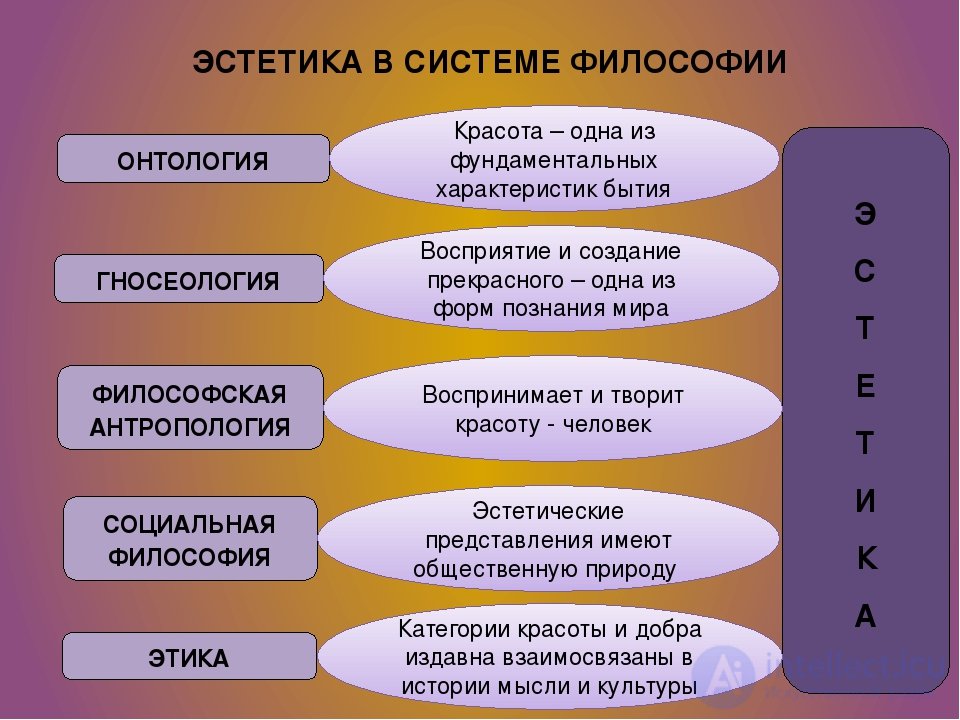
Let us define the principal problems that make up the system of aesthetic knowledge. The first problem, which is the fundamental basis of aesthetics as a science, is the category of "the aesthetic". It should be defined with due regard to its role within the system of aesthetic knowledge as a "meta-category", or as the principal category. It is extremely important to investigate its essential features also because the appropriate and inappropriate use of the concept of "the aesthetic" leads to its leveling. People speak of an aesthetic environment, aesthetic behavior, an aesthetic appearance, an aesthetically done hairstyle, and so on. In this way, the philosophical category meant to designate the creative essence of a person's engaged relation to the world dissolves into everyday usage, losing its categorial dimension. The aesthetic is a meta-category insofar as it reflects the regularities of the spiritual-creative relation to the world as the free interaction of a person's intellectual structures with the expressive forms of reality. That is, the aesthetic is a special kind of relation: it unfolds as the free interaction of feeling and mind with "its own" object.
The second block of problems concerns problems of aesthetic consciousness. The specificity of the aesthetic relation is given concrete form in its distinctiveness – a special form of social consciousness expressed in the concepts of aesthetic feeling, aesthetic taste, aesthetic ideal, and aesthetic theory. It is precisely these forms that reveal aesthetic consciousness as a complex spiritual formation, distinct from the mythological, religious, scientific, political, moral and legal forms of consciousness. The forms of aesthetic consciousness are interrelated, forming a harmonious self-organization of spiritual structures directed toward the perception, experiencing, evaluation and judgment of the being of the expressive forms of reality in accordance with their inherently harmonious, purposive vitality. The level of perfection of feeling – the "truth of feeling" – is objectified in the activity of aesthetic evaluation.
The third block of problems making up the content of aesthetic theory (aesthetic knowledge) consists of the categories of aesthetics. The principal aesthetic categories include: the beautiful, the sublime, the tragic, and the comic. Contemporary scholarship also distinguishes modifications of these principal aesthetic categories: harmony, beauty, grace, the ideal, the dramatic, the heroic, the grotesque, and irony. Categories of artistic creation are also distinguished: art, imitation, image, allegory, form, and (artistic) taste [10]. Categorial knowledge in aesthetics has the distinctive feature that it consolidates humanity's experience of what is regular in its experiencing relation to the phenomena of spiritual experience objectified in artistic phenomena.
The fourth major block of problems, representing the substance of aesthetic knowledge, is art as a specific form of human activity. Art is experience – the wholeness of the vitality of feeling in the regularities of its manifestation in forms of artistic perfection – objectified within a system of artistic-figurative language. This block of problems encompasses the genesis of the human being's artistic capacity as a generic characteristic, and the distinctiveness of the figurative language of art. It combines the richness of the means of artistic expressiveness in conveying human feelings, which conditions the formation of the rich diversity of the specific forms of art; it investigates the foundations of the integrity of art as an inherently purposive expressive vitality, and the factors conditioning that expressiveness; it reveals the richness of the historical life of art's language and of the specificity of its forms at each historical stage. In connection with the problem of the history of artistic development, its regularities are revealed, which are correspondingly embodied in the system of methods, currents, trends, styles and manners. Artistic creation is the work of talent and genius, the nature of which requires investigation by the theory of aesthetics.
Ultimately, the problems of aesthetic theory involve investigating the regularities governing the creation of beauty in human relations, the beauty of the environment, the beauty of everyday life, the beauty of productive activity, and the purposive beauty of objects created by human beings. These are problems that ground the principles for filling human life with beauty, with expressive and purposive forms. The overarching task of aesthetics is to form the harmonious integrity of the personality's spiritual world through a system of spiritual values that constitute the province of aesthetics. In aesthetics, the human being appears both as the goal and as the means of the creation of perfection, as the most fitting way for humankind to realize itself.
Thus, aesthetics is a methodology of the culture of feeling, a theory of the human being's purposively formative capacities. It is a methodology of artistic creation. The principal subject of aesthetics is art, for art concentrates the experience of the sensuously perfect experiencing of the being of the human being's world and its embodiment through perfect, sensuously manifest means: a system of integral artistic images of art.

Comments