
Lecture 42 min.
Pesticides are substances intended to control pests. They include herbicides, insecticides, nematicides, molluscicides, piscicides, avicides, rodenticides, bactericides, insect repellents, animal repellents, microbicides, fungicides and lampricides. The most common of these are herbicides, which account for approximately 50% of all pesticide use worldwide. Most pesticides are intended for use as plant protection products (also known as crop protection products), which normally protect plants from weeds, fungi or insects. For example, the fungus Alternaria solani is used to control the aquatic weed Salvinia.
In general, a pesticide is a chemical substance (for example, a carbamate) or a biological agent (for example, a virus, bacterium or fungus) that deters, incapacitates, kills or otherwise discourages pests. Target pests can include insects, plant pathogens, weeds, mollusks, birds, mammals, fish, nematodes (roundworms) and microbes that destroy property, cause nuisance, spread disease or are vectors of disease. Along with these benefits, pesticides also have drawbacks, such as potential toxicity to humans and other species.
| Pesticide type | Target pest group |
|---|---|
| Algicides or algaecides | Algae |
| Avicides | Birds |
| Bactericides | Bacteria |
| Fungicides | Fungi and oomycetes |
| Herbicides | Plants |
| Insecticides | Insects |
| Lampricides | Lampreys |
| Miticides or acaricides | Mites |
| Molluscicides | Snails |
| Nematicides | Nematodes |
| Rodenticides | Rodents |
| Slimicides | Algae, bacteria, fungi and slime molds |
| Virucides | Viruses |
The Food and Agriculture Organization (FAO) has defined pesticide as:
any substance or mixture of substances intended for preventing, destroying or controlling any pest, including vectors of human or animal disease, unwanted species of plants or animals, causing harm during or otherwise interfering with the production, processing, storage, transport or marketing of food, agricultural commodities, wood and wood products or animal feedstuffs, or substances that may be administered to animals for the control of insects, arachnids or other pests in or on their bodies. The term includes substances intended for use as a plant growth regulator, defoliant, desiccant, or agent for thinning fruit or preventing the premature fall of fruit. It also covers substances applied to crops either before or after harvest to protect the commodity from deterioration during storage and transport.
Pesticides can be classified by target organism (for example, herbicides, insecticides, fungicides, rodenticides and pediculicides — see the table), chemical structure (for example, organic, inorganic, synthetic or biological (biopesticides), although the distinction can sometimes blur) and physical state (for example, gaseous (fumigant)). Biopesticides include microbial pesticides and biochemical pesticides. Plant-derived pesticides, or "botanicals", are developing rapidly. They include the pyrethroids, rotenoids, nicotinoids and a fourth group that includes strychnine and scilliroside.
Many pesticides can be grouped into chemical families. Prominent insecticide families include organochlorines, organophosphates and carbamates. Organochlorine hydrocarbons (for example, DDT) can be divided into dichlorodiphenylethanes, cyclodiene compounds and other related compounds. They act by disrupting the sodium/potassium balance of the nerve fiber, forcing the nerve to transmit continuously. Their toxicity varies widely, but they have been phased out because of their persistence and their capacity for bioaccumulation. Organophosphates and carbamates have largely replaced organochlorines. Both work by inhibiting the enzyme acetylcholinesterase, allowing acetylcholine to transmit nerve impulses indefinitely and causing a variety of symptoms such as weakness or paralysis. Organophosphates are quite toxic to vertebrates and in some cases have been replaced by less toxic carbamates. Thiocarbamates and dithiocarbamates are subclasses of carbamates. Prominent herbicide families include phenoxy and benzoic acid herbicides (for example, 2,4-D), triazines (for example, atrazine), ureas (for example, diuron) and chloroacetanilides (for example, alachlor). Phenoxy compounds tend to kill broadleaf weeds selectively rather than grasses. The phenoxy and benzoic acid herbicides function similarly to plant growth hormones and cause cells to grow without normal cell division, crippling the plant's nutrient transport system. Triazines interfere with photosynthesis. : 335 Many commonly used pesticides are not included in these families, including glyphosate.
Pest control products are usually applied by dispersing the chemical in a solvent-surfactant system (often hydrocarbon-based) to give a homogeneous preparation. A 1977 study of virus lethality showed that the specific pesticide did not increase the lethality of the virus. Combinations including surfactants and solvent clearly showed that pretreatment with them markedly increased virus lethality in experimental mice.
Pesticides can be classified according to their biological mechanism of action or method of application. Most pesticides work by poisoning pests. A systemic pesticide moves inside a plant after the plant absorbs it. For insecticides and most fungicides, this movement is usually upward (through the xylem) and outward. The result can be increased effectiveness. Systemic insecticides that poison the pollen and nectar of flowers can kill bees and other necessary pollinators.
In 2010, the development of a new class of fungicides called paldoxins was announced. They work by exploiting the natural defensive chemicals released by plants, called phytoalexins, which fungi then neutralize using enzymes. Paldoxins inhibit the fungal detoxification enzymes. They are believed to be safer and more environmentally friendly.
As early as 2000 BC, people used pesticides to protect crops. The first known pesticide was dust of elemental sulfur, used in ancient Sumer about 4,500 years ago in ancient Mesopotamia. By the 15th century, toxic chemicals such as arsenic, mercury and lead were being applied to kill pests on crops. In the 17th century, nicotine sulfate was extracted from tobacco leaves for use as an insecticide. In the 19th century, two more natural pesticides were introduced: pyrethrum, which is derived from chrysanthemums, and rotenone, which is derived from the roots of tropical vegetables. Until the 1950s, arsenic-based pesticides predominated. Paul Müller discovered that DDT was a highly effective insecticide. Organochlorines such as DDT were predominant, but by 1975 they had been replaced in the US by organophosphates and carbamates. Since then, pyrethroid compounds have become the dominant insecticides. Herbicides became common in the 1960s, led by "triazine and other nitrogen-based compounds, carboxylic acids such as 2,4-dichlorophenoxyacetic acid, and glyphosate".
The first law granting federal authority to regulate pesticides was passed in 1910. In the 1940s, manufacturers produced large quantities of synthetic pesticides, and their use became widespread. Before World War I, Germany was the world's leading chemical industry and exported most of the dyes and other chemicals used in the United States. The war introduced tariffs that stimulated the growth of the chemical industry in the US, making chemistry a prestigious occupation as the industry expanded and became profitable. Money and ideas flowed back from Europe after the US entered World War I, changing the way Americans interacted with themselves and with nature, and the industrialization of war accelerated the industrialization of pest control. Some sources consider the 1940s and 1950s the beginning of the "pesticide era". Although the US Environmental Protection Agency was established in 1970 and amendments to the pesticide law were made in 1972, pesticide use has increased 50-fold since 1950, and today large quantities are used every year. Seventy-five percent of all pesticides in the world are used in developed countries, but their use in developing countries is growing. A study of pesticide use trends in the US through 1997 was published in 2003 by the National Science Foundation's Center for Integrated Pest Management.
In the 1960s, DDT was found to interfere with the reproduction of many fish-eating birds, posing a serious threat to biodiversity. Rachel Carson wrote the bestselling book Silent Spring about biomagnification. The agricultural use of DDT is now banned under the Stockholm Convention on Persistent Organic Pollutants, but in some developing countries it is still used to prevent malaria and other tropical diseases by spraying it on interior walls to kill or repel mosquitoes.
The available pesticides are not sufficient, and new developments are needed. Continued research in basic pest biology may reveal new vulnerabilities and create new pesticides; it may also yield pesticides with better financial and environmental characteristics than those now in use. Plant-derived pesticides, or "botanicals", are developing rapidly. They include the pyrethroids, rotenoids, nicotinoids and a fourth group that includes strychnine and scilliroside. In 2010, the development of a new class of fungicides called paldoxins was announced. They work by exploiting the natural defensive chemicals released by plants, called phytoalexins, which fungi then neutralize using enzymes. Paldoxins inhibit the fungal detoxification enzymes. They are believed to be safer and more environmentally friendly.
Fungicide resistance increases the proportion of inactive enantiomers in fungicide applications: the evolution of resistance requires research and the discovery of new active ingredients that move away from the already discovered classes toward more complex chemical structures. These tend to have more chiral centers, which means more by-products during synthesis.
The development of insecticides is discouraged and slowed by public opinion related to the global crisis of colony collapse disorder. Although CCD is a serious problem, there are signs that other factors are also involved, notably the 2007 discovery by Cox-Foster et al. that a virus is largely to blame. Public concern has grown, and agrochemical research companies face a problem of image and perception. Partnership with agricultural services could help resolve some of these problems and revive pesticide research.
Pesticides are used to control organisms that are considered harmful or detrimental to their surroundings. For example, they are used to kill mosquitoes, which can transmit potentially deadly diseases such as West Nile virus, yellow fever and malaria. They can also kill bees, wasps or ants, which can cause allergic reactions. Insecticides can protect animals from diseases that may be caused by parasites such as fleas. Pesticides can prevent human illness that may be caused by moldy food or diseased produce. Herbicides can be used to clear roadside weeds, trees and shrubs. They can also kill invasive weeds that may damage the environment. Herbicides are commonly applied in ponds and lakes to control algae and plants such as water weeds that can interfere with activities such as swimming and fishing and give the water an unpleasant appearance or smell. Uncontrolled pests such as termites and mold can damage structures such as houses. Pesticides are used in grocery stores and warehouses to control rodents and insects that infest food such as grain. Every use of a pesticide carries a certain risk. Proper use of pesticides reduces these associated risks to a level considered acceptable by pesticide regulatory authorities such as the US Environmental Protection Agency (EPA) and Canada's Pest Management Regulatory Agency (PMRA).
DDT, sprayed on the walls of houses, is an organochlorine compound that has been used to control malaria since the 1950s. Recent policy statements by the World Health Organization have given stronger support to this approach. It and other organochlorine pesticides are banned in most countries of the world because of their persistence in the environment and their toxicity to humans. The use of DDT is not always effective, because resistance to DDT was identified in Africa as early as 1955, and by 1972 nineteen species of mosquitoes worldwide were resistant to DDT.
In 2006 and 2007, approximately 2.4 megatons (5.3 × 10 9 pounds) of pesticides were used worldwide, with herbicides accounting for the largest share of world pesticide use at 40%, followed by insecticides (17%) and fungicides (10%). In 2006 and 2007, the US used approximately 0.5 megatons (1.1 × 10 9 pounds) of pesticides, which is 22% of the world total, including 857 million pounds (389 thousand tonnes) of conventional pesticides used in the agricultural sector (80% of conventional pesticide use), as well as in the home and garden sectors. California alone used 117 million pounds. Pesticides are also found in most US households: 88 million of 121.1 million households in 2012 reported using some type of pesticide. As of 2007, more than 1,055 active ingredients were registered as pesticides, yielding more than 20,000 pesticide products sold in the United States.
The US used about 1 kg (2.2 lb) per hectare of arable land, compared with 4.7 kg in China, 1.3 kg in the UK, 0.1 kg in Cameroon, 5.9 kg in Japan and 2.5 kg in Italy. Insecticide use in the US has fallen by more than half since 1980 (0.6% per year), mainly because of the gradual phase-out of organophosphates. In cornfields the decline was even sharper because of the switch to transgenic Bt corn.
Pesticides can save farmers money by preventing crop losses to insects and other pests; in the US, farmers are estimated to get a fourfold return on the money they spend on pesticides. One study found that not using pesticides reduces crop yields by about 10%. Another study, conducted in 1999, found that a ban on pesticides in the United States could lead to higher food prices, job losses and increased hunger in the world.
There are two levels of benefits from the use of pesticides: primary and secondary. Primary benefits are the direct gains from using pesticides, while secondary benefits are the longer-term effects.
Controlling pests and plant disease vectors
Controlling human/animal disease vectors and nuisance organisms
Controlling organisms that harm other human activities and structures
One study estimated that every dollar ($1) spent on pesticides for crops can return up to four dollars ($4) in saved crops. This means that, based on the $10 billion spent on pesticides each year, an additional $40 billion can be saved in crops that would otherwise be lost to damage from insects and weeds. Overall, farmers benefit from increased yields and the ability to grow various crops throughout the year. Consumers of agricultural products also benefit from being able to afford the huge quantity of produce available year-round.
Conditions after World War II led to the flourishing of the pesticide industry for several reasons, including the growth of the middle class and the invention of cheap tractor-powered spraying equipment. By the 1980s, demand for pesticides had fallen because of farmers' financial difficulties and an oversaturated chemicals market. There were also new costs of producing pesticides because of the EPA's strict laws on chemicals. The modern pesticide market is worth seven billion dollars and is growing by 4% a year, thanks to the invention of the lawn and the stigma surrounding the wild yard.
On the cost side, the use of pesticides can involve environmental costs, human health costs, and the costs of developing and researching new pesticides.
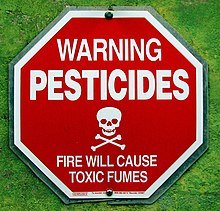
A sign warning of potential pesticide exposure
Pesticides can cause acute and long-term health effects in people who are exposed to them. Pesticide exposure can cause a variety of adverse health effects, ranging from simple skin and eye irritation to more serious effects such as damage to the nervous system, hearing loss, mimicking hormones, causing reproductive problems, and causing cancer. A 2007 systematic review found that "most studies on non-Hodgkin lymphoma and leukemia showed a positive association with pesticide exposure", and thus concluded that the cosmetic use of pesticides should be reduced. There is substantial evidence of a link between exposure to organophosphate insecticides and neurobehavioral changes. There is also limited evidence of other adverse effects of pesticide exposure, including neurological effects, birth defects and fetal death.
The American Academy of Pediatrics recommends limiting children's exposure to pesticides and using safer alternatives:
Because of inadequate regulation and precautions, 99% of pesticide-related deaths occur in developing countries, which account for only 25% of pesticide use.
One study found that pesticide self-poisoning is the preferred method in a third of suicides worldwide, and recommended, among other measures, more restrictions on the types of pesticides that are most harmful to humans.
A 2014 epidemiological review found an association between autism and exposure to certain pesticides, but noted that the available evidence is insufficient to draw a conclusion about causality.
The World Health Organization and the UN Environment Programme estimate that 3 million agricultural workers in developing countries experience severe pesticide poisoning each year, resulting in 18,000 deaths. According to one study, up to 25 million workers in developing countries may suffer mild pesticide poisoning each year. [ Other occupational exposures, beyond agricultural workers, including groomers, gardeners and fumigators, may also put people at risk of health effects from pesticides.
Pesticide use is widespread in Latin America, as about 3 billion US dollars are spent annually in the region. Records indicate an increase in the incidence of pesticide poisoning over the past two decades. The most common cases of pesticide poisoning are believed to result from exposure to organophosphate and carbamate insecticides. The use of pesticides in households, the use of unregulated products, and the role of unregistered workers in the agricultural industry make it difficult to determine the true impact of pesticides. An estimated 50–80% of pesticide poisoning cases are not reported.
Underreporting of pesticide poisoning is particularly common in areas where agricultural workers are less likely to seek help from medical facilities that may track or monitor cases of acute poisoning. The scale of unintentional pesticide poisoning may be much greater than the available data suggest, especially in developing countries. Globally, agriculture and food production remain among the largest industries. In East Africa, the agricultural industry is one of the largest sectors of the economy, with the income of almost 80% of the population depending on agriculture. Farmers in these communities rely on pesticides to maintain high yields.
Some East African governments are moving toward corporate farming, and the opportunities for foreign conglomerates to manage commercial farms have led to more accessible research on pesticide use and its effects on workers. In other areas, where most of the population lives on subsistence, small-scale farming, assessing pesticide use and exposure is difficult.
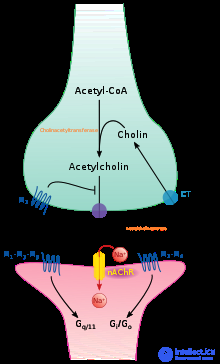
A cholinergic synapse and the breakdown of acetylcholine into choline and acetate by acetylcholinesterase
Pesticides can have toxic effects on humans and other non-target species, the severity of which depends on the frequency and extent of exposure. Toxicity also depends on the rate of absorption, distribution in the body, metabolism and elimination of the compounds from the body. Commonly used pesticides such as organophosphates and carbamates act by inhibiting the activity of acetylcholinesterase, which prevents the breakdown of acetylcholine in nerve synapses. An excess of acetylcholine can lead to symptoms such as muscle spasms or tremor, confusion, dizziness and nausea. Studies show that agricultural workers in Ethiopia, Kenya and Zimbabwe have reduced plasma concentrations of acetylcholinesterase, the enzyme responsible for breaking down acetylcholine acting at synapses throughout the nervous system. Other studies in Ethiopia found reduced respiratory function among agricultural workers who spray crops with pesticides. Multiple routes of exposure raise the risk of pesticide poisoning for agricultural workers, including absorption through the skin when walking through fields and applying products, as well as exposure through inhalation.
There are several approaches to measuring human exposure to pesticides, each of which allows the internal dose received by a person to be estimated. Two broad approaches involve measuring biomarkers and markers of biological effect. [67] The first involves direct measurement of the parent compound or its metabolites in various types of media: urine, blood, serum. Biomarkers may include direct measurement of the compound in the body before its biotransformation during metabolism. Other suitable biomarkers may include metabolites of the parent compound after their biotransformation during metabolism. Toxicokinetic data can provide more detailed information on how quickly a compound is metabolized and eliminated from the body, as well as give an idea of the timing of exposure.
Markers of biological effect provide an assessment of exposure based on cellular activity related to the mechanism of action. For example, many studies examining pesticide exposure often include quantification of the enzyme acetylcholinesterase in nerve synapses to determine the magnitude of the inhibitory effect of organophosphate and carbamate pesticides.
Another method of quantifying exposure involves measuring, at the molecular level, the amount of pesticide interacting with the site of action. These methods are used more often for occupational exposure, where the mechanism of action is better understood, as described in the WHO guidelines published in "Biological Monitoring of Chemical Exposure in the Workplace". We need a better understanding of how pesticides produce their toxic effects before this method of exposure assessment can be applied to the occupational exposure of agricultural workers.
Alternative methods of exposure assessment include questionnaires that allow researchers to determine whether participants experience symptoms associated with pesticide poisoning. Self-reported symptoms may include headaches, dizziness, nausea, joint pain or respiratory symptoms.
There are many challenges in assessing pesticide exposure in the general population, as well as many other challenges specific to the occupational exposure of agricultural workers. Beyond agricultural workers themselves, assessing exposure in family members and children presents additional difficulties, and exposure may occur as a result of "take-home" exposure to pesticide residues collected on clothing or equipment belonging to parents who work in agriculture and unintentionally brought into the home. Children may also be exposed to pesticides in utero from mothers who were exposed to pesticides during pregnancy. Characterizing children's exposure to pesticides from spraying and aerial application is also difficult, but it is well documented in developing countries. [70]Because of the critical periods of fetal and newborn development, these non-working populations are more vulnerable to pesticide exposure and may be at increased risk of neurocognitive effects and developmental disorders.
Although measuring biomarkers or markers of biological effect can provide a more accurate assessment of exposure, collecting these data in the field is often impractical, and many methods are not sensitive enough to detect low concentrations. Rapid cholinesterase tests exist for collecting blood samples in the field. Conducting large-scale assessments of agricultural workers in remote regions of developing countries makes it difficult to adopt these kits.Cholinesterase analysis is a useful clinical tool for assessing individual exposure and acute toxicity. The considerable variability in baseline enzyme activity among individuals makes it difficult to compare field measurements of cholinesterase activity with a reference dose in order to determine the health risk associated with exposure. Another problem faced by researchers in determining the reference dose is the identification of health endpoints that are relevant to exposure. Additional epidemiological studies are needed to identify critical health endpoints, especially among populations with occupational exposure.
Minimizing the harmful effects of pesticides can be achieved through the proper use of personal protective equipment, sufficient re-entry intervals for recently treated areas, and effective labeling of hazardous substances in accordance with FIFRA regulations . Training high-risk groups, including agricultural workers, in the proper use and storage of pesticides can reduce the incidence of acute pesticide poisoning and the potential chronic health effects associated with exposure. Ongoing research on the toxic effects of pesticides on human health provides the basis for appropriate policies and mandatory standards , protecting the health of all populations.
The use of pesticides causes a number of environmental problems. More than 98% of sprayed insecticides and 95% of herbicides reach a destination other than their target species, including non-target species, air, water and soil. Pesticide drift occurs when pesticides are suspended in the air, as the particles are carried by the wind to other areas, potentially contaminating them. Pesticides are one of the causes of water pollution , and some pesticides are persistent organic pollutants and contribute to the contamination of soil and flowers (pollen, nectar).In addition, the use of pesticides can adversely affect the farming of neighbors, since the pests themselves move to neighboring crops on which no pesticides were used and damage them.
In addition, the use of pesticides reduces biodiversity , contributes to the decline in the number of pollinators , destroys habitat (especially for birds), and threatens endangered species . Pests can develop resistance to a pesticide ( pesticide resistance ), which requires a new pesticide. Alternatively, a larger dose of pesticide can be used to counter the resistance, although this will worsen the problem of environmental pollution.
The Stockholm Convention on Persistent Organic Pollutants listed 9 of the 12 most dangerous and persistent organic chemicals , which were (now mostly obsolete) organochlorine pesticides. Because pesticides based on chlorinated hydrocarbons dissolve in fats and are not eliminated from the body, organisms tend to retain them almost indefinitely. Biomagnification is a process in which these chlorinated hydrocarbons (pesticides) become more concentrated at each level of the food chain. Among marine animals, the concentration of pesticides is higher in carnivorous fish, and even more so in fish-eating birds and mammals at the top of the ecological pyramid . Global distillation is a process in which pesticides are transported from the warmer regions of the Earth to the colder ones, in particular from the poles and mountaintops. Pesticides that evaporate into the atmosphere at a relatively high temperature can be carried by the wind over considerable distances (thousands of kilometers) to an area with a lower temperature, where they condense and are carried back to the ground by rain or snow.
To reduce negative effects, it is desirable for pesticides to be able to degrade or, at least, to be deactivated quickly in the environment. Such loss of activity or toxicity of pesticides is due both to the innate chemical properties of the compounds and to environmental processes or conditions. For example, the presence of halogens in the chemical structure often slows degradation in an aerobic environment. Adsorption by soil can slow the movement of pesticides, but can also reduce their bioavailability to microbial degraders.
| Harm | Annual cost in the US |
|---|---|
| Public health | $1.1 billion |
| Pesticide resistance in pests | $1.5 billion |
| Crop losses caused by pesticides | $1.4 billion |
| Bird losses due to pesticides | $2.2 billion |
| Groundwater contamination | $2.0 billion |
| Other costs | $1.4 billion |
| Total costs | $9.6 billion |
One study estimates the damage to human health and the environment from pesticides in the United States at $9.6 billion: this is offset by roughly $40 billion from increased agricultural production.
Additional costs include the registration process and the cost of purchasing pesticides, which are typically borne by agrochemical companies and farmers, respectively. The registration process can take several years (there are 70 different types of field trials) and can cost $50–70 million for a single pesticide. In the early 21st century, the United States spent about $10 billion a year on pesticides.
The use of pesticides inherently carries a risk of developing resistance. Various pesticide application methods and procedures can slow the development of resistance, as can certain natural features of the target population and the environment.
Alternatives to pesticides are available and include cultivation methods, the use of biological pest control (such as pheromones and microbial pesticides), genetic engineering (mainly of crops ), and methods of interfering with insect reproduction. The application of composted yard waste has also been used as a way to control pests.
These methods are becoming increasingly popular and are often safer than traditional chemical pesticides. In addition, the EPA is registering a growing number of reduced-risk pesticides.
Cultivation methods
Cultivation methods include polyculture (growing several plant species), crop rotation , planting crops in places where the pests that harm them do not live, timing planting to coincide with when the pests will be least problematic, and using trap crops that draw pests away from the real crop. Trap crops have successfully controlled pests in some commercial farming systems while reducing pesticide use. In other systems, trap crops may not reduce pest density on a commercial scale, even if trap crops work in controlled experiments.
Use of other organisms
Releasing other organisms that fight pests is another example of an alternative to using pesticides. These organisms may include natural predators or parasites of the pests. Biological pesticides based on entomopathogenic fungi , bacteria and viruses that cause disease in pest species can also be used.
Biological control engineering
Interference with insect reproduction can be achieved by sterilizing males of the target species and releasing them so that they mate with females but do not produce offspring. This method was first applied to the screwworm fly in 1958 and has since been applied to the Mediterranean fruit fly , the tsetse fly and the gypsy moth . It is an expensive and slow approach that works only with some insect species.
Other
Other alternatives include "laser weeding" - the use of new agricultural robots to control weeds with lasers .
The term "push-pull" was introduced in 1987 as an approach to integrated pest management (IPM). This strategy uses a mixture of behavior-modifying stimuli to manage the distribution and abundance of insects. "Push" means that insects are repelled or deterred from the resource being protected. "Pull" means that certain stimuli (semiochemical stimuli, pheromones, food additives, visual stimuli, genetically modified plants, etc.) are used to attract pests to a trap crop, where they will be destroyed. There are many different components involved in implementing a push-pull strategy in IPM.
Many case studies have been conducted around the world to test the effectiveness of the push-pull approach. The most successful push-pull strategy was developed in Africa for subsistence farming. Another successful case study was carried out on the control of Helicoverpa in cotton crops in Australia. In Europe, the Middle East and the United States, push-pull strategies have been successfully used to control Sitona lineatus in legume fields.
Some advantages of the push-pull method are lower use of chemical or biological materials and better protection against insects becoming habituated to this control method. Some disadvantages of the push-pull strategy are that, without adequate knowledge of the behavioral and chemical ecology of host-pest interactions, the method becomes unreliable. In addition, because the push-pull method is not very popular in IPM practice, registration costs are higher.
Some evidence suggests that alternatives to pesticides can be as effective as the use of chemicals. A study of corn fields in northern Florida showed that applying composted yard waste with a high carbon-to-nitrogen ratio to agricultural fields was very effective in reducing populations of plant-parasitic nematodes and increasing yields, with yields rising by 10% to 212%; the observed effects were long-term, often not appearing until the third season of the study. Supplemental silicon nutrition protects some garden crops from fungal diseases almost completely, and a lack of silicon sometimes leads to severe infection even when fungicides are applied.
Pesticide resistance is growing, and this may make the alternatives more attractive.
Pesticides are often named according to the type of pest they control. Pesticides can also be viewed as biodegradable pesticides, which will be broken down by microbes and other living things into harmless compounds, or persistent pesticides, which can take months or years to break down: this was the persistence of DDT, for example, which led to its accumulation in the food chain and the death of predatory birds at the top of the food chain. Another way to think about pesticides is to consider chemical pesticides derived from a common source or method of manufacture.
Neonicotinoids are a class of neuroactive insecticides chemically similar to nicotine . Imidacloprid, from the neonicotinoid family, is the most widely used insecticide in the world. In the late 1990s, neonicotinoids came under increasing scrutiny over their environmental impact and in a number of studies were linked to adverse ecological effects, including honey bee colony collapse disorder (CCD) and bird deaths due to declines in insect populations. . In 2013, the European Union and several non-EU countries restricted the use of certain neonicotinoids.
Organophosphate and carbamate insecticides have a similar mechanism of action. They act on the nervous system of target pests (and non-target organisms) by disrupting the activity of acetylcholinesterase , the enzyme that regulates acetylcholine , in nerve synapses . This inhibition causes an increase in synaptic acetylcholine and overstimulation of the parasympathetic nervous system . Many of these insecticides, first developed in the mid-20th century, are highly toxic. Despite their widespread use in the past, many older chemicals were withdrawn from the market because of their effects on health and the environment ( for example, DDT , chlordane and toxaphene ). Many organophosphates do not persist in the environment.
Pyrethroid insecticides were developed as a synthetic version of the naturally occurring pesticide pyrethrin, which is found in chrysanthemums. They were modified to increase their stability in the environment. Some synthetic pyrethroids are toxic to the nervous system.
A number of sulfonylureas have been commercialized for weed control, including: amidosulfuron , flazasulfuron , metsulfuron-methyl , rimsulfuron , sulfometuron-methyl , terbacil , nicosulfuron , and triflusulfuron-methyl . These are broad-spectrum herbicides that kill plants, weeds or pests by inhibiting the enzyme acetolactate synthase .. In the 1960s, more than 1 kg/ha (0.89 lb/acre) of plant protection chemicals was commonly applied, whereas sulfonylureas make it possible to use as little as 1% of that material to achieve the same effect.
Biopesticides are certain types of pesticides derived from natural materials such as animals, plants, bacteria and some minerals. For example, canola oil and baking soda have pesticidal applications and are considered biopesticides. Biopesticides fall into three major classes:
Pesticides by type of pest include the following:
| Type | Action |
|---|---|
| Algicides | Control algae in lakes, canals, swimming pools, water tanks and other sites |
| Antifouling agents | Kill or repel organisms that attach to underwater surfaces, such as boat bottoms. |
| Antimicrobials | Kill microorganisms (such as bacteria and viruses) |
| Attractants | Attract pests (for example, to lure an insect or rodent into a trap). |
| Biopesticides | Biopesticides are certain types of pesticides derived from natural materials such as animals, plants, bacteria and some minerals. |
| Biocides | Kill microorganisms |
| Disinfectants and sanitizers | Kill or inactivate disease-causing microorganisms on inanimate objects |
| Fungicides | Kill fungi (including blights, mildew, mold and rust) |
| Fumigants | Produce gas or vapor intended to destroy pests in buildings or soil. |
| Herbicides | Kill weeds and other plants that grow where they are not wanted. |
| Insecticides | Kill insects and other arthropods |
| Acaricides | Kill mites that feed on plants and animals |
| Microbial pesticides | Microorganisms that kill, inhibit or outcompete pests, including insects or other microorganisms. |
| Molluscicides | Kill snails and slugs |
| Nematicides | Kill nematodes (microscopic worm-like organisms that feed on plant roots) |
| Ovicides | Kill the eggs of insects and mites |
| Pheromones | Biochemical substances used to disrupt the mating behavior of insects |
| Repellents | Repel pests, including insects (such as mosquitoes) and birds |
| Rodenticides | Control mice and other rodents |
| Slimicides | Kill slime-producing microorganisms such as algae , bacteria , fungi and slime molds. |
The term "pesticide" also includes the following substances:
In many countries, pesticides must be approved for sale and use by a government authority.
Worldwide, 85% of countries have pesticide legislation on the proper storage of pesticides, and 51% include provisions ensuring the proper disposal of all expired pesticides.
In Europe, EU legislation has been approved banning the use of highly toxic pesticides, including those that are carcinogenic , mutagenic or toxic to the reproductive system, endocrine disruptors, persistent, bioaccumulative and toxic (PBT) or very persistent and very bioaccumulative (vPvB), and measures have been approved to improve the overall safety of pesticides in all EU member states.
Although the rules for using pesticides differ from country to country, pesticides and the products in which they were used are sold across international borders. To resolve inconsistencies in the rules between countries, delegates to the Food and Agriculture Organization of the United Nations conference adopted the International Code of Conduct on the Distribution and Use of Pesticides in 1985, in order to create voluntary standards for pesticide regulation in different countries. The Code was updated in 1998 and 2002. The FAO states that the Code has raised awareness of the dangers of pesticides and reduced the number of countries in which there are no restrictions on pesticide use.
Three other efforts to improve the regulation of international trade in pesticides are the United Nations London Guidelines for the Exchange of Information on Chemicals in International Trade and the United Nations Codex Alimentarius Commission. The former aims to introduce procedures ensuring prior informed consent between countries that buy and sell pesticides, while the latter aims to establish uniform standards for maximum pesticide residue levels among member countries.
Pesticide safety training and pesticide application regulations are intended to protect the public from the misuse of pesticides , but they do not eliminate all cases of misuse. Reducing pesticide use and choosing less toxic pesticides can lower the risks to society and the environment associated with pesticide use. Integrated pest management , the use of several approaches to pest control, is becoming widespread and is being applied successfully in countries such as Indonesia , China , Bangladesh , the USA, Australia and Mexico . IPM tries to recognize the broader impact of an action on the ecosystem. so that natural balances are not disturbed. New pesticides are being developed, including biological and botanical derivatives and alternatives, which are believed to reduce risks to health and the environment. In addition, manufacturers are encouraged to consider alternative control methods and to adopt practices that reduce the use of chemical pesticides.
Pesticides can be created that target the life cycle of a specific pest, which may be less harmful to the environment. For example, potato nematodes hatch from their protective cysts in response to a chemical released by the potato; they feed on the potato and damage the crop. A similar chemical can be applied to fields well ahead of potato planting, causing the nematodes to emerge early and starve in the absence of potatoes.
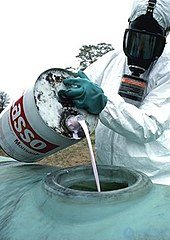
Preparing to apply a hazardous herbicide in the USA
In the United States, the Environmental Protection Agency (EPA) is responsible for regulating pesticides under the Federal Insecticide, Fungicide, and Rodenticide Act (FIFRA) and the Food Quality Protection Act (FQPA).
Studies must be conducted to establish the conditions under which the material is safe to use, and its effectiveness against the intended pest(s). The EPA regulates the use of pesticides to ensure that these products do not have adverse effects on people or the environment, paying particular attention to the health and safety of children. Pesticides produced before November 1984 continue to be reassessed to meet current scientific and regulatory standards. All registered pesticides are reviewed every 15 years to make sure they meet the appropriate standards. During the registration process a label is created. The label contains instructions for the proper use of the material in addition to safety restrictions. Based on acute toxicity, pesticides are assigned to a toxicity class . Pesticides are the most thoroughly tested chemicals after drugs in the United States; those used on food require more than 100 tests to determine the range of potential effects.
Some pesticides are considered too dangerous to sell to the public and are classified as restricted use pesticides . Only certified applicators who have passed an exam may purchase or supervise the application of restricted use pesticides. Records of sales and use must be kept and may be inspected by the government agencies responsible for enforcing pesticide regulations. These records must be available to employees and to state or territorial environmental agencies.
In addition to the EPA, the United States Department of Agriculture (USDA) and the United States Food and Drug Administration (FDA) set standards for the levels of pesticide residues that are permitted on or in agricultural crops. The EPA considers the potential effects on human health and the environment that may be associated with the use of a pesticide.
In addition, the US EPA uses the National Research Council's four-step process to assess risk to human health: (1) hazard identification, (2) dose-response assessment, (3) exposure assessment and (4) risk characterization.
In 2013, Kauai County (Hawaii) passed Bill No. 2491, adding an article to Chapter 22 of the county code concerning pesticides and GMOs. The bill strengthens protections for local communities in Kauai, where many large pesticide companies test their products.
The Pest Management Regulatory Agency ( PMRA ) is a Canadian government agency responsible for regulating pest control products in Canada under the federal authority of the Pest Control Products Act and its regulations. The agency is a branch that reports to Parliament through the Minister of Health Canada . The PMRA is responsible for providing access to pest management tools while minimizing risks to human health and the environment through « open and transparent use of modern science-based approaches to pesticide regulation ». Its main areas of activity include: evaluation of new products, post-market review, compliance and enforcement.
A pesticide , also called a plant protection product (PPP), the term used in regulatory documents, consists of several different components . The active ingredient of a pesticide is called the "active substance", and these active substances consist of either chemicals or microorganisms. These active substances are intended specifically to control organisms harmful to plants (Article 2(2) of Regulation (EC) No 1107/2009 ). In other words, active substances are the components active against plant pests and diseases .
Pesticide residues refer to pesticides that may remain on or in food after food crops have been treated with them. Maximum permissible levels of these residues in food are often set by regulatory authorities in many countries. Rules such as pre-harvest intervals also often prevent the harvesting of crop or livestock products if they have recently been treated, in order to allow the concentration of residues to fall over time to a safe level before harvest. Exposure of the general population to these residues most often occurs through the consumption of treated food sources or through close contact with areas treated with pesticides, such as farms or lawns.
Many of these chemical residues, especially derivatives of chlorinated pesticides, show a capacity for bioaccumulation , which can reach harmful levels in the body as well as in the environment. The problem is most acute in China, the largest producer of chlorinated pesticides. Persistent chemicals can spread through the food chain and are found in foods ranging from meat, poultry and fish to vegetable oils, nuts and various fruits and vegetables.
Environmental pesticide contamination can be monitored using bioindicators, such as pollinating bees .
Research is currently under way on pesticide residues in farming systems.
продолжение следует...
Часть 1 Pesticides: Classification, Development and Use

Comments