
Lecture
There are many different numeral systems, that is, systems of writing for expressing numbers.
A numeral system is a system for writing numbers, that is, a mathematical notation for representing numbers of a given set using digits or other symbols in a consistent manner.
The same sequence of symbols can represent different numbers in different numeral systems. For example, “11” denotes the number eleven in the decimal numeral system (the most widely used in the world today), the number three in the binary numeral system (used in modern computers), and the number two in the unary numeral system (used for tallying scores).
The number that a digit represents is called its value. Moreover, not all numeral systems can represent the same set of numbers; for example, Roman, Greek and Egyptian numerals have no official representation of the number zero.
Ideally, a numeral system should:
For example, the ordinary decimal representation gives every nonzero natural number a unique representation as a finite sequence of digits, beginning with a nonzero digit.
Numeral systems are sometimes called number systems, but that name is ambiguous, since it can refer to different systems of numbers, such as the system of real numbers, the system of complex numbers, various hypercomplex numeral systems, the system of p-adic numbers, and so on. Such systems, however, are not the subject of this article.
A writing system includes a set of symbols, called a script, along with the rules by which that script represents a particular language. The first writing systems appeared at the end of the 4th millennium BC. Throughout history, every independently created writing system gradually evolved from a proto-writing system, which used a small number of pictographs incapable of fully encoding a language and, therefore, of expressing a wide range of ideas.
Writing systems are usually classified according to how their symbols, called graphemes, relate to units of language. Phonetic writing systems, which include alphabets and syllabaries, use graphemes that correspond to sounds in the corresponding spoken language. Alphabets use graphemes called letters, which generally correspond to spoken phonemes. They are usually divided into three subtypes: pure alphabets use letters to represent both consonant and vowel sounds, abjads generally use only letters representing consonant sounds, and abugidas use letters representing consonant-vowel pairs. Syllabaries use graphemes called syllabograms, which represent whole syllables or morae. In contrast, logographic (or morphographic) writing systems use graphemes that represent units of meaning in the language, such as its words or morphemes. Alphabets usually use fewer than 100 distinct symbols, while syllabaries and logographies may use hundreds or thousands, respectively.
Numbers can be classified according to the way they are represented, or according to the properties they possess.
 ): Numbers used for counting, {1, 2, 3, ...} are usually called natural numbers; however, other definitions include 0, so the nonnegative integers {0, 1, 2, 3, ...} are also called natural numbers. Natural numbers, including 0, are sometimes called whole numbers. Alternatively, natural numbers not including 0 are sometimes also called counting numbers.
 ): Positive and negative whole numbers, as well as zero: {..., −3, −2, −1, 0, 1, 2, 3, ...}.
 ): numbers that can be expressed as the ratio of an integer to a nonzero integer. All integers are rational, but there are rational numbers that are not integers, such as −2/9.
 ): numbers corresponding to points on a line. They may be positive, negative, or zero. All rational numbers are real, but the converse is not true.
 ): Real numbers that are not rational.
 , where i2=−1
 The number 0 is both real and imaginary.
 ): Includes real numbers, imaginary numbers, and sums and differences of real and imaginary numbers.
 ), octonions (
  ), sedenions (
  ), trigintaduonions (
  ) and other hypercomplex numbers of dimension 64 and higher. Less common variants include bicomplex numbers, coquaternions and biquaternions.
"A base is a natural number B, whose powers (B multiplied by itself a certain number of times) are denoted in a special way in a numeral system." This term is not equivalent to radix, since it applies to all numeral writing systems (not only positional ones with a radix) and to most spoken number systems. In some systems there are two bases: a smaller one (sub-base) and a larger one (base); an example is Roman numerals, which are organized by fives (V=5, L=50, D=500, sub-base) and tens (X=10, C=100, M=1000, base).
| Name | Base | Sample | Approximate First Appearance | |||||||||
|---|---|---|---|---|---|---|---|---|---|---|---|---|
|
Proto-cuneiform numerals in Mesopotamia (in the Uruk period) and eventually developed into early cuneiform, used in the region during the Early Dynastic I period. |
10 and 60 | 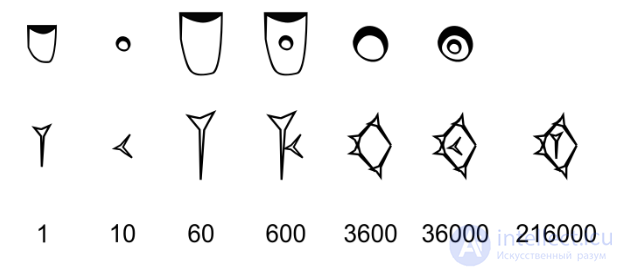 |
c. 3500–2000 BC | |||||||||
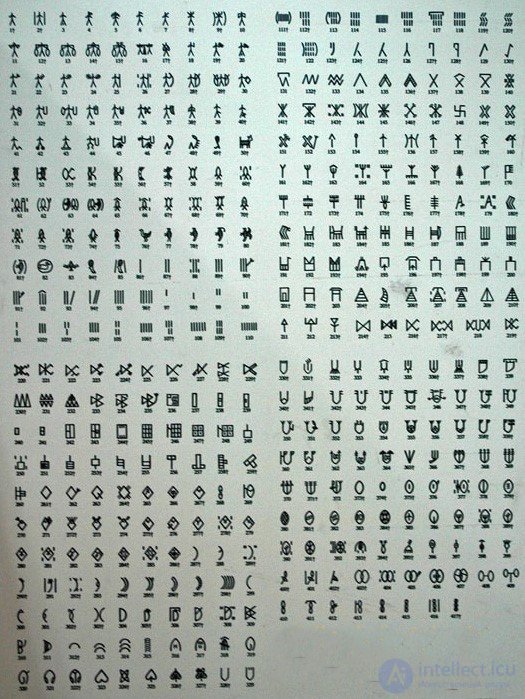
|
Indus Valley numerals Indus River basin, Pakistan, and the seasonal Ghaggar-Hakra river, northwestern India and eastern Pakistan |
unknown |
undeciphered, a number of hypotheses have been proposed |
c. 3500–1900 BC | |||||||||
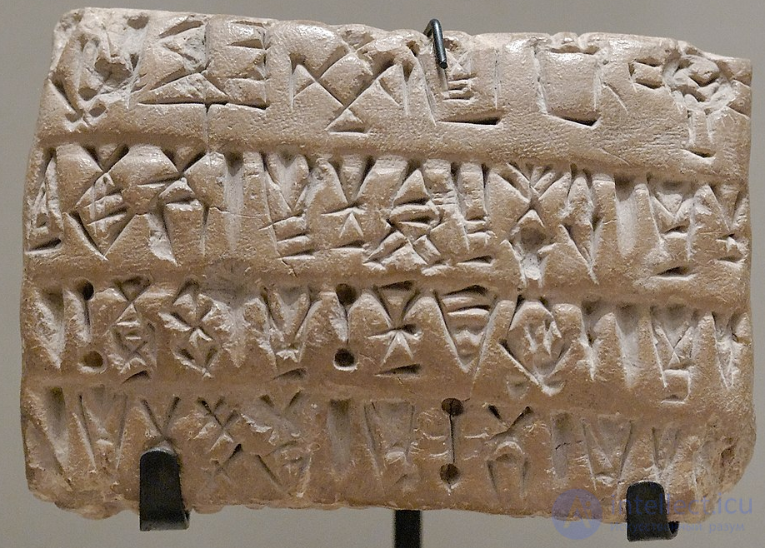
| Proto-Elamite numerals in southern Mesopotamia, which later spread and extended its influence over the territory of present-day southwestern Iran, | 10 and 60 |
undeciphered
|
3100 BC | |||||||||
| Sumerian numerals ancient Mesopotamia, in the territory of present-day Iraq. | 10 and 60 | 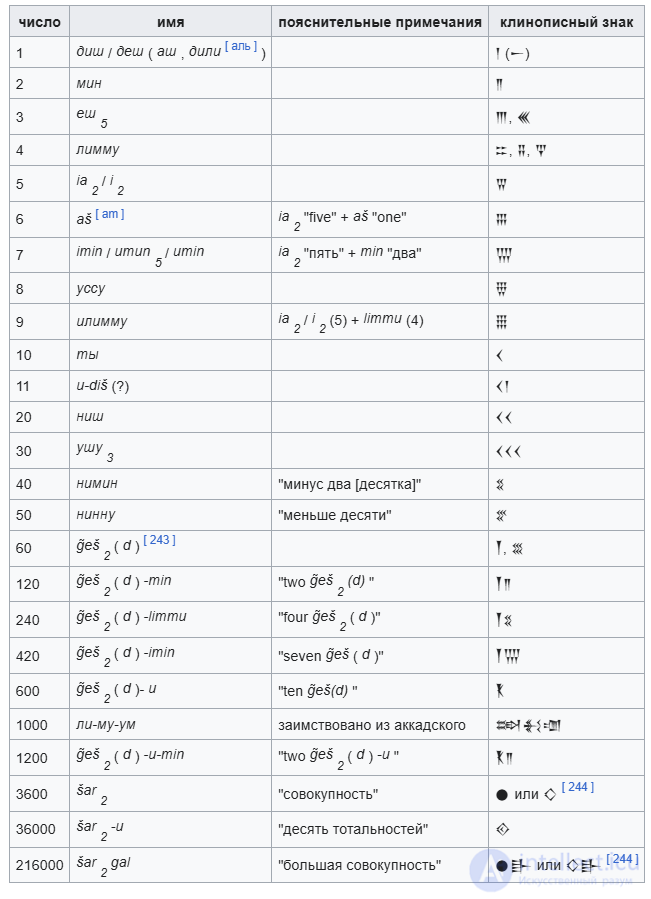 |
3100 BC | |||||||||
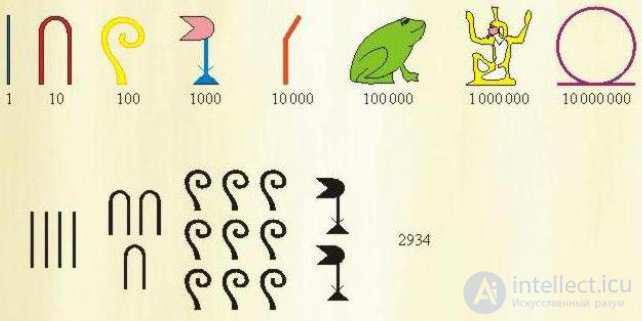
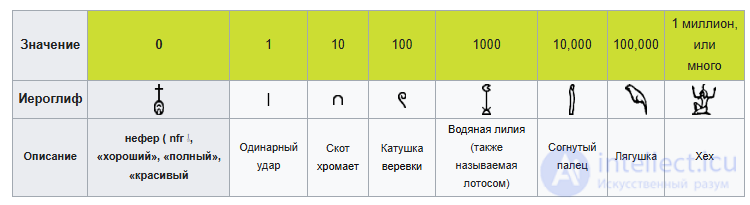
| Egyptian numerals | 10 |
|
3000 BC | |||||||||
| Babylonian numerals also used in Assyria and Chaldea | 10 and 60 | 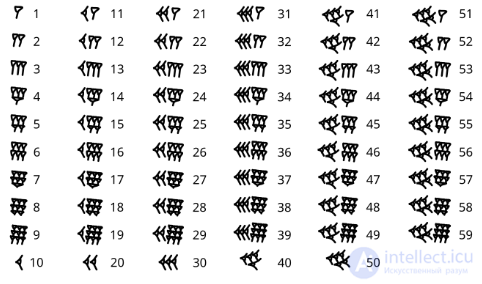 |
2000 BC | |||||||||
|
Aegean numerals used by the Minoan and Mycenaean civilizations centered on the island of Crete, and Ancient Greece |
10 | 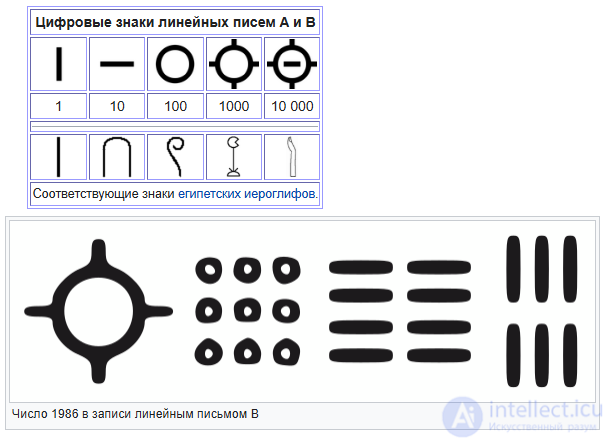 |
1500 BC | |||||||||
| Chinese numerals Japanese numerals Korean numerals (Sino-Korean) Vietnamese numerals (Sino-Vietnamese) |
10 |
零一二三四五六七八九十百千萬億 (default, Traditional Chinese)
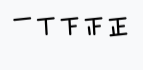
Cultures using Chinese characters are united by the formation of the character 正, , which consists of five strokes. |
1300 BC | |||||||||
| Roman numerals | 5 and 10 | IVXLCDM | 1000 BC [ 1 ] | |||||||||
| Hebrew numerals | 10 | א ב ג ד ה ו ז ח ט י כ ל מ נ ס ע פ צ ק ר ש ת ך ם ן ף ץ |
800 BC | |||||||||
| Indian numerals | 10 |
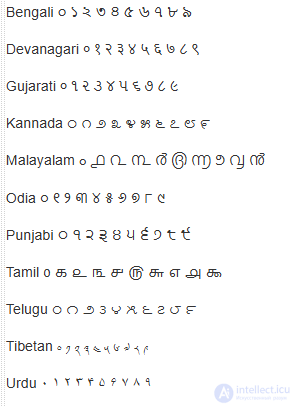
Devanagari ० १ २ ३ ४ ५ ६ ७ ८ ९ Gujarati ૦ ૧ ૨ ૩ ૪ ૫ ૬ ૭ ૮ ૯ Kannada ೦ ೧ ೨ ೩ ೪ ೫ ೬ ೭ ೮ ೯ Malayalam ൦ ൧ ൨ ൩ ൪ ൫ ൬ ൭ ൮ ൯ Odia ୦ ୧ ୨ ୩ ୪ ୫ ୬ ୭ ୮ ୯ Punjabi ੦ ੧ ੨ ੩ ੪ ੫ ੬ ੭ ੮ ੯ Tamil ௦ ௧ ௨ ௩ ௪ ௫ ௬ ௭ ௮ ௯ Telugu ౦ ౧ ౨ ౩ ౪ ౫ ౬ ౭ ౮ ౯ Tibetan ༠ ༡ ༢ ༣ ༤ ༥ ༦ ༧ ༨ ༩ Urdu ۰ ۱ ۲ ۳ ۴ ۵ ۶ ۷ ۸ ۹ |
750–500 BC | |||||||||
| Greek numerals | 10 | ō α β γ δ ε ϝ ζ η θ ι ο Α' Β' Γ' Δ' Ε' Ϛ' Ζ' Η' Θ' |
<400 BC | |||||||||
| Kharosthi numerals ancient Indian script, originally developed in the Gandhara region in the northwest of the Indian subcontinent | 4 and 10 | 𐩇 𐩆 𐩅 𐩄 𐩃 𐩂 𐩁 𐩀 | <400–250 BC [ 3 ] | |||||||||
| Phoenician numerals in the territory of present-day Lebanon and parts of coastal Syria | 10 | 𐤙 𐤘 𐤗 𐤛𐤛𐤛 𐤛𐤛𐤚 𐤛𐤛𐤖 𐤛𐤛 𐤛𐤚 𐤛𐤖 𐤛 𐤚 𐤖 | <250 BC [ 5 ] | |||||||||
| Chinese rod numerals | 10 |
Counting rods (筭) are small sticks, usually 3–14 cm (1 to 6 inches) long, which were used by mathematicians for calculations in ancient East Asia. They were arranged horizontally or vertically to represent any integer or rational numbers. |
1st century | |||||||||
| Coptic numerals were common between the cities of Asyut and Oxyrhynchus (Egypt) | 10 | Ⲁ Ⲃ Ⲅ Ⲇ Ⲉ Ⲋ Ⲍ Ⲏ Ⲑ | 2nd century | |||||||||
| Ge'ez numerals | 10 | ፩ ፪ ፫ ፬ ፭ ፮ ፯ ፰ ፱ ፲ ፳ ፴ ፵ ፶ ፷ ፸ ፹ ፺ ፻ ፼ |
3rd–4th century 15th century (modern style) [ 7 ] : 135–136 |
|||||||||
| Armenian numerals | 10 | Ա Բ Գ Դ Ե Զ Է Ը Թ Ժ | Early 5th century | |||||||||
| Khmer numerals | 10 | ០ ១ ២ ៣ ៤ ៥ ៦ ៧ ៨ ៩ | Early 7th century | |||||||||
| Thai numerals | 10 | ๐ ๑ ๒ ๓ ๔ ๕ ๖ ๗ ๘ ๙ | 7th century [ 8 ] | |||||||||
| Abjad numerals | 10 | غ ظ ض ذ خ ث ت ش ر ق ص ف ع س ن م ل ك ي ط ح ز و هـ د ج ب ا | <8th century | |||||||||
| Chinese numerals (financial) | 10 | 零壹貳參肆伍陸柒捌玖拾佰仟萬億 (Pacific Chinese) 零壹贰叁肆伍陆柒捌玖拾佰仟萬億 (Southern Chinese) |
late 7th/early 8th century [ 9 ] | |||||||||
| Eastern Arabic numerals | 10 | ٩ ٨ ٧ ٦ ٥ ٤ ٣ ٢ ١ ٠ | 8th century | |||||||||
| Vietnamese numerals ( Chữ Nôm ) | 10 | 𠬠 𠄩 𠀧 𦊚 𠄼 𦒹 𦉱 𠔭 𠃩 | <9th century | |||||||||
| Western Arabic numerals | 10 | 0 1 2 3 4 5 6 7 8 9 | 9th century | |||||||||
| Glagolitic numerals | 10 | Ⰰ Ⰱ Ⰲ Ⰳ Ⰴ Ⰵ Ⰶ Ⰷ Ⰸ ... | 9th century | |||||||||
| Cyrillic numerals | 10 | а в г д е е з и й... | 10th century | |||||||||
| Rumi numerals used in Fez, Morocco, as well as elsewhere in North Africa and the Iberian Peninsula | 10 |
|
10th century | |||||||||
| Burmese numerals | 10 | ၀ ၁ ၂ ၃ ၄ ၅ ၆ ၇ ၈ ၉ | 11th century [ 10 ] | |||||||||
| Tangut numerals | 10 | 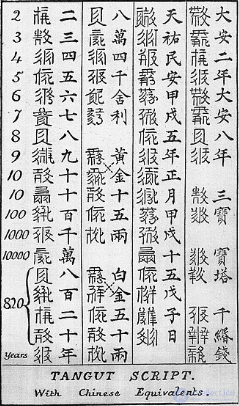 |
11th century (1036) | |||||||||
| Cistercian numerals, a monastic order Rome, Italy | 10 | 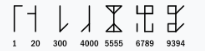 |
13th century | |||||||||
| Maya numerals southeastern Mexico, all of Guatemala and Belize, and the western parts of Honduras and El Salvador | 5 and 20 |  |
<15th century | |||||||||
| Muisca numerals Cundiboyacense High Plateau, Colombia | 20 | 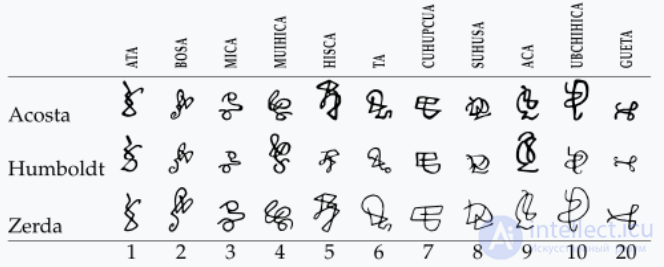 |
<15th century | |||||||||
| Korean numerals (Hangul) | 10 | 영 일 이 삼 사 오 육 칠 팔 구 | 15th century (1443) | |||||||||
| Aztec numerals in Central Mexico | 20 | in writing they were depicted using dots and bars, and partly with pictures (trees, bags, hands, a heart, bones). | 16th century | |||||||||
| Sinhala numerals | 10 | ෦ ෧ ෨ ෩ ෪ ෫ ෬ ෭ ෮ ෯ 𑇡 𑇢 𑇣 𑇤 𑇥 𑇦 𑇧 𑇨 𑇩 𑇪 𑇫 𑇬 𑇭 𑇮 𑇯 𑇰 𑇱 𑇲 𑇳 𑇴 |
<18th century | |||||||||
| Pentadic runes | 10 |  |
19th century | |||||||||
| Cherokee numerals | 10 |  |
19th century (1820s) | |||||||||
| Vai numerals | 10 | ꘠ ꘡ ꘢ ꘣ ꘤ ꘥ ꘦ ꘧ ꘨ ꘩ | 19th century (1832) | |||||||||
| Bamum numerals | 10 |  |
19th century (1896) | |||||||||
| Mende Kikakui numerals | 10 |  |
20th century (1917) | |||||||||
| Ottoman numerals | 10 |  |
20th century (1920s) | |||||||||
| Medefaidrin numerals | 20 | 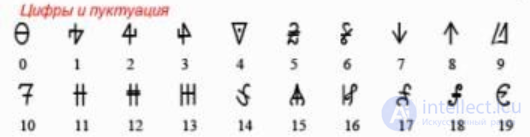 |
20th century (1930s) | |||||||||
| N'Ko digits | 10 | 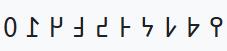 |
20th century (1949) [ 19 ] | |||||||||
| Hmong numerals | 10 | 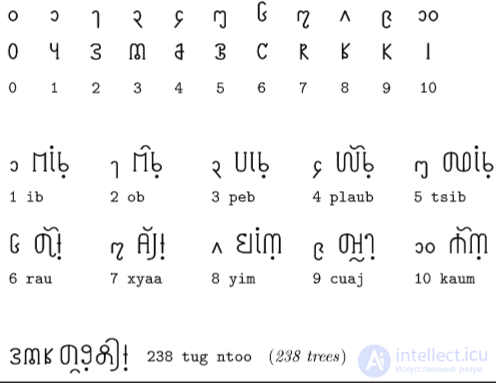 |
20th century (1959) | |||||||||
| Garay numerals | 10 | 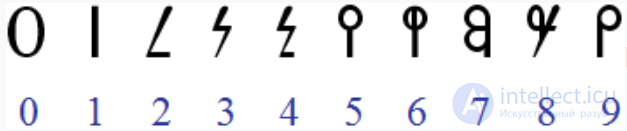 |
20th century (1961) | |||||||||
| Adlam digits | 10 | 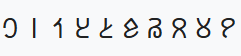 |
20th century (1989) | |||||||||
| Kaktovik numerals | 5 and 20 | 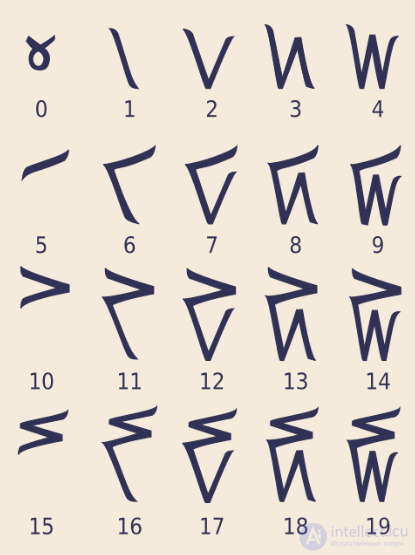 |
20th century (1994) | |||||||||
| Sundanese numerals | 10 |  |
20th century (1996) |
Numeral systems are classified here according to whether they use a positional numeral system (also known as place-value notation), and by base.
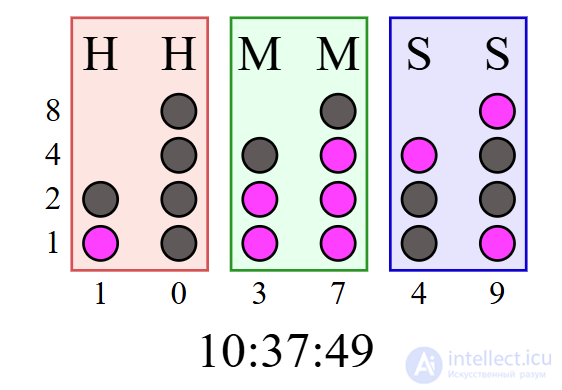
In binary clocks, LEDs can be used to display binary values. In such clocks, each column of LEDs displays a binary-coded decimal digit of the traditional sexagesimal time.
Common names are derived, somewhat arbitrarily, from a mixture of Latin and Greek, in some cases combining roots from both languages in a single name. There have been some proposals for standardization.
| Base | Name | Usage |
|---|---|---|
| 2 | Binary | Digital computing, imperial and US customary volume (bushel – kenning – peck – gallon – pottle – quart – pint – cup – gill – jack – fluid ounce – tablespoon) |
| 3 | Ternary, trinary | Cantor set (all points in the interval [0,1] that can be represented in ternary without any 1s); counting tasbih in Islam; the “palm – foot – yard” and “teaspoon – tablespoon” measurement systems; the most economical integer base |
| 4 | Quaternary | Chumashan languages and Kharosthi numerals |
| 5 | Quinary | Gumatj, Ateso, Nunggubuyu, Kuurn Kopan Noot and Saraveca languages; common tally-mark grouping, e.g. tally marks |
| 6 | Senary, seximal | Diceware, Ndom, Kanum and Proto-Uralic language (hypothesized) |
| 7 | Septenary, septenary | |
| 8 | Octal | Charles XII of Sweden, Unix-style permissions, Squawk codes, DEC PDP-11, Yuki, Pame, compact notation for binary numbers, Xiantian (I Ching, China) |
| 9 | Nonary, novenary | Compact notation for ternary numbers |
| 10 | Decimal, denary | Most widely used by modern societies |
| 11 | Undecimal, unodecial, undenary | Base 11 was erroneously attributed to the Maori (New Zealand) in the 19th century [ 34 ], and in the 20th century was reportedly used by the Pangwa (Tanzania) [ 35 ], but this has not been confirmed by subsequent research and is also believed to be an error. [ 36 ] Briefly proposed during the French Revolution to settle a dispute between those who proposed switching to duodecimal and those satisfied with decimal. Used as a check digit in 10-digit ISBNs. Applied in computer science and engineering. Mentioned in popular fiction. |
| 12 | Duodecimal, dozenal | Middle Belt languages of Nigeria: Janji, Gbiri-Niragu, Piti and the Nimbia dialect of Gwandara; Chepang language of Nepal and the Mahl dialect of Dhivehi; counting “dozen — gross — great gross”; 12-hour and monthly timekeeping; years of the Chinese zodiac; feet and inches; Roman fractions. |
| 13 | Tridecimal, tredecimal | Conway base 13 function. |
| 14 | Quattuordecimal, tetradecimal | Programming for the HP 9100A/B calculator [ 42 ] and image processing applications. [ 43 ] |
| 15 | Pentadecimal, quindecimal | Telephony routing over IP and the Huli language. [ 36 ] |
| 16 | Hexadecimal, sexadecimal, sedecimal | Compact notation for binary data; Nystrom tonal system. |
| 17 | Septendecimal, heptadecimal | |
| 19 | Nonadecimal, nonadecimal | |
| 20 | Vigesimal | Basque, Celtic, Muisca, Inuit, Yoruba, Tlingit and Dzongkha numerals; the Santali and Ainu languages. |
| 5&20 | Quinary-vigesimal | Greenlandic, Inupiaq, Kaktovik, Mayan, Nunivak Cup'ig and Yupik numerals – “widespread... throughout the area from Alaska along the Pacific coast to the Orinoco and the Amazon” |
| 21 | Smallest base in which all fractions 1/2 to 1/18 have periods of 4 or less. | |
| 23 | Kalam language, Kobon language | |
| 24 | Quadrovigesimal | 24-hour time format; the Greek alphabet; the Kaugel language. |
| 25 | Sometimes used as a compact notation for quinary. | |
| 26 | Hexavigesimal | Sometimes used for encryption or encoding, using all letters of the English alphabet. |
| 27 | Septemvigesimal | Telefol, Oksapmin, Wambon and Hewa languages. Mapping non-zero digits to the alphabet, and zero to a space, is sometimes used to derive checksums for alphabetic data, such as personal names, for compact encoding of alphabetic strings, or as a basis for gematria. [ 57 ] Compact notation for ternary numbers. |
| 28 | Months in timekeeping. | |
| 30 | Trigesimal | Natural area code – the smallest base in which all of 1/2 to 1/6 terminate; a number n is a regular number if and only if 1/n terminates in base 30. |
| 32 | Duotrigesimal | Found in the Ngiti language. |
| 33 | Use of letters (excluding I, O, Q) with digits in Hong Kong vehicle registration plates. | |
| 34 | Smallest base in which 1/2 terminates and all of 1/2 to 1/18 have periods of 4 or less. | |
| 36 | Hexatrigesimal | Covers the ten decimal digits and all letters of the English alphabet. |
| 37 | Covers the ten decimal digits and all letters of the Spanish alphabet. | |
| 40 | Quadragesimal | DEC RADIX 50/MOD40 encoding is used for compact representation of file names and other characters on Digital Equipment Corporation computers. This character set is a subset of ASCII consisting of the space, uppercase letters, the punctuation marks “$”, “.” and “%”, and digits. |
| 42 | Largest base for which all minimal primes are known. | |
| 47 | Smallest base for which no generalized Wieferich primes are known. | |
| 49 | Compact notation for septenary. | |
| 50 | Quinquagesimal | SQUOZE encoding, used for compact representation of file names and other characters on some IBM computers. The encoding uses all Gurmukhi characters, as well as Gurmukhi digits. |
| 60 | Sexagesimal | Babylonian and Sumerian numerals; the degree-minute-second and hour-minute-second measurement systems; Ekari; covers base 62 except for I, O and l, but including _ (underscore). |
| 62 | Can be denoted using digits 0–9 and the letters of the English alphabet A–Z and a–z. | |
| 64 | Tetrasexagesimal | I Ching in China. This system is conveniently encoded in ASCII, using the 26 letters of the Latin alphabet in upper and lower case (52 in total), 10 digits (62 in total), and two special characters (+ and /). |
| 72 | The smallest base greater than binary at which no three-digit narcissistic number exists. | |
| 80 | Octogesimal | Used as a subbase in Supyire. |
| 85 | ASCII85 encoding. This is the minimum number of characters needed to encode a 32-bit number into 5 printable characters by a method similar to MIME-64 encoding, since 85^5 is only slightly greater than 2^32. This method is 6.7% more efficient than MIME-64, which encodes a 24-bit number into 4 printable characters. | |
| 89 | Largest base for which all left-truncatable primes are known. | |
| 90 | Nonagesimal | Relates to the Goormaghtigh conjecture for generalized repunit numbers (111 in base 90 = 1111111111111 in base 2). |
| 95 | Number of printable ASCII characters. | |
| 96 | Total number of character codes on the (six) ASCII sticks containing printable characters. | |
| 97 | Smallest base that is not a perfect odd power (where generalized Wagstaff numbers can be factored algebraically) for which no generalized Wagstaff primes are known. | |
| 185 | Smallest base that is not a perfect power (where generalized repunits can be factored algebraically) for which no generalized repunit primes are known. | |
| 210 | Smallest base at which all fractions 1/2 to 1/10 terminate. |
| Base | Name | Usage |
|---|---|---|
| 1 | Unary (bijective base 1) | Tally scores, counting. Unary numeration is used in some data compression algorithms, such as Golomb coding. It also underlies the Peano axioms for formalizing arithmetic in mathematical logic. A form of unary notation called Church encoding is used to represent numbers in the lambda calculus.
Some email spam filters flag messages with multiple asterisks in a header, such as X-Spam-Bar or X-SPAM-LEVEL. The higher the number, the more likely the message is to be considered spam. |
| 10 | Bijective base 10 numeration | To avoid zero |
| 26 | Bijective base 26 numeration | Numbering of columns in spreadsheets. Also used by John Nash as part of his fascination with numerology and the uncovering of “hidden” messages. [ 62 ] |
| Base | Name | Usage |
|---|---|---|
| 2 | Balanced binary (non-adjacent form) | |
| 3 | Balanced ternary | Ternary computers |
| 4 | Balanced quaternary | |
| 5 | Balanced quinary | |
| 6 | Balanced senary | |
| 7 | Balanced septenary | |
| 8 | Balanced octal | |
| 9 | Balanced nonary | |
| 10 | Balanced decimal | John Colson Augustin Cauchy |
| 11 | Balanced undecimal | |
| 12 | Balanced duodecimal |
| Base | Name | Usage |
|---|---|---|
| 2 i | Quater-imaginary base | related to base −4 and base 16 |
 |
Base √2i |
related to base −2 and base 4 |
 |
Base √24i |
related to base 2 |
 |
Base 2ω |
related to base 8 |
 |
Base ω√23 |
related to base 2 |
| −1 ± i | Twindragon base | Fractal form of the Twindragon, related to base −4 and base 16 |
| 1 ± i | Negatwindragon base | related to base −4 and base 16 |
| Base | Name | Usage |
|---|---|---|
 |
Base 3/2 |
rational non-integer base |
 |
Base 4/3 |
related to duodecimal |
 |
Base 5/2 |
related to decimal |
 |
Base √2 |
related to base 2 |
 |
Base √3 |
related to base 3 |
 |
Base 3/2 |
|
 |
Base 4/3 |
|
 |
Base 2^(1/12) |
used in the 12-tone equal-tempered musical system |
 |
Base 5/2 |
|
 |
Base −3/2 |
negative rational non-integer base |
 |
Base −√2 |
negative non-integer base related to base 2 |
 |
Base 10 |
related to decimal |
 |
Base 3/2 |
related to duodecimal |
| φ | Golden ratio base | early beta encoder |
| ρ | Plastic number base | |
| ψ | Supergolden ratio base | |
 |
Silver ratio base | |
| e | Base e |
best radix economy |
| π | Base π |
|
| e π | Base e π |
|
eπ |
Base eπ |
| Base | Name | Usage |
|---|---|---|
| 2 | Binary number | |
| 3 | Triadic number | |
| 4 | Tetradic number | same as binary number |
| 5 | Pentadic number | |
| 6 | Hexadic number | not a field |
| 7 | Heptadic number | |
| 8 | Octadic number | same as binary number |
| 9 | Enneadic number | same as triadic number |
| 10 | Decadic number | not a field |
| 11 | Hendecadic number | |
| 12 | Dodecadic number | not a field |
All known numeral systems developed before Babylonian cuneiform numerals are non-positional, as are many developed later, such as Roman numerals. The French Cistercian monks created their own numeral system.


 Bengali ০ ১ ২ ৩ ৪ ৫ ৬ ৭ ৮ ৯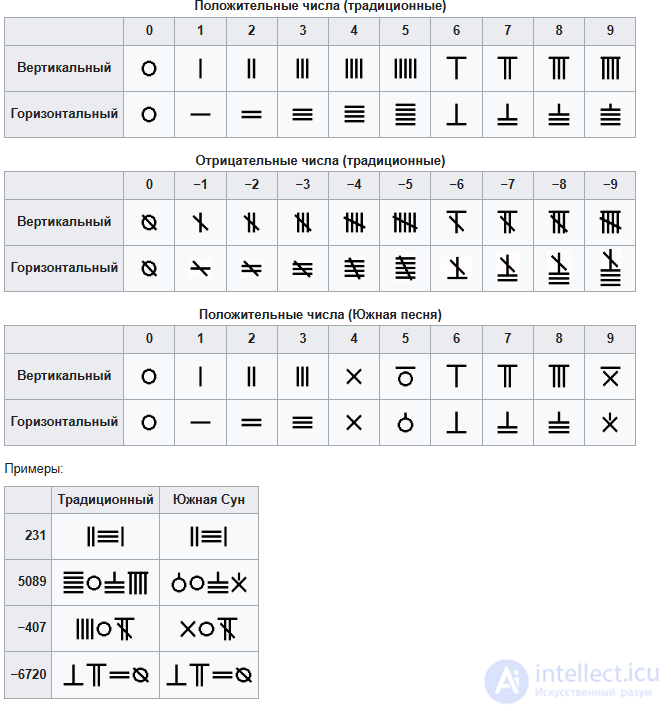


Comments