
Lecture
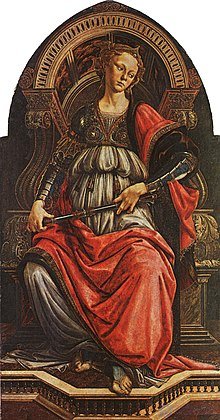
Courage — is a willed act, performed consciously, whose realisation requires the individual to overcome fear. It should not be confused with masculinity.
Courage — is one of the virtues, reflecting moral strength in overcoming fear. Courage often manifests as the capacity to endure suffering, including physical pain.
Courage – is responsible and reasonable, moderately bold and moderately calm, behaviour in difficult or extreme circumstances.
The ship is sinking, and the courageous person organises the rescue, prevents panic, directs the process.
Courage - is a manifestation of will in difficult or extreme circumstances. The antonym of courage is cowardice.
Courage in psychology - is a psychological characteristic that describes a person's ability to cope with danger, fear, difficulty or stressful situations, despite them, and to act with confidence and determination. It is a necessary personality trait that can manifest in various aspects of life and in various situations.
Courage includes several key facets:
The ability to overcome fear: Courage presupposes the ability to confront one's fears and adapt to situations even when they cause discomfort or danger.
Resolve and action: Courageous people are ready to act even when faced with adverse circumstances. They are able to make difficult decisions and follow through on them.
Self-sacrifice and protecting others: Courage can manifest in how a person risks their own well-being in order to help or protect other people.
Adaptability and persistence: Courage is linked to the ability to adapt to change and to strive unswervingly towards a set goal, despite difficulties.
Emotional stability: Courage includes the ability to cope with emotional discomfort and stress while preserving psychological stability.
Conscious acceptance of risk: Courage does not mean reckless risk-taking, but rather the conscious acceptance of risks based on an assessment of the situation.
Courage can manifest in different areas of life, such as physical trials, professional activity, interpersonal relationships, and so on. It is an important character trait and can be developed through experience, self-awareness and learning.
In antiquity, courage was regarded as one of the four cardinal virtues (together with temperance, wisdom and justice).
In Aristotle's view, courage — is overcoming the fear of death and a readiness to pay for virtuous conduct with the risk of one's own life: “He who deliberately goes into danger for the sake of good, and does not fear it, is courageous, and this is courage”. According to Aristotle, courage — is the only worthy mode of conduct in battle; hence the notion of it as a specifically masculine virtue arose (Greek ἀνδρεία, which, as in Russian, shares a root with the word for “man”).
Courage was used as the ethical justification for the existence of aristocratic estates through military activity; for Plato, courage — is the virtue of the guardian class. For the Romans, courage (Lat. virtus) is a synonym not only of martial valour but of virtue in general.
Courage (fortitudo) remained the principal virtue of medieval chivalry, directly linked to honour. Courage was one of the four cardinal virtues. Thomas Aquinas called fear (timor) the opposite of courage, though the extreme form of fearlessness (audacia) bears the traits of recklessness. Courage is characterised by patience (patientia), as well as constancy, fortitude, indomitability, perseverance and firmness, united under the term constantia. Its enemy is softness (mollities).
In the course of the transition to industrial society (the modern era), the significance of courage declines, since “the industrial spirit triumphed over the military and aristocratic spirit” (Nietzsche). In the ethics of the modern era, courage becomes secondary or even acquires a negative connotation: thus Hobbes regards fear of death as a useful force for establishing peace. Spinoza places courage at the end of the list of “affects”. According to Kant, courage — is the capacity “to dare what duty commands”; Kant notes that the fear of ridicule requires more courage to overcome than does battle. Among the well-known philosophers of the modern era, Nietzsche alone tried, unsuccessfully, to restore courage to its central role in ethics.
Nowadays courage is often used simply as a synonym for general human moral fortitude, and loses its meaning as a specifically masculine virtue (thus the phrase “a courageous woman” in many languages — including Russian — contains no contradiction). This is fostered by modern theories and practical experience of nonviolence, in which nonviolent struggle is seen as more courageous than violent struggle (Mahatma Gandhi).
In military affairs, courage is regularly displayed by servicemen in extreme situations, for example during military (combat) operations, which is why courage is associated with armed confrontation. In many states and countries there exist state (departmental) awards named — “For Courage”.
Courage in psychology
Willpower - is the quantity of will. Courage – is the quality of will, a manifestation of the will of a bold, mature and wise person.
Courage: it is precisely this that is lacking in relationships. An article by Pavel Zygmantovich
Boldness, unlike courage, does not presuppose responsibility or necessarily engaging one's head. Only a thinking, mature person can be courageous.
Everyone feels fear. When, faced with something frightening, a person compels themselves to do what is necessary, this is called courage. But if a person fails to do this themselves and, moments later, is compelled by others to do the very same thing, they earn the nickname of coward. The compulsion will happen regardless, and it will have to be done in any case: so why be a coward, when there is the chance, under the same conditions, to be a courageous person instead? See→
At the level of reflex, one can train oneself to be guided not by feelings (fear, I'm afraid, I doubt, I'm anxious) but by reason and duty. Simply do what is needed. And we will be afraid later, in our own time, if the desire remains.

Comments