
Lecture
The Internet of Things (IoT) is a concept of a data transmission network among physical objects ("things") equipped with built-in tools and technologies for interacting with one another or with the external environment . Such networks are expected to reshape economic and social processes and to remove the need for human involvement in some actions and operations .
The concept was formulated in 1999 as a way of thinking about the prospects for the widespread use of radio-frequency identification to enable physical objects to interact with each other and with their surroundings. Since the 2010s, filling the concept with a diverse range of technologies and implementing practical solutions for it has been considered a steady trend in information technology , primarily thanks to the ubiquity of wireless networks, the emergence of cloud computing, the development of machine-to-machine communication technologies, the start of an active transition to IPv6 , and the adoption of software-defined networks.
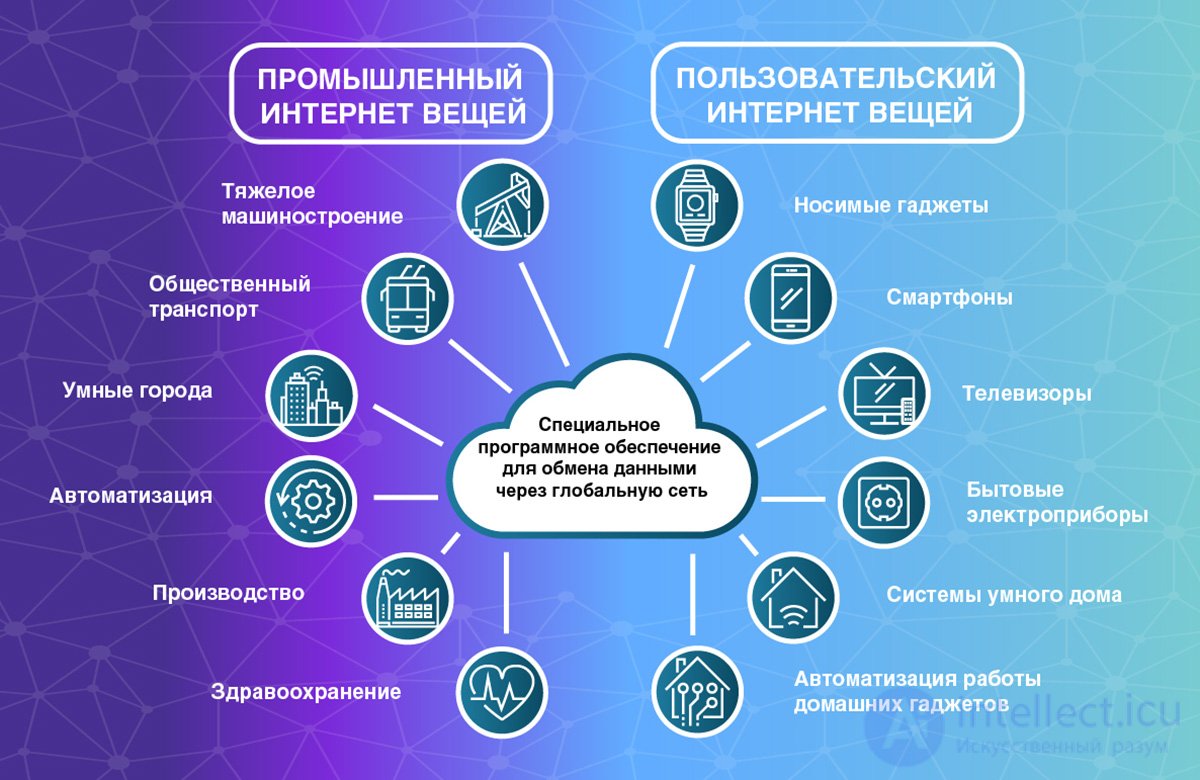
Using physical-world objects in the "Internet of Things", even when they are not equipped with means of connecting to data networks, requires technologies for identifying these objects ("things"). Although RFID technology gave the initial impetus to the concept, any means used for automatic identification can serve this purpose: optically recognizable identifiers (barcodes, Data Matrix, QR codes) and real-time location systems. With the pervasive spread of the Internet of Things, it is essential to ensure that object identifiers are unique, which in turn requires standardization.
For objects connected directly to Internet networks, the traditional identifier is the MAC address of the network adapter, which identifies a device at the data link layer. The range of available addresses is practically inexhaustible (248 addresses in the MAC-48 space), but a link-layer identifier is not very convenient for applications. The IPv6 protocol offers broader identification capabilities for such devices, providing unique network-layer addresses for at least 300 million devices per inhabitant of Earth.
Measurement tools play a special role in the Internet of Things: they convert information about the external environment into machine-readable data and thereby fill the computing environment with meaningful information. A wide class of measurement tools is used, from elementary sensors (for example, of temperature, pressure, or illumination) and consumption metering devices (such as smart meters) to complex integrated measurement systems. Within the "Internet of Things" concept, it is essential to network measurement tools (as in wireless sensor networks and measurement complexes), which makes it possible to build machine-to-machine communication systems.
A particular practical problem in deploying the "Internet of Things" is the need to make measurement tools as autonomous as possible, above all the problem of powering sensors. Finding effective solutions for autonomous sensor power (using photovoltaic cells, harvesting energy from vibration and airflow, and using wireless power transfer) makes it possible to scale sensor networks without increasing maintenance costs (such as replacing batteries or recharging sensor batteries).
The range of possible data transmission technologies covers all wireless and wired networking means.
For wireless data transmission, qualities such as efficiency at low data rates, fault tolerance, adaptability, and the capacity for self-organization are especially important in building the "Internet of Things". The IEEE 802.15.4 standard is of primary interest in this respect: it defines the physical layer and medium access control for energy-efficient personal area networks and is the basis for protocols such as ZigBee, WirelessHART, MiWi, 6LoWPAN, and LPWAN.
Among wired technologies, PLC solutions, which build data transmission networks over power lines, play an important role in the penetration of the "Internet of Things", since many applications have access to the electrical grid (for example, vending machines, ATMs, smart meters, and lighting controllers are connected to the power supply network from the outset). 6LoWPAN, which implements the IPv6 layer over both IEEE 802.15.4 and PLC and is an open protocol standardized by the IETF, is noted as particularly important for the development of the "Internet of Things"[15].
The extensive set of applications for IoT devices[16] is often divided into consumer, commercial, industrial, and infrastructure spaces
A growing share of IoT devices is created for consumer use, including connected vehicles, home automation, smart clothing, connected healthcare, and appliances with remote monitoring capabilities[19].
IoT devices are part of the broader concept of home automation, which can include lighting, heating and air conditioning, media systems, security systems, and video surveillance systems[20][21]. Long-term benefits can include energy savings, by automatically turning off lights and electronics or by informing residents of their usage[22].
A smart home or automated home can be based on a platform or hubs that control smart devices and appliances[23]. For example, using Apple HomeKit, manufacturers can have their home products and accessories controlled by an app on iOS devices such as the iPhone and Apple Watch[24][25]. This can be a dedicated app or native iOS features such as Siri. An example is Lenovo Smart Home Essentials, a line of smart home devices controlled through the Apple Home app or Siri without needing a Wi-Fi connection[26]. There are also dedicated smart home hubs offered as standalone platforms for connecting a variety of smart home products, including Amazon Echo, Google Home, Apple HomePod, and the Samsung SmartThings Hub[27]. In addition to commercial systems, there are many non-proprietary open-source ecosystems, including Home Assistant, OpenHAB, and Domoticz[28][29].
One of the key uses of the smart home is assisting people with disabilities and older adults. These home systems use assistive technologies to meet the specific needs of the owner[30]. Voice control can help users with vision and mobility impairments, while alert systems can be connected directly to the cochlear implants worn by users with hearing impairments[31]. They can also be equipped with additional safety features. These features can include sensors that monitor medical emergencies such as falls or seizures[32]. Smart home technology applied in this way can give users more freedom and a higher quality of life.
IoT devices can be used to enable remote health monitoring and emergency notification systems. These health monitoring devices can range from blood pressure and heart rate monitors to advanced devices capable of monitoring specialized implants, such as pacemakers, Fitbit electronic wristbands, or advanced hearing aids[33]. Some hospitals have begun deploying "smart beds" that can detect when they are occupied and when a patient is trying to get up. A smart bed can also adjust itself to provide proper pressure and support for the patient without manual intervention from nurses[34].
Specialized sensors can also be installed in living spaces to monitor the health and general well-being of older adults, to ensure proper treatment, and to help people regain lost mobility through therapy[35]. These sensors form a network of smart sensors that can collect, process, transmit, and analyze valuable information in various environments, such as connecting home monitoring devices to hospital systems. Other consumer devices that encourage a healthy lifestyle, such as connected scales or wearable heart monitors, are also available with IoT[36]. IoT platforms for comprehensive health monitoring are also available for prenatal and chronic patients, helping to manage vital health indicators and recurring medication needs[37].
Advances in techniques for fabricating electronics on plastic and fabric have made it possible to create ultra-low-cost, easy-to-use IoMT sensors. These sensors, along with the necessary RFID electronics, can be fabricated on paper or e-textiles for wirelessly powered disposable sensing devices[38]. Applications have been developed for point-of-care medical diagnostics, where mobility and low system complexity are important[39].
As of 2018, IoMT was applied not only in the clinical laboratory industry but also in the healthcare and health insurance sectors. In the healthcare industry, IoMT now allows doctors, patients, and others, such as patient caregivers, nurses, families, and so on, to be part of a system in which patient records are stored in a database, giving doctors and other medical staff access to patient information[40]. In addition, IoT-based systems are patient-centered, which implies flexibility with respect to the patient's medical conditions. In the insurance industry, IoMT provides access to better and new types of dynamic information. This includes sensor-based solutions such as biosensors, wearables, connected medical devices, and mobile apps for tracking customer behavior. This can lead to more accurate underwriting and new pricing models[41].
The application of the Internet of Things in healthcare plays a fundamental role in managing chronic diseases and in disease prevention and control. Remote monitoring is made possible by connecting powerful wireless solutions. Connectivity allows practitioners to collect patient data and apply sophisticated algorithms to analyze health data[42].
The Internet of Things can help integrate communications, control, and information processing across various transportation systems. IoT applications extend to all aspects of transportation systems (that is, the vehicle[43], the infrastructure, and the driver or user). Dynamic interaction among these components of a transportation system enables communication between and within vehicles, intelligent traffic control[43], smart parking, electronic toll collection systems, logistics and fleet management, vehicle control, and road safety and assistance[44].
The Industrial Internet of Things, also known as IIoT, receives and analyzes data from connected equipment, operational technology (OT), locations, and people. Combined with operational technology (OT) monitoring devices, IIoT helps regulate and control industrial systems. In addition, the same implementation can be used to automatically update records of asset placement in industrial storage facilities, since assets can range in size from a small screw to an entire spare engine, and misplacing such assets can cost a percentage of working time and money.
The Internet of Things also makes it possible to connect various manufacturing devices equipped with sensing, identification, processing, communication, actuation, and networking capabilities[45]. Network control and management of manufacturing equipment, asset and situation management, and manufacturing process control allow IoT to be used for industrial applications and smart manufacturing[46]. Intelligent IoT systems enable rapid manufacturing and optimization of new products, as well as quick response to product demand.
Digital control systems for process automation, operator tools, and service information systems for optimizing plant safety and security fall within the scope of IIoT[47]. IoT can also be applied to asset management through predictive maintenance, statistical evaluation, and measurements to ensure maximum reliability[48]. Industrial control systems can be integrated with smart grids, enabling energy optimization. Measurements, automated control, plant optimization, occupational health and safety management, and other functions are provided by networked sensors.
In addition to general manufacturing, the Internet of Things is also used in construction industrialization processes[49].
There are many IoT applications in agriculture[50], such as collecting data on temperature, rainfall, humidity, wind speed, pest infestation, and soil composition. This data can be used to automate farming techniques, make informed decisions to improve quality and quantity, minimize risk and waste, and reduce the effort required to manage crops. For example, farmers can now monitor soil temperature and moisture from afar and even use IoT-acquired data for precision fertilization programs[51]. The overall goal is that sensor data, combined with the farmer's knowledge and intuition about his or her farm, can help increase farm productivity as well as reduce costs.
In August 2018, Toyota Tsusho began a partnership with Microsoft to create fish farming tools using the Microsoft Azure application suite for IoT technologies related to water management. Developed in part by researchers at Kindai University, the water pump mechanisms use artificial intelligence to count the number of fish on a conveyor belt, analyze the number of fish, and determine the efficiency of water flow based on the data provided by the fish[52]. Microsoft Research's FarmBeats project[53], which uses TV white space to connect farms, is now also part of the Azure Marketplace[54].
In recent years, the use of IoT-based applications to improve activities in the food supply chain has been widely studied[55]. The introduction of RFID technology into the food supply chain has led to real-time visibility of inventory and its movement, automated delivery confirmation, more efficient logistics for products with a short shelf life, monitoring of the environment, livestock, and the cold chain, and effective traceability[56]. Researchers at Loughborough University used IoT technology to develop an innovative digital food waste tracking system that supported real-time decision-making to tackle food waste problems in food production and reduce the amount of waste. They also developed a fully automated, image-processing-based system for tracking potato waste at a potato packing factory[57]. IoT is now being adopted in the food industry to improve food safety, improve logistics, increase supply chain transparency, and reduce losses[58].
Monitoring and controlling the operation of sustainable urban and rural infrastructure, such as bridges, railway tracks, and onshore and offshore wind farms, is a key application of the Internet of Things. IoT infrastructure can be used to monitor any events or changes in structural conditions that could compromise safety and increase risk. The Internet of Things can benefit the construction industry through cost savings, time reductions, better-quality workdays, paperless workflows, and increased productivity. It can help with faster decision-making and save money through real-time data analytics. It can also be used to plan repair and maintenance work efficiently by coordinating tasks among different service providers and users of these facilities. IoT devices can also be used to control critical infrastructure, such as bridges, to provide access for ships. The use of IoT devices to monitor and operate infrastructure is likely to improve incident management and emergency response coordination, as well as quality of service and uptime, and to reduce operating costs in all infrastructure-related areas[59]. Even areas such as waste management can benefit from the automation and optimization that can be achieved with the Internet of Things[60].
A significant number of energy-consuming devices (for example, lamps, household appliances, motors, pumps, and so on) already integrate Internet connectivity, which allows them to communicate with utilities not only to balance electricity generation but also to help optimize overall energy consumption. These devices provide remote control by users or centralized control through a cloud interface, and they enable functions such as scheduling (for example, remotely turning heating systems on or off, controlling ovens, changing lighting conditions, and so on). The smart grid is a utility-side IoT application; the systems collect and process energy- and electricity-related information to improve the efficiency of electricity production and distribution[61]. Using Internet-connected devices with advanced metering infrastructure (AMI), electric utilities not only collect data from end users but also manage distribution automation devices such as transformers[33].
IoT applications for environmental monitoring typically use sensors to support environmental protection[62] by monitoring air[63] or water quality, atmospheric or soil conditions[64], and can even include areas such as monitoring the movements of wildlife and their habitats[65]. The development of resource-constrained Internet-connected devices also means that other applications, such as earthquake or tsunami early warning systems, can be used by emergency services to provide more effective assistance. IoT devices in this application typically cover a large geographic area and can also be mobile. It has been argued that the standardization that IoT brings to wireless sensing will revolutionize this field[66].
Another example of IoT integration is the Living Lab, which combines and integrates research and innovation processes, bringing people together within a public-private partnership. There are currently 320 living labs that use IoT for collaboration and knowledge sharing among stakeholders to co-create innovative and technological products. For companies to implement and develop IoT services for smart cities, they must have incentives. Governments play a key role in smart city projects, since policy changes will help cities adopt IoT, which ensures the efficiency, effectiveness, and accuracy of the resources used. For example, the government provides tax breaks and cheap rent, improves public transport, and offers an environment in which startups, creative industries, and multinational corporations can co-create, share common infrastructure and labor markets, and take advantage of local technologies, production processes, and transaction costs. The relationship between technology developers and the governments that manage city assets is key to effectively providing open access to resources for users[67].
The Internet of Military Things (IoMT) is the application of IoT technologies in the military domain for reconnaissance, surveillance, and other combat-related purposes. It relies heavily on future prospects of warfare in urban environments and involves the use of sensors, munitions, vehicles, robots, human-wearable biometrics, and other smart technologies relevant on the battlefield[68].
The Internet of Battlefield Things (IoBT) is a project initiated and carried out by the US Army Research Laboratory (ARL) that focuses on the fundamental science related to IoT that enhances the capabilities of Army soldiers[69]. In 2017, ARL launched the Internet of Battlefield Things Collaborative Research Alliance (IoBT-CRA), establishing a working collaboration among industry, universities, and Army researchers to advance the theoretical foundations of IoT technologies and their application to Army operations[70][71].
The Ocean of Things project is a DARPA-led program designed to create an Internet of Things over large ocean areas in order to collect, monitor, and analyze data on the environment and vessel activity. The project envisions deploying about 50,000 floats housing a set of passive sensors that autonomously detect and track military and commercial vessels as part of a cloud-based network[72].
There are several smart or active packaging applications in which a QR code or NFC tag is attached to a product or its packaging. The tag itself is passive, but it contains a unique identifier (usually a URL) that allows the user to access digital content about the product using a smartphone[73]. Strictly speaking, such passive items are not part of the Internet of Things, but they can be regarded as enablers of digital interaction[74]. The term "Internet of Packaging" was coined to describe applications that use unique identifiers to automate supply chains and to enable large-scale scanning by consumers to access digital content[75]. Authentication of unique identifiers, and therefore of the product itself, is possible using a copy-sensitive digital watermark or a copy detection pattern when a QR code is scanned[76], while NFC tags can encrypt communication
The IoB concept brings together devices for collecting so-called "digital dust" – fragments of data from people's lives. The information is collected from various sources:
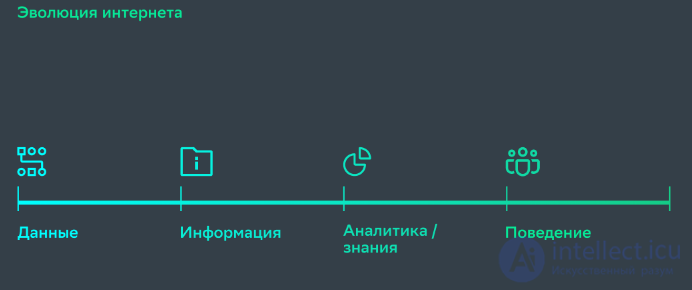
The likelihood of IoB technologies being adopted depends on the legislation of individual countries. Local privacy laws and laws on the processing of citizens' personal data may become an obstacle.
The global adoption of IoB entails serious social consequences. The key problem of the Internet of Behaviors is the violation of personal security. On the one hand, collecting "digital dust" will help in the fight against crime. For example, license plate recognition systems make it possible to promptly obtain information about speeding and to identify those at fault in traffic accidents. On the other hand, the concept of data privacy is undermined.
Nevertheless, surveys show that people are ready to accept the Internet of Things as part of social life. According to the American researchers Schoen Cooperman Research, 59% of US residents have a positive attitude toward the widespread installation of facial recognition systems. Surveys by the Security Industry Association (SIA) show that in specific cases Americans express even greater support for this technology. For example, 75% of respondents agree with installing facial recognition systems at airports.
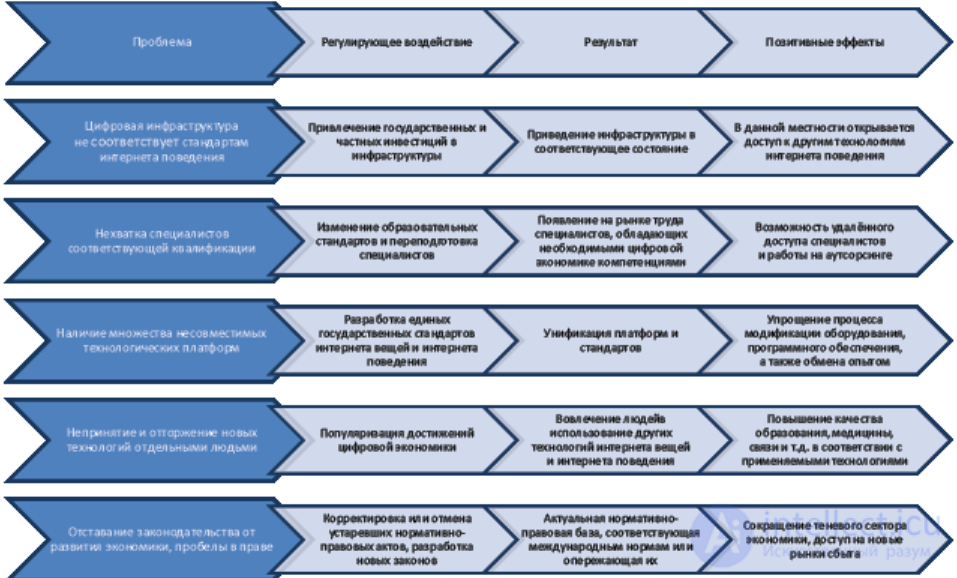
Essentially, the Internet of Bodies (IoB) is an extended version of the Internet of Things. The system connects the human body to a network through devices that are ingested, implanted, or otherwise connected to the body. Once connected, data can be exchanged, and both the body and the associated device can be monitored and controlled remotely.
There are three generations of the Internet of Bodies, which include:
Advances in wireless communication, materials and engineering innovation are allowing implantable medical devices (IMDs) to scale and become viable in many applications.
Pacemakers
The best-known example of the Internet of Bodies is the defibrillator or pacemaker. It is a small device placed in the abdomen or chest to help patients with heart conditions control abnormal heart rhythms using electrical impulses. In 2013, former US Vice President Dick Cheney replaced his Wi-Fi-connected defibrillator with one that had no network connectivity. There were concerns that he could be killed by an electric shock if an attacker hacked the device.
In 2018, the California healthcare provider Kaiser Permanente launched a virtual rehabilitation program for patients recovering from heart attacks. Patients shared their data with healthcare providers through smartwatches, which allowed for better monitoring and helped maintain a closer and more continuous relationship between patient and doctor. Thanks to this innovation, the completion rate of the rehabilitation program rose from less than 50% to 87%, accompanied by a drop in readmissions and in the cost of the program.
Smart Pills
A "smart pill" is another IoB device. Once swallowed, they collect data on the condition of organs and then send it to a remote network-connected device.
In November 2017, the US Food and Drug Administration (FDA) approved the first digital medicine – a pill with a sensor that makes it possible to track whether and when the patient has taken it. This is the antipsychotic Abilify MyCite – the drug aripiprazole, used to treat schizophrenia, bipolar I disorder and depression. The drug is manufactured by the Japanese pharmaceutical company Otsuka Pharmaceutical, and the sensor was developed by Proteus Digital Health. The sensor is activated by gastric juice. The data that the patient has taken the pill is transmitted to a special digital patch worn by the patient, and from it to a mobile app that tracks medication intake. Patients sign an agreement under which the doctor and a few other people, such as family members, can access the medication intake data.
Smart Lenses
Smart contact lenses are being developed that combine sensors and microchips that perform health diagnostics based on information from the eye and tears. One smart contact lens under development is designed to monitor glucose levels. In the future, this will allow diabetics to monitor their blood sugar without finger pricks throughout the day.
Work on smart lenses has been under way since 2014, and since then by several major corporations at once – Samsung, Google, Sony and Mojo Vision.
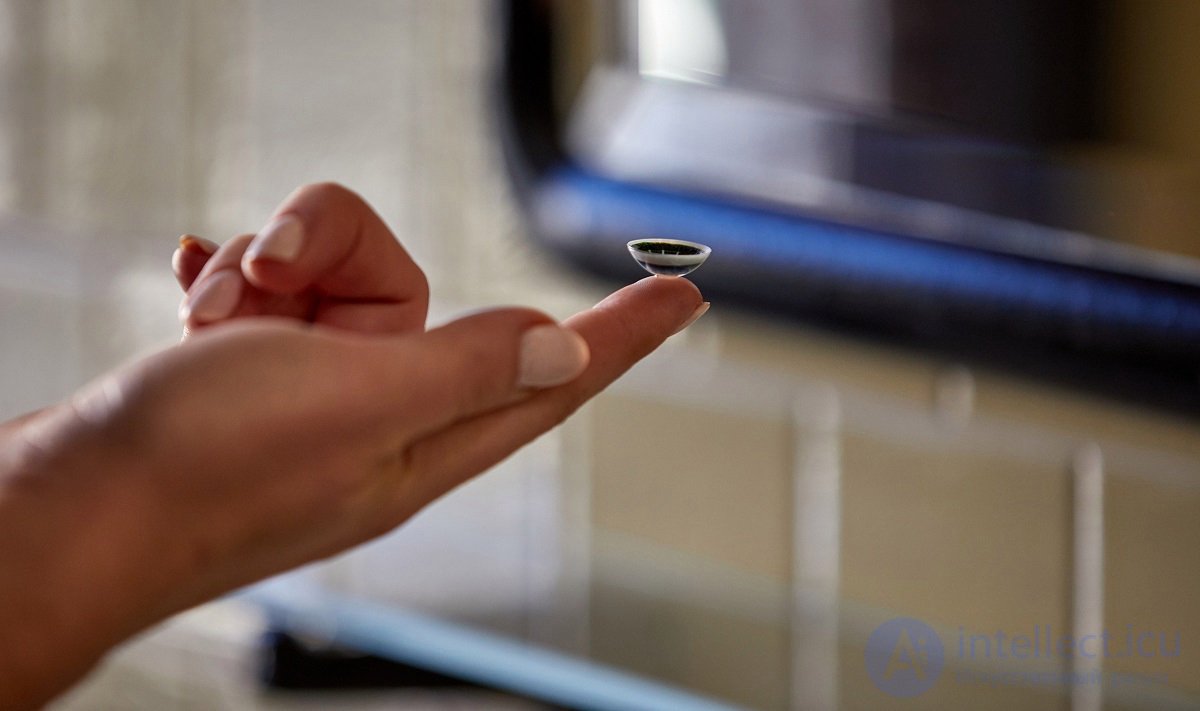
Mojo Vision
For example, in January 2020, Mojo Vision demonstrated the first prototype of its smart lenses. Engineers developed a display, an oxygenation system, a microchip and power management tools, as well as eye-tracking algorithms.
Mojo's lenses promise to provide users with useful, timely information without having to look at a screen or be distracted from a conversation. Outwardly they look exactly like ordinary cosmetic contact lenses that change eye color. In reality, however, they are an entire computer with tiny displays, batteries and electronics.
Brain-Computer Interface
The brain-computer interface is also worth noting: here the human brain is effectively joined to an external device for real-time monitoring and control. The ultimate goal is to help restore function in people with disabilities by using brain signals rather than the usual neuromuscular pathways.
But the technology will be used not only in medicine but also in the entertainment industry.
The American company Valve has announced that it is developing a brain-computer interface (BCI), which it intends to take into account when developing future game projects. This was reported by the founder of the company and of the Steam service, Gabe Newell, in an interview with the 1 NEWS resource.
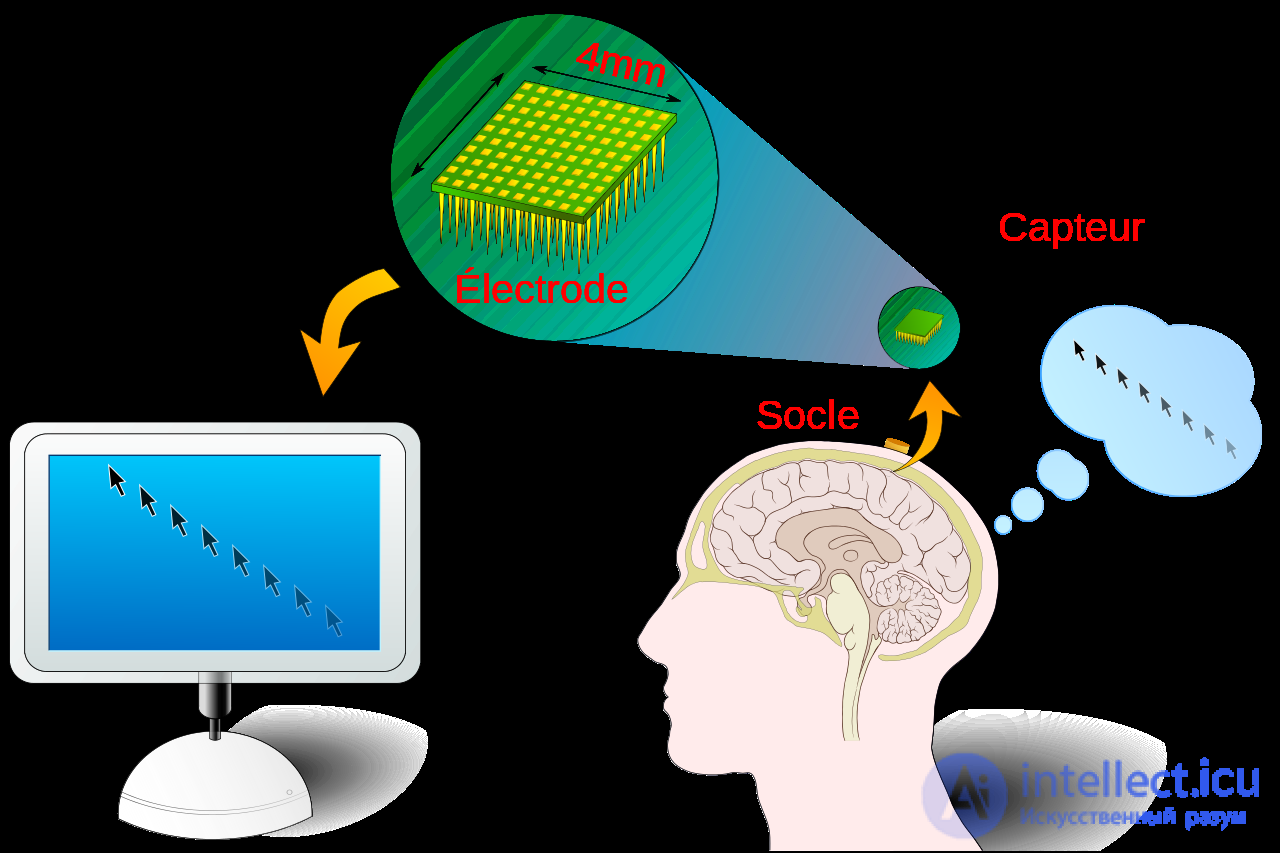
Author: Balougador — , CC BY-SA 4.0,
According to a study published in March of this year in the journal Neuron, scientists were able to use ultrasound to observe blood flow in different parts of the brain. They conducted experiments on primates and found that certain patterns of blood flow in the brain not only match the animals' actions but can also predict which action the animal will take.
The system was able to effectively predict whether an animal was about to move its eyes left or right with 78% accuracy, and whether it was about to reach out its paw to the left or right with 89% accuracy.
The bioengineering company Biohax has implanted chips in more than 4,000 people, primarily for convenience. In one widely known example, 50 employees of Three Square Market agreed to have an RFID microchip the size of a large grain of rice implanted. As a reminder, RFID is a method of automatic identification of objects in which data stored in so-called transponders, or RFID tags, is read or written by means of radio signals. Any RFID system consists of a reader and a transponder. It allows these employees to enter the building without a key and to pay for goods in a vending machine with a wave of the hand.
The most talked-about example of a neurochip right now is the development by Elon Musk's company, Neuralink. The 2020 presentation showed second-generation chips, which are now implanted in the skull, along with the robot used to install them, as well as pigs with the implanted device.
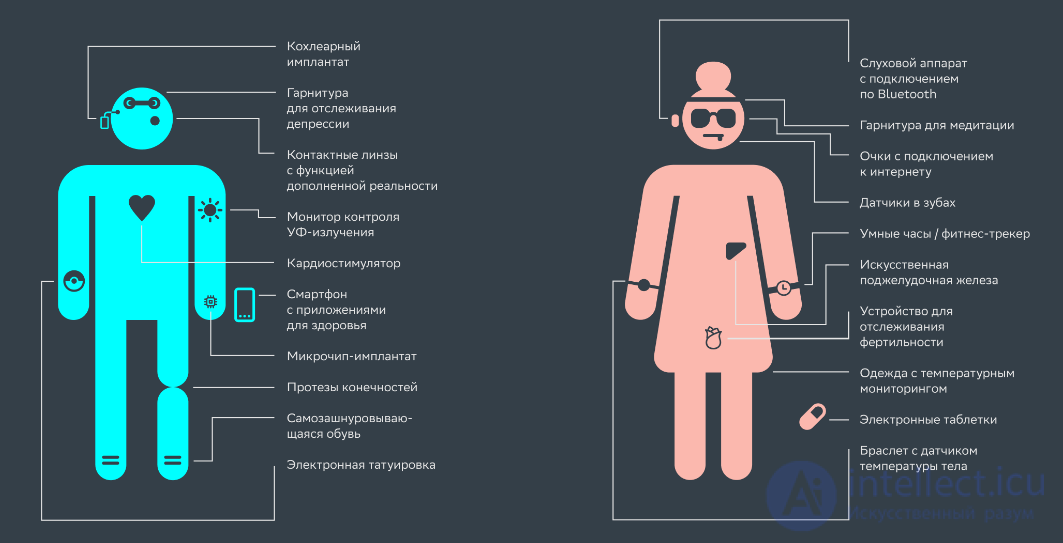
For healthcare workers, the Internet of Bodies opens the gates to a new era of effective monitoring and treatment.
The stream of data collected by such technologies contributes to our understanding of how human behavior, lifestyle and environmental conditions affect our health. It has also extended the notion of healthcare beyond the hospital or the doctor's office into everyday life. This can be crucial in the fight against the coronavirus pandemic. Symptom tracking can help us stop the spread of infection and quickly detect new cases. Researchers are studying whether data collected from smartwatches and similar devices can be used as early warnings of viral infection by tracking the user's heart rate and breathing.
Data streams about everything from diets to social interactions can help improve preventive medical care, increase employee productivity and encourage people to become active participants in their own health.
An artificial pancreas can automate insulin dosing for diabetics. Brain-computer interfaces can allow people with disabilities to control prosthetic limbs with their minds. And smart diapers can alert parents via a Bluetooth app when their child needs to be changed.
But despite its potential to revolutionize practically everything and to bring benefits, the Internet of Bodies may put our most intimate personal information at risk.
But is everything really that simple?
Support Issues
Most high-tech companies rely on end-user license agreements. If a customer does not agree to the changed terms, the manufacturer reserves the right to deactivate the device. In the case of a smartphone, such a situation is at worst unpleasant, but refusing a license agreement for a prosthesis or a pacemaker can create problems. For example, it is unclear at whose expense such a device would be removed.
The bankruptcy of an IoB device manufacturer would also create difficulties for customers. Contractual rights and access to confidential data are often treated as assets in bankruptcy proceedings, and a court may allow them to be sold to another company – for example, to insurers.
The situation in which US Vice President Cheney ordered a defibrillator that was not connected to Wi-Fi for security reasons illustrates one of the biggest problems facing Internet of Bodies technology: how to protect the devices and the information they collect and transmit. In 2017, the US Food and Drug Administration recalled nearly half a million pacemakers because of security issues requiring a firmware update, explains Bernard Marr, a well-known futurist, in his column for Forbes. The security problems facing Internet of Bodies technology are similar to those that threaten the Internet of Things in general. However, the consequences of a hack can be far more tragic when IoB devices are involved. In addition, IoB devices create yet another cybersecurity problem that must be protected against hackers.
Privacy is also of paramount importance. Questions about who can access the data and for what purposes need answers. For example, a device that tracks diagnostics of a condition may also track unhealthy behavior. Will health insurance companies be able to deny coverage if a customer's IoB device reports on their behavior? A cochlear implant can restore hearing, but it can also record all the sound in a person's environment. Will this data remain confidential?
It is worth recalling the story of fire survivor Ross Compton. In September 2016, a fire destroyed his $400,000 home in Middletown, Ohio. Fortunately, as Compton told investigators, he managed to stuff several bags with a few items, including the charger for his external defibrillator, before breaking a window with his cane and escaping. But when the smoke cleared, the police began to suspect that Compton's story was fabricated. His statements were contradictory. The debris smelled of gasoline. It seemed implausible that someone escaping from a burning house, especially a person with a condition like Compton's, would be capable of carrying out such a complex plan of escape from a fire.
In the end, investigators were able to charge Compton with felony aggravated arson and insurance fraud. Their ideal witness? His pacemaker.
The police obtained a warrant for data on Compton's cardiac activity before, during and after the fire. After examining this information, a cardiologist concluded that it was "highly improbable" that Compton could have escaped the fire so quickly while hauling that many belongings.
Compton pleaded not guilty. His attorney argued that the pacemaker data could not be used in the case; among other things, it would violate the confidentiality of the doctor-patient relationship and Compton's constitutional right to privacy, the lawyer said. The case was strange and full of difficult questions. Regardless of whether Compton actually burned down his house, should a life-saving device inside someone's body be part of the case to put him behind bars?
Compton died at the age of 62, leaving his case – and whatever precedent it might have set – unresolved.
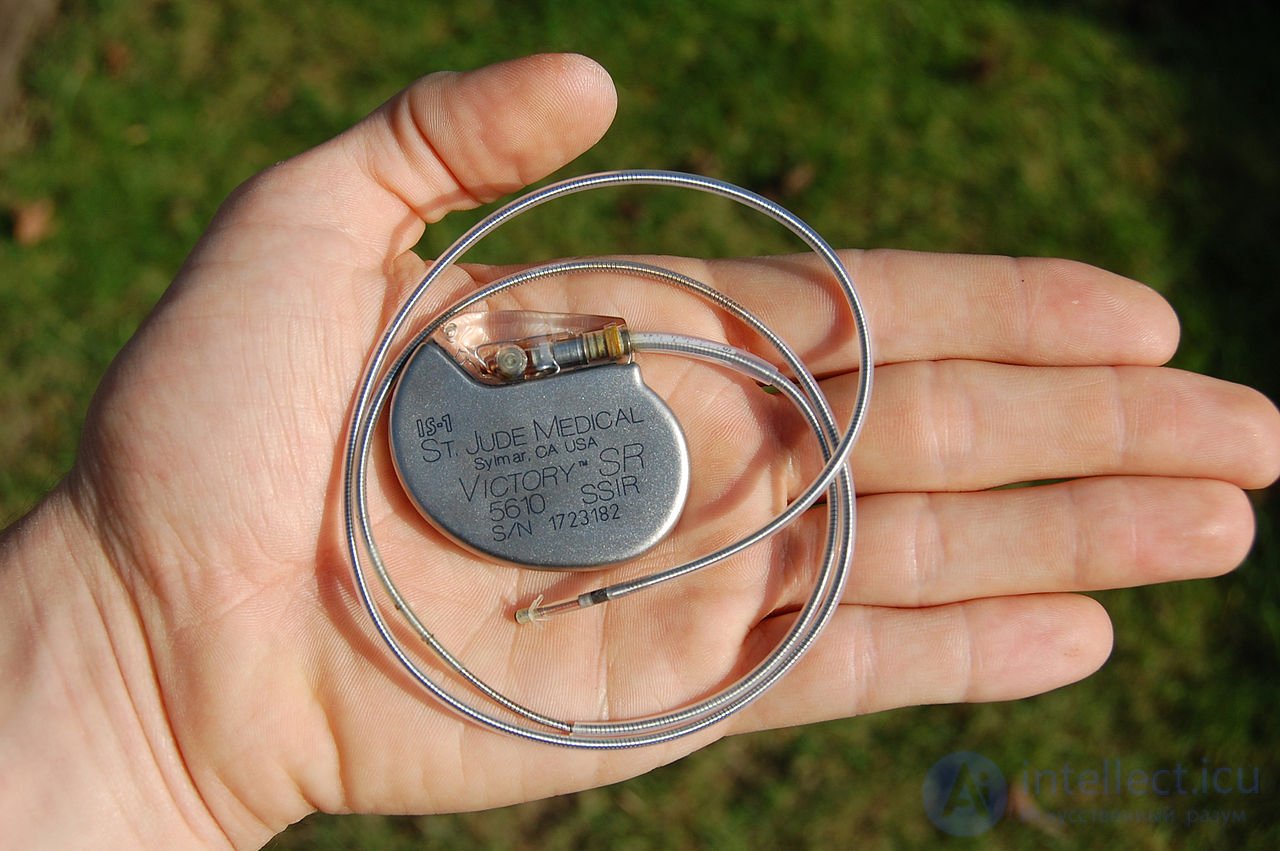
Author: Steven Fruitsmaak — own work, removed from a deceased patient before cremation. Holding it in my hand., CC BY 3.0
This may seem like a one-of-a-kind chain of events, an aberration. But as industries usher in a new era of devices that track personal information, using the internet and the human body alike, it will not be the last.
The Internet of Bodies can improve our lives in countless ways. But the risks cannot be escaped. A RAND study examines IoB and its risks. RAND is an American nonprofit organization that serves as a strategic research center working under contract for the US government, its armed forces and related organizations.
"When it comes to regulating IoB, it's the Wild West," explains Mary Lee, a mathematician at RAND and the lead author of the study. "These technologies have many benefits, which some consider too great to be restrained by policy. But we need a broader discussion of what these benefits will cost us – and how we can avoid some of the risks altogether."
"We are collecting huge amounts of data, and the rules regarding that data are really fuzzy," she adds. "There is no clarity about who owns the data, how it is used, or even to whom it can be sold."
Lee and her colleagues examined the risks that IoB devices may pose in three areas: data privacy, cybersecurity and ethics. The team also identified recommendations that can help policymakers balance the many risks and benefits of IoB.
The benefits of implantable cardiac devices are clearly documented – they can improve a patient's quality of life and in many cases sustain their life. But, as the Ross Compton case shows, it is unclear whether law enforcement's use of IoB data violates constitutional protections against self-incrimination and unreasonable search and seizure.
Internet connectivity creates the possibility of these devices being hacked and the data they transmit being compromised.
Amazon has patented wristband technology designed to track and record workers' locations and hand movements. If the wristband senses a lull in productivity, it will vibrate, nudging the employee to focus.
Although it is unclear whether Amazon will ever manufacture this device, such productivity-enhancing technology could help businesses become more efficient and less error-prone. But because it would give employers highly personal information about their employees, such as information about bathroom breaks, there are concerns that the technology described in Amazon's patents could violate employees' right to privacy.
How it works: the wristband would send ultrasonic pulses at set intervals to track hand movements and the relative positions of employees' hands and inventory bins.
Employees may view this technology as intrusive and akin to spying.
IoB wristbands, watches, rings and smartphone apps can track steps, heart rate, sleep patterns and other physical data, such as alcohol consumption.
The amount of personal data these devices collect, security vulnerabilities and the potential for user error have created ideal conditions for surveillance of individuals. Companies and hackers can use the data for financial or political gain.
These devices operate using modern accelerometers and other sensors that can convert motion into digital measurements.
Incidentally, some studies have shown that constantly tracking biometric activity with health apps such as sleep trackers can heighten users' anxiety and aggravate insomnia and other conditions.
Patients can give healthcare workers and doctors access to this information through a web portal. This can help healthcare providers confirm whether patients are adhering to their treatment plans. But this comes at the cost of exposing healthcare providers' networks to cyberattacks.
Data collected through digital pills could give insurance companies the ability to monitor whether and when a patient takes their medication, and to deny coverage to those who do not follow the prescribed regimen.
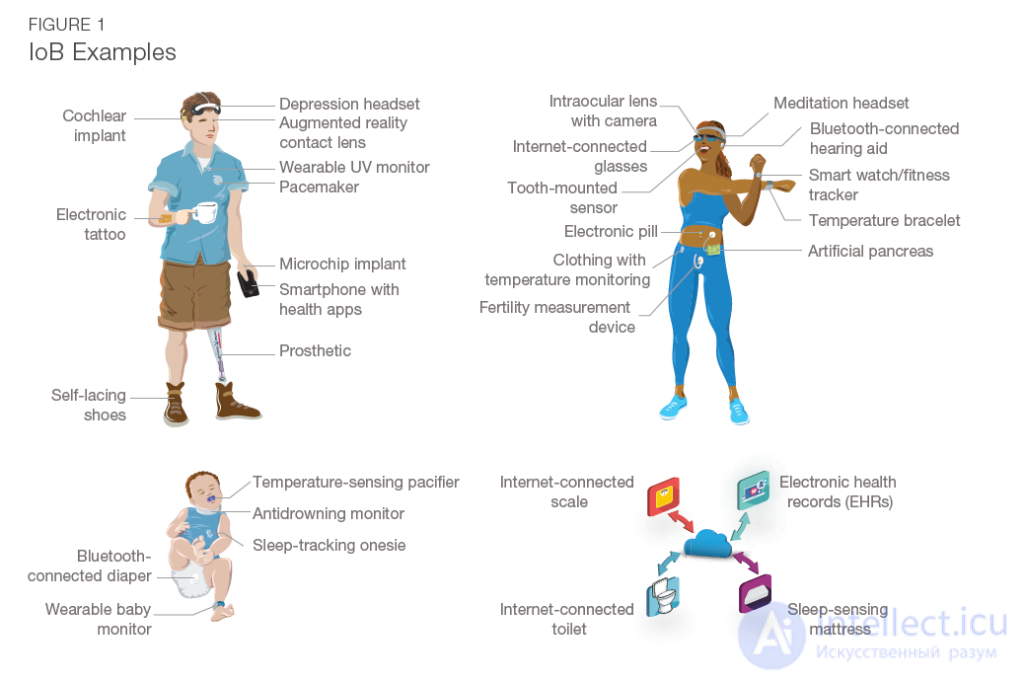
Privacy and security risks are inherently ethical problems for the individuals whose data has been compromised. But IoB raises additional ethical issues, including unfairness and threats to personal autonomy.
Without insurance coverage, internet access or a certain level of technical savvy, some groups may miss out on the immediate benefits of IoB, as well as on its long-term impact on public health initiatives. And because IoB is in its infancy, fundamental questions remain about whether people own their personal data or have the right to opt out of data collection.
As Internet of Bodies technology continues to develop, it will be necessary to address regulatory and legal issues and to build policy based on the proper use of the technology.

Comments