
Lecture
Image processing — any form of information processing for which the input data is represented by an image, for example, photographs or video frames. Image processing may be carried out either to produce an image as output (for example, preparation for printing, for television broadcasting, etc.), or to obtain other information (for example, text recognition, counting the number and type of cells in a microscope field, etc.). Besides static two-dimensional images, it is also necessary to process images that change over time, for example, video.
Digital image processing — the use of computer algorithms to process digital images . As a field of digital signal processing, digital image processing has many advantages over analogue processing[en]. It allows a much wider range of algorithms to be applied to the input data and avoids problems such as added noise and distortion during processing. Since images are defined as two-dimensional (or higher) arrays, digital image processing can be modelled using multidimensional systems .
As far back as the mid-20th century, image processing was for the most part analogue and was carried out by optical devices. Such optical methods are still important today in fields such as, for example, holography. Nevertheless, with the sharp growth in computer performance, these methods have been increasingly displaced by digital image processing methods. Digital image processing methods are usually more accurate, reliable, flexible and simple to implement than analogue methods. Specialized hardware, such as pipelined instruction processors and multiprocessor systems, is widely used in digital image processing. This applies especially to video processing systems. Image processing is also carried out using computer mathematics software, for example, MATLAB, Mathcad, Maple, Mathematica, and others. For this purpose they use both basic tools and the Image Processing extension packages.
Most methods for processing one-dimensional signals (for example, the median filter) are also applicable to two-dimensional signals, which images are. Some of these one-dimensional methods become significantly more complex with the transition to a two-dimensional signal. Image processing introduces several new concepts here, such as connectivity and rotational invariance, which are meaningful only for two-dimensional signals. In signal processing, the Fourier transform is widely used, as well as the wavelet transform and the Gabor filter. Image processing is divided into processing in the spatial domain (brightness transformation, gamma correction, etc.) and the frequency domain (Fourier transform, etc.). The Fourier transform of a discrete function (image) of spatial coordinates is periodic in spatial frequencies with a period of 2pi.
The first digital image processing techniques were developed in the 1960s at the Jet Propulsion Laboratory, the Massachusetts Institute of Technology, Bell Labs, the University of Maryland and other research centres as applications for satellite imagery, conversion to phototelegraph standards, medical imaging, videotelephony, character recognition and photograph enhancement . The cost of processing on the equipment of that time was, however, very high. The situation changed in the 1970s, when inexpensive computers and other equipment became available. It then became possible to process images in real time for some tasks, such as television standards conversion . As the power of general-purpose computers grew, they came to perform almost all specialized operations that required large amounts of computer resources. With the advent of fast computers and advanced signal processing algorithms, which became available in the 2000s, digital processing became the most common form of image processing and, in general, is used not only because of the flexibility of the methods applied, but also because of its low cost.
Digital image processing technology for medical applications was inducted into the U.S. Space Foundation Hall of Fame in 1994 .
Digital image processing allows the application of significantly more complex algorithms, and consequently can provide both higher performance on simple tasks, as well as implement methods that would be impossible with an analogue implementation.
In particular, digital image processing is the only practical technology for:
Some techniques used in digital image processing:
Image editing (Lat. redactus — put in order) — the modification of photographs (images) by classical or digital methods. It may also be referred to by the term retouching, retouch (Fr. retoucher — to touch up, to correct). The purpose of editing is defect correction, preparation for publication, and solving creative tasks.
Besides static two-dimensional images, sequences of images may also be processed
Defects that can be removed from an image :
Types of retouching: Portrait retouching includes :
Each output device (monitor, printer, offset printing press, etc.) has its own colour gamut capabilities (not every colour can be reproduced). For example, on paper the lightness ratio between white and black reaches 40, whereas for a slide it exceeds 200. The main task is to convey the author's intent with the least loss. Colour conversion is performed, for example, in the case of printing on a paper medium, determining the amount of ink needed to reproduce each colour.
A specialist, when preparing photographs for publication, acting creatively, as an artist, or using standard methods, brings the image to a form corresponding to the technical capabilities of the reproduction process, while preserving the idea of the image as much as possible.
Today, image editing is done mostly on a computer using raster editors in digital form. For this purpose, an image, even one obtained from a traditional medium (film), is converted to digital form — for example, using a scanner.
Programs for viewing and simple image processing are often bundled with digital cameras and scanners. More complex and powerful programs (Adobe Photoshop, Corel PHOTO-PAINT, Paint Shop Pro, Microsoft Picture It!, Visualizer Photo Studio, Pixel image editor, PixBuilder Photo Editor, Fo2Pix ArtMaster, etc.) need to be obtained separately and, as a rule, for money. GIMP is an exception, a freely distributed program whose capabilities are comparable to those of Adobe Photoshop.
Modern editors are not free of shortcomings, but their competent use allows most problems arising during image editing to be solved. They make it possible, to some extent, to correct technical defects made during the shooting of the photograph.
Experience shows that the original of the image being processed should be preserved wherever possible. Copies can be edited freely — these will be copy 1, copy 2, copy 3, and so on.
Graphics editors — programs — are used for editing images.
It is possible to:
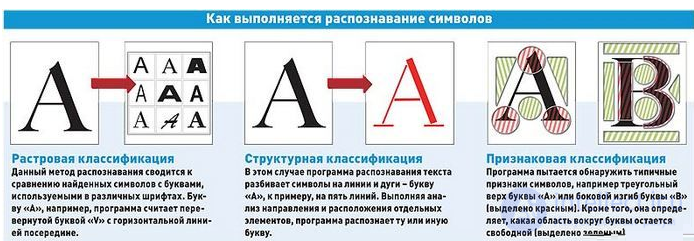
Optical character recognition (English optical character recognition, OCR) — the mechanical or electronic conversion of images of handwritten, typewritten or printed text into text data, used to represent characters in a computer (for example, in a text editor). Recognition is widely used for converting books and documents into electronic form, for automating record-keeping systems in business, or for publishing text on a web page. Optical character recognition makes it possible to edit text, search for words or phrases, store it in a more compact form, display or print the material without losing quality, analyse information, and also apply machine translation, formatting or text-to-speech conversion to the text. Optical character recognition is a research problem in the fields of pattern recognition, artificial intelligence and computer vision.
Processing of satellite images (remote sensing data) (image processing) - the process of performing operations on aerospace imagery, including their correction, transformation and enhancement, interpretation, and visualization. The main stages of processing satellite image data: Preliminary processing; Thematic processing.
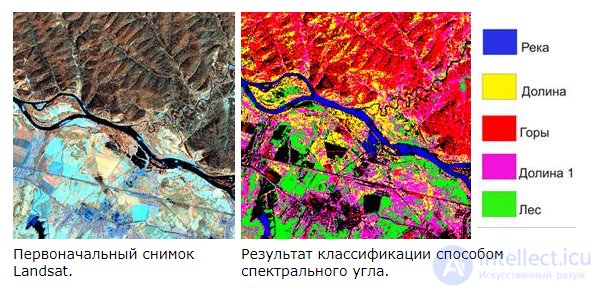
The spectral angle method.
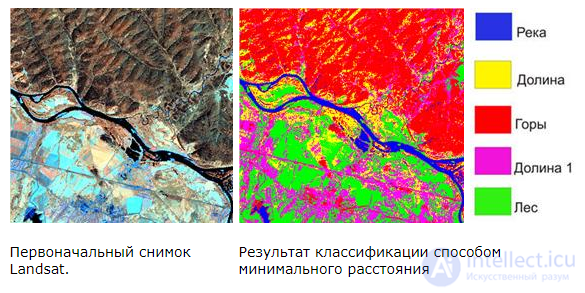
The minimum distance method.
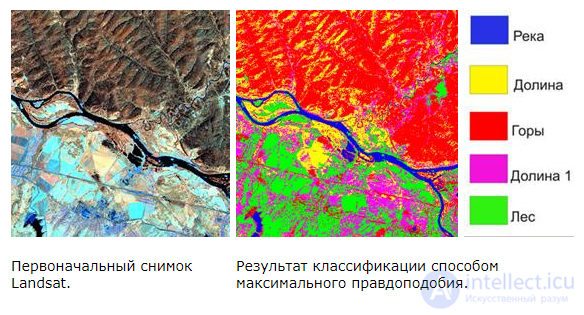
The maximum likelihood method.
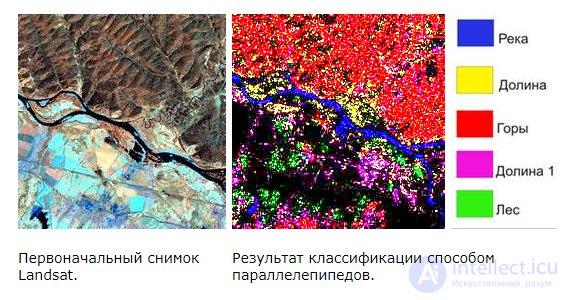
The parallelepiped method.
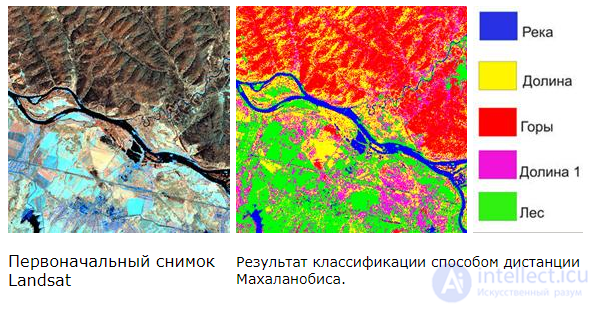
The Mahalanobis distance method.
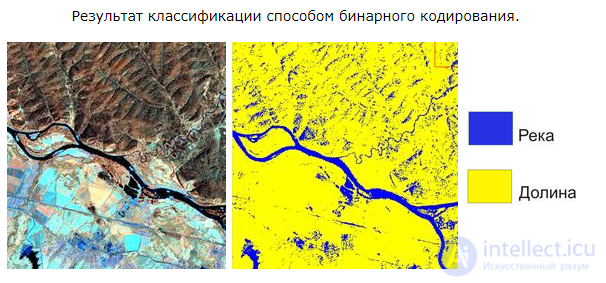
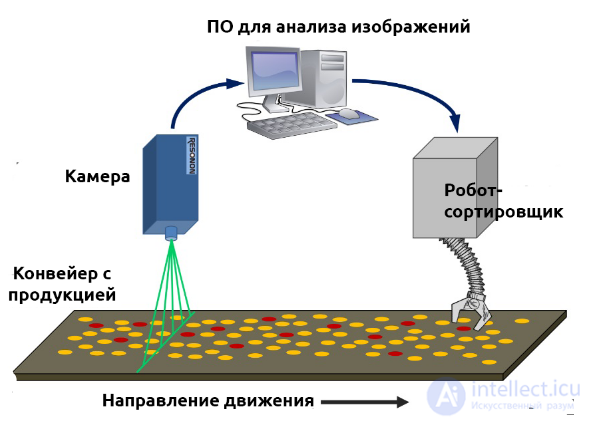
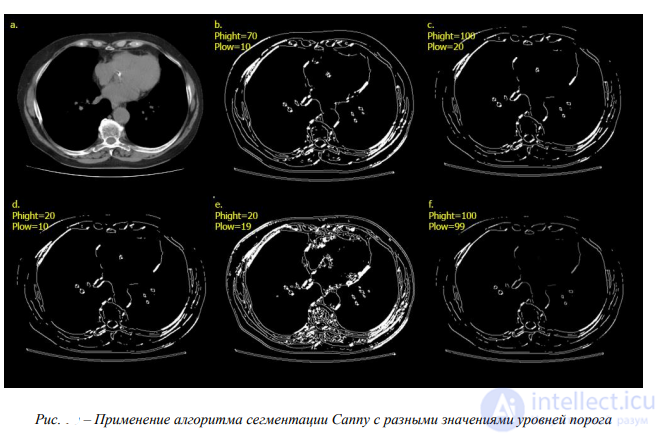
Image processing in medicine
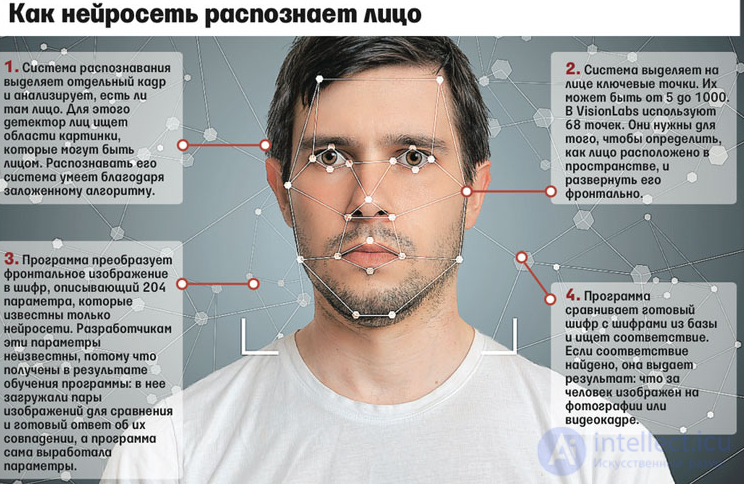
Automated vehicle control
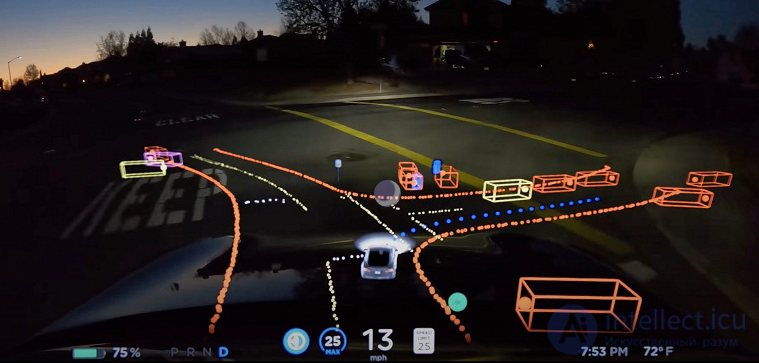
the work of an autopilot's machine vision and how the car itself “sees” its surrounding space.
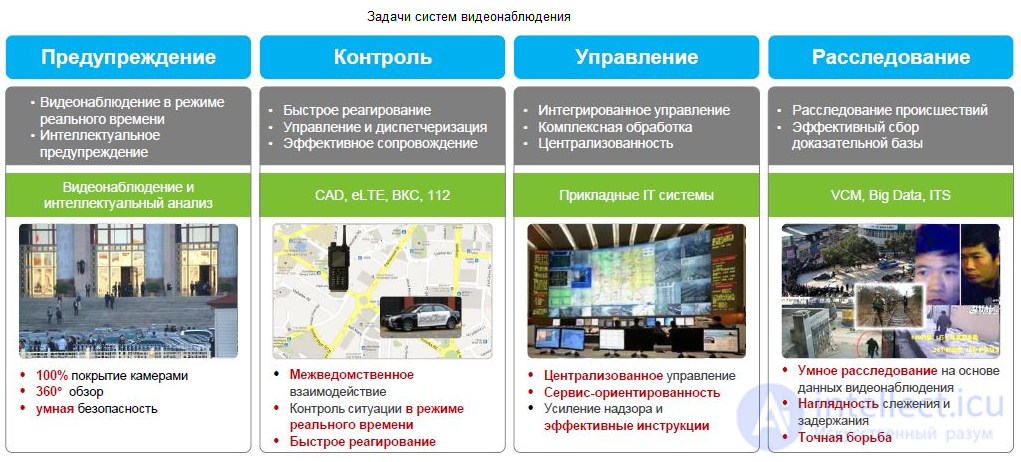
Image processing in video surveillance systems

Comments