
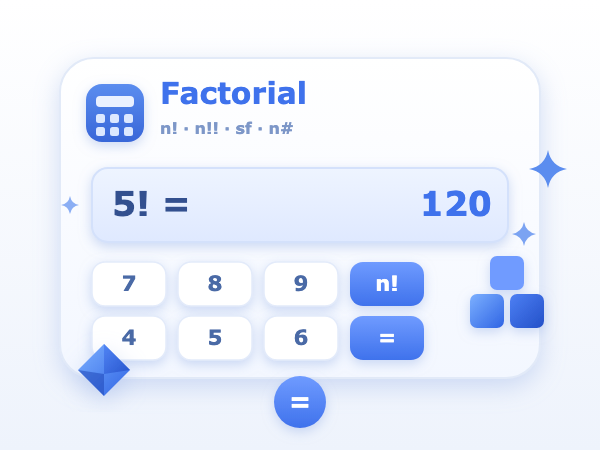
n! = 1·2·3·…·n. Put the ! sign after the
number, for example 5! = 120.n! = 1 · 2 · 3 · … · n, and by definition 0! = 1.5! = 1·2·3·4·5 = 120, 10! = 3628800. The factorial counts! sign, for example 5!.n!! = n · (n−2) · (n−4) · …7!! = 7·5·3·1 = 105, 8!! = 8·6·4·2 = 384. To compute a7!!.sf(n) = 1! · 2! · 3! · … · n!sf(4) = 1!·2!·3!·4! = 1·2·6·24 = 288. The superfactorial is computedsf function: enter sf(4) to get 288 (you can also1!*2!*3!*4!). Superfactorials grow very fast and appear inn# = 2 · 3 · 5 · 7 · 11 · … · p (all primes p ≤ n).11# = 2·3·5·7·11 = 2310. Primorials are used in number theory, in the# sign after the number, e.g. 11# gives 2310.5! — factorial, 7!! — doublesf(4) — superfactorial, 11# — primorial.(5! + 3!) / 2.
 Text calculator of arithmetic expressions online 1+1=
 Calculator tetration and pentation, power towers online
 Integer or fractional number in words online
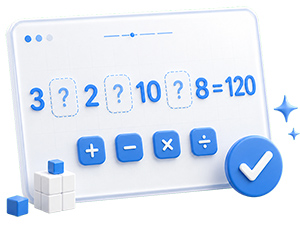 Insert missing math symbols for online expression 3 2 10 8 = 120
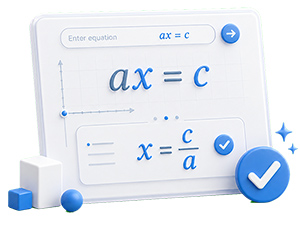 Solution of equations of the first degree by a given string online ax=c
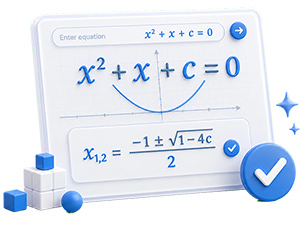 Solution of equations of the second degree by a given string online x^2+x+c=0
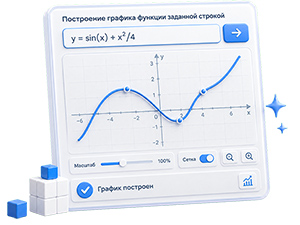 Constructing a graph of a function by a given string online

Comments